Dongyang Wood Carving and the Lu Residence
Dongyang wood carving is one of China’s four great woodcarving traditions — mainly relief carving, left unvarnished in the natural color of the wood, hence its name “white wood carving.” It joined China’s first national list of intangible heritage in 2006. To see it as it was used in buildings, visit the Lu Residence on the east side of town, a family compound built over the Ming and Qing and a national Major Historical and Cultural Site since 1988.
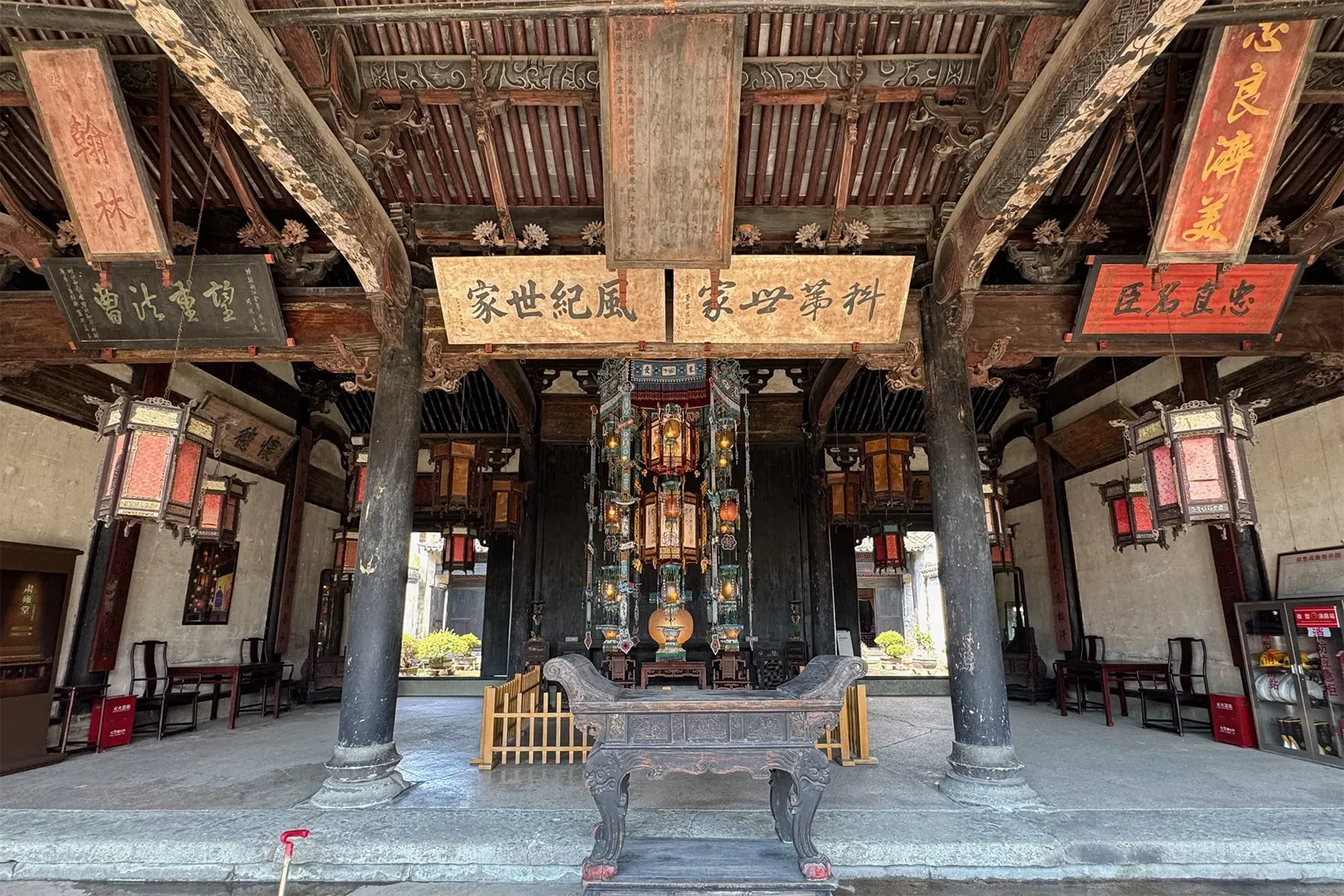
Half of Dongyang’s craft lives in wood. According to Wikipedia, Dongyang wood carving is one of China’s four great woodcarving traditions, and its work survives in Beijing’s Forbidden City and in Suzhou, Hangzhou and Anhui — which is why Dongyang is called the home of wood carving.
A thousand years of carving
According to China’s intangible heritage website, Dongyang has many hills and little farmland, and in the old days its two rivers brought drought and flood by turns, so people turned to crafts to make a living — carving above all. Dongyang’s gazetteer records that in the Taihe years of the Tang, the brothers Feng Su and Feng Ding of Fenggaolou Village had a mansion whose “high towers and painted railings dazzled the eye, with covered walks below nearly half a li long.”
The oldest surviving piece of Dongyang carving is a wooden arhat from the Five Dynasties. According to Tide News in 2025, when Dongyang’s Nansi Pagoda, built in 961 in the Northern Song, collapsed in 1963, the arhat was found inside; it has since been graded a national first-class relic and is the treasure of the China Dongyang Wood Carving Museum.
In the Ming and Qing, Dongyang carving was used everywhere on houses and furniture, and the craft developed a complete set of techniques. The Suyong Hall of the Lu Residence, the Wuben Hall at Baitan and the Yijing Hall at Mashangqiao all survive from that time, as do pieces of furniture such as the “thousand-day bed” and the dowry furnishings known as “ten li of red.” In the early twentieth century the craft turned from architecture to carvings made for export; the Renyi workshop, opened in Hangzhou in 1914, was the first Dongyang carving firm.
Why “white wood carving”
Dongyang carving is mainly relief work — shallow, low, deep and high relief, layered relief, pierced double-sided carving and more — rich in depth while keeping a flat, decorative surface. It is not stained or lacquered dark: the wood keeps its natural grain and color, which is why it is called “white wood carving.” The usual woods are linden, white peach, camphor and ginkgo.
In 2006 Dongyang wood carving joined China’s first national list of intangible cultural heritage, as item VII-43. Today the craft has moved beyond old houses: the vases for the medal bouquets at the Hangzhou Asian Games were Dongyang carvings.
The Lu Residence
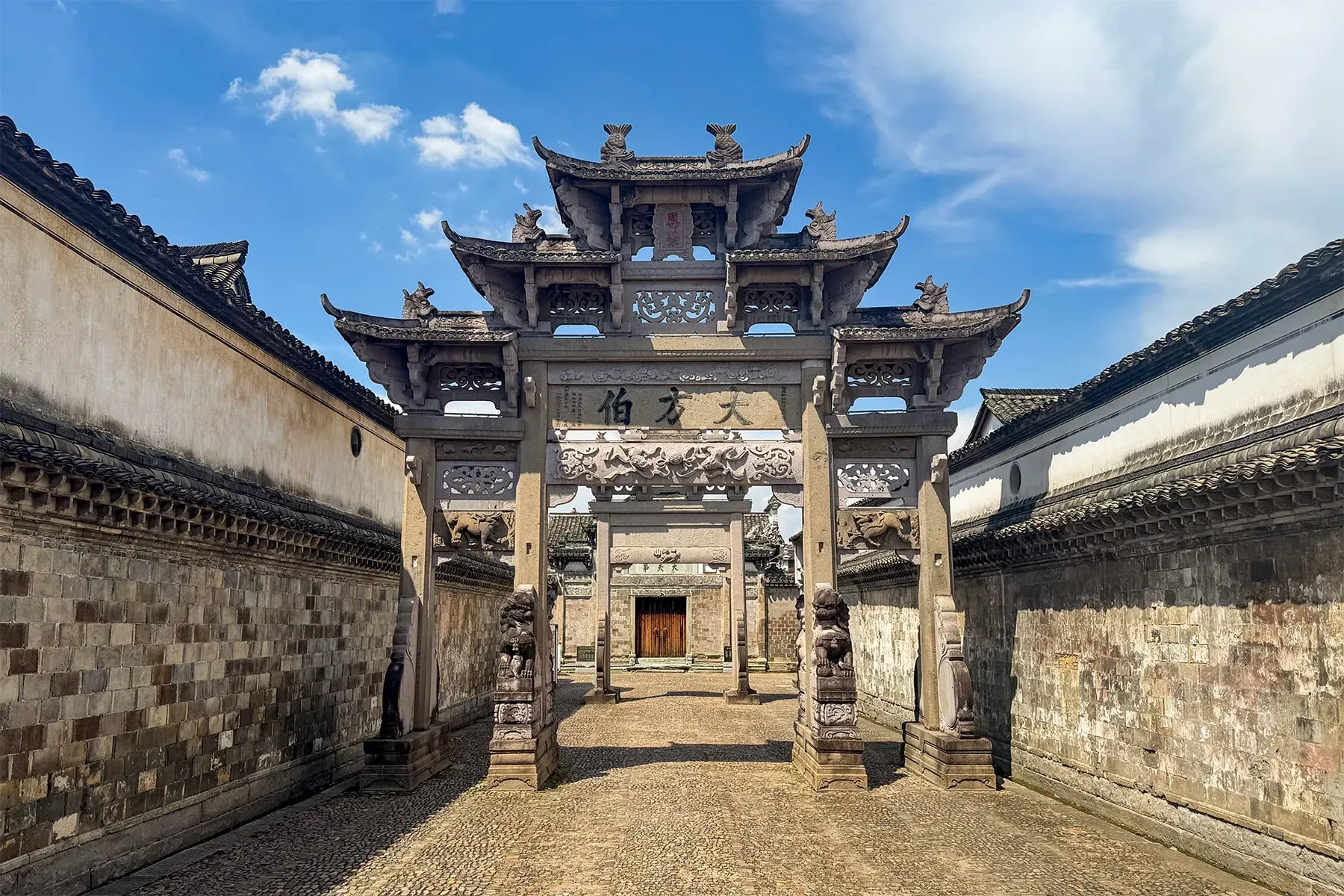
The best place to see how Dongyang carving was used in buildings is the Lu Residence on the east side of town. According to Wikipedia, the Lu family settled here in the Southern Song; after Lu Rui passed the imperial examination in the Yongle years of the Ming, the family prospered and built up, generation by generation, a vast complex centered on the main ancestral hall and surrounded by the branch compounds of the Fujing, Suyong and Shude halls — more than 25,000 square meters in all. Inside are memorial archways and gatehouses, and halls such as the Shiyong, Dunxu and Jiahui.
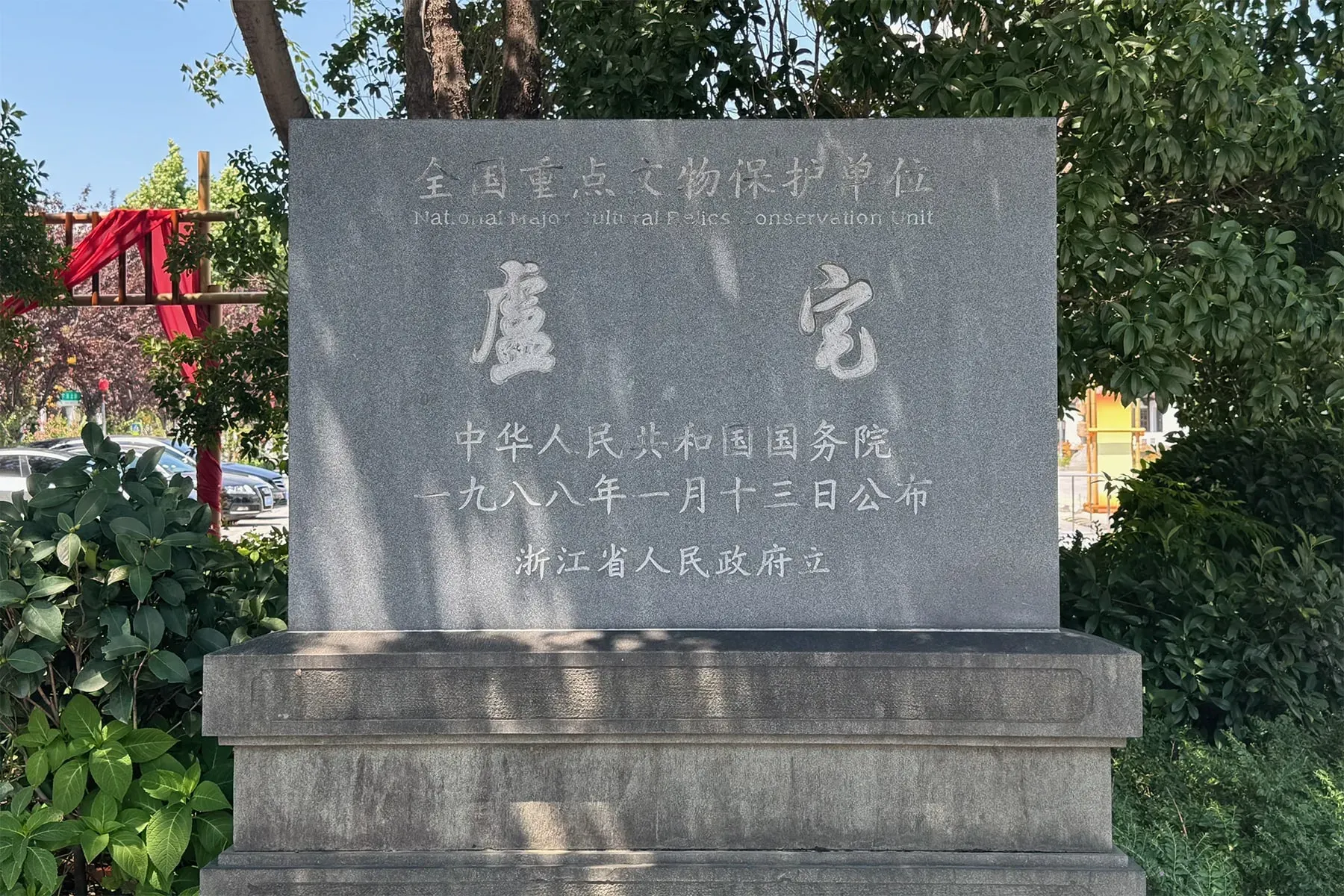
The Lu Residence became a Zhejiang provincial heritage site in 1961 and a national Major Historical and Cultural Site, in the third batch, in 1988. Even the craft of building such houses is now heritage: in 2008 the building techniques of the Lu Residence joined the national list as part of the traditional house-building craft of Wuzhou.
Where to see it
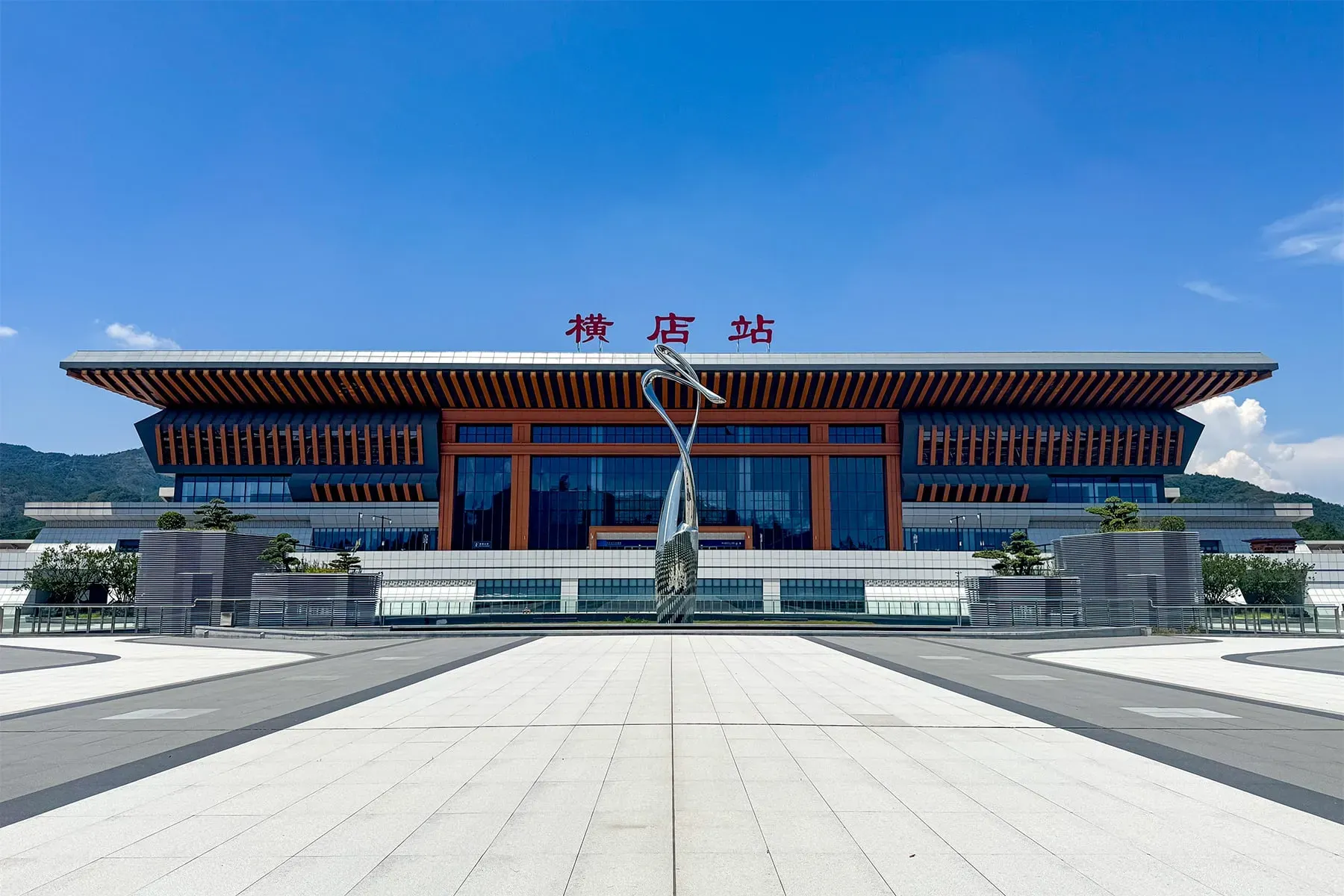
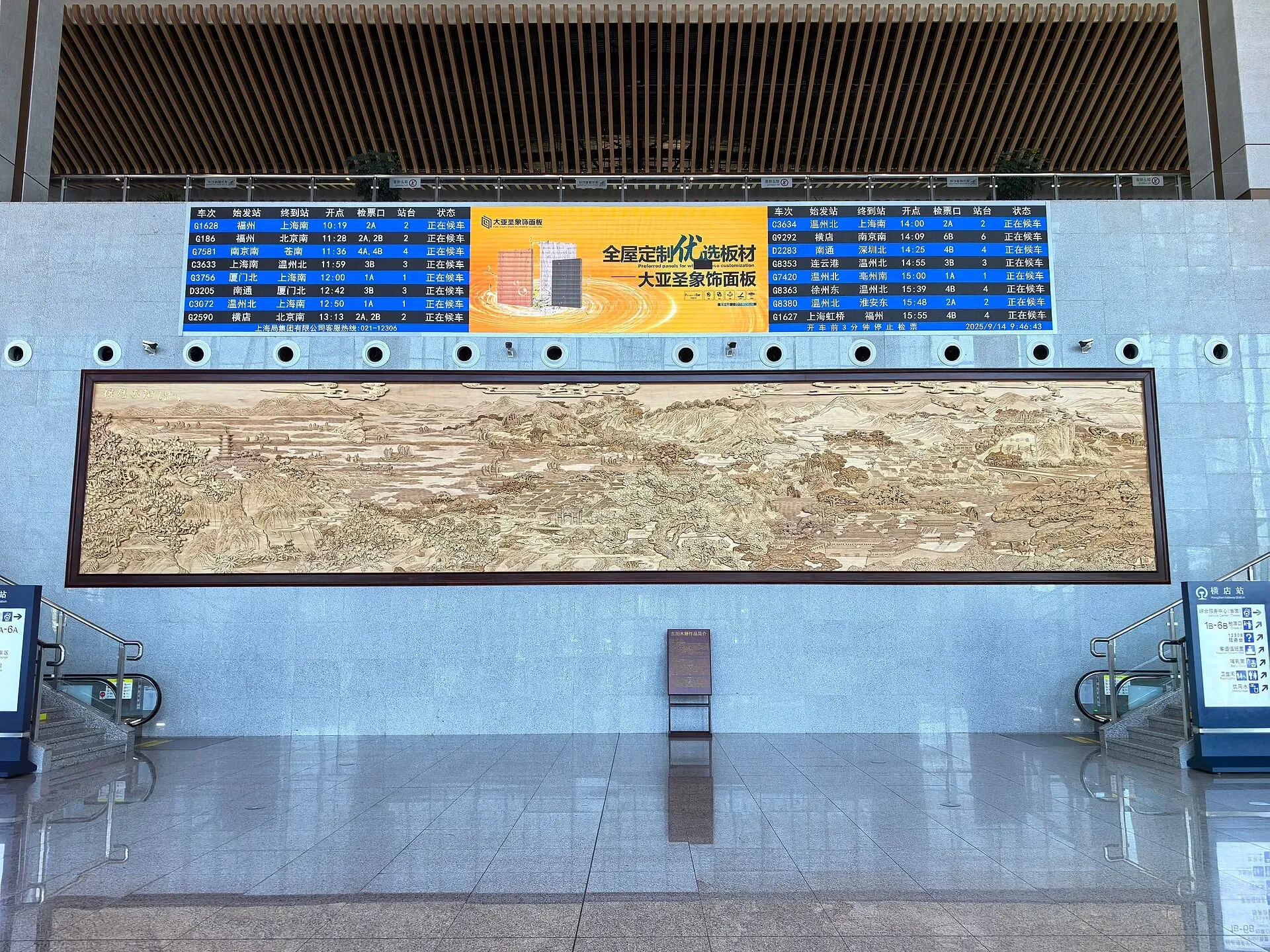
The Lu Residence is on the east side of Dongyang, about 9 km from Hengdian high-speed station and about 8 km from Dongyang North station by map estimate. The China Dongyang Wood Carving Museum holds the Five Dynasties arhat. If you arrive by train at Hengdian, look at the large carved panel in the ground-floor hall before you leave the station. Check opening hours and tickets locally; for how to reach Dongyang, see Getting to Dongyang and Hengdian.
Questions & answers
What makes Dongyang wood carving distinctive?
It is mainly relief carving — shallow, low, deep, layered and pierced double-sided relief among other techniques — rich in depth yet keeping a flat, decorative surface. It is left pale and unvarnished, showing the wood’s natural grain and color, which is why it is called “white wood carving.” Common woods are linden, white peach, camphor and ginkgo.
What are China’s four great woodcarving traditions?
Usually Fuzhou longan-wood carving, Yueqing boxwood carving, Chaozhou gold-lacquer carving and Dongyang wood carving from Zhejiang.
How old is Dongyang wood carving?
More than a thousand years. Dongyang’s gazetteer records the carved balustrades of the Feng brothers’ mansion in the Taihe years of the Tang. The oldest surviving piece is a Five Dynasties arhat figure found when the Nansi Pagoda in Dongyang collapsed in 1963, now a national first-grade cultural relic. By the Ming and Qing, Dongyang carving was used widely on buildings and furniture.
What is the Lu Residence?
The compound of the Lu family on the east side of Dongyang. The Lus settled here in the Southern Song, and after Lu Rui passed the imperial examination in the Yongle years of the Ming the family prospered, building up a complex centered on the main ancestral hall and surrounded by the branch compounds of the Fujing, Suyong and Shude halls — more than 25,000 square meters in all. It became a national Major Historical and Cultural Site in 1988.
Where can I see Dongyang wood carving?
In the old Ming and Qing buildings of the Lu Residence, such as the Suyong Hall; in the China Dongyang Wood Carving Museum, which holds the Five Dynasties arhat; and even in the ground-floor hall of Hengdian high-speed station, where a large panel hangs.
Sources
- 车程是按 OpenStreetMap 路网估算的开车时间。
- 东阳木雕 · 中国非物质文化遗产网(国家级名录,项目编号 Ⅶ-43)
- 文润之江丨东阳木雕再焕活力 看千年木雕“七十二变” · 潮新闻,2025 年 7 月 17 日
- 东阳木雕 · 维基百科
- 东阳卢宅 · 维基百科
- 东阳市 · 维基百科