Small Town China · Stop 03 · Zhejiang

Tiantai

The end of the Tang Poetry Road: a temple from the Sui dynasty, a waterfall beneath a stone bridge, and a poet-monk who wrote his poems on the rocks.

天台四万八千丈

“Tiantai, forty-eight thousand zhang high” · Li Bai

Tiantai is a county under Taizhou in Zhejiang Province, south of Xinchang, with Ninghai (part of Ningbo) to the northeast; Hangzhou is about 220 kilometers away. The county covers about 1,432 square kilometers, eighty percent of it low mountains and hills ringing a river basin in the middle, and the Shifeng River runs past the county town.

Tiantai is an old county. It was founded between 222 and 231, under the Kingdom of Wu, as Shiping, and later went by Shifeng and Tangxing; it was renamed Tiantai in 908, changed names twice more, and has been Tiantai ever since 960. The name comes from Mount Tiantai, just north of the town: the Tiantai school of Buddhism was founded there, and Guoqing Temple at its foot is still the founding temple of the Tiantai school in China and Japan. For the Tang poets who came south along the Shan stream, Mount Tiantai was the journey’s end.

Tiantai is a stop on the Tang Poetry Road of Eastern Zhejiang — see the whole route →

Tiantai by high-speed train from Shanghai and Hangzhou, and the other small towns on the line →

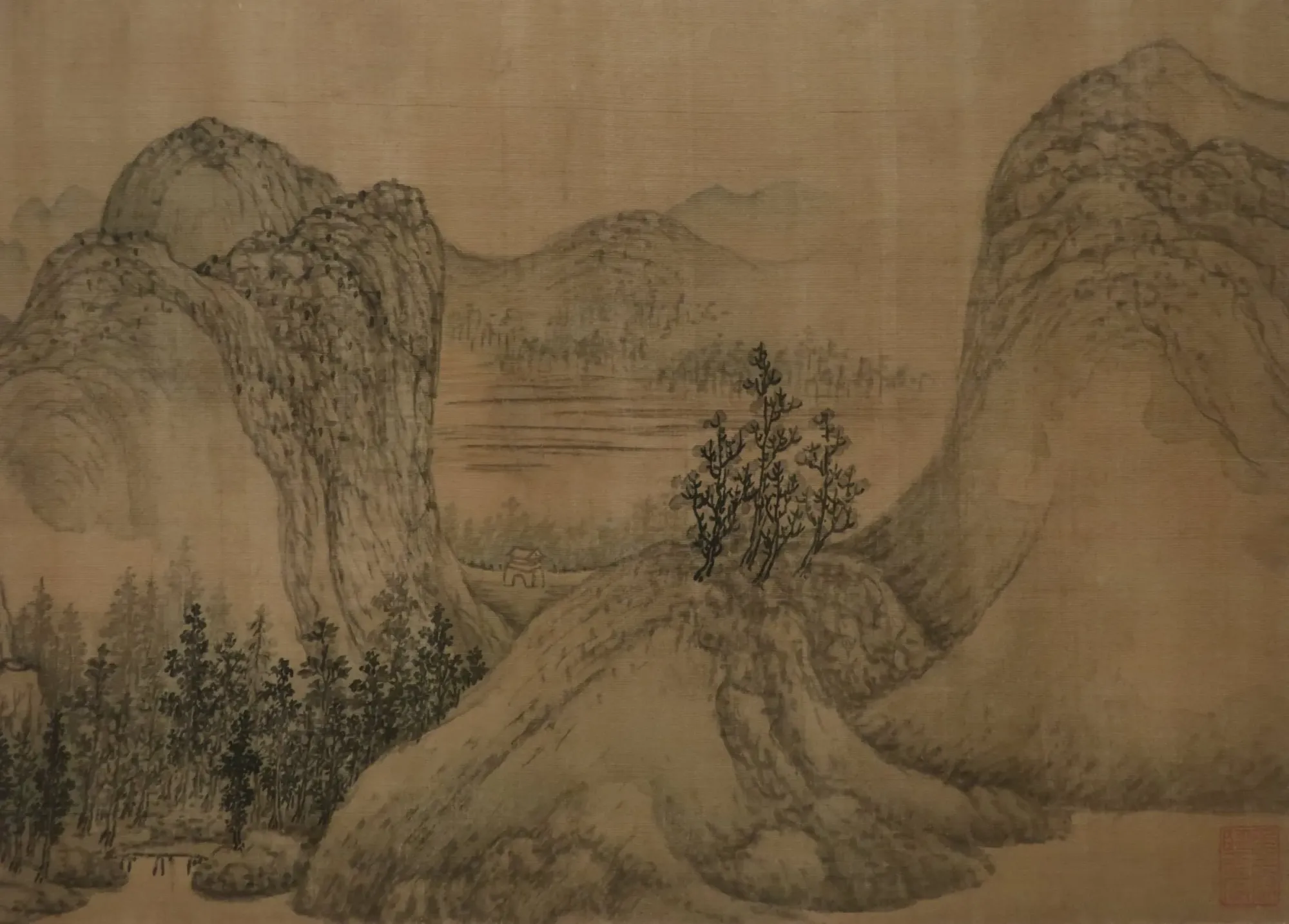
Mount Tiantai, painted by the Ming artist Wu Bin in 1605, ink and color on silk. Honolulu Museum of Art.
Photo: 吴彬 Wu Bin · Honolulu Museum of Art · Public domain · Wikimedia Commons

At a glance

Location
Taizhou, Zhejiang, south of Xinchang
Area
About 1,432 km²
Population
About 475,000 (2020 census)
Founded
222–231, under the Kingdom of Wu; called Tiantai since 960
Known for
Guoqing Temple, Mount Tiantai, the Stone Bridge falls, the Grand Waterfall, Ji Gong, Hanshan and Shide, jiaobingtong
Getting there
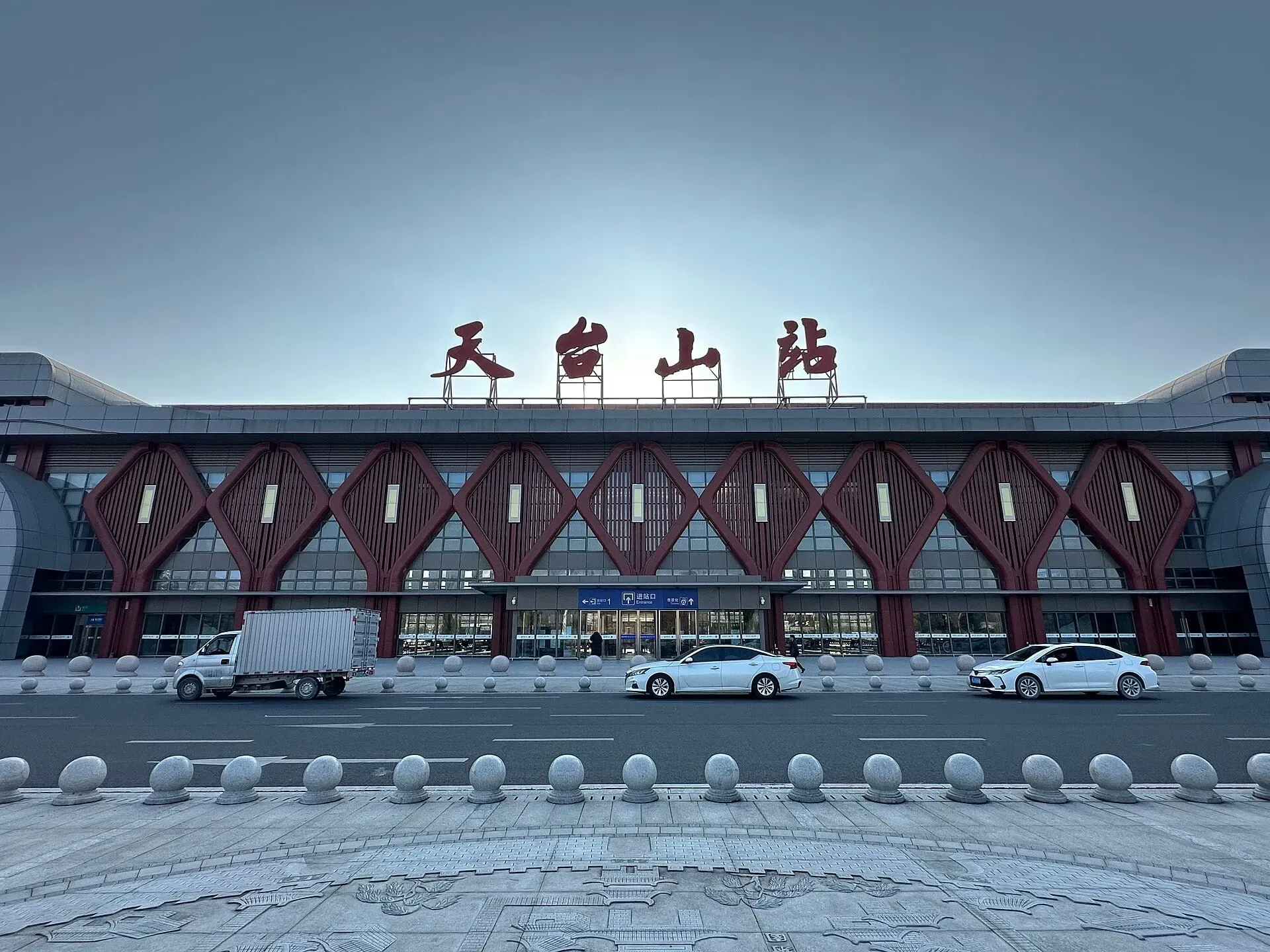
About an hour by train from Hangzhou East to Tiantaishan

Sources: 维基百科, Wikipedia, Táizhōu Shì · City Population, 诗仙李白做梦都要去天台山 · 都市快报,2025 年 1 月 26 日

Where Tiantai isHangzhou: about 150 km in a straight line. Shaoxing: about 105 km in a straight line. Ningbo: about 95 km in a straight line. Taizhou: about 65 km in a straight line. Shanghai: about 235 km in a straight line.50 km100 kmHangzhou150 kmShaoxing105 kmNingbo95 kmTaizhou65 kmShanghai235 kmTiantaiN
Straight-line distances

Tiantai guides

In depth

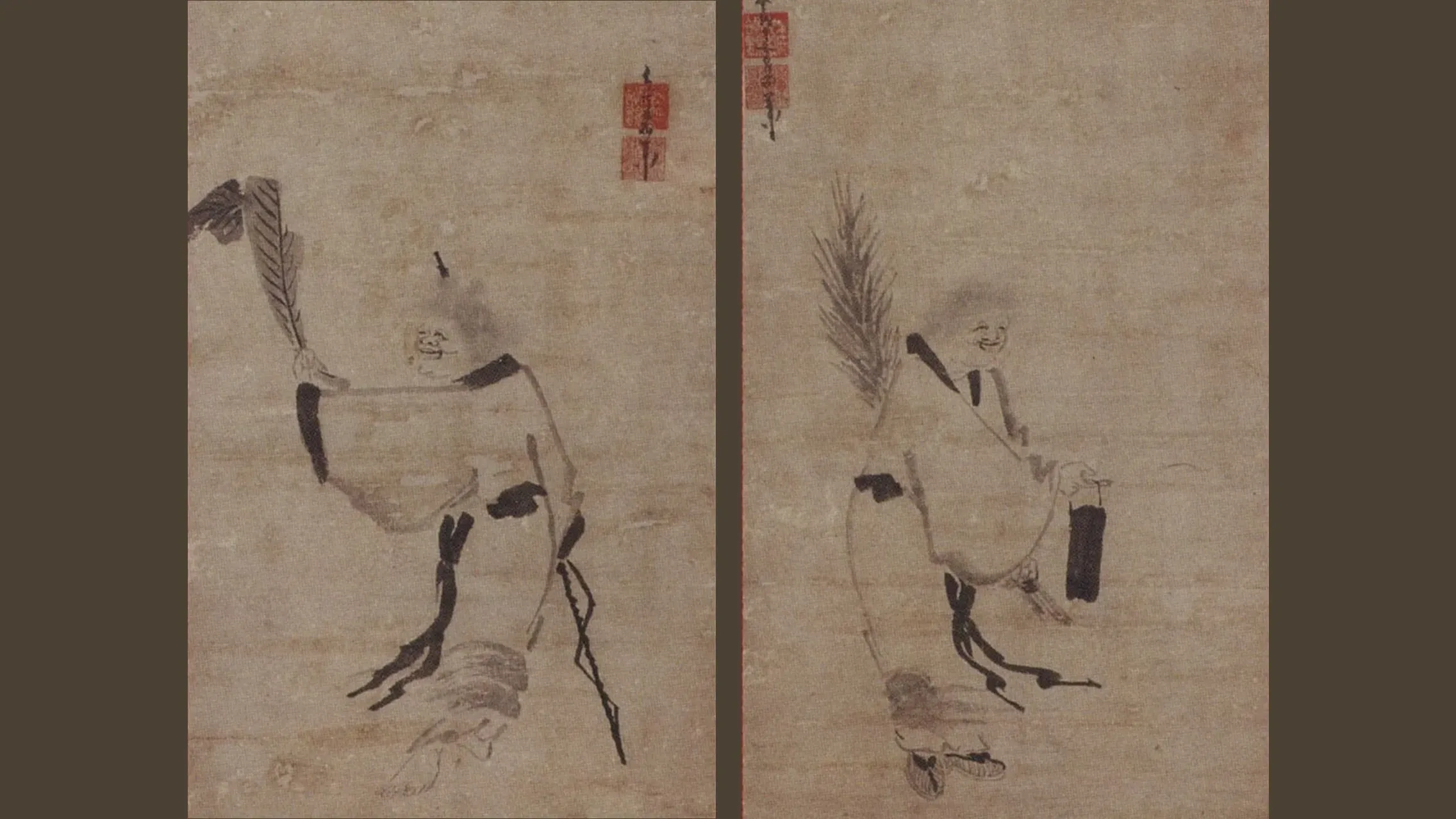
Hanshan and Shide by the Yuan dynasty monk-painter Yintuoluo — two hanging scrolls, shown here side by side. Sunritz Hattori Museum of Arts, Nagano, Japan.Photo: 因陀罗 Yintuoluo · Sunritz Hattori Museum of Arts · Public domain · Wikimedia Commons

In depth · Tiantai opera & poetry

Hanshan (Cold Mountain) and Shide

Hanshan, a Tang dynasty recluse, lived in a cave on Mount Tiantai and wrote his poems on bamboo, trees and rock faces; Shide, who worked in the kitchen of Guoqing Temple, was his closest friend. In time the pair became China’s Twin Immortals of Harmony, and Hanshan’s poems crossed the sea to win admirers from Japan’s great haiku poet to America’s Beat Generation.
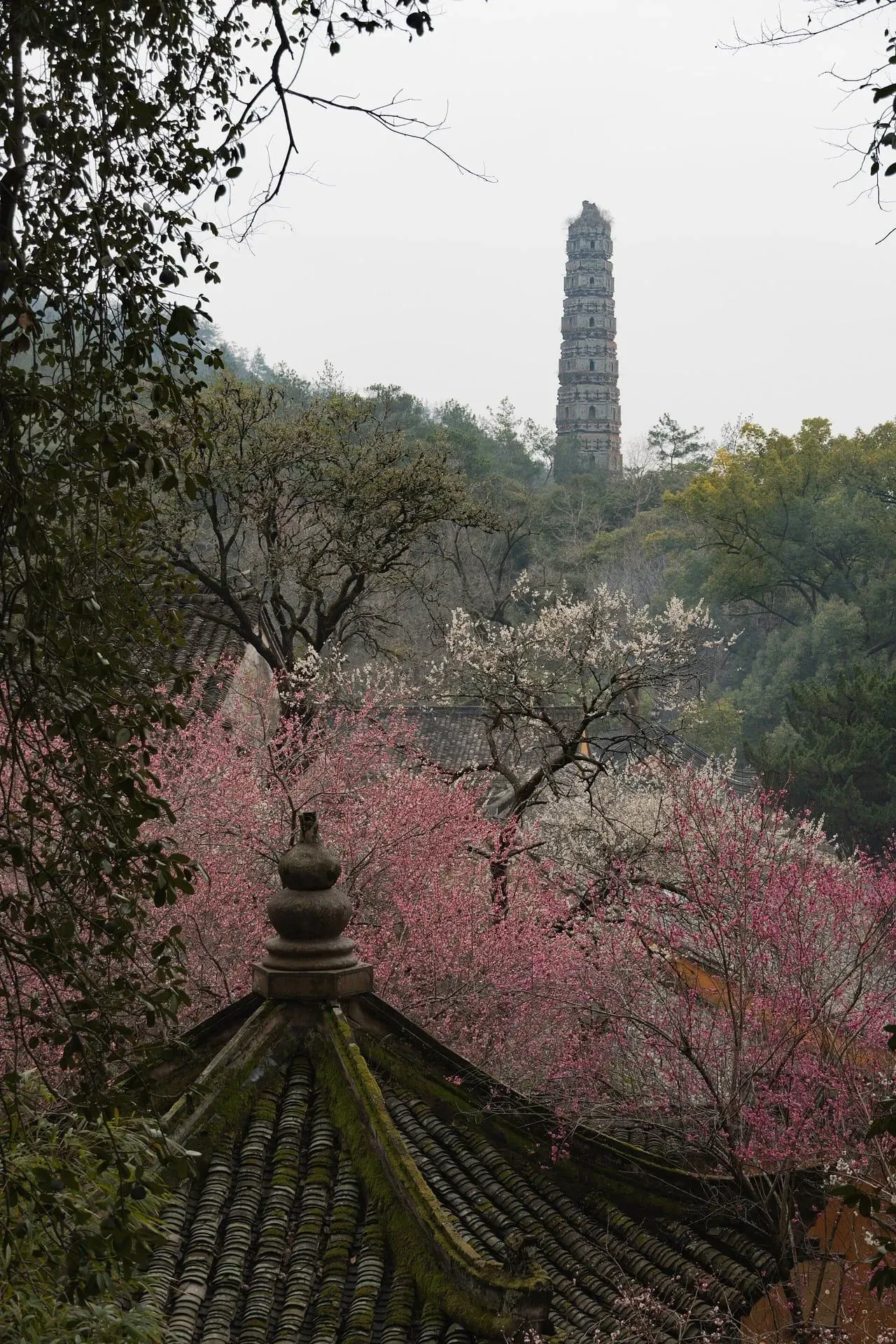
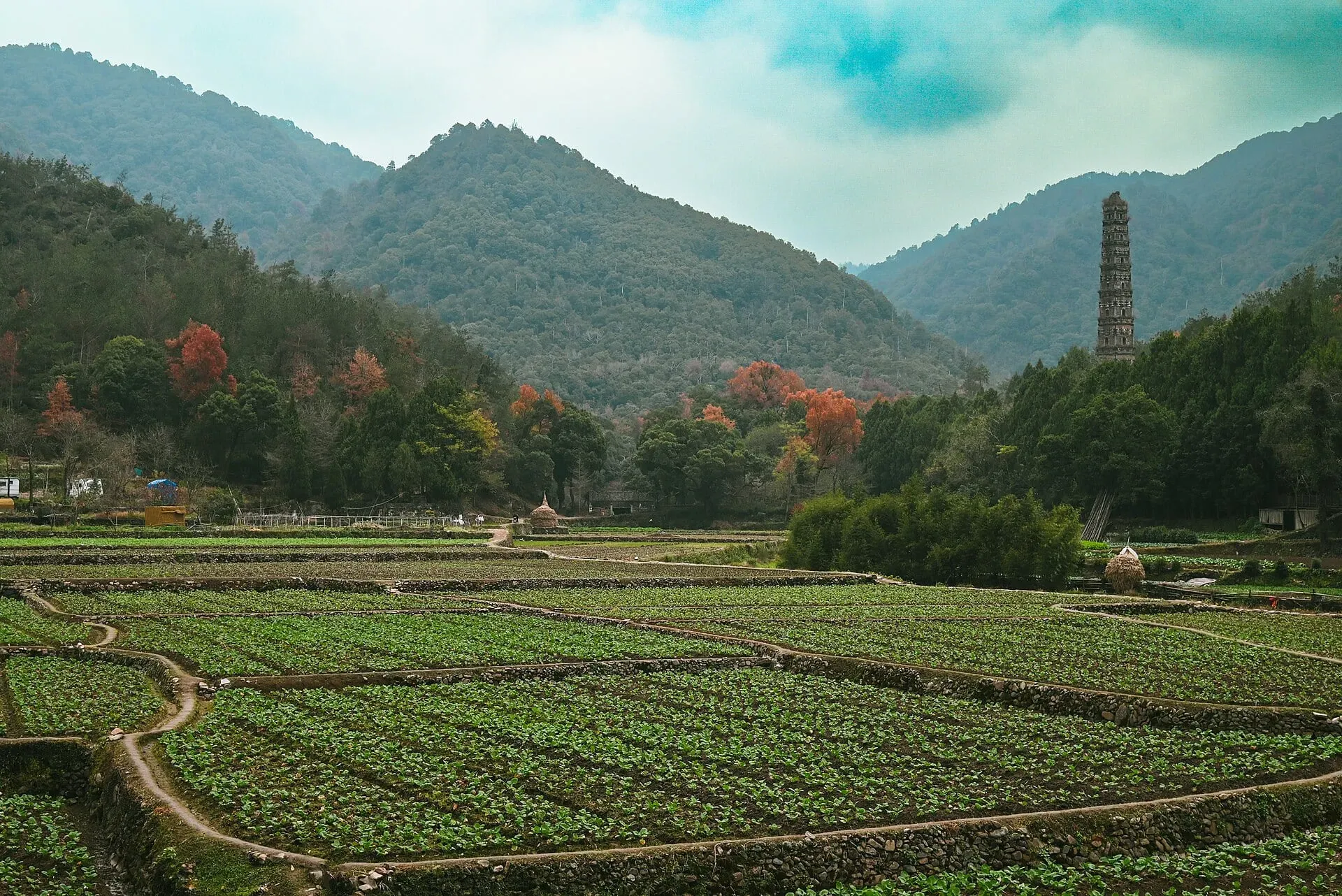
The Sui dynasty pagoda outside Guoqing Temple, 2024. Built in 598 and still about 59 meters tall, it lost its spire long ago.Photo: Dahanbeige · CC BY-SA 4.0 · Wikimedia Commons

In depth · Tiantai history

Guoqing Temple

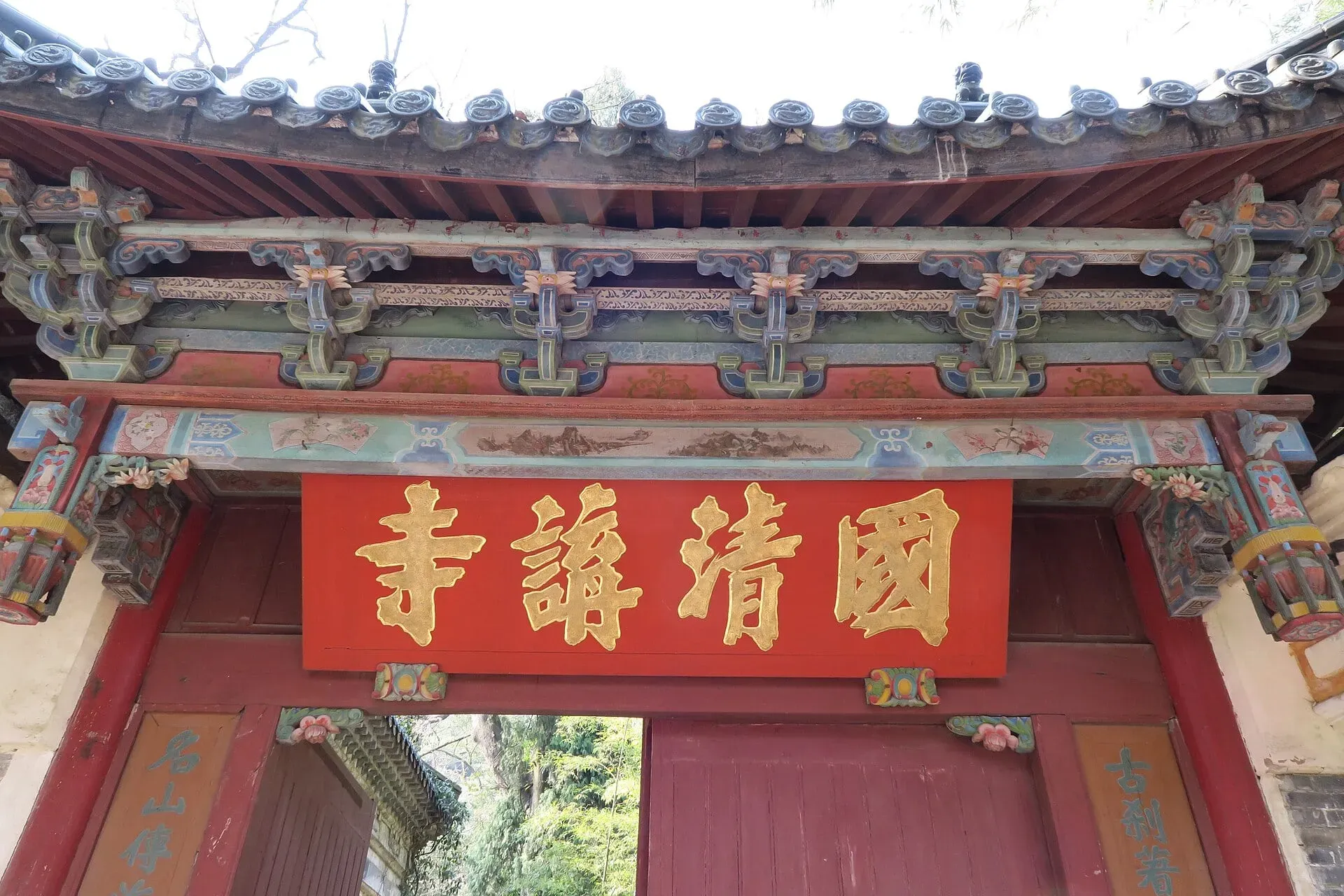
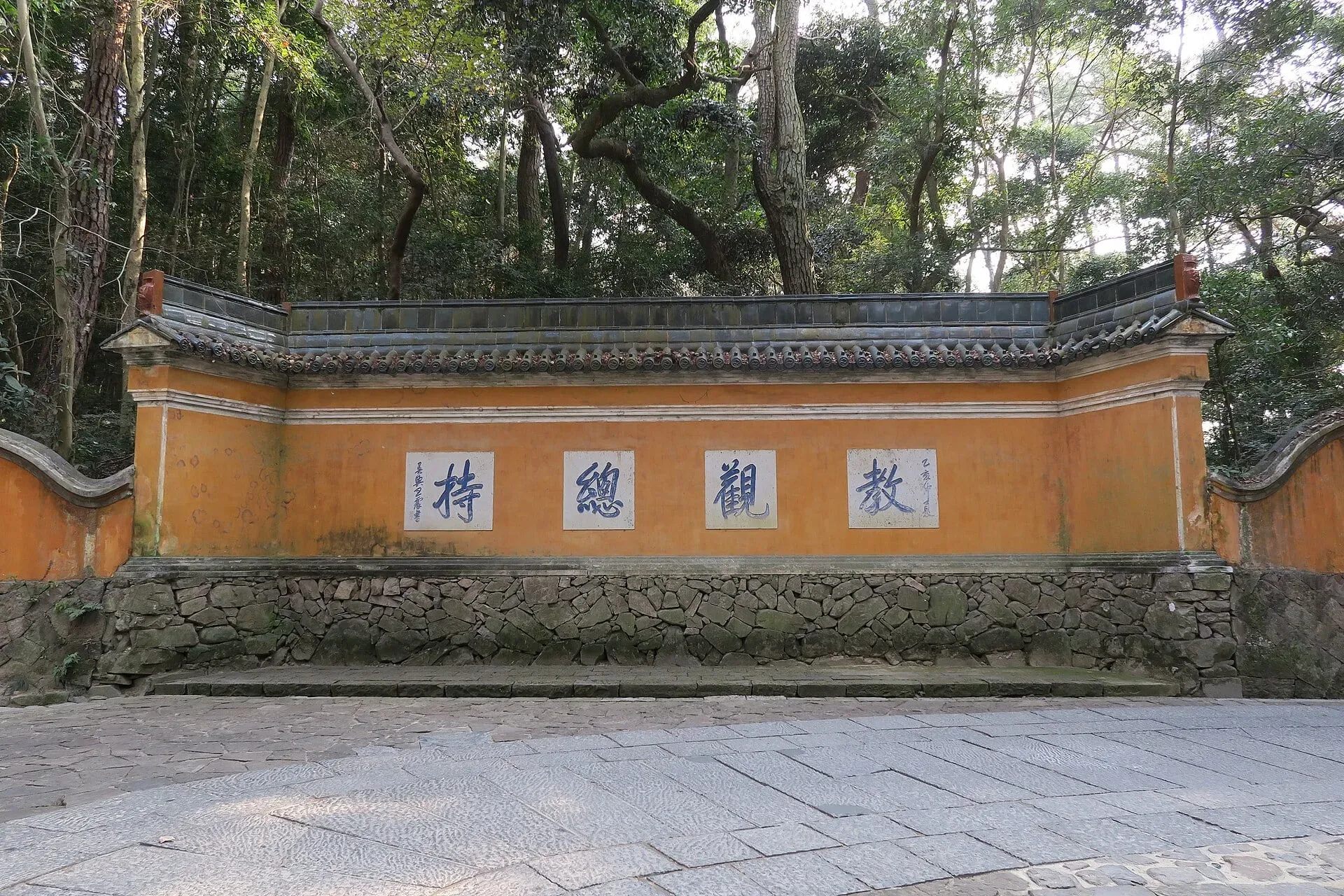
Guoqing Temple, at the foot of Mount Tiantai, was begun in 598. It is the mother temple of the Tiantai school of Buddhism, which spread from here to Japan. Outside the gate stands a pagoda more than 1,400 years old, and the temple takes its name from a prophecy — “when the temple is built, the country will be at peace.”

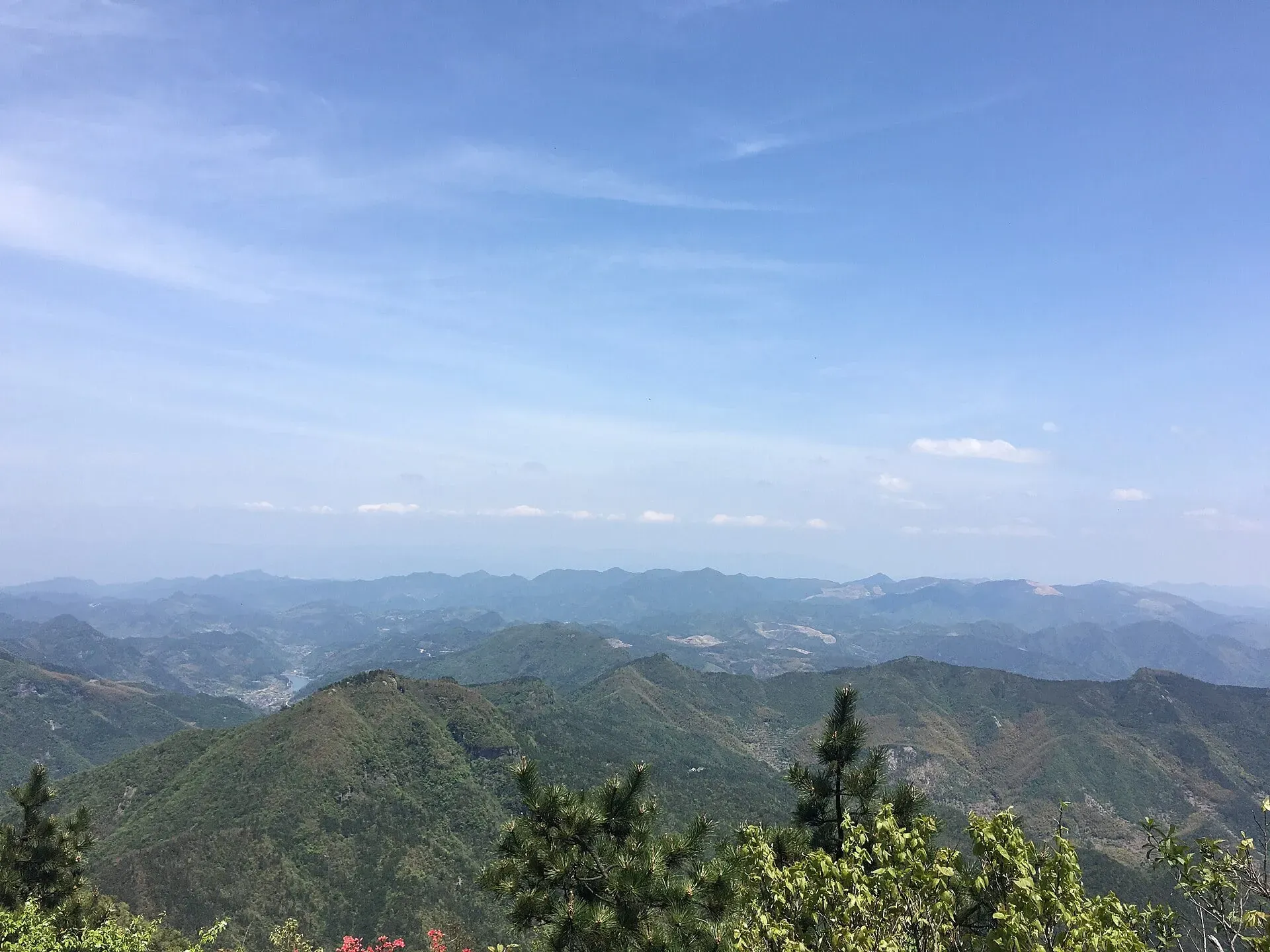
The view from Mount Tiantai, 2016.Photo: Huangdan2060 · CC0 · Wikimedia Commons

In depth · Tiantai travel

Tiantai Mountain

On May 19, 1613, Xu Xiake set out from Ninghai for Mount Tiantai — the day China now celebrates as China Tourism Day. On Huading Peak he wondered why the flowers at the top had not yet opened; at the Stone Bridge falls he walked across a natural stone bridge little more than a foot wide. Four centuries later, these are still the two places on Mount Tiantai most worth the trip.

Questions & answers

Where is Tiantai?

Tiantai is a county under Taizhou, Zhejiang, just south of Xinchang. Its high-speed station is called Tiantaishan, about an hour by train from Hangzhou East. See Getting to Tiantai.

How do you say Tiantai?

Tiāntāi — the second syllable is tāi, in the first tone, not tái as the character is usually read. The same goes for Mount Tiantai, the Tiantai school and Taizhou itself.

What is there to see in Tiantai?

Guoqing Temple, just north of town, is the founding temple of the Tiantai school, with a Sui dynasty pagoda outside its gate. Northeast, up on Mount Tiantai, are the Stone Bridge falls and Huading, the highest peak — where the Ming traveler Xu Xiake began his famous travel diaries. The Grand Waterfall, reopened in 2020, is in the Qiongtai valley, and Ji Gong’s former home is just north of town. See Guoqing Temple and Mount Tiantai.

Was Ji Gong from Tiantai?

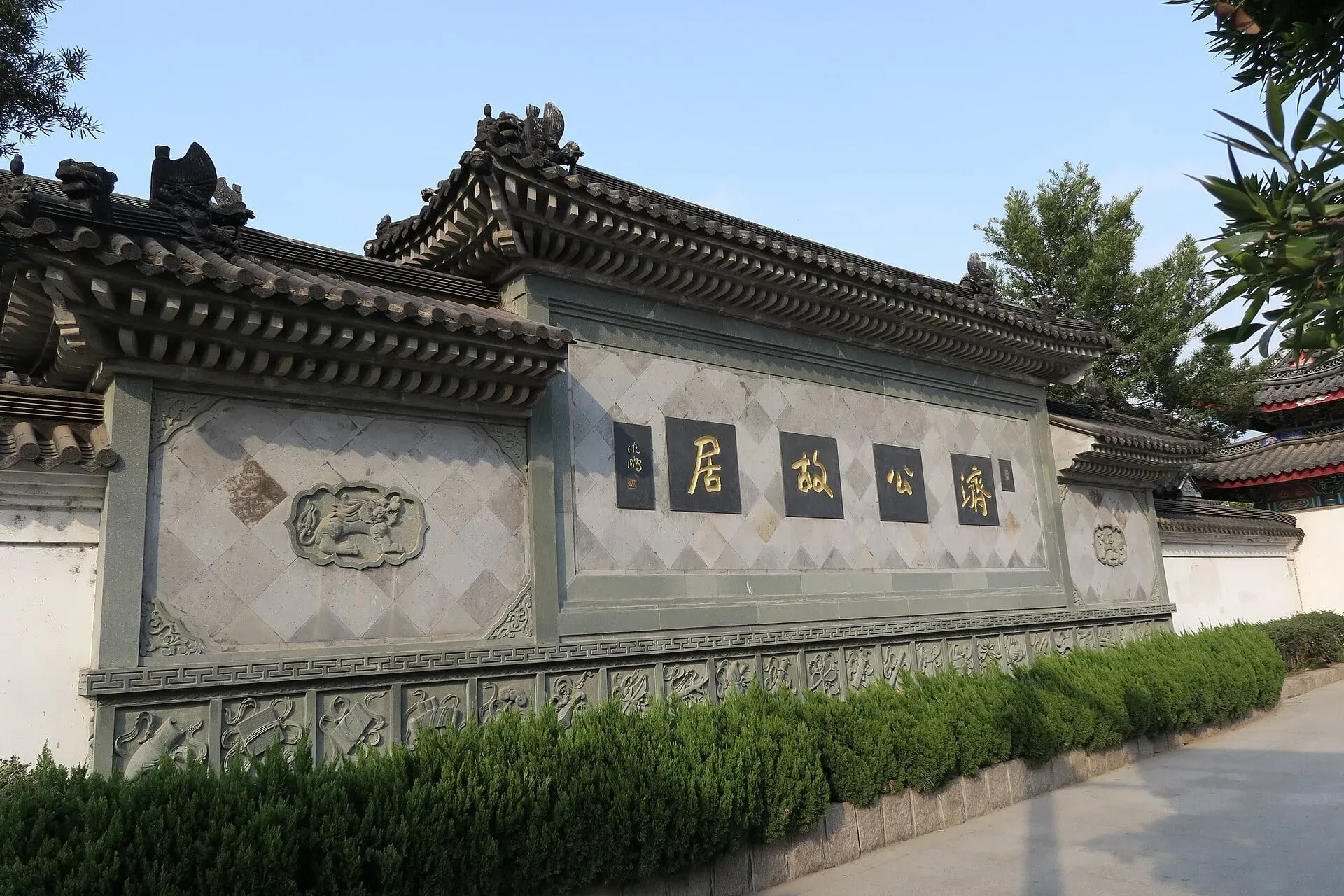
Yes. Ji Gong was the Southern Song monk Daoji, born Li Xiuyuan in Yongning Village just north of Tiantai town; he was ordained at Lingyin Temple in Hangzhou and died at Jingci Temple in 1209. See Ji Gong’s Hometown.

What should I eat in Tiantai?

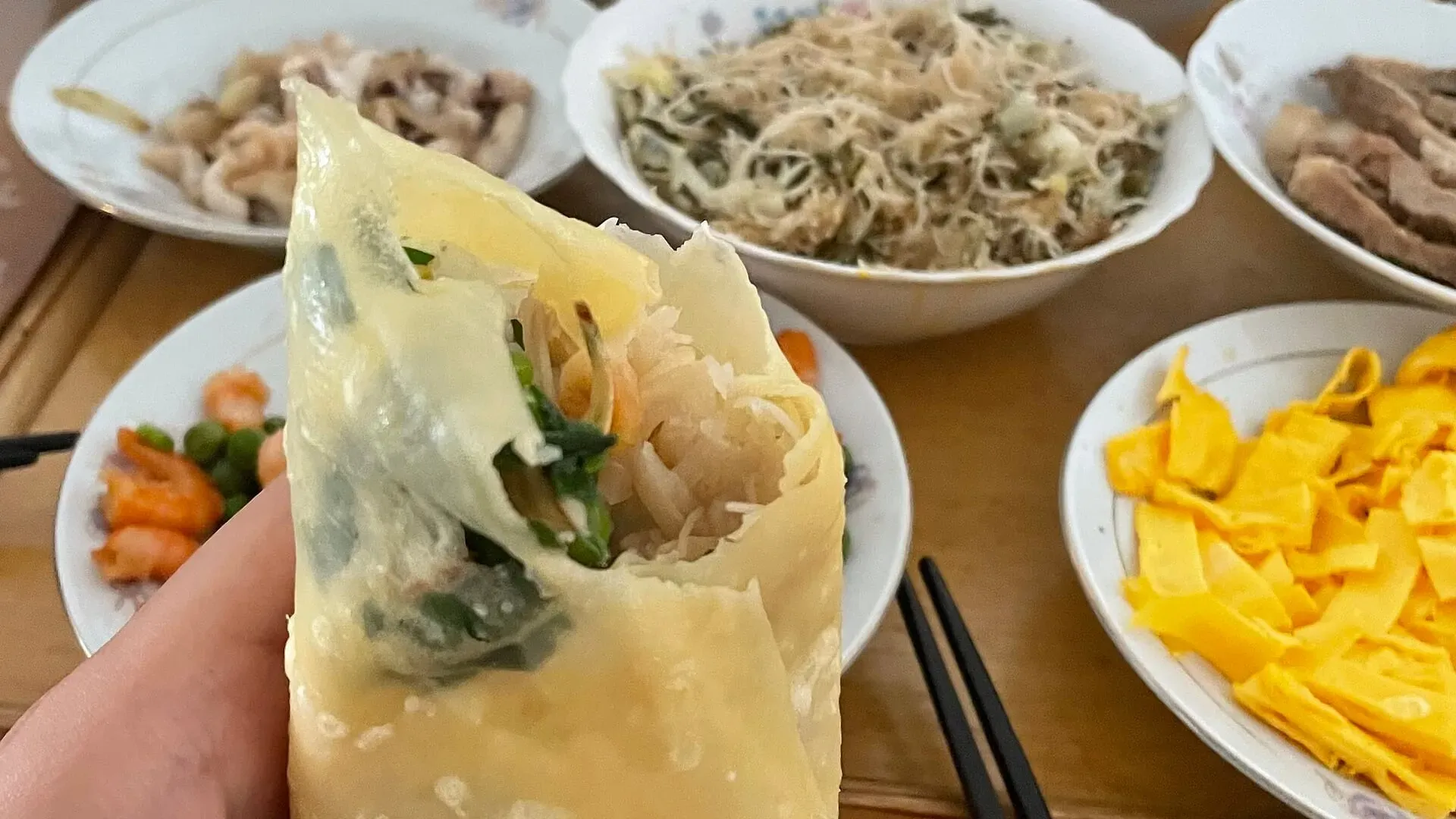
Jiaobingtong above all — a thin pancake wrapped around a dozen stir-fried fillings and rolled into a tube. With hulatai, a thin pancake cooked in a big wok, and rouwan maibing, a round stuffed wheat cake, it makes up Tiantai’s “set of three” snacks. See Jiaobingtong.

How is Tiantai connected to the Tang Poetry Road?

Mount Tiantai is where the road ends. By one count, more than 1,200 of the over 1,500 Tang poems about eastern Zhejiang are about Tiantai. See the Tang Poetry Road.