Guides to China’s small towns

Small Town China

Schematic map: high-speed lines from Hangzhou to the seven townsto Shanghai诸Zhujifrom 22 min嵊Shengzhoufrom 37 min新Xinchangfrom 37 min东Dongyangfrom 44 min (Hengdian)天Tiantaiabout 1 h临Linhaifrom 1 h 4 min仙Xianjufrom 1 h 5 min

Beyond Beijing and Shanghai lie thousands of county towns and small cities. Small Town China visits them one at a time and explains each one properly — its food, theatre, poetry and past — with sources, in English and Chinese.

In depth

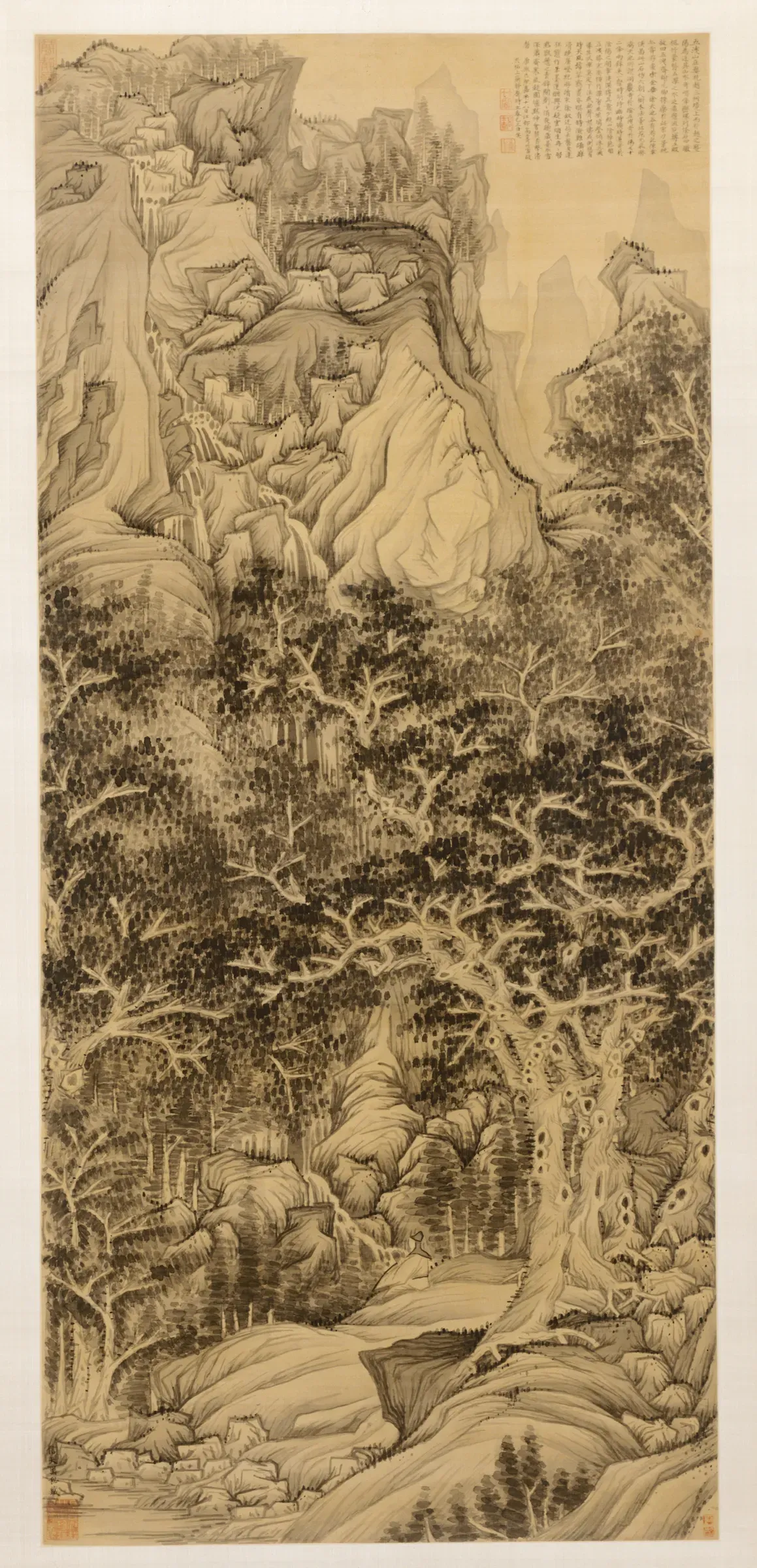
Chen Hongshou, The Mountain of Five Cataracts, about 1630: the Wuxie hills of Zhuji. The Cleveland Museum of Art.Photo: 陈洪绶 Chen Hongshou · Public domain · Wikimedia Commons

In depth · Zhuji opera & poetry

Chen Hongshou, the Old Lotus of Zhuji

Chen Hongshou (1598 or 1599–1652), called Laolian, Old Lotus, was a figure painter of the late Ming and early Qing from Zhuji, by local accounts from Fengqiao. His Nine Songs, Water Margin cards and Western Chamber were cut in wood and widely copied; after the Ming fell he was for a time a monk.
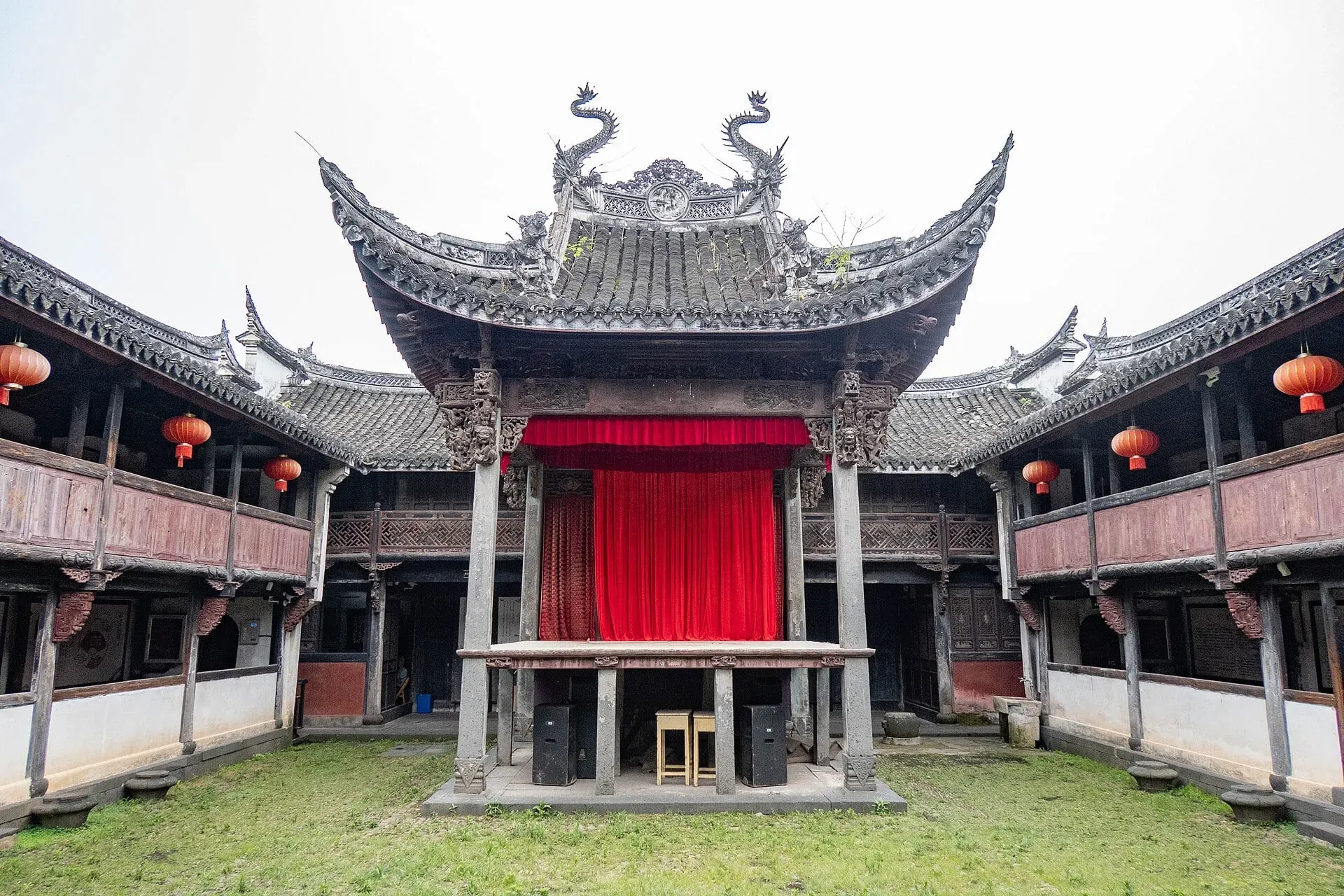
The old stage in the Yushan Ancestral Hall, flanked by two-story galleries.
Stop 01

Shengzhou

from 37 min Hangzhou East → Shengzhou-Xinchang · Hangzhou–Taizhou line

The birthplace of Yue opera, the home of xiaolongbao, and a small city on the Tang Poetry Road.

18 guides

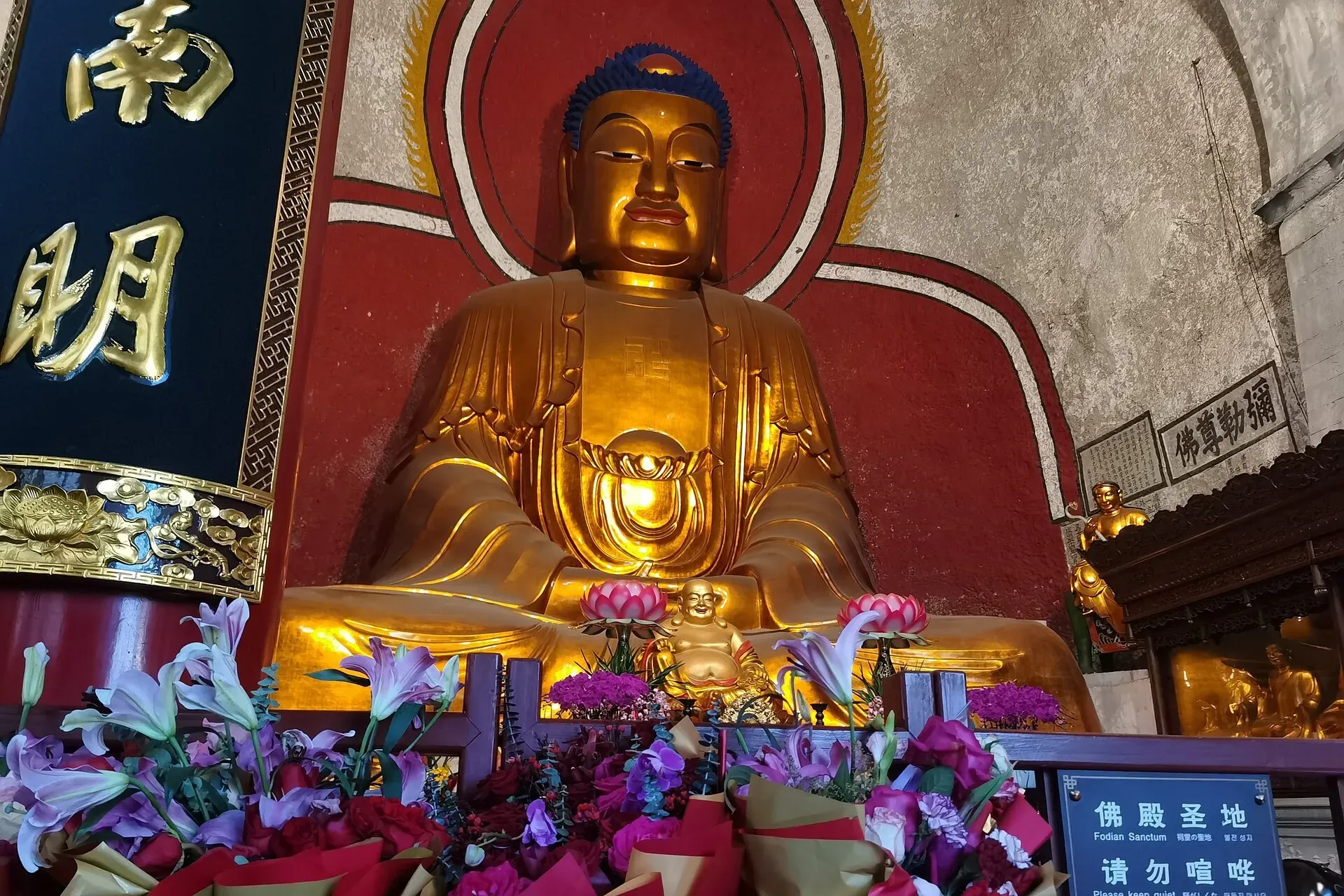
The stone Maitreya in its cave at the Great Buddha Temple, finished in 516 and 13.2 meters tall seated.
Stop 02

Xinchang

from 37 min Hangzhou East → Shengzhou-Xinchang · Hangzhou–Taizhou line

The mountain of Li Bai’s dream, a Buddha carved into a cliff, and fried rice cakes simmered in broth.

9 guides

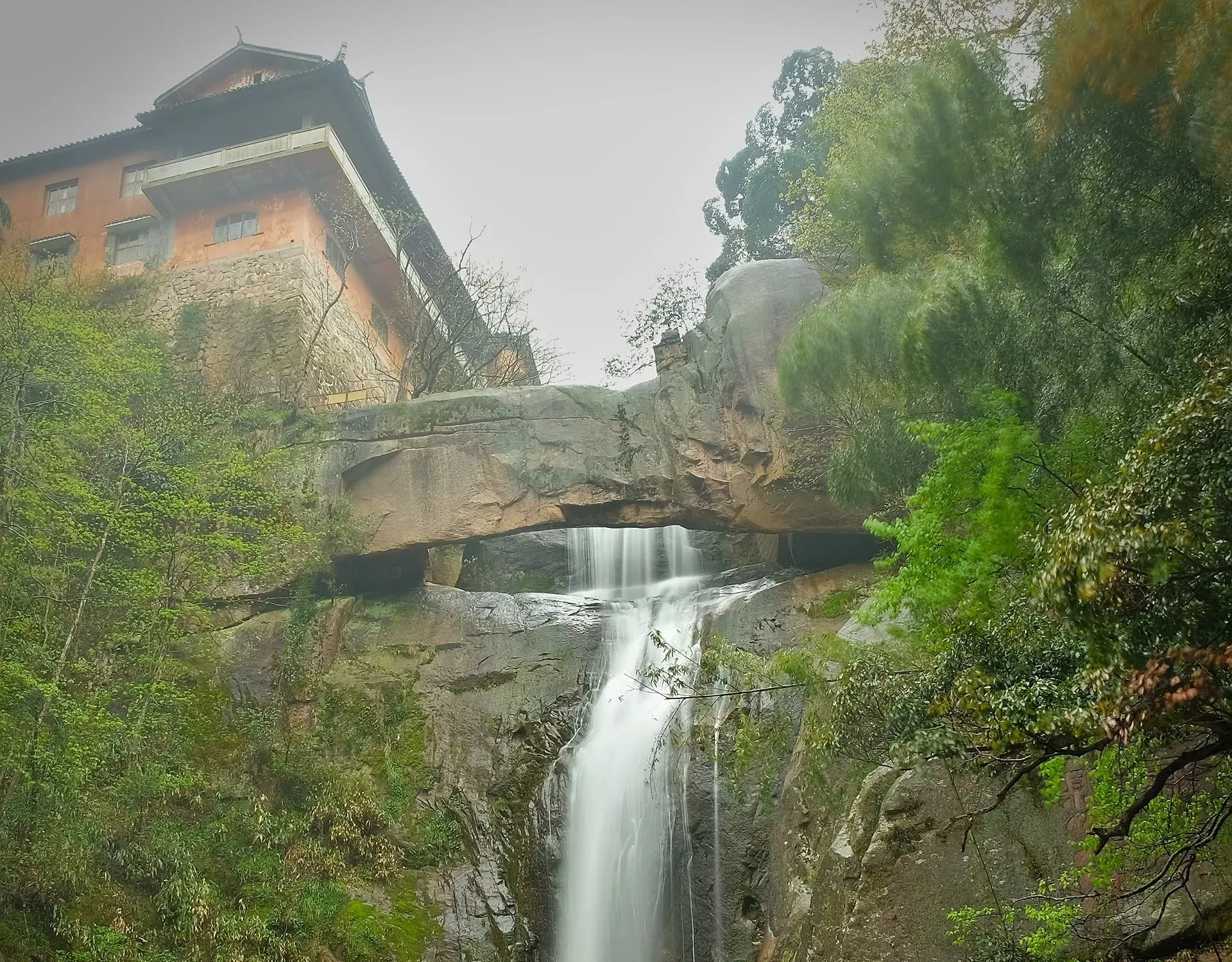
The Stone Bridge falls on Mount Tiantai: a natural granite bridge spans the top of the waterfall — the “Stone Bridge” of Meng Haoran’s poem. Taken in 2016.
Stop 03

Tiantai

about 1 h Hangzhou East → Tiantaishan · Hangzhou–Taizhou line

The end of the Tang Poetry Road: a temple from the Sui dynasty, a waterfall beneath a stone bridge, and a poet-monk who wrote his poems on the rocks.

11 guides

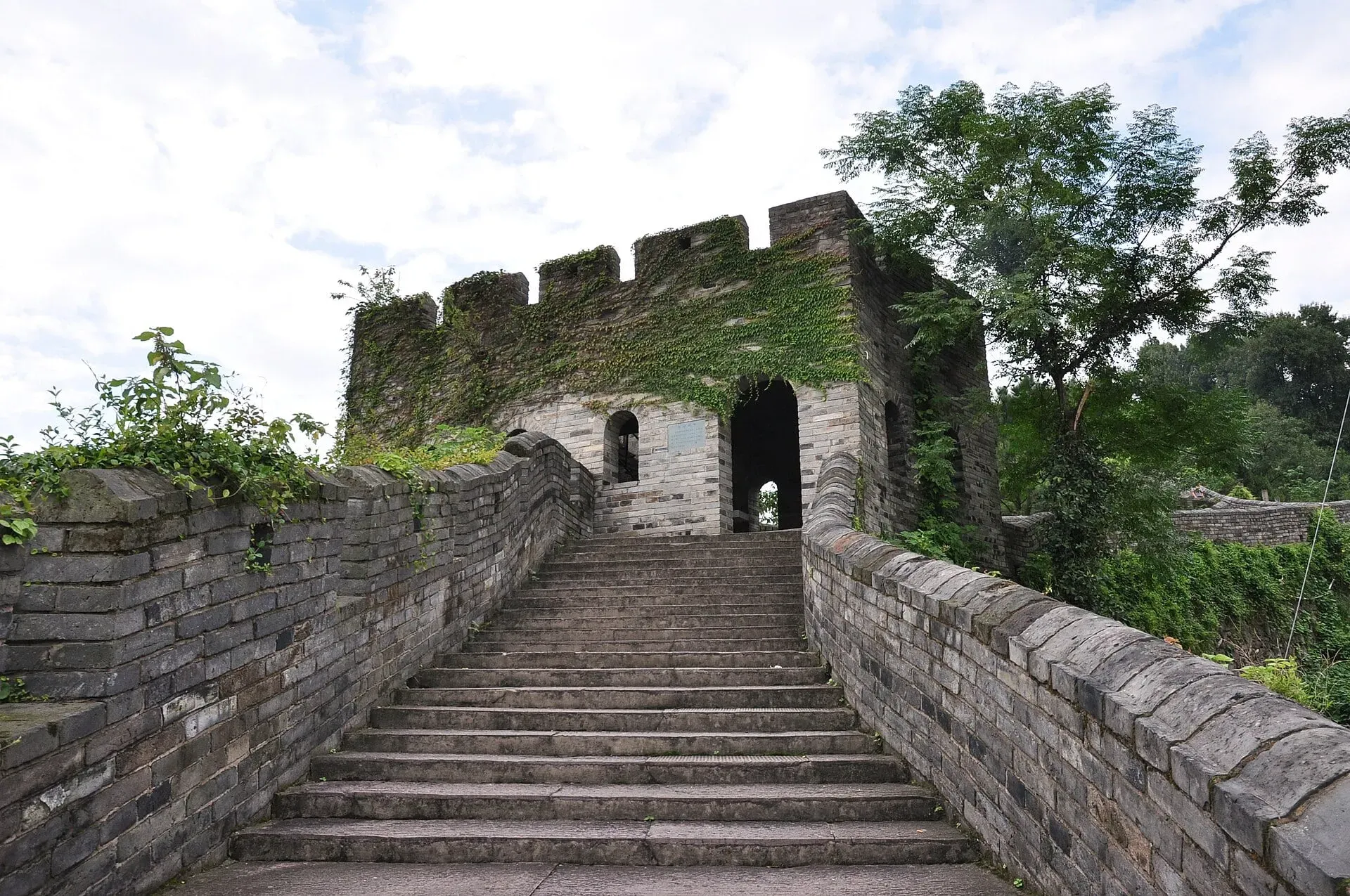
A two-story tower on the city wall, 2010.
Stop 04

Linhai

from 1 h 4 min Hangzhou East → Linhai · Hangzhou–Taizhou line

Taizhou’s capital for fourteen centuries: a city wall that climbs the hills, the old friend Du Fu never stopped missing, and a bowl of zaogeng on the fourteenth night of the new year.

9 guides

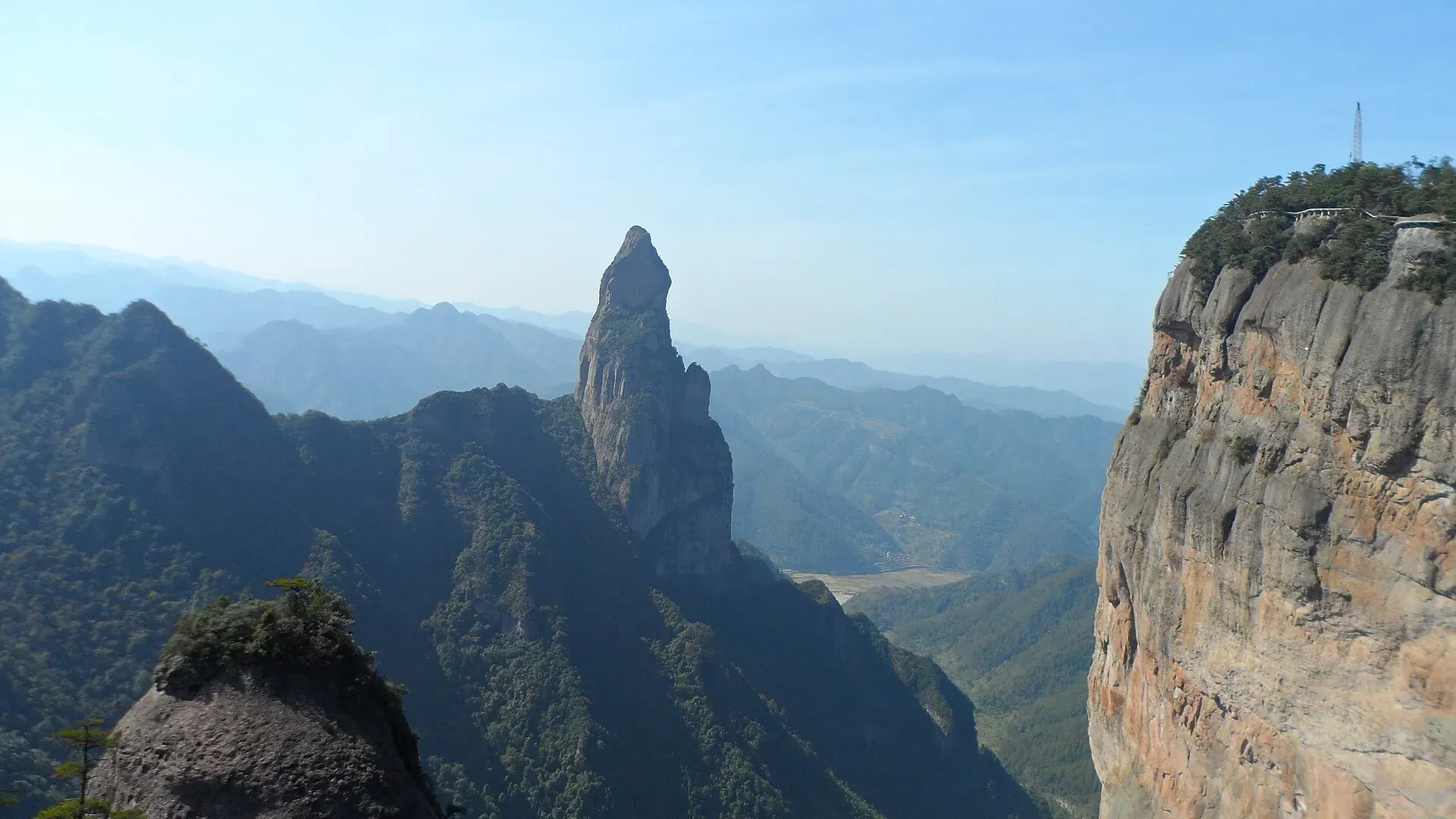
Peaks and cliffs at Shenxianju in 2019. The free-standing spire in the middle is Guanyin Peak.
Stop 05

Xianju

from 1 h 5 min Hangzhou West → Xianju · Hangzhou–Wenzhou line

The “abode of immortals,” named by a Song emperor: cliffs and spires of volcanic rock, a bridge shaped like a ruyi scepter, and hillsides of yangmei every June.

8 guides

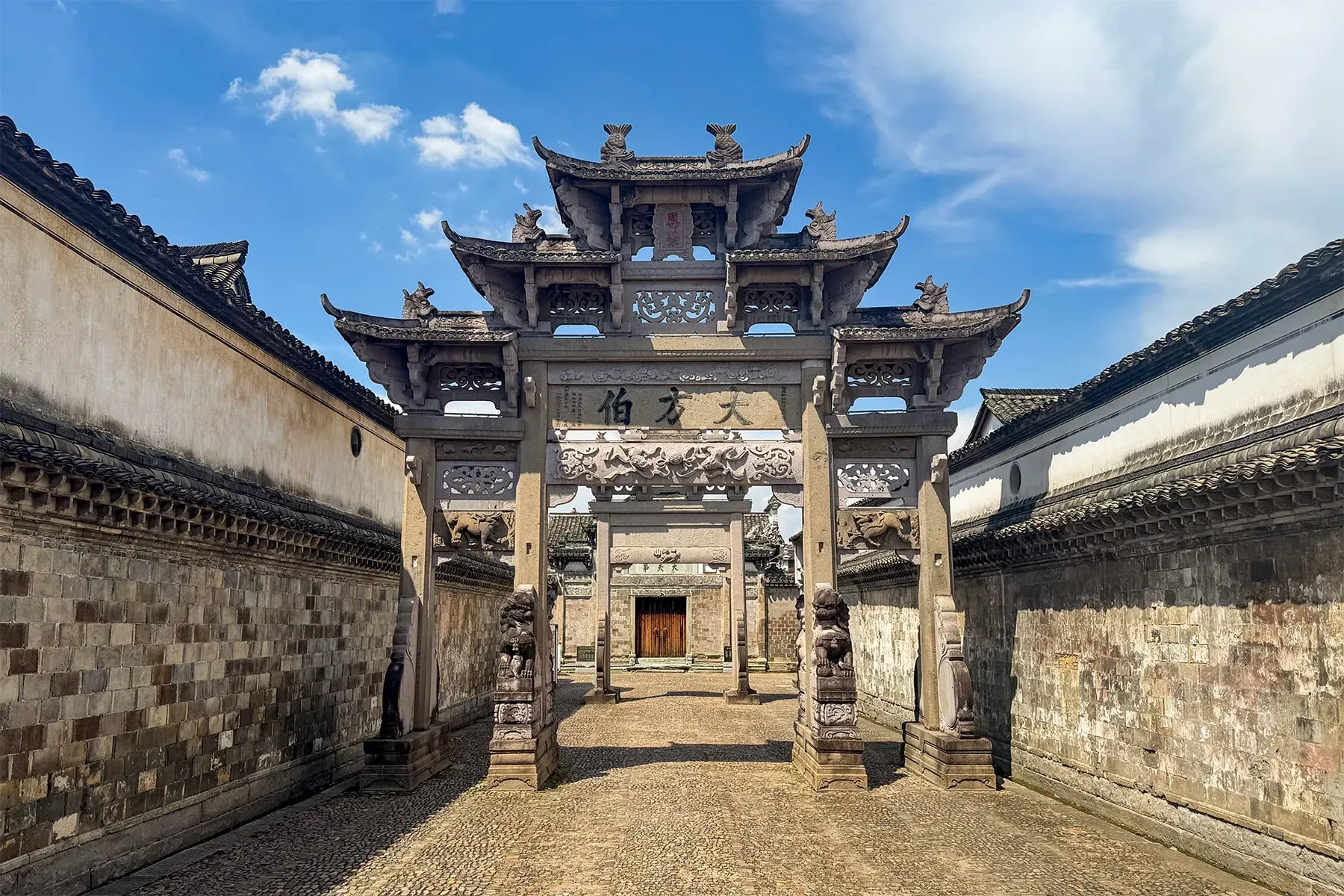
A stone memorial archway in the Lu Residence, Dongyang, 2026.
Stop 06

Dongyang

from 44 min (Hengdian) Hangzhou West → Hengdian · Hangzhou–Wenzhou line

Shengzhou’s neighbor to the southwest: the “Hollywood of the East,” where more than 1,200 films and shows have been shot; a woodcarving craft more than a thousand years old; and an egg eaten only in spring.

10 guides

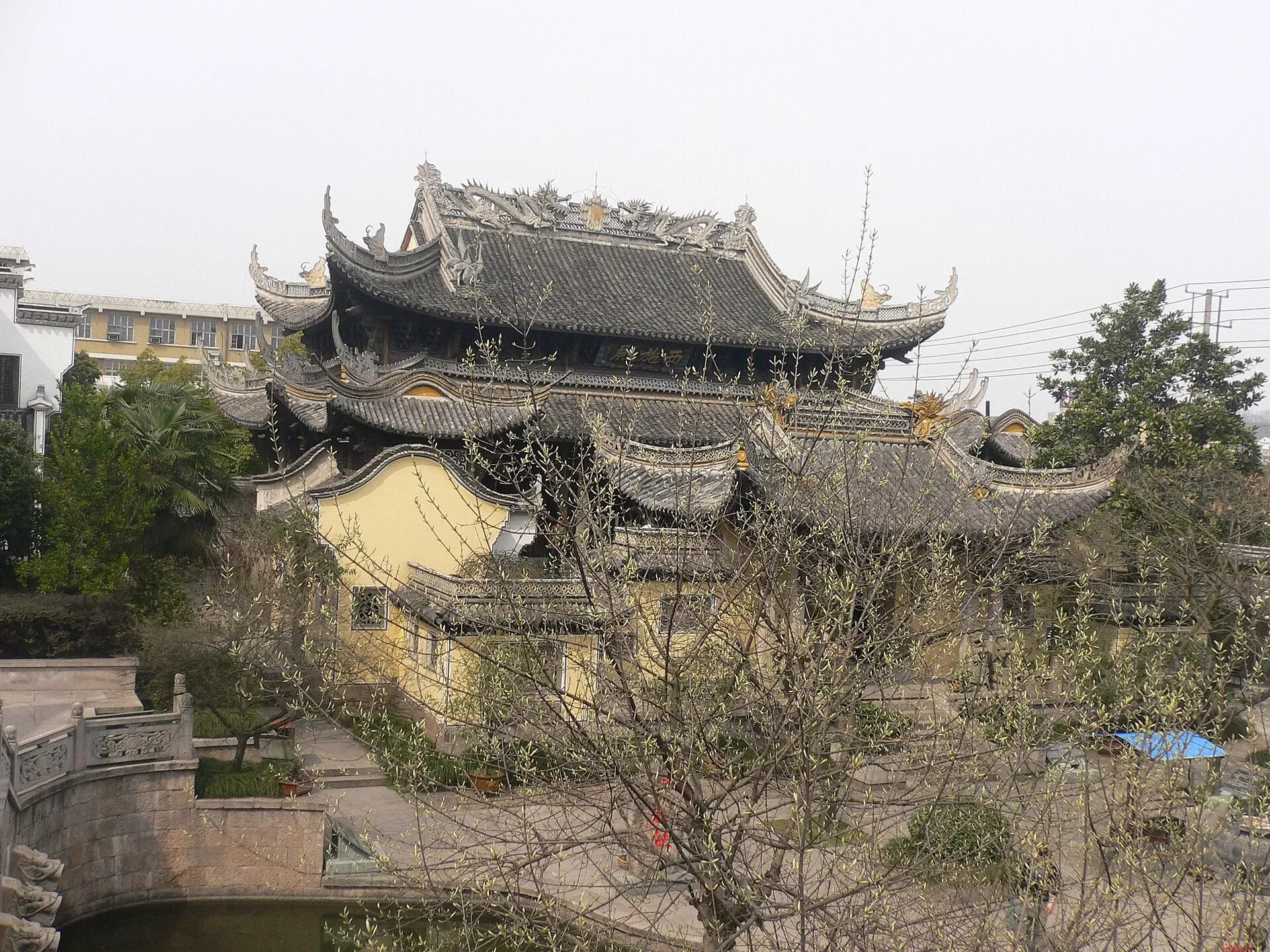
The Xi Shi Hall in Xi Shi’s Hometown, Zhuji, 2008.
Stop 07

Zhuji

from 22 min Hangzhou East → Zhuji · Shanghai–Kunming line

Shengzhou’s neighbor to the west: the hill where Xi Shi washed silk, the market for seven in ten of the world’s freshwater pearls, and torreya trees on the Kuaiji hills more than a thousand years old.

10 guides

Next stop More towns to come.

Photos: Shengzhou Siyuwj · CC BY-SA 4.0 · Wikimedia Commons; Xinchang Siyuwj · CC BY-SA 4.0 · Wikimedia Commons; Tiantai Julien Seguinot · CC BY-SA 3.0 · Wikimedia Commons; Linhai Marcus Hsu · CC BY 3.0 · Wikimedia Commons; Xianju 钉钉 · CC BY-SA 4.0 · Wikimedia Commons; Dongyang Windmemories · CC BY-SA 4.0 · Wikimedia Commons; Zhuji 江上清风1961 · CC BY 3.0 · Wikimedia Commons

In depth
History

Ma Yinchu of Shengzhou

The economist Ma Yinchu (1882–1982) was a Shengzhou man, born at Pukou in the house his father built; the family came from Shaoxing. He studied at Yale and Columbia, led Zhejiang and Peking universities and published his New Population Theory in 1957. His Pukou home is a national heritage site.

In depth
History

Saichō, Eisai and Mount Tiantai

Saichō, founder of Japanese Tendai, came to Taizhou in 804, studied under Daosui at Longxing Temple in Linhai and under Xingman at Folong on Mount Tiantai, and went home in 805 with the school’s texts. Eisai studied Rinzai Zen at Wannian Temple from 1187. What the records say and what is left.

In depth
Travel

Dramas Filmed at Hengdian

Story of Yanxi Palace, Ruyi’s Royal Love in the Palace and Empresses in the Palace were filmed in the Ming and Qing Palaces at Hengdian World Studios, The Untamed and Joy of Life at the Palace of Emperor Qin. Which drama used which park, on whose word, and what a visitor can still see.

In depth
Food

Xianju’s Eight Bowls and Street Snacks

Xianju’s Eight Bowls are its traditional banquet for guests, eight dishes each named for one of the Eight Immortals, though sources pair Immortals and dishes in two ways. On the street there are wheat cakes, shaobing, topped noodles and maci, and a thick soup on the fourteenth night of the new year.

In depth
Opera & poetry

The Butterfly Lovers and Yue Opera

One of China’s four great folk legends. Zhu Yingtai dresses as a man to go to school, loves her classmate Liang Shanbo and cannot marry him; in death they become butterflies. Six places claim the story, but the version most people know is the Yue opera’s, and Yue opera comes from Shengzhou.

In depth
Travel

The Nineteen Peaks of Chuanyan

The Nineteen Peaks of Chuanyan are Danxia cliffs of red conglomerate around Jingling, southwest Xinchang, Zhejiang, rising from the Chengtan River to 340 m. The Feilong Walkway, opened in 2016, runs 3.2 km with a glass section and a rope bridge; from Xiayanbei village you look down on the peaks.

Notes by Zheng Lao’er

All notes
  1. Prose ·

    Happy Hands, a Rich Life

    Yesterday evening I shoveled the ash from the burn the day before into a bucket and put it by for later. That ash is the sunlight of a spring and a summer, the last relics of the pumpkin vines, the loofah vines and the eggplant plants, and an old secret handed down among farmers. Then I turned the soil, buried the loofah and pumpkin vines that had been shut up in plastic buckets since last year to rot down, opened two small bags of sheep droppings, scattered them over the bare earth, mixed them in and covered them with soil. That is base fertilizer enough, and rich. It’s true: the moment the loosening and feeding was done, the smell of the earth held the essence of the rotted loofah and pumpkin vines, mixed with the faint grassy scent of the sheep droppings — the plainest fragrance in my balcony paradise.

    Read
  2. Prose ·

    Wildfire on the Balcony

    Yesterday I cut down the pumpkin vines and burned off the plot. My old mother saw it and praised me: “Such a big heap of ash!” Then she swept a dustpan of rubbish off the front balcony and piled it on top, and the tangerine peel that had already dried in the sun toasted in the fire until the whole balcony smelled of its scorched sweetness. Farming people are plain and unpretentious. Rabbit droppings, sheep droppings, chicken droppings, plant ash — to them these are all good things. When they look at them, what they see is row upon row of melons and vegetables, green and glossy and full of juice. They have dealt with the land all their lives; they know what is good, and what tastes true. It is a simple kind of joy, and like the crops that grow out of the soil, it has roots and rootlets, and it grows into the bone.

    Read