Places to Visit
Dongyang beyond the film sets: the Ming and Qing Lu Residence, carved halls in Baitan and Mashangqiao, and Huayuan, a village that built its own sights.
Most people who have heard of Dongyang know it for Hengdian World Studios. Yet in and around the city there are real old houses too: family compounds built up over the Ming and Qing, halls covered in carving, and a village that built its own attractions from scratch. Dongyang is famous for its wood carving, and these houses are where you can see it in the places it was made for. Here is what is worth the trip beyond Hengdian.
The Lu Residence
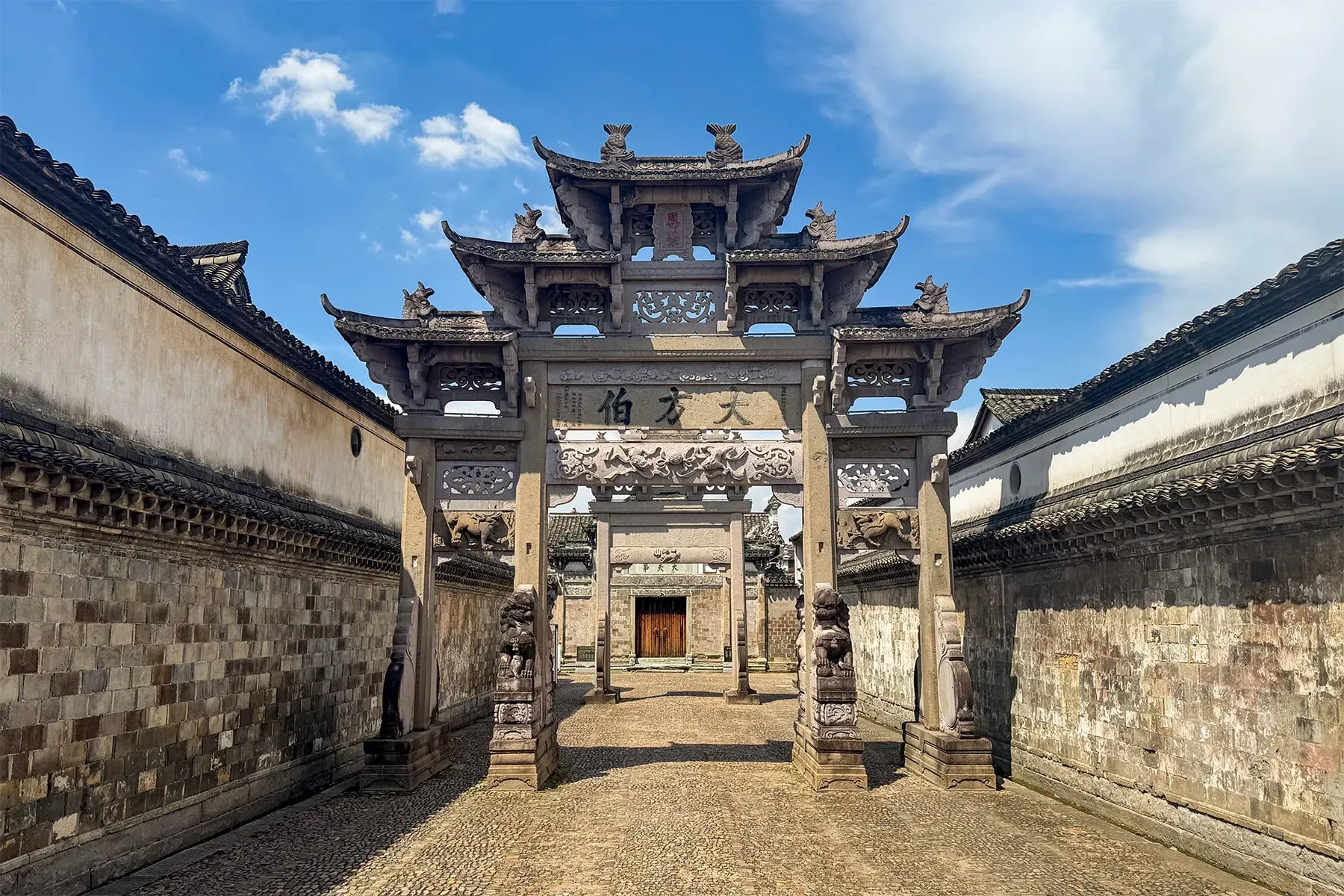
The Lu Residence, in Luzhai Village on the eastern edge of Dongyang, is the Ming and Qing compound of the Lu family. According to China Daily’s Chinese site in 2025, the family had lived here together since the Song; from 1421, when Lu Rui passed the highest imperial examination, until the middle of the Qing, its sons kept passing the exams, and one grand house after another went up. In 1988 the State Council listed the Lu Residence as a national Major Historical and Cultural Site.
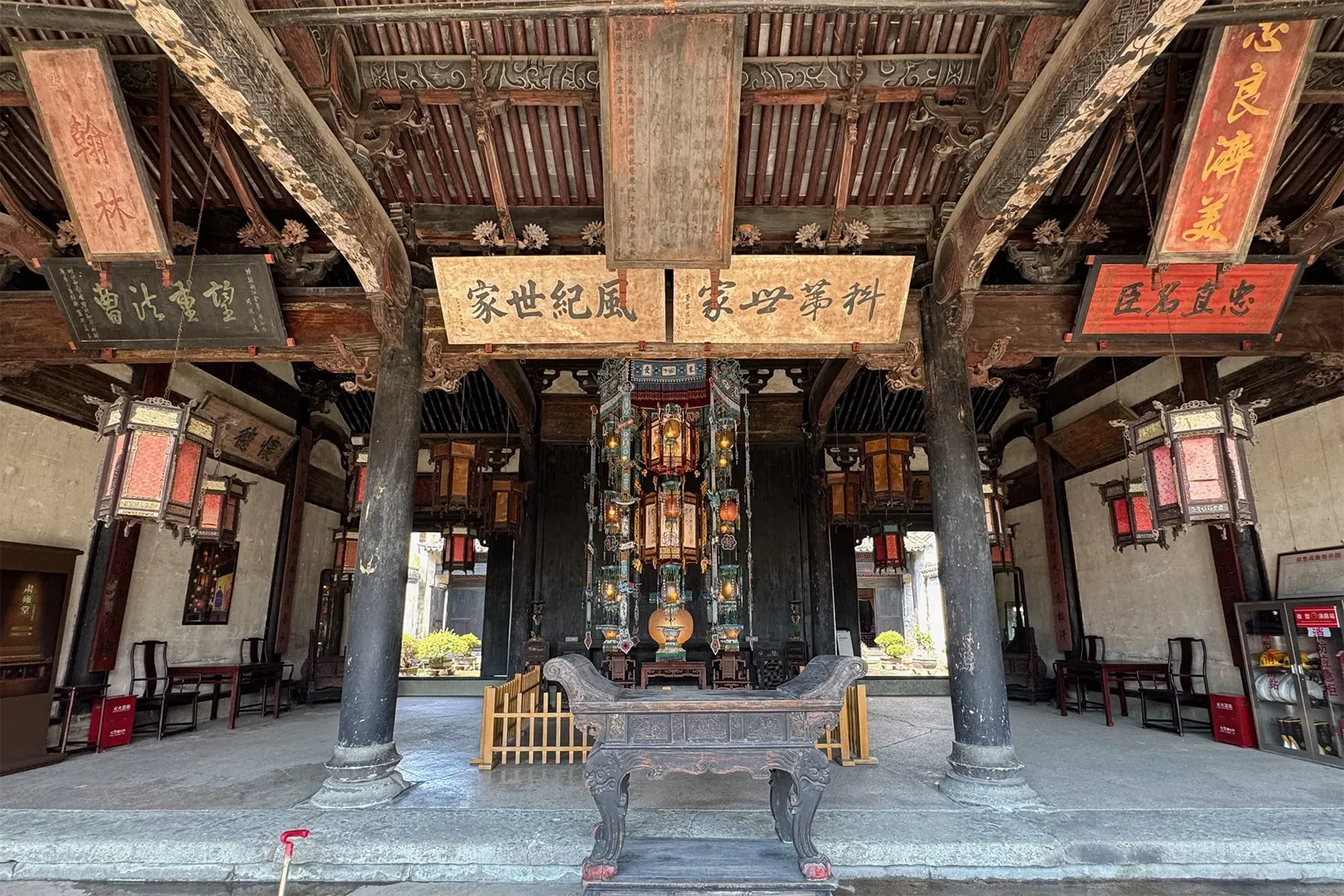
The same report says the compound’s showpiece is the Suyong Hall, ringed by the Yaxi stream. Its buildings run 320 meters from front to back, laid out in a sequence much like Beijing’s Forbidden City; the Lu Residence is also called the “people’s Forbidden City.” Brackets, beams, corbels, doors and windows are carved everywhere, and the great lantern in the Suyong Hall is 4.05 meters tall, strung from 400,000 glass beads. For the family’s history and the carving, see Dongyang Wood Carving and the Lu Residence.
The Lu Residence is only three or four kilometers from the center of Dongyang, about 9 km from Hengdian high-speed station and about 8 km from Dongyang North station — roughly ten minutes by taxi from either. There are many courtyards and the lanes wind, so allow half a day. Check tickets and opening hours locally.
Baitan village: the Fuyu and Wuben halls
Baitan is a village in Weishan Town, east of the city of Dongyang. According to the Dongyang Daily in 2019, it is more than six hundred years old, keeps more than forty buildings from the Ming, the Qing and the early Republic, and was named one of China’s traditional villages, a national designation, in 2016. The largest and finest are two family halls, the Fuyu and the Wuben, which were listed together in 2019 as a national Major Historical and Cultural Site, the Baitan residences.
The same report says the Fuyu Hall was built between the Jiaqing and Xianfeng reigns of the Qing (roughly 1796 to 1861): four family wings on two axes, in a triangular plan with six courtyards, over more than 10,000 square meters. The Wuben group was built from the Jiaqing years to the early Republic, with the Wuben Hall itself in the middle and the Juzhuang and Sanli halls on either side, all linked by narrow lanes. Both are full of Dongyang wood carving, along with stone carving and wall paintings, and the Fuyu Hall has brick carving too. Since 2017, red lanterns have been hung in the old halls every Spring Festival.
Baitan is about 23 km from central Dongyang and about 21 km from Dongyang North station, around twenty minutes by car. An hour or two is enough for the two halls; they are village houses, so ask locally whether they are open.
The Mashangqiao Flower Hall
In Mashangqiao Village, Huxi Town, stands the Flower Hall, also called the Yijing Hall. China’s intangible heritage website, describing Dongyang carving, names it alongside the Suyong Hall of the Lu Residence and the Wuben Hall of Baitan among the old buildings that survive from the Ming and Qing. According to Zhejiang’s provincial cultural relics bureau, it was built between 1820 and 1830 as the home of a wealthy local merchant, with carving throughout; Wikipedia adds that it has four courtyards one behind another. In 2013 it was listed as a national Major Historical and Cultural Site.
Huxi lies east of Hengdian station, about 15 km away by car. We have found no opening hours for the hall, so ask locally before you go.
Huayuan village
Huayuan, in Nanma Town, is a different kind of sight. According to The Paper in 2026, it was once a small hill village in central Zhejiang — “a village called Garden where no flowers grow,” with no famous scenery and no long village heritage to speak of — and nearly all of what visitors see today was built later. It was the first single village in Zhejiang to become a national 4A scenic area, and it receives close to ten thousand visitors a day.
At its center, Jixiang Lake was once a small reservoir and now has a musical fountain and films projected on a water screen. The village also has the China Rural Museum and the Huayuan rosewood furniture mall, nearly 500,000 square meters with more than 2,300 brands. Nanma lies south of the city and west of Hengdian, about 15 km by car from Hengdian station. Allow half a day for the village and the furniture mall.
And Hengdian, of course
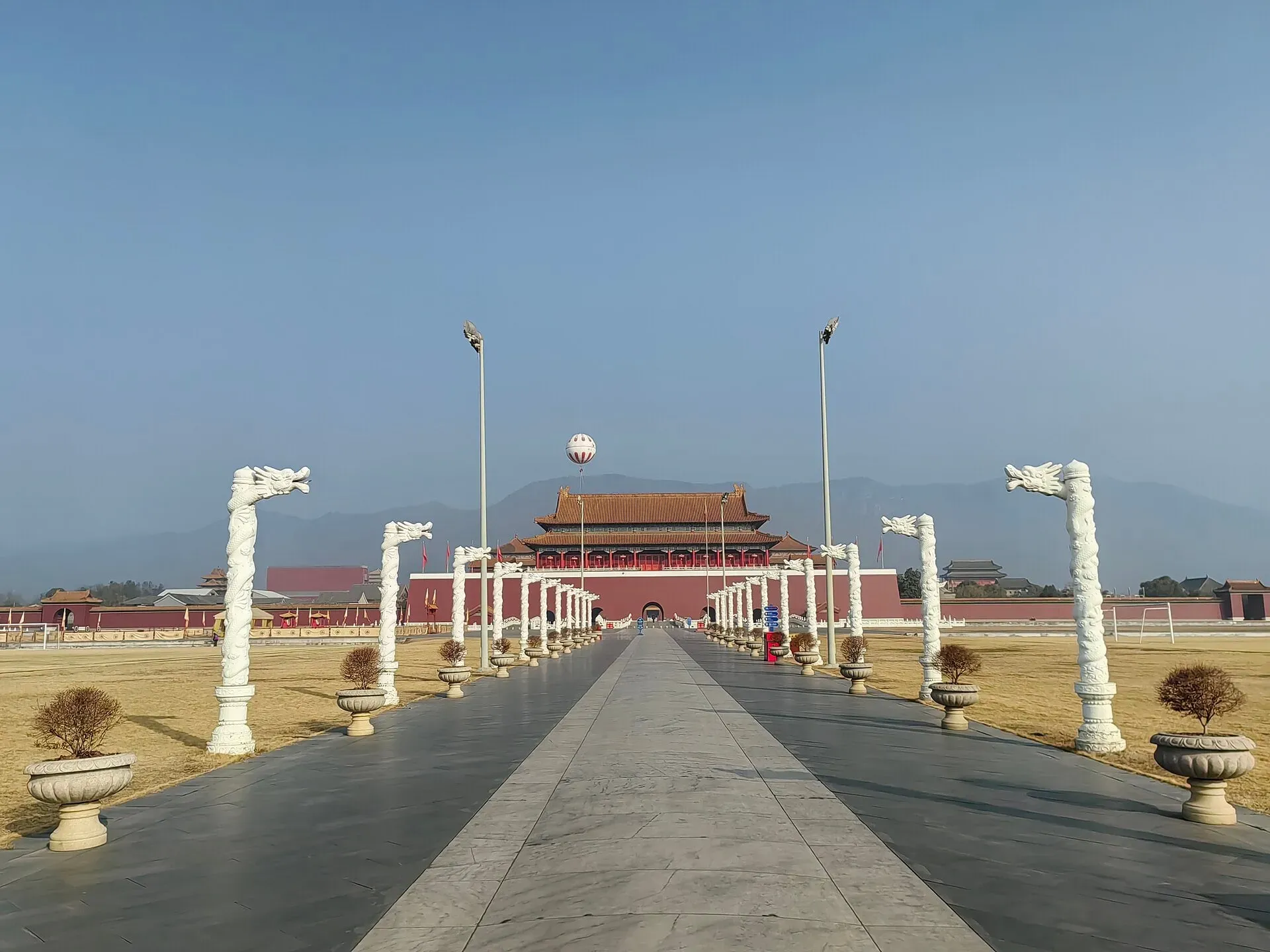
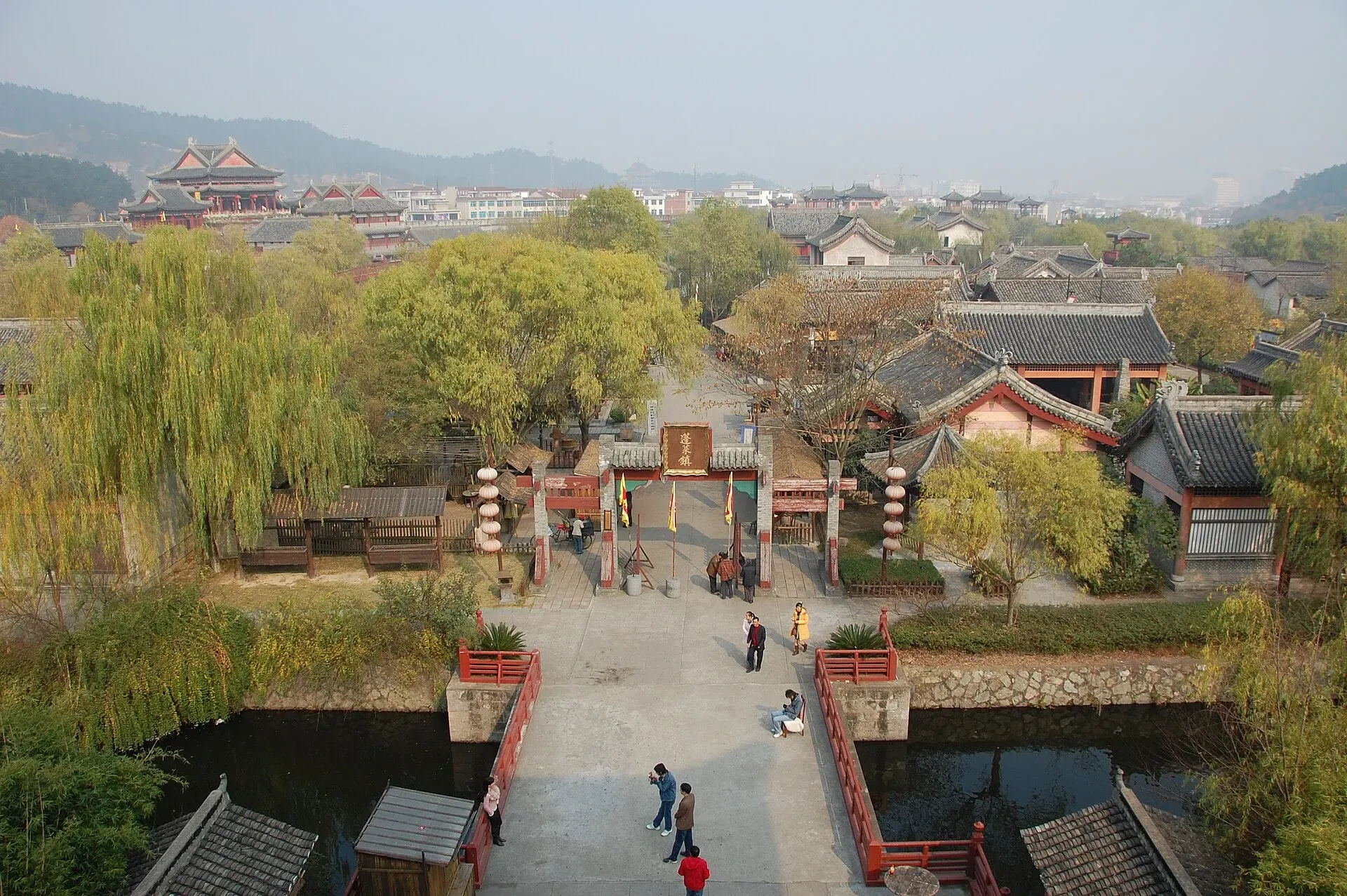
Hengdian World Studios, in the south of Dongyang, deserves time of its own: its areas, among them the Palace of Emperor Qin, the Ming and Qing Palaces and the Riverside Scene at Qingming, are spread around the town, and the studios say it takes three days to see them all. More in Hengdian World Studios.
A bowl of aomian
When you need a break, try a bowl of Dongyang aomian, a thick noodle soup of “ten toppings in one bowl”; come in early spring and you will also see stalls selling virgin boy eggs. More in Virgin Boy Eggs and Dongyang Aomian; for Dongyang’s ham, see Jinhua Ham and Dongyang.
Getting around
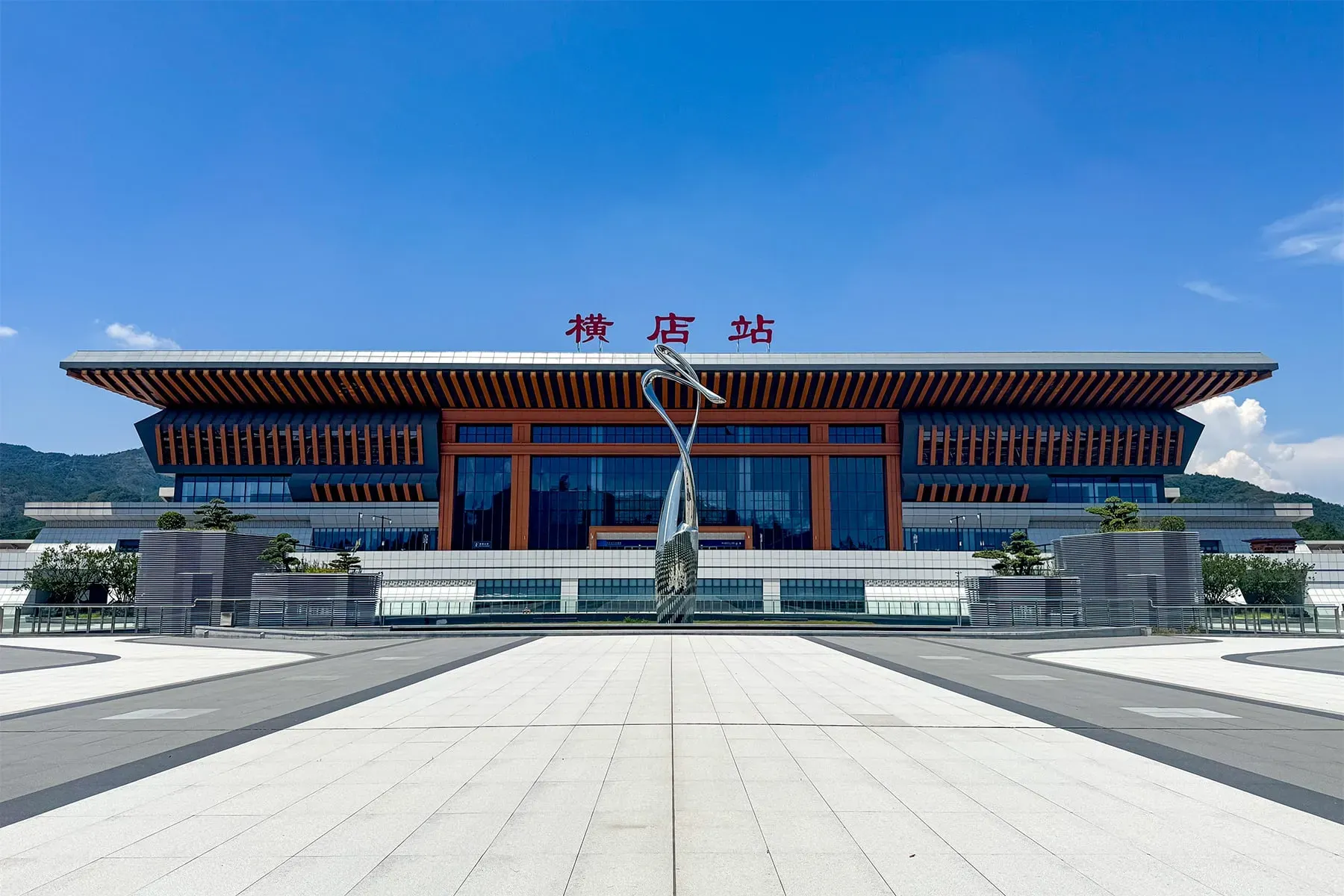
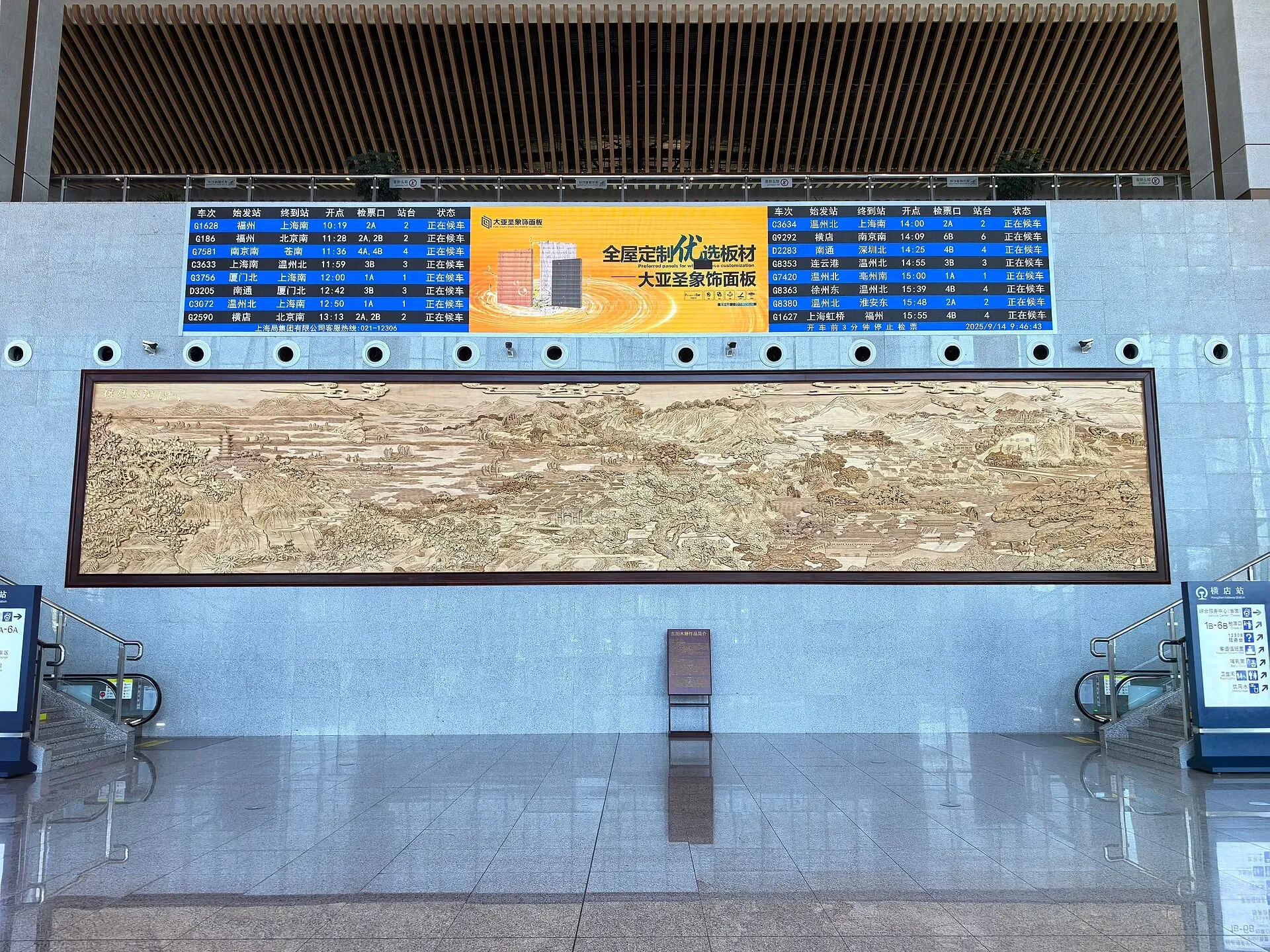
Dongyang’s high-speed station is called Hengdian. It is on the Hangzhou–Wenzhou line, between the city and the town of Hengdian, 47 minutes from Hangzhou West at the fastest, and north of the city is Dongyang North station on the Ningbo–Jinhua railway. The places above are some distance apart, so a taxi from the station is easiest; for Weishan, Huxi and Nanma, hiring a car for the day or driving yourself saves time. See Getting to Dongyang and Hengdian. For a day trip from Hangzhou, see Day Trips from Hangzhou by High-Speed Train.
More photos
All photos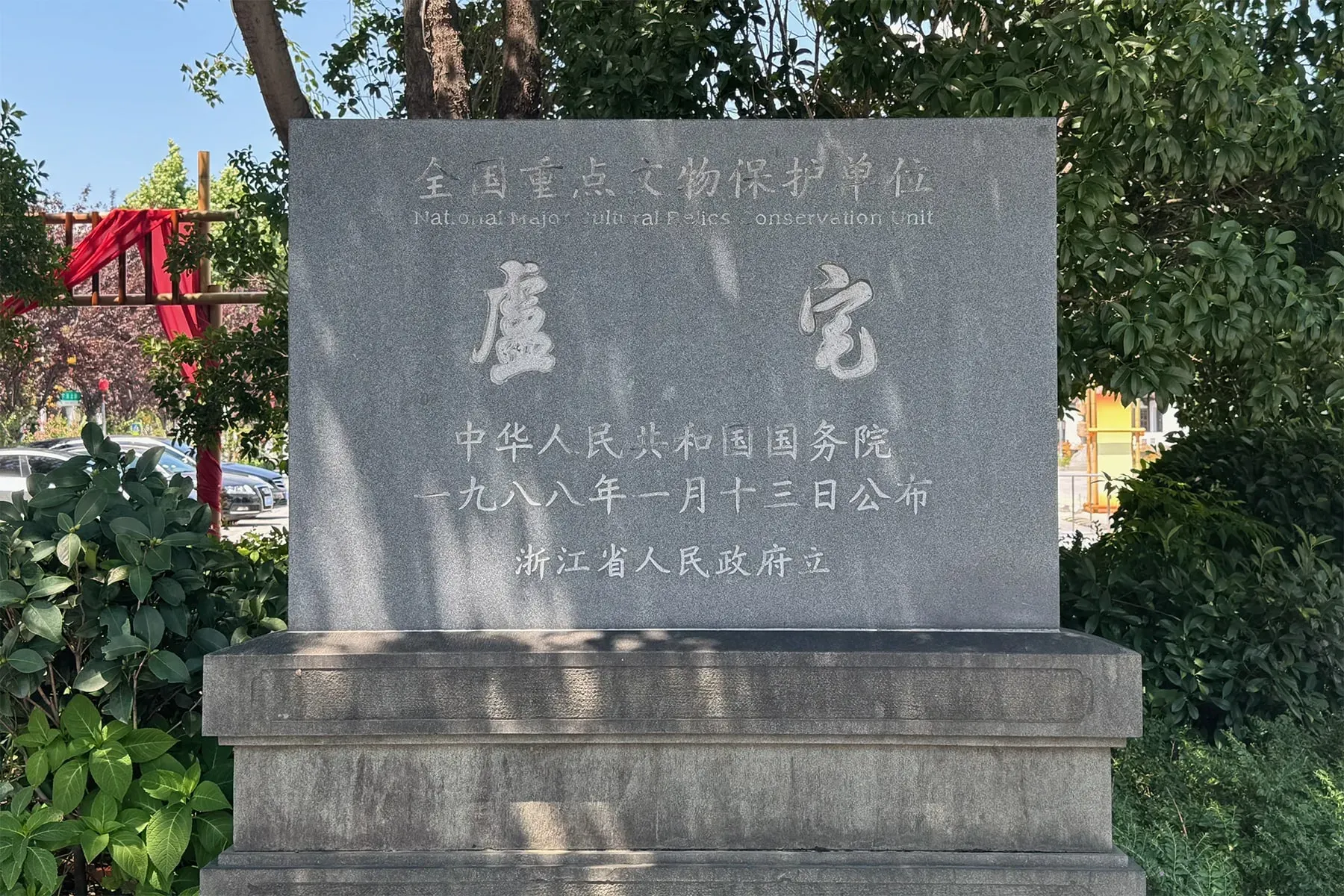
Sources
- 车程是按 OpenStreetMap 路网估算的开车时间。
- 金华东阳卢宅景区成为游客打卡地 · 中国日报网,2025 年 10 月 15 日
- 东阳卢宅 · 维基百科
- 白坦有两座“国保”民宅 · 东阳日报,2019 年 11 月 5 日
- 国务院关于核定并公布第八批全国重点文物保护单位的通知 · 中国政府网,2019 年 10 月 7 日
- 国务院核定公布第七批全国重点文物保护单位(附名单)· 国家文物局,2013 年 5 月 3 日
- 东阳木雕 · 中国非物质文化遗产网(国家级名录,项目编号 Ⅶ-43)
- 马上桥花厅 · 维基百科
- 东阳·马上桥花厅 · 浙江省文物局(2006 年,网页存档)
- “零旅游资源”起步的浙江东阳花园村,为何每年能吸引数百万游客 · 澎湃新闻,2026 年 5 月 14 日