Dongyang Wine
Dongyang wine is the Jinhua wine of the old books, brewed from glutinous rice with a smartweed starter and red yeast rice. Li Shizhen’s Compendium of Materia Medica says that “Dongyang wine is Jinhua wine,” good to drink and good in medicine, and in the Southern Song a Dongyang man, Lü Ziyi, sent his wine to the poet Lu You, who wrote a poem about it. The craft has been on China’s national intangible heritage list since 2008, and its national master, Lü Minxiang, is from Dongyang.
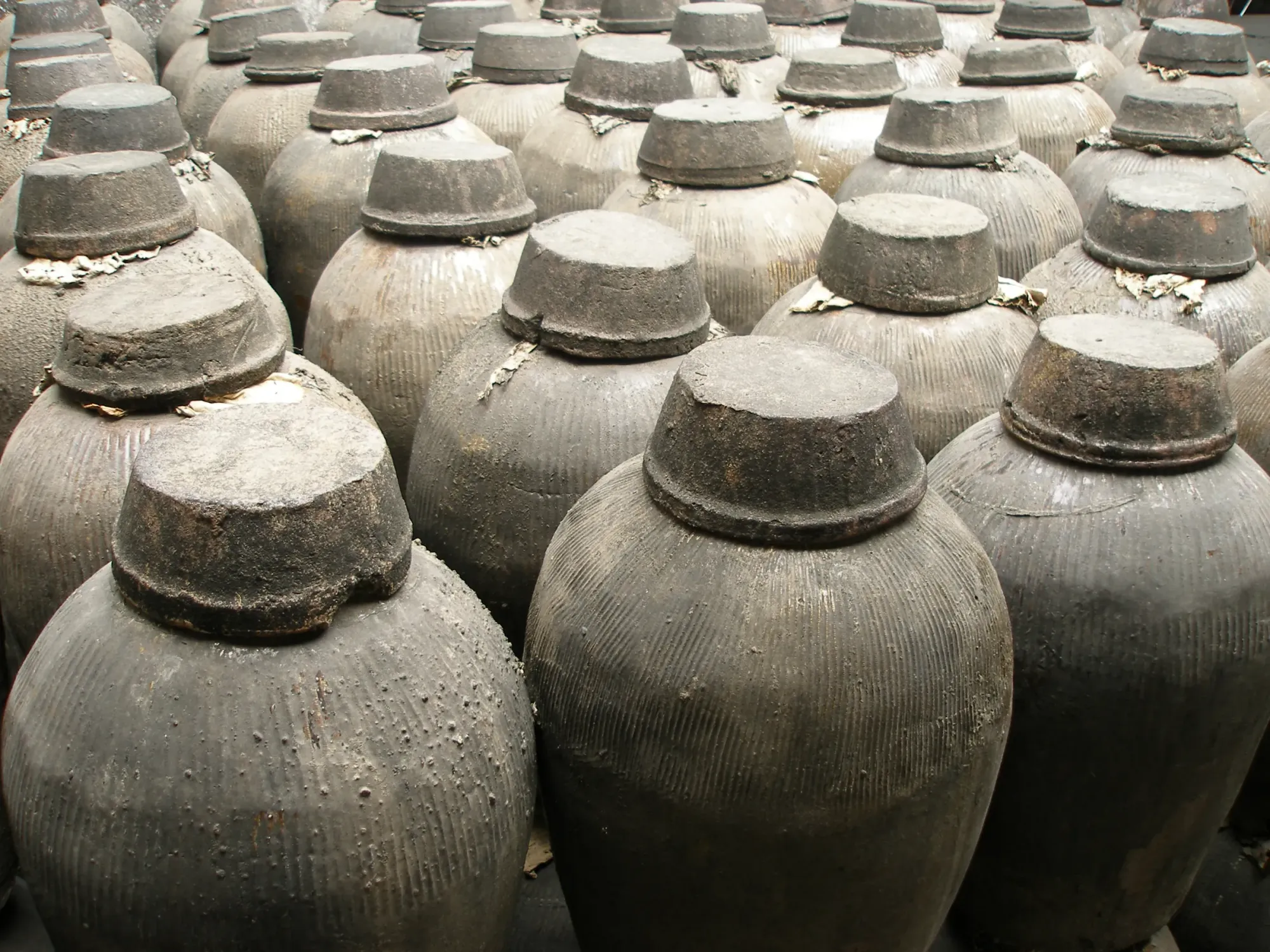
Dongyang is known for its wood carving, and for its wine. More than four hundred years ago, Li Shizhen wrote in his Compendium of Materia Medica that “Dongyang wine is Jinhua wine” — a wine of glutinous rice that, in his view, was good both to drink and to use in medicine.
Dongyang wine in the old books
Under its entry on wine, the Compendium quotes the physician Wang Ying: “For medicine, Dongyang wine is best; its fame goes back to antiquity.” Its starter, he explains, is made of bran flour mixed with the juice of smartweed, whose pungency drives the brew; the wine smells sweet from afar and is golden in color, and even drunk to excess it gives no headache and no dry mouth. Dongyang’s water, he adds, weighs heavier than other water, and the wine of the neighboring counties cannot match it — “all thanks to the goodness of the land and water.”
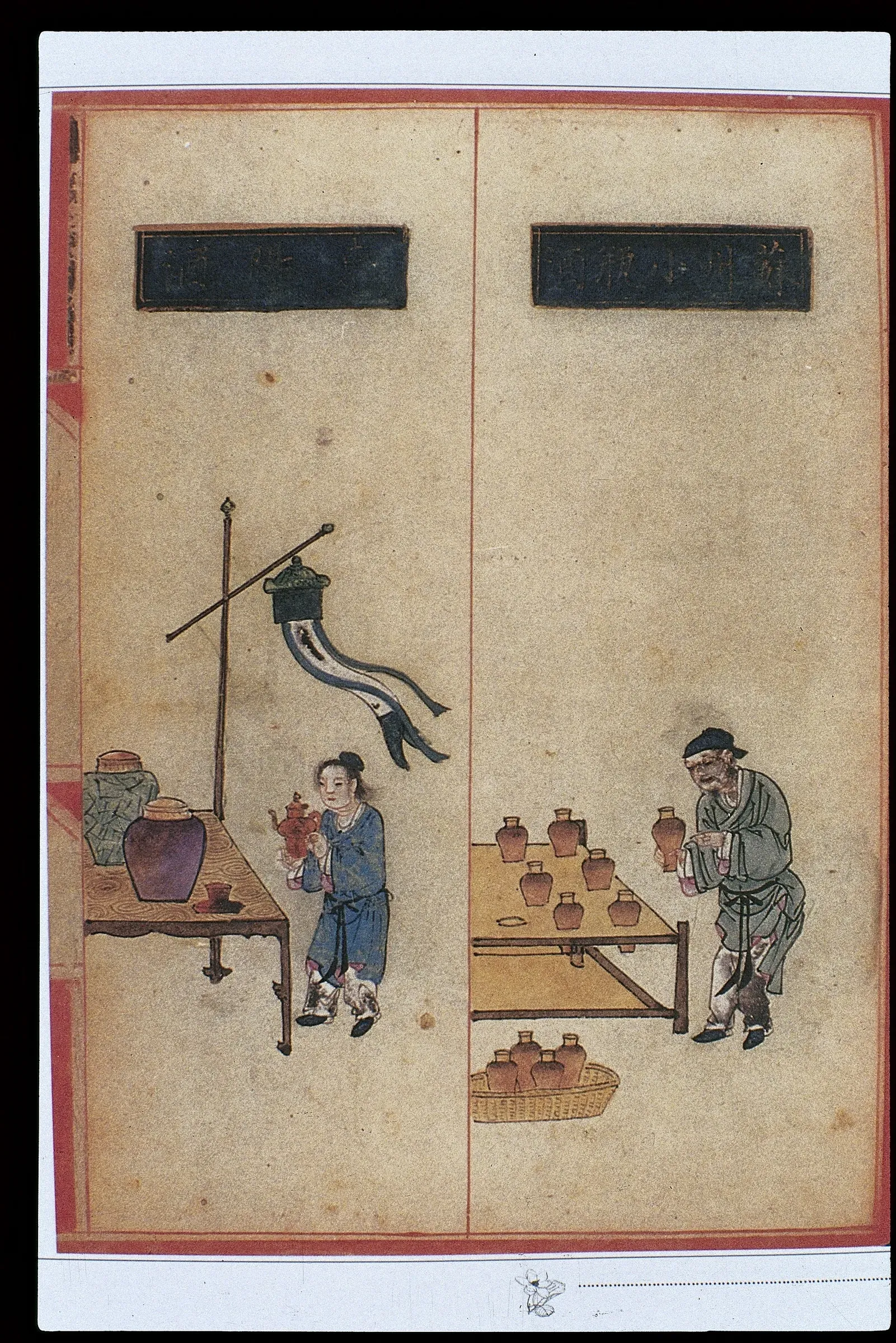
Li Shizhen goes further in his own note. Dongyang wine is Jinhua wine, he writes, and it is the Lanling wine of old, so that Li Bai’s famous line about “the fine wine of Lanling, fragrant as turmeric” is about this very wine. The Compendium gives Dongyang wine an entry of its own, too: “sweet and pungent, not toxic,” and good for preparing other medicines.
A smartweed starter and red yeast rice
According to China’s intangible heritage website, Jinhua wine is one of China’s historic wines. Around Jinhua, it says, people were already brewing a “white mash wine” from glutinous rice and a smartweed starter in the Spring and Autumn and Warring States periods, and from the Tang and Song onward Jinhua wine ranked among the famous wines of the country.
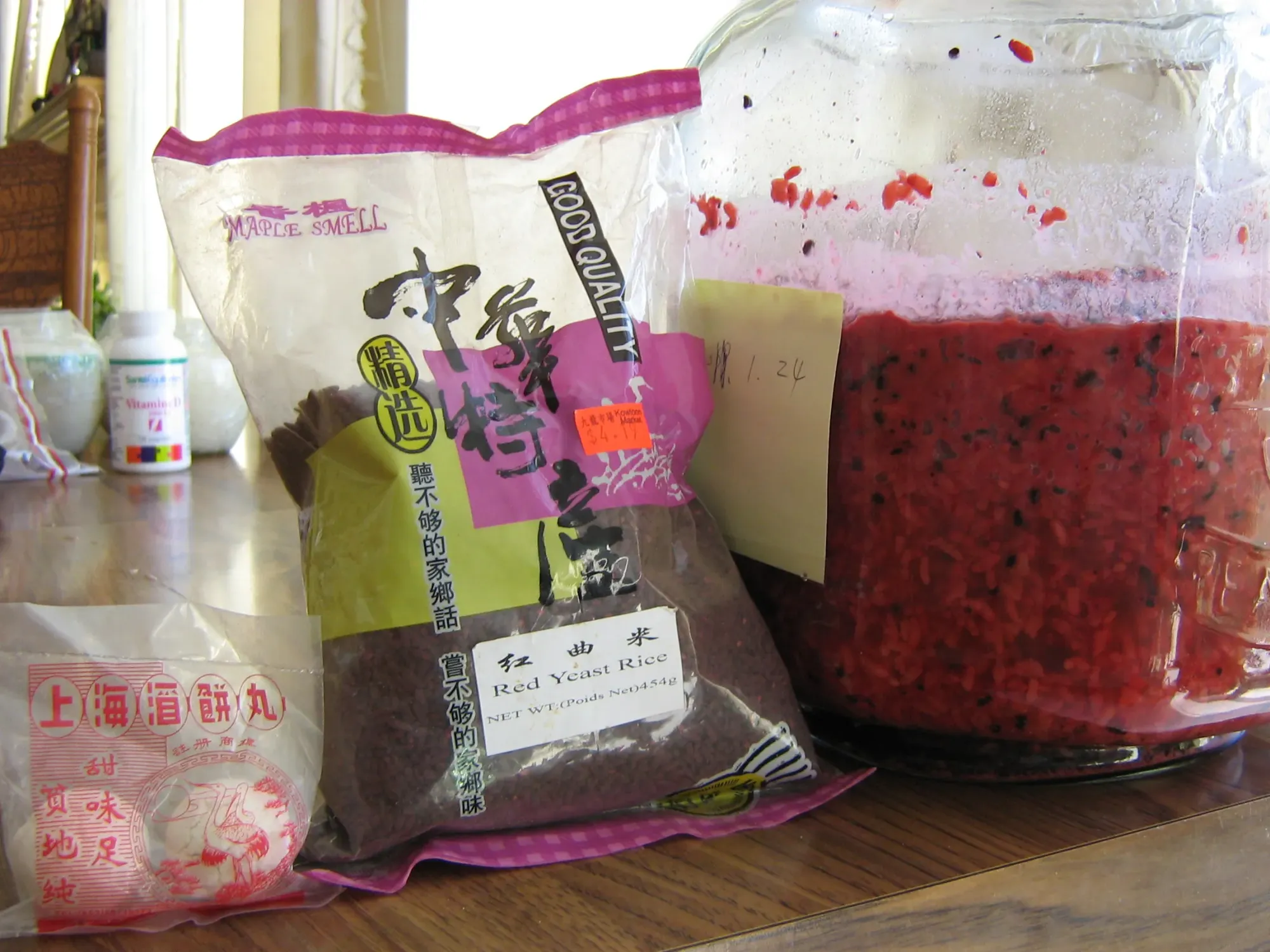
The same website names four things that set the craft apart. The starter: besides wheat flour, the traditional white starter takes smartweed juice, to quicken fermentation and add bite. The use of starters: alongside the smartweed starter, the brewers add red yeast rice, so that the wine — called shousheng, “longevity,” wine — is mellow and smooth with the fragrance of a wheat-starter wine, yet clear and bright red like a red-yeast wine. The calendar: starters are begun around the Dragon Boat Festival and finished in the dog days of summer; brewing starts after the winter solstice and takes a month or so; then the young wine goes into jars for about a year. And the steps: dozens of them, each adjusted to the weather and to how the brew is going.
Wine for Lu You
Lü Minxiang, the national master of the brewing of Jinhua wine, was born in 1953 in Dongyang and is the seventh generation in the craft. According to China’s intangible heritage website, his ancestor Lü Ziyi — eleventh generation in the genealogy of the Lü family of Dahua, Dongyang — lived in the Southern Song and sent his home-brewed rice wine to the poet Lu You, who wrote a poem titled “Guo Xilü and Lü Ziyi of Dongyang Send Wine.”
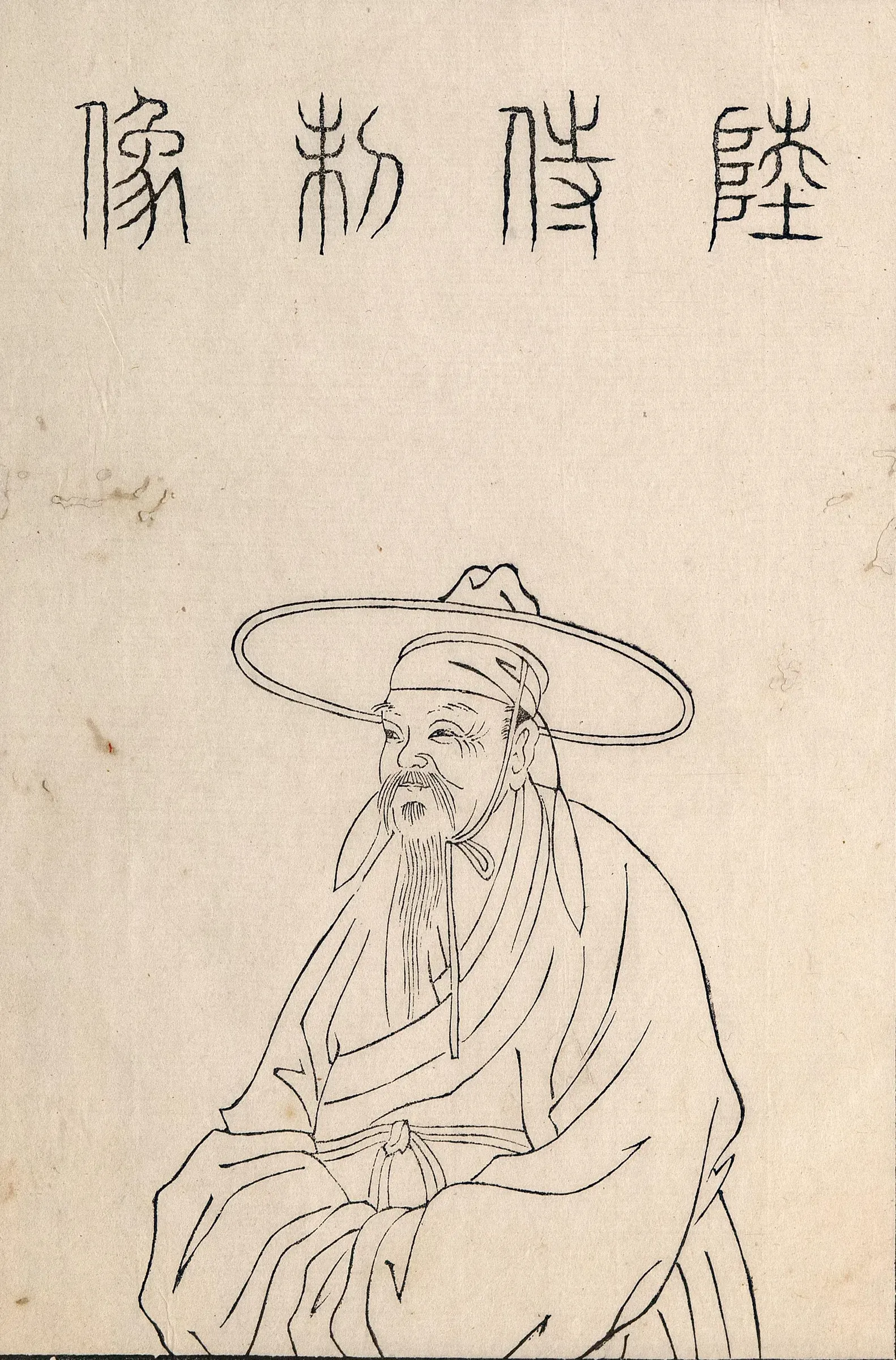
In the Qing dynasty a Lü Zhifu opened a winery called Yuhe. By the time Lü Minxiang’s father, Lü Weiqi, took it over in 1942, it had been in the family for six generations; it was later renamed the Huxi Winery. Lü Minxiang learned to brew from him.
On the national list
In 2008 the traditional brewing of Jinhua wine joined China’s second national list of intangible cultural heritage, put forward by the city of Jinhua and looked after by its Jinhua Wine Culture Research Society. Lü Minxiang was recognized as a national master in the fifth round. According to China’s intangible heritage website, he leads a team of young brewers who have mastered the old method in full; he has revived the Dongyang strain of Jinhua wine from the descriptions in the Eight Treatises on Following the Principles of Life and the Compendium of Materia Medica, and has set up a showroom for traditional Jinhua wine.
The craft has its worries. The heritage website’s entry notes that Jinhua wine has always been brewed by hand in small family workshops, that most of the brewers who know the method are already seventy or older, and that few of the younger generation want to learn it — without prompt protection, it warns, its future is in doubt.
Brewed in winter, drunk at New Year
Around Jinhua, winter is the season for brewing rice wine. In a 2025 report from Wucheng, in Jinhua, China News Service quoted a brewer and local heritage practitioner: in the old days, when every household started brewing red yeast wine, you knew the New Year was near. The method is simple enough — water first, then the red yeast rice, then steamed glutinous rice, all stirred together, the vat sealed and left for a month or so, until everything melts together and turns red. Its festive color makes it the wine for New Year guests, a wish for a red-hot, prosperous year ahead.
In Dongyang
We have not found the address or opening hours of a winery or showroom you can visit, so if you want to see wine being made, ask locally before you go. For Dongyang’s carving, see Dongyang Wood Carving and the Lu Residence; for its food, Virgin Boy Eggs and Dongyang Aomian; and for the journey, Getting to Dongyang and Hengdian.
Questions & answers
Are Dongyang wine and Jinhua wine the same thing?
Li Shizhen wrote in his Compendium of Materia Medica that “Dongyang wine is Jinhua wine,” and Dongyang is a county-level city within Jinhua. Lü Minxiang, the national master of the craft, revived what he calls the Dongyang strain of Jinhua wine from the descriptions in two Ming books, the Eight Treatises on Following the Principles of Life and the Compendium.
What color is it?
The old book and today’s accounts differ. The passage in the Compendium describes a starter of bran flour and smartweed juice and a wine “golden in color”; China’s intangible heritage website says that Jinhua wine uses red yeast rice alongside the smartweed starter, giving a wine clear and bright red, with the fragrance of a wheat-starter wine and the color of a red-yeast one.
Why was it prized for medicine?
That is what the old physicians said. The Compendium quotes Wang Ying as writing that “for medicine, Dongyang wine is best; its fame goes back to antiquity.” Even drunk to excess, he claimed, it gives no headache and no dry mouth; Dongyang’s water weighs heavier than other water, and the neighboring counties cannot match the wine — “all thanks to the goodness of the land and water.” Li Shizhen’s own verdict was “good both to drink and in medicine.”
What does Lu You have to do with it?
According to China’s intangible heritage website, Lü Minxiang’s ancestor Lü Ziyi, who lived in the Southern Song, sent his home-brewed rice wine to the poet Lu You, and Lu You wrote a poem titled “Guo Xilü and Lü Ziyi of Dongyang Send Wine.”
Can I see it being made in Dongyang?
China’s intangible heritage website says Lü Minxiang has set up a showroom for traditional Jinhua wine, but we have not found its address or opening hours, so ask locally before you go.