These photos were shared by photographers on Wikimedia Commons under open licenses. Each one is credited.
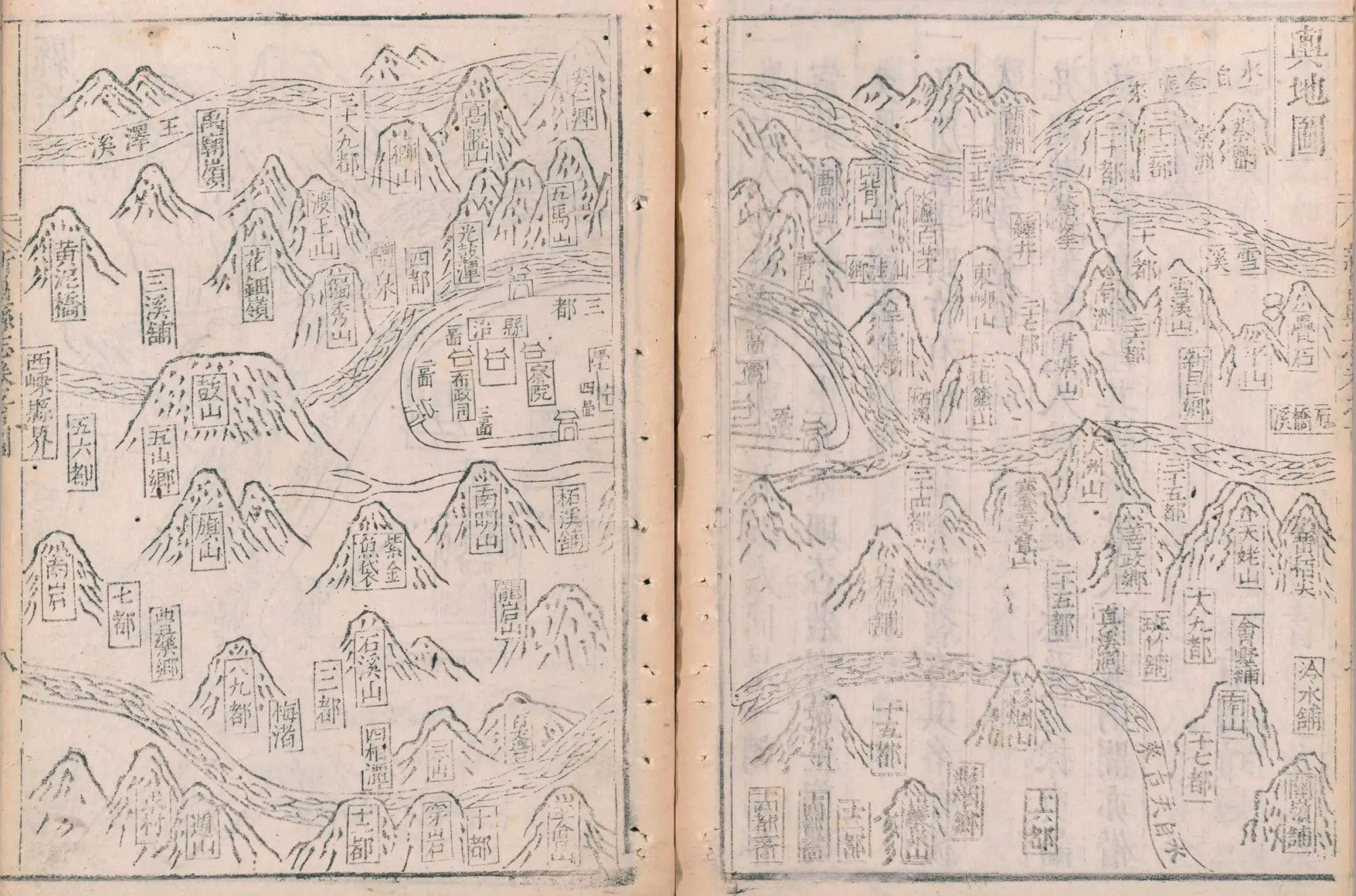
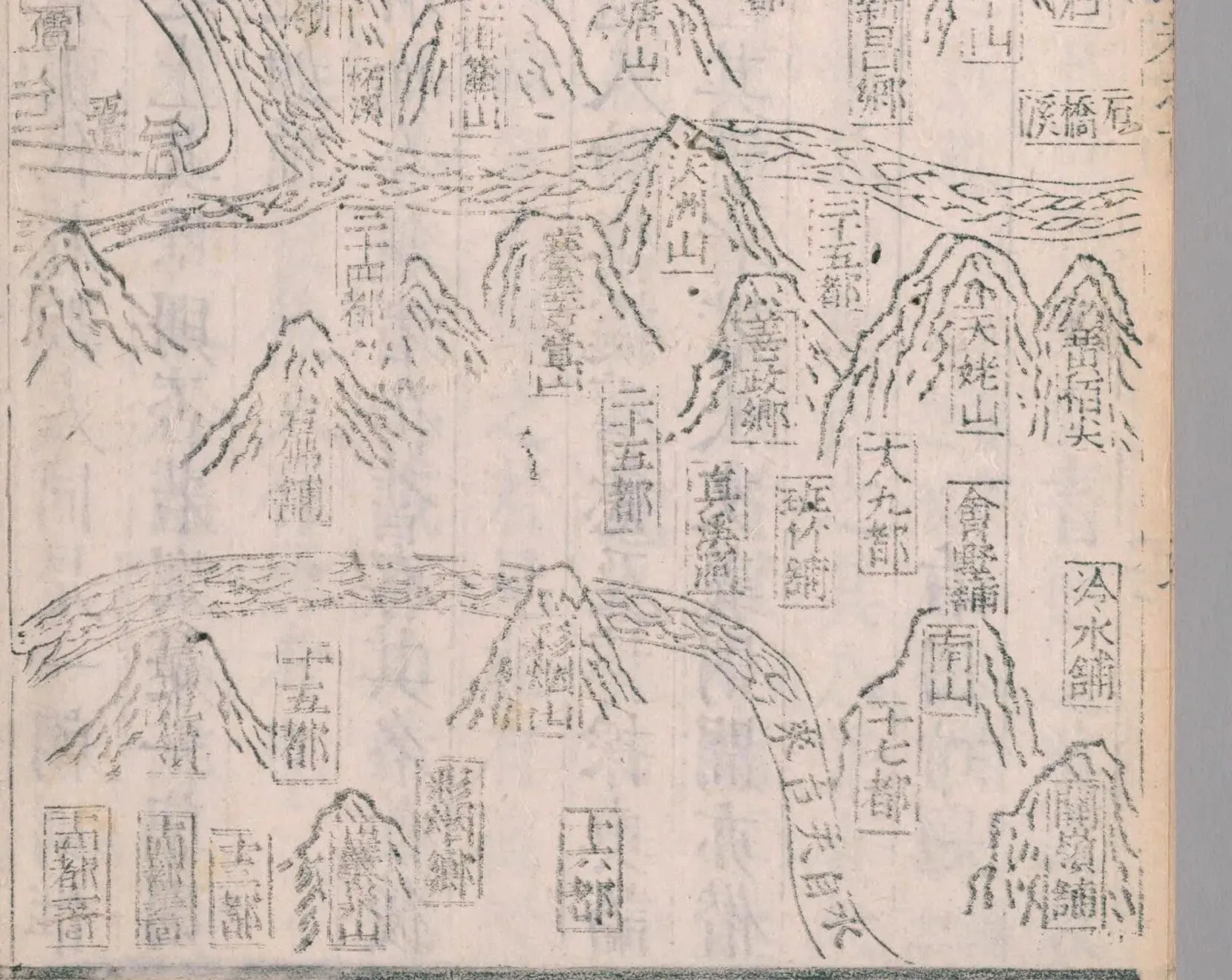
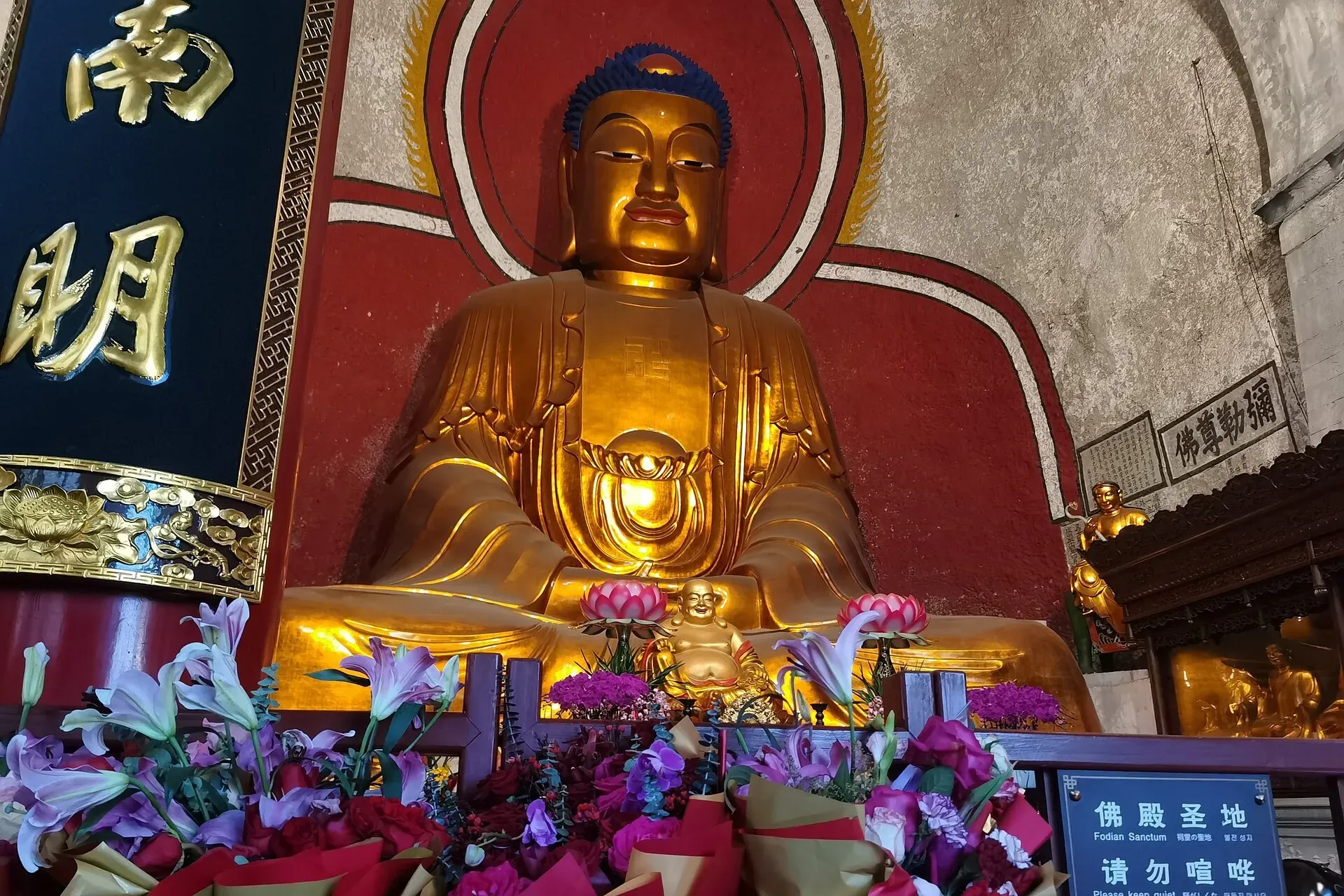
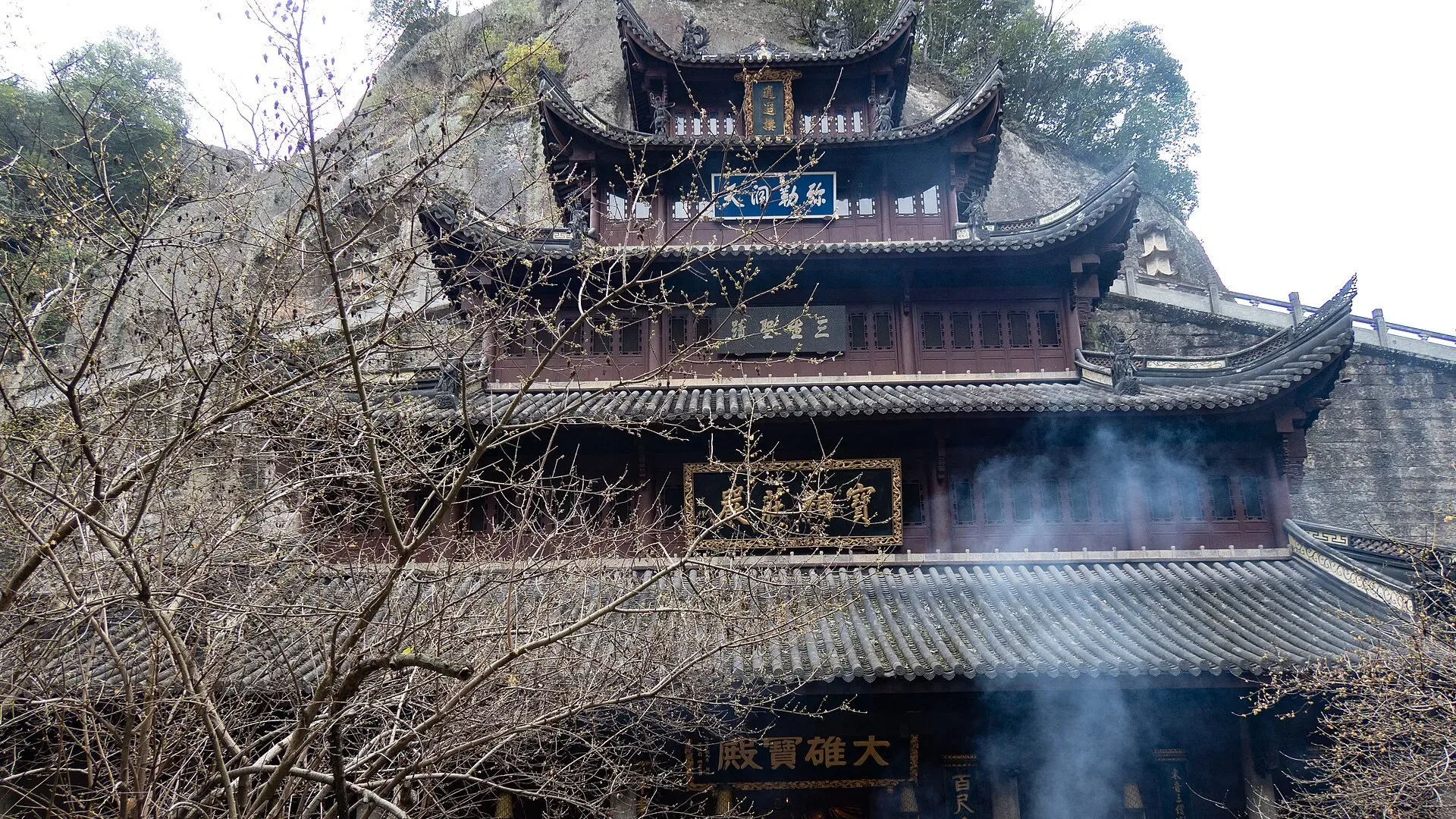
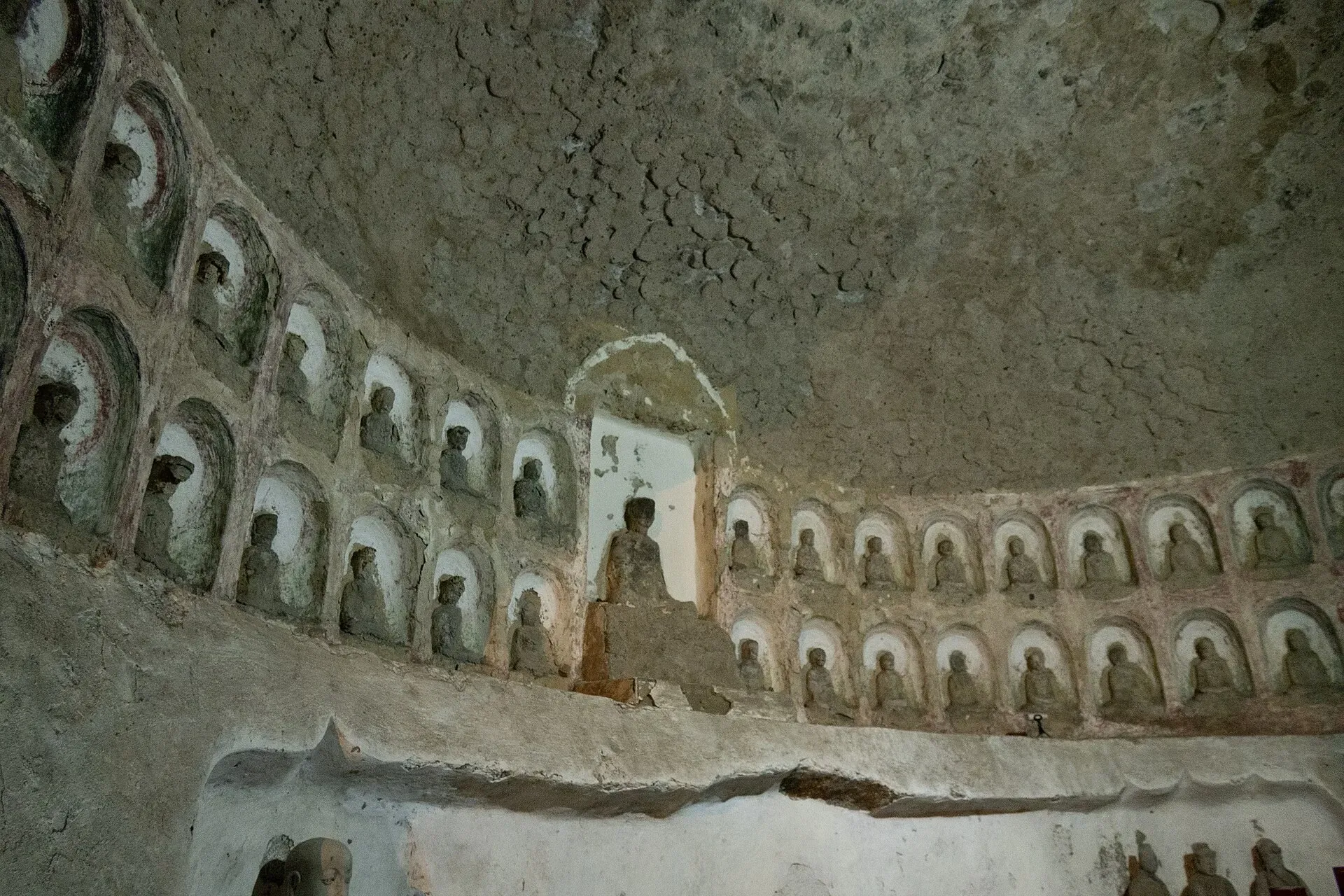
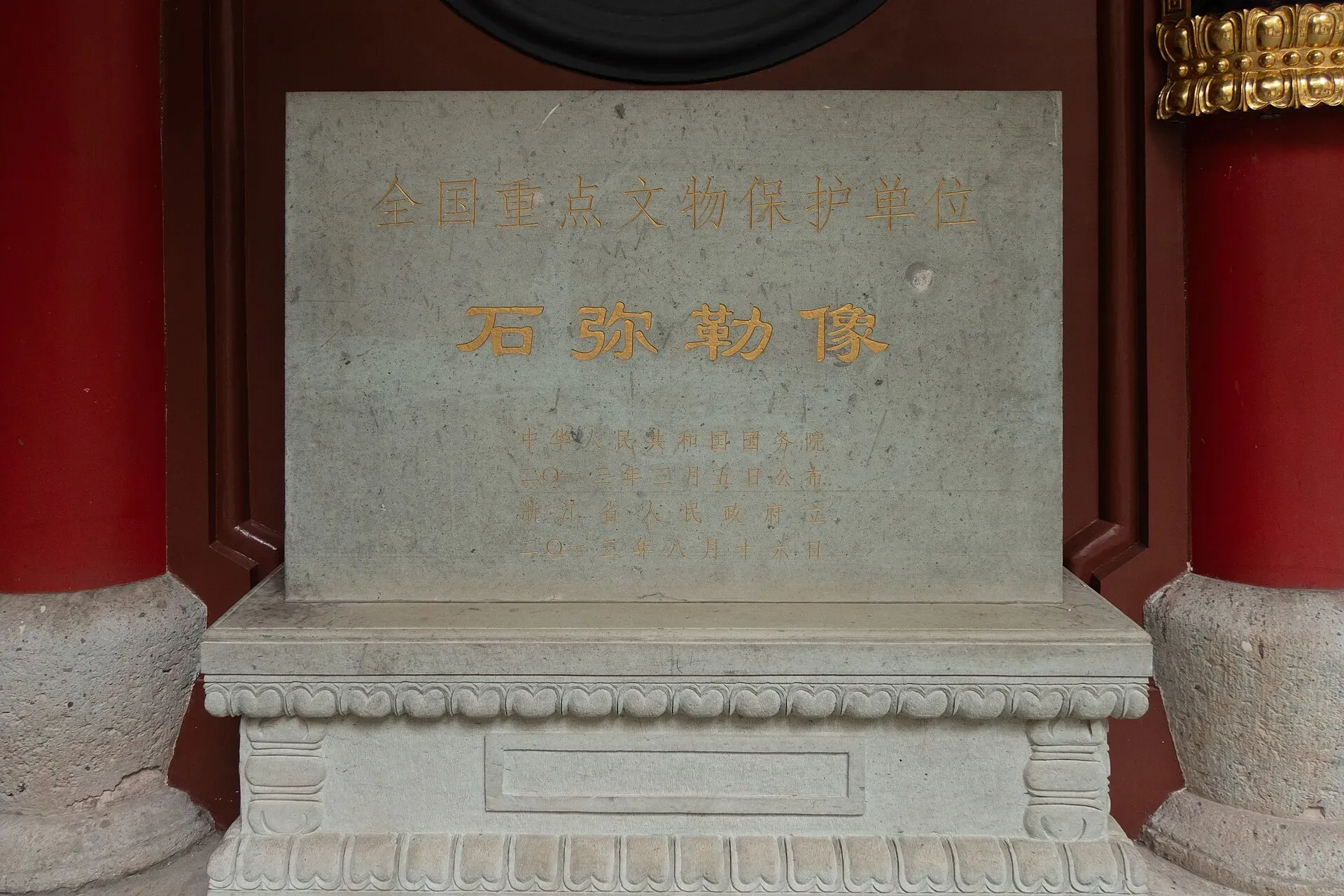
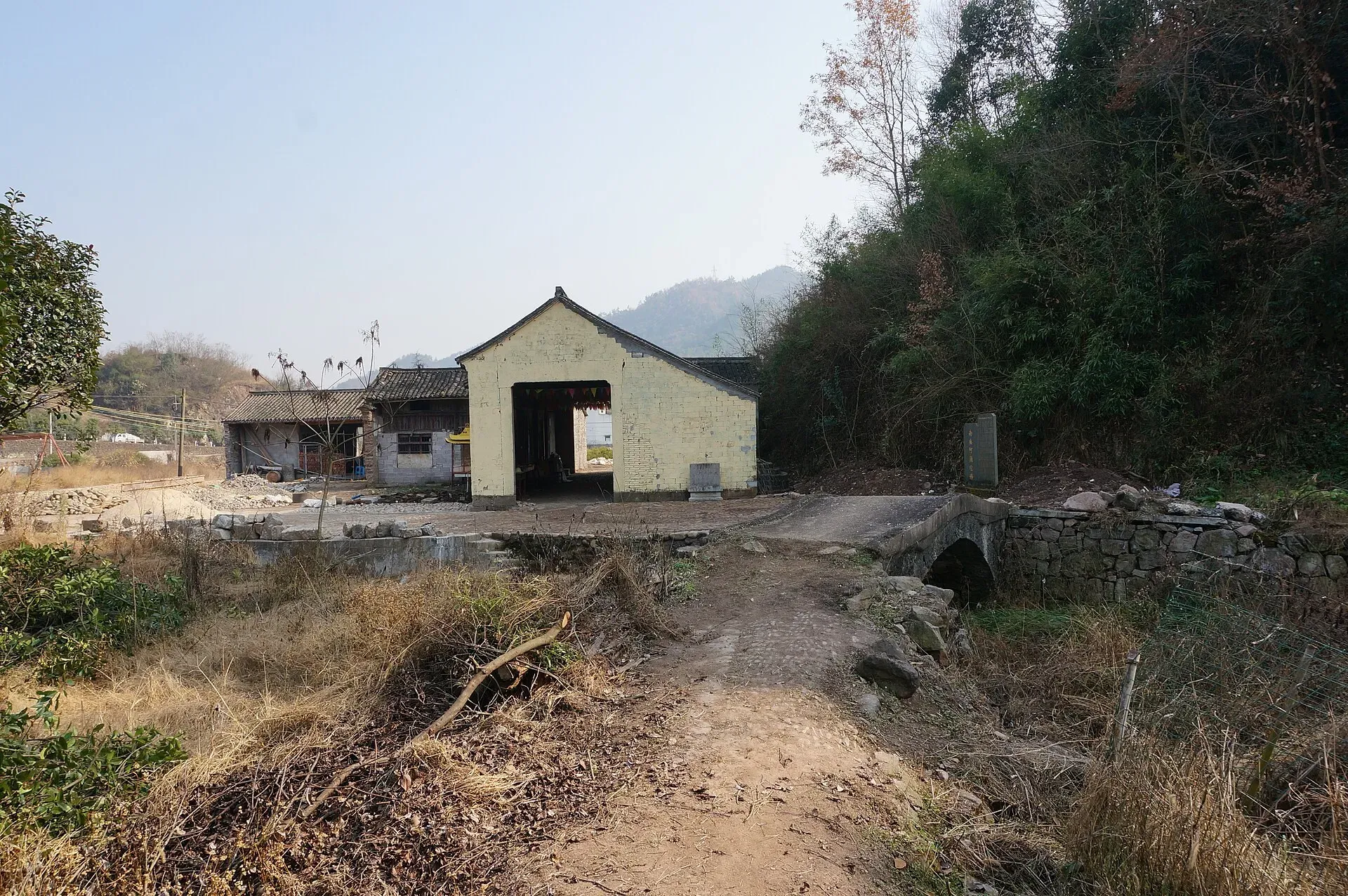
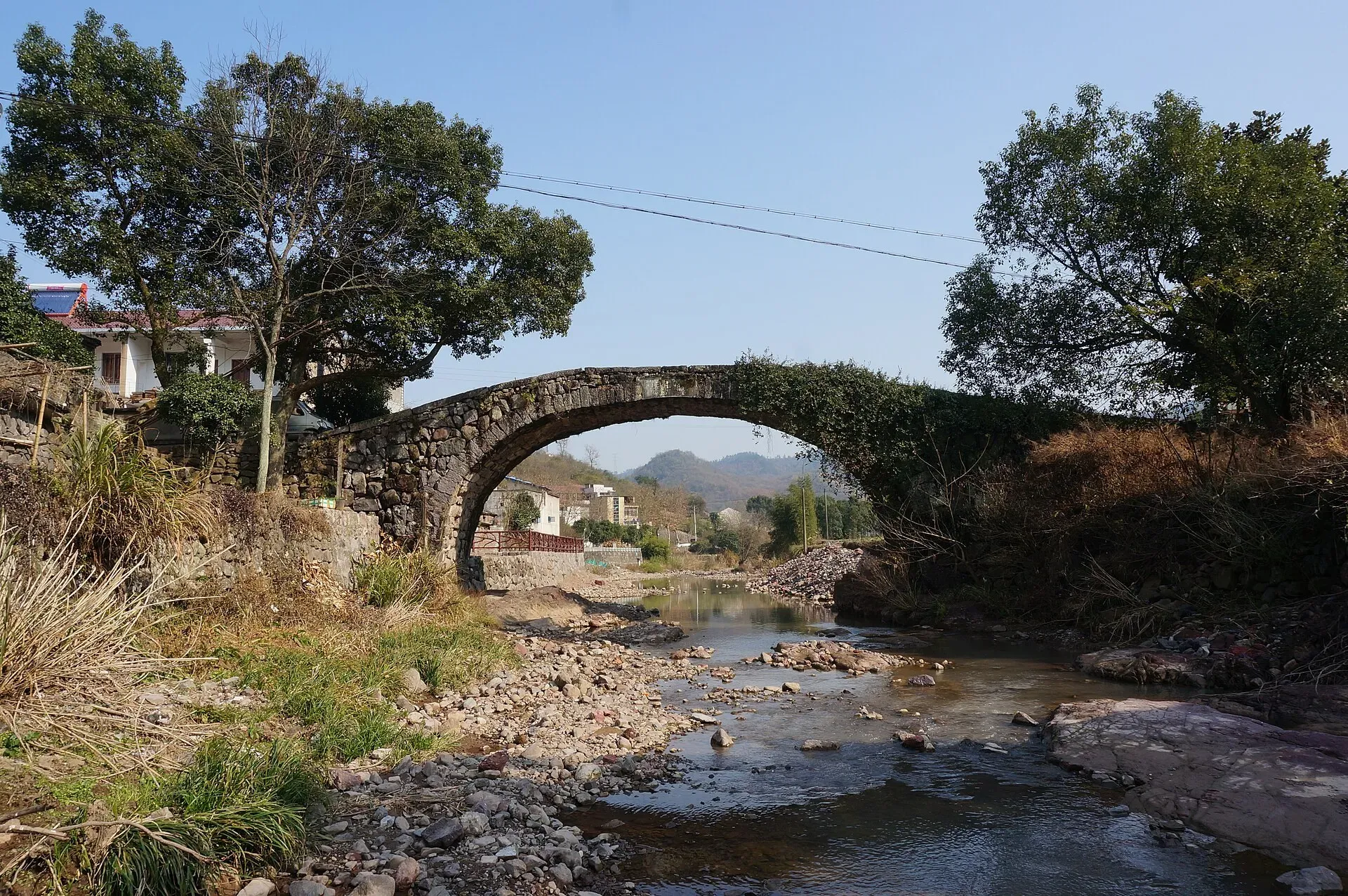
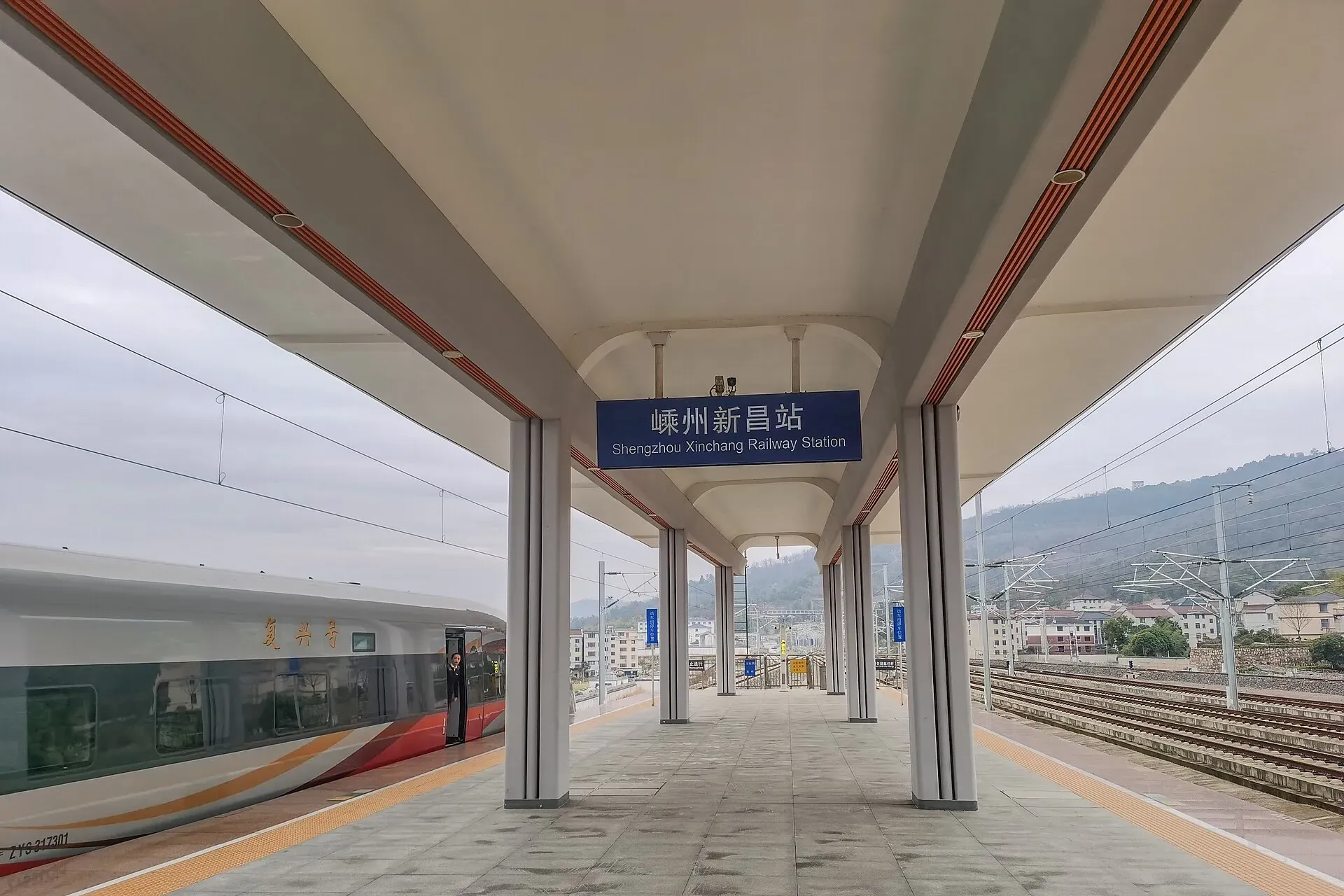
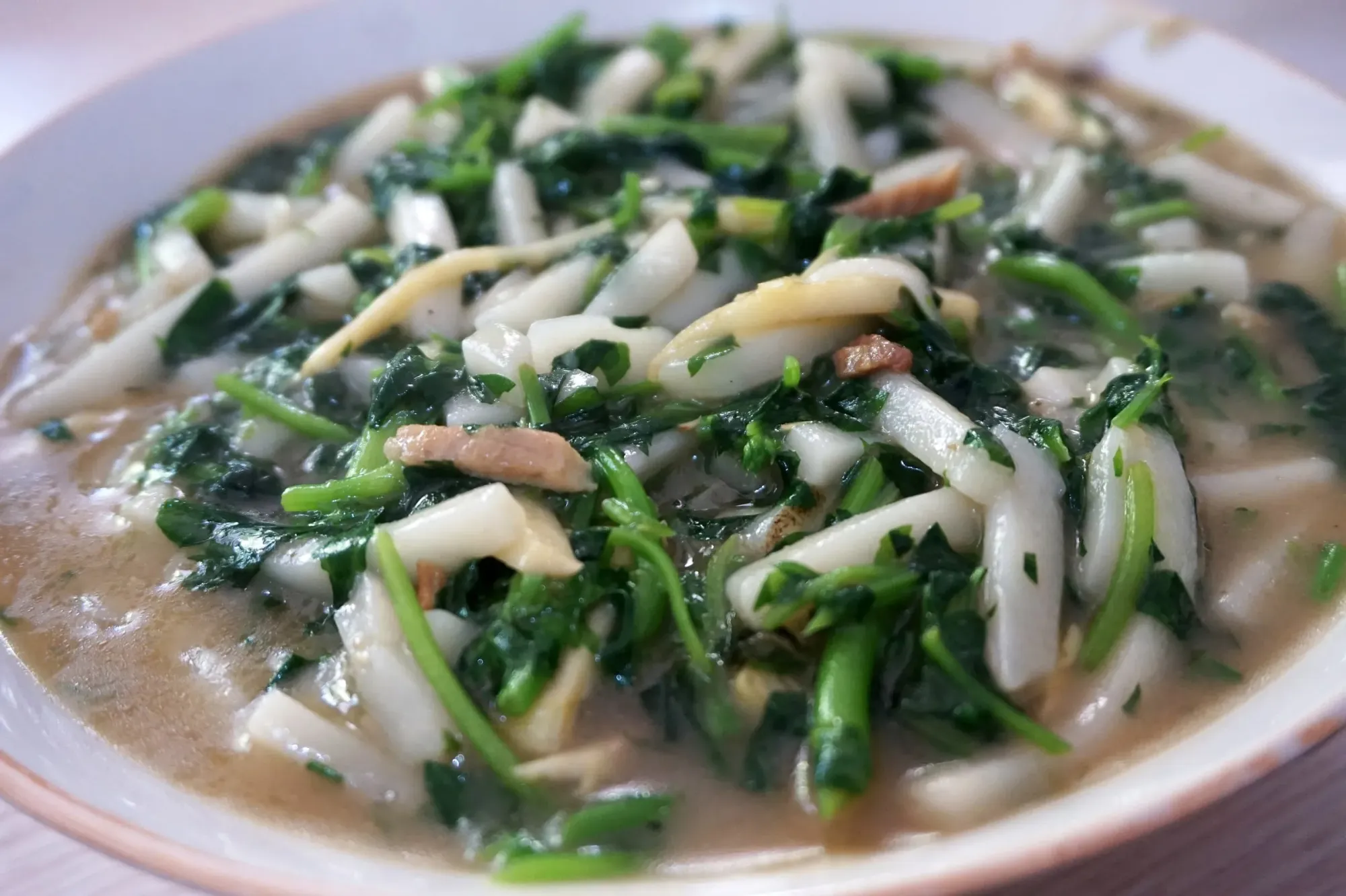
The county map in a Ming dynasty gazetteer of Xinchang, compiled under the magistrate Tian Guan. The walled county town is in the middle of the left page; the right page marks Mount Wozhou, Mount Tianmu and post stations such as Banzhu and Huishu.Photo: 田琯 等纂 · 日本国立国会图书馆 National Diet Library · Public domain · Wikimedia CommonsDetail of the Ming dynasty map of Xinchang: Mount Tianmu, with the Banzhu and Huishu post stations below it, Guanling at bottom right, and a river labeled “water coming from Tiantai.”Photo: 田琯 等纂 · 日本国立国会图书馆 National Diet Library · Public domain · Wikimedia CommonsThe stone Maitreya in its cave at the Great Buddha Temple, finished in 516 and 13.2 meters tall seated.Photo: Siyuwj · CC BY-SA 4.0 · Wikimedia CommonsThe great hall built against the cliff, with the stone Maitreya in the cave behind it. Its boards read “Sacred Work of Three Lives” and “Maitreya’s Cavern Heaven.”Photo: Siyuwj · CC BY-SA 4.0 · Wikimedia CommonsRows of small Buddha niches in the Thousand Buddha Cliff cave.Photo: Siyuwj · CC BY-SA 4.0 · Wikimedia CommonsThe marker for the stone Maitreya as a major national heritage site, announced by the State Council on March 5, 2013.Photo: Siyuwj · CC BY-SA 4.0 · Wikimedia CommonsThe Xiaoshifo post house on the old Tianmu road, 2019.Photo: 猫猫的日记本 · CC BY-SA 4.0 · Wikimedia CommonsYingxian Bridge over the Chouchang stream in Xinchang, 2019. Legend says Liu Chen and Ruan Zhao met the immortals in these hills.Photo: 猫猫的日记本 · CC BY-SA 4.0 · Wikimedia CommonsThe platform at Shengzhou-Xinchang station, 2026.Photo: Siyuwj · CC BY-SA 4.0 · Wikimedia CommonsFried rice cakes in Xinchang.Photo: 三猎 · CC BY-SA 4.0 · Wikimedia Commons