Places to Visit
Xinchang, in Shaoxing, Zhejiang: the cliff-carved Great Buddha, Li Bai’s Mount Tianmu, the Danxia Nineteen Peaks, Wozhou Lake and two old villages.
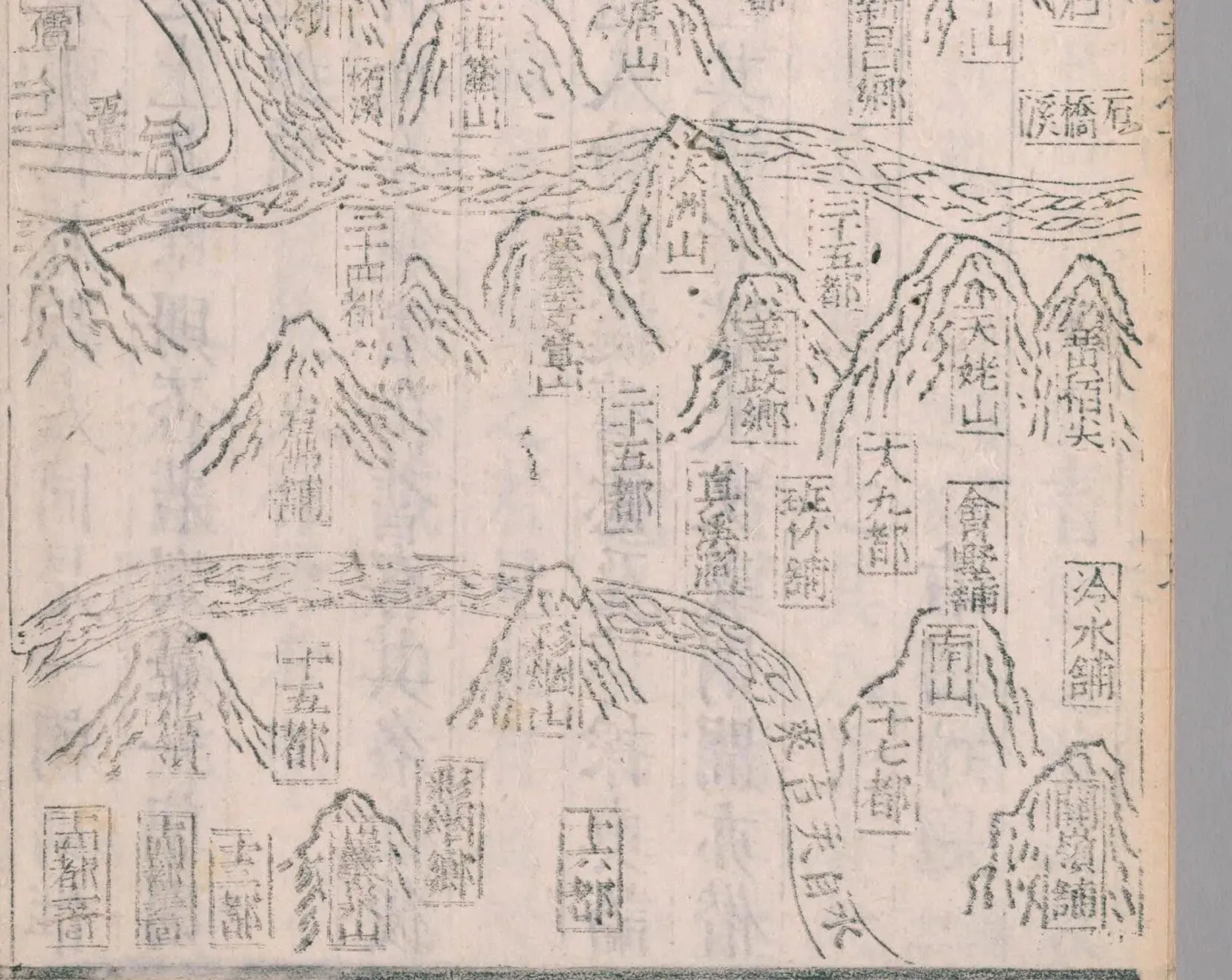
What there is to see in Xinchang falls into a few areas. The Great Buddha Temple is on Mount Shicheng at the edge of the county town; to the south and southeast are Banzhu Village at the foot of Mount Tianmu and Wozhou, often named in Tang poetry; and around Jingling Town in the southwest stand the Danxia cliffs of the Nineteen Peaks, with a few villages tucked into the hills. China News Service reported in 2012 that Xinchang had by then grown three touring areas: Buddhist culture around the Great Buddha Temple, lake and mountain scenery around Wozhou Lake, and Tang poetry around Mount Tianmu. Here are the places worth the trip, with where each one is and how to get there; the stories behind them are in our longer guides.
The Great Buddha Temple
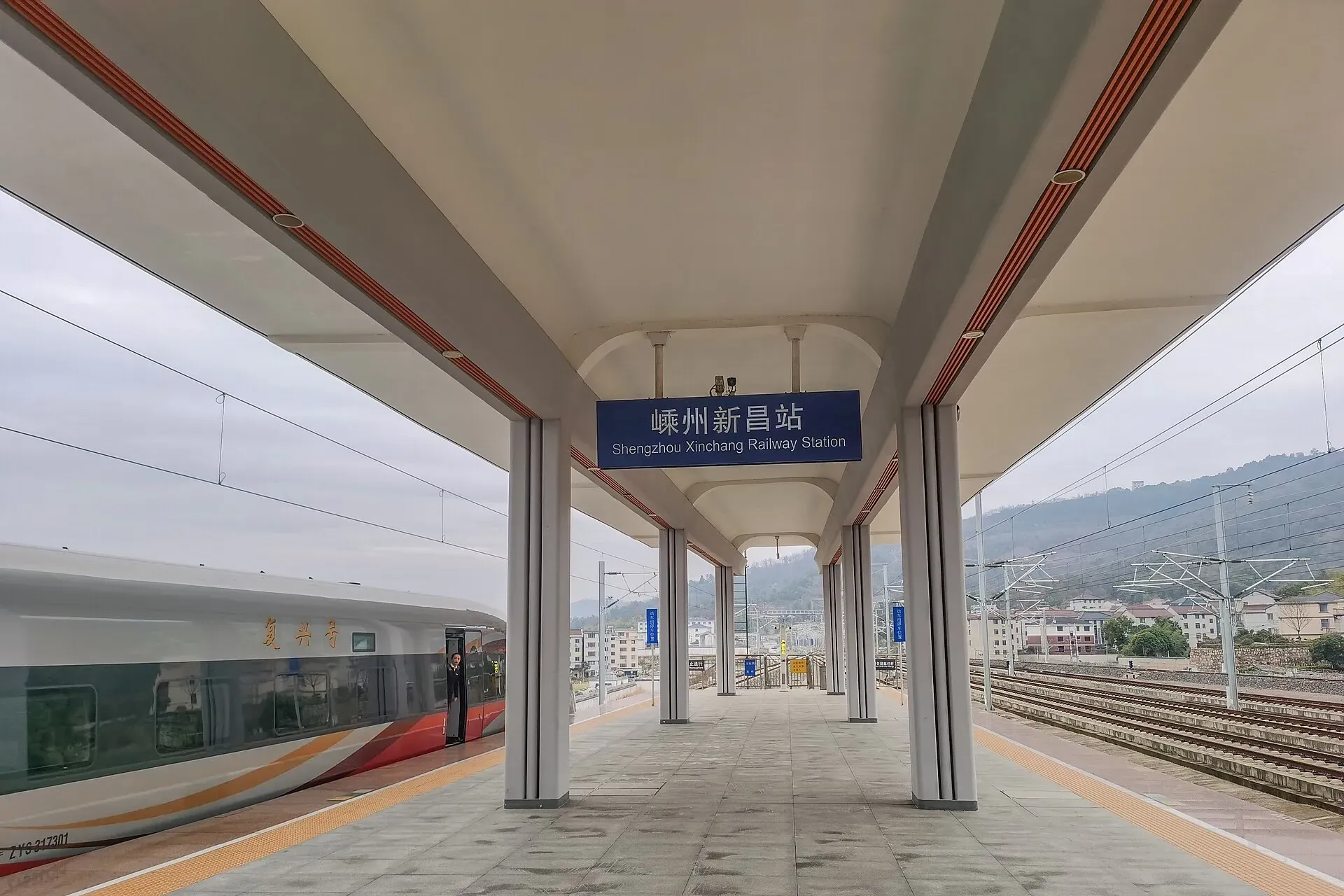
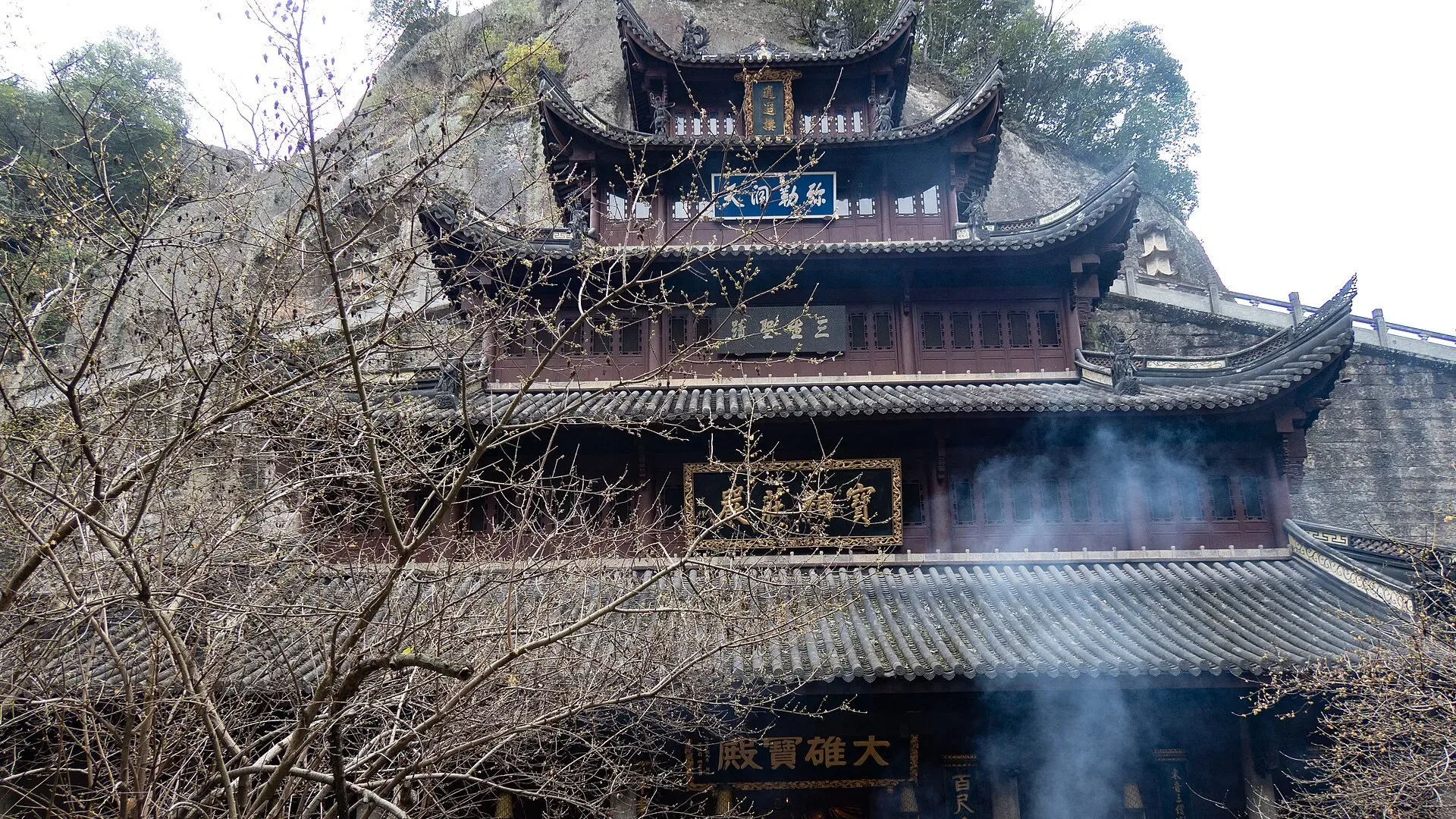
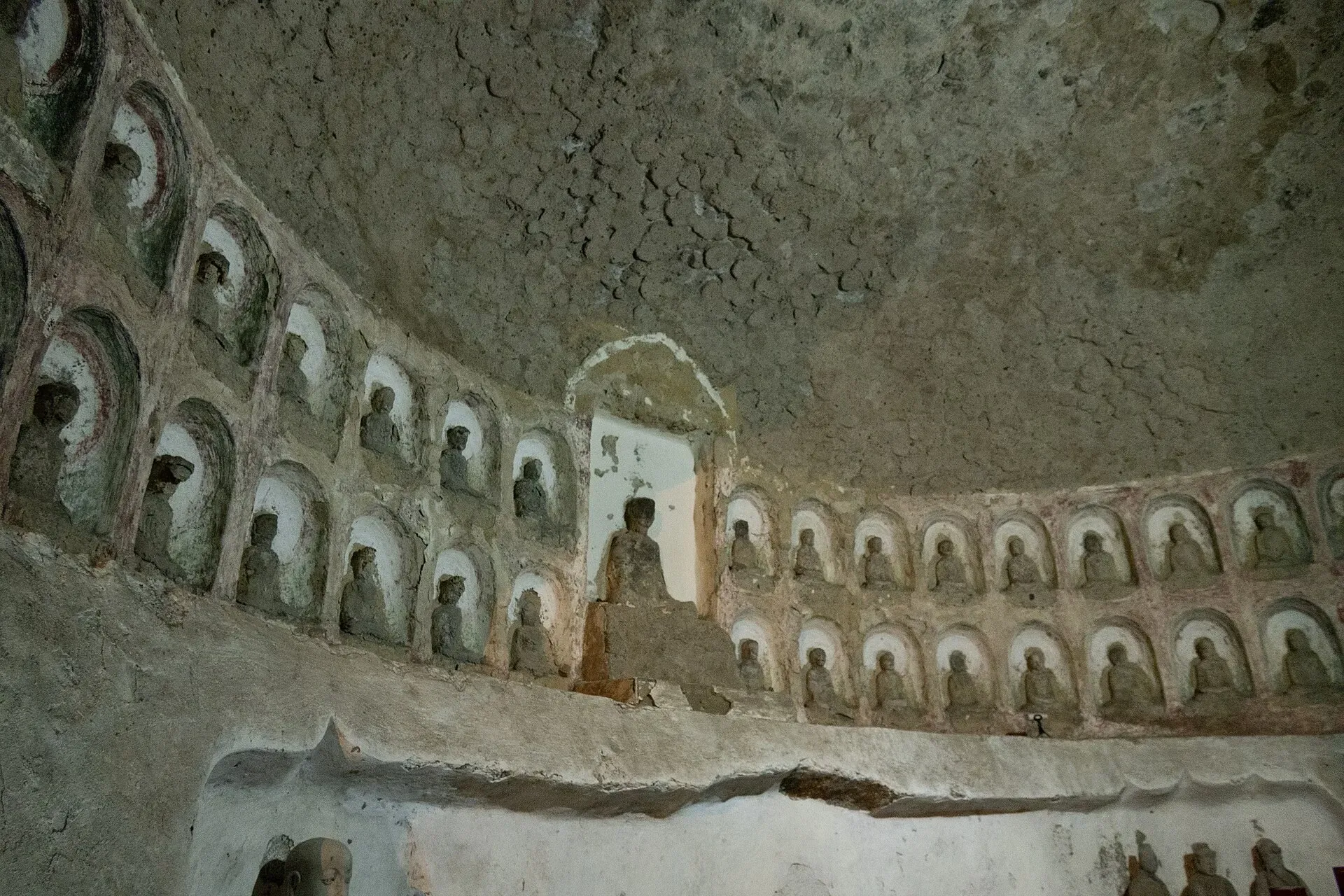
The Great Buddha Temple is on Mount Shicheng, at the edge of the county town. In a cave cut into the cliff sits a stone Maitreya, 13.2 meters tall seated, finished in 516, more than two hundred years before the Leshan Giant Buddha in Sichuan, and known as the Great Buddha of the South. At the Thousand Buddha Cliff, about 300 meters northwest of the temple, 1,075 small Buddhas are carved into a cave. Xinhuanet said in 2026 that the scenic area also has a reclining Buddha in a cave and the underground Prajna Valley. According to Hangzhou.com.cn in 2021, the temple is about 8.8 km by taxi from Shengzhou-Xinchang station, or more than an hour by bus. Tickets and opening hours change, so check with the scenic area before you go. More in the Great Buddha of Xinchang.
Mount Tianmu and Banzhu Village
Mount Tianmu, the mountain of Li Bai’s dream, is in southeast Xinchang on the border with Tiantai; its highest peak, Dajian, is about 900 meters. Most people climb it from Banzhu Village, about twenty minutes’ drive south of the county town, or about 25 km and around half an hour by taxi from Shengzhou-Xinchang station. Known as the “gateway to Tianmu,” Banzhu is on China’s list of traditional villages. China News Service reported in 2018 that Lord Xie’s Road runs through the village, about 1,000 meters long and some 2 meters wide, paved with river cobbles, and that by the records the Ming traveler Xu Xiake, the Qing poet Yuan Mei and the modern writer Yu Dafu all stayed the night or stopped at Banzhu. Since 2014 the village has turned empty old houses into farm restaurants and guesthouses, and set up more than a hundred “Tang poetry courtyards.”
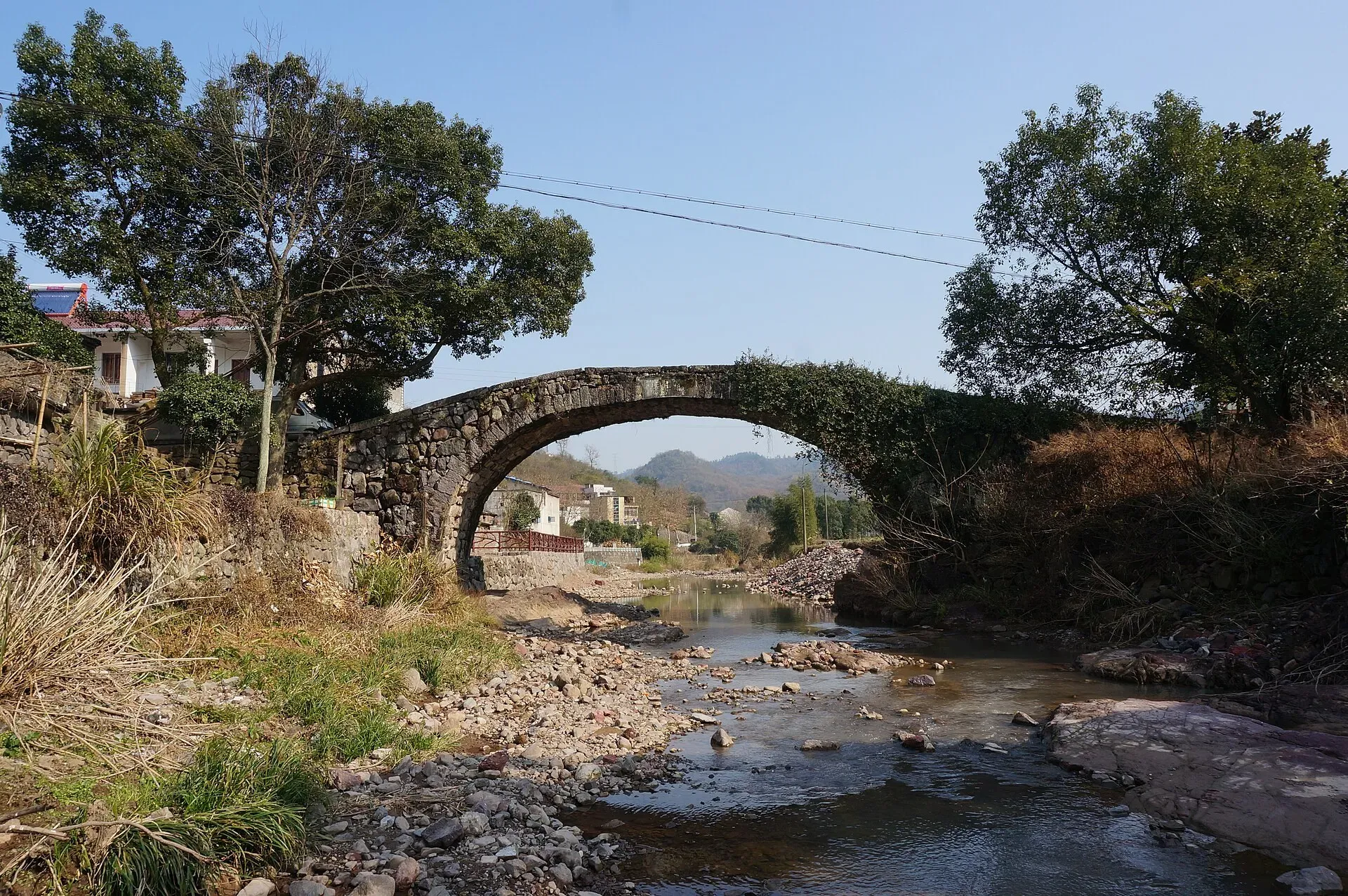
From the village the old Tianmu road climbs over Huishu Ridge, from where you can see the main peak in the distance; old post houses such as Xiaoshifo still stand along the way. Xinhuanet said in 2026 that Mount Tianmu, far from city lights, is a place to watch the stars, and that from December to February it is rime season on the mountain. In Nanming, the Yingxian Bridge crosses the Chouchang stream; legend says it was in these hills that Liu Chen and Ruan Zhao met the immortals. Banzhu is twenty-odd minutes’ drive from the Great Buddha Temple, so the two fit into one day. More in Mount Tianmu.
Wozhou Lake
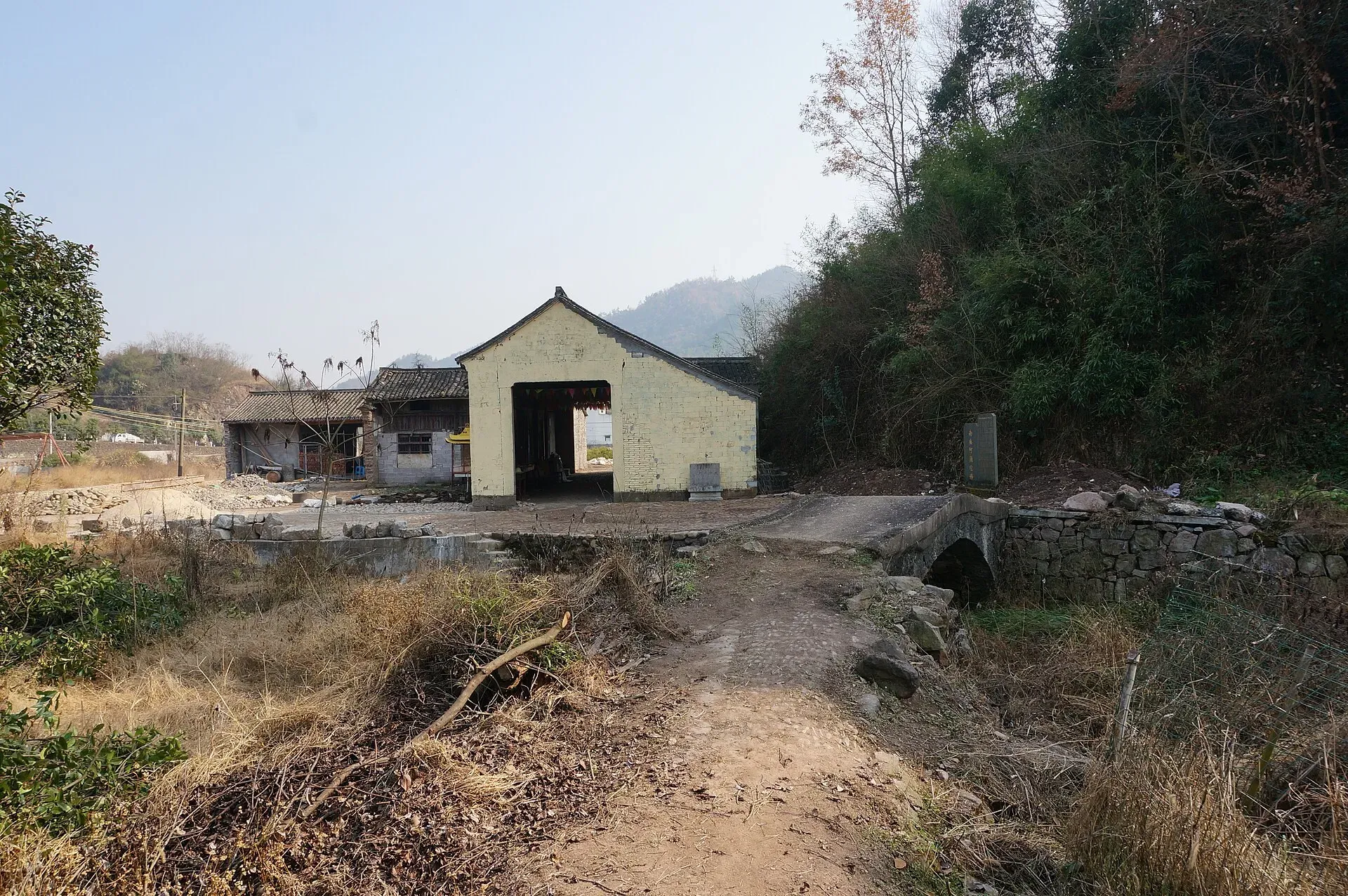
In his Record of the Chan Monastery on Mount Wozhou, Bai Juyi wrote: “Of the landscapes of the southeast, Yue is the head, Shan is the face, and Wozhou and Tianmu are the eyes and brows.” Wozhou lies a short way northeast of Mount Tianmu. China News Service reported in 2012 that as early as the Six Dynasties, eighteen eminent monks, among them Zhu Daoqian and Zhi Dun, gathered around Wozhou and Mount Shicheng to study Buddhism; Xinhuanet, in 2026, also recalls the Wozhou gathering of the Eastern Jin, when Zhi Dun, Wang Xizhi and other monks and scholars met here. Today’s Wozhou Lake is the Changzhao Reservoir in the Wozhou basin; according to Wikipedia, its dam is at Changzhao Village, southeast of the county town. The dam is about 16 km, twenty minutes or so, by car from the county town.
China News Service reported in 2018 that the Zhenjun Hall on Mount Wozhou has an old opera stage with a carved caisson ceiling. We have found no reliable, recent information on boats, tickets or opening hours at the lake, so ask locally before you go. For Wozhou’s place on the Tang Poetry Road, see Mount Tianmu and the Tang Poetry Road of Eastern Zhejiang.
The Nineteen Peaks
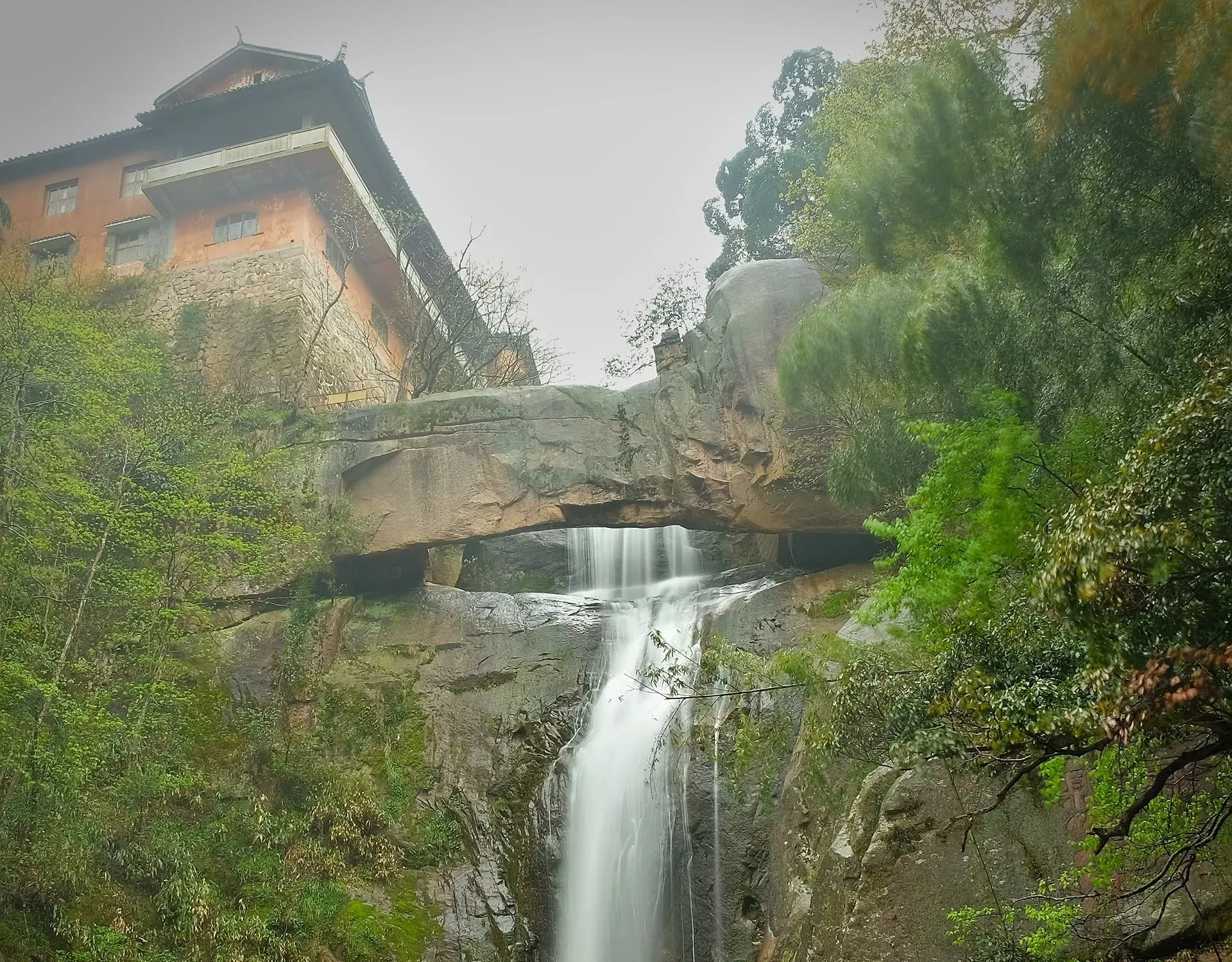
Around Jingling Town, southwest of the county town, stands a line of Danxia peaks known as the Chuanyan Nineteen Peaks. According to Chao News in 2025, the scenic area has five parts, the Nineteen Peaks, the Feilong Walkway, Qianzhang Valley, Taitou Hill and Daotuoxue; it is one of the largest groups of Danxia peaks in China, nicknamed the Zhangjiajie of eastern Zhejiang, and the television dramas Nirvana in Fire, The Legend of the Condor Heroes and Chinese Paladin were all filmed here. Each peak is named for its shape: Incense Burner Peak, Boat Mooring Peak, Saddle Peak and so on. The highlight is the Feilong Walkway, 999 steps up the cliff face, with a glass walkway about a hundred meters long at the edge of the drop and a rope bridge beyond; it takes some stamina and a head for heights. The visitor center is about 24 km, around half an hour, by car from Shengzhou-Xinchang station.
The hills around Xiayanbei Village nearby are a good place to look down on the Nineteen Peaks. Xinhuanet said in 2026 that the Xiayanbei–Jinshanshang area overlooks the peaks, is wrapped in cloud and mist on more than 200 days a year, and has dozens of guesthouses built for the view. It is about 12 km by car from the Nineteen Peaks visitor center.
For the rock and how the peaks were made, the layout of the scenic area, the Feilong Walkway and opening hours, see The Nineteen Peaks of Chuanyan.
Meizhu Old Village
In Chengtan, west of the county town, is the village of Meizhu. Zhejiang Online reported in 2020 that its history goes back to the Song dynasty and that it keeps more than 30 buildings from the Ming, the Qing and the Republic, among them more than 20 old gated compounds, or taimen, and an old street more than 300 meters long, along with intangible heritage such as shifan folk music, papercutting and zaoshao, a spirit distilled from wine lees; it has been called an open-air museum and is on China’s list of traditional villages. At the entrance is the Ming dynasty pond in front of the houses, a square pool with a waterwheel turning beside it. China News Service reported in 2021 that the village faces south, is shaped like a boat and still keeps its old layout of “one pond, one street, one watchtower, two temples, six ancestral halls and many gated compounds.” Zhejiang Online also reported in 2020 that since 2014 the village had restored its old houses, street and lanes and brought in craftsmen, and that its street had coppersmiths’, carpenters’ and other old craft shops. It is about 11 km, ten-odd minutes, by car from Shengzhou-Xinchang station.
Waipokeng Village
Deep in the hills of Jingling Town, where Xinchang meets Shengzhou, Dongyang and Pan’an, is Waipokeng, “Grandma’s Hollow.” Chao News reported in 2025 that wives from more than ten of China’s ethnic minorities, among them Miao, Dai, Bai, Zhuang and Yi, have married into the village, which is why it is called the first ethnic village south of the Yangtze; Jingling, for its part, is said to have “thirteen peoples and nineteen peaks.” Ninety-six percent of the villagers are named Lin and are said to share a clan with Lin Zexu. At the visitor center you can rent ethnic costumes, and the village has the Lin ancestral hall, a tie-dye workshop, a “red” earth building on the village’s revolutionary history, the Thirteen-Bay Gatehouse and the Waipokeng Museum; the local snack is corn cake. Chao News reported in 2024 that Waipokeng, once known as a “village of bachelors,” is on China’s list of traditional villages, has held a summer water-splashing festival and is lively at the Lantern Festival. Chao News put it at about two hours’ drive from Hangzhou in 2025, and the Nineteen Peaks about 40 minutes from the village by car.
In town
The county town has things to see and eat too. China News Service reported in 2017 that its China Tea Market is the largest trading center for Longjing tea in the country, busiest early on weekend mornings — see Dafo Longjing Tea. For snacks, go to South Street in the old town and Wozhou Road; Xinhuanet in 2026 called South Street the “carb street.” Xinchang’s fried rice cakes come “with broth” — see Xinchang Fried Rice Cakes and Snacks; for the local peanuts, see Xinchang Xiaojingsheng Peanuts. Diaoqiang opera is on China’s national list of intangible heritage; we have found no fixed venue or schedule, so ask locally if you want to see it — see Xinchang Diaoqiang Opera.
Getting around
Xinchang’s high-speed station, Shengzhou-Xinchang, sits on the border between Shengzhou and Xinchang, about half an hour by train from Hangzhou East and about 11 km, ten-odd minutes by taxi, from Xinchang town. Taxis or ride-hailing are the easiest way between sights: the Nineteen Peaks are about 25 km from town, Banzhu Village and the Wozhou Lake dam about 16 km each; for Waipokeng, a car is simpler. Routes, tickets and opening hours change, so check locally. See Getting to Xinchang. For a day trip from Hangzhou, see Day Trips from Hangzhou by High-Speed Train.
More photos
All photos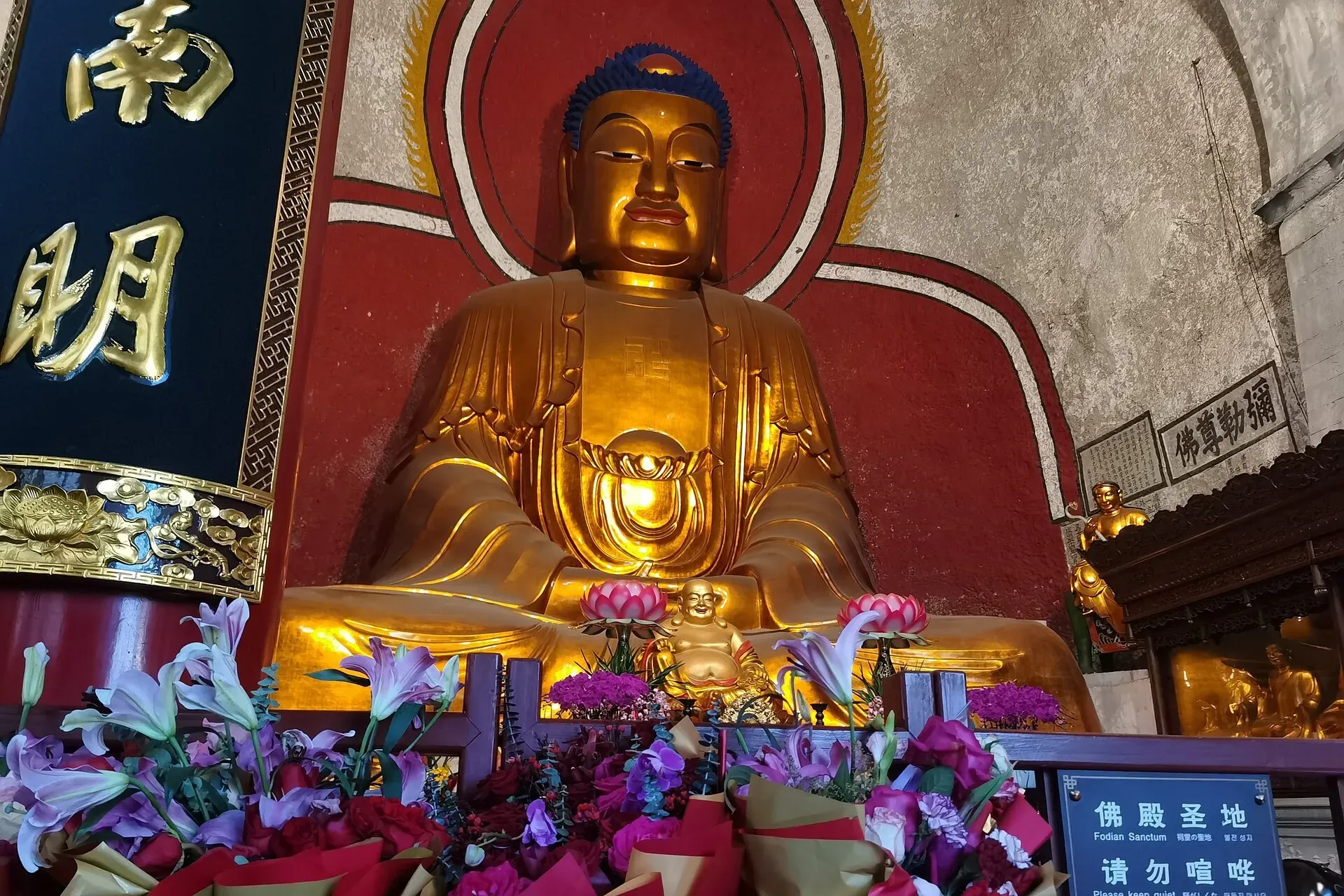
Sources
- 十九峰、下岩贝、梅渚和沃洲湖大坝的距离和车程,以及县城到班竹村的距离,是按 OpenStreetMap 路网估算的开车时间;外婆坑到十九峰的车程来自潮新闻。其余距离和车程,与本站的《新昌大佛寺》《天姥山》《怎么去新昌》一致,出处见各篇。英文为本站翻译。
- 美丽城市丨千年古城新昌赴一场诗与美好之约 · 新华网,2026 年 3 月 13 日
- 不在贵州,在绍兴!这座大山里的小村竟藏着“最炫民族风” · 潮新闻,2025 年 1 月 5 日
- 为什么上海吴先生,对新昌这个村庄的元宵节念念不忘 · 潮新闻,2024 年 2 月 29 日
- “重走红色足迹,传承革命基因” · 中国科学院宁波材料技术与工程研究所,2021 年 6 月 8 日
- 探访浙江传统古村梅渚村:古朴建筑承载千百春秋 · 中国新闻网(浙江新闻),2021 年 5 月 31 日
- 走进新昌梅渚村探寻承古赋新的路线图 找回村子的古韵灵气 · 浙江在线,2020 年 12 月 1 日
- 依托“浙东唐诗之路” 浙江新昌开拓文旅新路径 · 中国新闻网,2018 年 9 月 2 日
- 三品浙江新昌“禅茶”:沐浴茶韵芬芳 探秘兴农智慧 · 中国新闻网,2017 年 4 月 15 日
- 400诗人踏出浙东唐诗之路 浙江多地欲申遗 · 中国新闻网,2012 年 11 月 26 日
- 嵊州、新昌、天台通高铁啦!杭绍台铁路昨试运行 · 杭州网,2021 年 11 月 27 日
- 长诏水库 · 维基百科
- 浙江省中国传统村落列表 · 维基百科