The Lu Residence, Dongyang
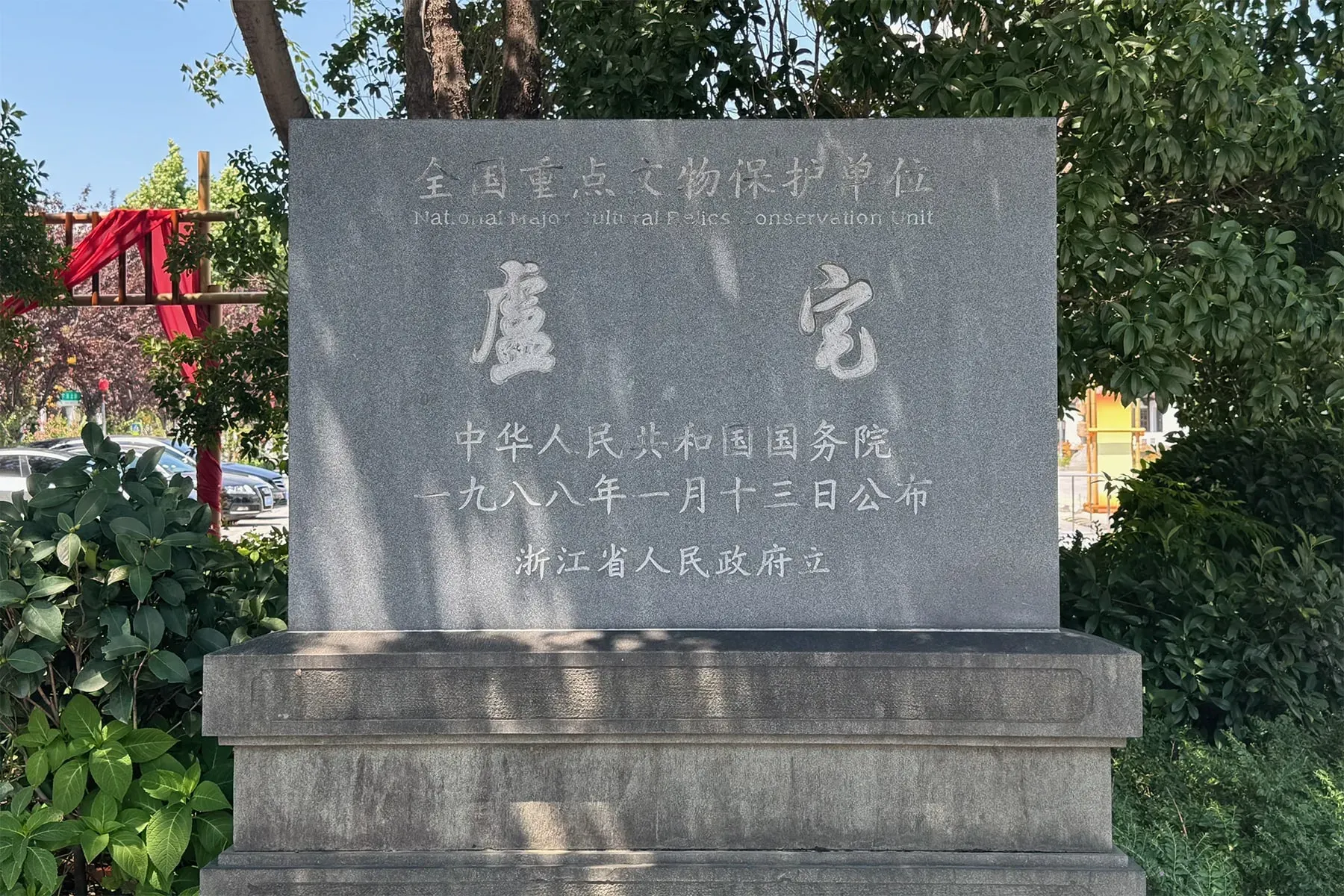
The Lu Residence, on the east side of Dongyang, is the Ming and Qing compound of the Lu clan of Yaxi, nicknamed the “people’s Forbidden City”; the axis of its Suyong Hall runs nine courts and 320 meters deep. Starting with Lu Rui in 1421, the family produced eight jinshi, or metropolitan graduates, in the Ming and Qing. The compound has been a national Major Historical and Cultural Site since 1988 and a national 4A scenic area since 2023.
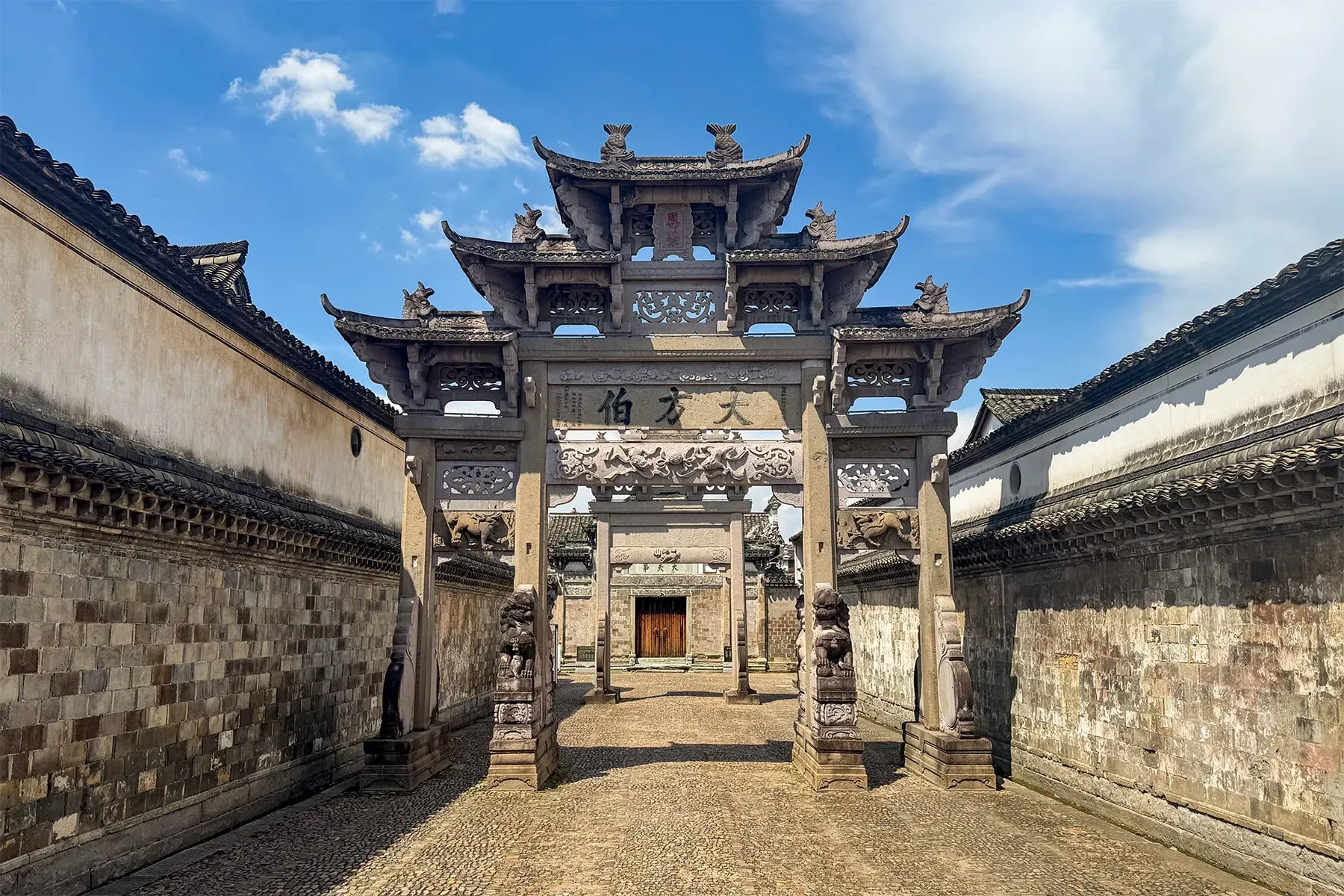
The Lu Residence — Lu Zhai in Chinese, sometimes the Lu Mansion in English — is the home the Lu clan of Yaxi built for itself on the east side of Dongyang, in what is now the Luzhai community of Wuning subdistrict. Through the Ming and Qing the family added hall after hall; at the heart of it all is the Suyong Hall, whose axis runs nine courts and 320 meters deep. Because the plan echoes Beijing’s Forbidden City, the Lu Residence is nicknamed the “people’s Forbidden City.” It became a national Major Historical and Cultural Site in 1988, in the third batch, and a national 4A scenic area in 2023.
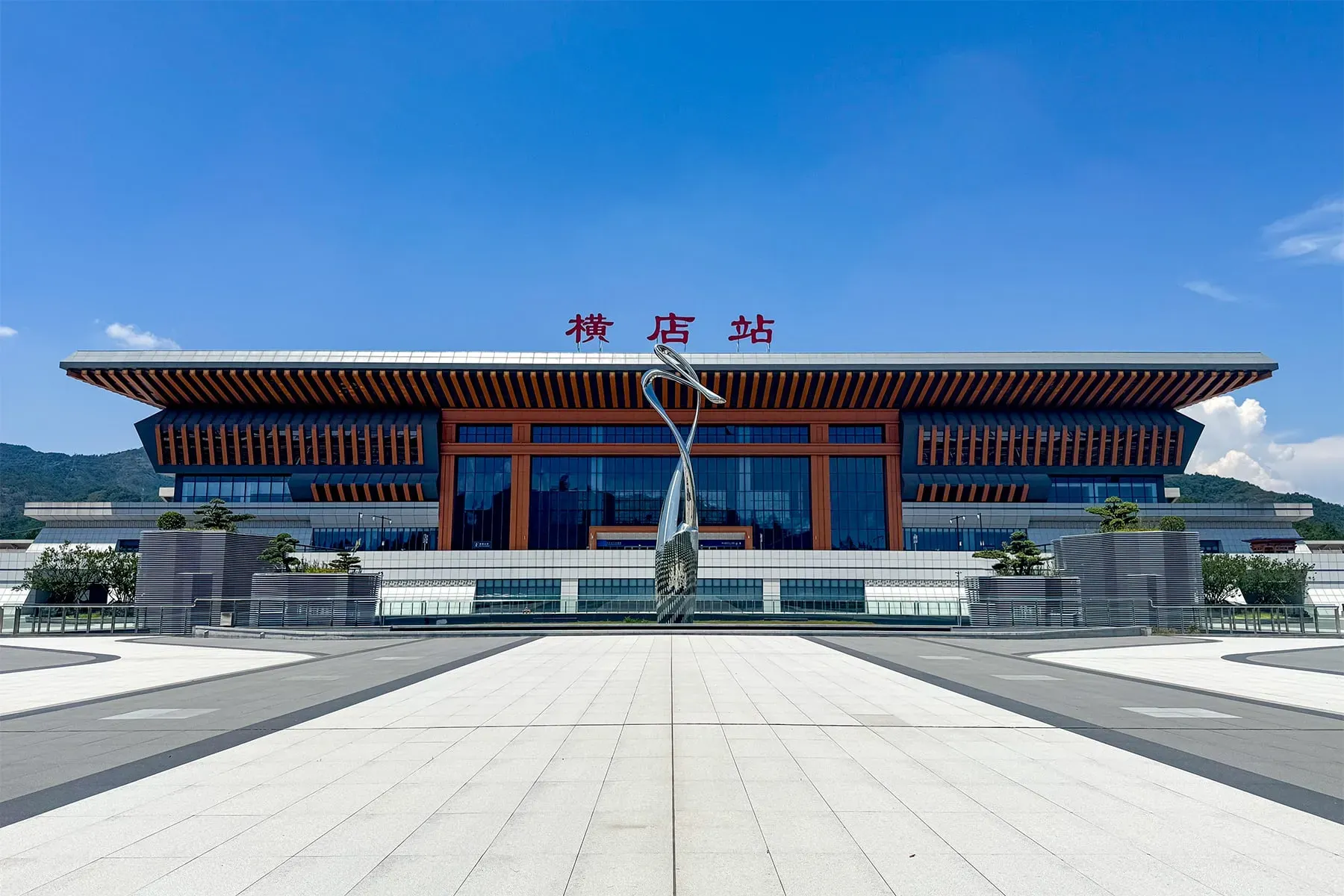
It is less than 10 km from Hengdian high-speed station, so it fits into a day with Hengdian World Studios.
The Lus of Yaxi
The Lus count themselves descendants of the great Lu clan of Fanyang in the north — a family tradition. As Lu Qiyuan of the Lu Residence history and culture society told it in a 2020 Zhejiang Online feature, Lu Yuanfu settled by the Yaxi stream in the Southern Song and founded the line; in the thirteenth generation, in the Yongle reign of the Ming, the family split into four branches, and in time three of them built the Fujing, Suyong and Shude halls around the main ancestral hall.
The man who made the family’s name was Lu Rui (1390–1462). According to genealogy texts translated by Harvard’s China Local project, he was the first jinshi, or metropolitan graduate, of the Yaxi Lus, and the Qing provincial gazetteer of Zhejiang records that he rose to be a right vice censor-in-chief; China Daily dates his degree to 1421. Six more jinshi followed in the Ming and one in the Qing, and more than 120 of the family are said to have held office, China News Service’s Zhejiang channel reported in 2023.
The family kept distinguished company: according to a 2024 essay from Zhejiang Xuanchuan, carried by Zhejiang Online, the couplet on the Suyong Hall’s front gate is by Wang Hua, father of the philosopher Wang Yangming, and there are boards inscribed by the grand secretary Shang Lu and by Wen Zhengming, one of the Ming’s famed “four talents.”
The nine courts of the Suyong Hall
The Suyong Hall is where the clan gathered for its great occasions. Its name comes from “Yougu,” a hymn in the Book of Songs in which musicians play and the ancestors listen:
Loud and full the sound, solemn and in harmony; the ancestors listen.The 2024 essay says the hall was begun in the Jingtai reign of the Ming (1450–1457) and grew for two centuries, reaching its full extent in the Kangxi reign of the Qing; a 2013 Wenhui Daily report, carried by China News Service, dates the start of building to 1456–1462, and China’s intangible heritage website dates the hall to the Yongle reign (1403–1424). The surviving buildings run from the Ming to the Republic.
Along the axis, from front to back, come nine courts:
- First, the Jiebao Gate, the “gate of good tidings”
- Second, the Guoguang Gate, the “glory of the state”
- Third, the Suyong Hall itself
- Fourth, the Tongshou Hall
- Fifth, the Leshou Hall
- Sixth, the Shiyong gatehouse
- Seventh, the Shiyong Hall
- Eighth, the middle hall
- Ninth, the rear building
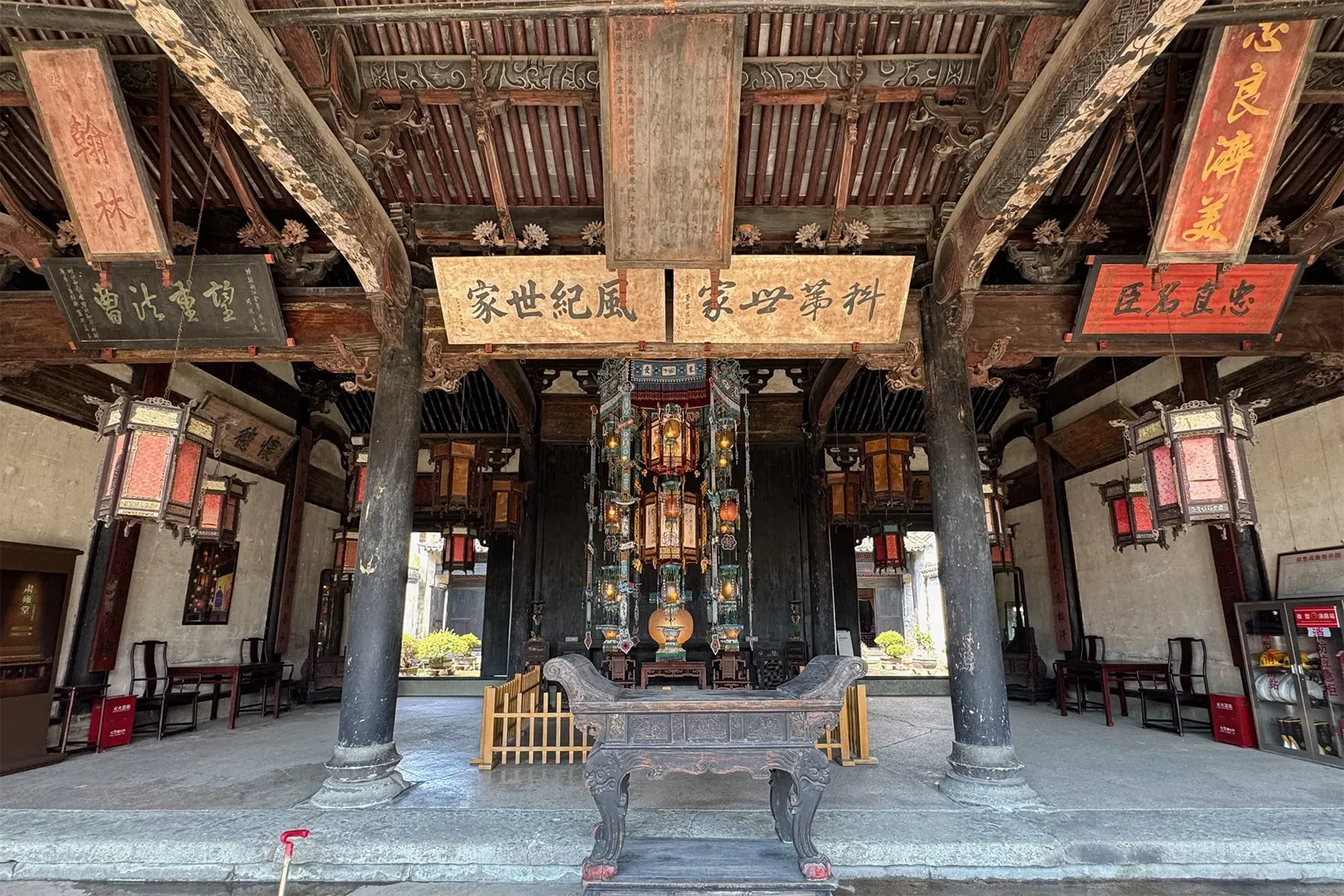
In 2013 Wu Xinlei, then deputy head of the Lu Residence heritage office, told reporters that the axis is 320 meters long, with 115 rooms over more than 6,470 square meters; China’s intangible heritage website likewise gives the axis as nine courts and 320 meters deep. The Suyong Hall itself, China Daily says, is five bays wide, ten purlins deep and 10.6 meters high, and the paintings on its brackets set huge dragons and phoenixes on a ground of peonies.
The “people’s Forbidden City” nickname
The nickname has a companion saying: “the Forbidden City in the north, the Lu Residence in the south.” China News Service’s Zhejiang channel offered two explanations in 2023: that the Lu Residence is the only surviving old house in China nine courts deep and five bays wide, laid out like the Forbidden City; and that many Dongyang craftsmen worked on the Forbidden City and left the marks of Dongyang carving there.
Carving everywhere
The 2024 essay calls the Lu Residence a “living” museum of Dongyang wood carving: beams, brackets, corbels, spandrels, doors, windows and even furniture are carved. The best-known piece is the Nine Lions Playing with a Ball, a beam in the Jiahui Hall carved in openwork and in the round from a single block of camphor more than 1.7 meters across, which China News Service’s Zhejiang channel called the treasure of the house. China’s intangible heritage website describes wood, stone and brick carving and painting combined in the halls, the wood carving finest of all.
In 2008 the craft of building the Lu Residence was added to China’s second national list of intangible cultural heritage, under the heading of Wuzhou’s traditional house-building. Repairs rely on local hands, too: the 2013 report describes Dongyang’s own heritage-building repair company “repairing the old as old,” down to laying pebble floors the old way. For the story of Dongyang carving, see Dongyang Wood Carving and the Lu Residence.
The great lantern
Lanterns have been hung here at New Year since the middle of the Ming, Wu Xinlei told The Paper in 2023, when more than two hundred went up. The centerpiece is the great horn lantern in the middle of the Suyong Hall, which goes by a thirteen-character full name. Lu Chuntai, who ran the clan’s common affairs, added it in 1919: six-sided, 4.05 meters tall, 2.1 meters across, 127.5 kilograms in weight and strung with 400,000 glass beads (about 450,000, China News Service said in 2017). In 1999 a Shanghai records register, the “Shanghai Guinness,” listed it as the largest hall lantern.
According to reports in 2023, it does not come out every year: only for the Spring Festival of a leap year, says The Paper — in the Chinese calendar, a year with an extra month — or every four years, says China News Service’s Zhejiang channel. It usually hangs from the Spring Festival to the Lantern Festival before going back to its lantern room. China News Service reported in 2017, a leap year in that calendar, that the lantern was out again after five years. Yet a photo taken on July 31, 2026, and shared on Wikimedia Commons shows such a lantern hanging in the middle of the Suyong Hall, so the practice may have changed. Part of the craft that made it is already lost.
Loss and repair
What survives is a fraction of what stood. In 2013 Wu Xinlei put the old estate at more than 500 mu, about 33 hectares, of which a little over 40 mu of old buildings remain, less than a tenth. The 2020 Zhejiang Online feature records that when the campaign against the “Four Olds” swept Dongyang in August 1966, the residence’s 25 archways and gatehouses were pulled down one by one (26 Ming archways, says the 2013 report), and a great many treasured objects were burned by the south gate of the old county town. Then on July 23, 1989, a once-in-a-century flood left more than a meter of water in the Suyong Hall’s walkway.
When rebuilding began the next year, Lu Qiyuan said, the gatehouse of the main ancestral hall and the Shude, Dunxu, Jiahui and Shanqing halls, all east of the Yaxi’s middle channel, were moved together onto a plot east of the Suyong Hall, while many others, the Fujing Hall among them, were lost. By his account, some of the halls you see today do not stand where they were built.
The Lu Residence today
Today the Lu Residence is run as a scenic area: old buildings by day and, the 2024 essay says, intangible heritage, film, food, crafts and guesthouses among them after dark. Lu Qiyuan and his colleagues in the history society have also built a 20-square-meter model of the village as it was some fifty years before, which in 2020 was in the West Heting Academy.
Hours and tickets change. In May 2023 the Jinhua government’s English website gave the hours as 8:30 a.m. to 5 p.m. daily. In April 2023 Dongyang’s official news account listed tickets at 35 yuan for people aged 60 to 70, children 1.2 to 1.5 meters tall, under-18s and students with a student card, and free entry for people over 70, children under 1.2 meters and, with valid documents, serving soldiers, veterans, disabled visitors and some others. We have not found the full adult price in an official source, so check before you go.
Getting there, and a day with Hengdian
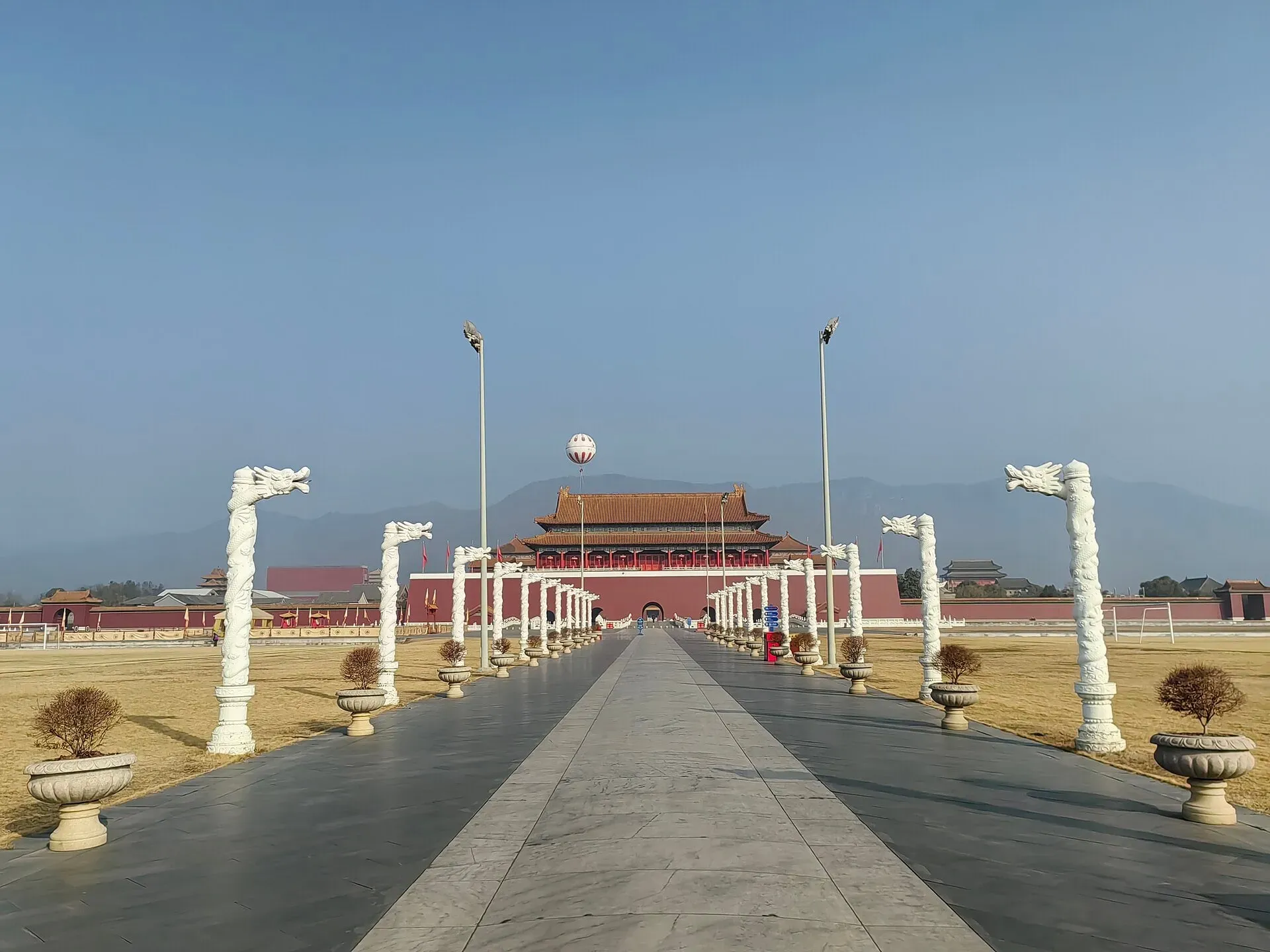
Hengdian high-speed station lies between the Lu Residence and Hengdian town: the Lu Residence is about 9 km to the north, ten minutes or so by car, and the center of Hengdian about 6 km to the south, according to Wikipedia. It is about 8 km from Dongyang North, on the Ningbo–Jinhua railway, and about 15 km from around the Ming and Qing Palaces in Hengdian, a little over ten minutes by car from either. These are map estimates and will be longer on holidays; for trains, see Getting to Dongyang and Hengdian.
To share a day with Hengdian, see the Lu Residence first — on the 2023 hours it opens at 8:30 a.m. — then head south around midday and pick one Hengdian area for the afternoon; according to Zhejiang Online in 2025, some, among them Guangzhou Street and Hong Kong Street and the Riverside Scene at Qingming, also open in the evening. For choosing among them, see Hengdian World Studios; for more carved halls in the Dongyang countryside, see Places to Visit.
Questions & answers
How much are tickets to the Lu Residence, and when is it open?
Both change, so check before you go. In May 2023 the Jinhua government’s English website gave the hours as 8:30 a.m. to 5 p.m. daily; in April 2023 Dongyang’s official news account listed tickets at 35 yuan for people aged 60 to 70, children 1.2 to 1.5 meters tall, under-18s and students, with free entry for people over 70, children under 1.2 meters and some other groups. We have not found the full adult price in an official source.
Why is the Lu Residence called the “people’s Forbidden City”?
China News Service’s Zhejiang channel gave two reasons in 2023. The Suyong axis is nine courts deep and five bays wide, laid out like the Forbidden City; and many Dongyang craftsmen worked on the Forbidden City — hence the saying “the Forbidden City in the north, the Lu Residence in the south.”
What are the nine courts of the Suyong Hall?
According to a 2024 essay from Zhejiang Xuanchuan, from front to back they are the Jiebao Gate, the Guoguang Gate, the Suyong Hall, the Tongshou Hall, the Leshou Hall, the Shiyong gatehouse, the Shiyong Hall, the middle hall and the rear building. In 2013 Wu Xinlei of the Lu Residence heritage office put the axis at 320 meters, with 115 rooms.
How do I get to the Lu Residence from Hengdian, and can I see both in one day?
Yes. The Lu Residence is about 9 km north of Hengdian high-speed station and about 15 km from around the Ming and Qing Palaces in Hengdian town, each a quarter of an hour or less by car on a map estimate. See the Lu Residence in the morning and Hengdian from midday. See Getting to Dongyang and Hengdian.
When can I see the great lantern of the Suyong Hall?
Not every year, according to reports in 2023. The Paper said it was hung only for the Spring Festival of a leap year — in the Chinese calendar, a year with an extra month — and China News Service’s Zhejiang channel said every four years, usually from the Spring Festival to the Lantern Festival; it was hung in 2017 and in 2023. Yet a photo taken on July 31, 2026, and shared on Wikimedia Commons shows such a lantern hanging in the middle of the Suyong Hall, so the practice may have changed. If you hope to see it, ask the scenic area before you go.
Sources
- 英文为本站翻译。车程是按 OpenStreetMap 路网估算的开车时间。《诗经》引文依维基文库的录文。
- 遇见卢宅 · 浙江在线(浙江宣传),2024 年 11 月 26 日
- 浙江东阳古建筑群将重现盛景 · 中新网(文汇报),2013 年 9 月 9 日
- 东阳卢宅:一指流沙凝固卢宅往昔风华 · 浙江在线金华频道,2020 年 6 月 24 日
- 金华东阳卢宅景区成为游客打卡地 · 中国日报网,2025 年 10 月 15 日
- 婺州传统民居营造技艺(东阳卢宅营造技艺)· 中国非物质文化遗产网(国家级名录,项目编号 Ⅷ-177)
- Memorial Arch for the Censor-in-Chief · China Local, Harvard University (texts from the Lu family genealogy)
- 浙江通志(四库全书本)卷一百六十一,卢睿条 · 维基文库
- 四年才能见一次!家门口的“世界之最”不容错过!· 中新网浙江频道,2023 年 2 月 6 日
- 全国重点文保单位东阳卢宅挂起百年堂灯:世上最大,仅闰年挂 · 澎湃新闻,2023 年 1 月 29 日
- 浙江东阳卢宅百年花灯春节亮灯 “吸睛”十足 · 中新网,2017 年 1 月 25 日
- 东阳卢宅 主轴线第三进院 肃雍堂大厅内悬挂的宫灯 · 维基共享资源(Windmemories 摄,2026 年 7 月 31 日)
- A glimpse of the Lu-Family Residence · Jinhua government English site (ezhejiang.gov.cn, presented by China Daily), May 23, 2023
- Jinhua gains two new national 4A scenic attractions · Jinhua government English site (ezhejiang.gov.cn, presented by China Daily), December 21, 2023
- “五一”假期,有啥嬉头 · 东阳发布(澎湃号),2023 年 4 月 27 日
- 横店影视城何以常玩常新 · 浙江在线(金华日报),2025 年 8 月 7 日
- 詩經·周頌·有瞽 · 维基文库
- 东阳卢宅 · 维基百科
- 吴宁街道 · 维基百科
- 横店站 (浙江省) · 维基百科
- 2006 World Monuments Watch · Wikipedia