Song Lian’s Farewell to Ma Sheng of Dongyang
The Ma Sheng of Song Lian’s farewell preface was Ma Junze of Dongyang, a student at the early Ming Imperial Academy; Song Lian, from Pujiang in the same Jinhua prefecture, called him a young man of his home region. What the essay says, when it was written, what “Dongyang” means and what can be seen.
The Ma Sheng of Song Lian’s farewell preface was Ma Junze, a young man from Dongyang. In the early Ming he was a student at the Imperial Academy in the capital; when Song Lian came to court, Ma called on him as a junior from the same home region, and as Ma was leaving to visit his parents, Song wrote him this preface. Song Lian was not from Dongyang. His family came from Qianxi in Jinhua and he himself settled in Pujiang, but Pujiang and Dongyang were counties of the same Jinhua prefecture under the Ming, and so he calls Ma “a son of my home region.”
The essay is a set text in Chinese middle schools, and its text and translations are everywhere online. This page does not translate it line by line again. It sets out what the essay says and why it was written, who Ma Junze and Song Lian were, what “Dongyang” means in the title, and what can still be seen today.
What the essay says
A xu, or preface, here means a farewell piece, written for someone setting out on a journey. Song Lian begins with how he read as a boy:
Even as a boy I loved to study. My family was poor and had no way to get books, so I would borrow them from families who kept libraries, copy them out by hand and return them on the day agreed. In the bitter cold, when the ink-stone froze hard and my fingers would not bend, I did not slacken.Once he came of age, he walked a hundred li to put his questions to a famous elder of the region. The master’s rooms were full of pupils and he never softened his manner; the young Song stood at his side, bent forward to listen, took his rebukes without answering back, and asked again when the master was in a better mood. The years of following a teacher were hard on the road:
When I was following my teacher, I carried my book box on my back and walked in worn-out shoes through deep mountains and great valleys. In the depth of winter, in fierce wind and snow several feet deep, the skin of my feet cracked and I did not even notice.At the lodging his limbs were so stiff with cold that a servant had to pour hot water over him and wrap him in quilts before he warmed up. The inn served two meals a day. His fellow lodgers were richly dressed, and he did not envy them:
My fellow lodgers all wore embroidered silks, hats with red tassels and jewels, white jade rings at their waists, a sword on the left and a scent pouch on the right, dazzling as gods. I lived among them in a padded gown and worn clothes without the least envy, for there was a joy within me that kept me from noticing that I ate and dressed less well than they did.Then he turns to the students of the Imperial Academy. The state feeds them, their parents send them clothes for winter and summer, they read in great halls, they have the academy’s directors and professors for teachers, and every book they need is there; none of them has to borrow and copy as he did.
If their learning is not fine or their virtue not complete, it is not that their natural gifts are low; it is only that their minds are not as set on it as mine was. How could it be anyone else’s fault?Song Lian knew the academy from the inside: the Ming History records that in 1371 he himself held the post of siye there, one of the “directors” the essay names among the students’ teachers.
Ma Junze, and how little else is known
Ma Sheng appears only in the last paragraph, and it is all we know of him:
Ma Junze of Dongyang, a student, has been at the Imperial Academy for two years, and his fellows speak highly of his worth. When I came to court at the capital, he called on me as a young man of my home region, bringing a long letter as his gift of introduction, written with great fluency. When we argued points, his words were mild and his manner easy. He says that as a boy he worked very hard at his studies. He may be called a good learner.Taken sentence by sentence: he was from Dongyang; he had spent two years at the academy; his fellow students thought well of him; he came to Song Lian as a junior from the same region, with a long, fluent letter as his introduction; in argument he was mild and calm; he said he had studied hard as a boy. And, the essay adds, he was now going home to see his parents.
Beyond this, we found nothing about his dates, degrees or later life. When we checked on November 13, 2026, the name was not in Harvard’s China Biographical Database, and a search of Wikisource found no text that mentions him other than the copies of the essay itself. We could not open the Dongyang government’s website on this occasion, and we found nothing on him from the Dongyang gazetteers or local-history office.
According to Chinese Wikipedia, “some scholars” believe that Ma Daoguan, a Yuan dynasty scholar of Dongyang, was Ma Junze’s father; it cites a 2014 paper by Zhou Mingchu in the Journal of Soochow University. We have not read the paper and cannot check the claim, so it remains one view. The New History of Yuan, compiled by Ke Shaomin in the Republican era, says that Ma Daoguan, courtesy name Dezhen, was a student of the scholar Xu Qian and mourned him as if for a parent, wrote a commentary on the Book of Documents, called himself the Old Man of One Insight and kept away from town unless he had official business. It calls him a man of Jinhua, while the entry just before it calls another of Xu Qian’s pupils, Xue Xuan, a man of Dongyang; Wikipedia calls Ma Daoguan a man of Dongyang, though the source it cites for his life is the New History of Yuan itself.
Song Lian ends by stating his purpose, and by answering in advance anyone who might take it amiss:
Now that he is going home to see his parents, I have told him how hard learning was. Those who say I am urging a man of my region to study have named my purpose; those who accuse me of boasting of my good fortune to show off before my countrymen — how little they know me.The “good fortune” he fears being accused of boasting about is a passage earlier in the essay: that although old and with little achieved, he has had the luck to stand among gentlemen, to enjoy the emperor’s favor, to follow behind the ministers and to sit each day at the emperor’s side, ready to answer his questions.
When it was written
The essay carries no date. Song Lian says he “came to court at the capital” and calls himself old, so it was written on a visit to court late in his life. The early Ming capital was Yingtian, today’s Nanjing; the court did not move to Beijing until 1421.
The Ming History’s biography of Song Lian says he retired in 1377 — asked his age by the emperor, he said sixty-eight — and that “the year after, he came to court,” in 1378. It is the only such visit the biography records.
In the Zhengde-era printing of his Collected Works of Academician Song, the essay stands in the third volume of the Chaojing Drafts, “chaojing” meaning to attend court at the capital. In a grave inscription in the fourth volume, Song writes of the time “when, having retired, I came to court at the capital.” But the Chaojing Drafts were not written in a single year. A grave inscription in the same volume as the essay says its subject died “on the third day of the tenth month of this, the tenth year of Hongwu,” so it was written at the end of 1377, and one in the fifth volume records a man who died in the first month of 1379 and was buried in the second, while the same fifth volume also holds two prefaces signed in 1373. Another preface in the third volume, for Wang Wenjiong of Kuaiji, says that thirty-five of the Academy’s students, chosen for their fine natural gifts and their skill in writing, had been taught in person by its professors, and that in the spring of the twelfth year, 1379, a further edict noted how long they had been at their studies and sent them home to visit their parents; Wang called on Song Lian before he left. Ma too was going home to see his parents, but the essay does not say whether he was one of the thirty-five or whether he went under that edict. The essay therefore belongs to Song Lian’s visits to court in old age, as the Ming History’s account of his return after retirement suggests; we found no evidence that settles the exact year.
“Dongyang” and “a son of my home region”
The Dongyang of the title is Ma’s home county. Under the Ming, Dongyang was one of the counties of Jinhua prefecture, which, according to Wikipedia, Zhu Yuanzhang’s government named in 1360 and which in the early Ming comprised seven counties: Jinhua, Lanxi, Yongkang, Yiwu, Dongyang, Wuyi and Pujiang. Today Dongyang is a county-level city under Jinhua; see Dongyang.
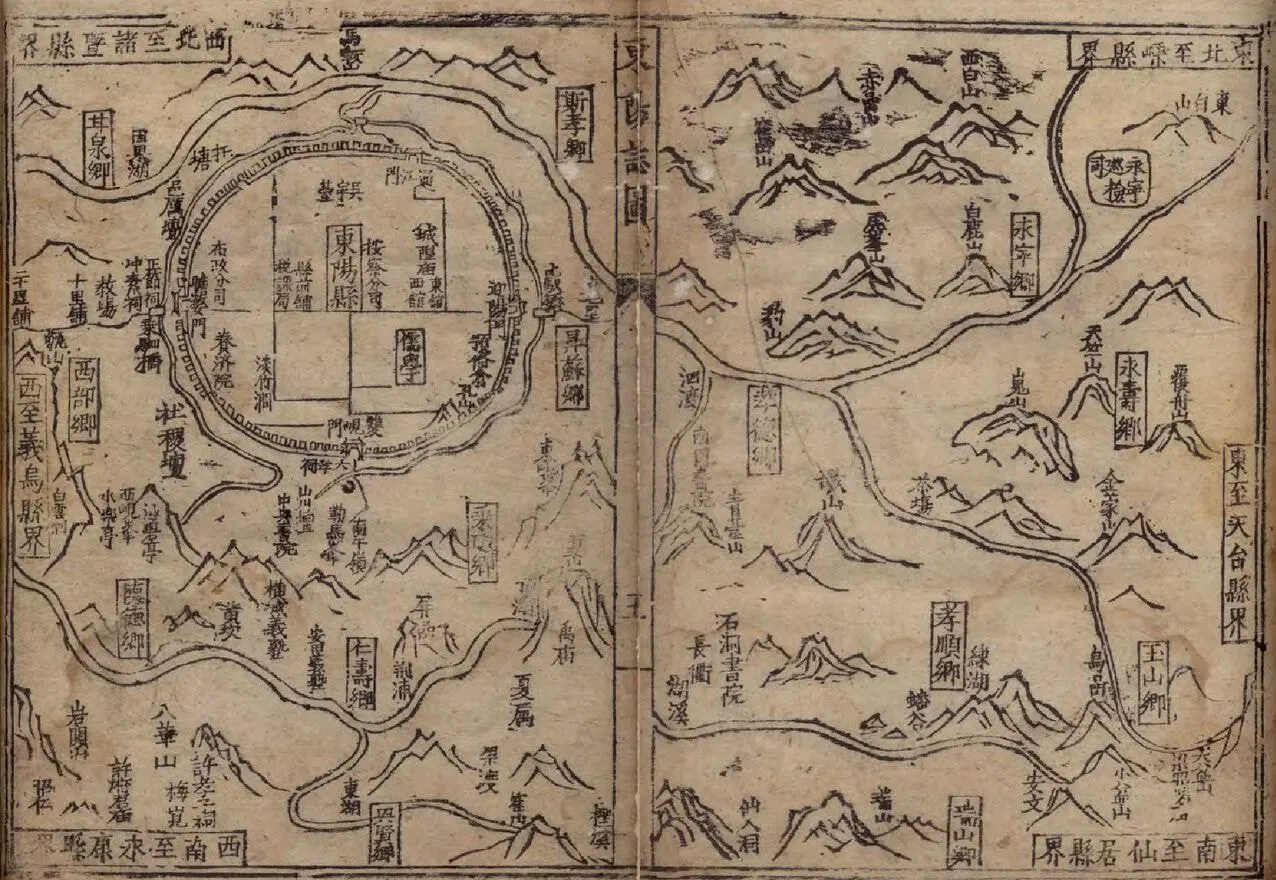
The name is older than the county. According to Wikipedia, in 266 the state of Wu carved a Dongyang commandery out of Kuaiji, covering roughly the basins of today’s Jinhua and Qu rivers, and under the Sui and Tang the prefecture of Wuzhou was at times renamed Dongyang commandery; when the Tang founded Dongyang County, it took over the old name. So “Dongyang” was once the name of the whole Jinhua region. The accounts we found, however, all read the title as naming Ma’s home county: a lesson plan published on the People’s Education Press website calls Ma a younger scholar “from Dongyang, of the same region,” and Xinhua in 2025 called him Song Lian’s “young fellow townsman.” We found no one arguing that the title means the wider region.
Song Lian himself was not from Dongyang. The Ming History says: “Song Lian, courtesy name Jinglian. His forebears were of Qianxi in Jinhua; with Lian the family moved to Pujiang.” Pujiang and Dongyang belonged to the same Jinhua prefecture, and the lesson plan and the Xinhua article above both call Ma his fellow townsman. In two other farewell prefaces, too, Song names his home and his neighbors not by Pujiang but by Wu and Jinhua: to Xu Shiyong he writes that his family is “in Jinhua of Wu,” Wu being Wuzhou, the old name of the prefecture, and he calls Su Pingzhong, who was going home to the Jinhua hills, a man “of the same commandery.”
Song Lian in brief
Song Lian (1310–1381) had the courtesy name Jinglian and the literary name Qianxi. According to the Ming History, he studied with Wenren Mengji and Wu Lai and then with Liu Guan and Huang Jin; when recommended for the Hanlin Academy under the Yuan, he declined on the grounds of his parents’ age and withdrew to Mount Longmen to write. After Zhu Yuanzhang took Wuzhou he summoned Song, and later set him to teach the classics to the heir apparent. In 1369 he became chief compiler of the History of Yuan; he tutored the heir apparent for more than ten years, the History says, and rose to the senior post of the Hanlin Academy, academician recipient of edicts. Renditions, the translation journal of the Chinese University of Hong Kong, likewise credits him with a chief role in compiling the History of Yuan.
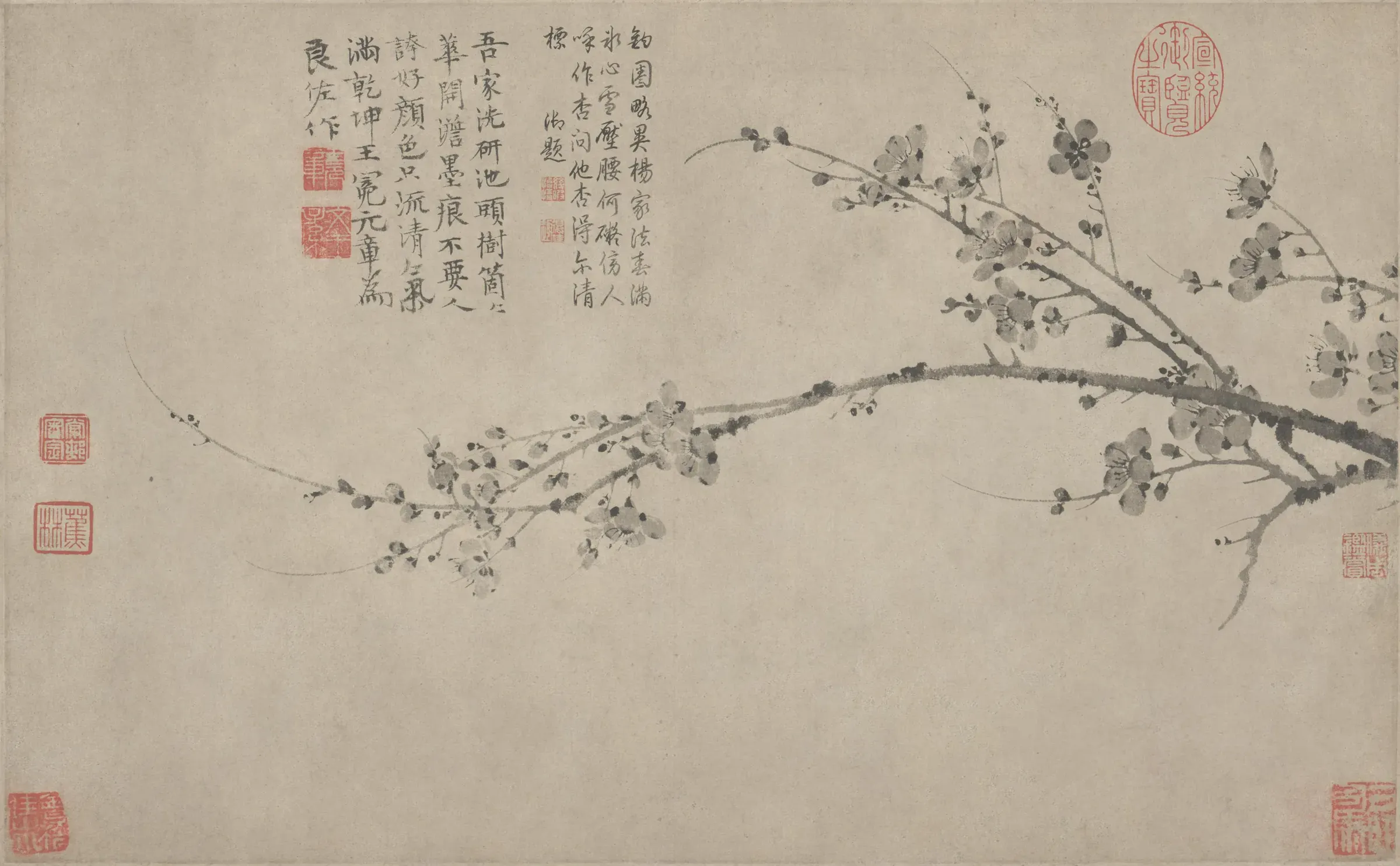
His end was unhappy. In 1380, the Ming History says, his eldest grandson Song Shen was implicated in the Hu Weiyong case, and the emperor meant to put Song Lian to death; the empress and the heir apparent pleaded for him, and he was banished instead to Maozhou in Sichuan. He died the next year at Kuizhou, aged seventy-two; according to Wikipedia, the old sources disagree on whether he died of illness or hanged himself. Song Lian also wrote a life of the painter Wang Mian; see Wang Mian and His Ink Plum Blossoms.
The essay in the school curriculum
A Xinhua article of March 2025 calls the essay a lesson in the Chinese textbook for the second semester of the ninth grade, one that “often trends” online. The People’s Education Press website published a lesson plan for it by Xu Xia, a teacher at the Shangdi Experimental School in Beijing, written for third-year middle-school students (the page is undated; its address carries a 2019 date). It sets the fourth paragraph, the one about Ma, apart as the essay’s third part, “stating the background and purpose of the essay,” and it discusses the closing sentence too.
We have not seen the textbook page itself, and we could not confirm from the publisher or from major media whether the textbook marks it as an excerpt or leaves any sentence out. On November 13, 2026, the original page of the lesson plan showed a maintenance notice; we read the copy saved by the Internet Archive in 2019.
Dongyang’s name for learning
Dongyang takes the essay to heart. A China News Service report of September 2021 called the city, in a subheading, the home of “Ma Sheng of Dongyang,” and said that Dongyang has long had a tradition of founding schools and studying hard, that the essay has been loved for centuries, and that 305 Dongyang men are recorded as jinshi graduates of the old examinations. Many locals, the report said, believe that with many people and little land, Dongyang had to live by study and crafts, and so it earned names such as “home of education.”
The same report cited official figures for 2021: 14 academicians from Dongyang, more than 100 university presidents and heads of research institutes, more than 1,300 holders of doctorates and over 10,000 professors and associate professors. We could not open an original source showing who gave Dongyang the title “home of education,” or when. For one family’s record in the old examinations, the Lus of the Lu Residence on the east side of town, see The Lu Residence.
What can be seen today
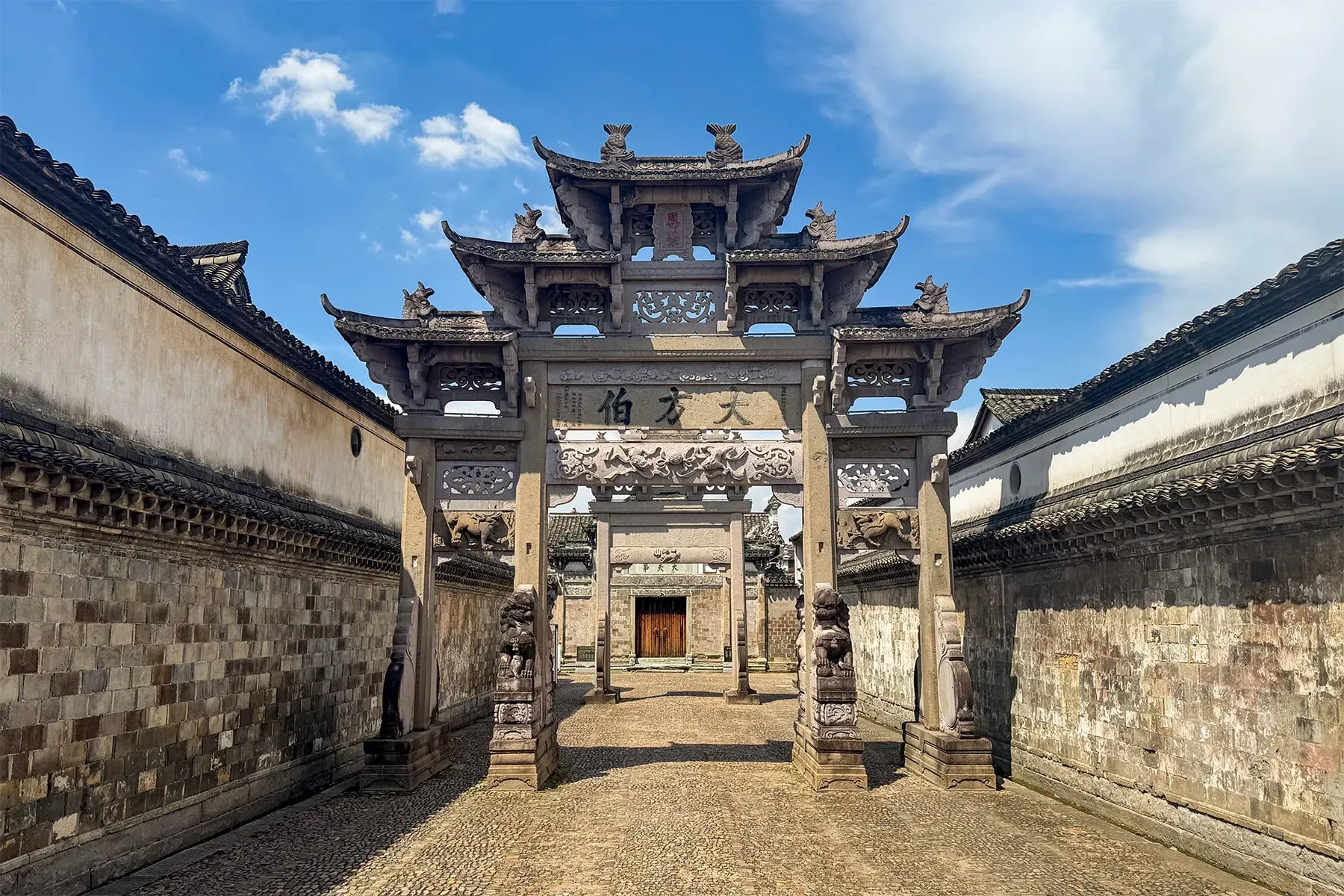
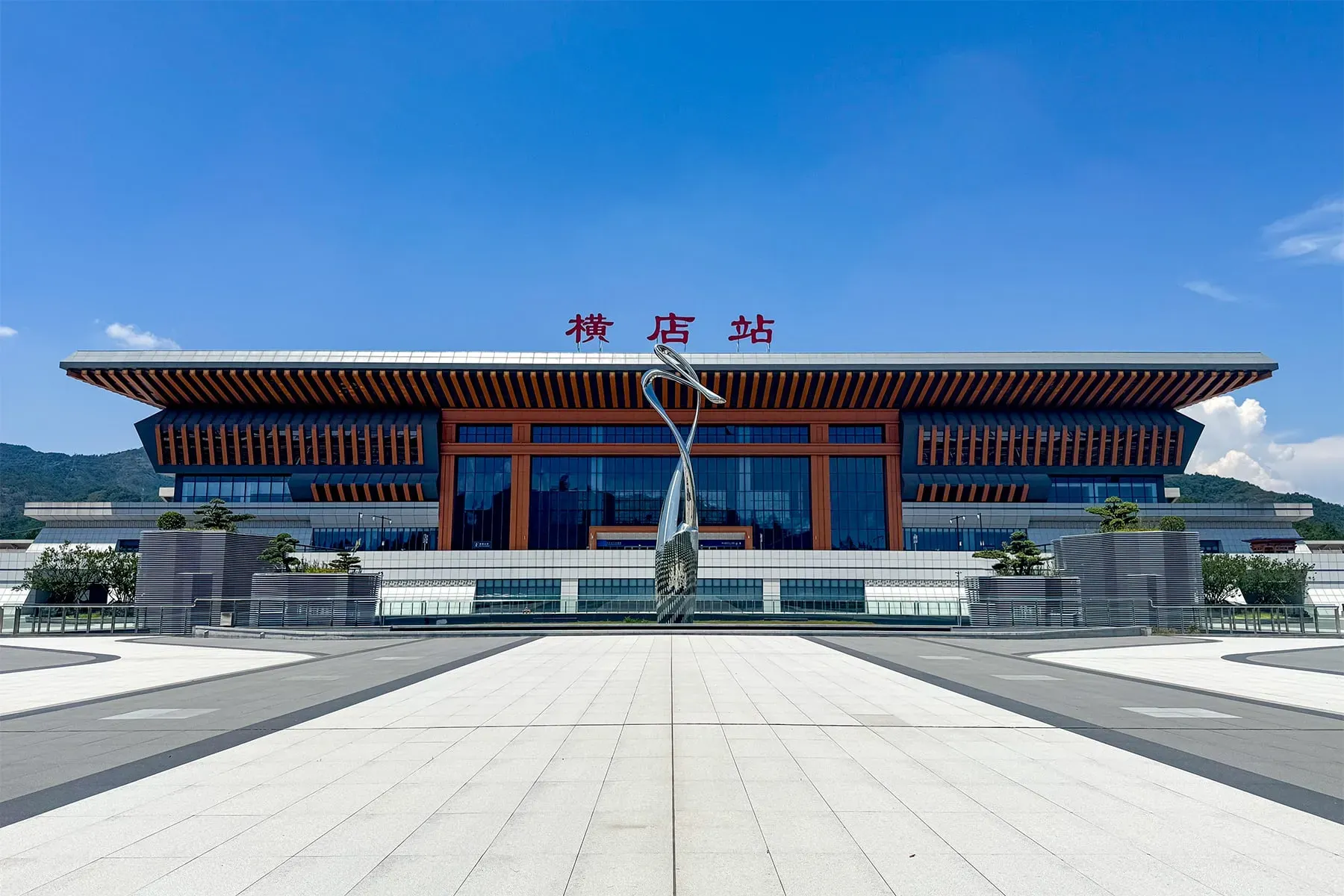
We found no house, grave or memorial of Ma Junze in Dongyang, and no place in Dongyang set aside for the essay. What can be visited of Dongyang’s tradition of study and examinations is the Lu Residence on the east side of town, about 9 km from Hengdian high-speed station on a map estimate; for hours, tickets and directions, see The Lu Residence. For Dongyang’s other sights, see Places to Visit.
The places connected with Song Lian are in Pujiang, a different county of Jinhua, not in Dongyang. According to Wikipedia, the Zhengyimen ancient buildings at Zhengzhai in Pujiang became a national Major Historical and Cultural Site in 2001, in the fifth batch: more than fifty Yuan, Ming and Qing buildings around the Zheng clan’s ancestral hall, among them the Dongming Academy and a site listed as Song Lian’s former site. We found no opening hours or ticket prices.
For trains to Dongyang, see Getting to Dongyang and Hengdian.
Questions & answers
Who was Ma Sheng in Song Lian’s farewell essay?
Ma Junze, a young man from Dongyang; “sheng” means a student. The essay says he had been at the Imperial Academy for two years and was praised by his fellow students, that he called on Song Lian with a long letter when Song came to court, and that Song wrote the preface as Ma was leaving to visit his parents. Beyond the essay, we found no reliable record of him.
Where was Ma Sheng from, and what is the Dongyang of the title?
Dongyang County, one of the counties of Jinhua prefecture under the Ming and today the city of Dongyang under Jinhua. Dongyang was also an older name for the whole region, a commandery set up by the state of Wu in 266, and the Tang county took over that old name. The accounts we found all read the Dongyang of the title as Ma’s home county.
Was Song Lian from Dongyang? Why does he call Ma a young man from his home region?
No. The Ming History says his family came from Qianxi in Jinhua and that he moved to Pujiang. Pujiang and Dongyang were counties of the same Jinhua prefecture, and a lesson plan on the People’s Education Press website and a Xinhua article both call Ma his fellow townsman. Elsewhere Song Lian writes that his family is “in Jinhua of Wu,” Wuzhou being the old name of the prefecture.
When was the essay written?
The essay carries no date. It was written on a visit to court late in Song Lian’s life; the Ming History says he retired in 1377 and came to court the following year, 1378. The Zhengde edition places it among his Chaojing Drafts, which were not written in a single year — a grave inscription in the same volume dates from 1377, and the fifth volume holds both an inscription for a man who died in 1379 and prefaces signed in 1373 — so we found no firm evidence for the exact year.
Where is the essay in the school curriculum?
According to Xinhua in 2025, it is a lesson in the Chinese textbook for the second semester of the ninth grade. We could not confirm from the publisher, People’s Education Press, or from major media whether the textbook prints it in full.
Is there anything connected with Ma Sheng to see in Dongyang?
We found no house, grave or memorial of Ma Junze in Dongyang. What can be seen of Dongyang’s old success in the examinations is the Lu Residence on the east side of town, whose family produced a number of jinshi graduates in the Ming and Qing; see The Lu Residence.
Sources
- 英文为本站翻译。引文依维基文库《宋学士文集》(四部丛刊景印明正德刊本)卷七十三、即《朝京稿》卷三的录文;异体字改为通行的简体字(如“㓜”作“幼”,“氷”作“冰”,“譔”作“撰”,“巳”作“已”),标点为本站所加;《明史》《新元史》和宋濂其他文章的引文也照此处理。这个本子作“余”“俟”,作“弊衣”“朱缨”“烨然”。四库全书本《文宪集》卷八和《明文海》卷二百八十五也收了这篇,个别字不同(两本的维基文库录文都作“砚水坚”,《明文海》本作“以衾覆,久之乃和”)。维基文库另有一个加了标点的页面,注明录自《明文海》,用字却和《明文海》的录文不全一样。
- 宋学士文集(四部丛刊本)卷第七十三(朝京稿卷三,送东阳马生序)· 维基文库
- 宋学士文集(四部丛刊本)目录八(朝京稿目录)· 维基文库
- 宋学士文集(四部丛刊本)卷第七十四(朝京稿卷四)· 维基文库
- 宋学士文集(四部丛刊本)卷第七十五(朝京稿卷五)· 维基文库
- 文宪集(四库全书本)卷八 · 维基文库
- 明文海(四库全书本)卷二百八十五(送东阳马生序、送许时用还越中序、送国子正苏君还金华山中序)· 维基文库
- 送东阳马生序 · 维基文库
- 明史 卷一百二十八(宋濂传)· 维基文库
- 新元史 卷二百三十四 儒林一(马道贯)· 维基文库
- 新华走笔丨从《送东阳马生序》和DeepSeek说起 · 新华网(新华每日电讯,吉哲鹏),2025 年 3 月 21 日
- 《送东阳马生序》教学设计 · 人教网(徐霞,北京市上地实验学校),页面未署日期,网址中的日期是 2019 年 6 月 27 日(互联网档案馆 2019 年 9 月 13 日存档)
- 县级市走出14位院士 浙江东阳因何“盛产”学者?· 浙江在线(中国新闻网,张斌),2021 年 9 月 19 日
- Song Lian (Sung Lien) 1310–1381 · Renditions, Research Centre for Translation, The Chinese University of Hong Kong
- Song Lian (person 10097) · China Biographical Database (CBDB), Harvard University(2026 年 11 月 13 日查询;库中没有马君则)
- 宋濂 · 维基百科
- Song Lian · Wikipedia
- 马道贯 · 维基百科(引周明初《〈送东阳马生序〉人物考》,《苏州大学学报》2014 年第 2 期)
- 东阳市 · 维基百科
- 东阳郡 (六朝) · 维基百科
- 金华府 · 维基百科
- 郑义门古建筑群 · 维基百科
- Nanjing · Wikipedia