Linhai and Yongquan Mandarins
Linhai’s best-known mandarins come from Yongquan, a town of hillside orchards east of the old city. They are Satsumas, mostly the early Miyagawa: seedless, and so thin-skinned that a local saying has you eat them peel and all. The Miyagawa usually comes in at the end of October or early in November and is best from mid-November into December; Yongquan’s picking season as a whole can run into February. Linhai mandarins have been a registered geographical indication since 2020.
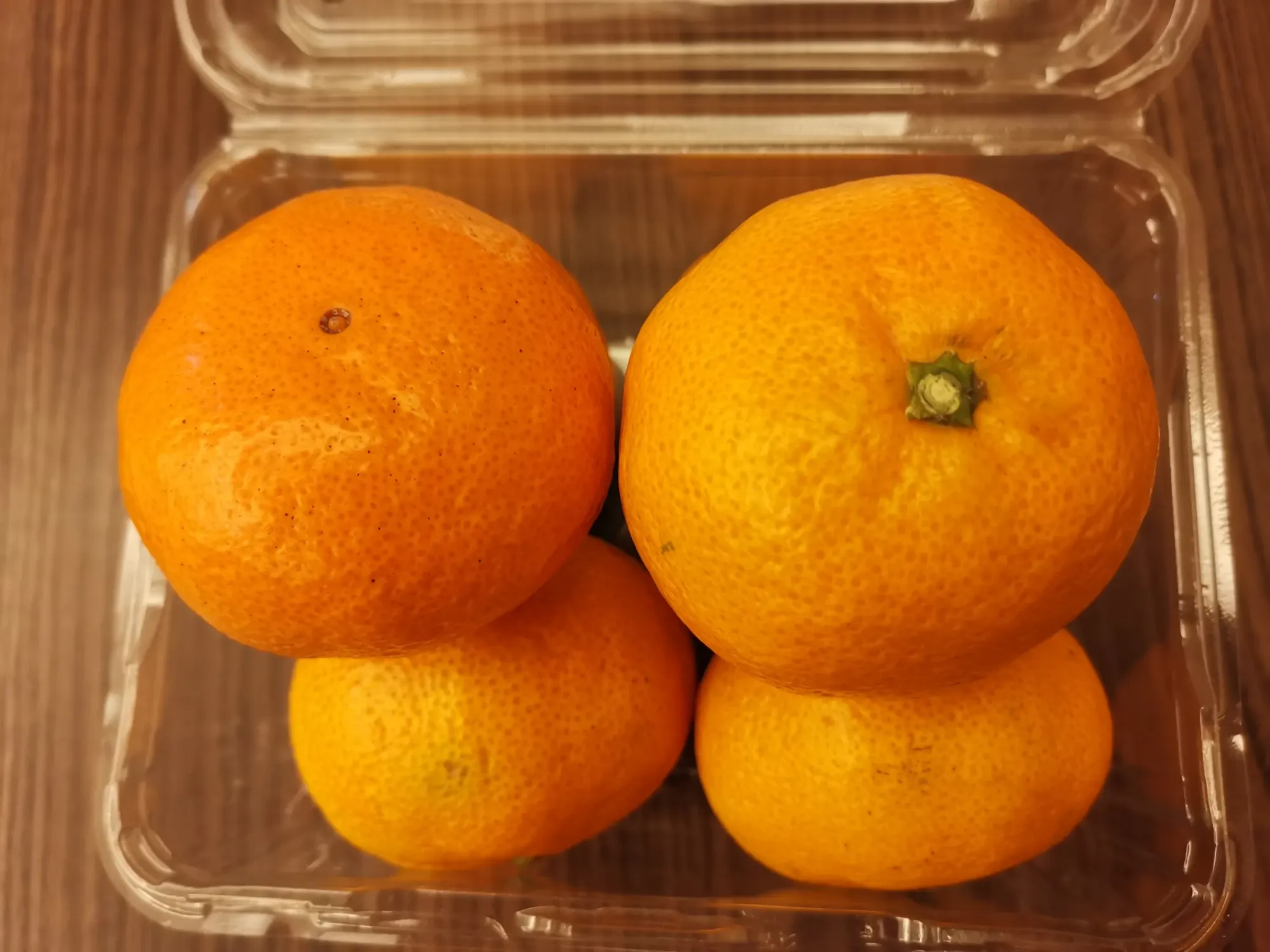
The best-known mandarins of Linhai come from Yongquan, a town on the Ling River east of the old city. They are Satsumas, mostly the early Miyagawa: seedless, and so thin-skinned that a local saying goes, “A wonder of Linhai: you eat the mandarins peel and all.” The Miyagawa usually comes in at the end of October or early in November and is best from mid-November into December; Yongquan’s picking season as a whole can run into February. Since 2020 “Linhai mandarins” has been a registered geographical indication, and Yongquan is its main growing area.
Seedless, thin-skinned Satsumas
Yongquan’s mandarins are Satsumas, Wenzhou migan in Chinese. Japanese dictionaries call the Satsuma a variety created in Japan, seedless, thin-skinned and juicy, and despite the name unconnected with the city of Wenzhou in Zhejiang. Yongquan grows mostly the Miyagawa (Xinhuanet, 2023), an early Satsuma that a doctor in Fukuoka, Miyagawa Kenkichi, found among the Satsumas at his home in the 1910s; it was named in 1925, a Japanese dictionary says. It reached Huangyan, in Taizhou, from Japan in 1937, says the Taizhou prefecture gazetteer of 1995.
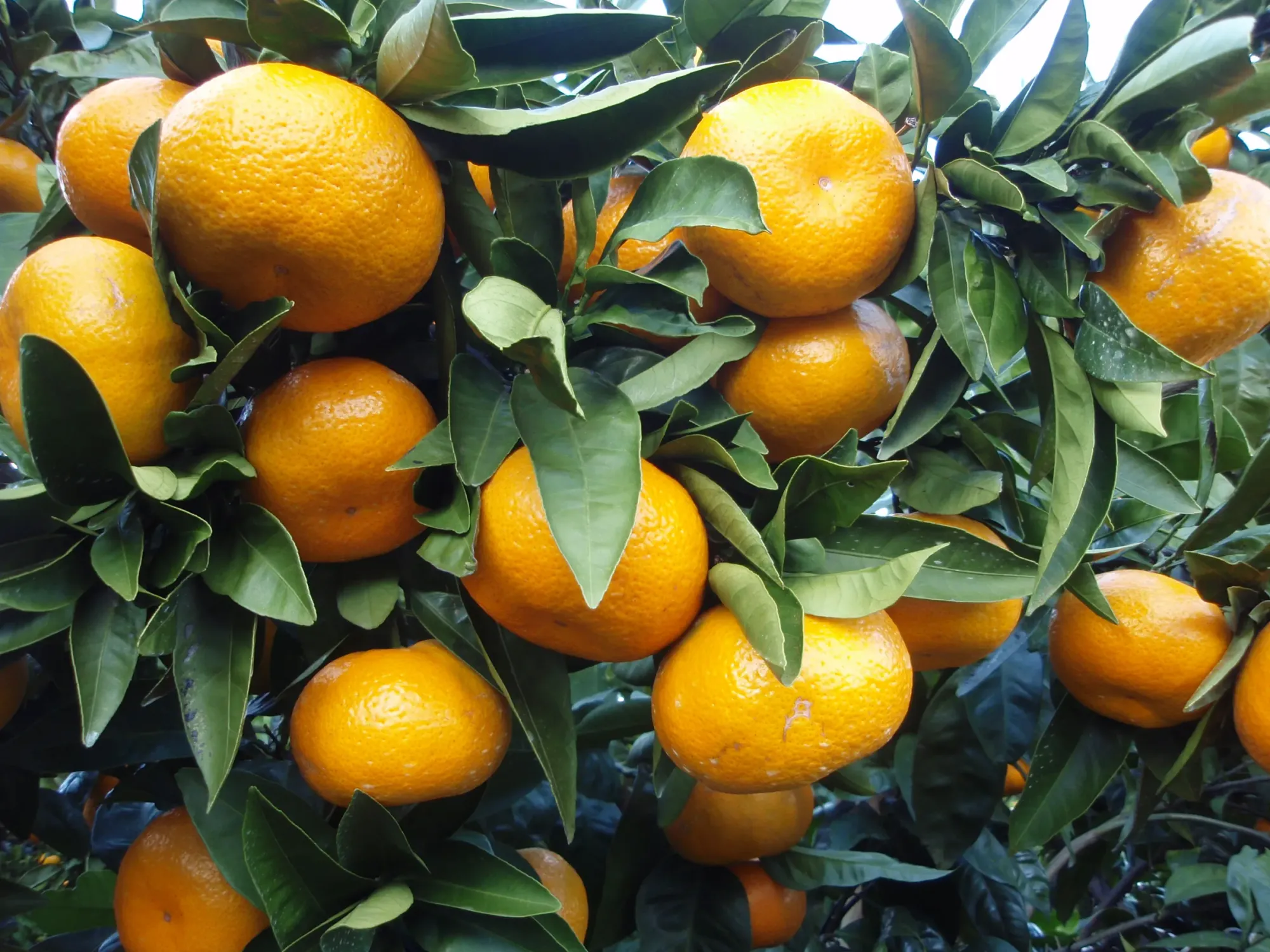
Where the Satsuma first arose is disputed. The Taizhou gazetteer passes on a legend that an early Ming Japanese monk, Zhihui, took home the seeds of mandarins he ate on a pilgrimage to Mount Tiantai, and that a mutation among the seedlings gave the Satsuma. A 2025 genome study by Huazhong Agricultural University, the Zhejiang Citrus Research Institute in Taizhou and others concluded that it arose from a cross of two mandarins, Ruju and Bendiguang, most probably in eastern Zhejiang, where cultivars like those two parents still grow in the same area.
Yongquan’s fame rests on sweetness and a thin peel. Ordinary mandarins measure 8 to 12 degrees Brix and Yongquan’s 12 and up, some 15 to 18, Zhejiang Online reported in 2022; the peel averages under 2 mm, fragrant and not astringent. Most mandarins are picked eight or nine parts ripe, Chao News said in 2025, but Yongquan’s only when fully ripe.
Hills above the Ling River
Yongquan lies east of Linhai’s old city, on the north bank of the lower Ling River. Zhejiang Online summed up its advantages in 2022: the river to the south, hills on three sides, plenty of sun and plenty of rain. The town is hilly, Taizhou Daily reported in 2024, and nearly all its mandarins grow on the slopes.
Legends and records
China Daily’s Taizhou pages said in 2018 and 2022 that Linhai has grown citrus for some 1,800 years. The earliest text we have found is Shen Ying’s third-century Linhai Shuitu Yiwu Zhi, which mentions a “chicken mandarin,” taken by the 1989 Linhai county gazetteer to be the kumquat; the Linhai of its title was the commandery of the day, far larger than today’s city. Under the Tang, Taizhou sent rugan mandarins to court as tribute, the New Book of Tang records. But Taizhou’s citrus long centered on Huangyan: in 1949, says the 1995 Taizhou gazetteer, Huangyan had 22,000 mu of orchards and Linhai about 1,000.
When the seedless mandarins reached Yongquan is disputed too. Taizhou’s second-round city gazetteer says the 1930s, and Zhejiang Online wrote in 2022 that villagers from Guan’ao brought them home in that decade. In 2026 Zhejiang Online told another story: in March 1943 Ma Xianzhong, an adjutant in Taizhou’s security command, and Kong Hanchao, a laborer in his household, carried 200 seedless saplings on shoulder poles from Fenghua, near Ningbo, to Meixian village, beginning seedless mandarin growing in Linhai, the report says. The 1989 county gazetteer dates the county’s first trial of Satsumas to 1956, at the Yuxian fruit farm.
Planted on low ground that the Ling River’s tides reached, those saplings died one by one; Kong kept one back for the sunny hillside behind his house, and it survives as Meixian’s “old mandarin king.” In 1956, the Taizhou gazetteer records, trials of growing citrus on the hills succeeded, and Huangyan and Linhai led the way.
By 1985, the county gazetteer records, Linhai had 78,890 mu of orchards, about 5,260 hectares and 80 times the area of 1949; over nine-tenths were Satsumas, and its Satsuma crop was the largest in Zhejiang. The best Miyagawa, from the county’s fruit farm and nursery, were known as “sugar-frost” mandarins. In the 1980s Yongquan switched to seedless mandarins and within ten years had 38,000 mu, Zhejiang Online wrote in 2025.
Today Yongquan has 60,000 mu of citrus, about 4,000 hectares, yielding some 80,000 tonnes a year (Xinhuanet, 2023), worth over 800 million yuan in 2024 (Zhejiang Online, 2025). All of Linhai has nearly 200,000 mu and a usual crop of about 300,000 tonnes (Zhejiang Online, 2025).
A protected name and a title
In Announcement No. 290, dated April 30, 2020, the Ministry of Agriculture and Rural Affairs registered “Linhai mandarins” as an agricultural geographical indication, covering 628 villages in 19 of Linhai’s towns and subdistricts. Yongquan is its main growing area, Taizhou Daily reported in 2024, and the city’s market regulators pursue misuse of the name.
Linhai also calls itself China’s home of seedless mandarins, a title Taizhou’s second-round city gazetteer gives to Yongquan. The Taizhou government’s English website, presented by China Daily, said in 2018 that the Ministry of Agriculture conferred it on Linhai in 1999; we have not found the ministry’s own record.
When they are in season
Timing depends on the kind and the year. In 2025, Zhejiang Online reported in October, Taizhou’s first mandarins were extra-early kinds, Ōita and Yura, on sale from September; Yongquan’s Miyagawa was expected at the end of October or early November and usually sells through December. Yongquan’s high point comes in the second half of November, the same site wrote that November, and its picking season can run from October into February, Xinhuanet reported in 2023.
In 2026 a few early Miyagawa were on sale from about the end of September, Chao News reported on October 27 that year, with the best expected from November.
Picking and selling
The fruit used to come down the slopes on shoulder poles. A load is about 90 jin (45 kg), and a hired porter charges 30 yuan a load, if one can be found; now monorail carts run between the orchards and the foot of the hill, carrying 400 to 500 jin a trip, and the town had about 4,000 of them in 2024, Taizhou Daily reported. On November 18 that year, growers set up stalls near the Linhai Citrus Science and Technology Park and sold freshly picked mandarins on the spot.
Much of the crop sells online. In July 2015, Zhejiang Online reported in 2022, fifty-five Yongquan cooperatives and families selling online formed Linhai’s first town-level e-commerce association, and by 2022 two of every five Yongquan mandarins sold online. Grading has grown finer: by then the mandarins were sorted by machine into more than thirty grades, from 2 to 100 yuan a jin, the report said.
Choosing, keeping and eating
To choose, Chao News advised in October 2026, look for glossy skins and fruit heavy for its size; the heavier, the juicier. Fruit still tinged with green keeps about half a month and sweetens as it sits, Hangzhou stallholders said. At Hangzhou’s Wenhui fruit market on October 26, 2026, Yongquan mandarins were 3 to 4 yuan a jin, and good ones about 10 yuan a jin in roadside fruit shops; one stallholder said the harvest was good and prices fairly low that year. Prices change every year, so check before you buy.
Online, take care. Yongquan had 926 registered fruit trademarks in 2024, most of them brands of Yongquan mandarins, Taizhou Daily reported, and a cooperative head said some listings labeled as from Yongquan sold for 4 or 5 yuan a jin, less than even the cheapest genuine Yongquan mandarins cost that year.
Linhai also serves its mandarins at banquets: segments coated in golden syrup and pulled into long threads of spun sugar make a closing sweet, Zhejiang Online reported in 2025. Candied orange goes into the sweet soup Linhai eats on the fifteenth night of the new year; see Zaogeng and Danqing Yangwei.
Visiting Yongquan
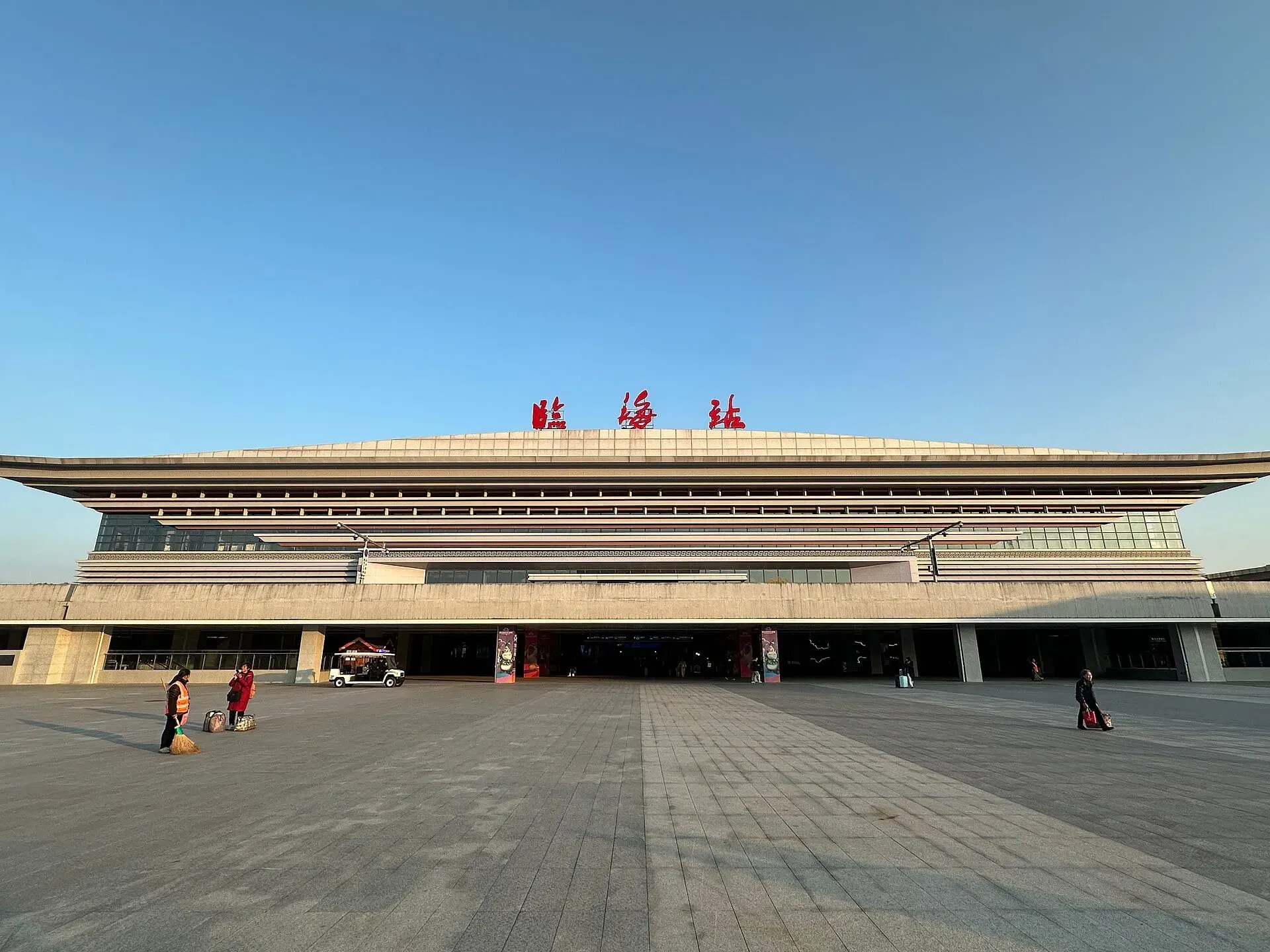
By map estimate, Yongquan is 28 to 34 km by road from Ziyang Street in the old city and about 26 km from Linhai station: half an hour or so either way, longer on holidays. We have found no reliable bus information, so a taxi or a car is simplest. For the journey to Linhai, see Getting to Linhai.
Three places come up in the reports we found, though we have found no official word on whether any of them is open to visitors:
- The Linhai Citrus Science and Technology Park, where Yongquan’s 14th citrus festival opened in November 2023 with a mandarin market and a qipao show.
- Meixian village’s “old mandarin king,” a late Satsuma planted in 1943: over 5 m tall, it gave more than 1,500 jin, some 750 kg, on January 4, 2026. A stone tablet stands beside it, and people come to see it in the picking season.
- Linhai Migu, the “honey valley,” begun near the park in November 2024 with plans for a playground and a hillside kitchen; we have not found whether it has opened.
Yongquan makes more than mandarins: over 40 percent of China’s qipao now come from the town, Xinhua reported in 2026. We have found no list of orchards open for picking, nor their hours or charges, and as of November 2026 no program for this year’s festival, so ask locally before you go. For more of Linhai, see Places to Visit.
Questions & answers
When are Yongquan mandarins in season?
The main kind, the Miyagawa, usually comes in at the end of October or early in November and sells through December (Zhejiang Online, 2025), and Yongquan’s high point comes in the second half of November. Its picking season can run from October into February, Xinhuanet reported in 2023. In 2026 a few early Miyagawa were on sale from the end of September, Chao News reported that October, with the best expected from November.
Are Linhai mandarins and Yongquan mandarins the same thing?
Yongquan’s are the best known of Linhai’s mandarins. “Linhai mandarins” is the agricultural geographical indication registered in 2020, covering 628 villages in 19 of Linhai’s towns and subdistricts (agriculture ministry announcement No. 290); Yongquan is its main growing area (Taizhou Daily, 2024). Yongquan grows 60,000 mu of citrus (2023), out of nearly 200,000 mu in all of Linhai (2025).
What kind of mandarin is it, and is it really seedless?
It is a Satsuma, these days mostly the early Miyagawa (Xinhuanet, 2023). Japanese dictionaries describe the Satsuma as seedless, thin-skinned and juicy, and the 1989 Linhai county gazetteer calls the Miyagawa thin-skinned, sweet, seedless and juicy. The peel averages less than 2 mm and is fragrant, not astringent, so it can be eaten too, Zhejiang Online reported in 2022; that is what the local saying about eating it peel and all refers to.
How do I buy genuine Yongquan mandarins, and what do they cost?
On November 18, 2024, Taizhou Daily reported, growers crowded the area around the Linhai Citrus Science and Technology Park, selling fresh-picked mandarins from stalls. Online there are many brands. Yongquan had 926 registered fruit trademarks in 2024, and a cooperative head said some listings labeled as from Yongquan sold for 4 or 5 yuan a jin, less than even the cheapest genuine Yongquan mandarins cost that year. On October 26, 2026, Yongquan mandarins sold for 3 to 4 yuan a jin at Hangzhou’s Wenhui fruit market, and good ones for about 10 yuan a jin in roadside fruit shops (Chao News); a stallholder said the harvest was good and prices fairly low that year. Prices change every year, so check before you buy.
Can I visit the orchards, or pick my own?
You can, but ask first. When the mandarin festival opened in November 2023, a release from Linhai’s publicity department, carried by Xinhuanet, said that visitors were streaming into Yongquan to see, pick and taste the fruit, and Meixian village’s “old mandarin king,” planted in 1943, draws visitors in the picking season (Zhejiang Online, 2026). We have found no list of orchards open for picking, nor their hours or charges, and no program for a 2026 festival. Yongquan is about half an hour’s drive east of the old city.
Sources
- 英文为本站翻译,日文和英文资料的中译也是本站翻译。车程是按 OpenStreetMap 路网估算的开车时间。1 斤 = 500 克,1 亩约 667 平方米;公制换算是本站做的。
- 中华人民共和国农业农村部公告第290号(附件1:2020年第一批农产品地理标志登记产品公告信息)· 农业农村部,2020 年 4 月 30 日
- 临海县志 · 第五编 经济 · 第四章 土特产 · 第一节 柑橘(1989 年)· 台州史志网
- 台州地区志 · 第十章 水果业 · 第一节 柑桔(1995 年)· 台州史志网
- 台州市志(下)· 卷29 县(市、区)概况 · 第四章 临海市 · 第五节 镇街道 · 台州史志网
- 新唐书 · 卷四十一 · 地理志 · 维基文库
- 临海郡 · 维基百科
- 浙江临海涌泉蜜橘节开幕 · 新华网浙江频道(临海市委宣传部),2023 年 11 月 21 日
- 2023年涌泉蜜橘节在浙江临海启幕 · 中新网浙江,2023 年 11 月 20 日
- 台州人文地理|橘子味的涌泉 · 浙江在线,2022 年 11 月 17 日
- 台州临海:“涌泉蜜桔”的现代化进阶路 · 人民网浙江频道(台州日报),2024 年 11 月 20 日
- 青橘已熟,宫川在望,秋日的这一口清甜,你吃了吗?· 浙江在线,2025 年 10 月 15 日
- “橘”时已到,台州邀你共赴一场甜蜜之约 · 浙江在线,2025 年 11 月 21 日
- 台州人的骄傲!咱家的柑橘在省里“露脸”了 · 浙江在线,2025 年 11 月 24 日
- 从沿海到山区 “浙”里冬日水果的N种打开方式 · 潮新闻,2025 年 12 月 13 日
- 无核蜜橘树之“王”,就在临海涌泉!· 浙江在线(临海发布),2025 年 12 月 26 日
- 年产量超1500斤!“古橘王”和橘农双向守护成就亿元村 · 浙江在线,2026 年 1 月 5 日
- 实现“蜜橘自由”!杭州人的果盘奏起“秋果交响曲” · 杭州网(潮新闻),2026 年 10 月 27 日
- 温州蜜柑 · コトバンク(精選版 日本国語大辞典、デジタル大辞泉)
- 宮川早生 · コトバンク(デジタル大辞泉プラス)
- Liu S. et al., Genomic origin of Citrus reticulata “Unshiu” · Horticulture Research 12(5), 2025
- Yongquan sweet orange in Linhai · Taizhou government English website (China Daily), November 23, 2018
- All you should know about Linhai tangerine · China Daily, May 13, 2022
- Chinese town breathes new life into traditional qipao industry · Xinhua, March 20, 2026