Taozhu Ancient Town
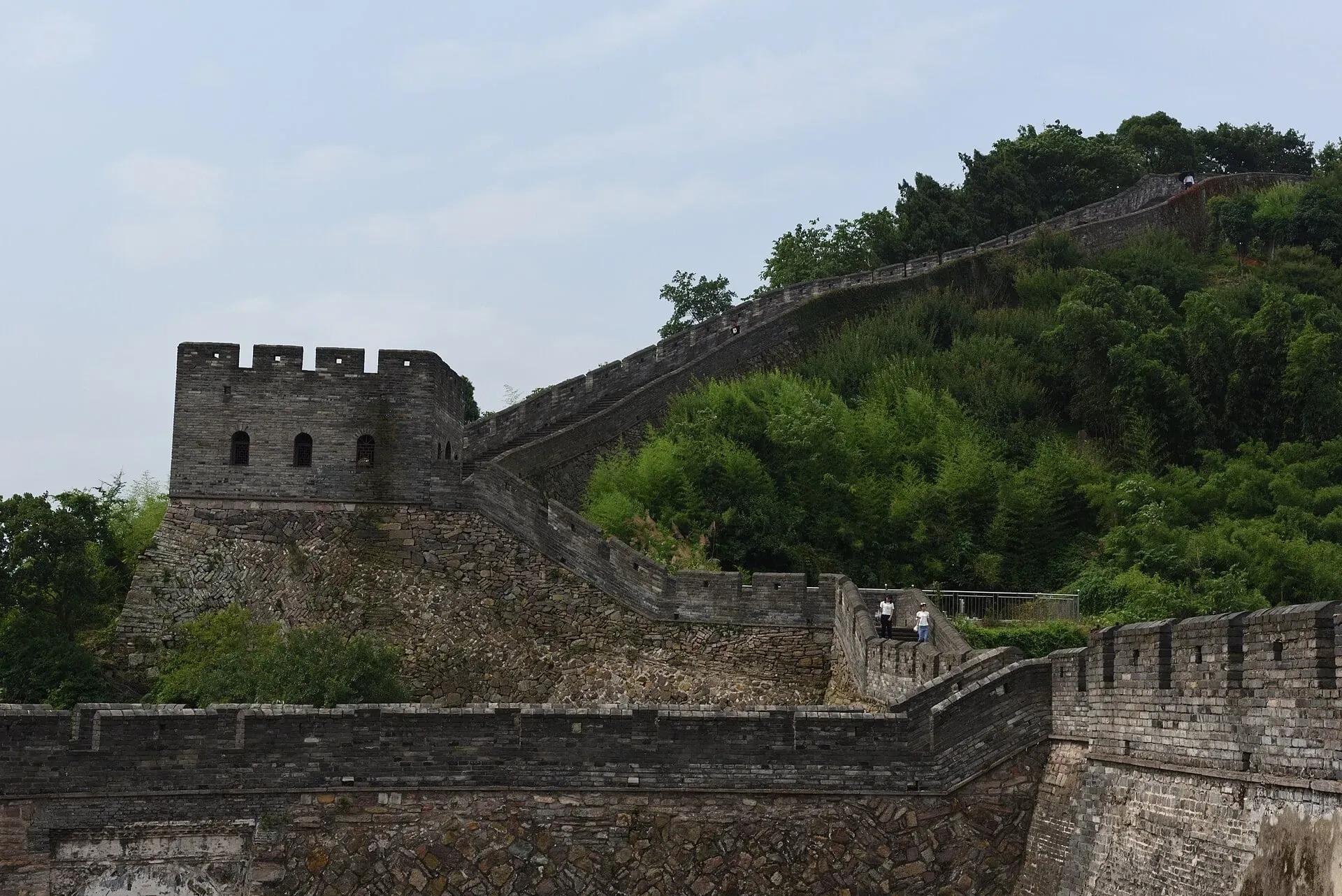
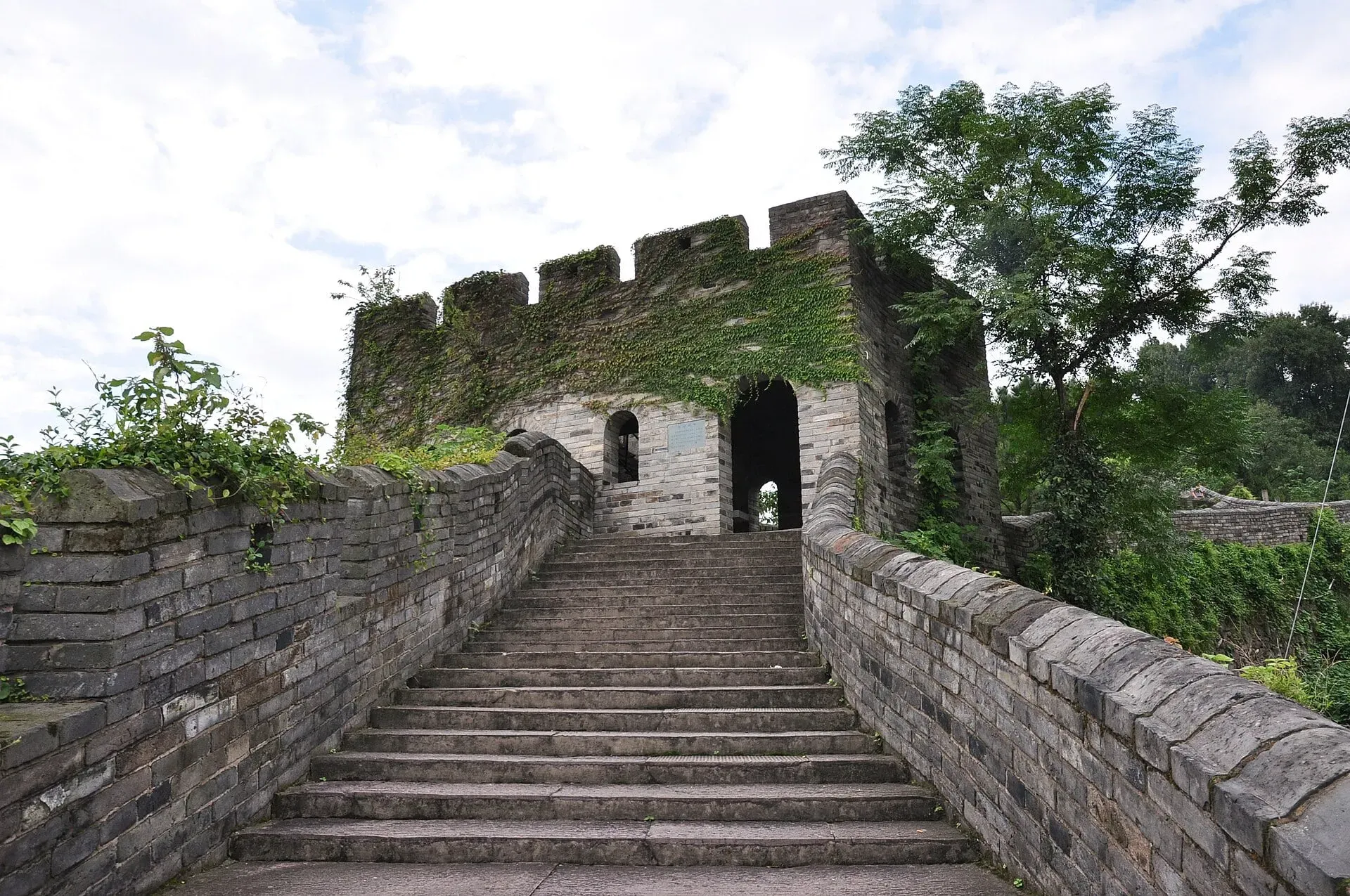
Taozhu is a walled garrison town that the Ming built against the wokou pirates, near the coast in eastern Linhai. The garrison was founded in 1387 and later moved inland; the present town was finished in 1443, and in 1561 Qi Jiguang held Taozhu against the raiders. Its wall, its three barbican gates and its lanes survive, and it has been a major national heritage site since 2001.
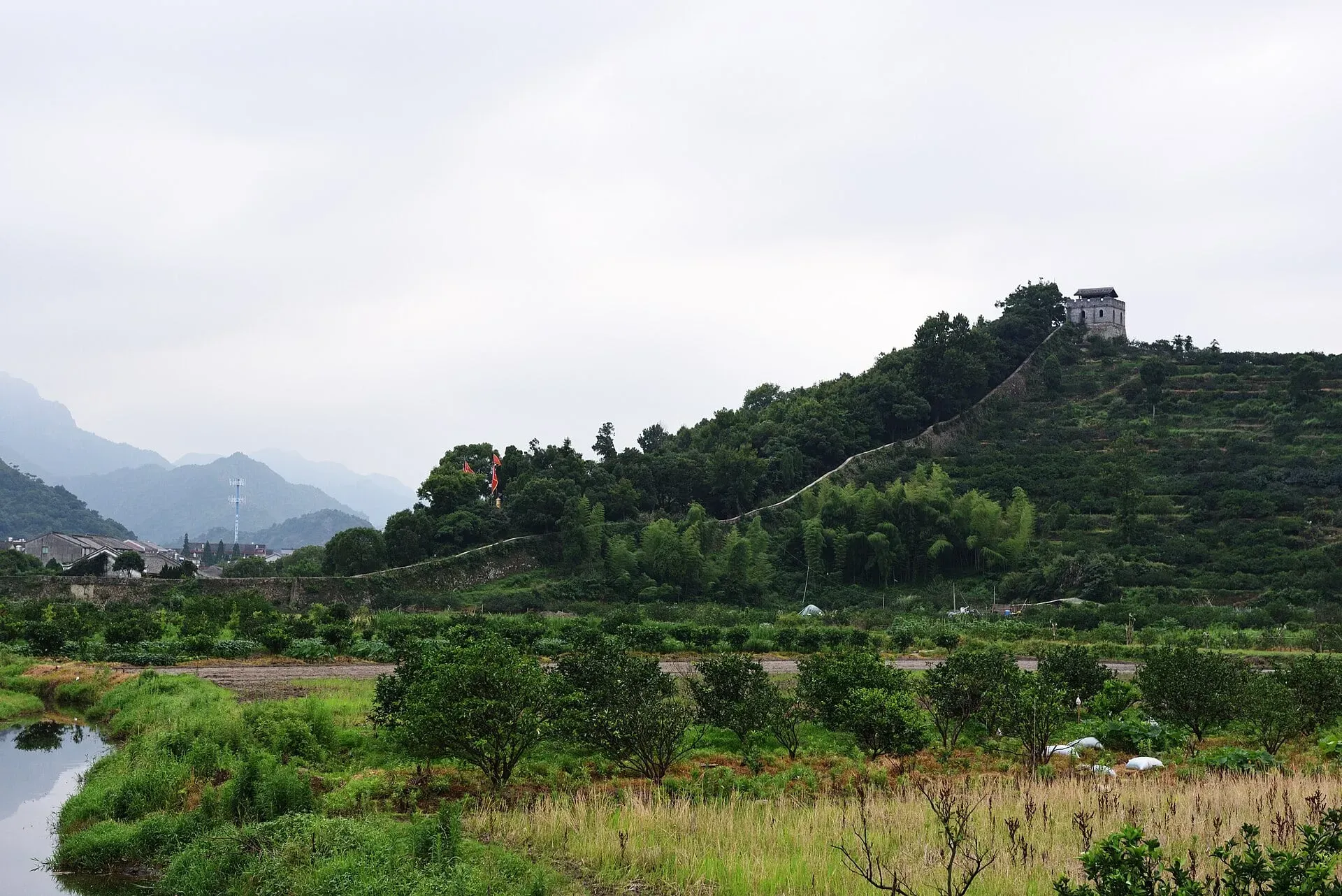
In Chengli village — the name means “inside the city” — in the coastal town of Taozhu in eastern Linhai, stands a small walled town of stone: Taozhu, often called Taozhu Ancient Town. It is a garrison town that the Ming dynasty built against the wokou pirates, about 40 km east of Linhai’s old city as the crow flies. The present town was begun in 1442 and finished in 1443. Its wall, its three gates with their barbicans and the lanes inside all survive, and in 2001 it became a major national heritage site.
The name means “peach islets”: according to the Taizhou city government’s English website in 2018, many peach trees were once planted on the islets here. For Linhai’s own city wall, and the hollow towers Qi Jiguang built on it, see the Taizhou City Wall.
A garrison that moved inland
To hold off the pirates, the Ming set up garrisons along the coast; according to a 2014 report in the Zhejiang Daily, Taozhu was one of 41 on Zhejiang’s southeast coast. The geography section of the Ming History, under Linhai county, notes that the Taozhu battalion was established in the ninth month of the twentieth year of Hongwu — 1387.
The first fort stood somewhere else. In a 2012 article in the Guangming Daily, Xu Sanjian, then director of the Linhai Museum, explained that it was built at Xincheng village in Shangpan, 15 km from Taozhu, so close to the sea that at high tide water surrounded it on all sides; the garrison then moved inland to Zhongcheng village in Taozhu.
The pirates still came. In the fifth month of 1439, the Ming History’s chapter on Japan records, “forty pirate ships broke through the two battalions of Taozhu in Taizhou and Dasong in Ningbo, then took the guard town of Changguo, killing and plundering at will.” The raiders who broke into Taozhu massacred its people, Xu writes. In 1442 the court sent Jiao Hong, a vice minister of revenue, and the censor Gao Jun to move the garrison again, more than ten li — over five kilometers — further inland. The new town, finished the following year, is the Taozhu that stands today.
Accounts date the town to 1442 or 1443; by Xu’s account, the move began in 1442 and the town was finished in 1443. They also differ on how many times the garrison moved: twice, by Xu’s account and in China News Service’s report of 2021; three times, said Linhai’s tourism account in 2019.
Nor were the wokou all Japanese. Describing the raids around Suzhou in the Jiajing reign, the same chapter of the Ming History reckons that “true Japanese were perhaps three in ten; seven in ten were their followers.”
Qi Jiguang at Taozhu
More than a century later, in the Jiajing reign, Qi Jiguang led the fight against the pirates in Taizhou. His biography in the Ming History records that in 1561 “the pirates plundered Taozhu and Qitou on a great scale. Jiguang hurried to Ninghai, held Taozhu, defeated them at Longshan and pursued them to Yanmen Ridge.” The biography goes on to follow the raiders as they turned on Taizhou itself, and counts nine battles that year, all of them won. For that campaign, the Taizhou victory, see the Taizhou City Wall.
According to China News Service in 2021, Qi’s army fought the pirates here in the Jiajing reign alongside the soldiers and people of Taozhu, a fight remembered as the Taozhu Victory. The town has also built a memorial hall to Qi, whose couplet reads: “Why go to the Red Cliffs to think on the past? When it comes to resisting invaders, who does not remember Taozhu?”
Qi is also credited with strengthening the town. Xu Sanjian writes that the east and west corners of the north wall were built up as platforms, and that according to the records Qi built them after his victory at Taozhu. In 2021 Wang Jianping, chairman of the Taozhu town people’s congress, told China News Service that Qi repaired the town and built two hollow towers here, gaining experience he later used on the Ming Great Wall in the north. Neither names a source, and we have not been able to trace the original record.
The walls and lanes today
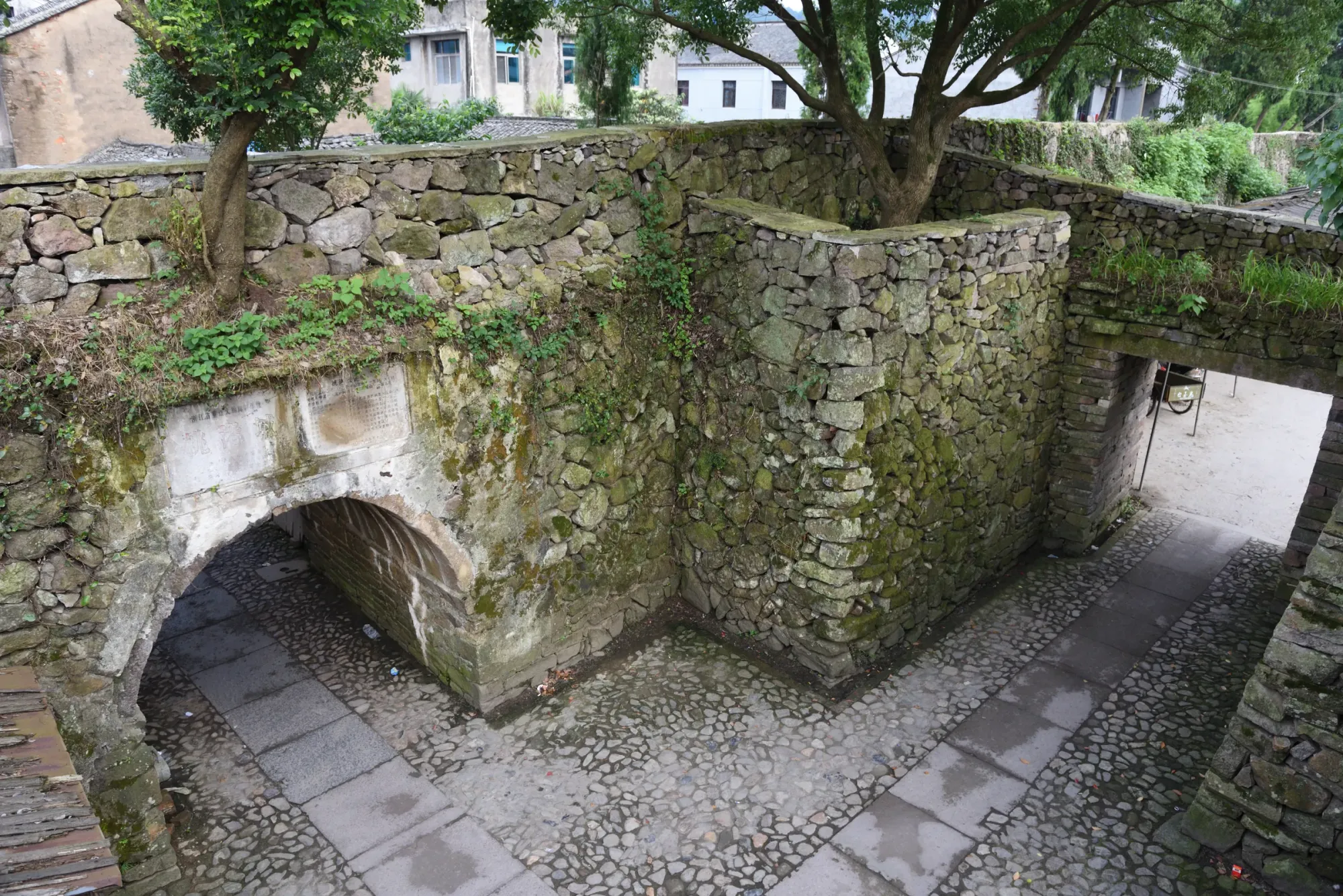
According to China News Service in 2021, the wall is built of blocks of stone, 4.5 meters high and 1,366 meters around (Xu Sanjian gave 1,364 in 2012), with twelve ditai, watchtower platforms, along its circuit. Each of the three gates, east, south and west, has a barbican. Xu describes the barbicans as semicircular, and writes that on the north the wall follows the ridge of Housuo Hill, so there is no gate on that side.
On Housuo Hill, above the town, two Ming inscriptions are cut into the rock — Tiaoyuan, “gaze afar,” and Zhenhai, “guard the sea” — and there are a beacon tower and a reviewing platform.
Inside, the plan is simple: one main street running east to west and seven lanes running north to south. Several hundred households lived there, Xu wrote in 2012; the Zhejiang Daily put the number at 360 households in 2014. Linhai’s tourism account in 2019 also points out an old house, the Langjiali residence.
After the Ming, Taozhu saw no more pirate raids, but the Qing still kept a garrison officer and fifty soldiers here, Xu writes. Before 1949 the soldiers were gone, yet the townspeople kept the wall in good repair, because it still kept out bandits.
A Korean castaway
In 1488 Choe Bu, an official of Joseon Korea, was caught by a storm at sea and drifted until he was rescued in Linhai county, in Taizhou prefecture. According to China News Service, the Taozhu battalion established who he was. He later wrote up the journey in classical Chinese as a diary, the Pyohaerok, “a record of drifting across the sea.” By its account he spent four days in the fort being questioned, and was then escorted north by way of the Jiantiao fort, Ninghai, Ningbo and Shaoxing to Hangzhou; from there he went on to Beijing and crossed the Yalu River home.
Choe spoke no Chinese and got by in written “brush conversations,” and at first, according to Wikipedia, his party was taken for Japanese pirates. John Meskill’s English translation, Ch’oe Pu’s Diary: A Record of Drifting Across the Sea, appeared in 1965. Wang Jianping told China News Service in 2021 that more than twenty years earlier Choe’s descendants had found their way to Taozhu by following the diary, and that a pavilion was later built to mark it; the town now has the Choe Bu Pavilion and a stele to friendship between the Chinese and Korean peoples.
His diary also records the fort as he saw it in 1488: double gates barred with iron, a row of guard towers along the wall, and inside, shop after shop and a crowded, prosperous town.
On the heritage lists
According to a 2016 report from the Taizhou news site China Taizhou, carried by People’s Daily Online, Taozhu became a provincial heritage site in Zhejiang’s second round, in March 1963. On June 25, 2001, the State Council added it to the fifth round of major national heritage sites, under ancient buildings, dated “Ming and Qing.”
In 2014, the Zhejiang Daily reported, the town joined a national program for protecting cultural and natural heritage, with an estimated 23.5 million yuan — 7 million of it from the central government — for footpaths, new power lines, fire and security systems and water pipes. In 2016 the Zhejiang government approved its fifth list of provincial historic and cultural towns, Taozhu Town among them, and in January 2019 the housing ministry and the National Cultural Heritage Administration put it on their seventh list of China’s historic and cultural towns.
The Taozhu Scenic Area
In March 2017 the State Council published its ninth list of national scenic areas, and the Taozhu Scenic Area was one of the three from Zhejiang. The Taizhou city government’s English website said in 2018 that the Thirteen Isles of the Tao River are a key part of both the Taozhu scenic area and the Linhai National Geopark: the river splits the fields into thirteen islets of different sizes, over 600 mu (40 hectares) in all, the largest 80 mu and the smallest half a mu.
For the Wukeng pinnacles south of the town, and the peak to climb for the view over the Thirteen Isles, see Places to Visit.
Getting there, tickets and hours
Taozhu is in Chengli village, Taozhu Town, Linhai. Driving times estimated from OpenStreetMap:
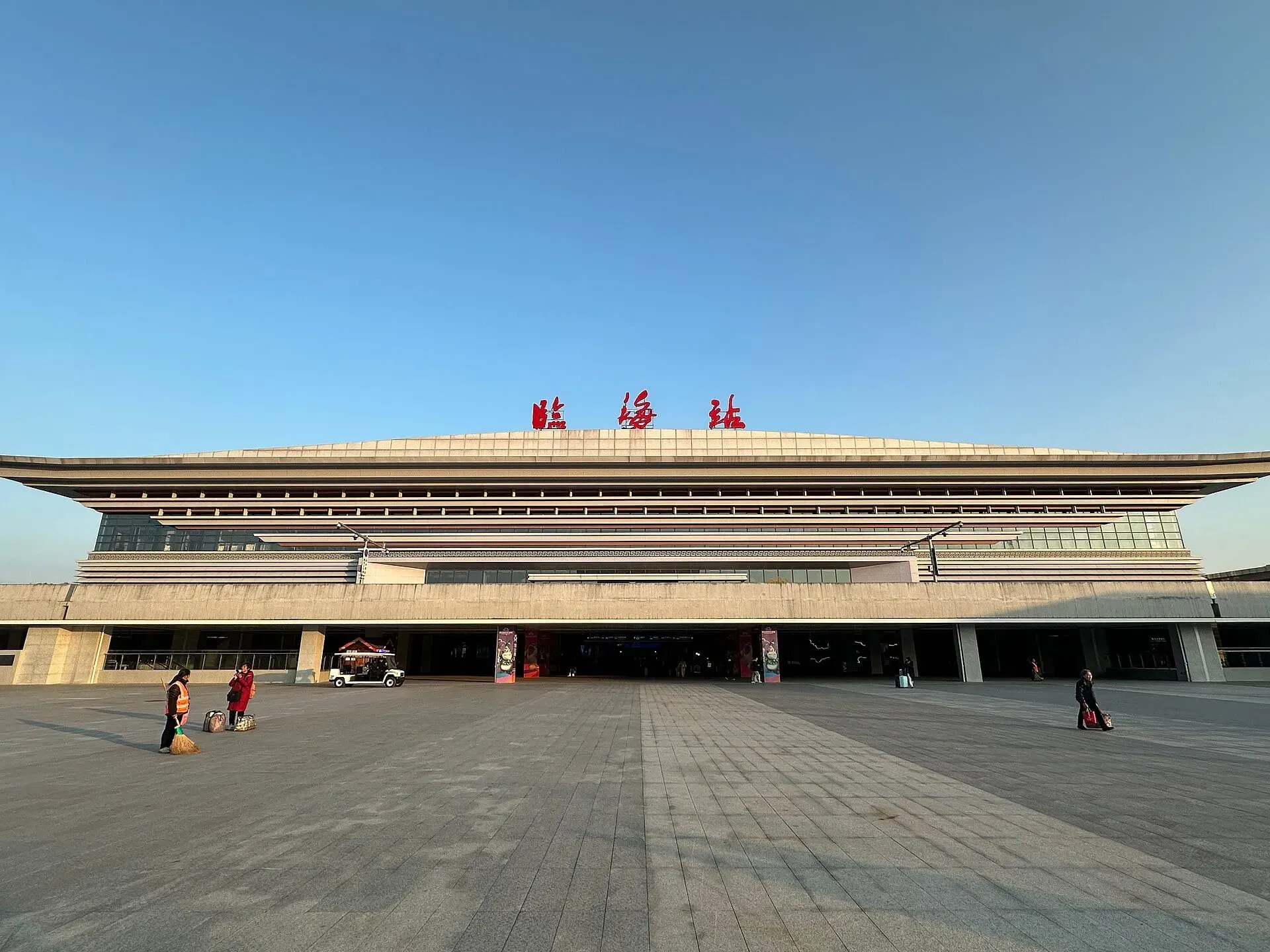
- From Linhai station: about 44 km, some forty minutes by car.
- From Linhai’s old city: about 50 km, roughly 45 to 50 minutes by car.
Allow longer on holidays. We have not found reliable bus information, so a taxi, a hired car or your own car is the easiest way. For the journey to Linhai, see Getting to Linhai.
We have not found ticket prices or opening hours published by the town or the scenic area. When we checked Ctrip on November 5, 2026, it listed the old town as open all year from 8:00 a.m. to 5:00 p.m., with no entry after 5:00 p.m., tickets from 15 yuan, and a car park at 10 yuan a visit. In July 2024 the ticket site Dahe Piaowu listed adult tickets at 14.5 yuan and student and child tickets at 10 yuan. The platforms do not all agree, so check before you go.
Questions & answers
Where is Taozhu Ancient Town, and how do I get there?
In Chengli village, Taozhu Town, in eastern Linhai, Zhejiang, about 40 km east of Linhai’s old city as the crow flies. By car it is about 44 km, some forty minutes, from Linhai station, and about 50 km from the old city. We have not found reliable bus information, so a taxi, a hired car or your own car is easiest. See Getting to Linhai.
When was Taozhu built?
The Ming History dates the founding of the Taozhu battalion to 1387. According to a 2012 article by Xu Sanjian, then director of the Linhai Museum, its first fort stood at what is now Xincheng village in Shangpan; after pirates sacked Taozhu in 1439, the court had the garrison moved more than ten li further inland in 1442, and the new town, the one that stands today, was finished the next year. That is why accounts give either 1442 or 1443.
Did Qi Jiguang fight at Taozhu?
Yes. The Ming History’s biography of Qi records that in 1561 the pirates plundered Taozhu and Qitou, and that Qi hurried to Ninghai, held Taozhu, beat them at Longshan and chased them to Yanmen Ridge. According to China News Service in 2021, the fight that Qi’s army and the people of Taozhu waged against the pirates in the Jiajing reign is remembered as the Taozhu Victory. Xu Sanjian writes that according to the records, the platforms at the two corners of the north wall were built by Qi after his victory, though he does not say which records.
How much is a ticket, and when is Taozhu open?
We have not found official prices or hours. When we checked Ctrip on November 5, 2026, it listed the old town as open all year from 8:00 a.m. to 5:00 p.m., with tickets from 15 yuan; in July 2024 the ticket site Dahe Piaowu listed adult tickets at 14.5 yuan and student and child tickets at 10 yuan. The platforms do not all agree, so check before you go.
What else is there to see near Taozhu?
In 2017 the Taozhu Scenic Area was named a national scenic area. South of the town are the rock pinnacles of Wukeng, and the Tao River splits the fields into the Thirteen Isles, over 600 mu (40 hectares) in all, according to the Taizhou city government’s English website in 2018. See Places to Visit.
Sources
- 直线距离按维基数据的坐标计算,车程按 OpenStreetMap 路网估算。《明史》引文依维基文库的录文。英文为本站翻译。
- 明史·地理志五(卷四十四)· 维基文库
- 明史·外国三·日本(卷三百二十二)· 维基文库
- 明史·戚继光传(卷二百一十二)· 维基文库
- 桃渚城的保护需要全社会参与(徐三见)· 光明日报,2012 年 2 月 16 日
- 探访浙江临海桃渚古城:见证抗倭文化与中韩情谊 · 中新网,2021 年 4 月 5 日
- 明代桃渚古城将大修 因戚继光抗倭而闻名 · 中新网(浙江日报),2014 年 10 月 24 日
- 桃渚横溪上榜第五批省历史文化名镇 · 人民网(中国台州网),2016 年 7 月 31 日
- 国务院关于公布第五批全国重点文物保护单位和与现有全国重点文物保护单位合并项目的通知(2001 年 6 月 25 日)· 维基文库
- 国务院关于发布第九批国家级风景名胜区名单的通知 · 中国政府网,2017 年 3 月 29 日
- 第七批中国历史文化名镇名村名单出炉 有你家吗?· 中新网,2019 年 1 月 30 日
- 古城斑驳、山海多情、田园悠然……如此多娇的桃渚,约吗?· 临海旅游(浙江在线),2019 年 2 月 25 日
- Taozhu Scenic Spot · 台州市人民政府新闻办公室英文网站(中国日报网承办),2018 年 12 月 26 日
- 漂海录 · 卷一(崔溥)· 维基文库
- Choe Bu · Wikipedia
- Ch’oe Pu’s Diary: A Record of Drifting Across the Sea(John Meskill 译,1965 年)· CiNii Books
- 桃渚古城 · 携程攻略(2026 年 11 月 5 日查阅)
- 桃渚古城(手机版,含门票价格)· 携程(2026 年 11 月 5 日查阅)
- 2025临海桃渚古城简介+地址+门票价格 · 大河票务网,2024 年 7 月 30 日