Qi Jiguang in Taizhou
Qi Jiguang was the Ming general who came to Zhejiang in 1555 to fight the wokou pirates, raised an army in Yiwu, drilled it in the mandarin duck formation and wrote the Jixiao Xinshu. In 1561 he won nine battles in about a month around Taizhou. Linhai, Taozhu and Jiaojiang still remember him.
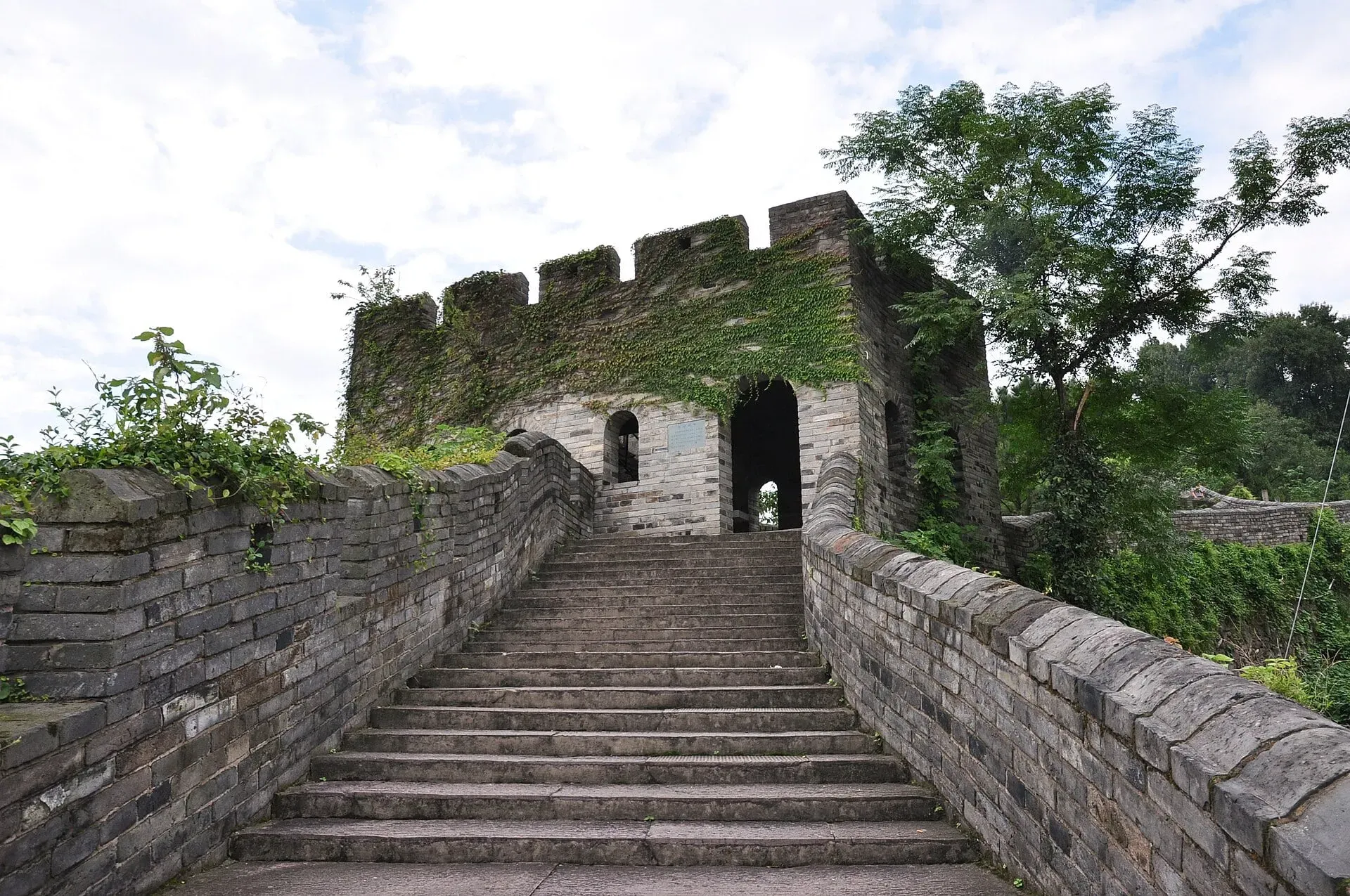
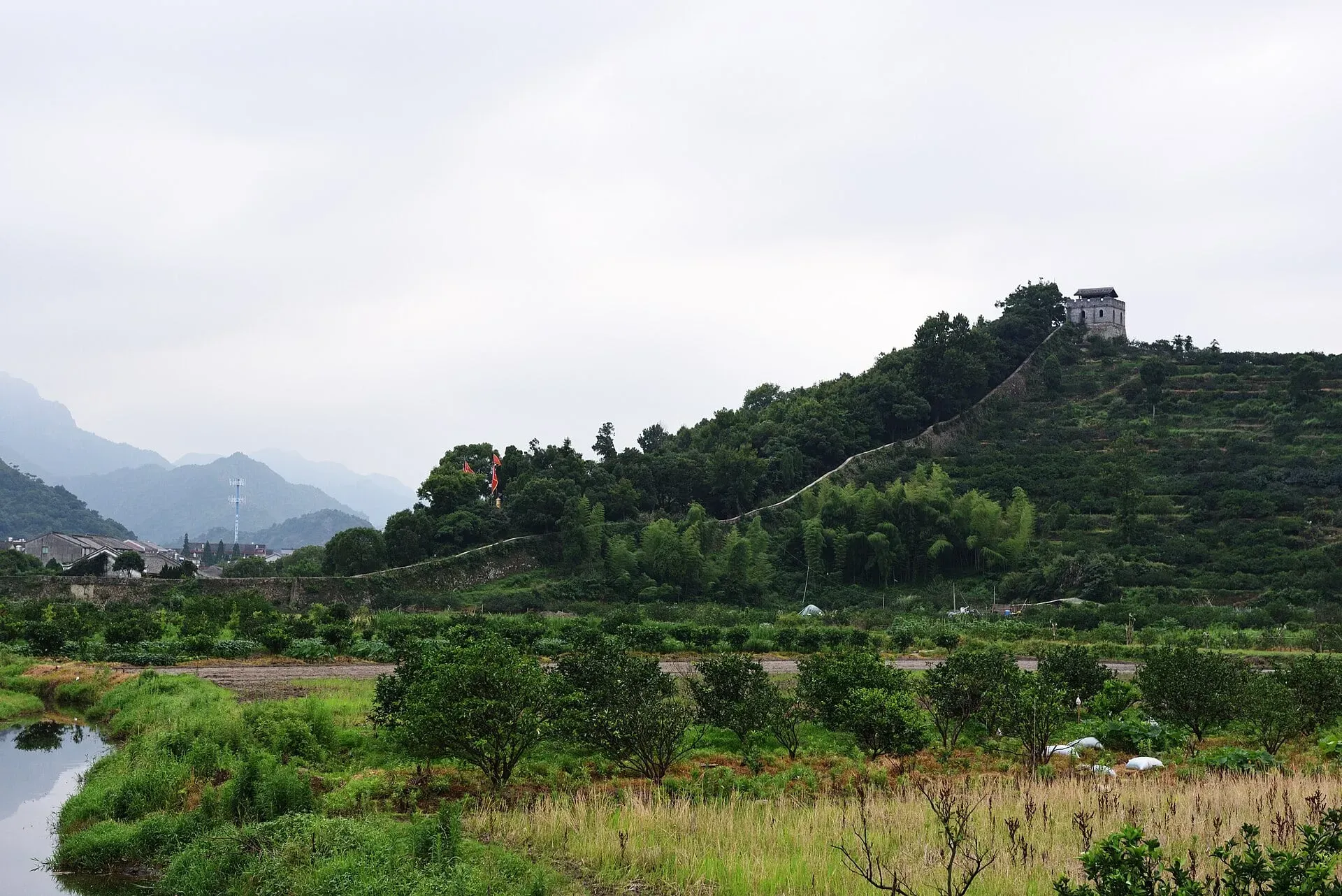
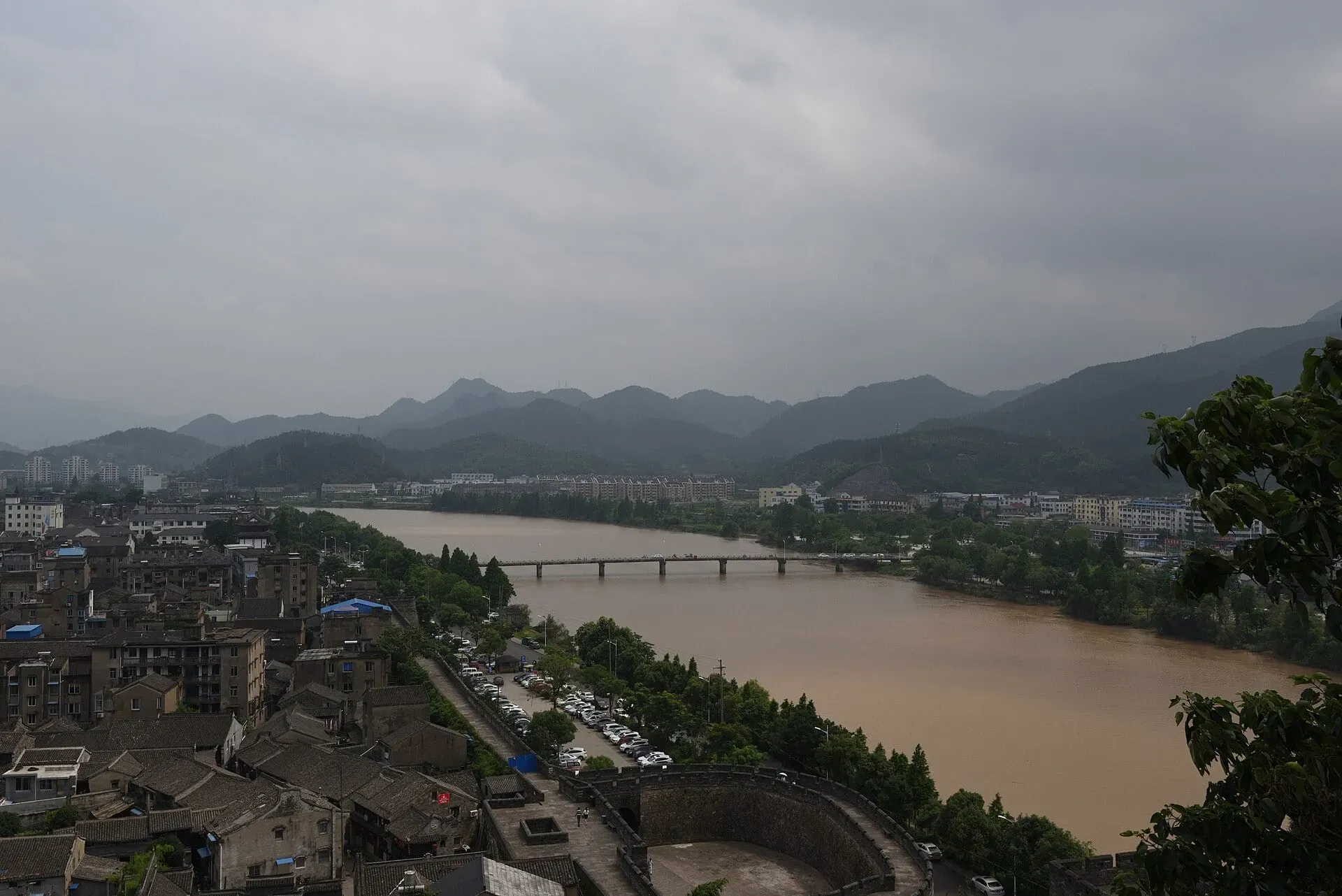
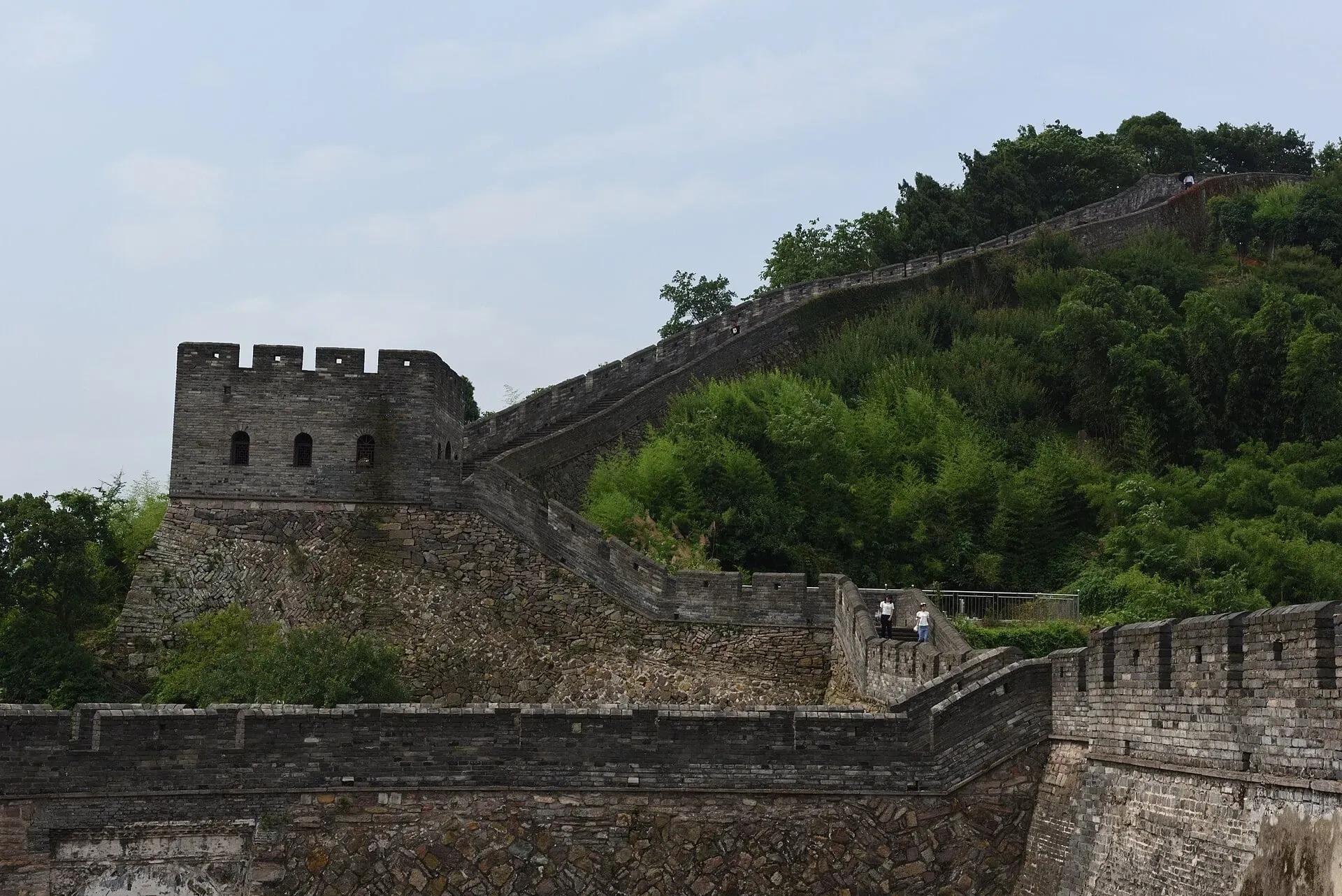
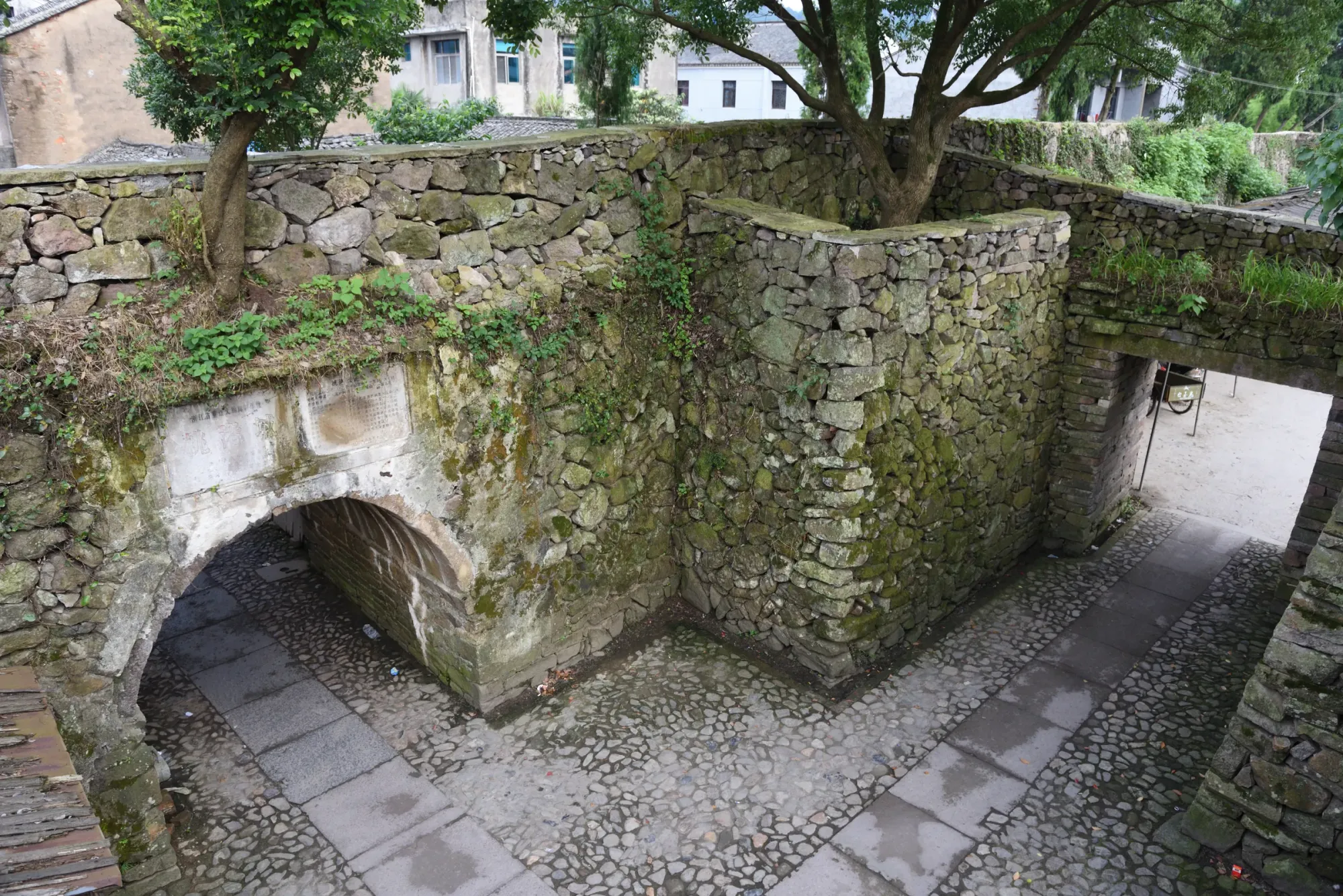
Qi Jiguang (1528–1588) was a Ming general who was posted to Zhejiang in 1555 and from the next year fought the wokou pirates on its coast. In 1561, around Taizhou, he fought nine battles in about a month and, the Ming History says, won them all: the Taizhou Victory. In Linhai, then the capital of Taizhou prefecture, you can still see the city wall where, Xinhuanet says, he built the first two-story hollow towers; and the fort at Taozhu, which he held against the raiders. East Lake has Ming steles to him and the prefect Tan Lun, though we could not confirm that they are on show. In Jiaojiang, a shrine to Qi is a major national heritage site.
The wokou and Taizhou in the 1550s
Ming records call the raiders wokou, “Japanese bandits,” but by the 1550s the name no longer fit. Britannica notes that the pirates, mainly Japanese at first, were later of mixed origin, and that by the early sixteenth century most were probably Chinese. The Ming History blames Chinese ringleaders such as Wang Zhi and Xu Hai, whom the Japanese followed, and says other pirates put on Japanese clothes and flags; by its reckoning, perhaps three raiders in ten were true Japanese.
Historians still debate what the raids were. Zhao Xianhai of the Chinese Academy of Social Sciences writes that coastal people, long held back by the Ming ban on private sea trade, armed themselves and joined Japanese ronin and samurai to become the wokou. Shang Chuan, then president of the Chinese Society of Ming History, argues that smuggling turned into large-scale raiding after 1551, when Wang Zhi and others joined forces with true Japanese pirates.
Taizhou was in the thick of it. In 1555, the Ming History records, fewer than two hundred raiders landed at Yueqing and plundered their way through three prefectures for fifty days, by way of Huangyan, Xianju, Fenghua, Yuyao and Shangyu, before they were wiped out at Shengxian, today’s Shengzhou.
Qi Jiguang comes to Zhejiang
Qi came from a family of hereditary officers of the Dengzhou guard in Shandong. Shang Chuan writes that he was transferred to Zhejiang in 1555 and a year later commanded Ningbo, Shaoxing and Taizhou. The Ming History records setbacks: he was too late to stop raids on Linhai and its neighbors in 1557, and after a failed siege of Wang Zhi’s followers at Cengang he was dismissed, kept on to fight and accused of dealing with foreigners, before being restored to defend Taizhou, Jinhua and Yanzhou.
He saw, the Ming History says, that the garrison troops were not trained for war, while the people of Jinhua and Yiwu were known to be tough, and asked to recruit and train three thousand of them. In 1559, he writes in his own book, he was ordered to pick and drill the men raised by Zhao Dahe, the magistrate of Yiwu. His rule was blunt: never take “slick idlers from the towns”; take “simple, honest men from the countryside.”
The mandarin duck formation and the Jixiao Xinshu
The first chapter of his Jixiao Xinshu sets out a squad: a leader, a long shield and a rattan shield, two men with langxian, four spearmen, two men with short weapons and a cook who carried the pot. A langxian was a long bamboo with its branches left on and, Shang Chuan adds, iron spikes. In the mandarin duck formation the two shields went side by side in front, a langxian behind each, and the spears behind them.
Each man covered the next: “the langxian saves the shield, the spear saves the langxian, the short weapon saves the spear.” The raiders, Qi explains at the front of the book, held high ground and charged at dusk when the Ming troops were tired, in helmets made to look like demons, their blades flashing in the sun; his formations were made for Zhejiang’s terrain and their way of fighting.
According to Chinese Wikipedia, citing the Dictionary of Ming Biography among others, he first drafted the book in eighteen chapters in 1560 and printed it himself in 1562, and late in life revised it into fourteen; its front matter already mentions the Taizhou victory of 1561. Much of it reads like a talk to the ranks: “Soldiers are for killing bandits, and bandits are for killing the common people. Don’t the people want you to kill the bandits?”
Nine battles in 1561
In the fourth lunar month of 1561 the raiders came in force. Shen Mingchen, a scholar on the staff of the supreme commander Hu Zongxian, wrote an account of the victories, printed in the coastal-defense compendium Chouhai Tubian; reports from Ningbo to Wenzhou, he says, put the raiders at ten or twenty thousand. When Qi marched north to Ninghai, bands landed behind him at Taozhu, Xinhe and Qitou. He turned back to relieve Xinhe, then hurried to Huajie, outside the prefectural city, where his men went into battle before they had eaten.
At Huajie the raiders broke, and over two hundred drowned in the Gualing River. The band of more than two thousand from Qitou burned its boats and moved inland; Qi, with 1,500 men, got ahead of it on the road to Xianju and lay in wait on Shangfeng Ridge. Each soldier held a pine branch, Shen writes, so that from afar they looked like woods; when half the column had passed, they charged in mandarin-duck squads and chased the raiders to Baishuiyang, now a town in Linhai, where the last of them died. Shen counts 344 heads and only three of Qi’s men killed.
Qi did not credit only himself or his Yiwu men. Asked in his book whether such a victory could be won again, he answers:
The victory at Taizhou was the work of men, and I could do it again. That the army came through it whole was not the work of men but of Heaven, and cannot be counted on.The sources disagree on the numbers. The Ming History has “more than a thousand captured or beheaded, and countless burned or drowned”; Shen’s total for Ningbo, Taizhou and Wenzhou together is 1,024 captured or beheaded; and a note in the eighteenth-century imperial edition, citing an older record, has Qi leading 1,500 picked men through nine engagements in twenty-nine days, with a thousand heads taken. Xinhuanet in 2026, and Lin Ruzhi, vice-president of the Taizhou Qi Jiguang Research Society, quoted by China News Service in 2025, speak of “nine victories in nine battles.” Shang Chuan gives 308 heads and three of Qi’s men killed at Huajie; Shen has 100 heads at Huajie, 39 on the field and 61 in the pursuit, and puts the three dead at Shangfeng Ridge. English Wikipedia dates the fighting to 1559, with over 5,000 pirate casualties; Qi’s book and the Ming History say 1561.
The prefect Tan Lun
Tan Lun, from Yihuang in what is now Jiangxi, was the prefect of Taizhou. The Ming History says he trained a thousand local men of his own and saw off a siege of the city, and later, as vice-commissioner for coastal defense, beat the raiders with Qi at Gebu and Nanwan; the two went on to serve together in Fujian and the north, and were named together as “Tan and Qi.” Qi wrote that the Taizhou recruits fought well under Tan because his strictness awed them from the start.
The city wall and its hollow towers, credited to Qi and Tan Lun, have their own page: the Taizhou City Wall.
Remembering Qi Jiguang
Taizhou honored him early. In 1630, according to Chinese Wikipedia, citing the Dictionary of Ming Biography, the Chongzhen emperor named the shrine to Qi in Taizhou the Biaozhong Ci, “honoring loyalty,” at the request of Qi’s son Qi Changguo; Wikipedia does not say which shrine this was, and we have not been able to find out. Zhejiang’s provincial heritage list, as republished in 1981, includes two Ming steles at East Lake in Linhai, a portrait of Tan Lun and a record of Qi’s merits, and Qi’s victory stele at Xinhe, now part of Wenling.
In Jiaojiang, the old town was the Ming garrison town of Haimen, and the district is today the seat of Taizhou city. The Qi Jiguang Shrine at the southwest foot of Dongshan was the garrison’s city-god temple and shrine to Qi; its buildings date from late Qing rebuilding. It became the Qi Jiguang Memorial Hall in 1987 and a major national heritage site in 2019. China News Service reported in 2025 that the hall has a mural of the Taizhou Victory. Taozhu has a memorial hall of its own.
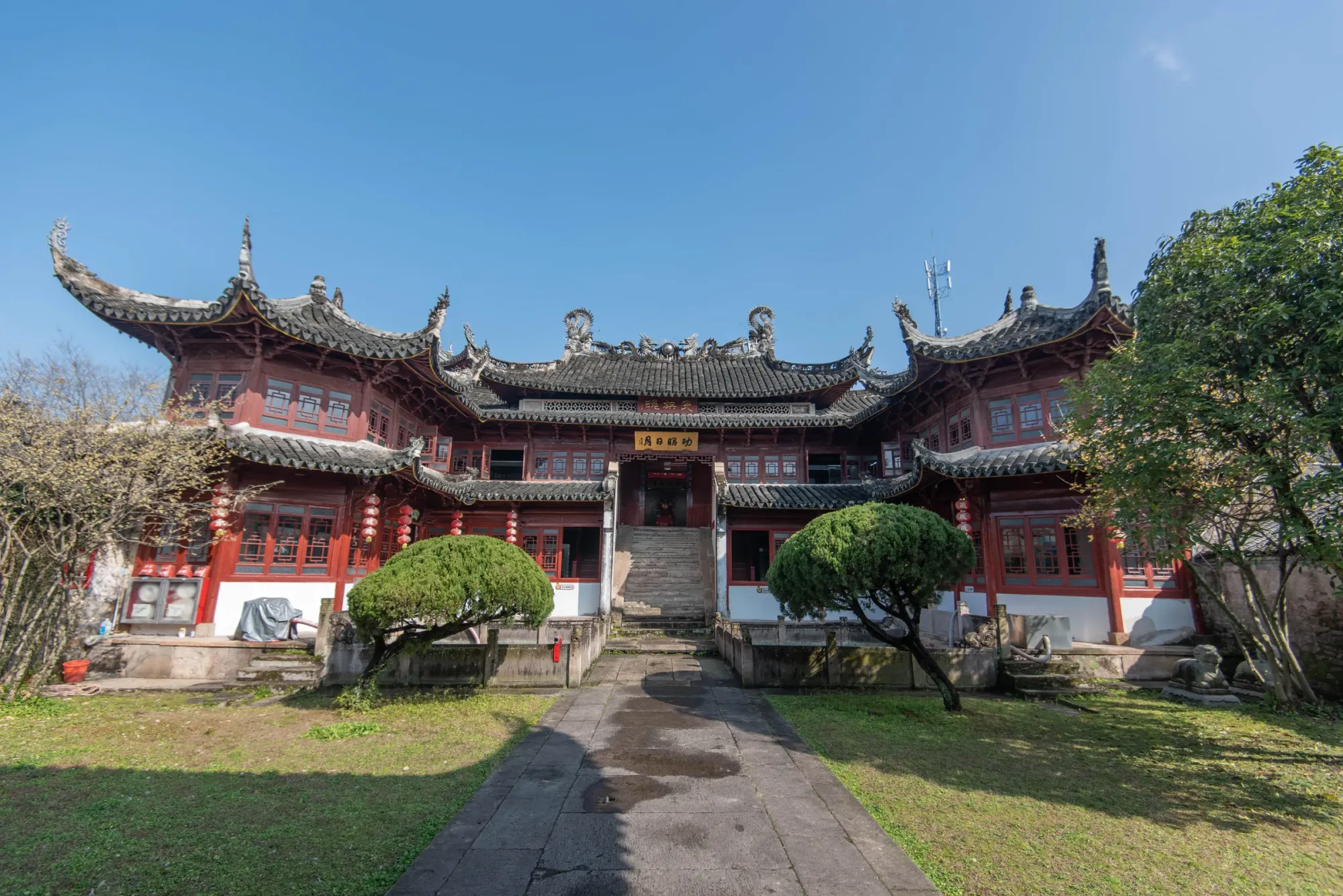
The same report ties local food customs, shibingtong at the Dragon Boat Festival and zaogeng on the fourteenth night of the new year, to legends of Qi’s army; for the legends, see Zaogeng and Danqing Yangwei and Jiaobingtong.
What you can see today
Driving distances, estimated from OpenStreetMap:
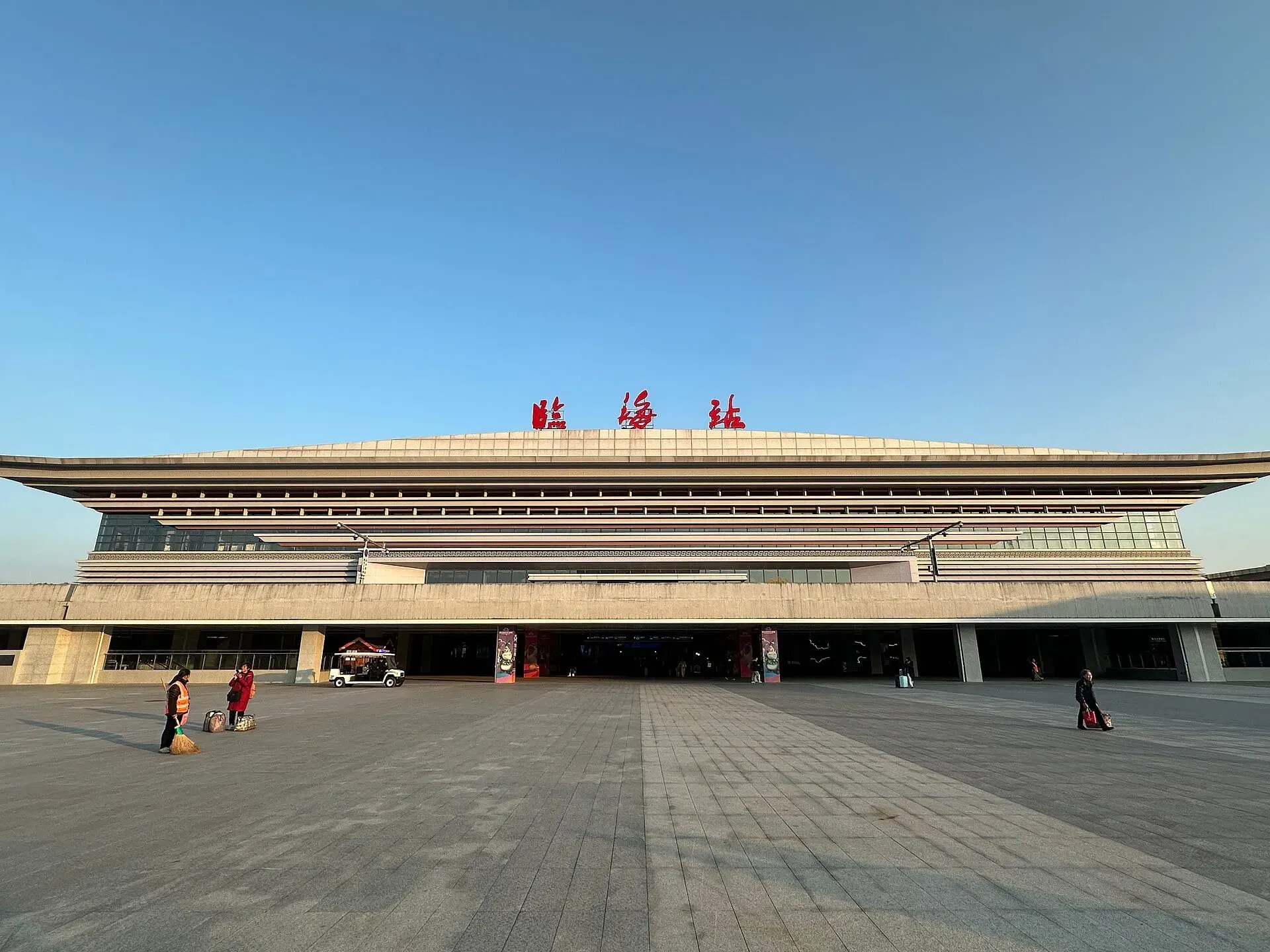
- Linhai’s old city: about 15 km, some twenty minutes by taxi, from Linhai station; the wall and East Lake are within walking distance.
- Taozhu: about 44 km, some forty minutes by car, from Linhai station.
- The Qi Jiguang Shrine, 100 Qijiguang Road, Jiaojiang: about 43 km, some forty minutes by car, from Linhai station; about 48 km from the old city.
On November 7, 2026, Ctrip listed East Lake as open all year, 7:00 a.m. to 6:00 p.m., last entry 5:30 p.m. We found no official word on whether its two Ming steles are on show, or on hours and prices at the Jiaojiang shrine, so ask before you go. For walking the wall, see the Taizhou City Wall; for East Lake, Ziyang Street and the Old City.
On Haocha’s 2025 timetable, direct trains from Shanghai Hongqiao to Linhai take between 2 hours 16 minutes and 3 hours 40 minutes. Schedules change, so check 12306 before you travel; see Getting to Linhai.
Questions & answers
What did Qi Jiguang do in Taizhou?
He came to Zhejiang in 1555, was later given Taizhou, Jinhua and Yanzhou to defend, and raised an army in Yiwu that he drilled in the mandarin duck formation. In 1561, when raiders landed at many points on the Taizhou coast, he fought nine battles in about a month and, says the Ming History, won them all; the campaign is remembered as the Taizhou Victory. The hollow towers on the Taizhou city wall are credited to him and the prefect Tan Lun; see the Taizhou City Wall.
Which battles made up the Taizhou Victory?
According to Shen Mingchen’s account in the Chouhai Tubian, the main fights were at Xinhe, at Huajie outside the prefectural city, at Shangfeng Ridge and Baishuiyang on the road to Xianju, and at Changsha on the coast, all in the fourth and fifth lunar months of 1561. Accounts differ on the count and the numbers; the Ming History gives more than a thousand captured or beheaded, and countless burned or drowned.
What is the mandarin duck formation?
The squad formation Qi used against the pirates. In the Jixiao Xinshu a squad has a leader, a long shield and a rattan shield, two langxian, four spears, two short weapons and a cook; the two shields go side by side in front, and “the langxian saves the shield, the spear saves the langxian, the short weapon saves the spear.”
Were the wokou all Japanese?
No. The Ming History reckons that in the Jiajing reign perhaps three in ten were true Japanese and seven in ten their followers, and ringleaders such as Wang Zhi and Xu Hai were Chinese; Britannica, too, says that by the early sixteenth century most were probably Chinese. Historians still debate what the raids were.
Where can I see places linked to Qi Jiguang in Taizhou?
In Linhai, the city wall in the old city; Ming steles honoring Tan Lun and Qi at East Lake, a provincial heritage site, though ask first whether they can be seen; and the fort at Taozhu near the coast. In the old town of Jiaojiang, the Qi Jiguang Shrine, home of the Qi Jiguang Memorial Hall and a major national heritage site since 2019, is about 43 km by car from Linhai station; we found no official word on its hours or tickets, so ask before you go. For the journey to Linhai, see Getting to Linhai.
Sources
- 车程按 OpenStreetMap 路网估算。《明史》《纪效新书》《筹海图编》的引文依维基文库的录文,改为简体;农历日期依《筹海图编》;花街一仗,《宁台温之捷》只写“是日”,接在四月二十六日和次日的记事之后,表中按二十七日记。英文为本站翻译。
- 明史·戚继光传(卷二百一十二)· 维基文库
- 明史 卷二百十二 考证(四库全书本)· 维基文库
- 明史·谭纶传(卷二百二十二)· 维基文库
- 明史·外国三·日本(卷三百二十二)· 维基文库
- 纪效新书 · 卷首(戚继光)· 维基文库
- 纪效新书 · 卷一 束伍篇 · 维基文库
- 纪效新书 · 卷二 紧要操敌号令简明条款篇 · 维基文库
- 纪效新书 · 卷四 论兵紧要禁令篇 · 维基文库
- 筹海图编(四库全书本)卷五 · 浙江倭变纪 · 维基文库
- 筹海图编(四库全书本)卷九 · 宁台温之捷(沈明臣)· 维基文库
- 从《抗倭英雄戚继光》说到历史上的戚继光(商传)· 光明日报,2016 年 1 月 6 日(中国社会科学院网站转载)
- 明代的海洋观念与军镇防御体系(赵现海)· 中国社会科学院历史研究所网站,2018 年 12 月 28 日
- wakō · Encyclopaedia Britannica
- 六百年海门卫城焕新颜 “卫城遗韵”成古今交汇文化地标 · 中国日报网(中国新闻网),2025 年 11 月 10 日
- 美丽城市丨台州府城:江南长城 千年宋城 · 新华网,2026 年 3 月 10 日
- 探访台州府城墙 听“城墙守护者”讲述申遗“长跑”故事 · 中新网,2022 年 3 月 19 日
- 探访浙江临海桃渚古城:见证抗倭文化与中韩情谊 · 中新网,2021 年 4 月 5 日
- 国务院关于核定并公布第八批全国重点文物保护单位的通知(2019 年 10 月 7 日)· 维基文库
- 浙江省人民政府关于调整和重新公布省级重点文物保护单位的通知(1981 年 4 月 13 日)· 维基文库
- 戚继光 · 维基百科
- 纪效新书 · 维基百科
- 戚继光祠 (台州) · 维基百科
- 椒江区 · 维基百科
- 白水洋镇 · 维基百科
- 台州府城 · 维基百科
- Qi Jiguang · Wikipedia
- 东湖(台州府城)· 携程攻略(2026 年 11 月 7 日查阅)
- 上海到临海列车时刻表 · 好查(2025 年时刻,2026 年 11 月 7 日查阅)
- 中国铁路 12306