The Linhai Great Wall (Taizhou City Wall)
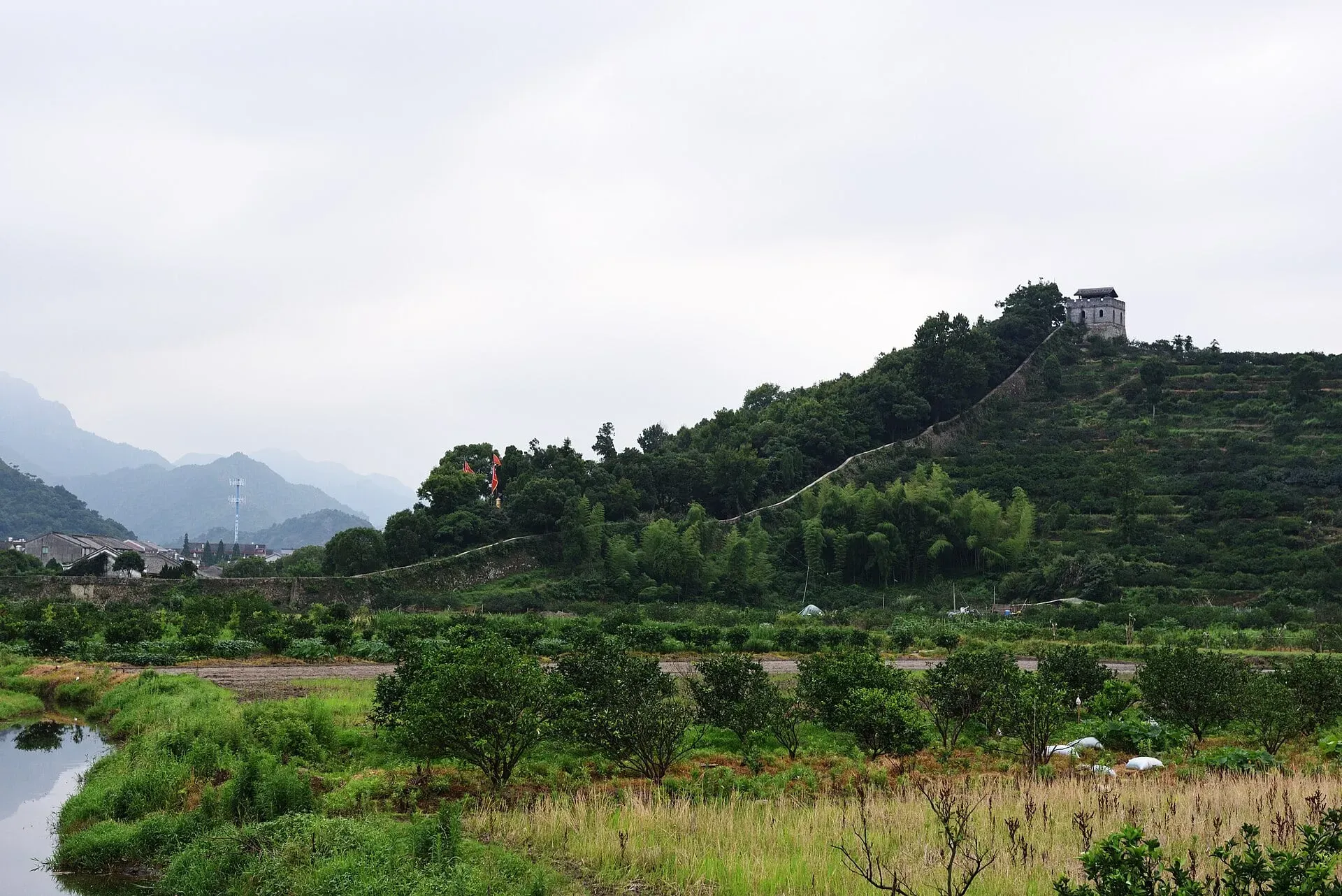
The Taizhou city wall in Linhai rides the ridge of Beigu Hill like the Great Wall in the north, while its river stretch doubles as a flood levee. The Ming general Qi Jiguang built his first two-story hollow towers here and later took the idea to the Great Wall — which is why this is called the Great Wall of the South.
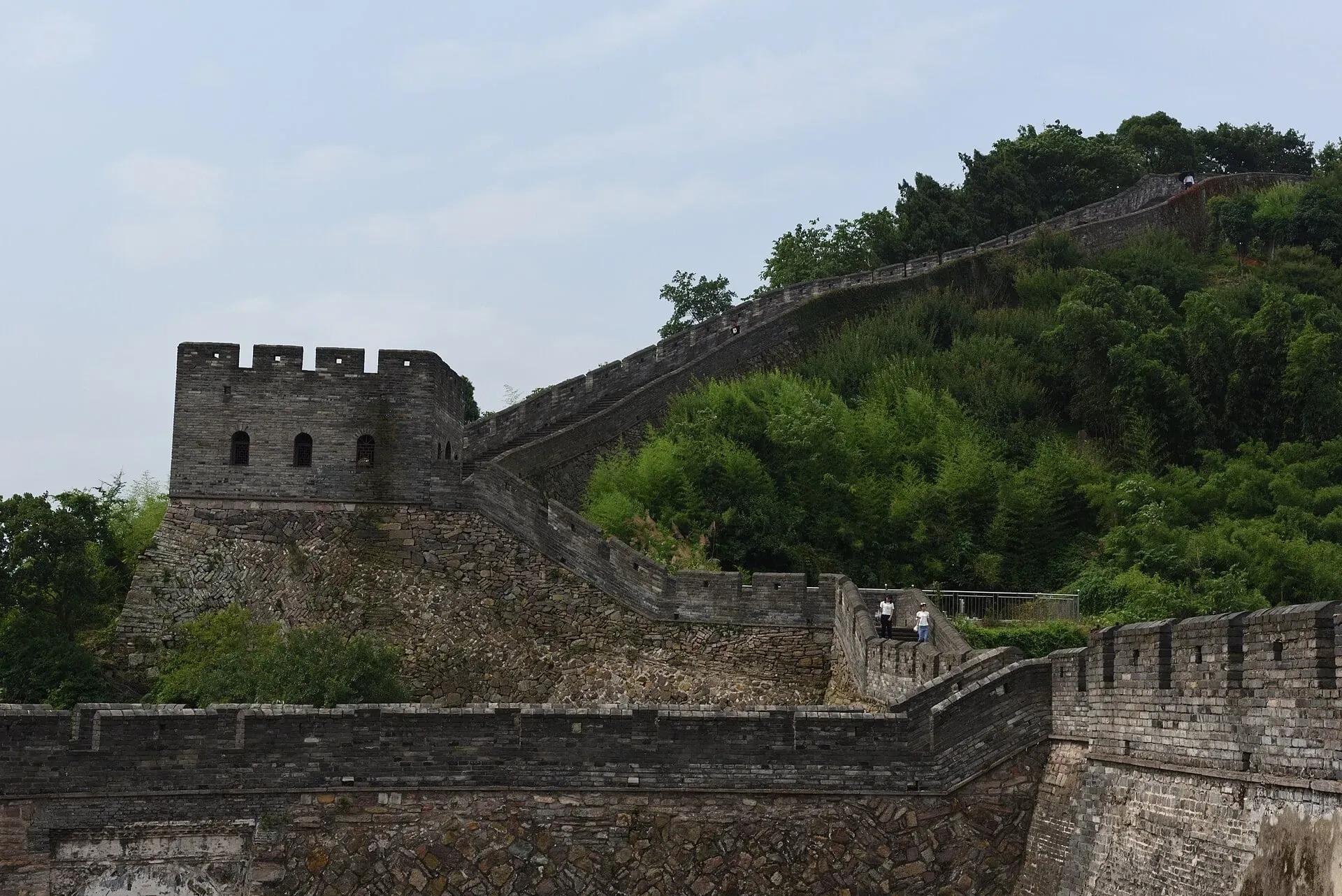
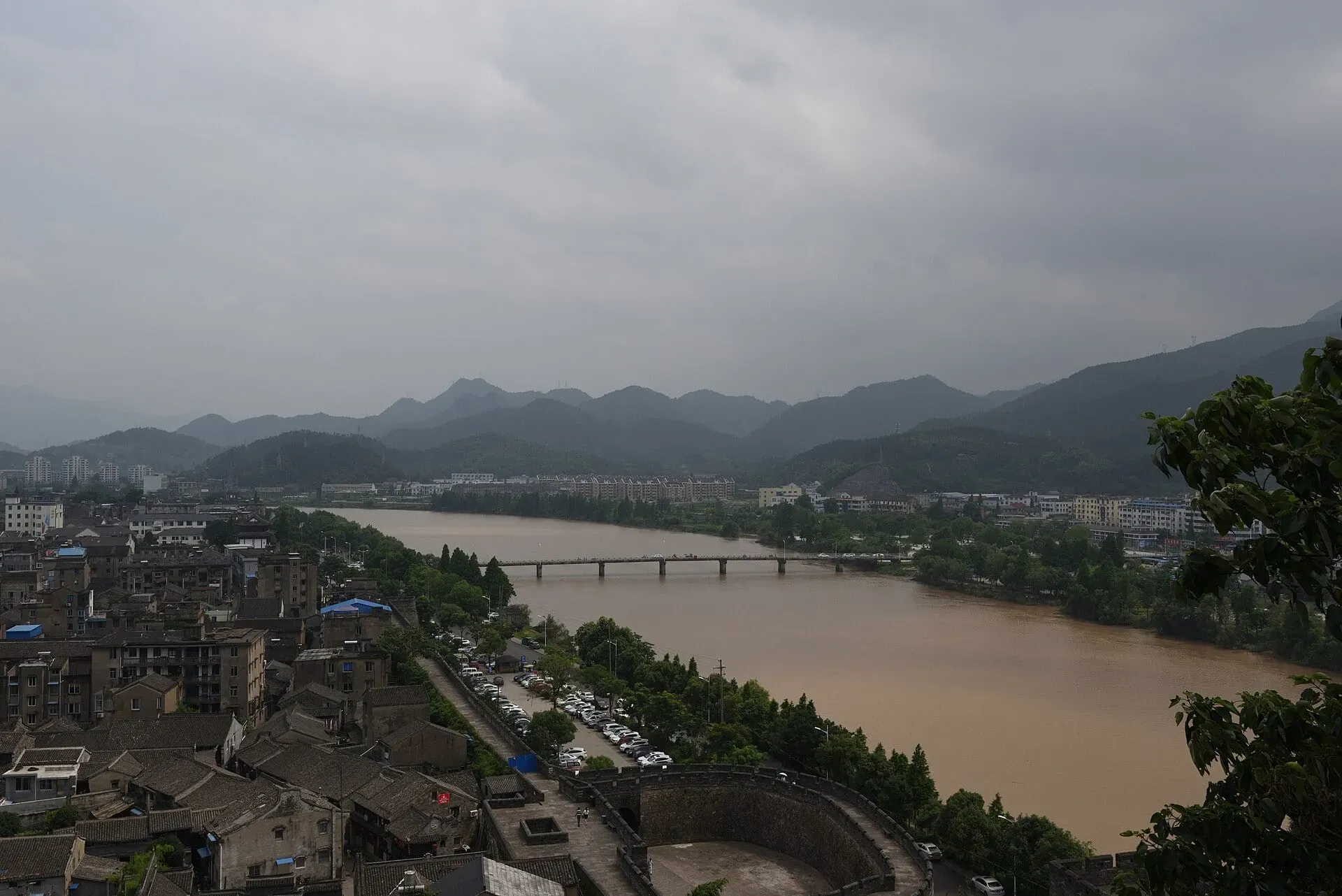
The old city of Linhai has Beigu Hill to its north, the Ling River to its west and south and East Lake to its east. Around it runs the Taizhou city wall. Its northern stretch rides the ridge of the hill so much like the Great Wall in the north that people call it the Great Wall of the South — in English it usually goes by the Linhai Great Wall, the Southern Great Wall or the Jiangnan Great Wall — while its river stretch is also a levee that has kept floods out of the city for more than a thousand years.
A city between the hills and the river
According to China News Service, the wall was originally more than 6,000 meters long, and 4,730 meters survive. It starts at the Lansheng Gate in the east, follows the ridge of Beigu Hill to the Yanxia Pavilion, drops down steep rock to the east bank of the Ling River and runs along the river to the western foot of Jin Hill. Peng Liansheng, head of Linhai’s heritage protection office, says it was begun in the Eastern Jin, enlarged in the early Tang, given its form in the Northern Song and completed in the Ming and Qing.
The Ming geographer Wang Shixing, a Linhai man, was rather proud of his hometown’s defenses. In his Guangzhi Yi he wrote:
Of the eleven prefectural cities, ours in Tai has the strongest position. The great river runs along its west and south, and to the northwest jagged crags stab at the sky with not so much as a bird’s path among them. Only the southeast is level, and there is a great lake and a deep moat — so it is not easily taken. The pirates came to its walls several times and could do nothing.Of the eleven prefectural cities of Zhejiang, in other words, Taizhou’s was the hardest to attack.
A wall against floods
The old city sits on the Ling River and has always lived with the threat of floods. Peng Liansheng says a third of the wall was built along the river, where it works like a levee and has held back floods for more than 1,600 years; in the Yuan dynasty, when city walls across the country were pulled down, Taizhou’s survived because it kept the water out.
The flood role shaped the wall. Most city walls have square bastions — the platforms that jut out from the wall. On the Taizhou wall the river side of each bastion is rounded so that the current slides past, a feature experts describe as very rare in China.
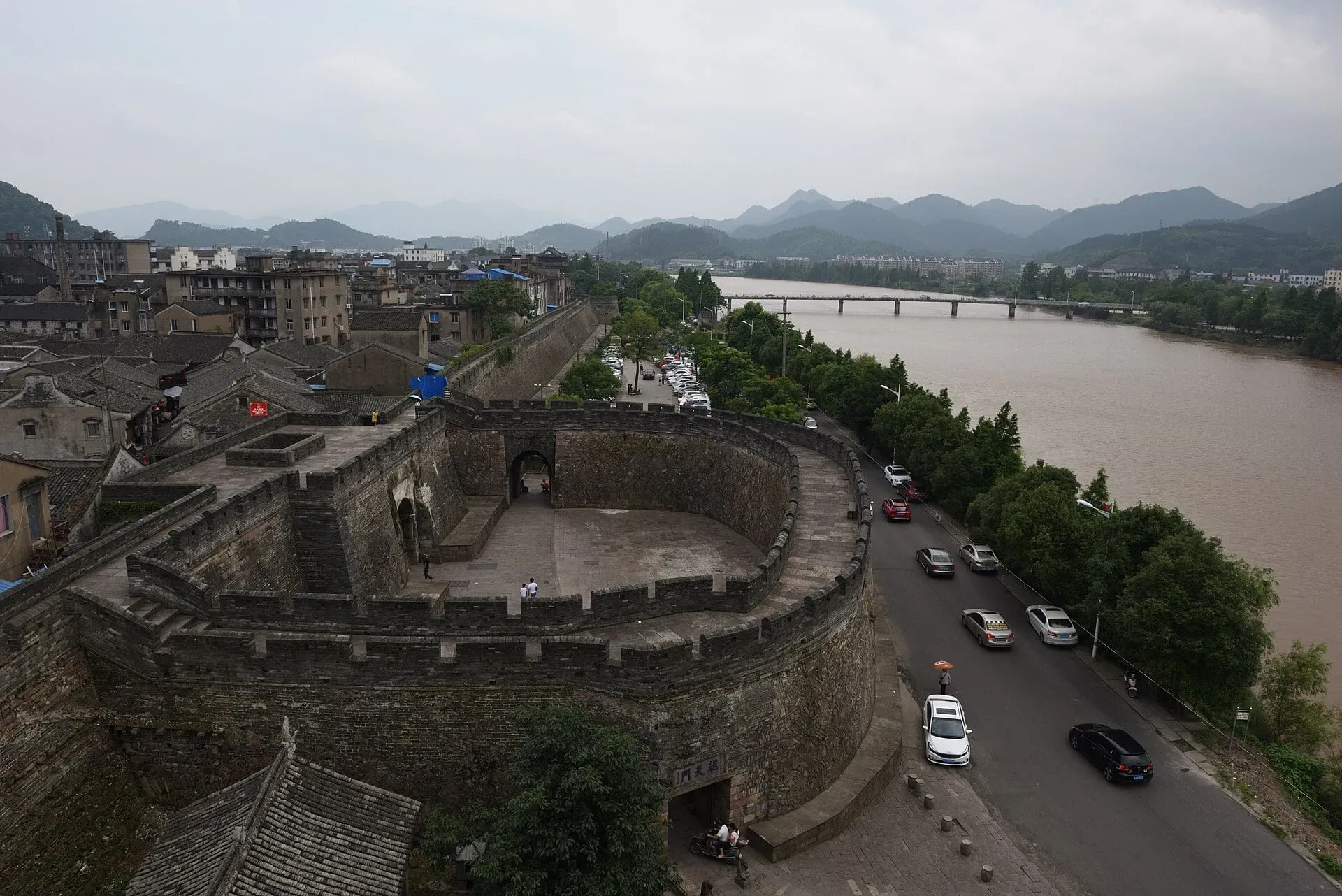
In August 2019 Typhoon Lekima battered Linhai, and floodwater rose to the foot of the wall. Had the wall not broken the force of the water, Peng says, the old buildings inside might have been swept away.
Qi Jiguang’s hollow towers
In the Jiajing reign of the Ming, pirates repeatedly raided the Zhejiang coast, and Qi Jiguang garrisoned Taizhou. With the prefect Tan Lun he raised and thickened the wall and built thirteen two-story hollow towers on it, where soldiers could be stationed and which made it easier to keep watch, defend the wall and pass messages. Xinhuanet credits Qi with inventing the two-story hollow tower here. In 1561 his army won nine battles out of nine around Taizhou — the Taizhou Victory, which Lin Ruzhi of the Taizhou Qi Jiguang Research Society says turned the tide against the pirates along the whole southeast coast.
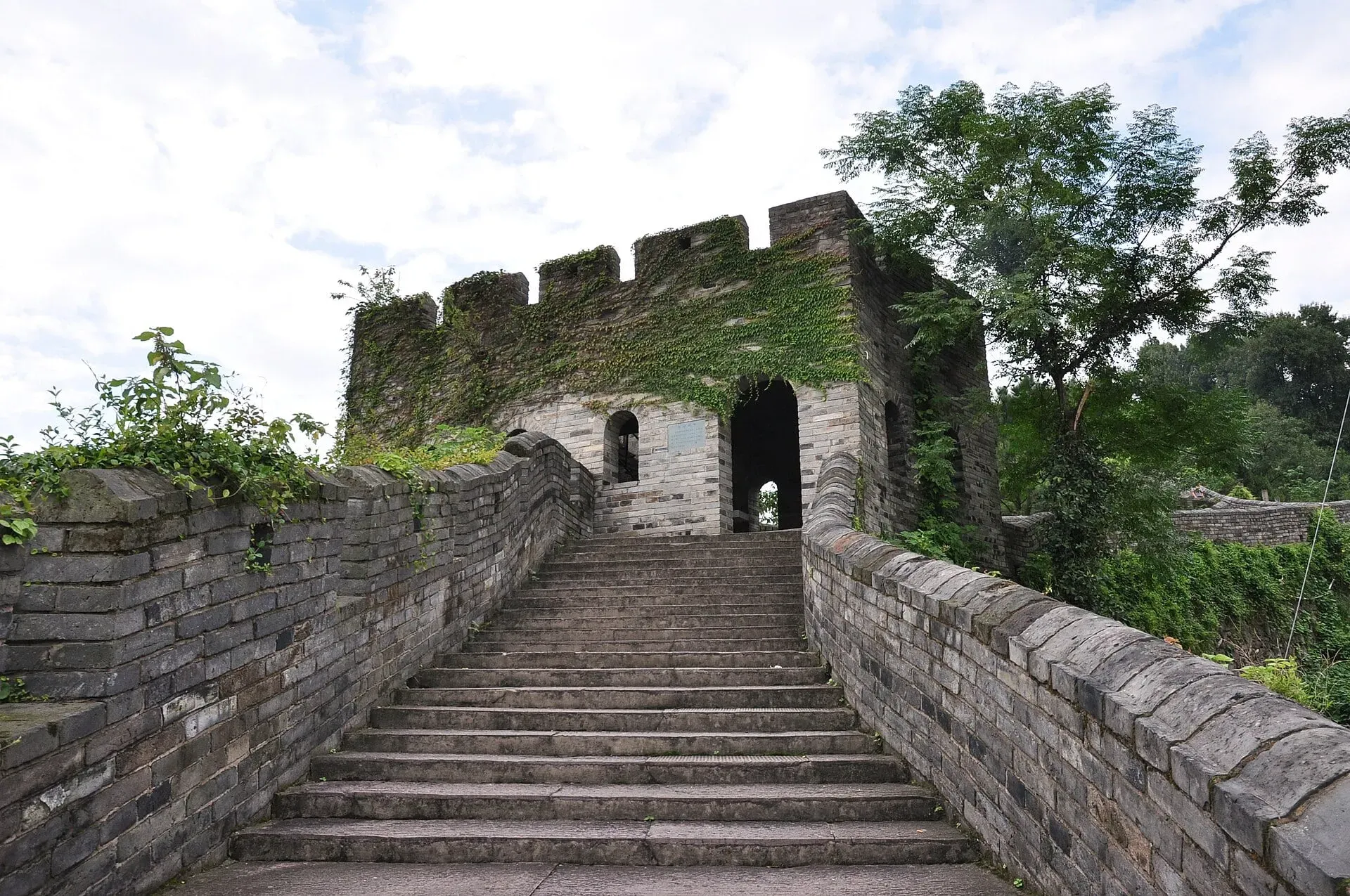
Qi was later posted north to guard Jizhou for more than a decade, and when he rebuilt the Great Wall there, he built hollow towers too. That is why the architectural historian Luo Zhewen called the Taizhou wall the model and blueprint of the Ming Great Wall — and where the name Great Wall of the South comes from.
Rebuilt again and again
The wall has had its hard times. In the 1950s the eastern stretch was torn down, and the stretch on the northern ridge you see today was rebuilt on the old foundations in the 1990s. In 1995 Linhai launched a campaign called “A brick from me for the old city: ten thousand people restore the wall,” residents donated bricks, and by 2000 the river walls had been restored.
In 2001 the wall was listed as a major national heritage site, and in 2012, together with the walls of Nanjing, Xi’an and other cities, it joined China’s World Heritage tentative list as part of the Ming and Qing city walls. In 2022 the old city around the wall became a national 5A scenic area.
Walking the wall
You can climb onto the wall at the Lansheng Gate and follow the ridge of Beigu Hill west, then down to the Ling River and along it to the foot of Jin Hill. There are plenty of steps and steep slopes on the ridge, so wear good shoes. Tickets and opening hours change, so check with the scenic area before you go.
From the wall you can see the Ling River, East Lake and the whole old city. At the bottom is Ziyang Street — see Ziyang Street and the Old City.
A side trip to Taozhu
About 40 km southeast of the old city, near the coast at Taozhu, stands another walled town. Taozhu was built in 1443 as a Ming garrison town against the pirates; its wall, 1,366 meters around, and three of its gates survive, and its lanes still look much as they did in the Ming and Qing. In the Jiajing reign Qi Jiguang routed the pirates here, and in 2001 Taozhu too became a major national heritage site. It is about 44 km, or some forty minutes, by car from Linhai station.
Questions & answers
Where is the Taizhou city wall?
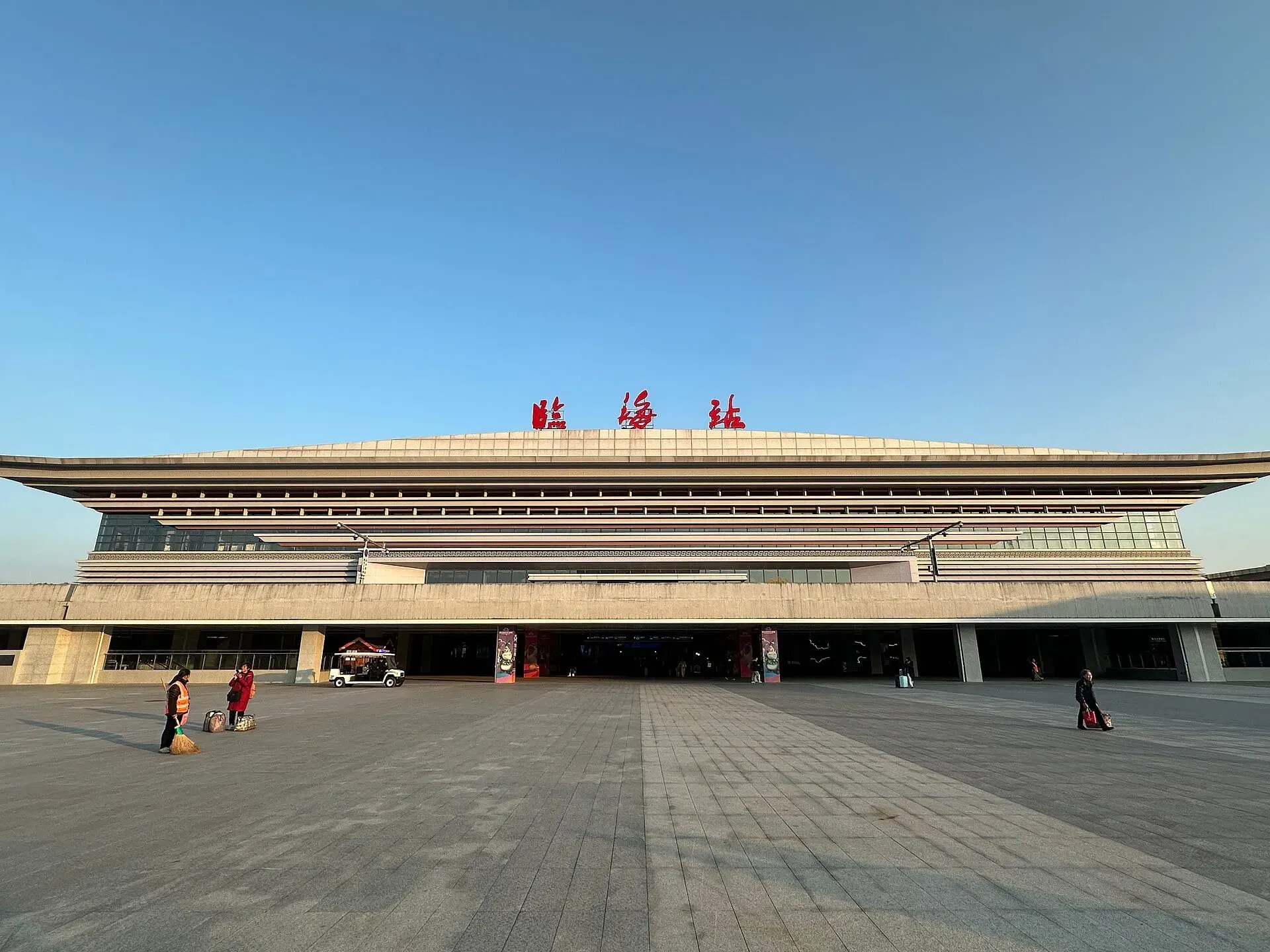
Around the old city of Linhai, Zhejiang. It follows the ridge of Beigu Hill on the north and the Ling River on the west and south, ending at the western foot of Jin Hill. The old city is about 15 km by taxi from Linhai station.
How long is the wall?
According to China News Service, it was originally more than 6,000 meters long, and 4,730 meters survive. The eastern stretch was torn down in 1956.
How does the wall protect against floods?
A third of its length runs along the Ling River like a levee. Its bastions are rounded on the river side so that floodwater slides past, and in 2019, during Typhoon Lekima, the wall held back the river.
What did Qi Jiguang have to do with the wall?
In the Jiajing reign of the Ming, Qi Jiguang garrisoned Taizhou against the pirates. With the prefect Tan Lun he raised and thickened the wall and built thirteen two-story hollow towers. Later, posted to the north, he used the same towers on the Great Wall, which is why the architectural historian Luo Zhewen called the Taizhou wall the model and blueprint of the Ming Great Wall.
Is the stretch on Beigu Hill original?
The northern stretch along the ridge, about 2,300 meters long, was rebuilt on the old foundations in the 1990s; the river walls on the west and south are better preserved.
How do I get to the Linhai Great Wall from Shanghai?
Direct high-speed trains run from Shanghai Hongqiao to Linhai station; on the 2025 timetable they take roughly two and a half to three and a half hours. From the station it is about 15 km, some twenty minutes by taxi, to the old city and the wall. Schedules change, so check 12306 — see Getting to Linhai.
Sources
- 车程是按 OpenStreetMap 路网估算的开车时间。王士性的话引自《广志绎》卷四。英文为本站翻译。
- 探访台州府城墙 听“城墙守护者”讲述申遗“长跑”故事 · 中新网,2022 年 3 月 19 日
- 美丽城市丨台州府城:江南长城 千年宋城 · 新华网,2026 年 3 月 10 日
- 六百年海门卫城焕新颜 “卫城遗韵”成古今交汇文化地标 · 中国日报网,2025 年 11 月 10 日
- 临海(上)· 维舟(澎湃号),2020 年 7 月 16 日
- 廣志繹/卷4 · 维基文库
- 台州府城 · 维基百科
- 上海到临海列车时刻表 · 好查(2025 年时刻)
- Walled City of Taizhou Fu · Wikipedia
- 桃渚城 · 维基百科
- 戚继光 · 维基百科