Ziyang Old Street and the Old City
The old prefectural city of Taizhou is one of the best preserved in Zhejiang, and some 28,000 people still live within its three square kilometers. Ziyang Street, its spine, runs for over a kilometer of flagstones lined with century-old shops; at its south end rise Jin Hill and its pagodas, where Saichō, founder of Japanese Tendai, found his teacher, and to the east lies East Lake.
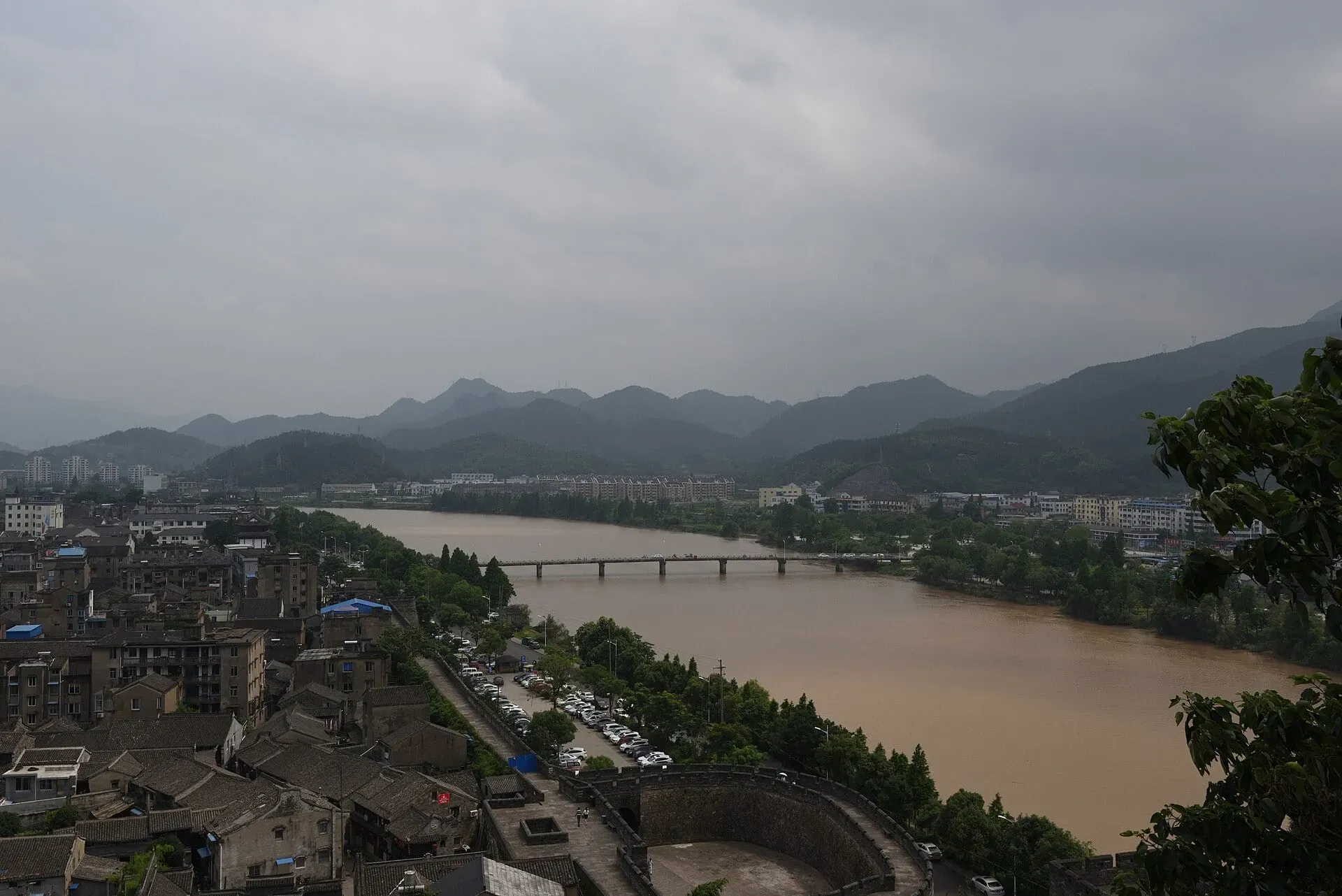
Many old cities have little more than a stretch of wall and a few old houses left. Old Linhai is still a living city. According to Xinhuanet it is the best preserved old city in Zhejiang and the one that best shows the layout of a Song dynasty prefectural capital, and some 28,000 people still live within its 3.12 square kilometers. Ziyang Street, often called Ziyang Old Street in English, is its spine; walk south and you reach Jin Hill and the Ling River, and to the east lies East Lake.
A kilometer of old street
Ziyang Street runs north to south, from Guangwen Road and Beigu Hill down to the Ling River — about 1,080 meters of flagstones, four meters wide. Most of its buildings have a shop downstairs and a home upstairs. According to Xinhua in 2026, the Yongli steelyard-scale shop has been in business for more than 160 years, and Cai Xuezhen, its fifth-generation keeper, has lived on the street for 68 of them; the Fang Yiren herbal medicine shop has traded for nearly 200 years, and Linhai’s paper-cutting tradition goes back more than 600.
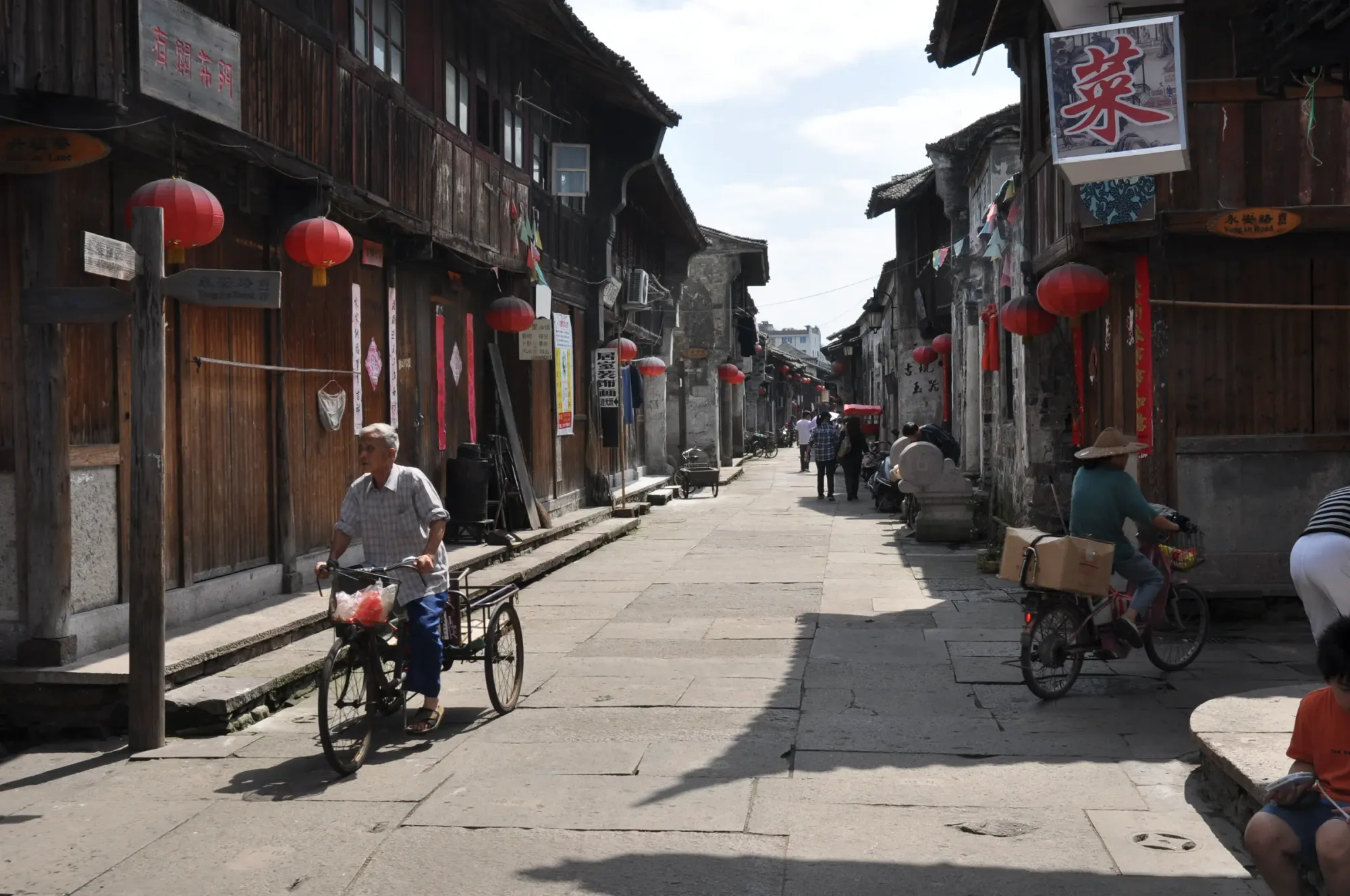
The street took the name Ziyang in 1998, after Zhang Boduan (987–1082), a Northern Song native of Linhai. Styled Ziyang and revered as the Perfected One of Ziyang, he wrote the Daoist classic of inner alchemy Wuzhen Pian and is honored as a founding patriarch of the Southern School of Daoism. He held that the true recluse lives in the marketplace, and never took monastic vows himself.
In 2012 Ziyang Street was named a Famous Historic Street of China. Xinhua reports that Linhai has held to a few rules: no wholesale relocation of residents, no fake “ancient towns” and no breaking up the old pattern of streets and lanes. Barbers, snack shops and craft workshops still trade on the street.
Jin Hill and its pagodas
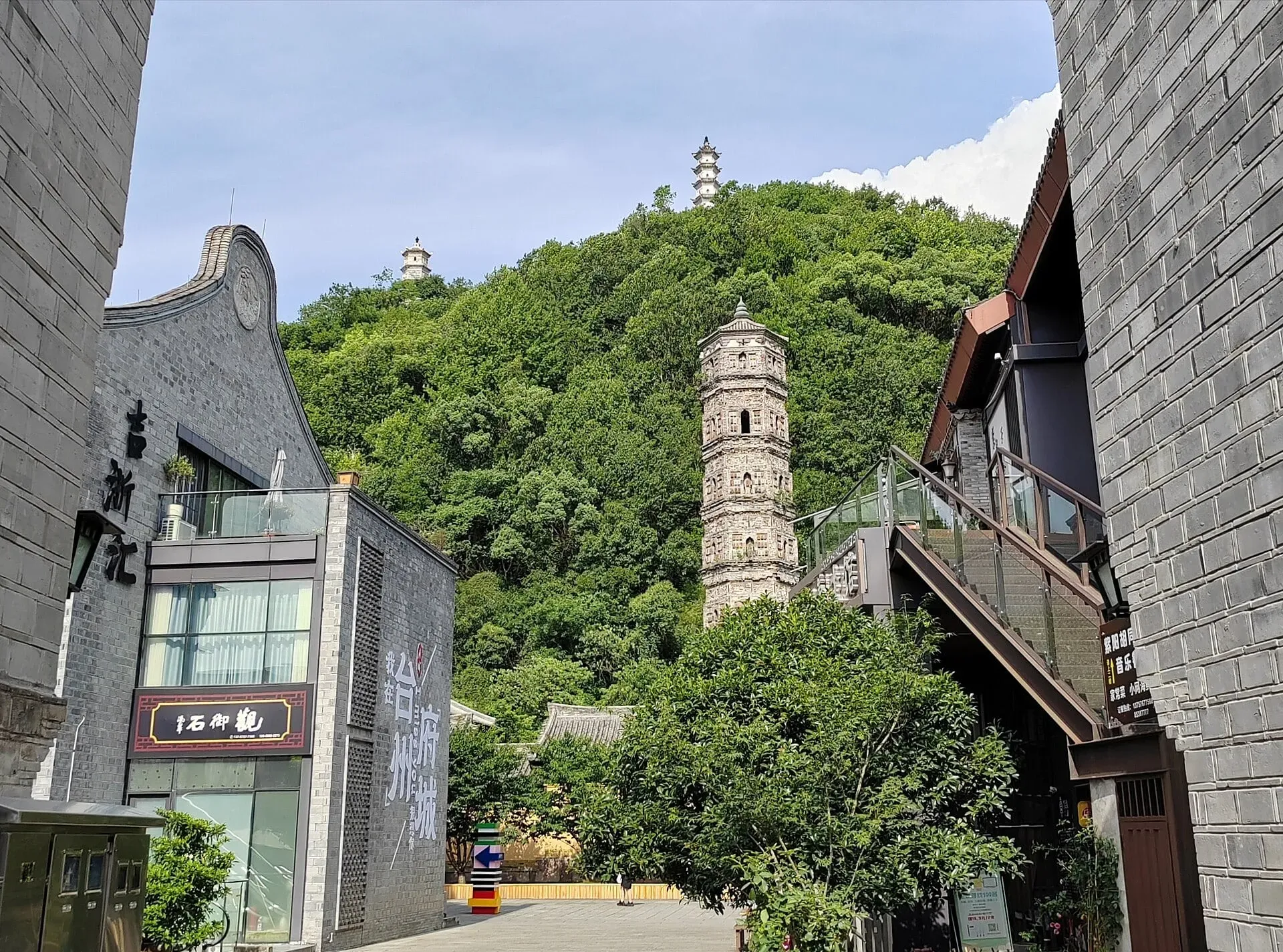
South along Ziyang Street, in the southeast corner of the old city, rises a small hill about 100 meters high: Jin Hill, or Jinzi Hill. Its two peaks face each other east and west with a dip between them, like a headscarf, or jin; legend says the immortal Huanghua dropped his headscarf here as he rose to heaven. China News Service describes old Linhai as “one hill with four pagodas, one city hiding eight temples”: a pagoda on each peak, the Nanshandian Pagoda halfway up the west side, and the Thousand Buddha Pagoda in Longxing Temple at the western foot.
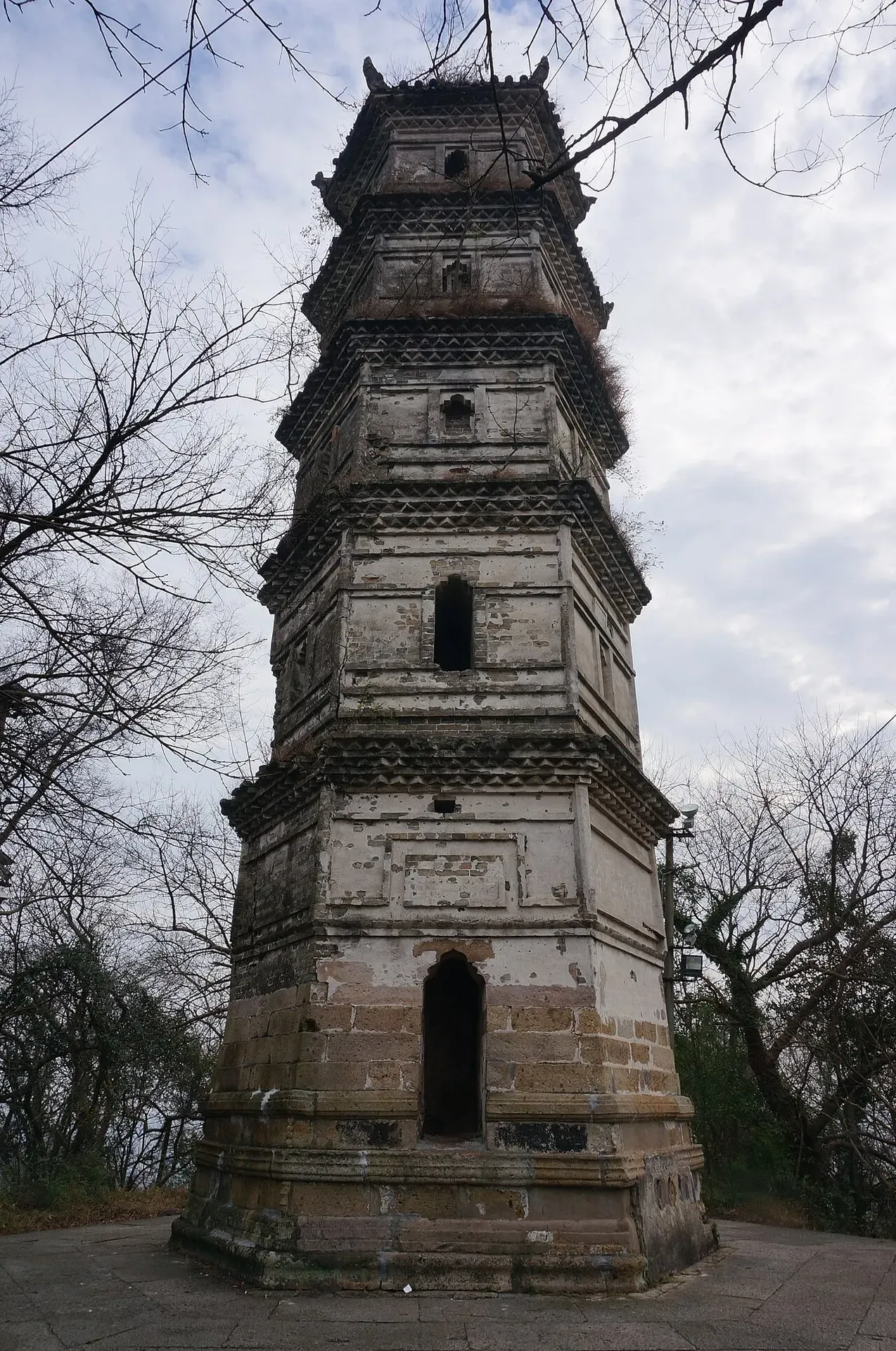
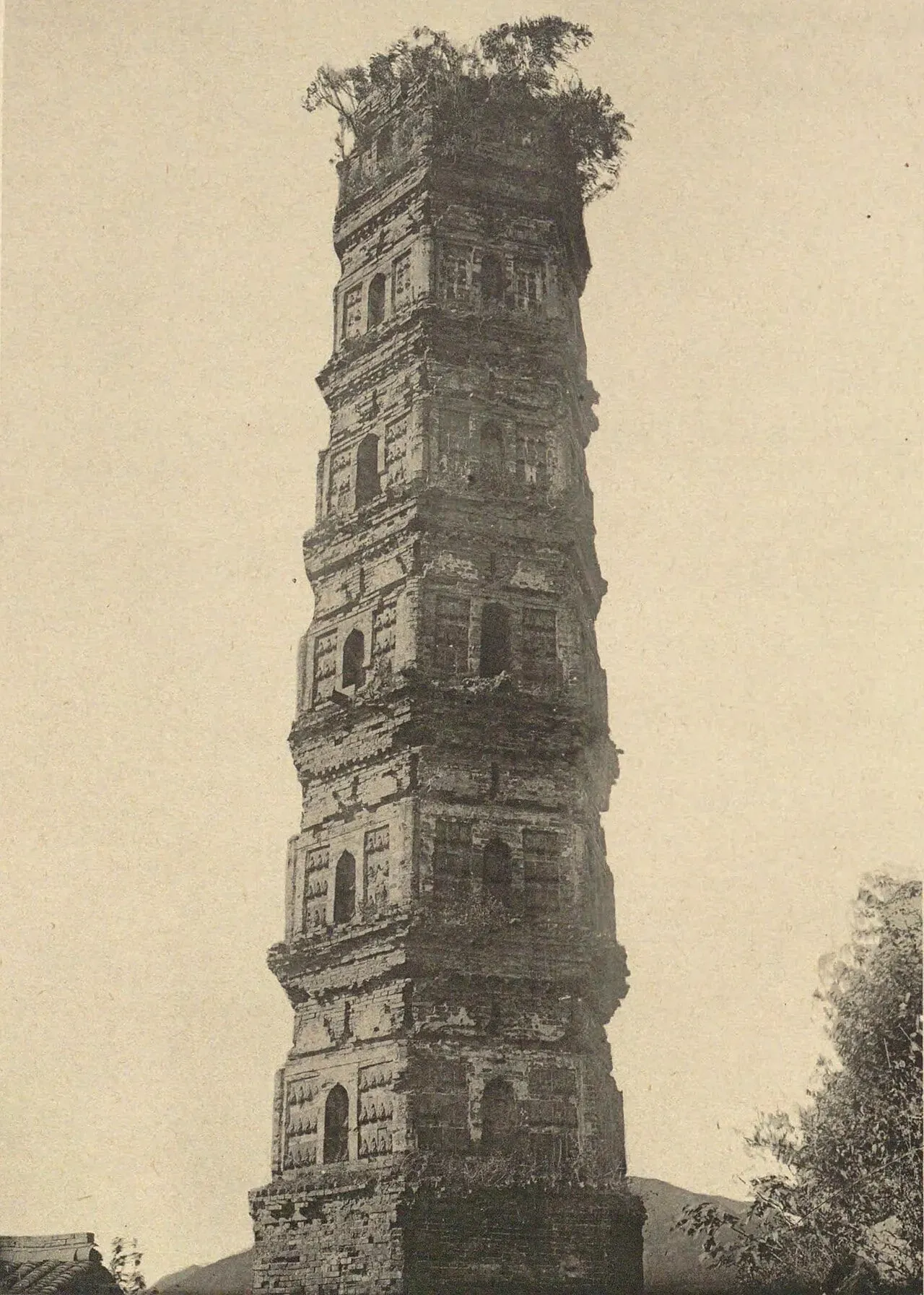
The Thousand Buddha Pagoda was first built in 744, in the Tang, and its present body was rebuilt in 1299, under the Yuan. About 28.7 meters tall, with seven stories and six sides, it is faced with more than a thousand molded Buddha tiles — hence its name — and is the tallest old pagoda left in Linhai.
For the story of the Tang poet Ren Fan and the poem he wrote, and wanted to rewrite, on Jinzi Hill, see Zheng Qian and the Tang Poets of Taizhou.
Where Saichō found his teacher
Longxing Temple, home of the Thousand Buddha Pagoda, already stood in the Tang. According to Wikipedia’s article on Daosui, in 804 the Tiantai monk Daosui came from Mount Tiantai to Longxing Temple in Linhai to lecture on the Mohe Zhiguan, and the Japanese monk Saichō became his student. After studying on Mount Tiantai, Saichō came back to Taizhou to copy scriptures, Daosui gave him the Mahayana bodhisattva precepts, and that same year Saichō returned to Japan to found the Tendai school, which honors Daosui as a founding patriarch. For Saichō on Mount Tiantai, see Guoqing Temple.
East Lake
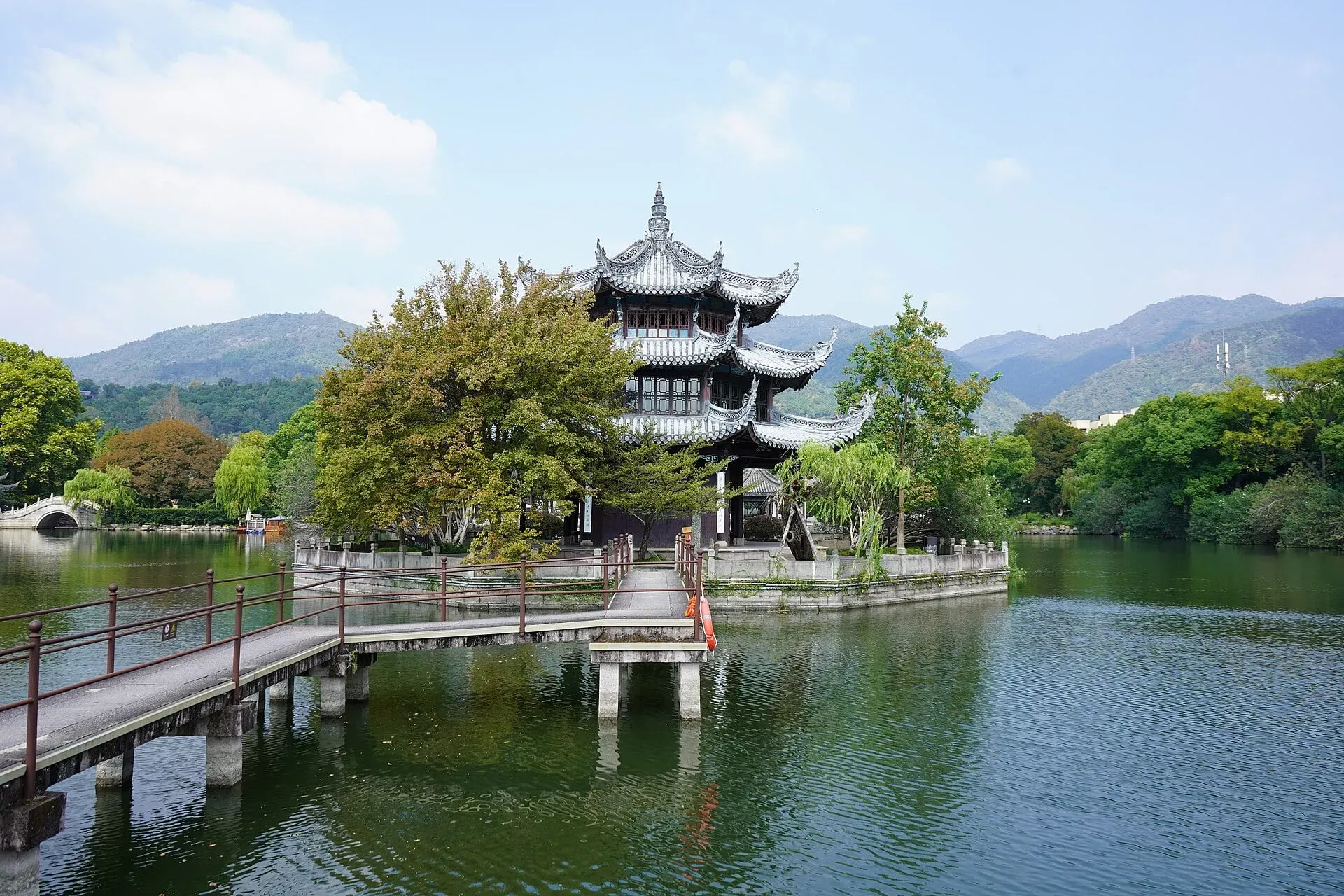
East Lake, on the east side of the old city, was once where mountain streams met and flowed south into the Ling River. In the Song the governor Zhang Wei built a boatyard and stationed a naval force here; a later governor, Qian Xuan, made it into a lake, and it was enlarged again and again. Rectangular, about 500 meters from north to south and 150 meters across, it is divided by causeways into a front lake and a back lake, with a pavilion on an island in the middle of the front lake.
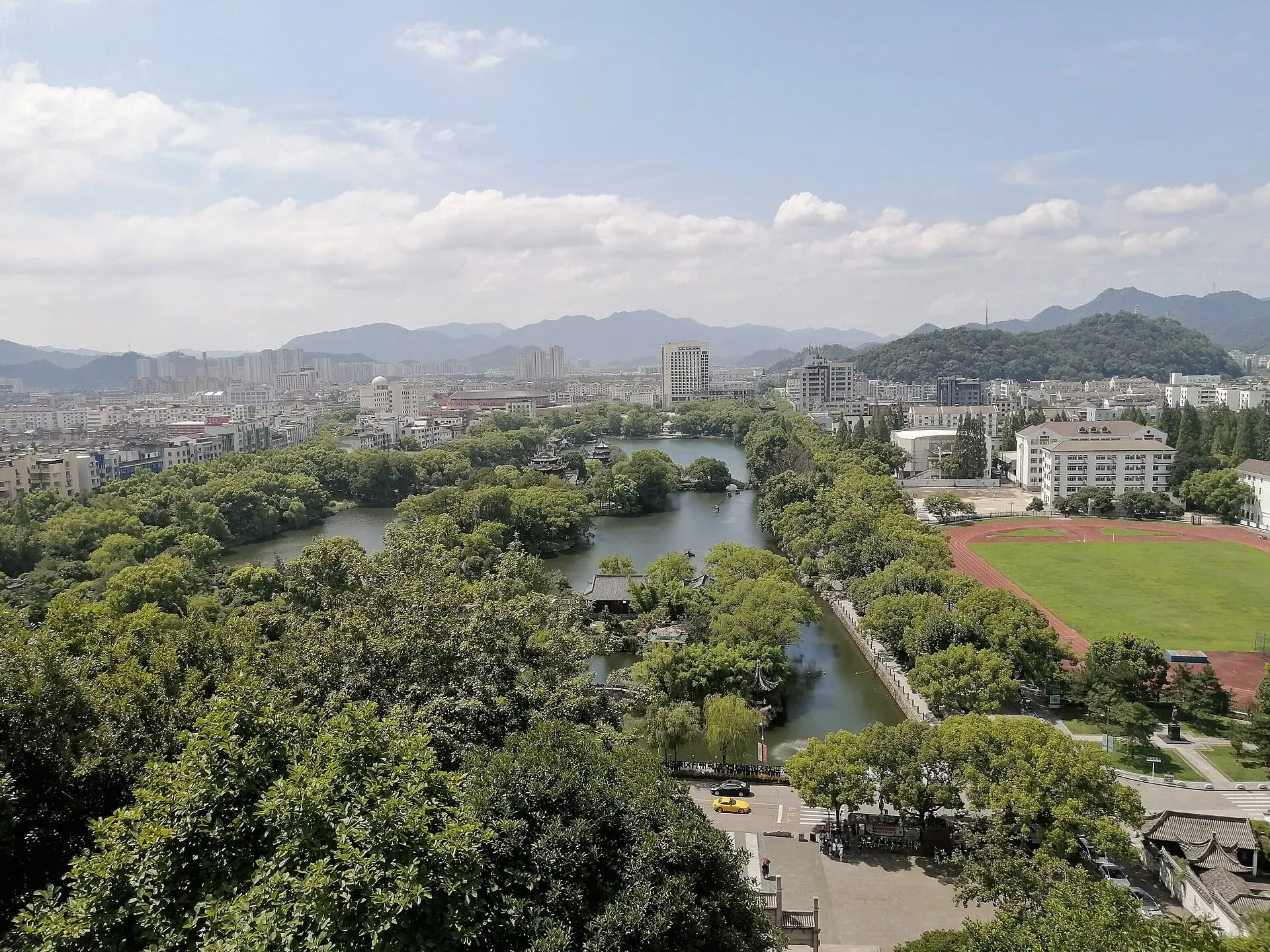
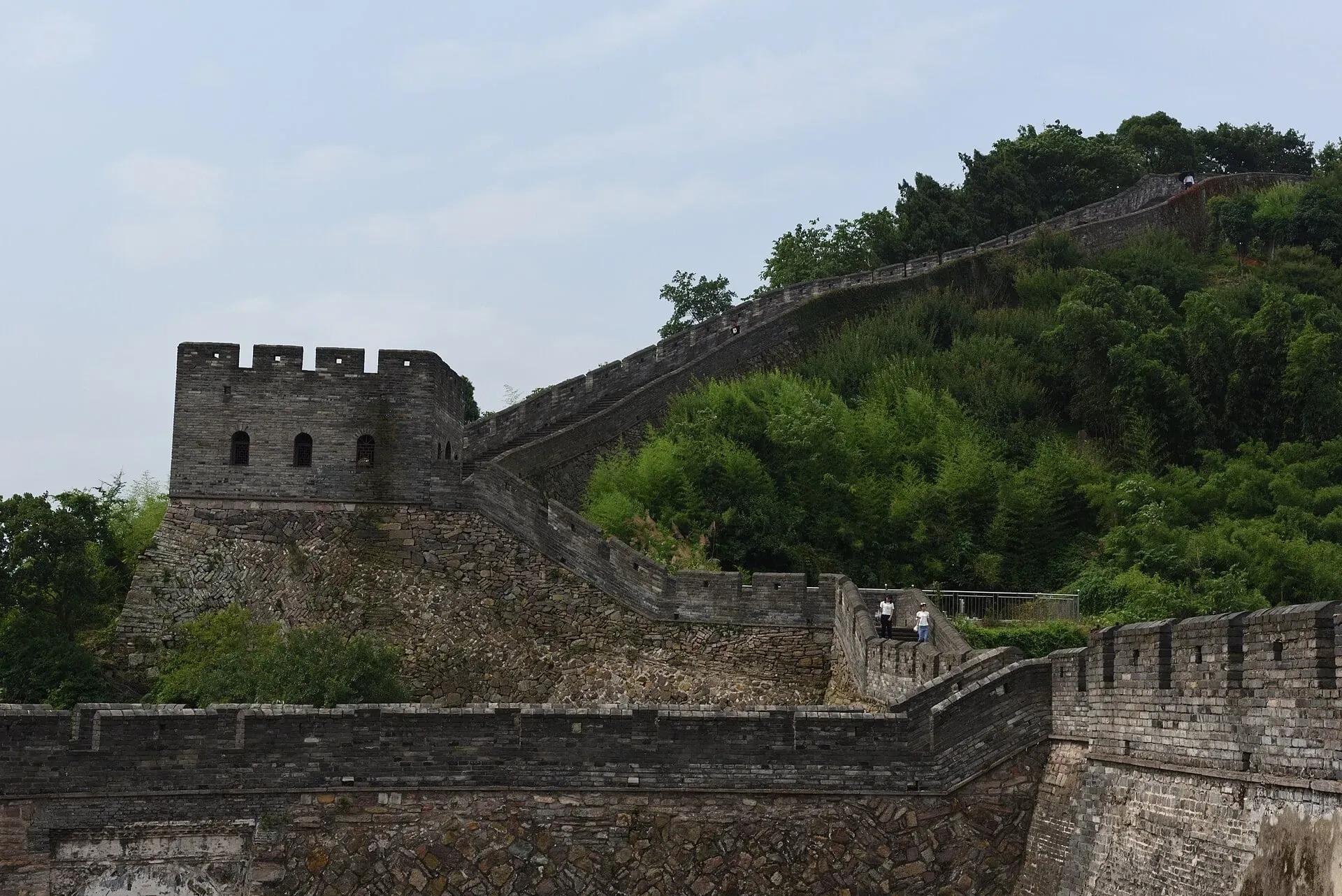
From the city wall, East Lake runs on into the new town beyond — see the Taizhou City Wall.
The Confucian temple and Zheng Qian’s shrine
At the north end of Ziyang Street are the Taizhou Confucian Temple and the shrine to Zheng Guangwen. The temple dates back to the Northern Song; the shrine, founded in 764, honors Zheng Qian, revered as the father of learning in Taizhou — see Zheng Qian and the Tang Poets of Taizhou.
Getting around
Start at the Confucian temple and Zheng Qian’s shrine at the north end, walk south down Ziyang Street to Jin Hill and Longxing Temple, then on to the wall by the river; East Lake is on the east side of the old city. Ziyang Street is a lived-in street of homes and shops that you can simply wander. Tickets and opening hours for sights such as the city wall change, so check with the scenic area.
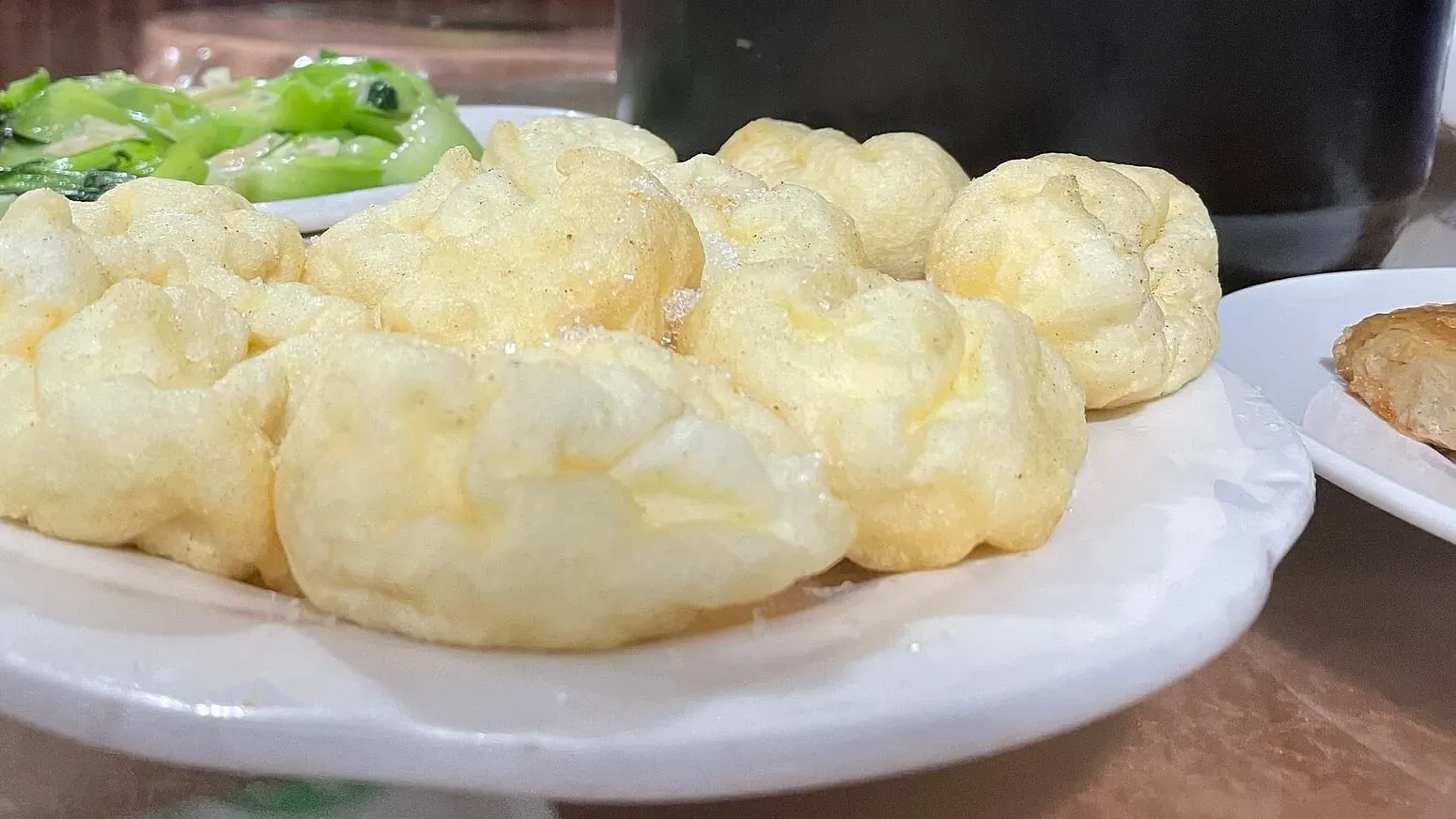
When your feet need a rest, Ziyang Street fries danqing yangwei to order — see Zaogeng and Danqing Yangwei.
Questions & answers
Where is Ziyang Street and how long is it?
In the old city of Linhai, Zhejiang, where it forms the north–south spine of the old prefectural capital, from Guangwen Road and Beigu Hill down to the Ling River — about 1,080 meters in all. It is about 15 km by taxi from Linhai station.
Why is it called Ziyang Street?
It is named after Zhang Boduan, a Northern Song native of Linhai styled Ziyang and revered as the Perfected One of Ziyang. He wrote the Daoist classic Wuzhen Pian and is honored as a founding patriarch of the Southern School of Daoism. The street took the name in 1998.
Why is Jin Hill called Jin Hill?
Jin Hill, also called Jinzi Hill, has two peaks facing each other east and west with a dip between them, like a headscarf (jin); legend says the immortal Huanghua dropped his headscarf here as he rose to heaven. Four pagodas stand on and around it, the oldest, the Thousand Buddha Pagoda, first built in the Tang.
What is Linhai’s connection with Japanese Tendai?
In 804 the Tiantai monk Daosui came from Mount Tiantai to lecture at Longxing Temple in Linhai, and the Japanese monk Saichō became his student there. Daosui later gave Saichō the bodhisattva precepts, and Saichō went home to found the Tendai school.
Do you need a ticket for Ziyang Street?
Ziyang Street is a lived-in street of homes and shops that you can simply wander. Tickets and opening hours for sights such as the city wall change, so check with the scenic area.