Tiantai Mountain Grand Waterfall
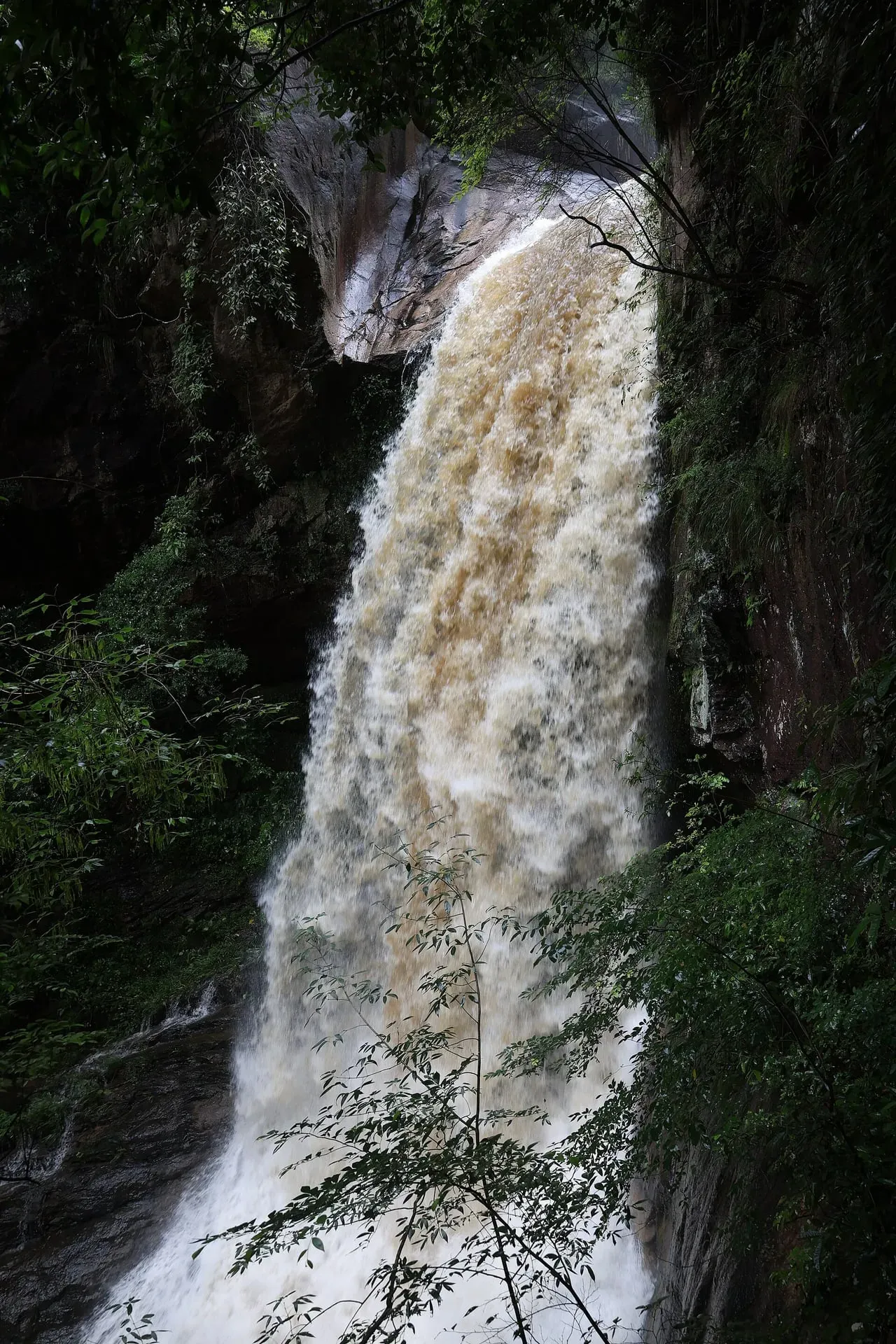
The Tiantai Mountain Grand Waterfall, once called the Tongbai Waterfall, drops 325 meters over nine tiers. It ran dry for more than sixty years after a reservoir was built upstream in 1958, reopened in April 2020, and now flows all year thanks to a system of channels. Qiongtai and the Twin Gates, which the traveler Xu Xiake sought out in 1613, are in the same valley.
Tiantai Mountain has two famous waterfalls. One is the Stone Bridge falls, where Xu Xiake walked across a natural bridge of rock. The other is the Grand Waterfall, which comes down Mount Tongbai in nine tiers, 325 meters from top to bottom. It was dry for more than sixty years and began to flow again only in 2020.
The waterfall Sun Chuo wrote about
The Grand Waterfall was once called the Tongbai Waterfall, or the Sanjing Waterfall, and lies on the west side of Mount Tongbai in Tiantai County. According to Zhejiang Online it has a total drop of 325 meters and is up to 90 meters wide, a chain of nine stepped falls that locals bill as the highest waterfall in China.
Its fame is old. In the Eastern Jin, Sun Chuo wrote in his Rhapsody on a Journey to Mount Tiantai:
Chicheng rises like rosy cloud and sets the marker; the waterfall, flying down, draws the boundary.Mount Chicheng stands like a red cloud to mark the way, and the waterfall’s flying stream draws the line: Sun Chuo set the falls beside Mount Chicheng as the two landmarks of Mount Tiantai. The rhapsody later went into the Selections of Refined Literature, and the mountain’s fame spread with it.
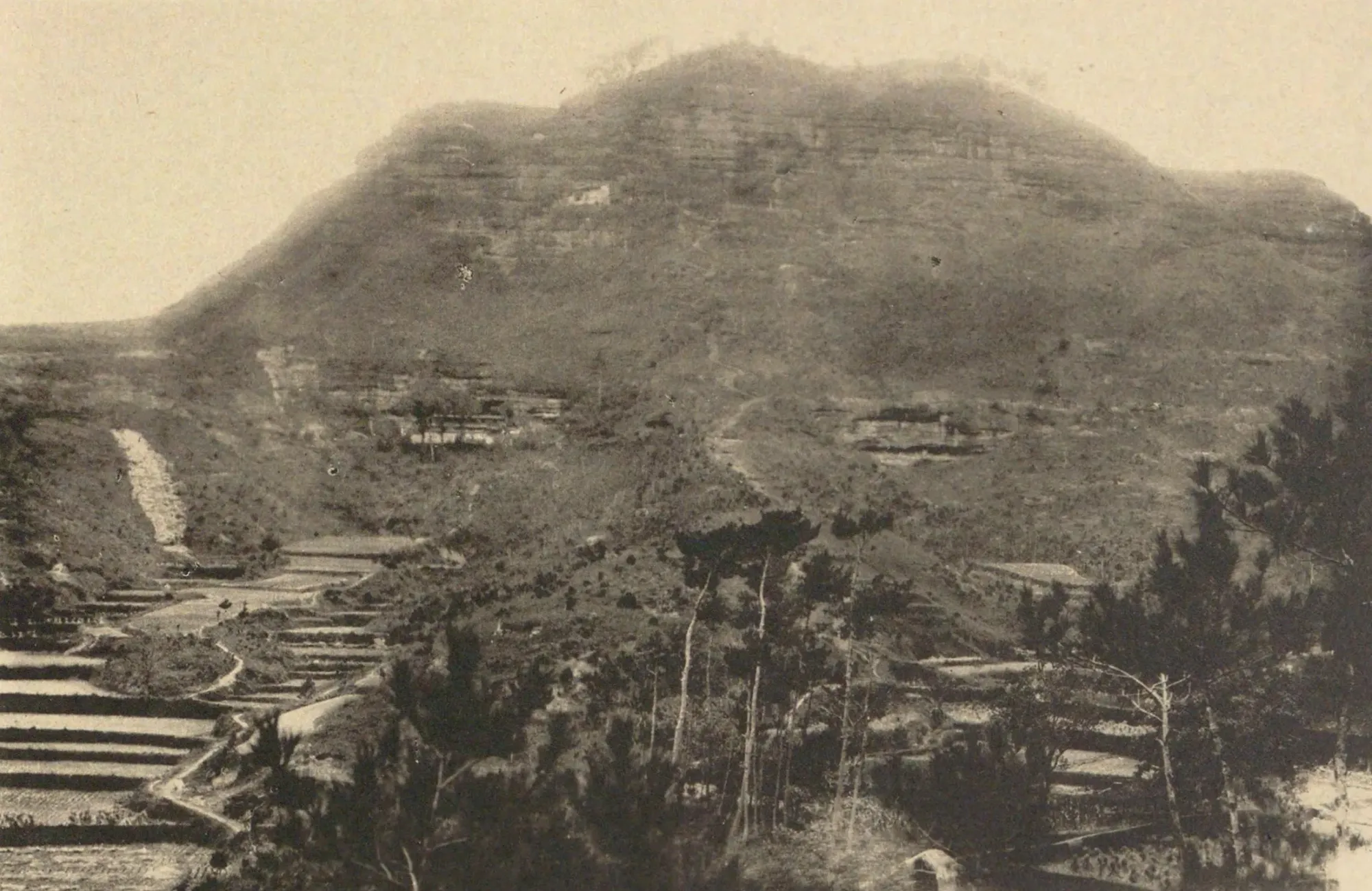
Sixty dry years
In 1958, for irrigation and electricity, Tiantai decided to build the Tongbai reservoir upstream of the falls, and two years later the power station was finished. The works changed the lie of the land, and the waterfall stopped. Tongbai Palace, the Daoist temple on the mountain, went under the reservoir that same year.
In the new century a cross-basin water diversion project, the Tongbai pumped-storage power station and the Huanglong reservoir were built in the area, laying the ground for the falls’ return. In 2013 the county decided to restore the Grand Waterfall, and on April 12, 2020, the scenic area opened for a trial run and the water came down again. A reporter from Zhejiang Online met a 72-year-old woman there who said she could see the falls from her front door as a child; after sixty dry years, she said, seeing them again was overwhelming.
A waterfall you can adjust
Today’s Grand Waterfall has its original cliffs and watercourse, but the water has been invited back. The head of the project says that channels and a regulating pool keep the falls running all year round, and the flow can be turned up or down. According to Hangzhou.com.cn, there are now cliff walkways, a rope bridge, a glass suspension bridge and a “ladder to the clouds” above the falls.
Qiongtai and the Twin Gates
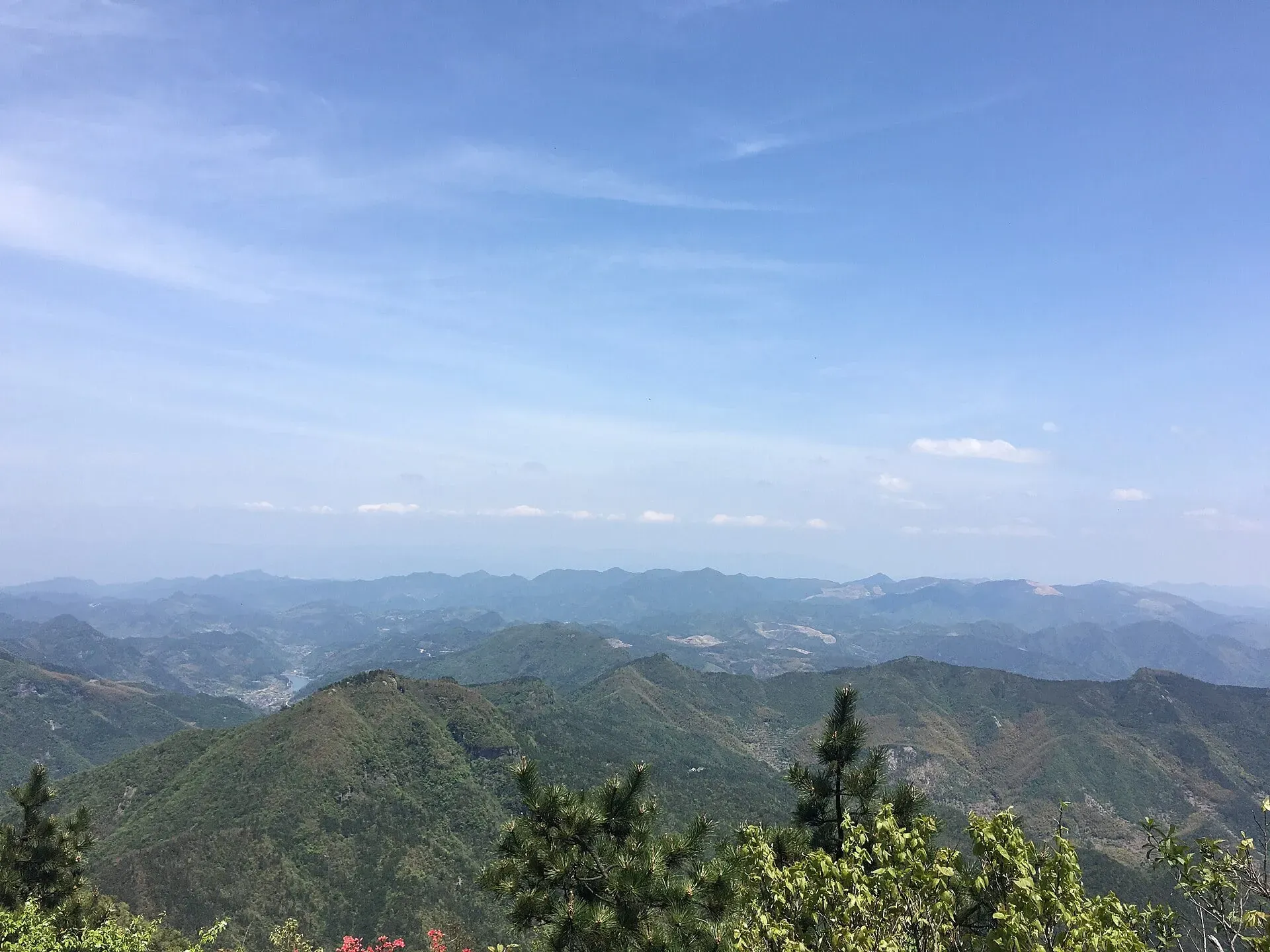
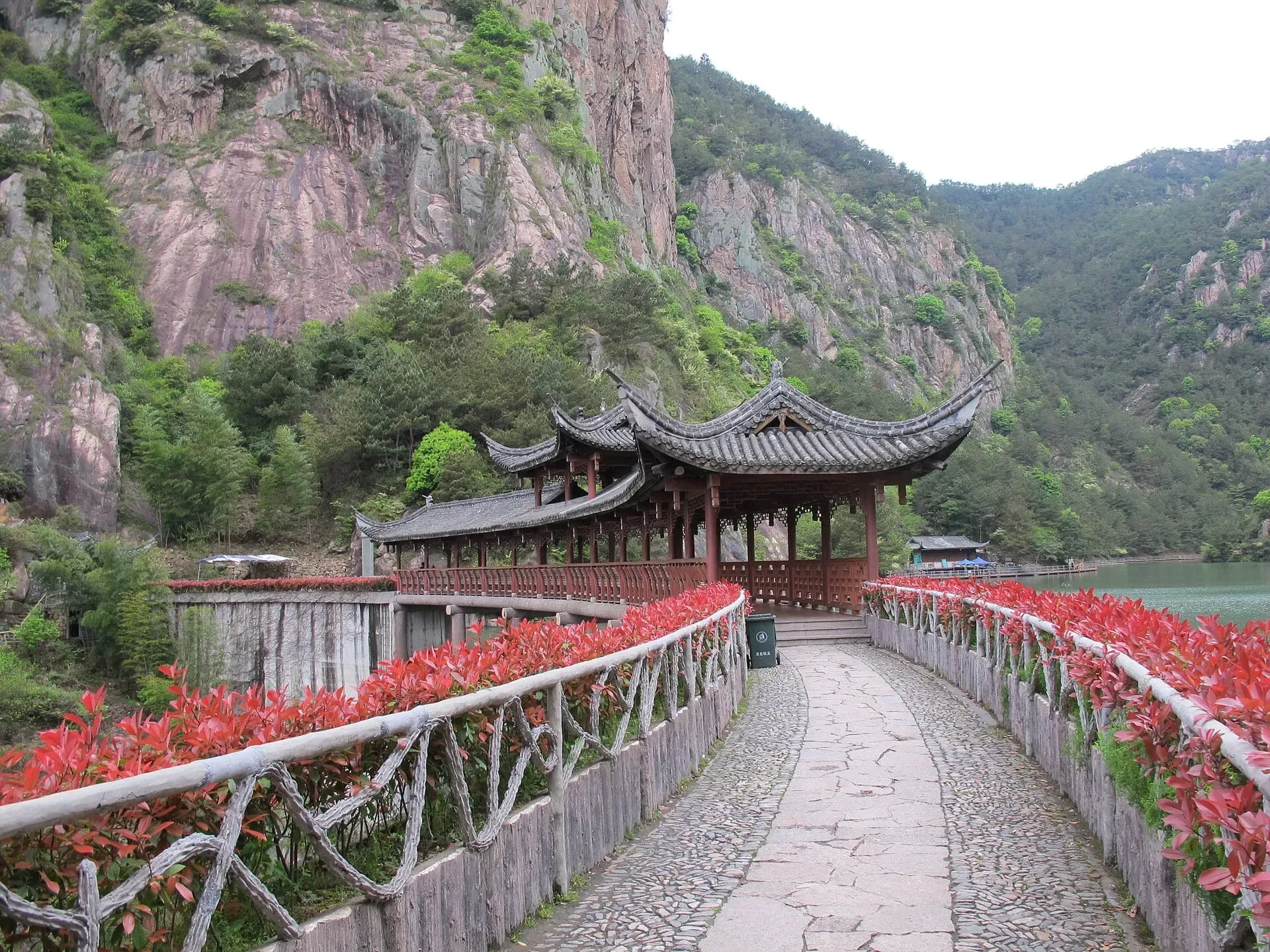
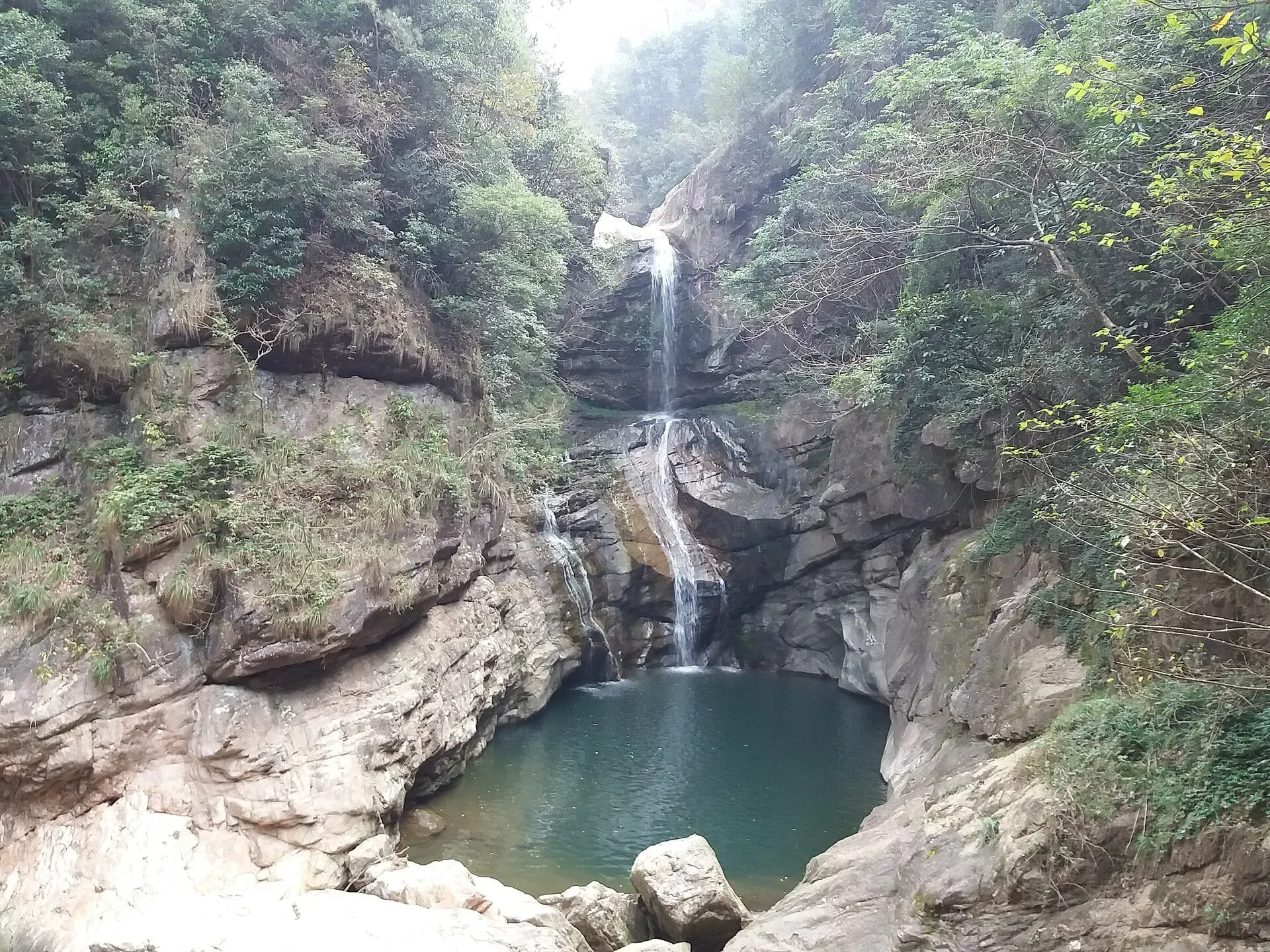
The scenic area around the falls is also known as Qiongtai Xiangu, the Immortals’ Valley of Qiongtai. Deep pools lie along the valley, with strange peaks standing over them; one that stands alone is Qiongtai Peak, which gives the valley its name, and the view on a moonlit night has a name of its own, “Night Moon at Qiongtai.”
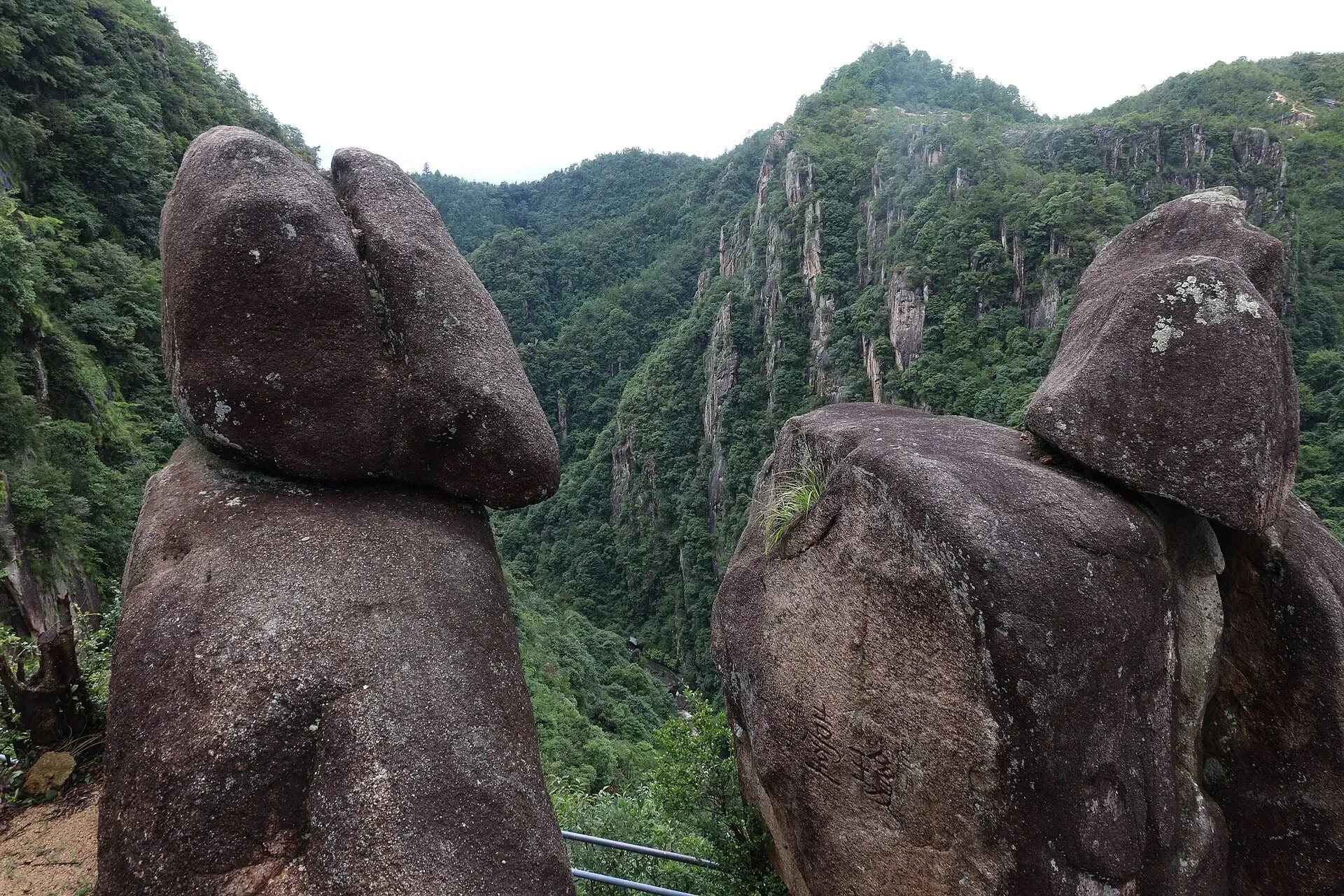
On May 26, 1613, his seventh day on Mount Tiantai, Xu Xiake came looking for Qiongtai and the Twin Gates. At first nobody he asked had heard of them; several li on, he learned they were at the top of the mountain:
Looking down, the gorge was sheer and winding, just like Taoyuan, only its green walls, ten thousand feet high, surpassed it. Where the peak breaks in the middle are the Twin Gates; what the Twin Gates hold and encircle is Qiongtai. The terrace has sheer cliffs on three sides, and behind it joins the Twin Gates.Looking down, he saw the gorge twisting between sheer walls; the peak split in two was the Twin Gates, and the terrace they enclosed was Qiongtai. It was too late in the day to climb onto Qiongtai itself, but, he wrote, he had already had his fill of wonders for one day.
Tongbai Palace
Mount Tongbai is also a Daoist mountain. In 711 Emperor Ruizong of the Tang ordered the Tongbai Abbey built here for the Daoist master Sima Chengzhen, who lived as a recluse on Mount Tiantai for forty years; Li Bai was his friend — see the Tang Poetry Road. In the Northern Song Zhang Boduan practiced here and wrote the Wuzhen Pian, which is why Tongbai Palace is honored as the founding temple of the Southern School of Daoism. The old palace went under the reservoir in 1958; the new one on the reservoir’s north shore was begun in 2008 and finished in 2013.
Visiting the falls
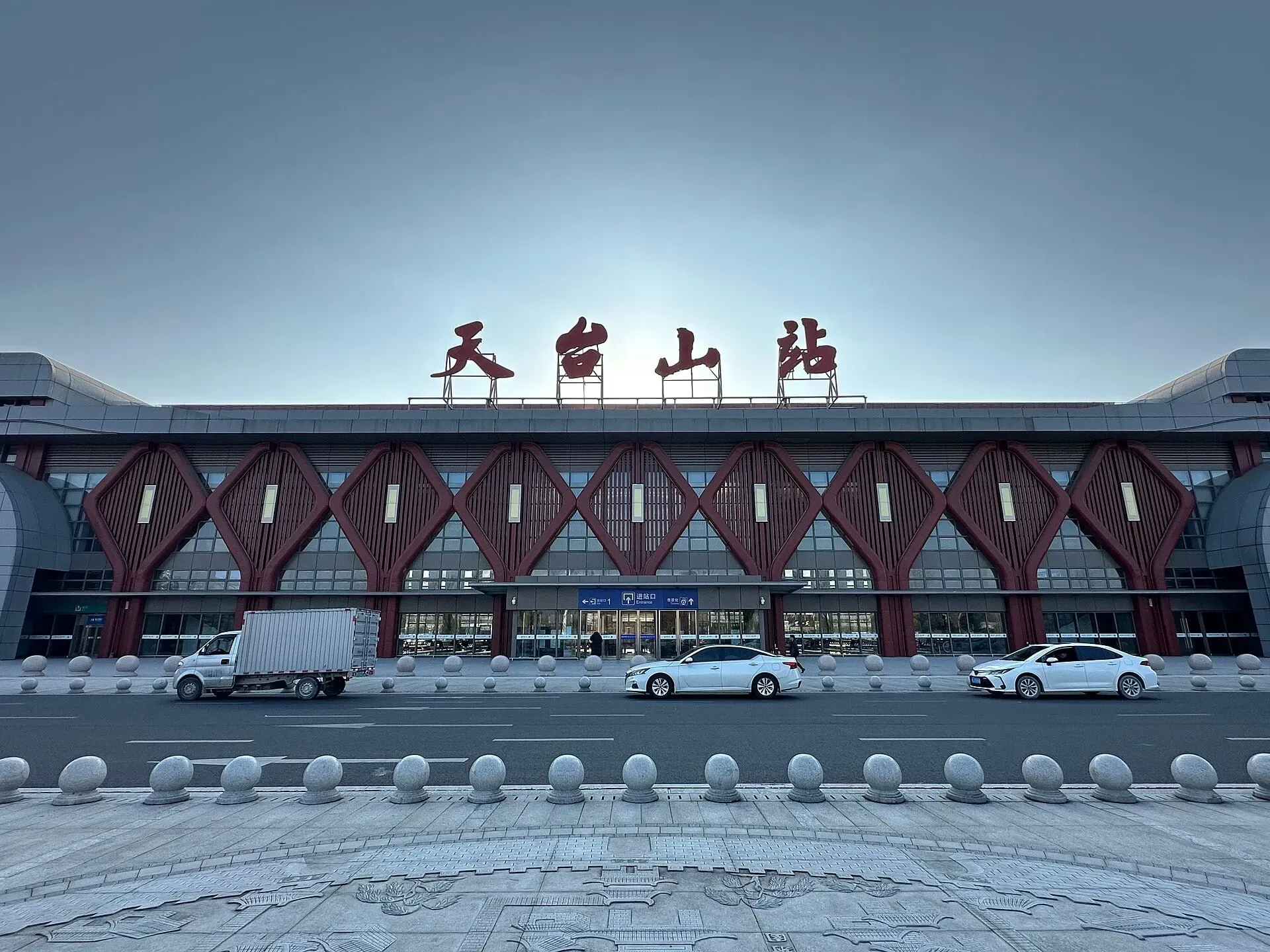
Take the high-speed train to Tiantaishan station. According to Hangzhou.com.cn in 2021, a tourist shuttle runs from the station straight to Qiongtai Xiangu, or it is about 11 km by taxi. The valley is steep and there are many steps up and down, so allow plenty of energy and time. Tickets and opening hours change, so check with the scenic area before you go.
The Stone Bridge falls are in another direction — see Tiantai Mountain. For the temple at the foot of the mountain, see Guoqing Temple.
Questions & answers
How high is the Tiantai Mountain Grand Waterfall?
According to Zhejiang Online, it is a chain of nine tiers with a total drop of 325 meters, up to 90 meters wide; locally it is billed as the highest waterfall in China.
Why did the waterfall run dry?
In 1958 Tiantai decided to build the Tongbai reservoir and a power station upstream, for irrigation and electricity. The works changed the lie of the land and the falls stopped. The county decided to restore them in 2013, and they reopened on April 12, 2020 — more than sixty years later.
Is today’s waterfall natural?
The cliffs and the watercourse are original; the water has been brought back. According to the head of the project, the falls are now fed by channels and a regulating pool, flow all year round, and can be turned up or down.
Is the Grand Waterfall the same as the Stone Bridge falls?
No. The Grand Waterfall is in the Qiongtai Xiangu scenic area on the west side of Mount Tongbai; the Stone Bridge falls, with a natural stone bridge across the top, are in the hills northeast of town. See Tiantai Mountain.
How do I get to the Grand Waterfall?
Take the high-speed train to Tiantaishan station. According to Hangzhou.com.cn in 2021, a tourist shuttle runs from the station to Qiongtai Xiangu, or it is about 11 km by taxi. Check tickets and opening hours with the scenic area.
Sources
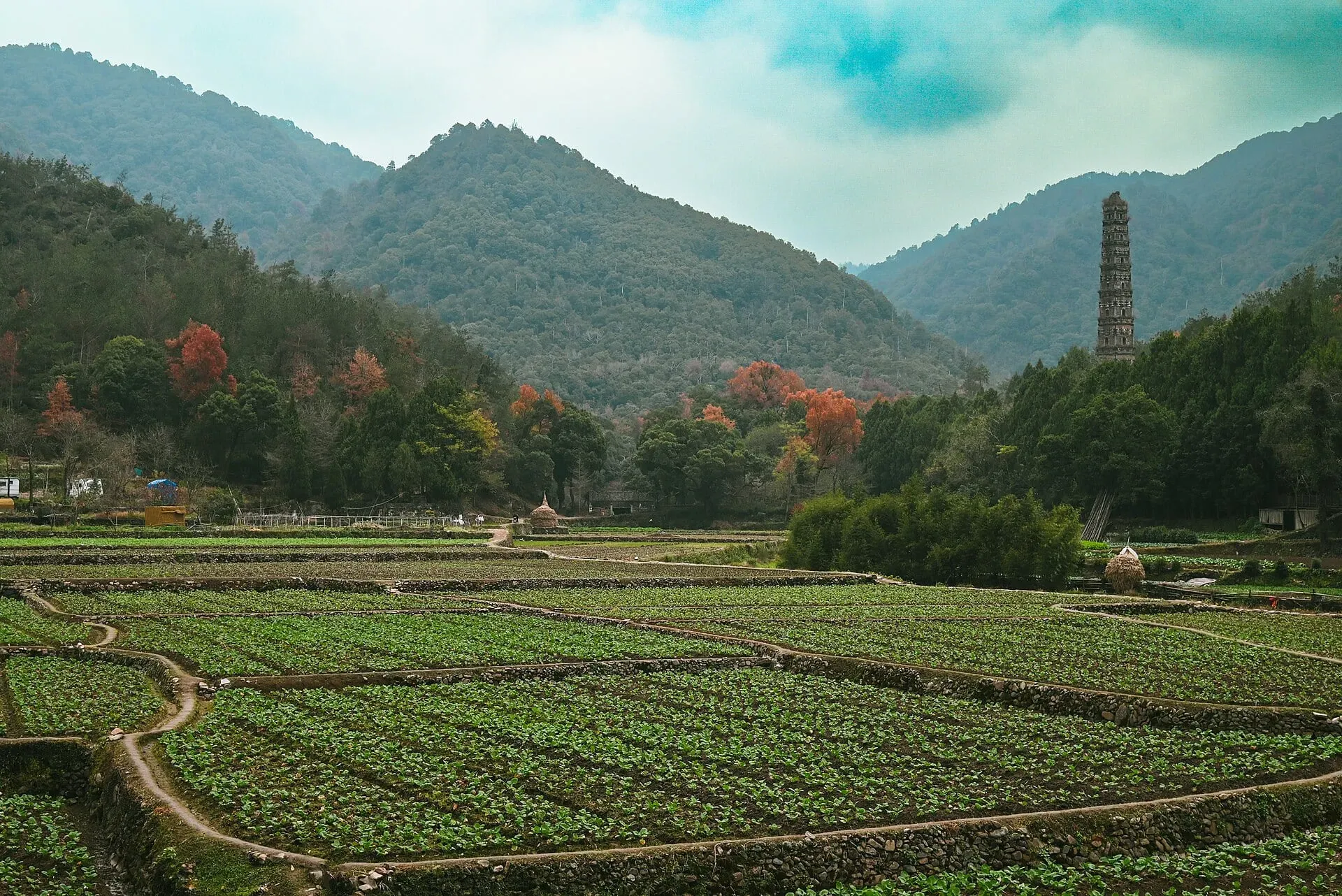
- 维基共享资源上还没有 2020 年恢复以后的大瀑布全景照片,所以首图用的是 2013 年的琼台仙谷。徐霞客的话引自《徐霞客游记·游天台山日记》,孙绰的话引自《游天台山赋》。英文为本站翻译。
- 60年前兴修水库断流 转型文旅今朝获新生 大瀑布再现天台山 · 浙江在线,2020 年 4 月 13 日
- 天台山大瀑布截流60多年后重现 为天台旅游注入新活力 · 浙江在线,2022 年 9 月 30 日
- 嵊州、新昌、天台通高铁啦!杭绍台铁路昨试运行 · 杭州网,2021 年 11 月 27 日
- 徐霞客遊記/遊天台山日記 · 维基文库
- 桐柏宫 · 维基百科