Places to Visit
Guoqing Temple, the Stone Bridge falls, Huading, the Grand Waterfall, Ji Gong’s home and Hanshan’s cave, with how to get there and how long to allow.
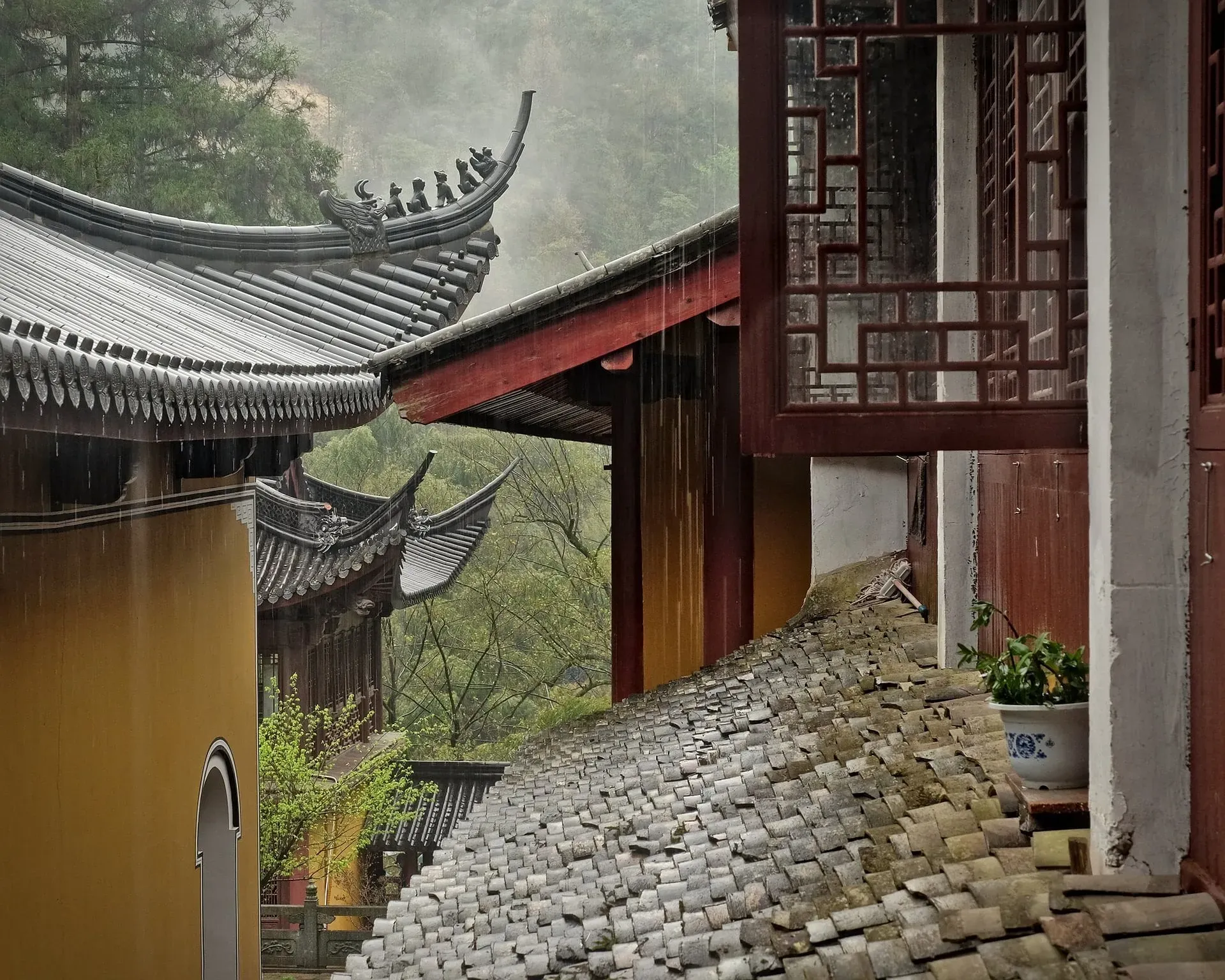
Most of what there is to see in Tiantai lies in the mountains just north of the county town: Guoqing Temple at their foot, the Stone Bridge falls and Huading Peak up to the northeast, and the Grand Waterfall in a valley to the northwest. Out in the hills southwest of town are the cliffs where the Tang poet-monk Hanshan lived. Here are the places worth the trip, with where each one is, how to get there and roughly how long to allow; the stories behind them are in our longer guides.
Guoqing Temple
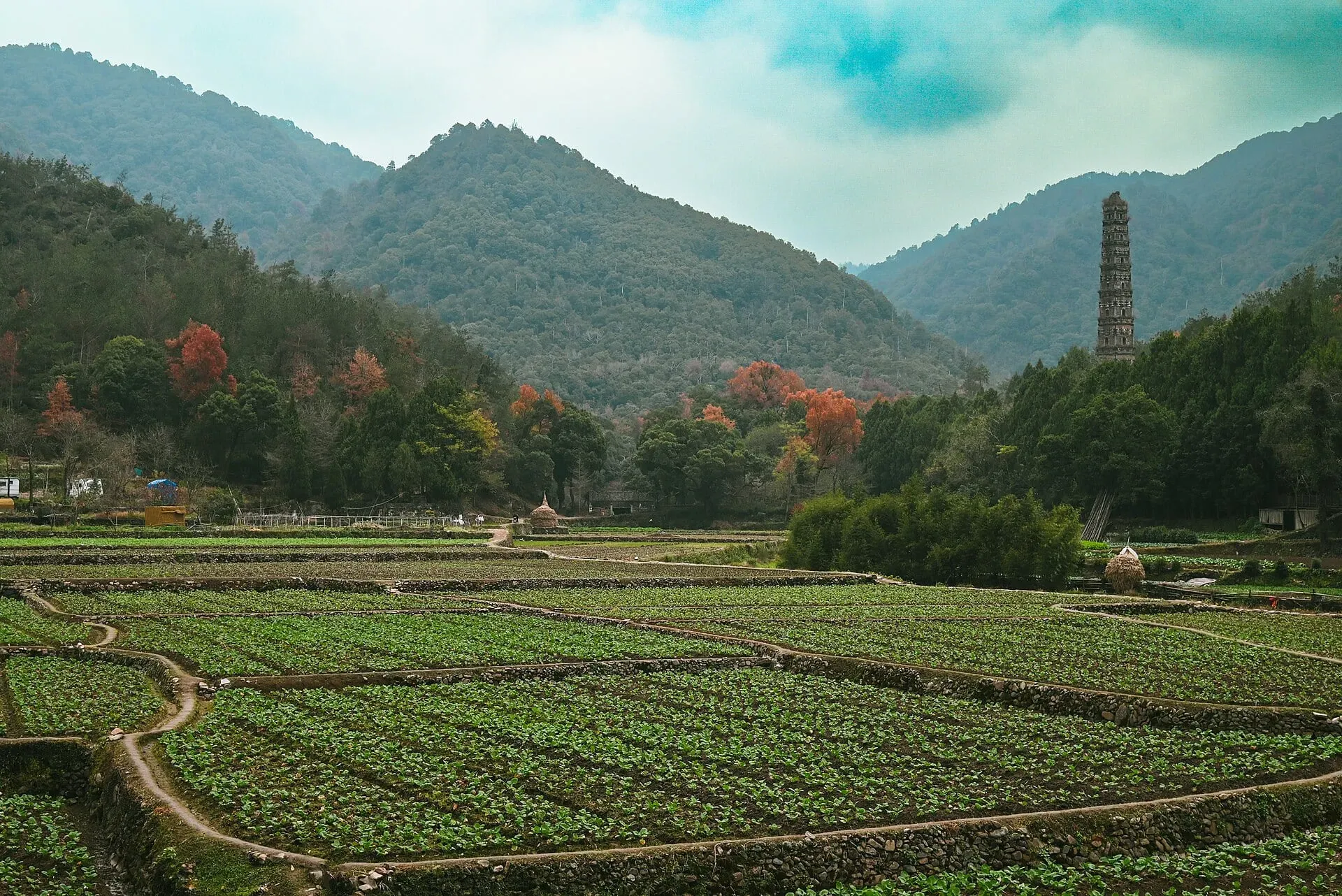
Guoqing Temple stands at the foot of Mount Tiantai, about 4 km north of the county town. Founded in 598, it is the mother temple of the Tiantai school of Buddhism, and Japan’s Tendai school honors it as its own. Outside the gate rises a six-sided, nine-story pagoda from the Sui dynasty. It is about 9 km, ten-odd minutes, by taxi from Tiantaishan station; according to a 2022 guide to the county’s buses, the No. 7 bus runs from the station to the Mount Tiantai visitor center, stopping at the Guoqing scenic area on the way. Shenxiu Tiantai, the county’s local news outlet, said in 2025 that entry is free and suggested arriving before 7 a.m. to beat the crowds. Give it a morning. More in Guoqing Temple.
The Stone Bridge falls
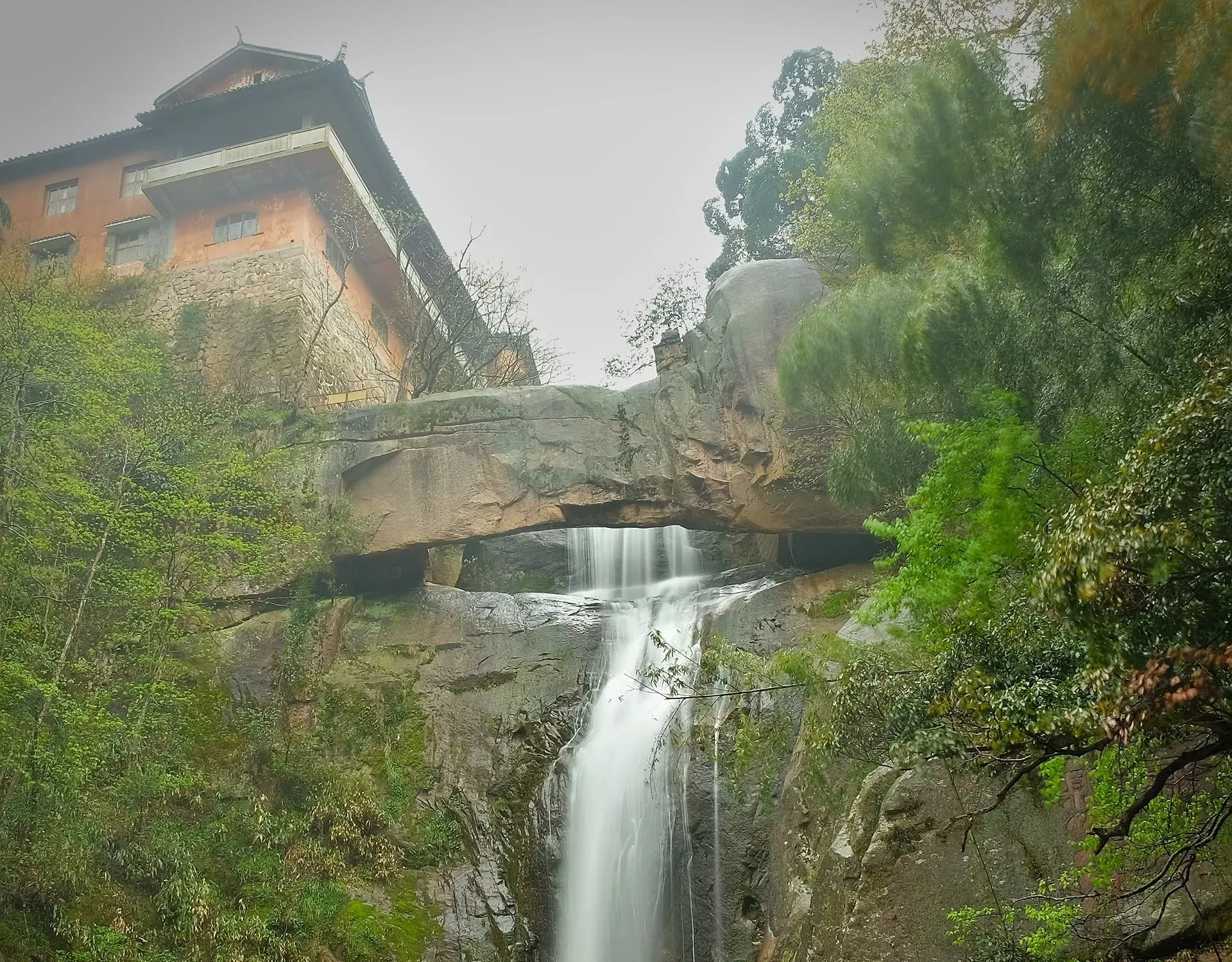
In the hills northeast of town, a natural bridge of rock spans the top of a waterfall; the stream runs beneath it and drops more than 30 meters into a deep pool. This is the Stone Bridge, or Shiliang, that the Tang poet Meng Haoran set out to see and that the Ming traveler Xu Xiake walked across in 1613. It is about 22 km and half an hour by car from Tiantaishan station, or about 13 km from Guoqing Temple. Tourist buses also run there from the Mount Tiantai visitor center. Shenxiu Tiantai’s three-day plan for 2025 puts the Stone Bridge and Huading on the same day. More in our guide to Mount Tiantai.
Huading Peak
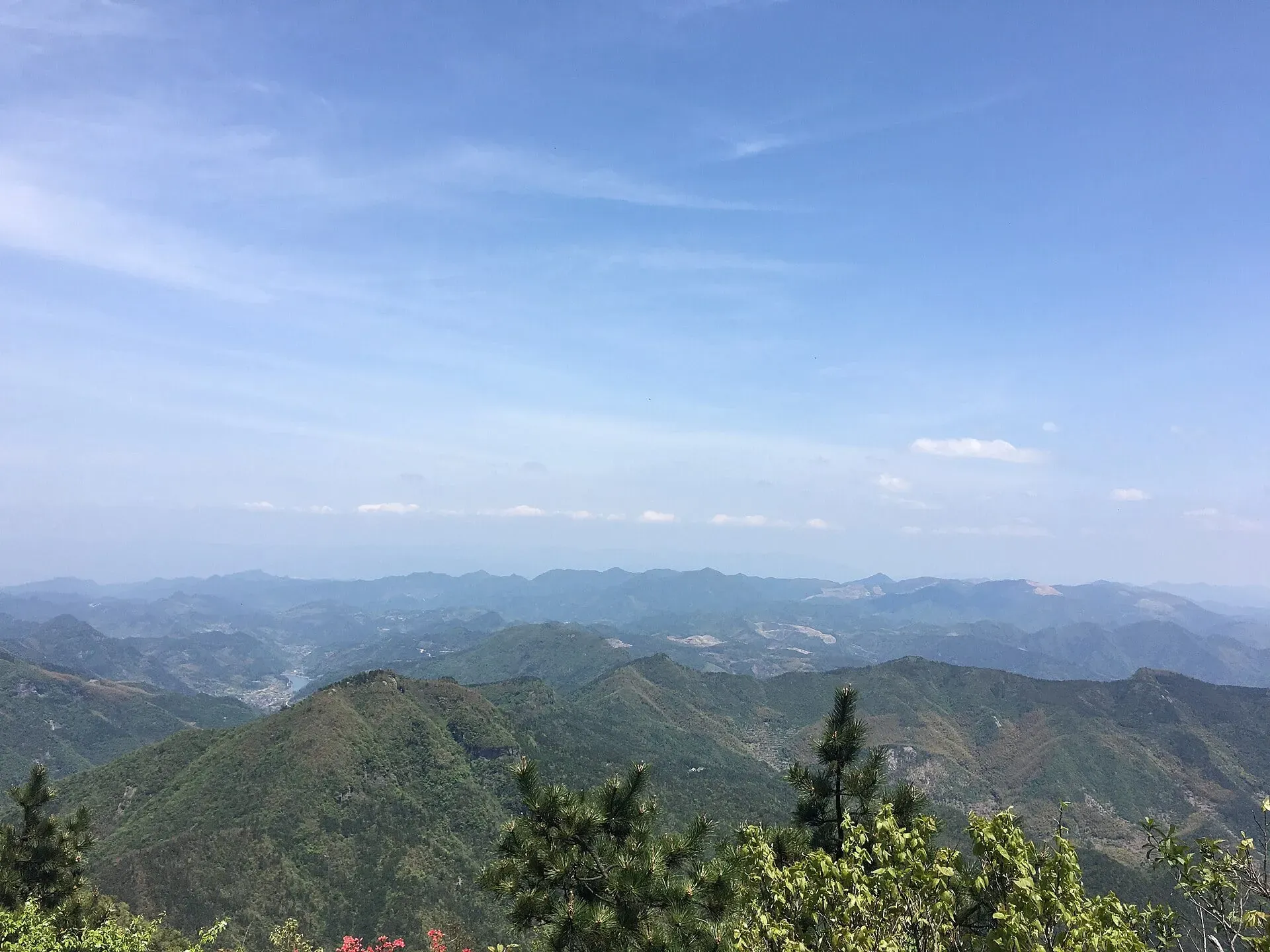
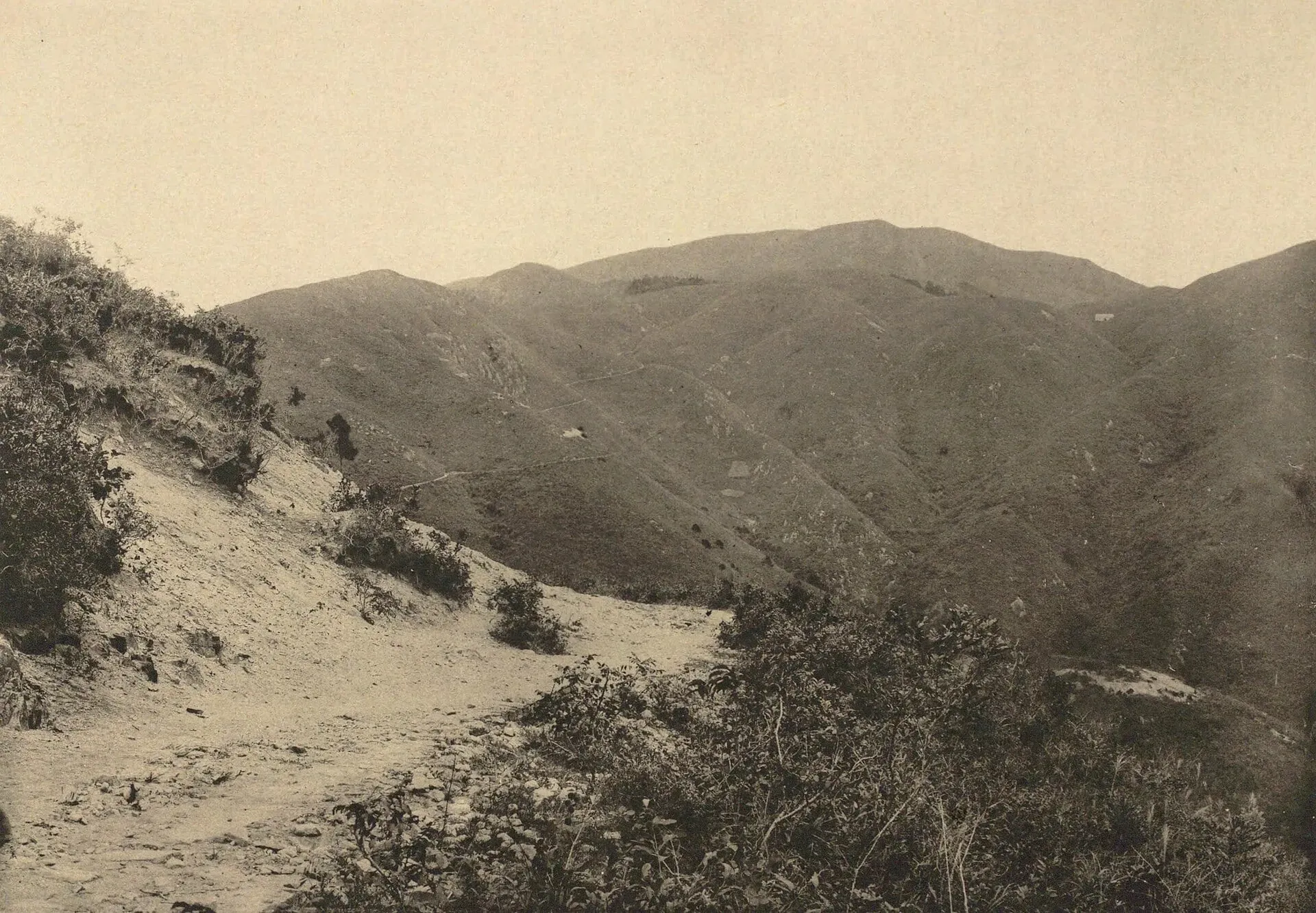
Huading is the highest peak of Mount Tiantai. The Taizhou Prefecture Gazetteer puts it about 30 km northeast of town, reached by carrying on up the road from the Stone Bridge; the Baijing Terrace on the summit is said to be a relic of the master Zhiyi. Large stands of Fortune’s rhododendron, yunjin dujuan, grow on the mountain, and the trees average more than two hundred years old, according to a 2023 article on Zhejiang Online; Shenxiu Tiantai said in 2025 that they are at their best in late April or early May. It is much colder up here than in town — Xu Xiake found frost on the grass when he climbed it in late May 1613 — so bring a jacket in spring and autumn. Tourist buses run up to Huading from the visitor center too.
The Grand Waterfall and Qiongtai
In the Qiongtai Xiangu valley northwest of town, the Grand Waterfall comes down in nine tiers, 325 meters in all. It ran dry for more than sixty years and began to flow again only in 2020. Qiongtai and the Twin Gates, which Xu Xiake sought out, are in the same valley. It is about 11 km by taxi from Tiantaishan station, and tourist buses run there directly. Shenxiu Tiantai reported in 2025 that a new cliff lift at Qiongtai reaches the top in 36 seconds; its one-day plan gives the waterfall the late morning and Qiongtai the afternoon, so allow most of a day. On the north shore of the reservoir above the falls stands Tongbai Palace, the founding temple of the Southern School of Daoism. More in Tiantai Mountain Grand Waterfall.
Mount Chicheng
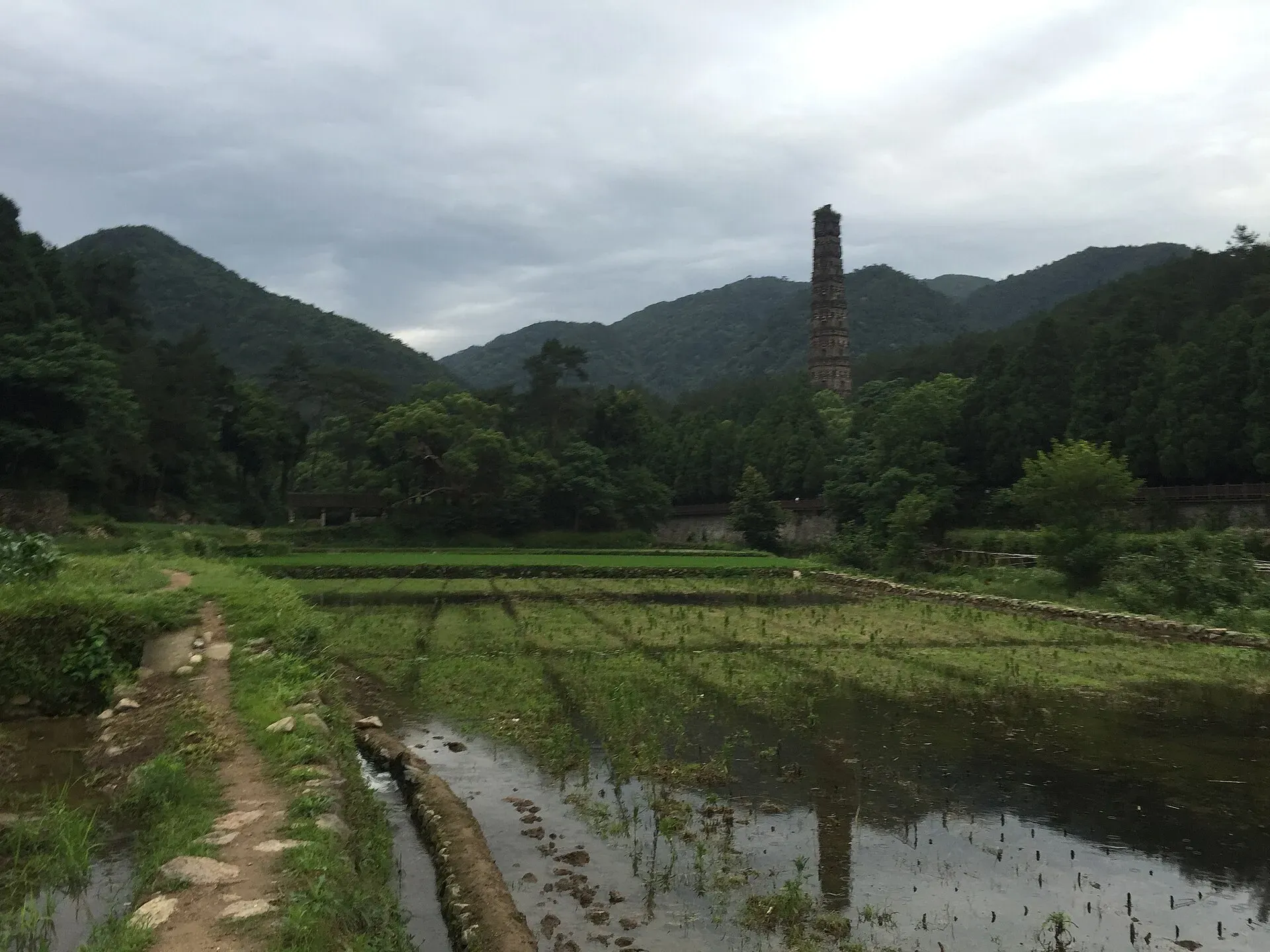
Mount Chicheng, about 2 km north of town according to the Taizhou Prefecture Gazetteer, takes its name, “red city,” from rock as red as fire and a shape like a fortress; in old times Tiantai County itself was also called Chicheng. The glow on the mountain at dawn or dusk is Tiantai’s famous “rosy clouds resting on Chicheng.” Its caves hold many Buddhist and Daoist relics, a Ji Gong hall was added in 1987, and the square pagoda on top, first built in 538 and rebuilt in 1947, faces the Sui pagoda of Guoqing Temple, one to the west and the other to the east. The Tiantai County Tourism Group said in 2023 that it is about a kilometer’s walk from the Mount Tiantai visitor center, and Shenxiu Tiantai’s three-day plan for 2025 pairs it with Guoqing Temple.
Ji Gong’s former home
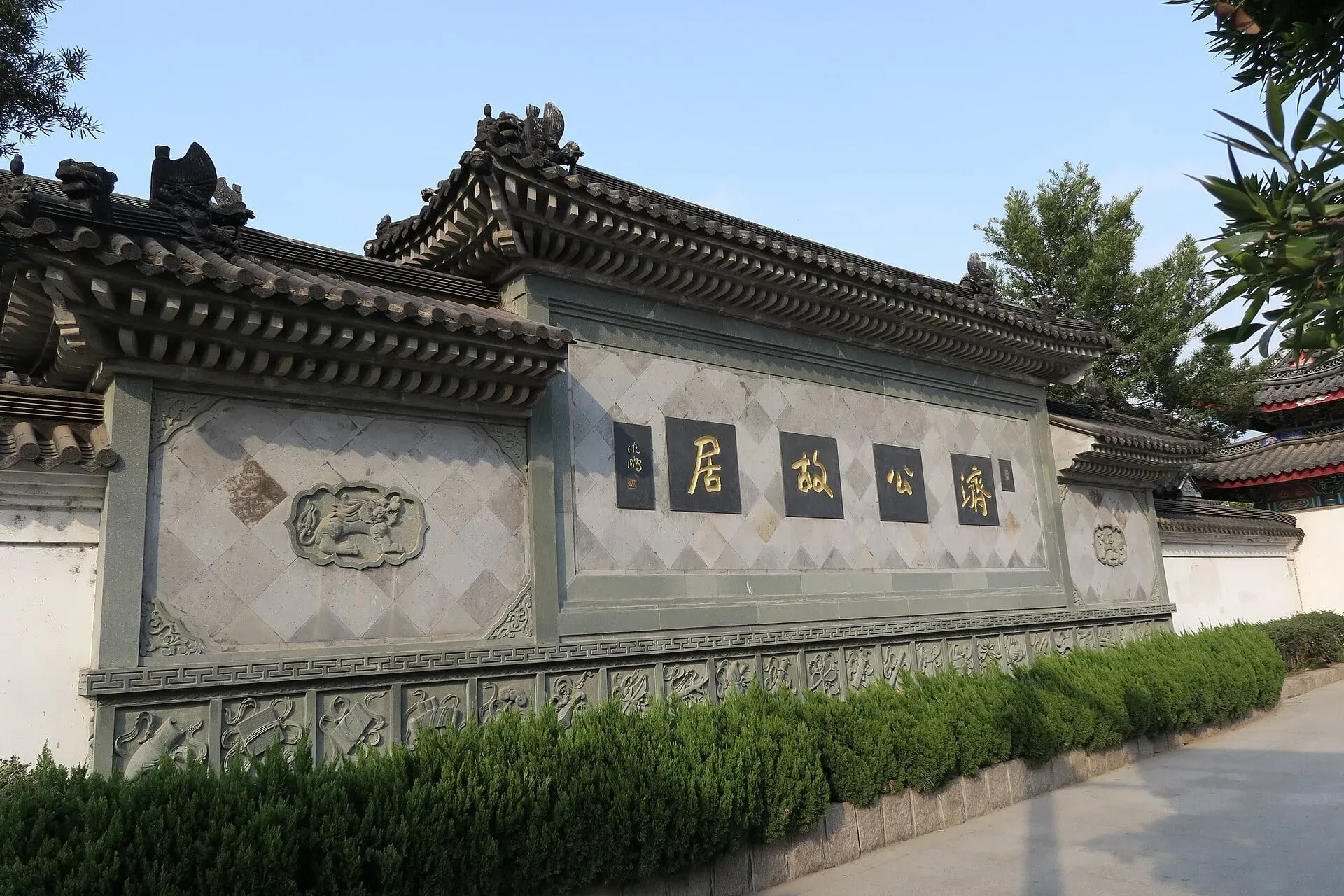
Ji Gong, the “mad monk,” was a real man, born Li Xiuyuan in Yongning Village just north of old Tiantai. His former home there today is a group of rebuilt Song-style buildings, and from the top of the 32-meter Guanxia Pavilion you can look across to Mount Chicheng. It is about 11 km by taxi from Tiantaishan station and 3.3 km south of Guoqing Temple; in 2023 the county’s Tourism Group suggested the No. 5 bus from the Mount Tiantai visitor center. More in Ji Gong’s Hometown.
Hanyan and Mingyan
Hanyan, the Cold Cliff where the Tang poet-monk Hanshan lived as a recluse, is in the hills of Jietou and Longxi in the southwest of Tiantai County, and together with Mingyan it now forms the Hanmingyan scenic area, rated national 4A. The way to Hanyan runs past a line of rock screens ten li long, called the Ten-Li Iron-Armored Dragon because the stone looks like a dragon’s scales. According to the Taizhou Prefecture Gazetteer, in the body of the cliff is a great cave more than ten meters high, level and spacious; and Mingyan is a deep gorge behind it, a detour of about 4 km from Hanyan. Houan, a village inside the scenic area, is listed as one of China’s traditional villages. For Xu Xiake’s description of both cliffs in 1613, see Hanshan and Shide.
Hanyan and Mingyan are about 30 km from Tiantaishan station, half an hour to forty minutes by car, and a car or a hired driver is easiest. With the drive, allow at least half a day.
Evenings in town
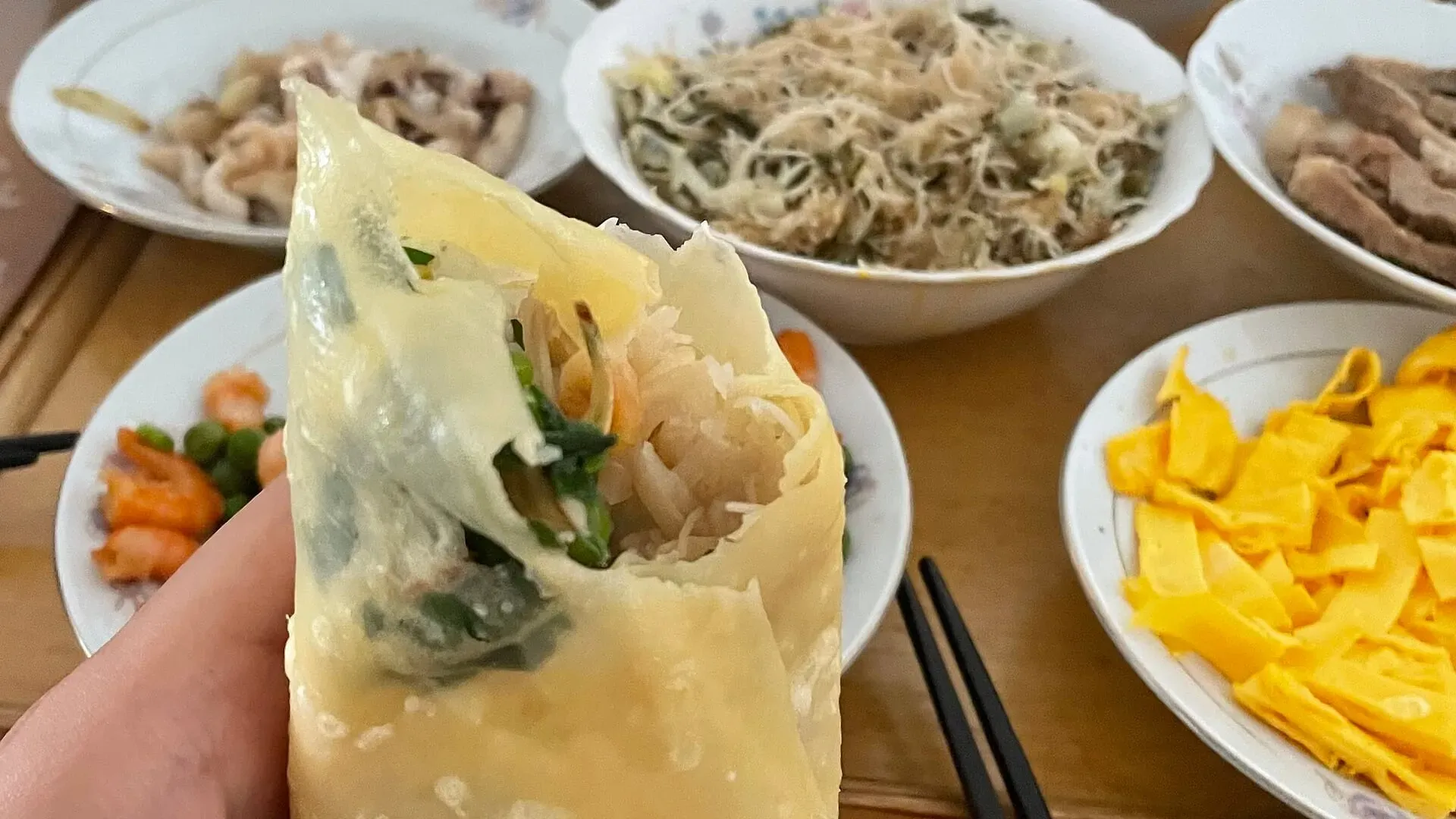
For the evening, Shenxiu Tiantai suggested in 2025 the Shifeng Lake night show, a walk-through performance of about 50 minutes on the theme of harmony, Tiantai’s hehe culture, which may be cancelled in rain; and the Zhexi old street, done up in Tang and Song style, for food and drink. The snack to try is jiaobingtong — see Jiaobingtong; for the mountain’s tea, see Tiantai Yunwu Tea.
Getting around
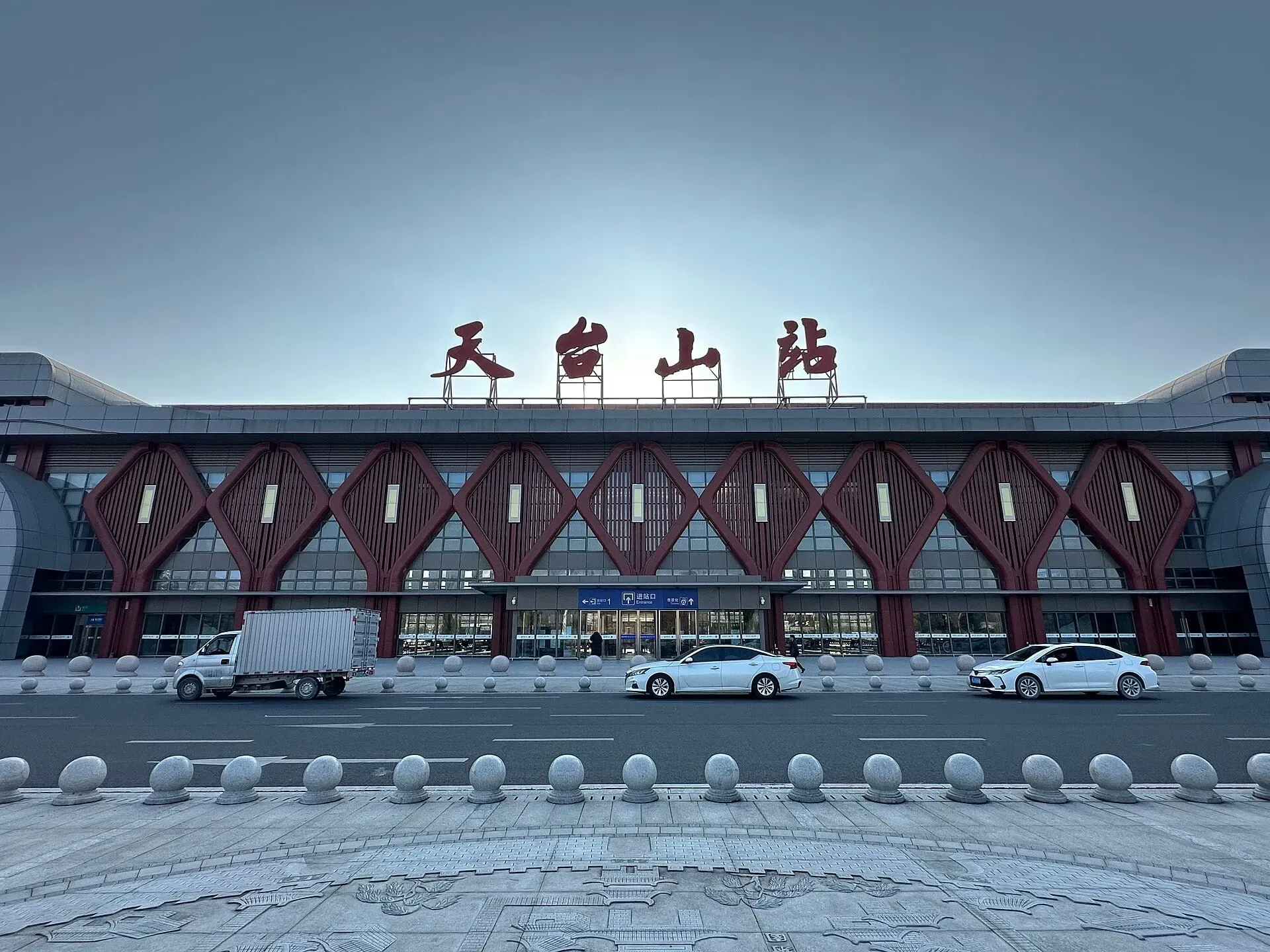
Tiantai’s high-speed station, Tiantaishan, is about an hour from Hangzhou East and about 6 km west of the county town. A taxi from the station is simplest: under ten minutes to town, ten-odd minutes to Guoqing Temple. According to the Tiantai County Tourism Group in 2023, tourist buses run from the Mount Tiantai visitor center to Guoqing, the Stone Bridge, Huading, the Grand Waterfall and other scenic areas, and straight from Tiantaishan station to the Grand Waterfall. Routes, timetables, tickets and opening hours change, so check locally. See Getting to Tiantai. For a day trip from Hangzhou, see Day Trips from Hangzhou by High-Speed Train.
More photos
All photos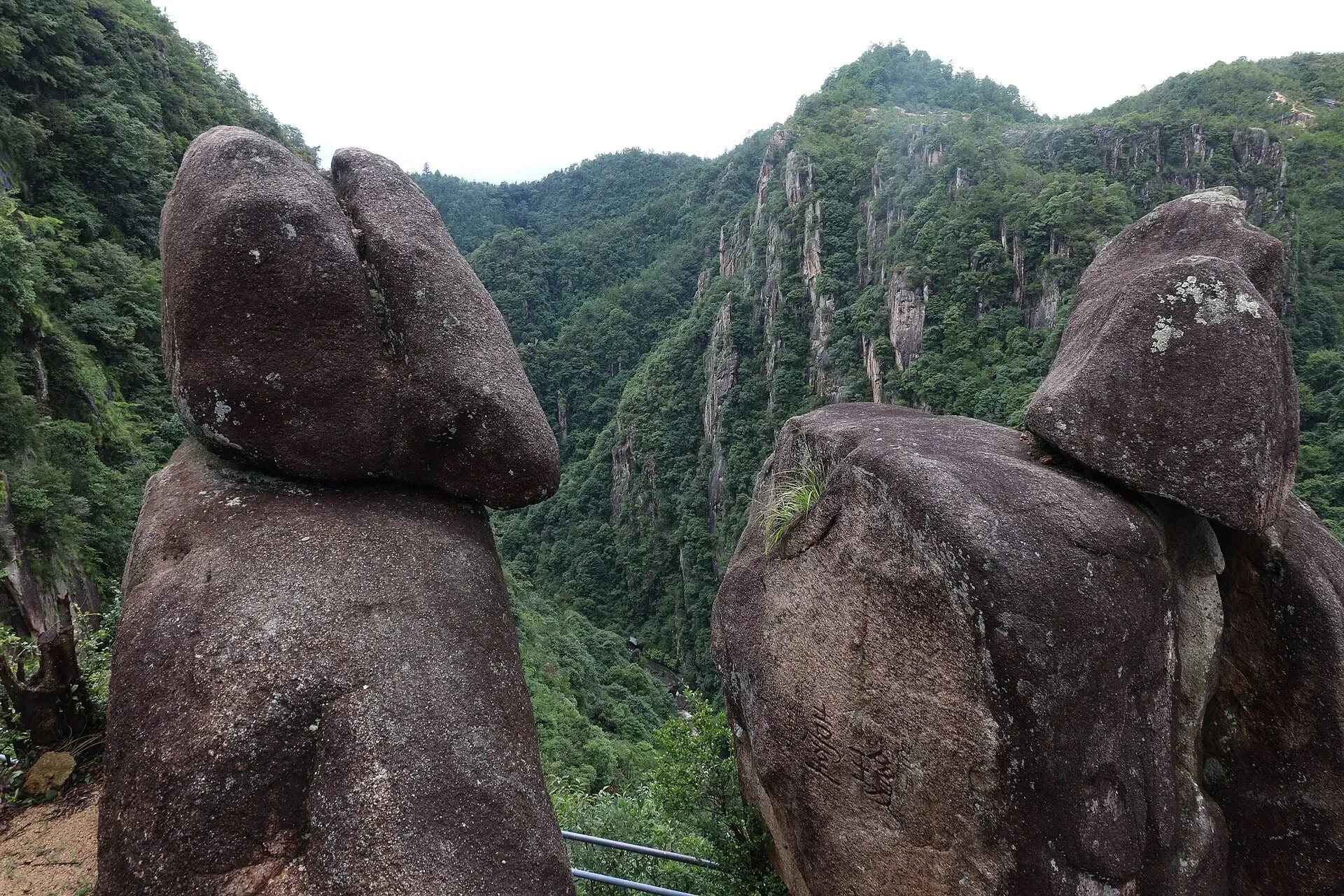
Sources
- 寒岩、明岩的车程是按 OpenStreetMap 路网估算的开车时间。其余距离和车程,与本站的《国清寺》《天台山》《天台山大瀑布》《济公故里》《怎么去天台》一致,出处见各篇。英文为本站翻译。
- 台州地区志 · 第四十四章 风景名胜 · 第一节 山岳名胜 · 台州史志网
- 天台9条公交线路直通高铁站 · 浙江在线(神秀天台),2022 年 1 月 4 日
- 景点门票+停车+攻略,五一“玩转”天台 · 浙江在线(天台县旅游集团),2023 年 4 月 30 日
- 浙江宣传丨云中谁寄杜鹃来 · 浙江在线,2023 年 5 月 20 日
- “台好玩”,天台这条游线成功上榜!· 浙江在线(神秀天台),2023 年 9 月 10 日
- 天台国清寺⇌大瀑布免费巴士开通啦 · 浙江在线(神秀天台),2025 年 3 月 19 日
- 走起!天台这3条旅游线路攻略也太全了 · 浙江在线(神秀天台),2025 年 4 月 28 日
- 嵊州、新昌、天台通高铁啦!杭绍台铁路昨试运行 · 杭州网,2021 年 11 月 27 日