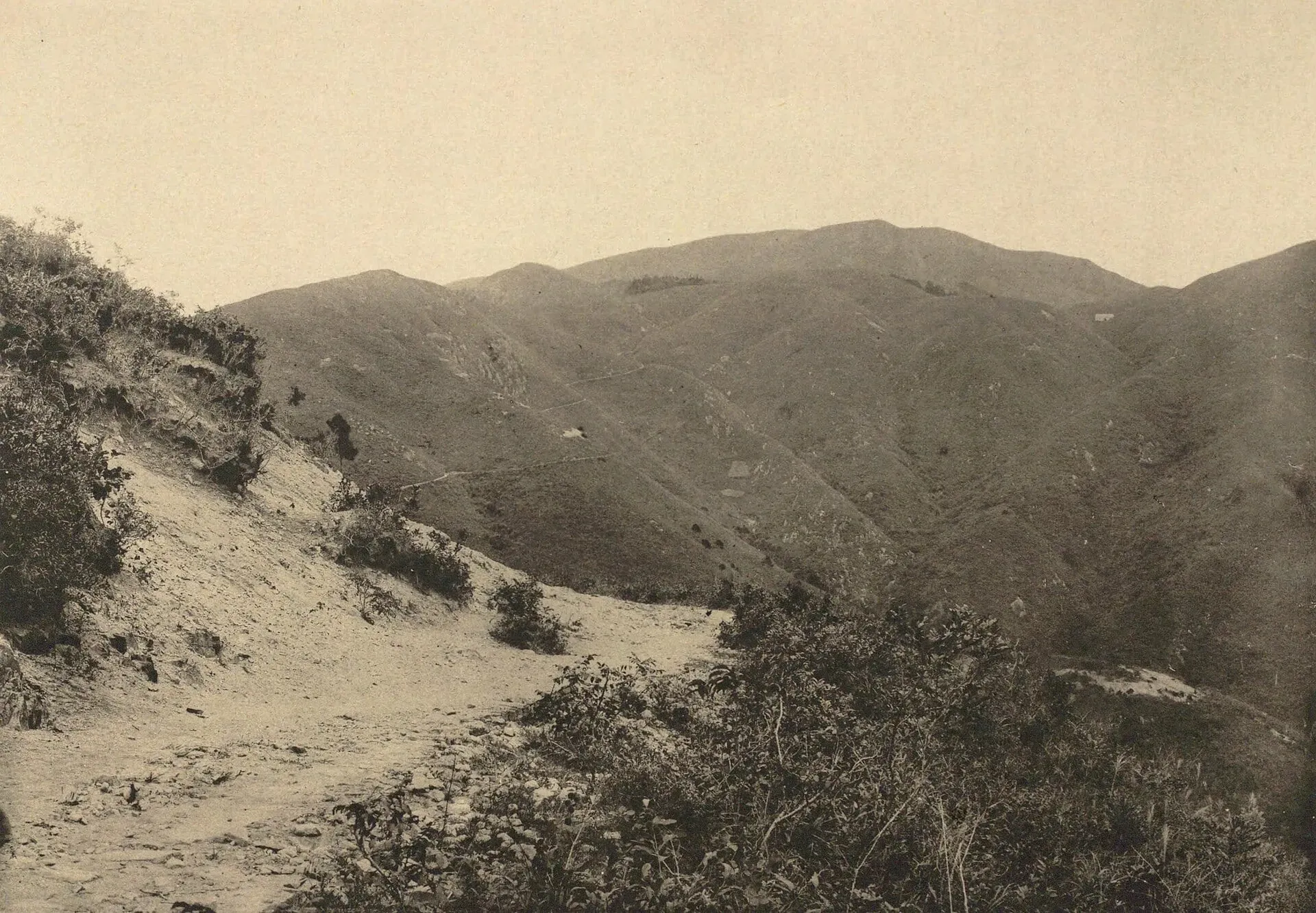
Guoqing Temple
Guoqing Temple, at the foot of Mount Tiantai, was begun in 598. It is the mother temple of the Tiantai school of Buddhism, which spread from here to Japan. Outside the gate stands a pagoda more than 1,400 years old, and the temple takes its name from a prophecy — “when the temple is built, the country will be at peace.”
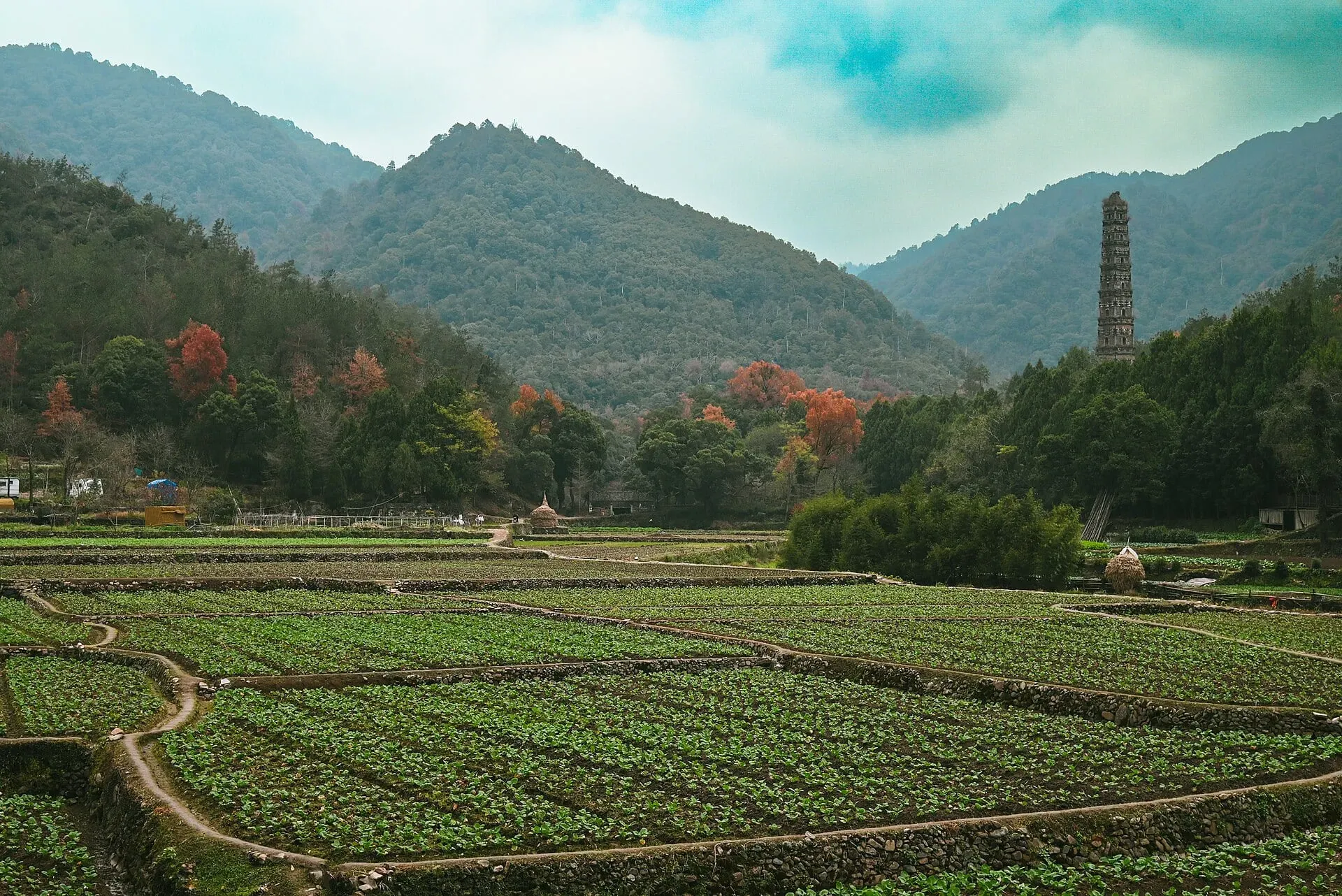
Four kilometers north of Tiantai town, at the foot of Mount Tiantai, stands Guoqing Temple. Begun in 598, it is the founding temple of the Tiantai school of Buddhism. More than twelve hundred years ago the Japanese monk Saichō studied on Mount Tiantai and went home to found the Tendai school, so Japanese Tendai honors Guoqing Temple as its founding temple too.
Master Zhiyi
Guoqing Temple’s story begins with a monk. Zhiyi (538–597), from Huarong in Jingzhou, came to Mount Tiantai in the autumn of 575 to live in seclusion, and stayed eleven years. Taking the Lotus Sutra as his foundation and giving equal weight to study and meditation, he founded the Tiantai school — the first school of Buddhism founded by a Chinese monk. His lectures, recorded and edited by his disciple Guanding, became the Three Great Works of Tiantai.
In 591 Yang Guang, Prince of Jin and later Emperor Yang of Sui, invited Zhiyi to Yangzhou to give him the bodhisattva precepts and gave him the title Zhizhe, “the Wise One” — which is why he is remembered as Master Zhizhe.
Zhiyi died in 597 at Shicheng Temple in Shan county. As the Southern Song gazetteer Chicheng Zhi puts it, he “passed away at Shicheng”; his disciples carried him back to Tiantai and buried him at Folong, where his pagoda still stands in Zhenjue Temple. Shicheng Temple is today’s Great Buddha Temple in Xinchang — see the Great Buddha of Xinchang.
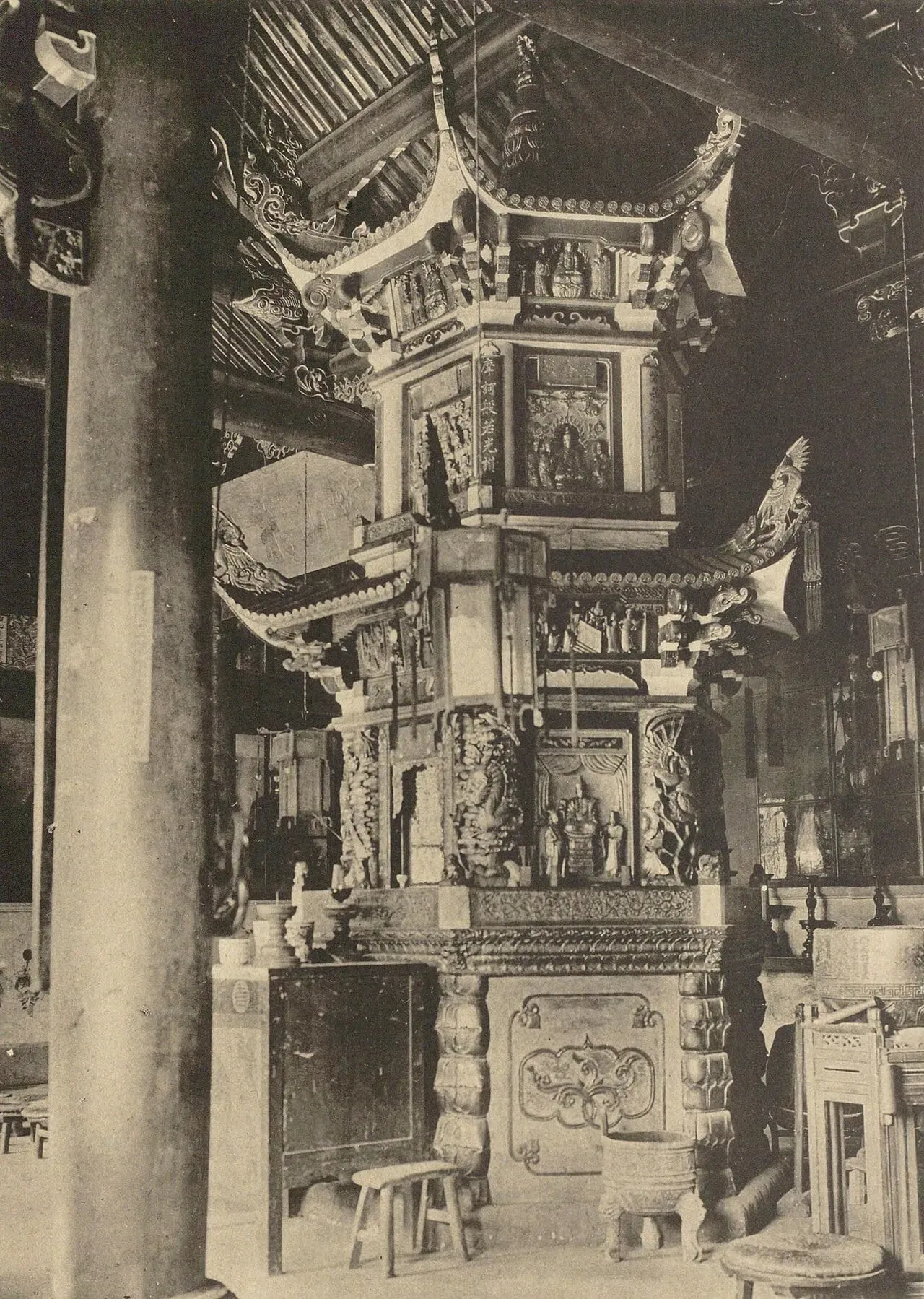
When the temple is built, the country will be at peace
Before he died, Zhiyi drew up a plan for a temple, gave it to his monks and wrote to Yang Guang asking him to build it. In 598 Yang Guang had work begun to the plan, and the temple was finished in 601. Because it stood on Mount Tiantai, it was at first called Tiantai Temple.
When Yang Guang became emperor, he asked the monks to propose a finer name. The monk sent from the temple, Zhizao, told a story: Zhiyi had once dreamed that the late Chan master Dingguang said to him that the time to build a temple had not yet come, but once “the three kingdoms became one family,” a man of great power would build one for him — “when the temple is built, the country will be at peace (guo qing); it must be called Guoqing Temple.” The emperor replied, “This is the auspicious sign of my late teacher. Use it, use it.” The exchange is recorded in the Guoqing Bailu, compiled in the Sui dynasty.
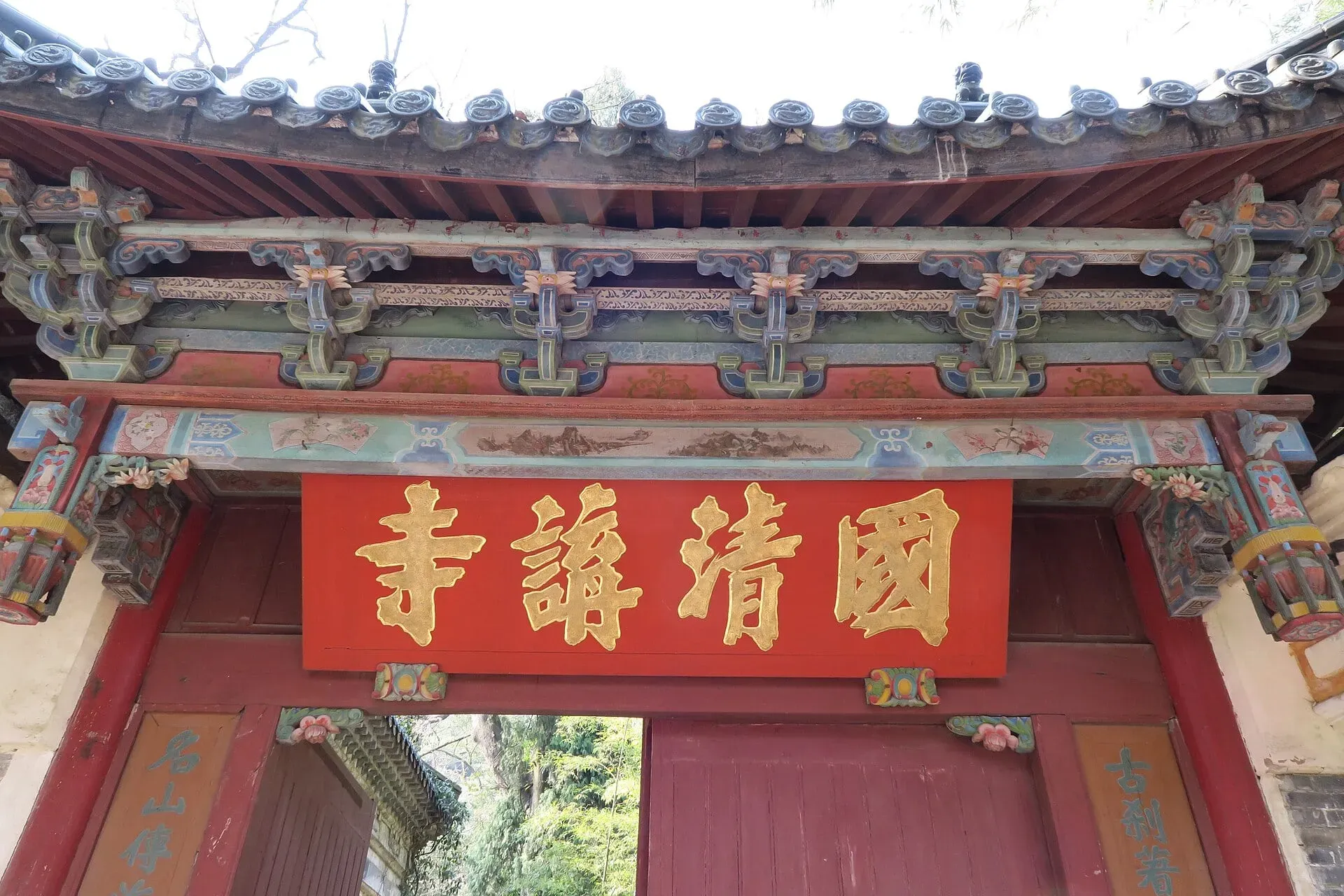
A pagoda, a plum tree and a stream that flowed west
The first thing you see as you approach is the Sui pagoda outside the temple. Begun in 598 along with the temple, it was Yang Guang’s thanks to Zhiyi for giving him the precepts. Built of brick and timber, with six sides and nine stories, it still stands 59.4 meters tall, one of the tallest old pagodas in Zhejiang. A fire once gutted it, taking its eaves and brackets, and it has no spire.
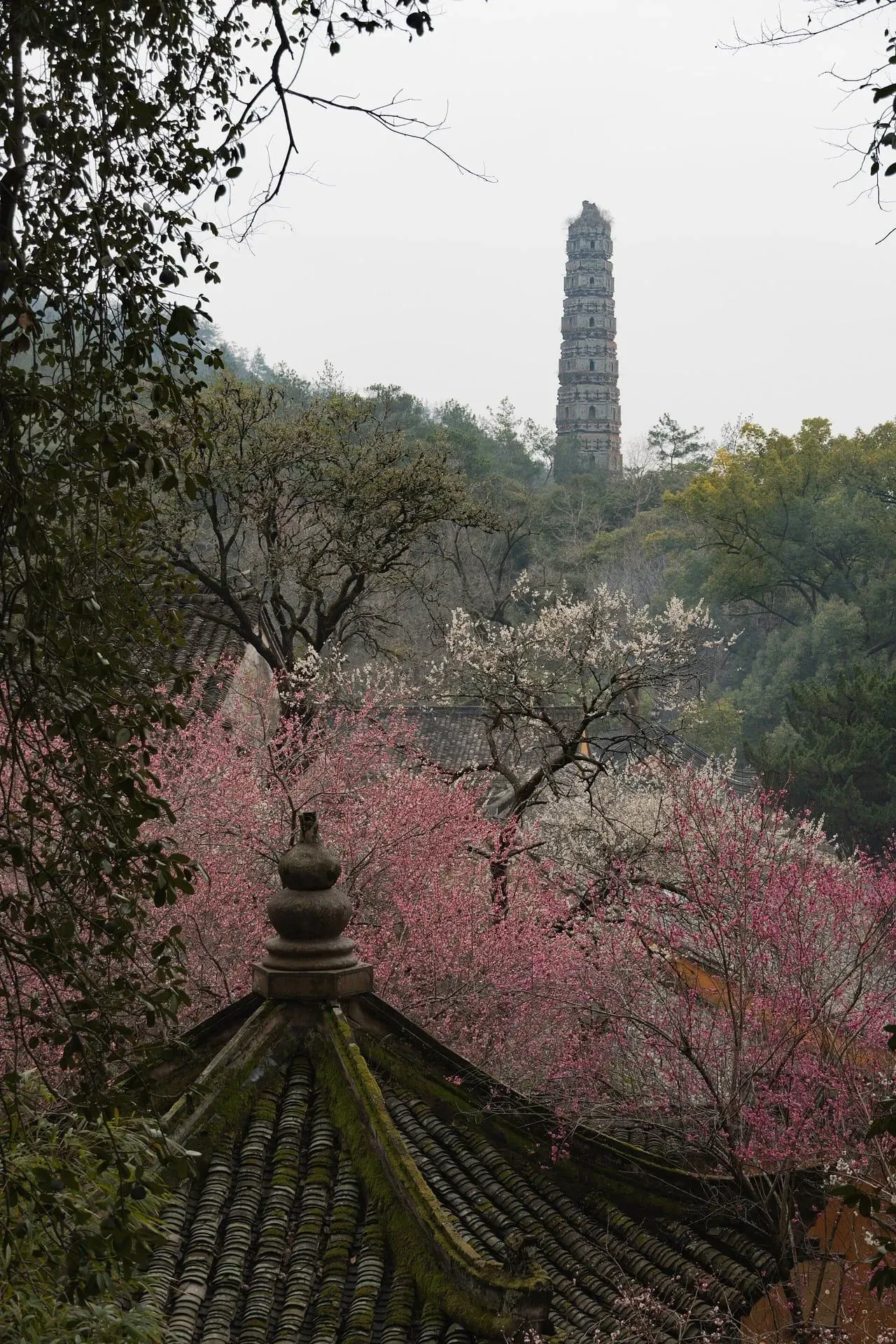
Inside the temple grows the Sui plum, said to have been planted by Zhiyi’s disciple Guanding, the fifth patriarch of the Tiantai school. Hangzhou.com.cn reported in 2021 that its trunk is too thick to put your arms around and it stands taller than the roofs; it has nearly died more than once, yet it is thriving again.
Outside stands a stele reading “Yixing came, and the water flowed west.” According to the Tang dynasty Minghuang Zalu, the astronomer Yixing, searching far and wide for a master of calculation, came to Guoqing Temple and stood outside the gate of a cloister. Inside, a monk working at his counting rods told his pupil that a disciple would come that day to learn his methods: “When the water at the gate flows west, the disciple will arrive.” Yixing went in, bowed, and was taught everything — and the stream at the gate, which had always flowed east, turned and flowed west. Yixing went on to draw up a new calendar, the Dayan calendar.
From Tiantai to Japan
In 804 the Japanese monk Saichō crossed the sea to China, landed at Mingzhou (today’s Ningbo) and went up Mount Tiantai, where he studied the Tiantai teachings under the monks Daosui and Xingman; Daosui was also lecturing at Longxing Temple in the prefectural city of Taizhou, today’s Linhai — see Ziyang Street and the Old City. He returned to Japan the following year and founded the Tendai school, whose head temple is Enryakuji on Mount Hiei.
On the hillside behind the temple, a pavilion named “The Milk of the Dharma for a Thousand Autumns” shelters three steles: the middle one praises Master Zhiyi, and the two beside it honor Saichō. On their backs is an inscription written in 1982 by Yamada Etai of Japan, wishing for lasting friendship between China and Japan.
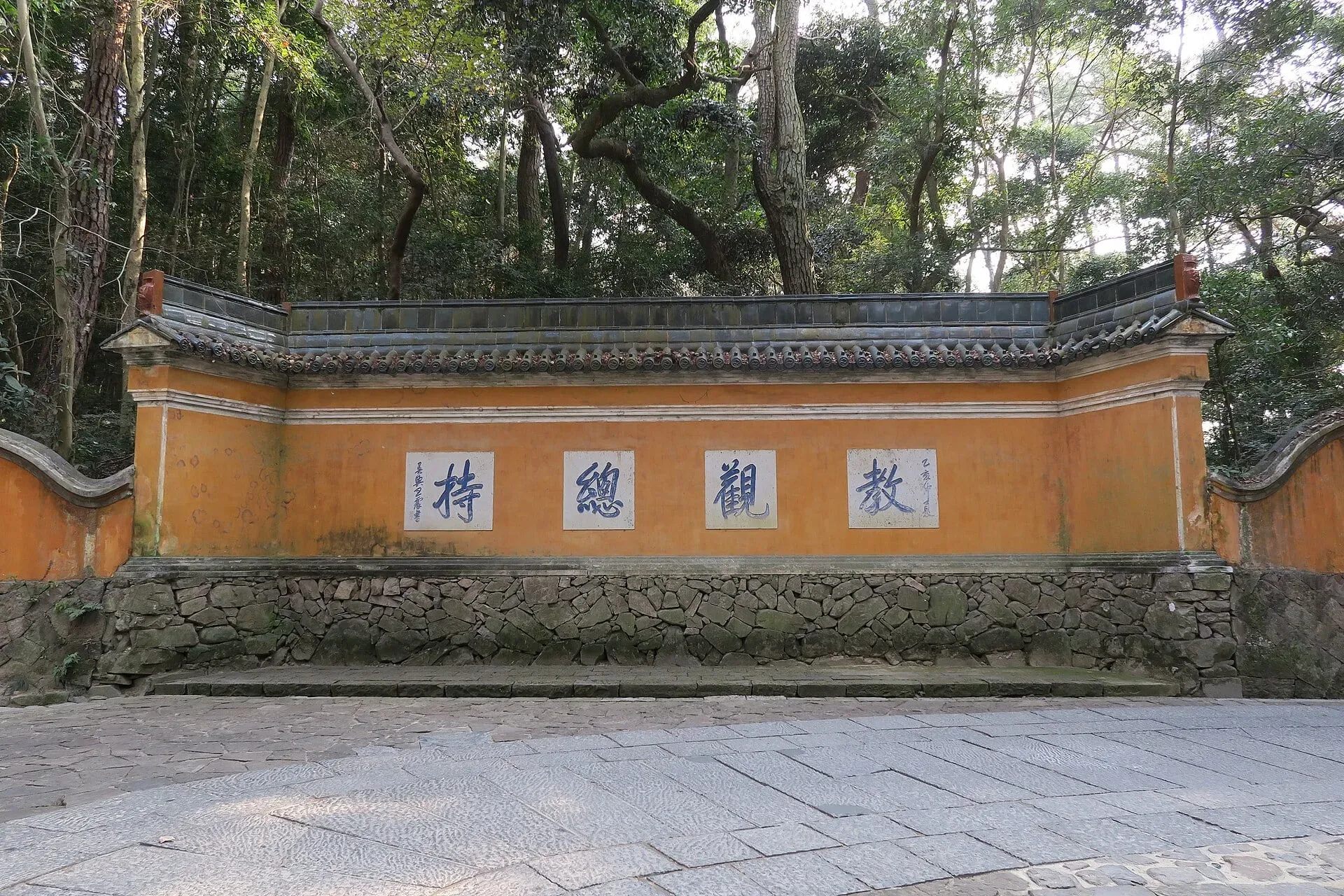
The heart of the Tiantai school is written on a screen wall before the temple: “Teaching and Contemplation Together.” Teaching means the study of the scriptures; contemplation means meditation. In the Southern and Northern Dynasties, monks in the north favored meditation and monks in the south the study of scripture; Zhiyi, who had studied with both, brought the two together.
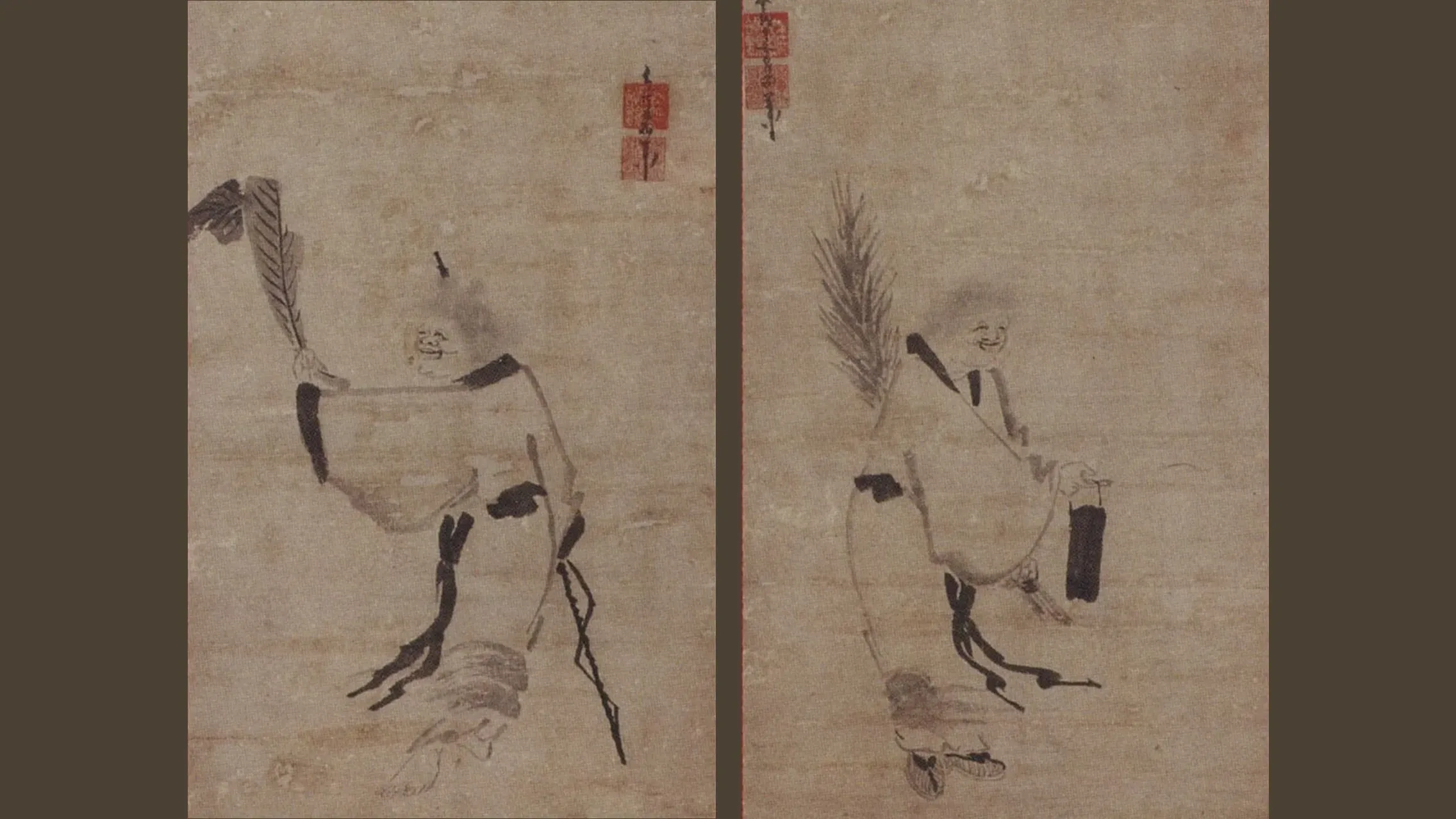
The temple’s Hall of the Three Worthies honors the three Tang poet-monks who lived at Guoqing Temple, Hanshan, Shide and Fenggan — see Hanshan and Shide.
Visiting the temple
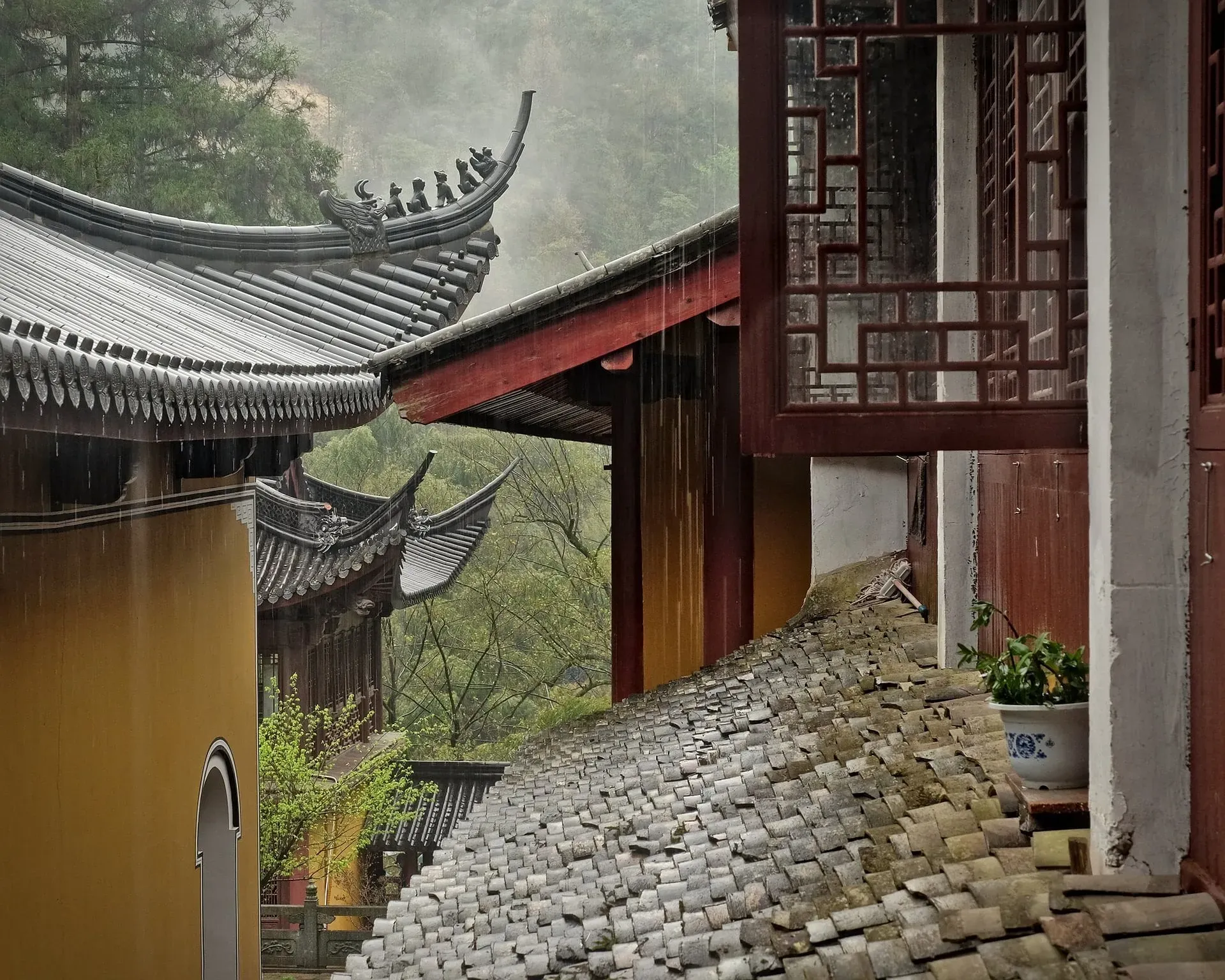
Guoqing Temple is about four kilometers north of Tiantai town, roughly 9 km and ten-odd minutes by taxi from Tiantaishan station. The temple covers some 73,000 square meters; most of its buildings were rebuilt by imperial order in 1734, and in 2001 it was listed as a major national heritage site.
It is still a working monastery, so keep your voice down. According to Hangzhou.com.cn in 2021, there is no admission charge; check the opening hours before you go.
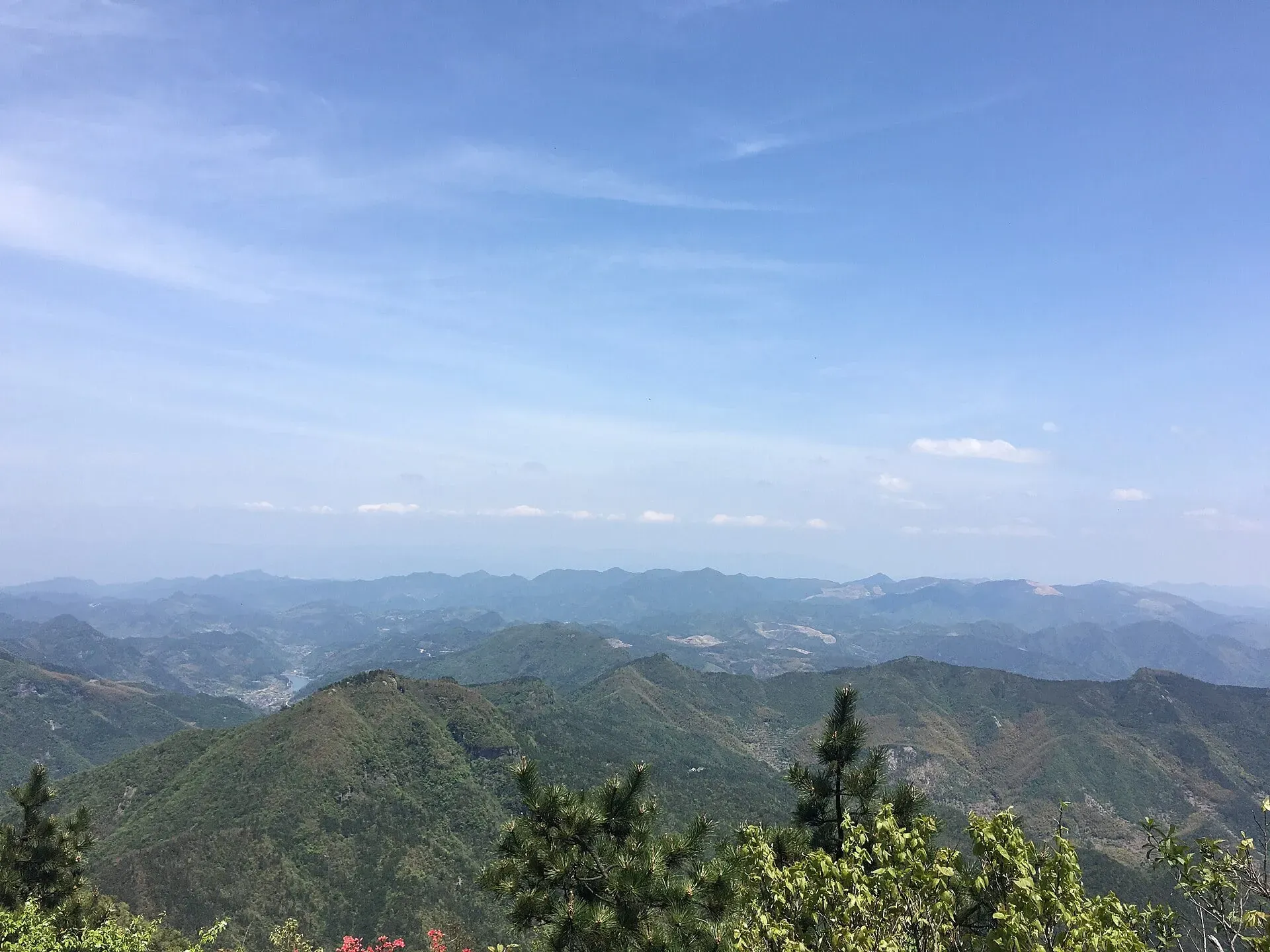
From Guoqing Temple, the drive northeast up Mount Tiantai to Shiliang, the town by the Stone Bridge falls, takes about twenty minutes — see Mount Tiantai.
Questions & answers
When was Guoqing Temple built?
Yang Guang, Prince of Jin, began it in 598 to a plan left by the master Zhiyi, and it was finished in 601. At first it was called Tiantai Temple; the name Guoqing came later. Most of today’s buildings date from a rebuilding in 1734.
Why is it called Guoqing?
According to the Guoqing Bailu, compiled in the Sui dynasty, Zhiyi once dreamed that the late Chan master Dingguang told him a man of great power would build him a temple once the realm was united — “when the temple is built, the country will be at peace (guo qing), so it must be called Guoqing Temple.” Hearing this, Emperor Yang said, “This is the auspicious sign of my late teacher. Use it.”
What is Guoqing Temple’s connection with Japan?
It is the founding temple of Japanese Tendai. The monk Saichō came to Mount Tiantai in 804 to study the Tiantai teachings, went home the following year and founded the Tendai school, whose head temple is Enryakuji on Mount Hiei. Two of the three steles in the pavilion behind Guoqing Temple honor him.
How tall is the Sui pagoda?
The brick-and-timber pagoda has six sides and nine stories and still stands 59.4 meters tall — one of the tallest old pagodas in Zhejiang. Begun in 598, it was once gutted by fire, which took its eaves and brackets, and it has no spire.
How do I get to Guoqing Temple?
The temple is about 4 km north of Tiantai town, roughly 9 km and ten-odd minutes by taxi from Tiantaishan station. According to Hangzhou.com.cn in 2021, entry is free; it is a working monastery, so check its opening hours before you go.
What does Ji Gong have to do with Guoqing Temple?
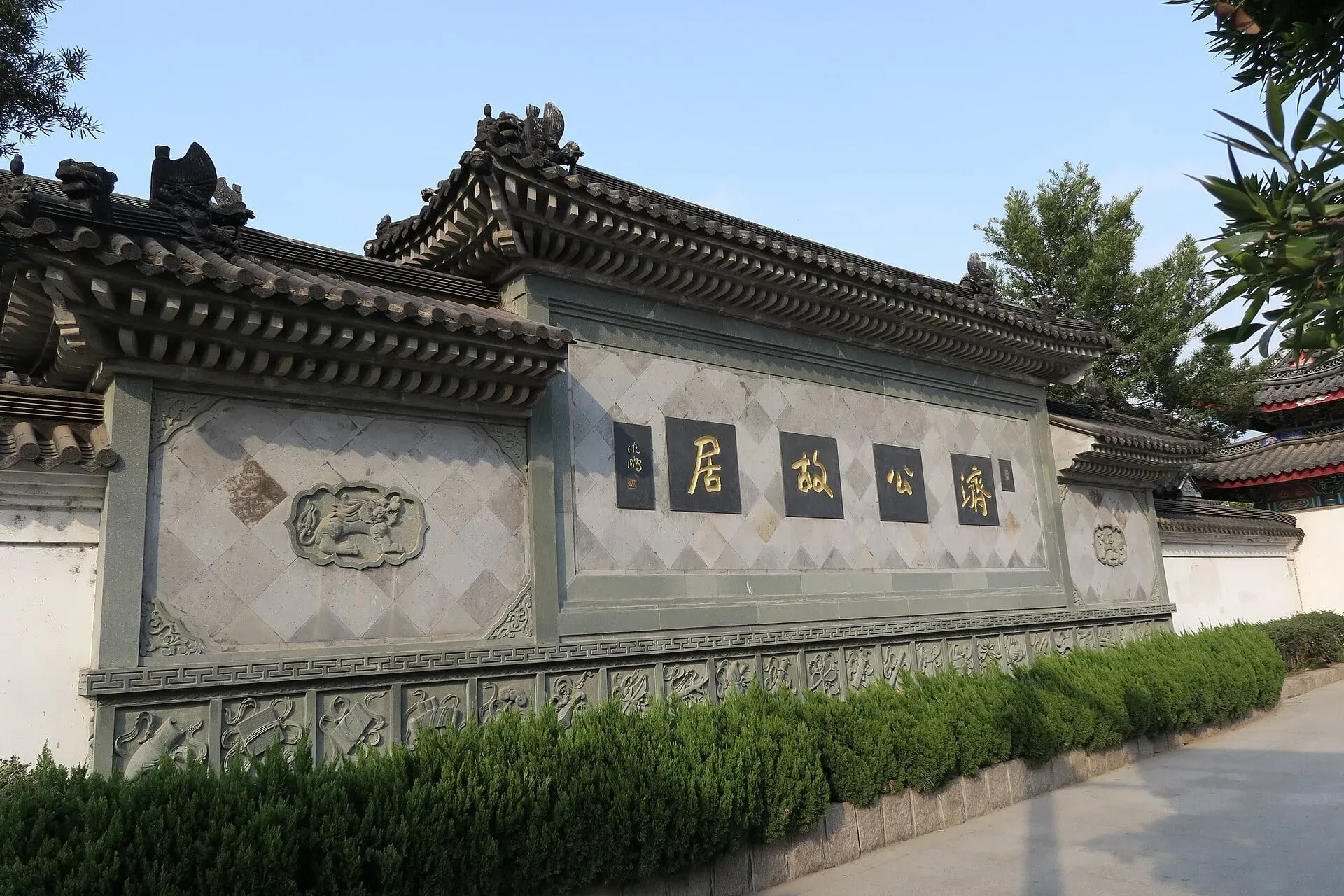
Ji Gong, the “mad monk” of the Southern Song, was born Li Xiuyuan in Tiantai. Local tradition has him taking his vows at Guoqing Temple, and the legend of jiaobingtong places him there as a monk; according to Wikipedia he was in fact ordained at Lingyin Temple in Hangzhou and later lived at Jingci Temple. See Ji Gong’s Hometown and Jiaobingtong.
Sources
- 车程是按 OpenStreetMap 路网估算的开车时间。寺名的来历据《国清百录》卷三,一行的故事据《明皇杂录》,智顗“示灭石城”据《赤城志》卷三十五,建寺经过参考徐玮《天台山指南》(1934 年)。英文为本站翻译。
- 國清百錄/卷003 · 维基文库
- 明皇雜錄/別錄 · 维基文库
- 赤城志 (四庫全書本)/卷35 · 维基文库
- 天台山指南/七 國清寺(徐玮,1934 年)· 维基文库
- 嵊州、新昌、天台通高铁啦!杭绍台铁路昨试运行 · 杭州网,2021 年 11 月 27 日
- 国清寺 · 维基百科
- 智顗 · 维基百科
- 天台宗 · 维基百科
- 最澄 · 维基百科
- 济公 · 维基百科
- Daosui · Wikipedia