Ji Gong’s Hometown
Ji Gong was a real person — Daoji, a monk of the Southern Song, born Li Xiuyuan in Yongning Village just north of Tiantai town. He took his vows at Lingyin Temple in Hangzhou and died at Jingci Temple in 1209. Tiantai has a rebuilt Ji Gong residence, and the Ji Gong legends, centered on Tiantai, joined China’s first national list of intangible cultural heritage in 2006.
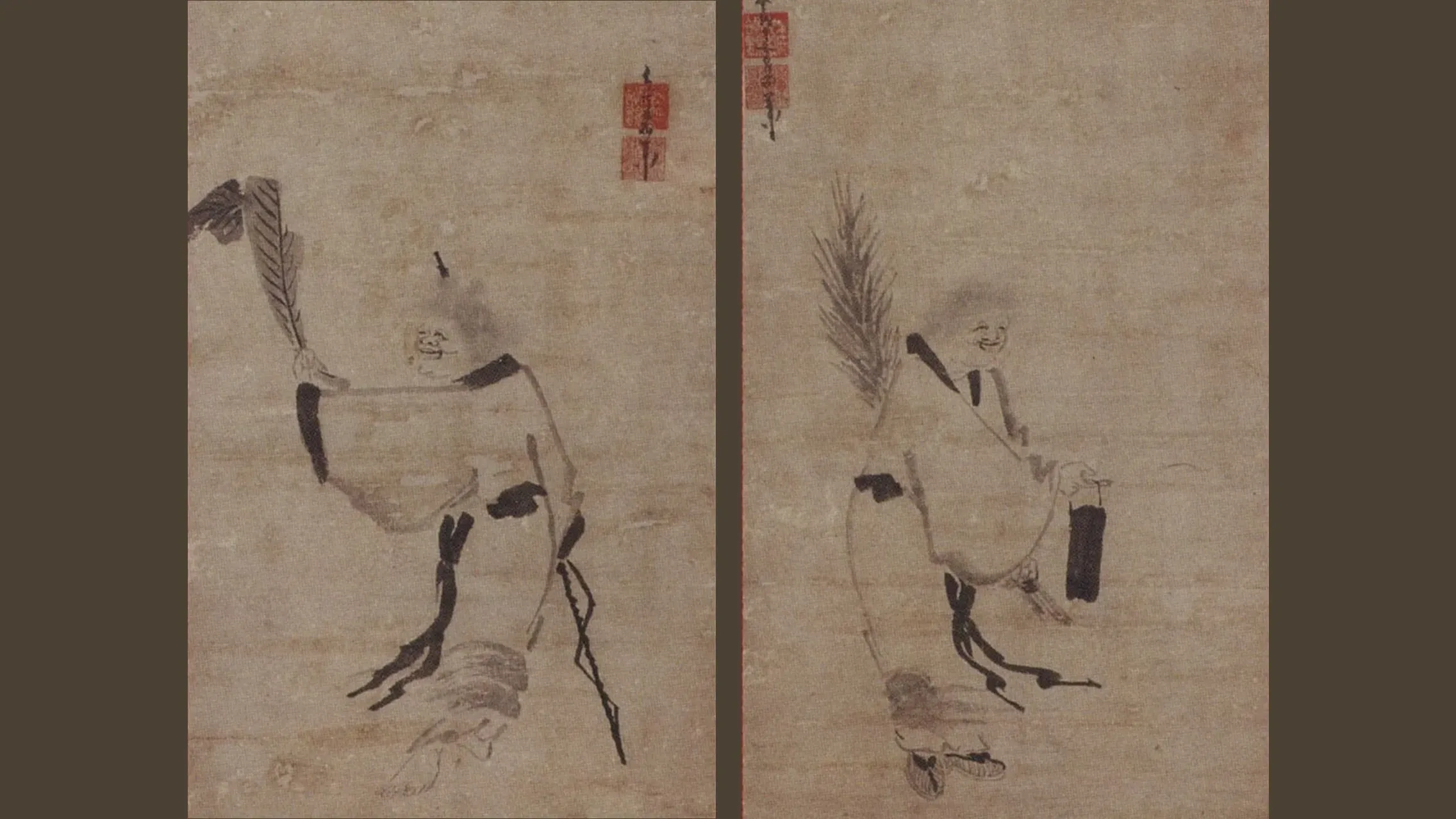
A battered hat, a broken fan and a ragged robe; wine and meat on the one hand, righting wrongs on the other — Ji Gong may be the best-known monk in China. He was not invented by a novelist. He was a real monk of the Southern Song, and his home was Tiantai.
A real man
Ji Gong’s monastic name was Daoji; he was born Li Xiuyuan in Yongning Village, Tiantai, the son of Li Maochun. Accounts of his birth year differ; 1148 and 1130 are the two usually given. After his parents died he went to Hangzhou and became a monk at Lingyin Temple, under the Chan master Huiyuan.
The Daoji of the biographies had no taste for chanting or sitting in meditation, did not abstain from wine or meat, loved a joke, and went about in a tattered robe and cap with a broken fan in his hand. The other monks could not stand it and complained to Huiyuan, who defended him: “The gate of the Buddha is wide; can it not hold one mad monk?” From then on he was Ji Dian, Crazy Ji. After Huiyuan died he moved to Jingci Temple, where his skill in medicine and readiness to help ordinary people earned him another name, the Living Buddha Ji Gong.
Daoji died at Jingci Temple in 1209 and was buried at Hupao. Before he died he left a verse:
Sixty years in a shambles,
knocking from the east wall to the west.
Now I gather myself up and go home —
the water still meets the sky, as blue as ever.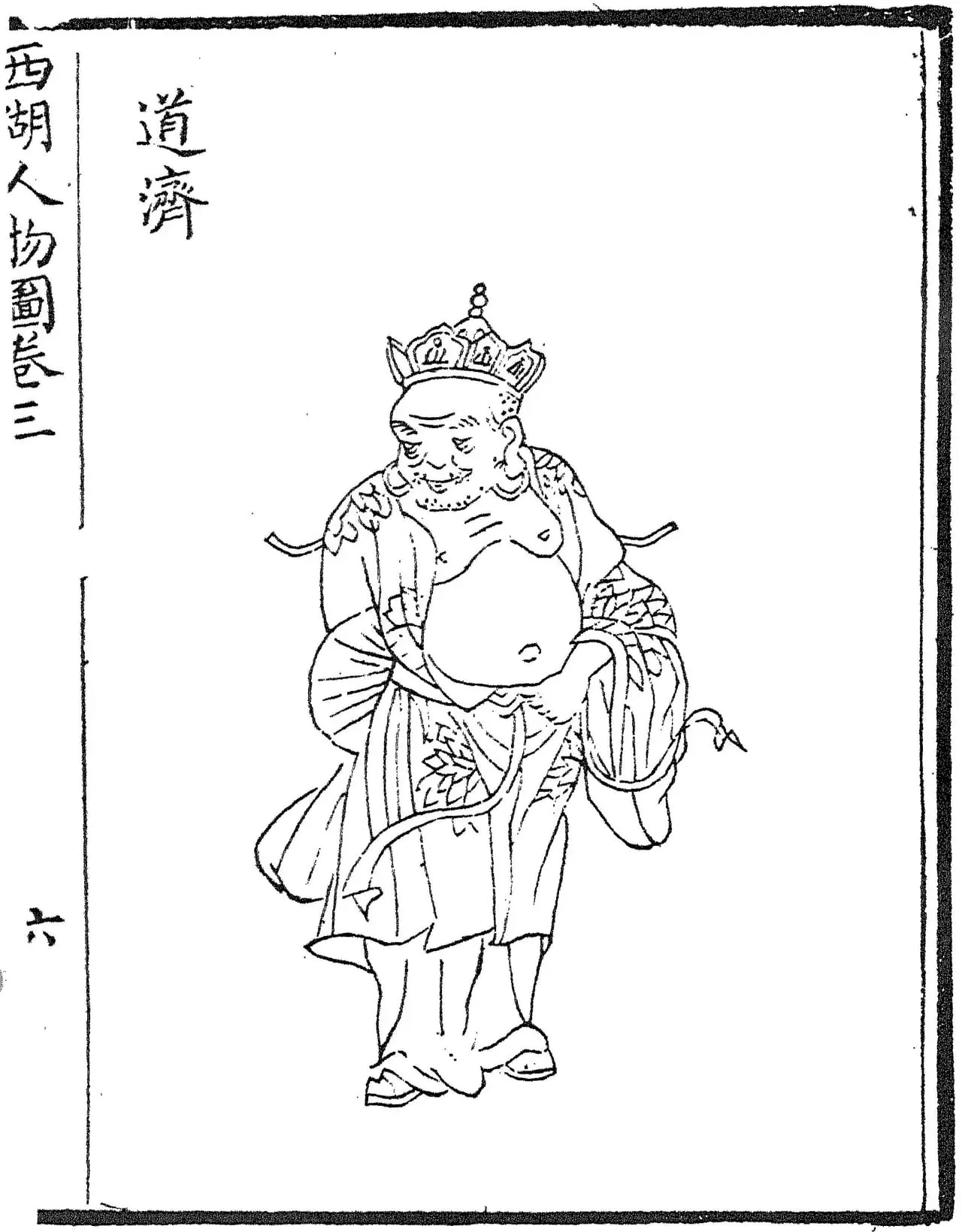
From Daoji to Ji Gong
In his lifetime and after his death, strange tales about Daoji were already going round Tiantai, and he was said to be the Dragon-Subduing Arhat reborn. In the Ming and Qing, storytellers made the tales ever livelier, and the Qing writer Guo Xiaoting gathered them into the long novel The Complete Tales of Ji Gong. According to Wikipedia, most of the miracles in the novel originally belonged to other eminent monks and were moved onto Ji Gong by the novelists. Since the 1980s the stories have been filmed for television many times; the 1985 series Ji Gong, starring You Benchang, is one of them.
In 2006 the Ji Gong legends joined China’s first national list of intangible cultural heritage, as folk literature, nominated by Tiantai County. The listing describes them as centered on Tiantai, told all over Zhejiang and from there across the country. Tiantai’s own tales include his birth as the Dragon-Subduing Arhat, the boy prodigy Li Xiuyuan, and the mad monk who rescues the poor and punishes the wicked.
Temples to Ji Gong are not only found in Zhejiang: there are others in Taiwan, Hong Kong and Malaysia.
Ji Gong’s home in Tiantai
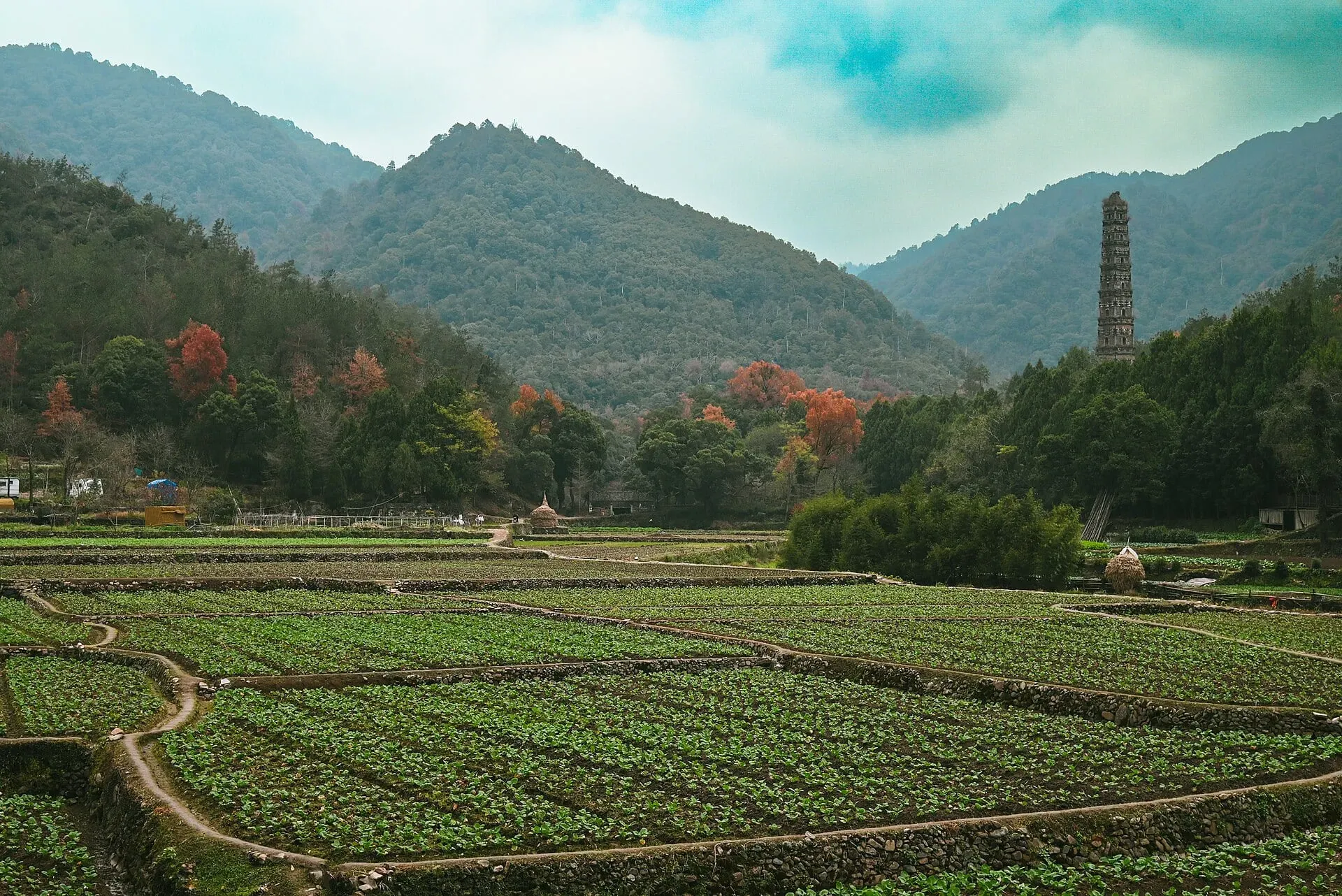
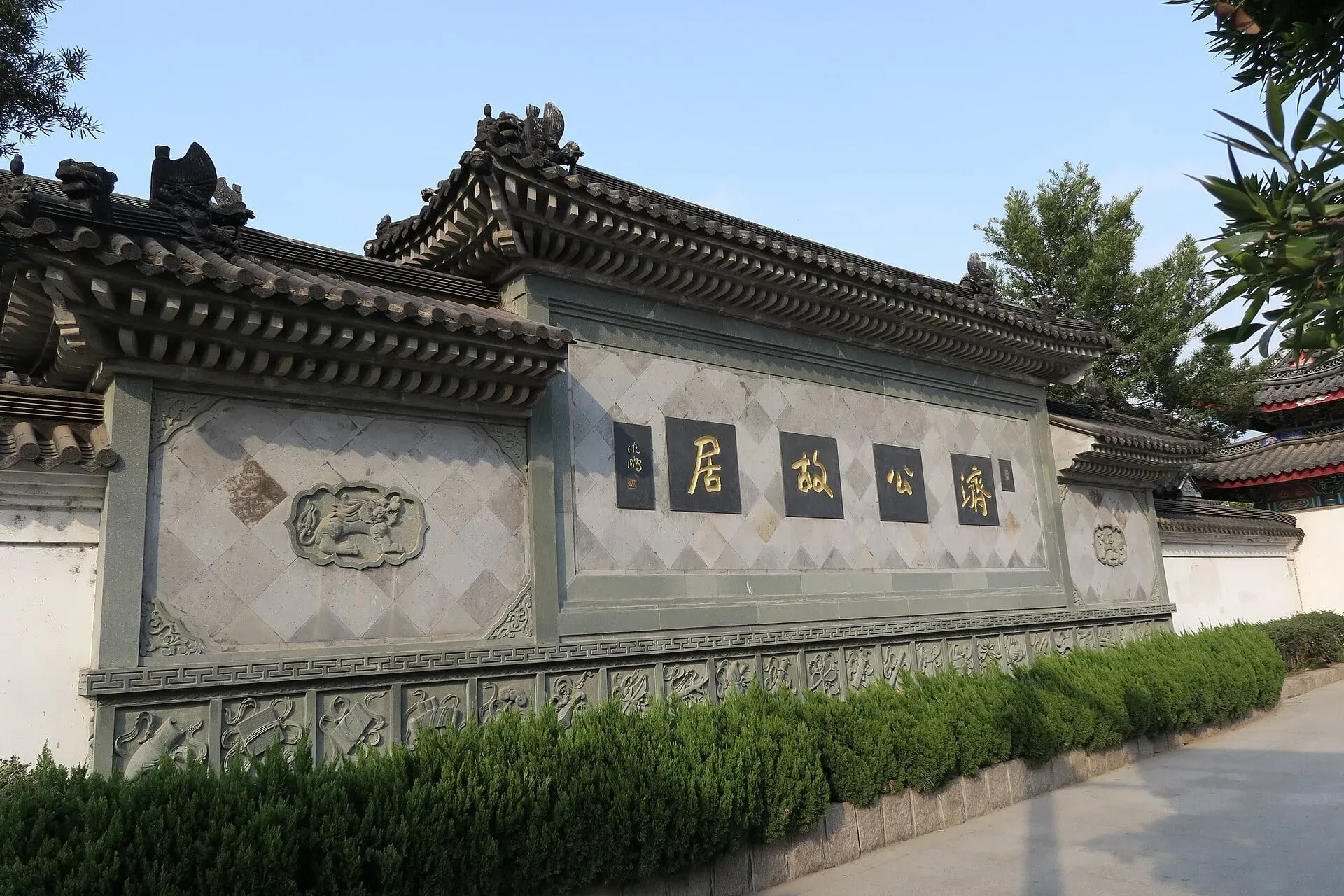
Yongning Village, where Ji Gong was born, lay outside the north gate of old Tiantai. The Ji Gong residence there today is a group of rebuilt Song-style buildings, not the house he knew. According to Hangzhou.com.cn in 2021, it consists of the Li family compound, the Longxi Garden, the Guanxia Pavilion and the Zuixian Tower. You enter under the village archway; to its west the Guanxia Pavilion, a timber tower in the Song style, rises 32 meters, and from the top on a clear dawn or dusk you can watch the glow on Mount Chicheng — the “rosy clouds resting on Chicheng” that Tiantai is known for. To the east is the Li compound with its three courtyards, and beyond it the Longxi Garden around a small lake.
Ji Gong, Guoqing Temple and jiaobingtong
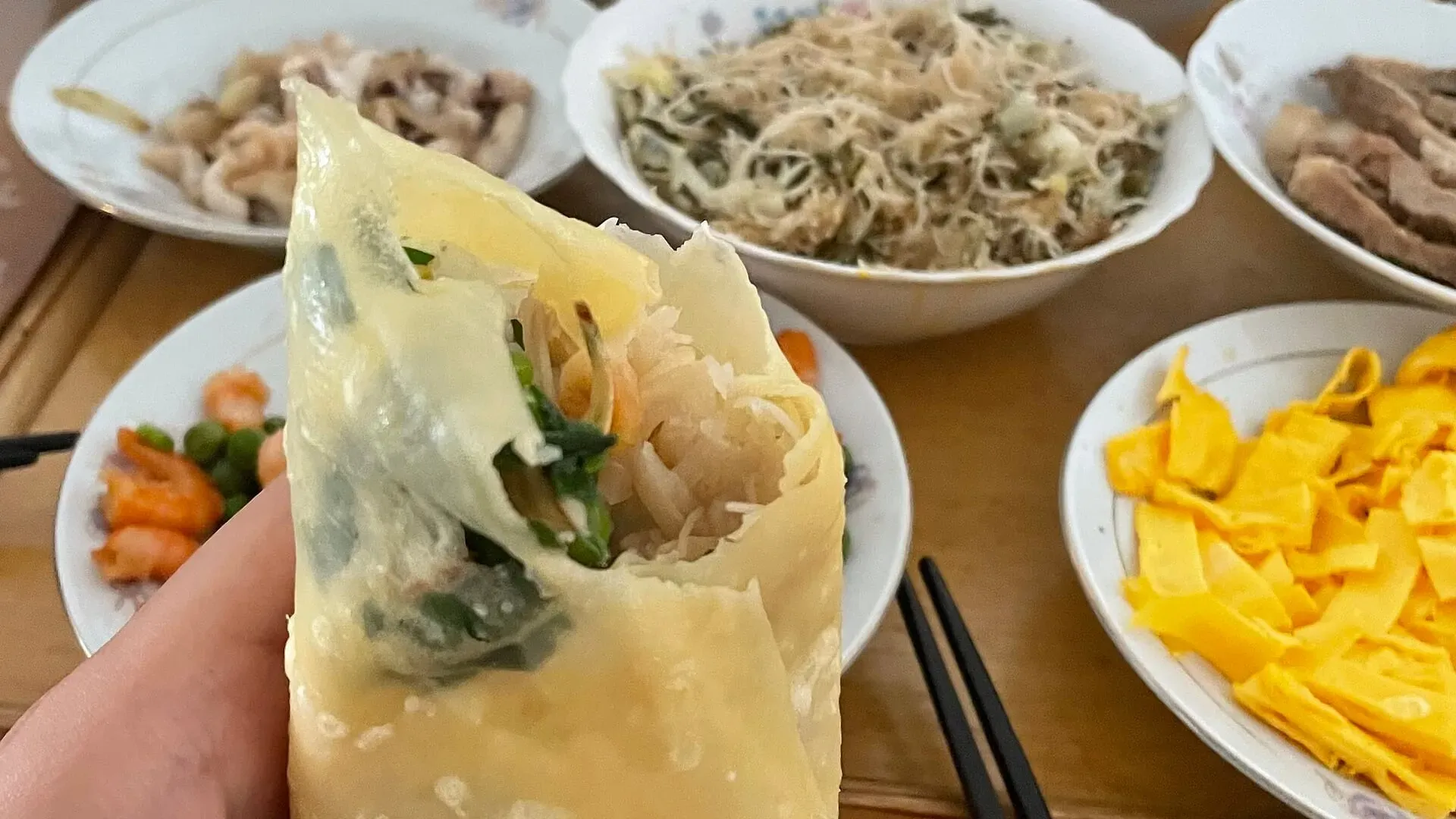
Where Ji Gong took his vows depends on whom you ask. Tiantai tradition holds that he first became a monk at Guoqing Temple, and the town’s favorite snack, jiaobingtong, is said to be his invention there, a way of not wasting the temple’s leftovers; according to Wikipedia he was ordained at Lingyin Temple in Hangzhou. See Guoqing Temple and Jiaobingtong.
Ji Gong in Hangzhou
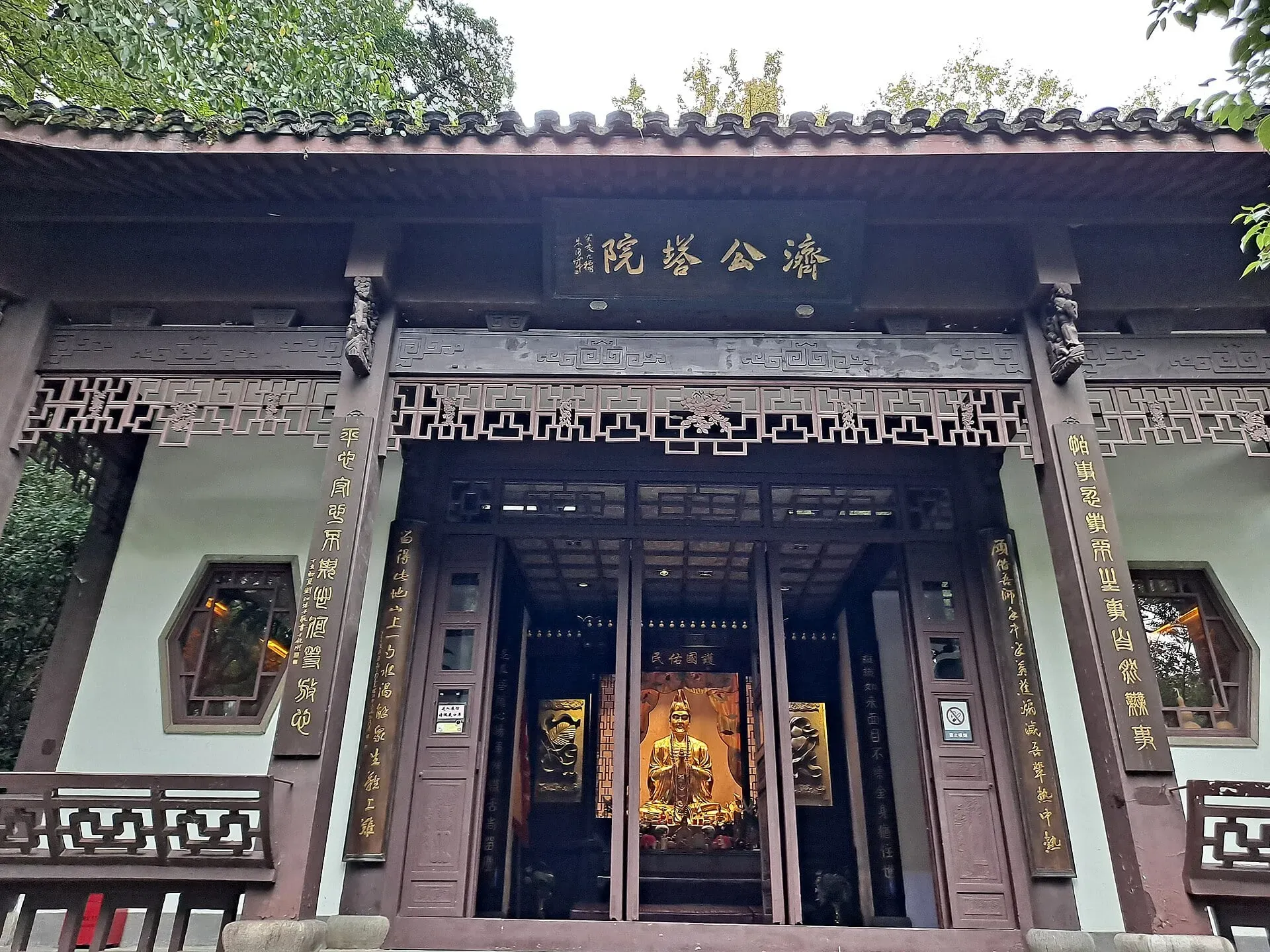
Ji Gong spent the second half of his life in Hangzhou. Lingyin Temple is where he was ordained, and Jingci Temple is where he lived in his last years and died; his burial pagoda is at Hupao, where the Ji Gong pagoda court stands today.
Visiting the residence
According to Hangzhou.com.cn in 2021, Ji Gong’s former home is about 11 km by taxi from Tiantaishan station, and Guoqing Temple is about 3.3 km to its north. Tickets and opening hours change, so check with the site before you go. For how to reach Tiantai, see Getting to Tiantai.
Questions & answers
Where was Ji Gong from?
Tiantai, in Zhejiang. Born Li Xiuyuan, he came from Yongning Village just north of Tiantai town, in today’s Chicheng subdistrict.
Was Ji Gong a real person?
Yes. He was a Chan monk of the Southern Song with the monastic name Daoji, ordained at Lingyin Temple in Hangzhou; he later lived at Jingci Temple, died in 1209 and was buried at Hupao. The miracle stories of the novels and television series were added over the centuries that followed.
Why did Ji Gong drink wine and eat meat?
The accounts say he had no taste for chanting or sitting in meditation, did not abstain from wine or meat, wore a tattered robe and cap and loved a joke. When the other monks complained to his teacher Huiyuan, Huiyuan defended him — “The gate of the Buddha is wide; can it not hold one mad monk?” — and so he came to be called Crazy Ji.
Did Ji Gong become a monk at Guoqing Temple?
Tiantai tradition says so, and the legend of jiaobingtong places him there; according to Wikipedia he was ordained at Lingyin Temple in Hangzhou.
Is Ji Gong’s former home in Tiantai the original house?
No. Today’s residence is a group of Song-style buildings rebuilt at Yongning Village, where he was born, including the Li family compound, the Longxi Garden and the 32-meter Guanxia Pavilion.