Jiaobingtong
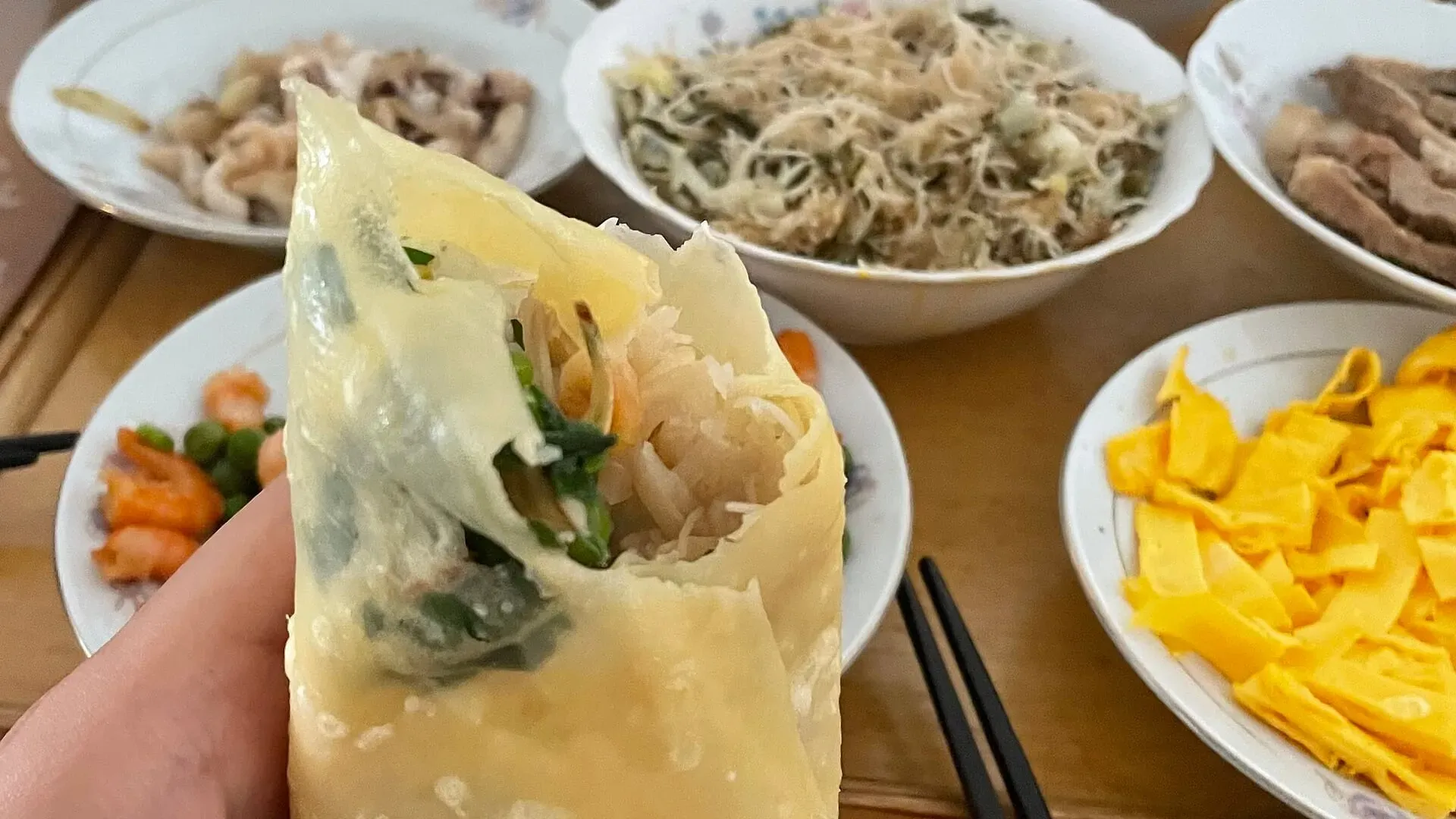
Jiaobingtong is Tiantai’s signature snack — a thin griddle pancake rolled around a dozen stir-fried fillings such as pork, tofu strips, egg ribbons and winter bamboo shoots. Every household makes it for the festivals and sends some round to the neighbors, and in 2022 the craft of making it joined Zhejiang’s list of intangible cultural heritage.
Tiantai’s Women’s Federation calls jiaobingtong the town’s most classic food: no festival goes by without it, least of all Qingming, the Ghost Festival in the seventh month and New Year’s Day. Locals say every Tiantai person loves it and could eat it from the start of the year to the end: the poor can eat it and so can the rich, it is good meatless and good with meat, and best of all with both.
One skin, ten fillings
According to the Mount Tiantai scenic area’s website, when jiaobingtong day comes, every household buys its ingredients in advance — pork, pig’s liver, bean noodles, tofu strips, egg ribbons, winter bamboo shoots, carrot, dried radish strips — stir-fries each one, adds scallions and other seasonings, and sets them aside to cool.
The skins are made from batter. Flour and water are stirred into a paste; a small scoop is smoothed by hand across a flat iron griddle into a thin round skin, which is peeled off when cooked and stacked on a rice sieve. To wrap, the fillings are laid on the skin one after another and neatened, then the skin is rolled up from one side into a tube and the ends are folded in. The griddled skin is crisp and fragrant.
Jigong’s leftovers
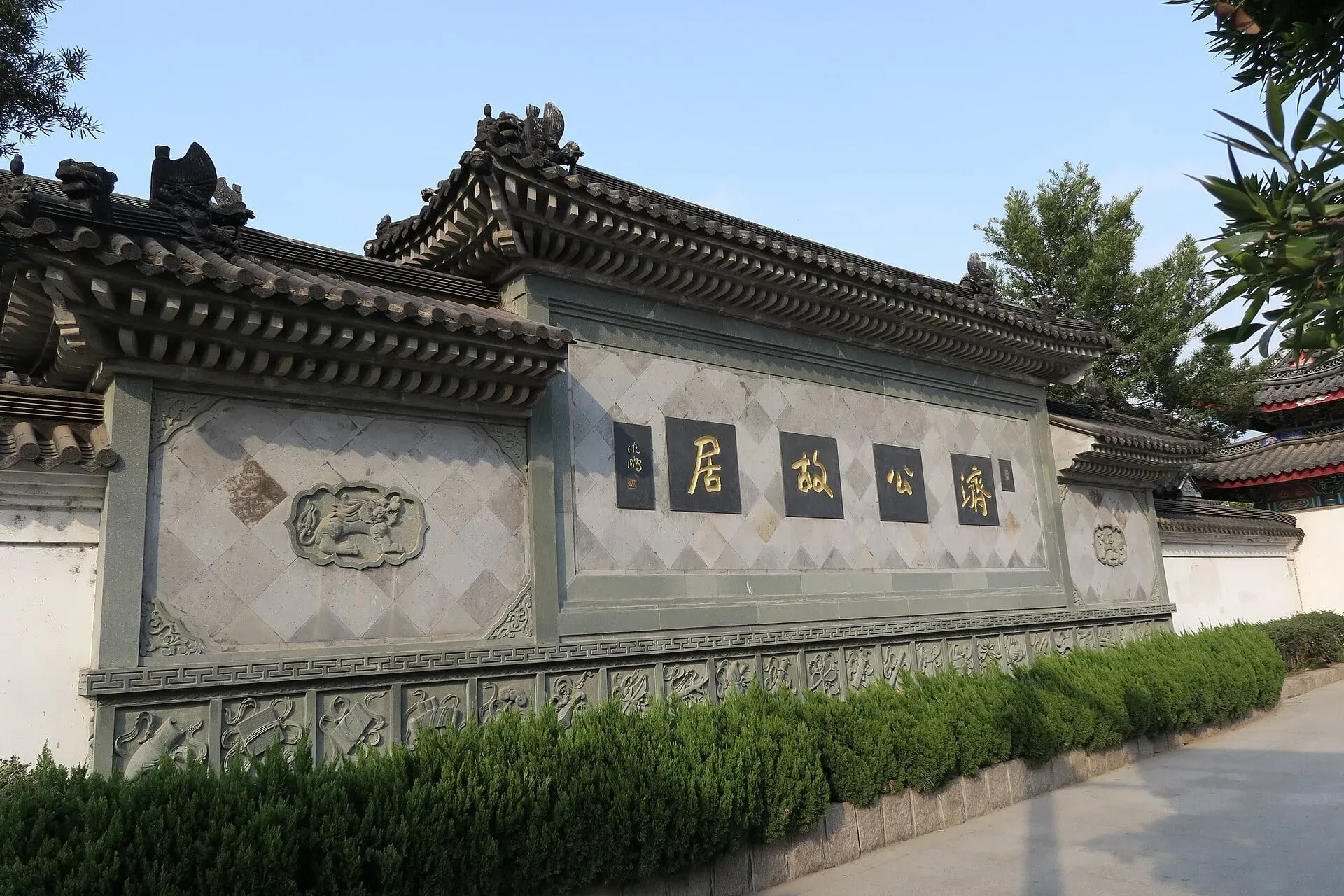
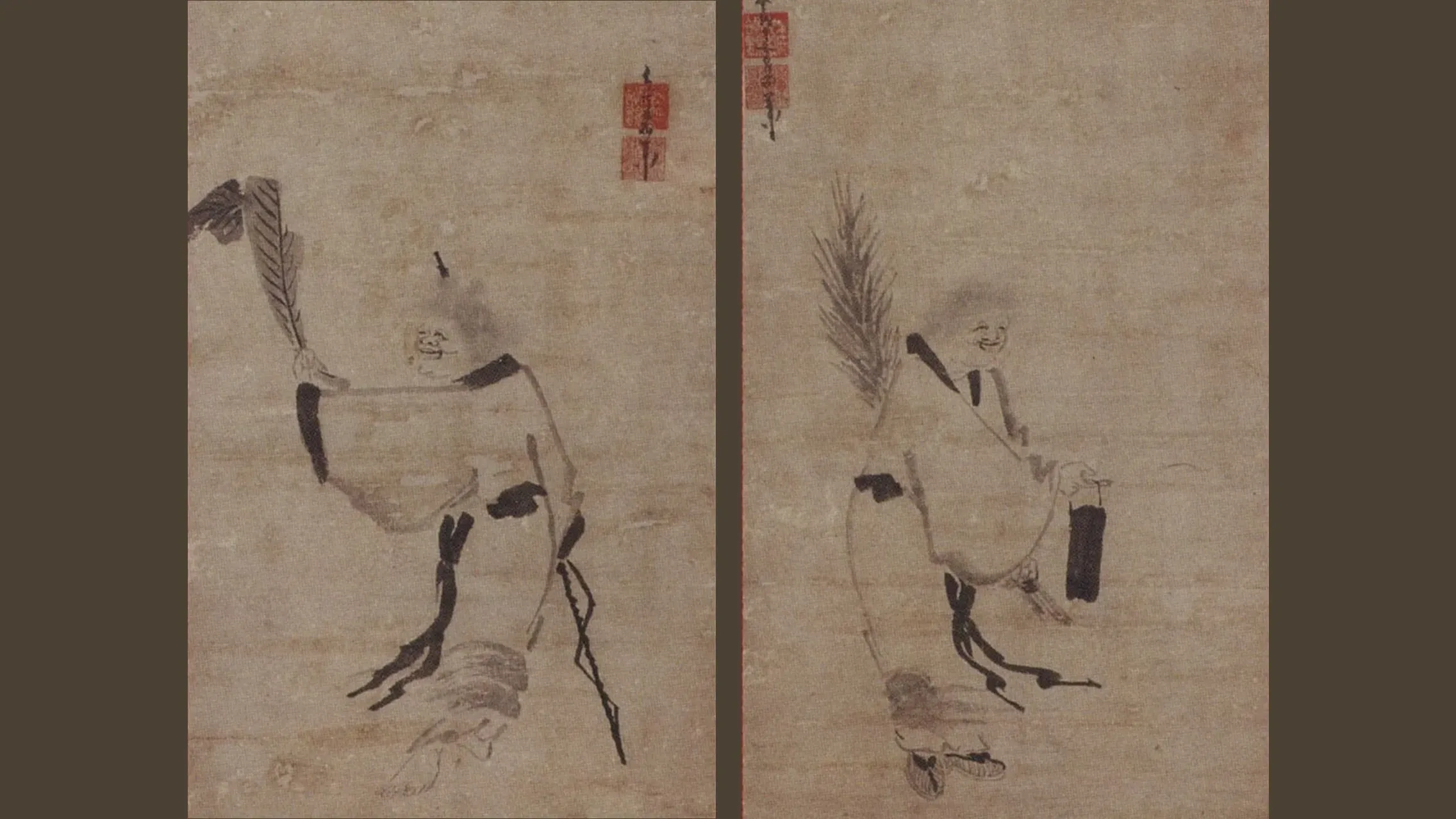
Where did jiaobingtong come from? Tiantai’s favorite story involves Jigong, the eccentric monk. Jigong, born Li in Tiantai, was a monk at Guoqing Temple, the story goes, and could not bear to see the temple’s leftovers thrown out, so he wrapped them in thin pancakes to eat at the next meal. Everyone liked them, and jiaobingtong spread from there. At the 2010 Shanghai Expo it was even served as a famous Chinese snack under the name “Jigong’s rolled pancake.”
According to Wikipedia, though, the historical Jigong became a monk at Lingyin Temple in Hangzhou; the Guoqing Temple story is Tiantai legend — see Ji Gong’s Hometown. Elsewhere in Taizhou there are other tales — that in the Ming, for instance, people on the coast wrapped food in pancakes to send to General Qi Jiguang’s soldiers fighting the pirates.
Reunion, and harmony
Both the skin and the finished roll are round, so besides the festivals, families celebrating a happy event often follow the main meal with jiaobingtong, for “reunion.” It is offering food, too: no altar goes without it, whether for the ancestors at Qingming, the spirits at the Ghost Festival or heaven and earth on New Year’s Eve.
Tiantai’s Women’s Federation says that by tradition a housewife who has made jiaobingtong always takes some to the neighbors, and whatever the filling, rich or poor, everyone eating it smiles — a living picture of Mount Tiantai’s culture of harmony. See Hanshan and Shide.
The scenic area’s website adds that the roll is shaped like the carrying pole Tiantai people shouldered when they left home to make a living. Many Tiantai families living far away take an iron griddle from home, so that even in a strange place they can make jiaobingtong for young and old.
In 2022 “the craft of making Tiantai jiaobingtong” was added to Zhejiang’s list of representative intangible cultural heritage. A year earlier it had made Zhejiang’s list of the hundred best rural snacks, alongside Linhai’s zaogeng and danqing yangwei — see Zaogeng and Danqing Yangwei.
Tiantai’s “set of three”
According to the Hangzhou paper Dushi Kuaibao, jiaobingtong heads Tiantai’s “set of three” snacks; the other two are hulatai and rouwan maibing.
Hulatai is a thin pancake cooked in a big wok. In the old days a big eater might make one as large as the wok and a small eater a little one, with an egg in it, or brushed with lard and salted, or with sugar or seaweed.
Rouwan maibing, a stuffed wheat cake, is the real test of skill. An old Tiantai saying mocks the clumsy cook — “a wheat cake with corners, a rice dumpling without” — since a wheat cake should be round and a rice dumpling should have corners. The set of three was once the standard test of a new bride in Tiantai, and rouwan maibing was the hardest part.
Eating jiaobingtong in Tiantai
According to the Women’s Federation, some restaurants in town that specialize in Tiantai home cooking even let you make your own jiaobingtong, from spreading the skins to rolling them up. For the real thing, though, come at festival time and eat it in a Tiantai home.
Tiantaishan station is about an hour by train from Hangzhou East — see Getting to Tiantai.
Questions & answers
What is jiaobingtong?
A traditional Tiantai snack. Batter is spread into thin round skins on a flat griddle; then stir-fried fillings — pork, pig’s liver, tofu strips, egg ribbons, winter bamboo shoots, carrot, dried radish and more — are laid on one by one, and the skin is rolled into a tube with the ends tucked in.
Is jiaobingtong the same as shibingtong?
Yes — the same food under different names. Tiantai calls it jiaobingtong; Linhai, Jiaojiang, Huangyan, Luqiao and Xianju in Taizhou mostly say shibingtong; Sanmen says maijiao, and neighboring Ninghai maijiaotong.
When do people in Tiantai eat it?
At every festival, and above all at Qingming, the Ghost Festival in the seventh month and New Year’s Day; also at the start of summer, Mid-Autumn and New Year’s Eve. Families celebrating a happy event often finish the main meal with jiaobingtong, for its round shape stands for reunion.
Did Jigong really invent jiaobingtong?
So Tiantai tells it — Jigong couldn’t bear to see leftovers thrown away, so he wrapped them in a thin pancake to eat at the next meal. Elsewhere in Taizhou there are other stories, such as people in the Ming wrapping food in pancakes for General Qi Jiguang’s soldiers fighting the pirates.
What is Tiantai’s “set of three”?
Jiaobingtong, hulatai and rouwan maibing. According to the Hangzhou paper Dushi Kuaibao, these three were once the standard test of a new bride’s cooking, with rouwan maibing the hardest.