Potan Old Town and the Boneless Lanterns
Potan stands on the Yong’an River about 25 km west of Xianju’s county town. From the late Tang it was the landing where sea salt was sent on to the inland counties of western Zhejiang; it peaked in the mid-Qing and went quiet after the Zhejiang–Jiangxi railway opened in 1937. Its “dragon-shaped” old street, about 2 km long, survives. Xianju’s needle-pricked boneless lanterns began here and joined China’s first national list of intangible cultural heritage in 2006.
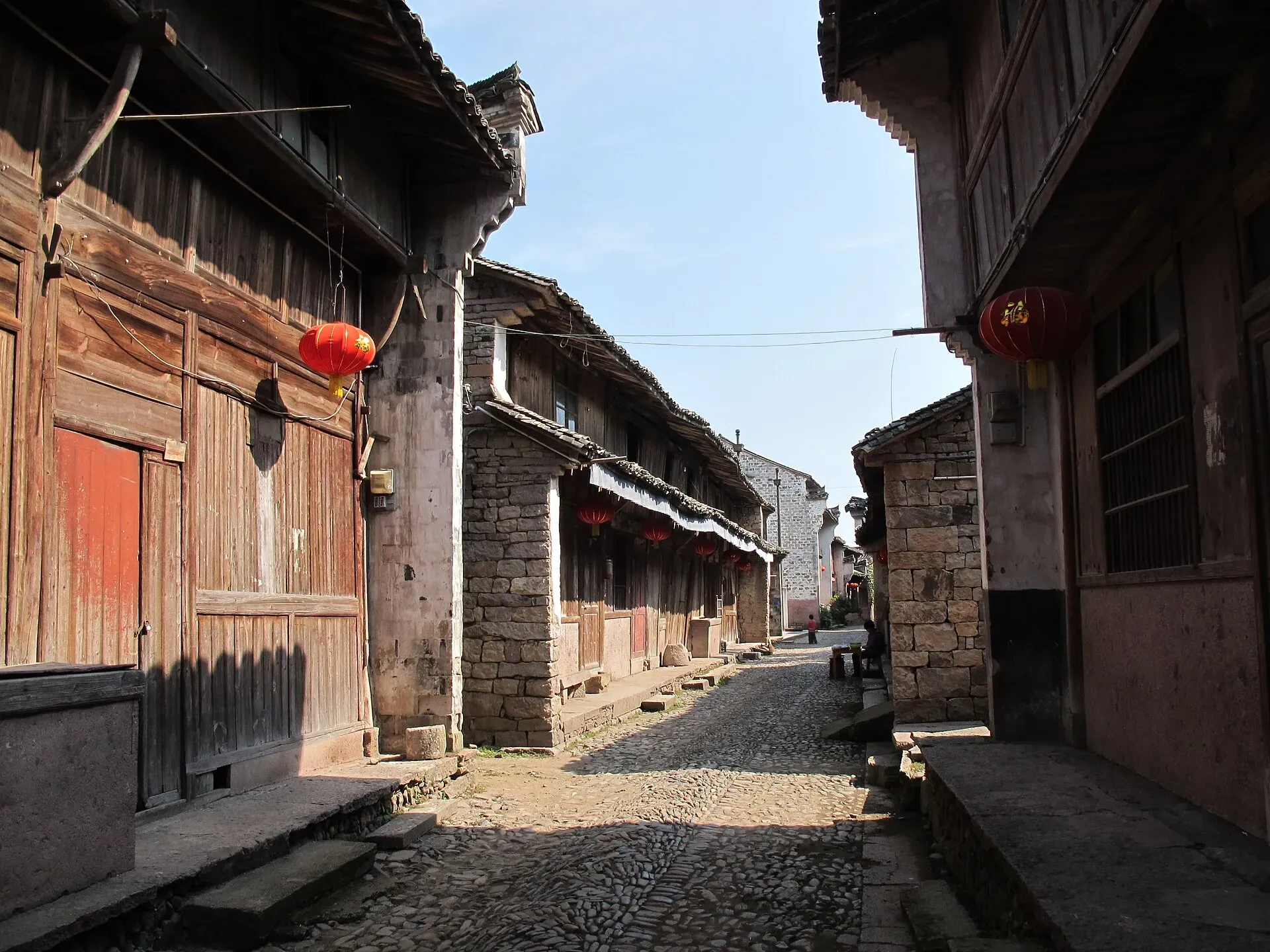
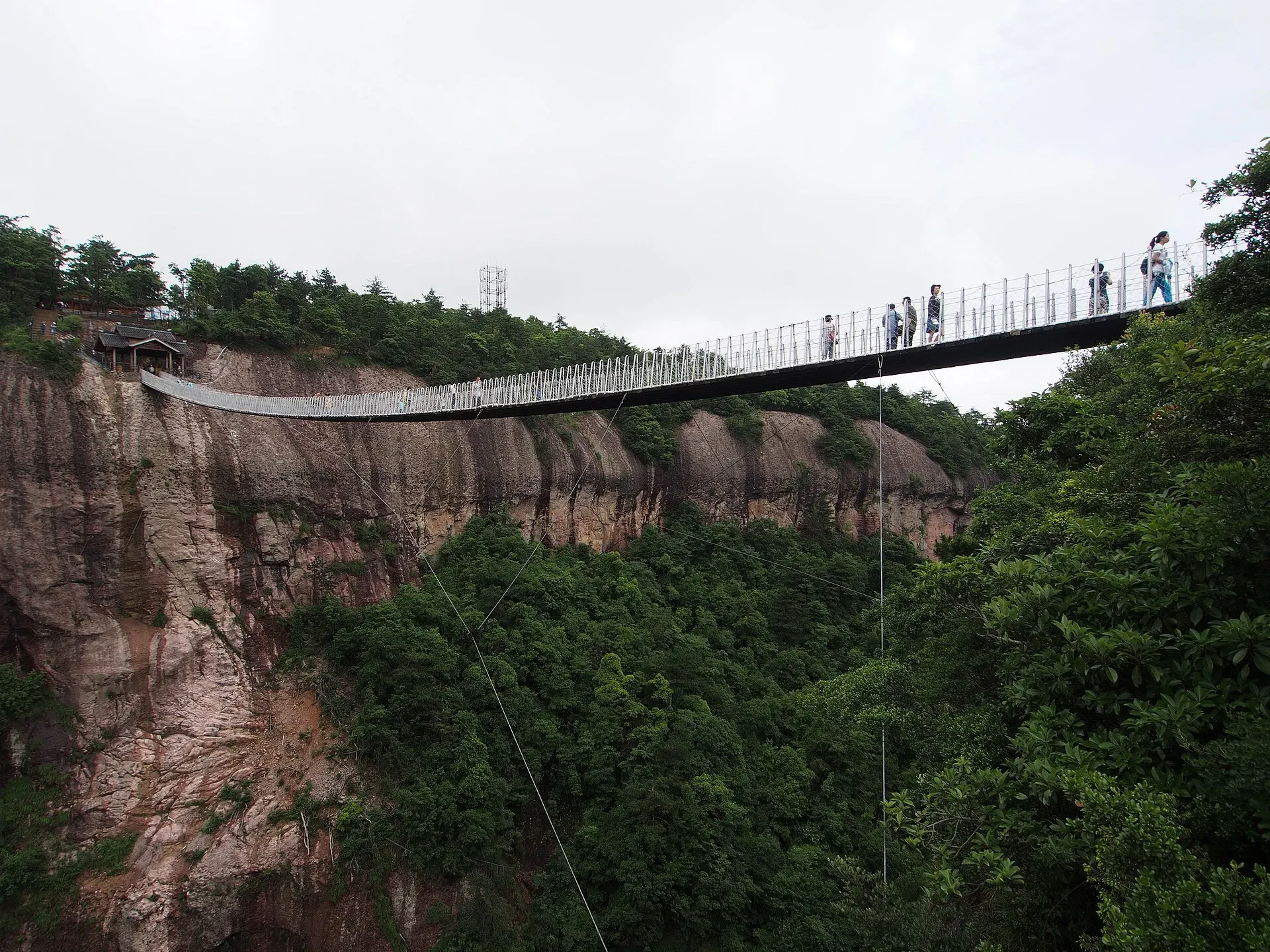
At Shenxianju you look at mountains; at Potan you look at a street. The town stands on the Yong’an River about 25 km west of Xianju’s county town, and was once among the busiest salt ports in Zhejiang. Today it is quiet, and rows of Ming and Qing shops still line the cobbled old street.
A salt port where five streams meet
Potan lies on the valley plain in the middle of Xianju, where four streams — the Zhumu, Wanzhu, Jiudukeng and Huangyukeng — join the Yong’an River. According to Zhejiang Online in 2014, from the late Tang onward salt made on the coast was shipped upriver along the Jiao and Yong’an rivers and landed at Potan, the last and furthest inland landing on the waterway. From there porters carried it along the old salt road that winds through the Kuocang range to Dongyang, Yiwu, Yongkang, Wuyi, Jinhua and Lanxi. So Potan grew into a market for salt, cloth and mountain produce.
The names of the wharves show where the merchants came from: an official wharf, and others named for Yongkang, Jinyun, Jinhua, Lishui, Dongyang, Longquan and Anhui. The report cites the Guangxu-era Xianju gazetteer to the effect that the government salt for the three counties of Dongyang, Yongkang and Wuyi all came ashore at Potan before going on. At its height in the Ming and Qing, nearly five hundred trading boats a day tied up along the river.
The dragon-shaped street
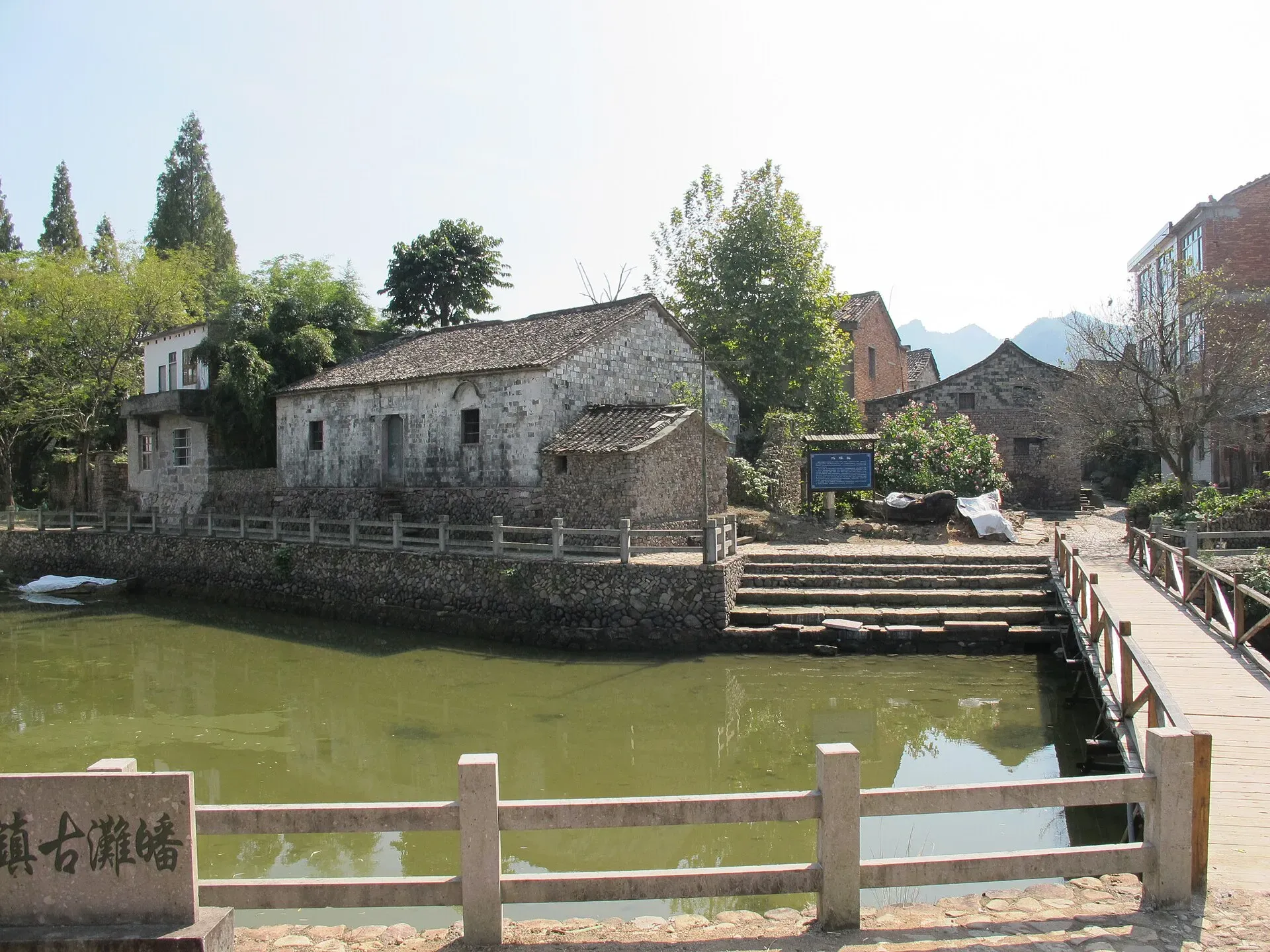
Potan is really one long trading street, built for its wharves along the line of the river. According to the same report, the old town covers 108,000 square meters; the street is “dragon-shaped,” about 2 km long, and keeps more than 620 bays of Ming and Qing buildings. The shops have counters built of stone slabs — “stone counters,” made to last.
The buildings are of many periods: the Chen ancestral hall, first built in the late Tang; a Southern Song mansion of the He family; Ming and Qing money shops; and the Qingfeng Tower from the Republican era. In 2008 Potan was named a National Historic and Cultural Town, in the fourth batch.
Made by the river, undone by the road
Potan’s market took shape in the late Tang, reached its height in the mid-Qing and faded from the end of the Qing. The Yong’an River shifted its course and trade routes changed; after the Zhejiang–Jiangxi railway opened in 1937, the salt road from Potan lost its purpose, and a salt port nearly a thousand years old fell silent.
The boneless lanterns
Potan is also where Xianju’s needle-pricked boneless lanterns began; the craft later spread to the townships of Hengxi, Baita, Tianshi, Xiage and Zhuxi. According to China’s intangible heritage website, the lantern “uses not a single rib of frame” — its body is folded and glued together from paper panels of different sizes and shapes — and its patterns are cut and pricked through the paper as tiny holes, so that the design appears when light shines through. Tradition dates it to the Tang dynasty, and people call it the Tang lantern; the craft matured in the Ming and Qing.
For a time the craft was lost. According to the same website, in 1983 a Xianju man named Li Xiangman heard from a man in his eighties that Potan once had a lantern with no frame. The next year he began to search out and recover it, learned how it was made, and brought the Tang lantern back after more than fifty years. Making one needle-pricked lantern takes thirteen steps. There were once more than eighty designs, of which twenty-seven have been recovered.
In 2006 the Xianju lantern joined China’s first national list of intangible cultural heritage. Another nationally recognized master, Wang Rulan, has kept a showroom of needle-pricked lanterns on Potan’s old street since 1985.
Tongjiang Academy
Near Potan is the Tongjiang Academy, founded in the Qiandao years of the Southern Song by Fang Zhuo, an eighth-generation descendant of the late Tang poet Fang Gan. The philosopher Zhu Xi is said to have lectured there twice, sent his son to study there and written an inscription for it — which earned it the name “first academy south of the Yangtze.” It is the best-preserved old academy in Taizhou today.
Getting there
Potan’s old street is about 23 km from Xianju high-speed station, a little over twenty minutes by car; Shenxianju is about 17 km from Potan. These are map estimates. For how to reach Xianju, see Getting to Xianju; for Shenxianju, see Shenxianju and the Ruyi Bridge; for the rest of the county, see Things to Do in Xianju.
Questions & answers
How do you pronounce Potan?
Pótān. The first character, 皤, is read pó, in the second tone.
Where is Potan Old Town?
In Potan Township, Xianju County, Taizhou, Zhejiang — about 25 km west of the county town, on the Yong’an River, and about 23 km by road from Xianju high-speed station.
Why was Potan a salt port?
Salt made on the coast came upriver by boat along the Jiao and Yong’an rivers and was landed at Potan, then carried by porters along the old salt road through the Kuocang range to Dongyang, Yongkang, Wuyi and Jinhua. Potan was the last and furthest inland landing on the waterway, which made it the transfer point for salt and other goods.
What is a boneless lantern?
A traditional lantern from Xianju, in full the needle-pricked boneless lantern. It has no frame at all — the whole body is folded and glued together from pieces of paper of different sizes — and its patterns are made of tiny holes cut and pricked through the paper, which show when the light shines through.
Why are the lanterns called Tang lanterns?
Tradition says they go back to the Tang dynasty, hence the popular name; according to China’s intangible heritage website, the craft matured in the Ming and Qing.
What does the Tongjiang Academy have to do with Zhu Xi?
The academy, near Potan, was founded in the Qiandao years of the Southern Song by Fang Zhuo, an eighth-generation descendant of the late Tang poet Fang Gan. Zhu Xi is said to have lectured there twice, sent his son to study there and written an inscription for it.