Shenxianju and the Ruyi Bridge
Shenxianju, in Xianju County, Zhejiang, is a landscape of cliffs and spires in volcanic rhyolite, rated a national 5A scenic area in 2015. Its Ruyi Bridge, opened in 2020, is about 100 meters long and some 140 meters above the valley floor, shaped like a jade ruyi scepter. Two cable cars run up the mountain, and the area is about 16 km from Xianju high-speed station.
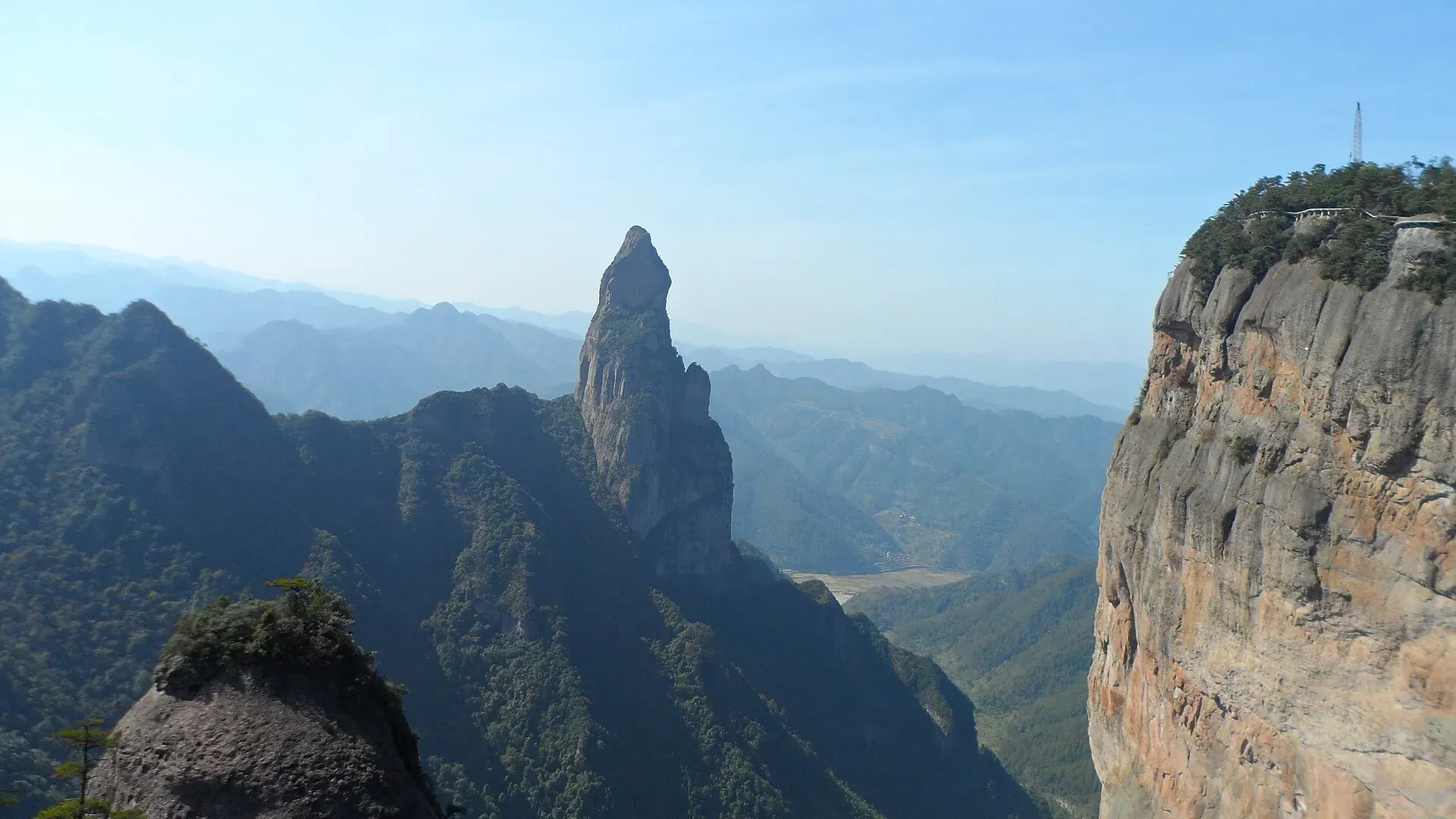
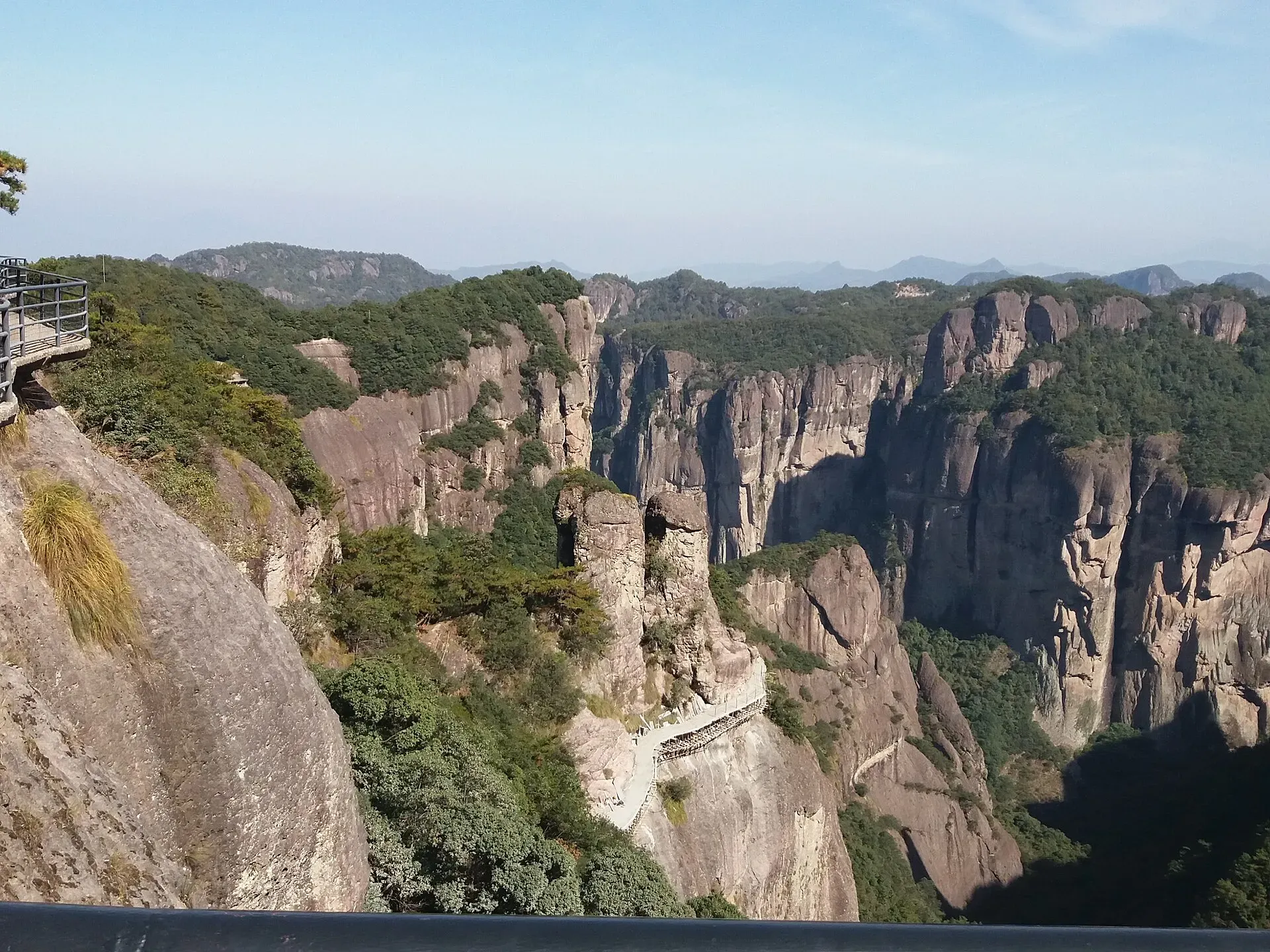
Xianju means “abode of immortals,” and the county’s best-known mountains are simply called Shenxianju, the immortals’ dwelling. There is no temple here and no old town. What people come for is rock — walls of cliff, stone spires and gorges — and a bridge that does not look as if it could be real.
Mountains left by volcanoes
The mountains of Shenxianju are made of volcanic rhyolite. In October 2015 the national tourism administration published a new list of 5A scenic areas, its top grade, and Shenxianju was on it together with Mount Tiantai; the report carried by People’s Daily Online described it as the world’s largest landscape of its kind, with sheer peaks, cliff-walled sinkholes and waterfalls.
The Ruyi Bridge
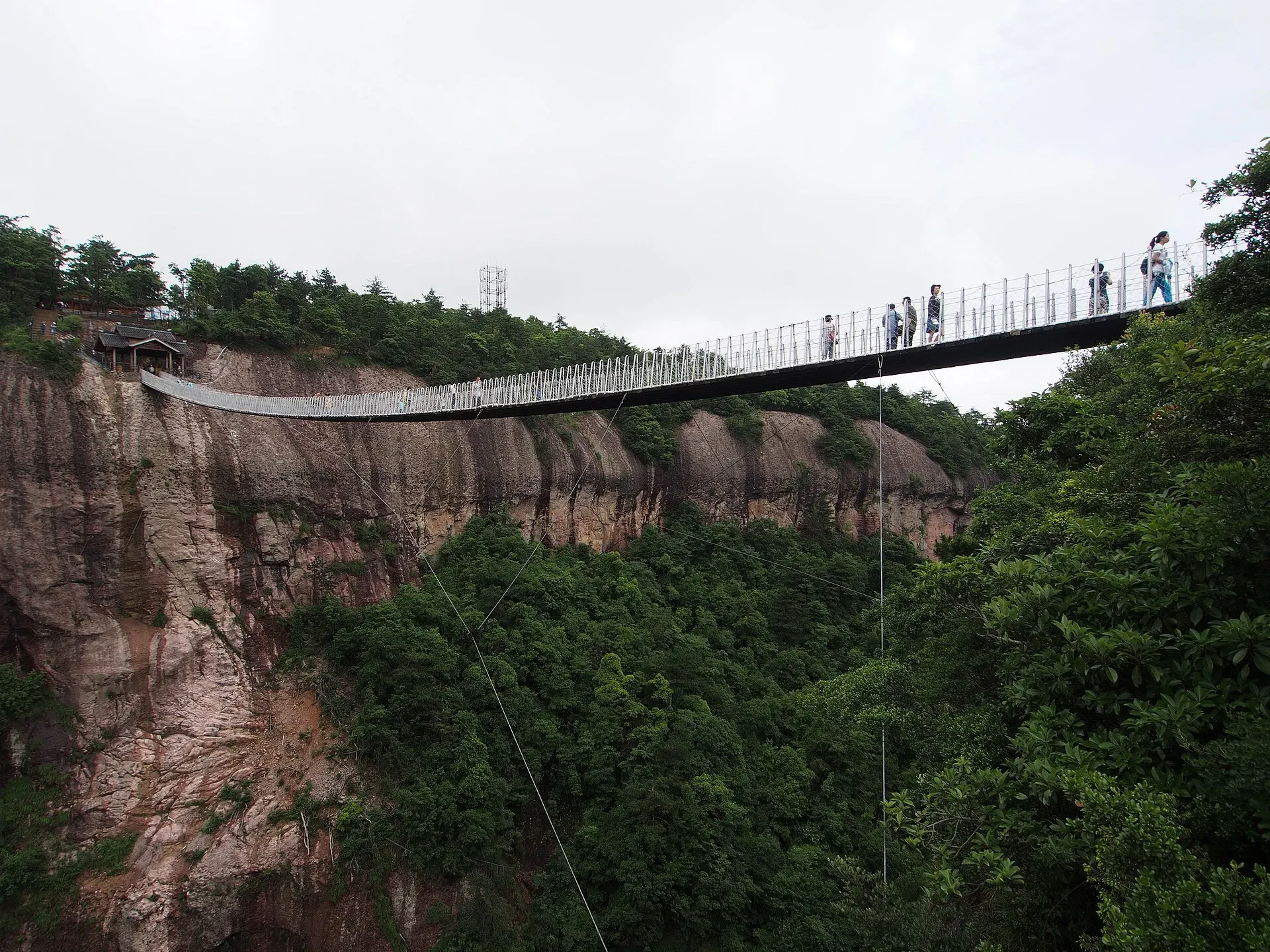
The Ruyi Bridge crosses a gorge on the west side of Shenxianju. According to Wikipedia, planning began in 2017 and the bridge opened in the autumn of 2020; its designer, He Yunchang, was a structural engineer who had worked on the steel of the “Bird’s Nest” stadium in Beijing. It is about 100 meters long and 140 meters above the valley floor, made of three undulating walkways with glass floors in places, and the whole is meant to look like a jade ruyi, the curved scepter that stands for good fortune. Within two months of opening, 200,000 people had walked across it.
Part of its fame is that many people did not believe in it. In 2020 a drone video of the bridge spread on social media abroad, and plenty of viewers took it for computer graphics; according to Wikipedia, the fact-checking site Snopes investigated and concluded that the bridge is real.
A tree was saved in the building of it. According to Zhejiang Online in 2021, a sweet chinquapin more than a hundred years old stood at the cliff edge on one side, and the official in charge of construction had the design reworked around the tree so that it could stay. Besides the Ruyi Bridge, Shenxianju has several other bridges across its chasms, among them the Wolong, Yuanmeng and Hongmeng bridges.
Nantianding and Guanyin Peak
Nantianding is a viewing deck built on a cliff at 869 meters. According to Zhejiang Online in 2025, it cantilevers 45 meters out from the rock, holds 800 people and faces Guanyin Peak, 919 meters high — a free-standing spire and the most recognizable summit at Shenxianju.
A mountain you do not have to climb
Ten years ago, what visitors remembered most about Shenxianju was the hours of climbing. According to Zhejiang Online, the area has since added cable cars on its south and north sides, cliff walkways and high footbridges, growing from 5 to 35 square kilometers. From the south gate you can now ride straight up, and the walkways on top mostly stay between 750 and 850 meters, gaining height on long, gentle ramps. Shenxianju now receives more than two million visitors a year.
The circuit is still a long one. According to the Hangzhou paper Dushi Kuaibao in 2024, it takes most of a day; go in early and you may see a sea of cloud.
Mount Weiqiang and Mount Tianmu
Shenxianju was once called Mount Weiqiang. A Southern Song gazetteer, Chicheng Zhi, says that Weiqiang was “also named Mount Tianmu,” and on that basis scholars in Xianju argue that this is the mountain of Li Bai’s poem A Dream Journey to Tianmu. The usual view still places Mount Tianmu to the north, in Xinchang. For both sides, see Mount Tianmu.
Jingxing Rock
Near Shenxianju is another peak, Jingxing Rock. According to Dushi Kuaibao, it lies about 27 km southwest of the county town: a summit formed by a single huge block of stone, 742 meters high and sheer on every side. Today you go up by an elevator fixed to the cliff, which rises 128 meters to the top in 45 seconds. Along the summit runs a 258-meter gallery for watching the moon — “moon-viewing at Jingxing” is one of the old Eight Views of Xianju.
Getting there
According to Dushi Kuaibao in 2024, Shenxianju is about 16 km from Xianju high-speed station, around twenty minutes by car, and a dedicated bus runs from the station to the Shenxianju visitor center. Ticket prices, cable car fares and opening hours change, so check with the scenic area before you go. For how to reach Xianju, see Getting to Xianju.
Questions & answers
Is the Ruyi Bridge real?
Yes. The Ruyi Bridge is in the Shenxianju scenic area in Xianju, Zhejiang, and opened in 2020. A drone video of it went viral abroad that year and many viewers took it for computer graphics; according to Wikipedia, the fact-checking site Snopes investigated and confirmed that the bridge is real.
Where is the Ruyi Bridge?
In the Shenxianju scenic area in Xianju County, Taizhou, Zhejiang, where it spans a gorge on the west side of the area. Xianju station is about an hour and twenty minutes from Hangzhou West by high-speed train, and the scenic area is about 16 km from the station.
How high and how long is the Ruyi Bridge?
According to Wikipedia it is about 100 meters long and 140 meters above the ground. It is made of three undulating walkways, parts of which have glass floors.
Is Shenxianju a hard climb?
No. There are cable cars on both the south and north sides — from the south gate you can ride straight up — and the walkways on top mostly stay between 750 and 850 meters, rising on long, gentle ramps. The full circuit is long, though; allow most of a day.
How do I get to Shenxianju from Shanghai or Hangzhou?
Take a high-speed train to Xianju station — direct from Shanghai Hongqiao in as little as two hours forty minutes, or about an hour and twenty minutes from Hangzhou West. From the station a dedicated bus runs to the Shenxianju visitor center, or it is about 16 km by taxi. See Getting to Xianju.
Is Shenxianju the Mount Tianmu of Li Bai’s poem?
It is disputed. Shenxianju was once called Mount Weiqiang, and a Southern Song gazetteer says Weiqiang was “also named Mount Tianmu,” which leads scholars in Xianju to claim Li Bai’s mountain for their county. The usual view still places Mount Tianmu in Xinchang. See Mount Tianmu.