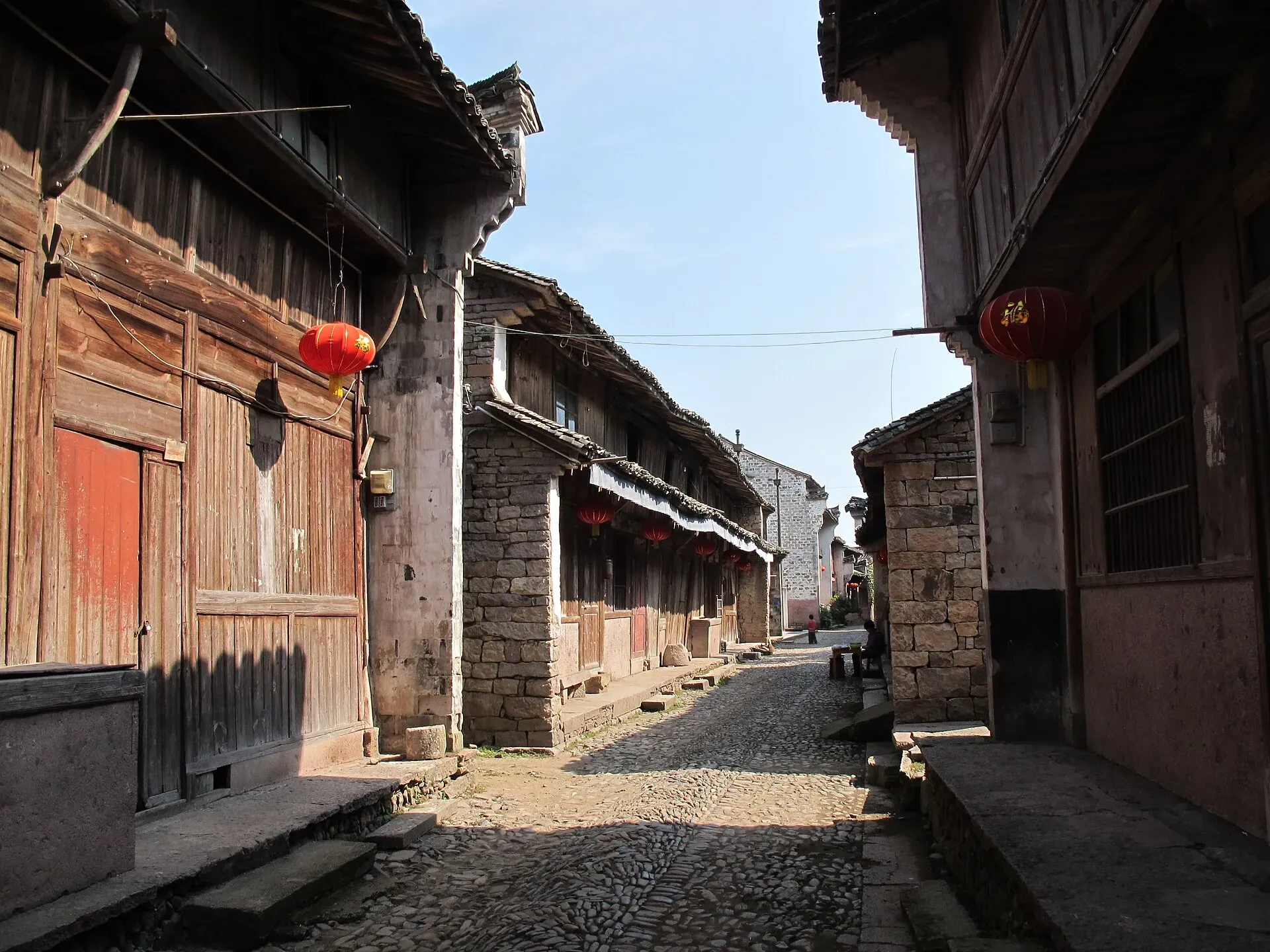
Xianju Yangmei (Chinese Bayberry)
Yangmei, also called Chinese bayberry or waxberry, is a sweet-tart fruit native to China that is in season for only a few weeks in early summer. Xianju, known as China’s home of yangmei, grows more than 150,000 mu of it, mainly the Dongkui and Biqi varieties, with the harvest usually starting in early June. In 2023 the UN Food and Agriculture Organization recognized Xianju’s ancient yangmei farming system as a Globally Important Agricultural Heritage System.
Every June the hills of Xianju turn red. Yangmei is a fruit of early summer only: it ripens fast and spoils just as fast, and for a few weeks a year you can eat it fresh. Xianju calls itself China’s home of yangmei, and more than thirty thousand households in the county grow it.
What yangmei is
Yangmei is native to China. According to a science interview carried by Xinhuanet in 2024, pollen of the yangmei genus has been found at the Neolithic site of Hemudu in Yuyao, Zhejiang, and the fruit has been grown and used for at least two thousand years; the yangmei found in the Han tombs at Mawangdui in Changsha look much like those grown today.
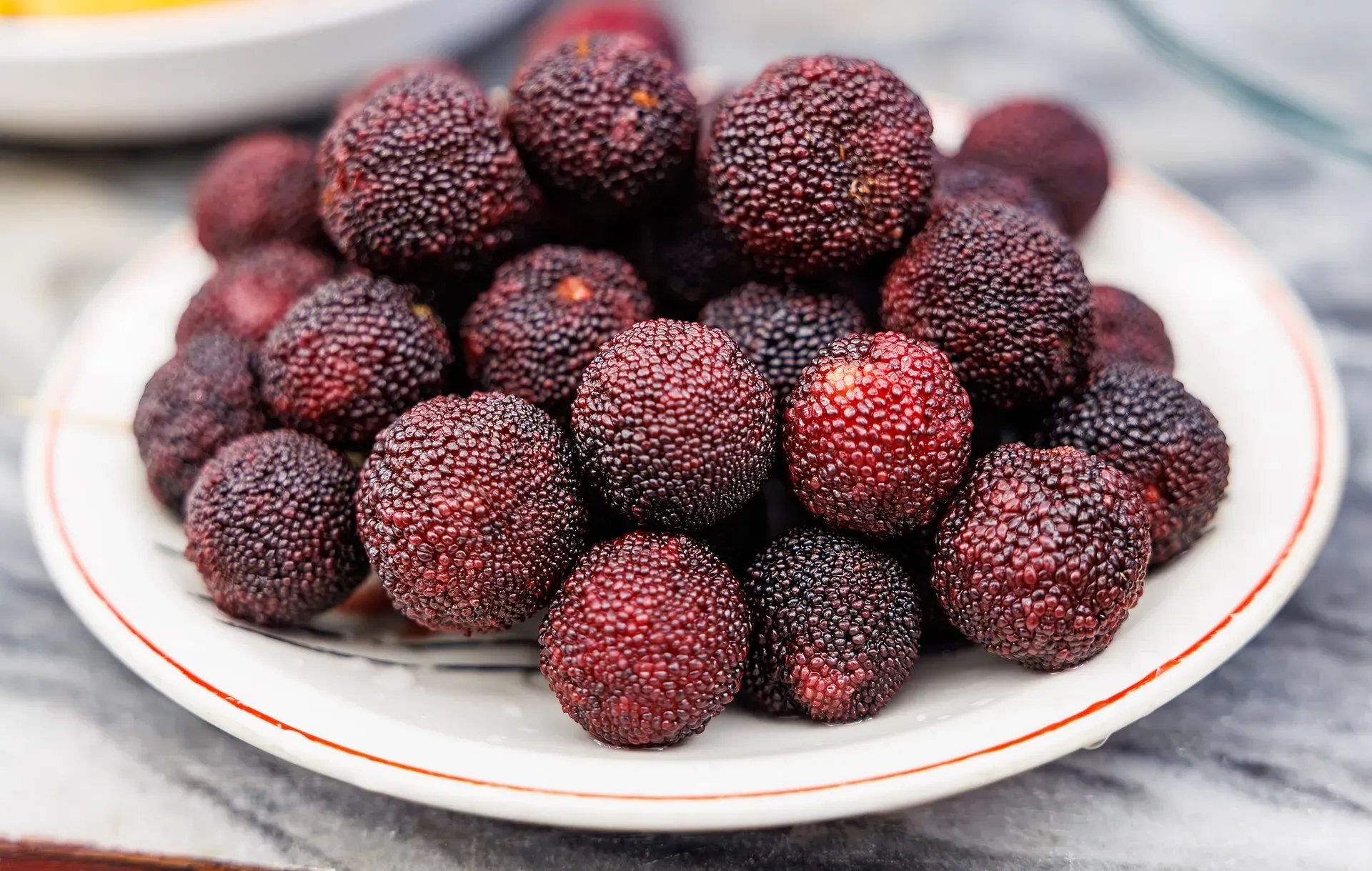
The fruit is round, usually 1.5 to 2.5 cm across, with a knobbly surface anywhere from red to purple-black and a single hard stone in the middle; the flesh is sweet, sharply tart and full of juice. English has no settled name for it — yangmei, Chinese bayberry, waxberry and yumberry all mean the same fruit, and botanists call it Myrica rubra.
Yangmei in Xianju
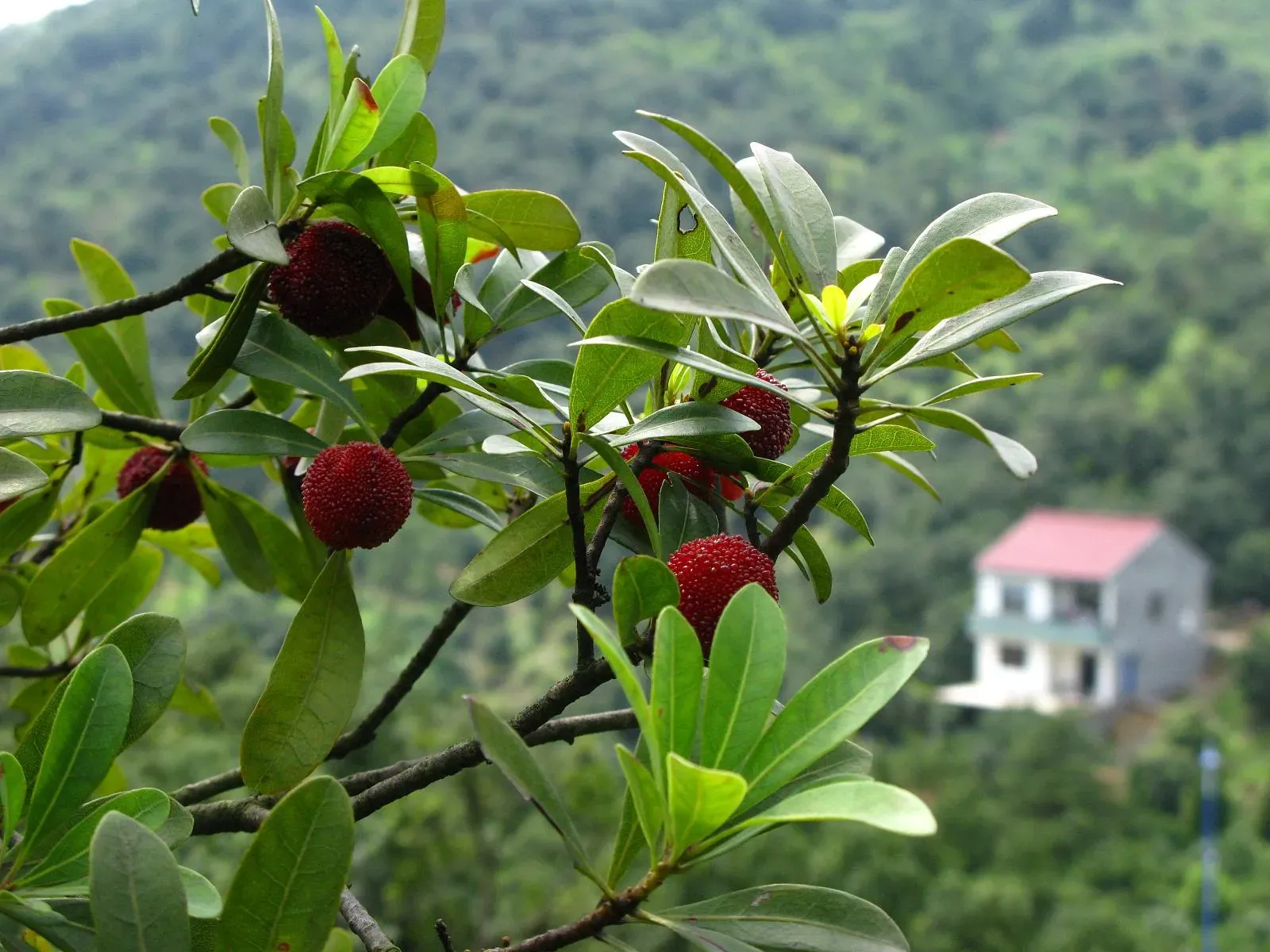
Xianju is known as China’s home of yangmei. According to county agriculture bureau figures quoted by Jiemian News in 2026, at the end of 2025 the county had more than 150,000 mu (about 10,000 hectares) of yangmei, producing 124,000 tonnes a year, with 31,500 households growing it.
Two varieties dominate. Dongkui is the big one — a single fruit can be the size of a ping-pong ball, thick-fleshed, juicy and small-stoned — and is the variety Xianju is famous for. Biqi, known locally as “black charcoal” yangmei, ripens earlier.
When to go
According to Zhejiang Online in 2014, Xianju’s microclimate lets its yangmei ripen at the start of June, reaching the market seven to ten days before the fruit of Cixi and Yuyao and staying ten to fifteen days longer; it is generally on sale from about June 10 to about July 20. Orchards that grow mainly Biqi ripen from early to late June, and those that grow mainly Dongkui from mid-June to mid-July. Greenhouses have since brought the season forward: according to Zhejiang Online, Xianju’s greenhouse yangmei went on sale on May 14 in 2023, nearly a month ahead of the outdoor fruit.
The dates move by a few days each year, so check the current season’s news before you go. During the season many orchards in Xianju let visitors pick their own.
Yangmei, tea, chickens and bees
In November 2023 the UN Food and Agriculture Organization recognized the “Xianju ancient yangmei composite system” of Zhejiang as a Globally Important Agricultural Heritage System. According to People’s Daily, it is a form of hillside farming that brings together yangmei, tea, chickens and bees; Xianju is one of the places where yangmei was first cultivated, with a history of 1,600 years, and still has 13,425 yangmei trees more than a century old.
The four fit together like this. The yangmei trees give the tea bushes filtered light and help the soil hold water and nutrients; Xianju chickens range under the trees; and the many flowering plants on the hillsides feed native bees. Yangmei, tea, chickens, eggs and honey all come off the same slope.
What to do with too many
Yangmei is delicate and does not keep. The same interview notes that people long ago found ways to make it last — salting it, preserving it in honey, drying it, making wine from it, pressing it for juice. The 2014 Zhejiang Online report likewise mentions that people in Xianju eat yangmei steeped in baijiu in summer and drink the local yangmei wine.
The county has also tightened its rules on fruit going to market. According to Jiemian News in 2026, yangmei from Xianju must carry a farm-produce certificate, naming the grower, the weight and the date of issue, before it can be sold. For where else to go while you are in Xianju for the fruit, see Things to Do in Xianju; for the trains, see Getting to Xianju.
Questions & answers
What is yangmei?
Yangmei is a fruit native to China, cultivated there for at least two thousand years. It is round, usually 1.5 to 2.5 cm across, with a knobbly surface that ranges from red to purple-black, and has a single hard stone at the center.
What is yangmei called in English?
There is no single name. You will see yangmei, Chinese bayberry, red bayberry, waxberry and yumberry; the botanical name is Myrica rubra, also written Morella rubra.
What does yangmei taste like?
Sweet and sharply tart at once, and very juicy. There is a hard stone in the middle, and you eat the knobbly flesh around it whole.
When is yangmei season in Xianju?
Outdoor fruit usually reaches the market in early June and finishes in mid to late July — Biqi first, Dongkui from about mid-June. Greenhouse fruit appears from mid to late May. The dates shift by a few days each year, so check the current season’s news.
What is the difference between Dongkui and Biqi?
Dongkui is the big one — a single fruit can be the size of a ping-pong ball, thick-fleshed, juicy and small-stoned — and is Xianju’s best-known variety. Biqi, known locally as “black charcoal” yangmei, ripens earlier.
Why is Xianju’s yangmei a world agricultural heritage?
In November 2023 the FAO recognized the Xianju ancient yangmei composite farming system as a Globally Important Agricultural Heritage System. It is a way of farming hillsides that combines yangmei, tea, chickens and bees — tea planted among the yangmei trees, the local Xianju chicken ranging beneath them, and native bees kept on the slopes. Xianju has grown yangmei for some 1,600 years and still has 13,425 trees more than a century old.