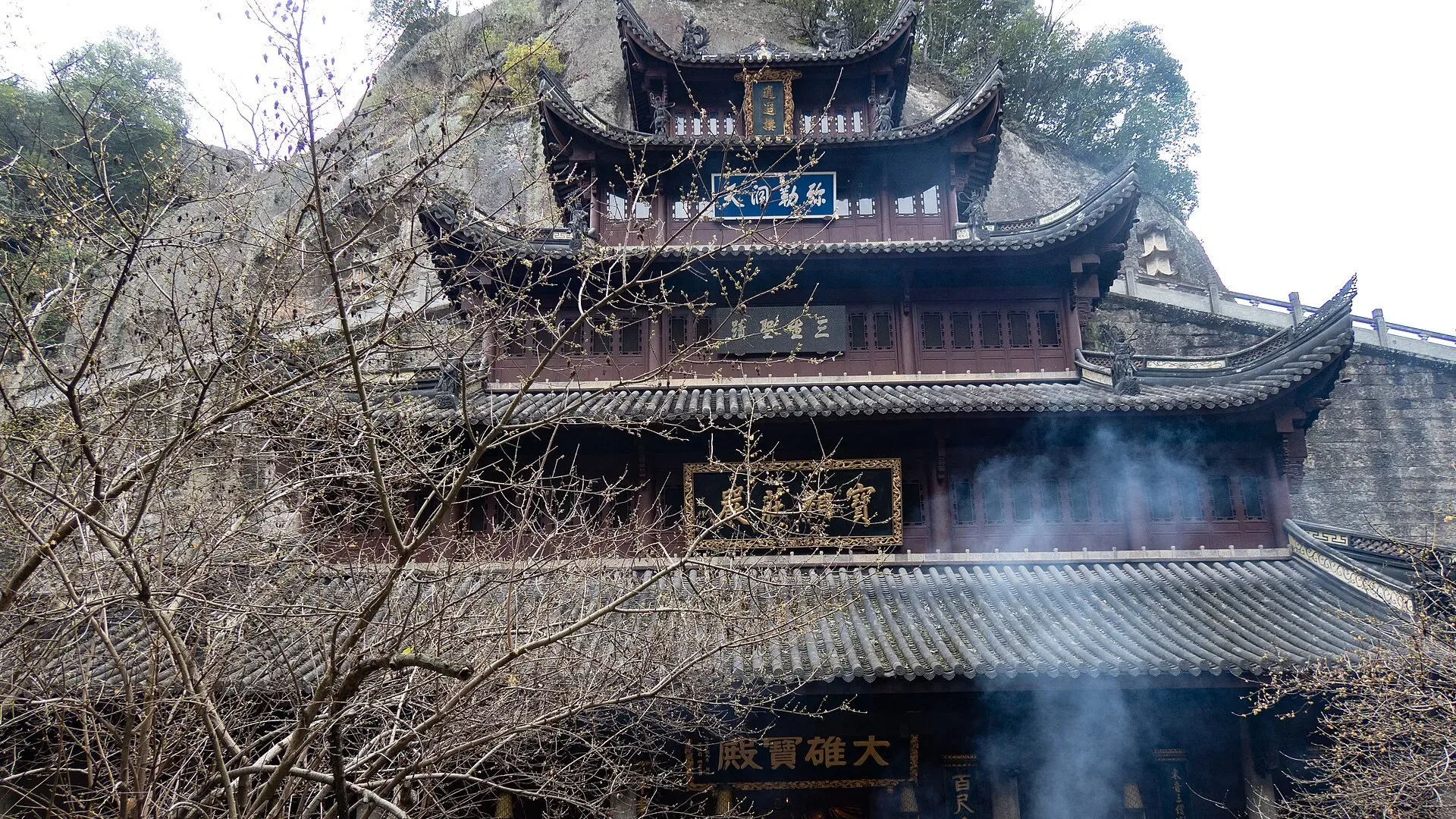
Mount Tianmu: The Mountain of Li Bai’s Dream
Li Bai’s poem “Dreaming of Mount Tianmu” made a modest mountain in Xinchang, under a thousand meters high, famous for more than a thousand years. How high it is, whether Li Bai ever climbed it and even where it is are still argued over; today you can walk up the old Tianmu road from Banzhu Village.
“Mount Tianmu reaches the sky and stretches across it, towering over the Five Peaks and hiding Chicheng.” In Li Bai’s poem the mountain dwarfs China’s five sacred peaks. The real Mount Tianmu, in southeast Xinchang on the border with Tiantai, tops out at about 900 meters on its highest peak, Dajian — hardly a giant. What made it famous for more than a thousand years was a poem about a dream.
A poem from a dream
Li Bai wrote “Dreaming of Mount Tianmu: A Farewell” for his friends in eastern Lu before he set off south for Wu and Yue, usually dated to 745 or 746, not long after he had left the capital, Chang’an. It opens by setting Tianmu beside Yingzhou, an immortal island lost at sea:
Seafarers tell of Yingzhou, lost in mist and waves, truly hard to find.
The people of Yue speak of Tianmu, glimpsed now and then through shifting cloud.
Tianmu reaches the sky and stretches across it, towering over the Five Peaks and hiding Chicheng.
Tiantai, forty-eight thousand zhang high, seems to bow toward the southeast before it.Then, in his dream, the poet flies across Mirror Lake in a single night, reaches the Shan stream, puts on Xie Lingyun’s wooden clogs and climbs the “ladder into the blue clouds”:
So I dream of Wu and Yue, and in one night fly across the moonlit Mirror Lake.
The moon on the lake casts my shadow and sees me to the Shan stream.
The place where Lord Xie once lodged is there still; clear water ripples and gibbons cry.
I put on Lord Xie’s clogs and climb the ladder into the blue clouds.The second half is a vision of the immortals: the stone doors of a cavern heaven burst open, and “in rainbow robes, with the wind for horses, the lords of the clouds come crowding down.” When he wakes, Li Bai writes the poem’s most famous line:
How could I bow and scrape to the powerful, and never once be glad at heart?The poem went into China’s high school textbooks, and the mountain’s fame went with it. People’s Daily reported in 2018 that, by an incomplete count, more than 400 Tang poems take Mount Tianmu as their subject.
Where Lord Xie lodged
The “Lord Xie” of the poem is Xie Lingyun, the fifth-century father of Chinese landscape poetry, who came this way more than three hundred years before Li Bai. He wrote, “At dusk I lodge in Shan; at dawn I climb Tianmu’s peak.” He also cut a path into the mountain, and the old road around Banzhu Village has been called Lord Xie’s Road ever since. When Li Bai puts on “Lord Xie’s clogs,” he means to walk in his footsteps.
So where is Mount Tianmu?
For centuries Mount Tianmu has been taken to be in Xinchang. The high school textbook note puts it “fifty li east of Xinchang county in today’s Shaoxing, bordering Mount Tiantai to the east.” In 2009 the Mount Tianmu scenic area in Xinchang was made a national scenic area.
In recent years other voices have joined in. Scholars in Xianju, in Taizhou, argue that Xianju’s Mount Weiqiang — today’s Shenxianju scenic area — was also once called Tianmu: the Southern Song gazetteer Chicheng Zhi says that “Mount Weiqiang is also called Mount Tianmu.” They add that the “stone doors of the cavern heaven” in the poem point to the Kuocang cavern in Xianju, and that Xinchang’s Tianmu, north of Mount Tiantai and lower than it, could hardly make Tiantai “bow toward the southeast.” Taizhou Daily reported that at a Tianmu culture forum in Xianju in October 2018, several scholars backed this view; researchers in Tiantai and Ninghai have made claims of their own.
Did Li Bai ever go there? Professor Lin Jiali of Zhejiang University thinks so, pointing to another of his poems, “Parting from Chu Yong on My Way to Shan”: “I leave you for Tianmu, to brush off a rock and lie down in the autumn frost.” Others feel that the Tianmu of the poem was always half real mountain and half dream. It is, after all, a poem about a dream, and the argument over which mountain it is will probably go on.
Up the old Tianmu road
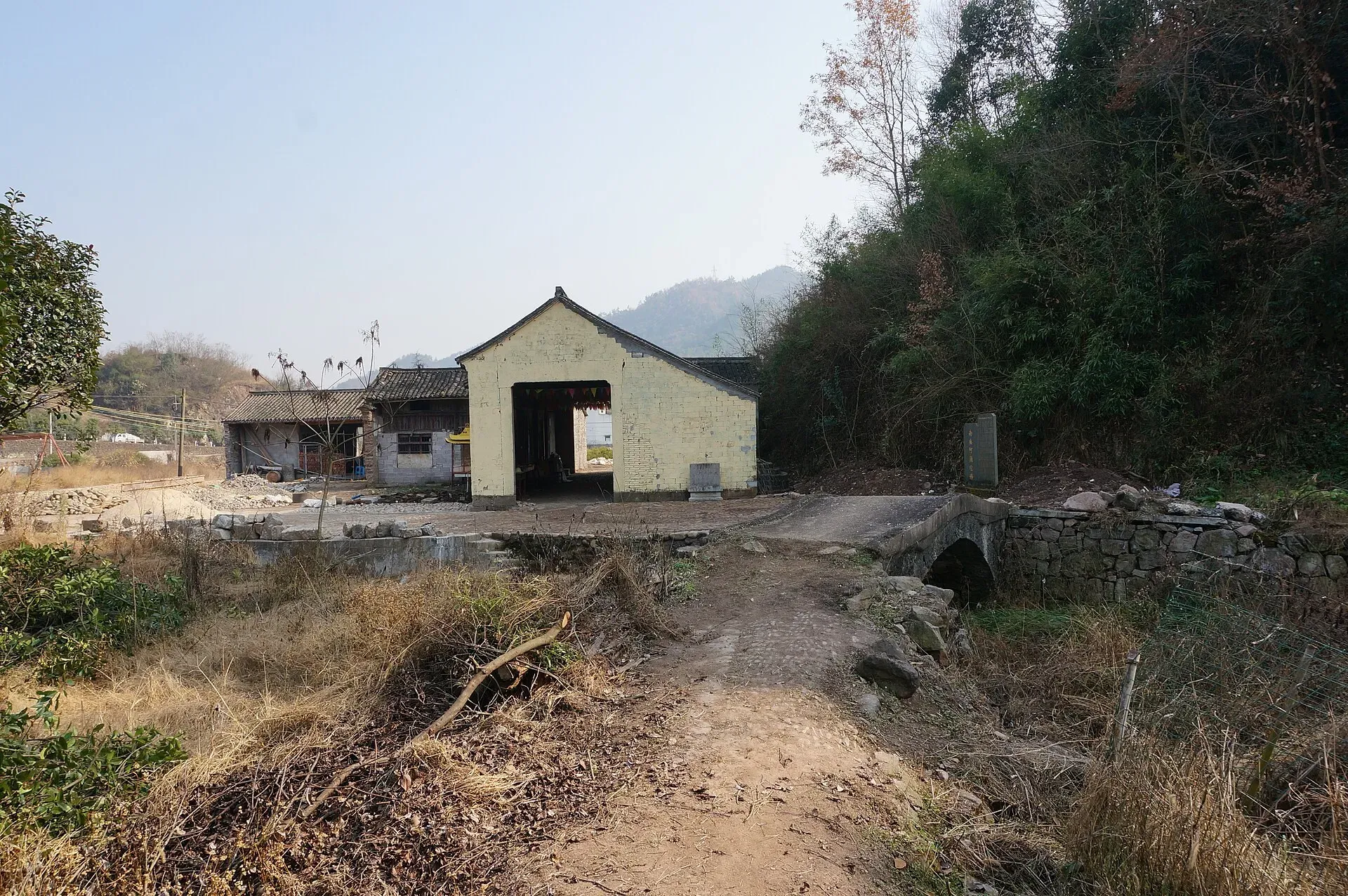
Most people climb Mount Tianmu from Banzhu Village, about twenty minutes’ drive south of Xinchang town by map estimate. Known as the “gateway to Tianmu,” it is on China’s list of traditional villages. According to People’s Daily, the old Tianmu road leads up from Banzhu over Huishu Ridge, from where you can see the main peak in the distance; the road is a protected heritage site of Zhejiang Province, and beside it stand the characters “天姥山” in the calligraphy of the scholar Ren Jiyu.
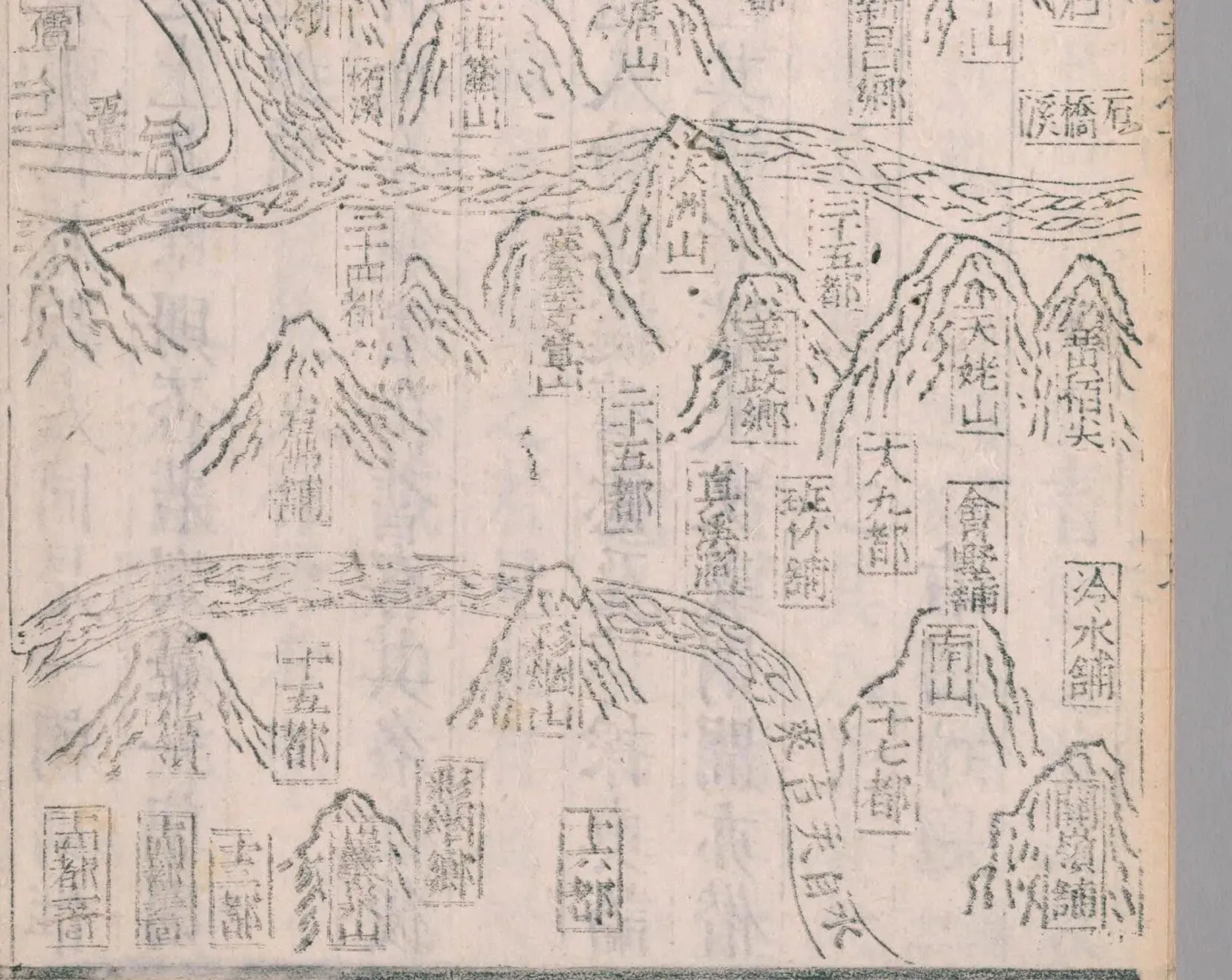
On the Ming dynasty map of Xinchang at the top of this page, the road is marked stage by stage — the post stations of Banzhu, Huishu, Lengshui and Guanling — beside a river labeled “water coming from Tiantai.” People’s Daily describes the old post roads and stone bridges of this area as remnants of the Tang Poetry Road.
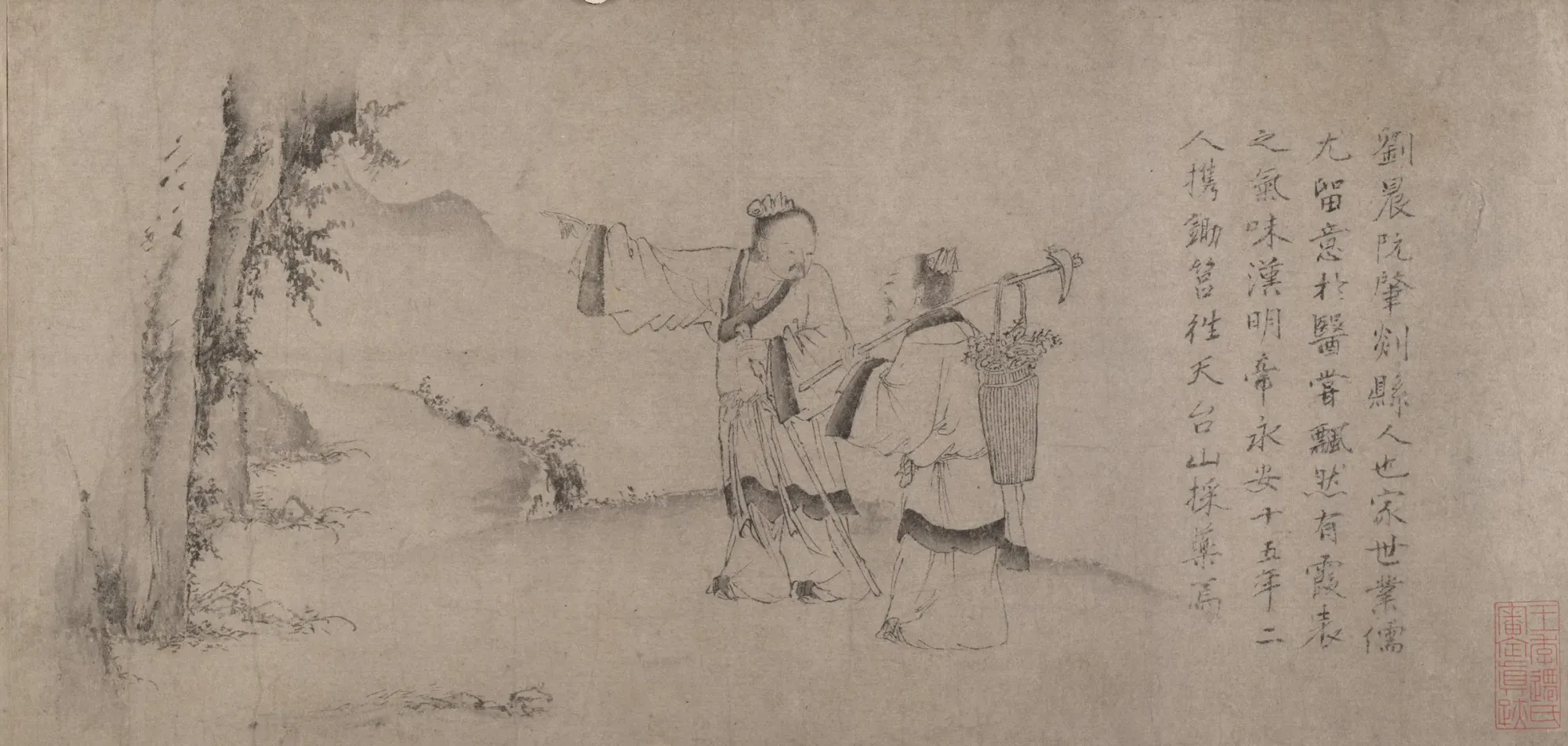
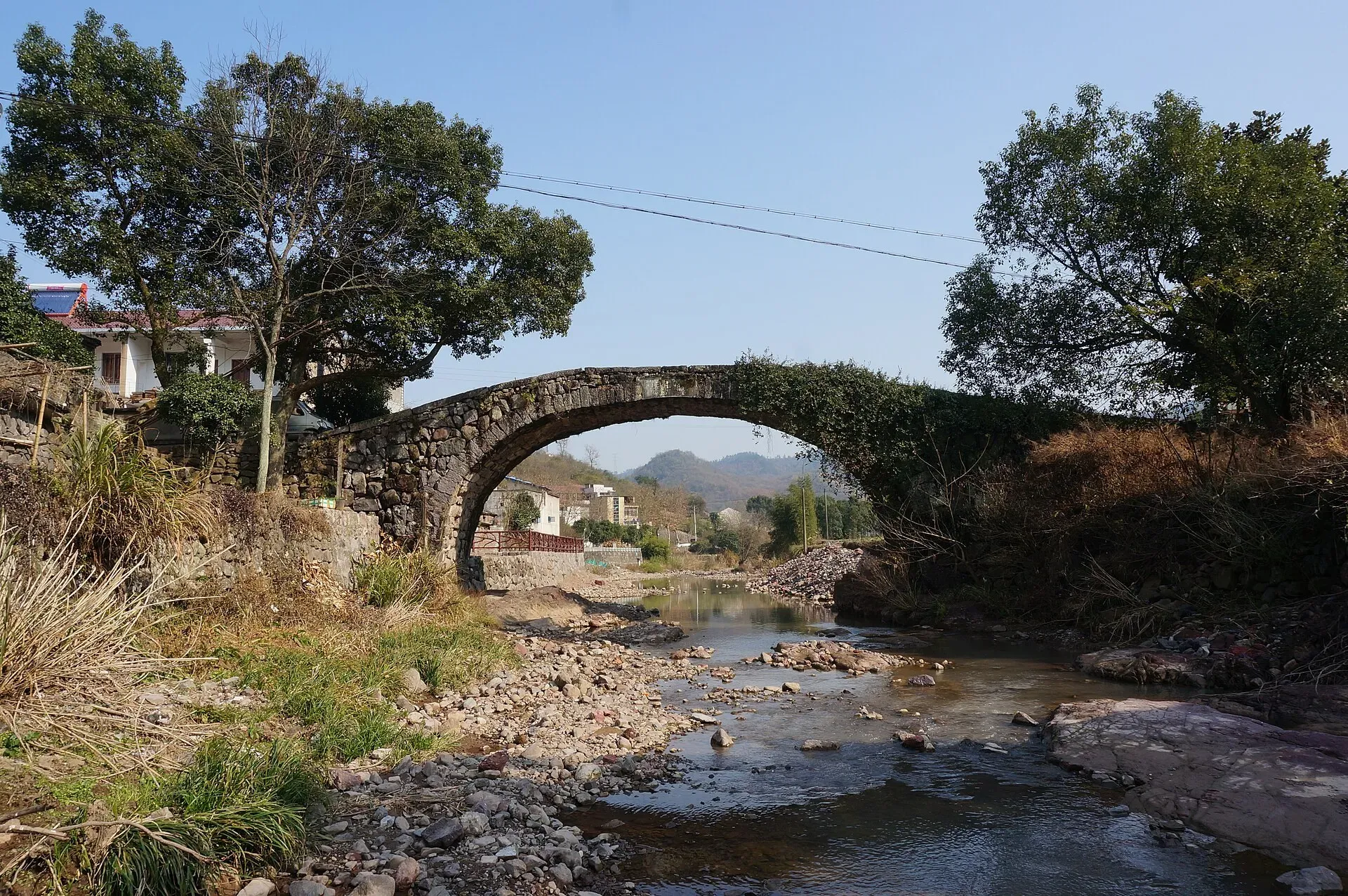
In Nanming, a subdistrict of Xinchang, the Yingxian Bridge — the “Bridge of Meeting the Immortals” — crosses the Chouchang stream. According to Hangzhou.com.cn, legend says that two thousand years ago two young men, Liu Chen and Ruan Zhao, went into the hills to gather herbs, met two immortal women and married them; when they went home after half a year, two hundred years had passed, and their descendants were in the seventh generation. Tang poets often wrote of Liu and Ruan.
Wozhou: the “eyes and brows” of the southeast
In his Record of the Chan Monastery on Mount Wozhou, Bai Juyi wrote: “Of the landscapes of the southeast, Yue is the head, Shan is the face, and Wozhou and Tianmu are the eyes and brows.” Wozhou lies a short way northeast of Mount Tianmu. The Eastern Jin monk Zhi Dun lived there as a recluse, and Tang poets who came this way often wrote of him. According to the Xinchang scholar Zhu Yuebing, a large reservoir was built in the Wozhou basin in the 1970s — the Changzhao Reservoir, also called Wozhou Lake.
From the Shan stream in Shengzhou to Wozhou and Tianmu in Xinchang, the next stop to the south is Mount Tiantai. For the Shan stream part of the story, see The Poets’ Stream; for the whole road, see the Tang Poetry Road of Eastern Zhejiang.
Questions & answers
Where is Mount Tianmu?
It is usually placed in southeast Xinchang, Zhejiang, around Ru’ao Town on the border with Tiantai; Banzhu Village at its foot is about twenty minutes’ drive from Xinchang town. Some scholars argue that the mountain Li Bai wrote about is really Mount Weiqiang in Xianju, Taizhou.
How high is Mount Tianmu?
The highest peak, Dajian, is about 900 meters; Xijian is about 892 and Boyunjian about 821. Li Bai’s “forty-eight thousand zhang” for neighboring Tiantai is poetic exaggeration.
Did Li Bai actually go to Mount Tianmu?
“Dreaming of Mount Tianmu” describes a dream. Professor Lin Jiali of Zhejiang University points to another poem, “Parting from Chu Yong on My Way to Shan,” with the line “I leave you for Tianmu,” as evidence that Li Bai did set out for the mountain; others see the Tianmu of the poem as half real mountain, half dream.
How do I get to Mount Tianmu?
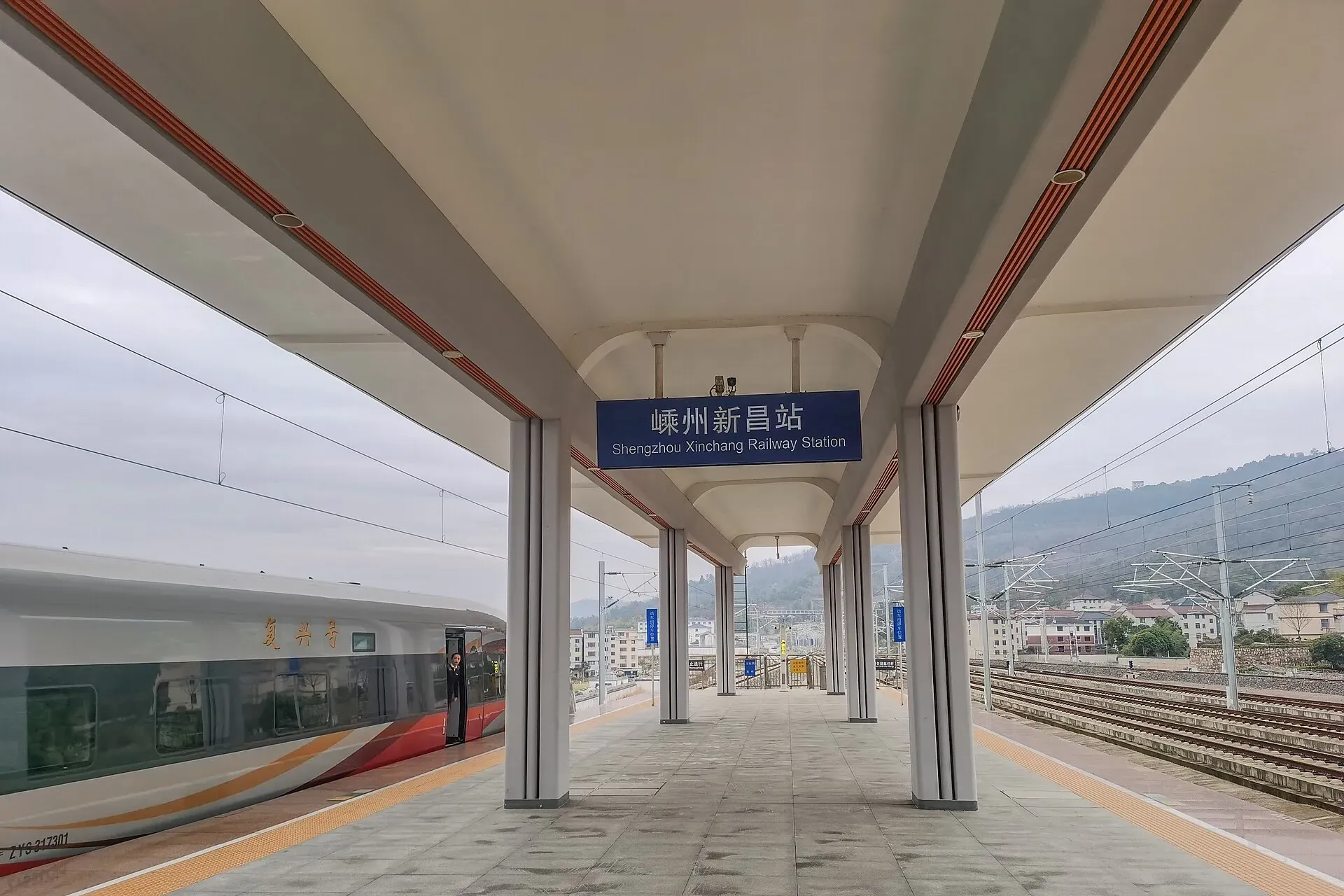
Take the train to Shengzhou-Xinchang station, then a taxi to Banzhu Village, about half an hour by map estimate, and walk up the old Tianmu road from the village. Train times change often, so check 12306 before you go.
Sources
- 诗句出自李白《梦游天姥吟留别》(《全唐诗》卷一百七十四)、《别储邕之剡中》,谢灵运《登临海峤初发彊中作与从弟惠连见羊何共和之》;白居易的话出自《沃洲山禅院记》。英文为本站翻译。车程是按 OpenStreetMap 路网估算的开车时间。
- 梦游天姥吟留别 · 维基文库
- 天姥山 · 维基百科
- 悠悠唐诗路 梦回天姥山 · 人民日报,2018 年 10 月 3 日
- 天姥之名归何处,引学术界热议 · 台州日报,2018 年 10 月 18 日(百度百科转载)
- 《梦游天姥吟留别》:李白为什么偏偏梦见天姥山? · 华西都市报(中新网转载),2023 年 11 月 20 日
- 杭台高铁穿梭的浙东唐诗之路 是一条怎样的路? · 杭州网,2022 年 1 月 7 日
- 剡溪——唐诗之路(竺岳兵)· 新昌浙东唐诗之路研究社
- 浙江省中国传统村落列表 · 维基百科
- 长诏水库 · 维基百科
- 新昌縣志(明,田琯等纂)· 日本国立国会图书馆藏,维基共享资源