Dafo Longjing Tea
Longjing tea does not only come from West Lake. Xinchang, which once exported gunpowder tea, brought in the Longjing pan-firing method in 1986 and registered the name Dafo Longjing in the early 1990s, after the county’s thousand-year-old Great Buddha Temple. Today it is one of China’s best-known Longjing-growing areas.
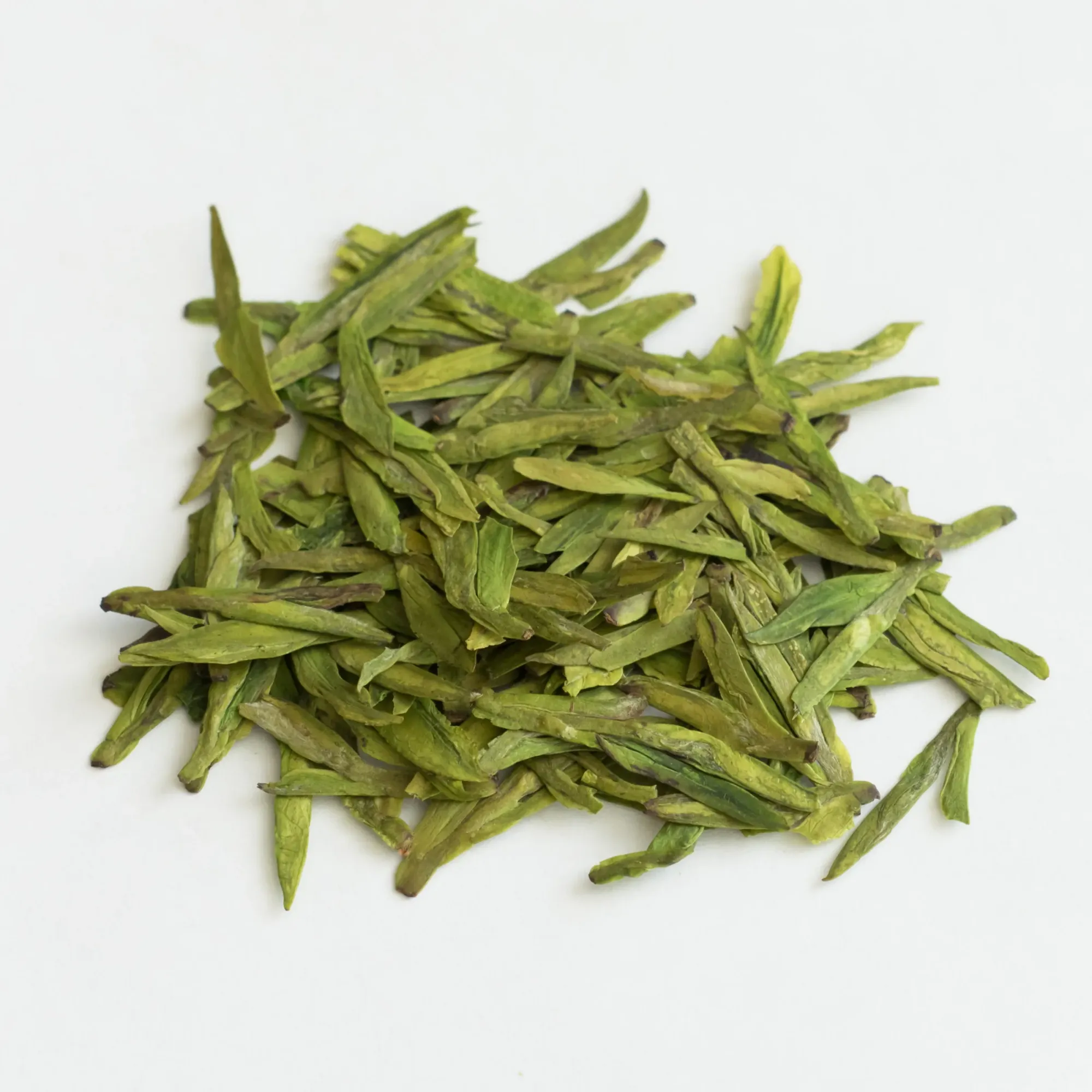
Mention Longjing and most people think of West Lake in Hangzhou. But Longjing has three legally protected growing areas, and Xinchang, in Shaoxing, is in one of them; a 2025 report in the national paper CPPCC Daily calls Xinchang the largest Longjing-growing county in China (neighboring Shengzhou says the same of itself). Its Longjing goes by one shared name: Dafo Longjing.
Longjing’s three areas
According to Wikipedia, Longjing takes its name from Longjing, “Dragon Well,” in Hangzhou’s West Lake district, and is a protected geographical name in China: only tea from three areas of Zhejiang — West Lake, Qiantang and Yuezhou — may be called Longjing, and Yuezhou means Shaoxing. Xinchang, Shengzhou and Zhuji all lie within the protected area. For Shengzhou’s teas, see Shengzhou tea.
From gunpowder to Longjing
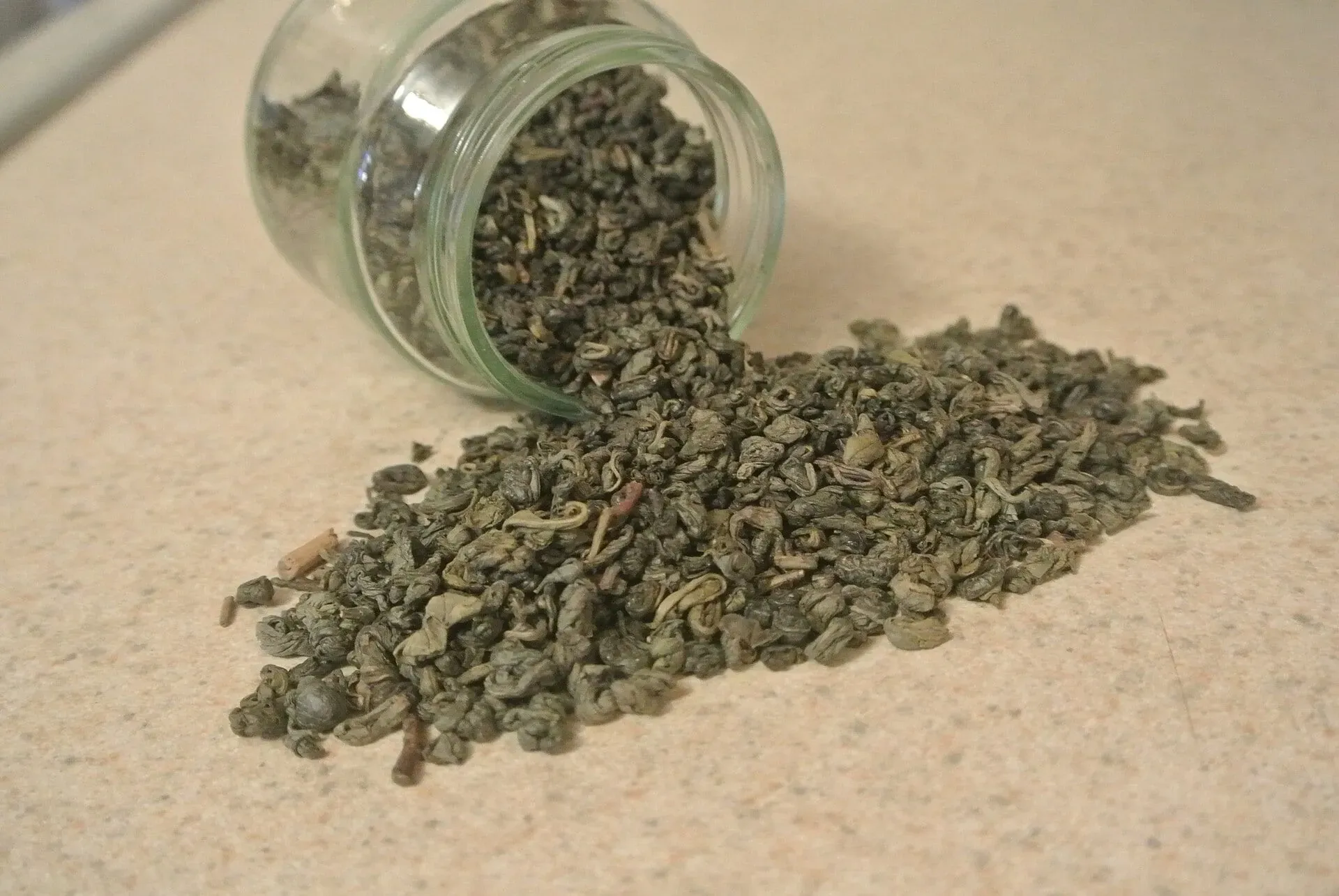
Xinchang has grown tea for a very long time — since the Eastern Han dynasty, according to the manager of its tea market. For decades the county exported gunpowder, a green tea rolled into small pellets, the kind brewed for Moroccan mint tea; see Shengzhou tea. According to China News Service in 2017, when the state stopped buying up all tea after the economic reforms, Xinchang’s gunpowder trade stalled. In 1981 the county began developing fine teas of its own, and in 1986 it brought in the pan-firing method of Longjing, with successful test sales.
In the early 1990s, before most places had begun to think about brands, Xinchang registered the name Dafo Longjing. At the end of 1998 it issued a provincial standard for the tea, setting out how it is grown, made and processed, along with rules on how the name, the packaging and the grades may be used.
Why it is called Dafo
Dafo, “Great Buddha,” refers to Xinchang’s Great Buddha Temple. According to China News Service in 2021, the county built its shared tea brand on the name of that thousand-year-old temple, and that set it on the road as a tea brand. For the temple and its stone Buddha, see the Great Buddha of Xinchang.
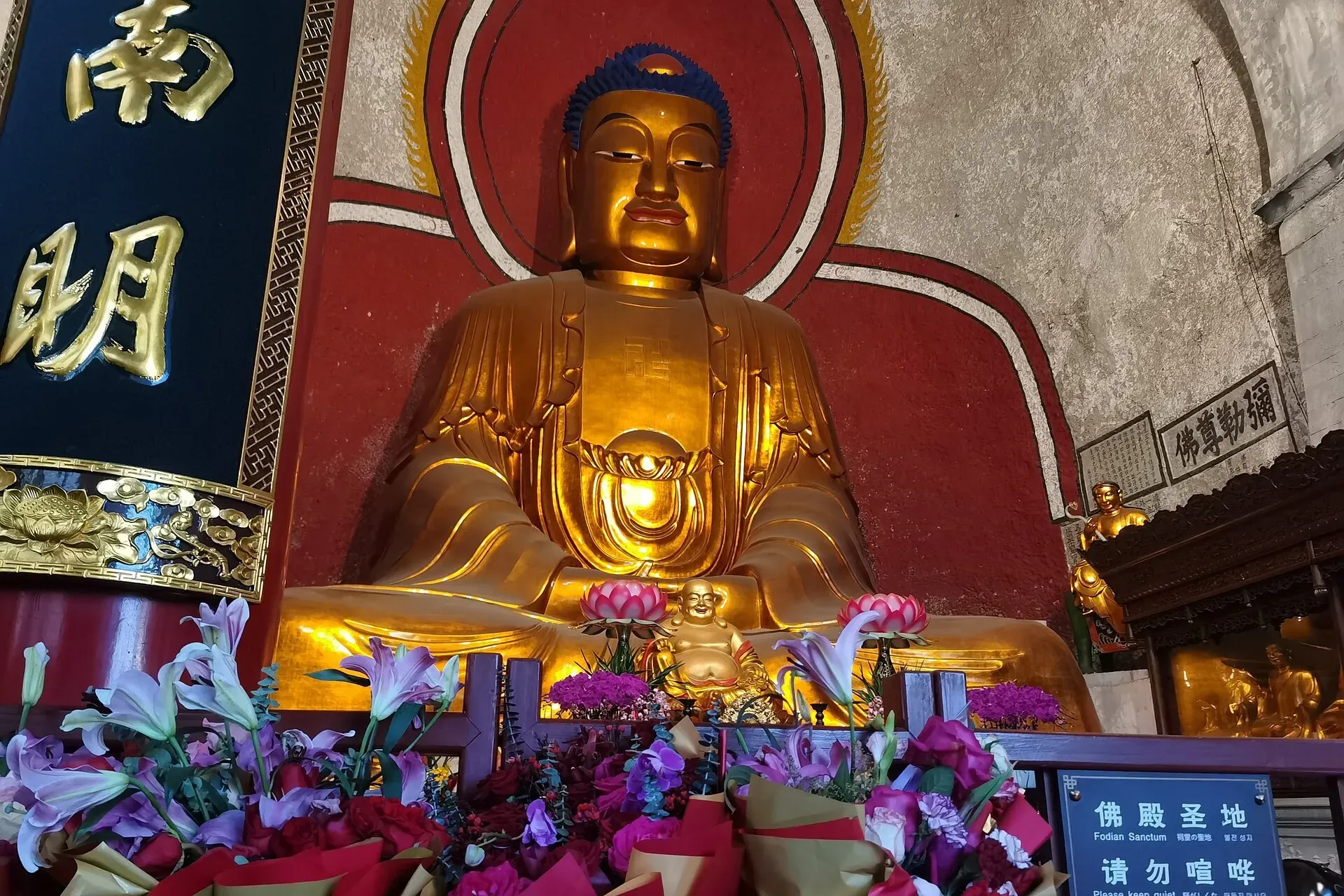
Xinchang calls itself China’s home of fine tea, and also of tea culture and of Chan (Zen) tea culture. The county holds a Dafo Longjing tea festival every year; the 2021 festival was the fifteenth.
The industry today
Chao News reported that in 2024 Xinchang’s tea industry as a whole, from the gardens to the finished goods, passed 10 billion yuan in output for the first time. According to the CPPCC Daily in 2025, the county now processes fine Longjing on an industrial scale for China’s new tea-drink chains, supplying them with more than 3,000 tonnes of Longjing a year, and has made Dafo Longjing craft beer, tea snacks and tea drinks. As early as 2017, China News Service reported that 180,000 of Xinchang’s 430,000 people made their living from tea.
The brand has grown in value too. In the 2021 assessment led by Zhejiang University’s China Agricultural Brand Research Center, Dafo Longjing was valued at 4.774 billion yuan, seventh among China’s regional tea brands. According to the business site Caiwen, the 2026 report on regional green-tea brands valued it at 6.475 billion yuan, fourth among green teas, and noted that it has been among the national top ten tea brands for seventeen years running. For comparison, West Lake Longjing, first in the previous year’s (2025) assessment, was valued at 8.639 billion yuan.
Spring tea and the three labels
The new tea is picked in spring; in 2025 the ceremony opening the Dafo Longjing harvest was held on March 8 in Jinshan Village, Dongming Township. China News Service reported in 2017 that Dafo Longjing grows in hill gardens more than 400 meters above sea level.
To fight fakes, Xinchang introduced three labels for Dafo Longjing in 2025: an origin label, certifying that the tea was grown in Xinchang; an ecological label, for tea from the county’s certified ecological, digitally monitored gardens; and a premium label, for the tea from those gardens that meets the premium grade. Each builds on the one before, and producers apply for them voluntarily.
Tea in Xinchang
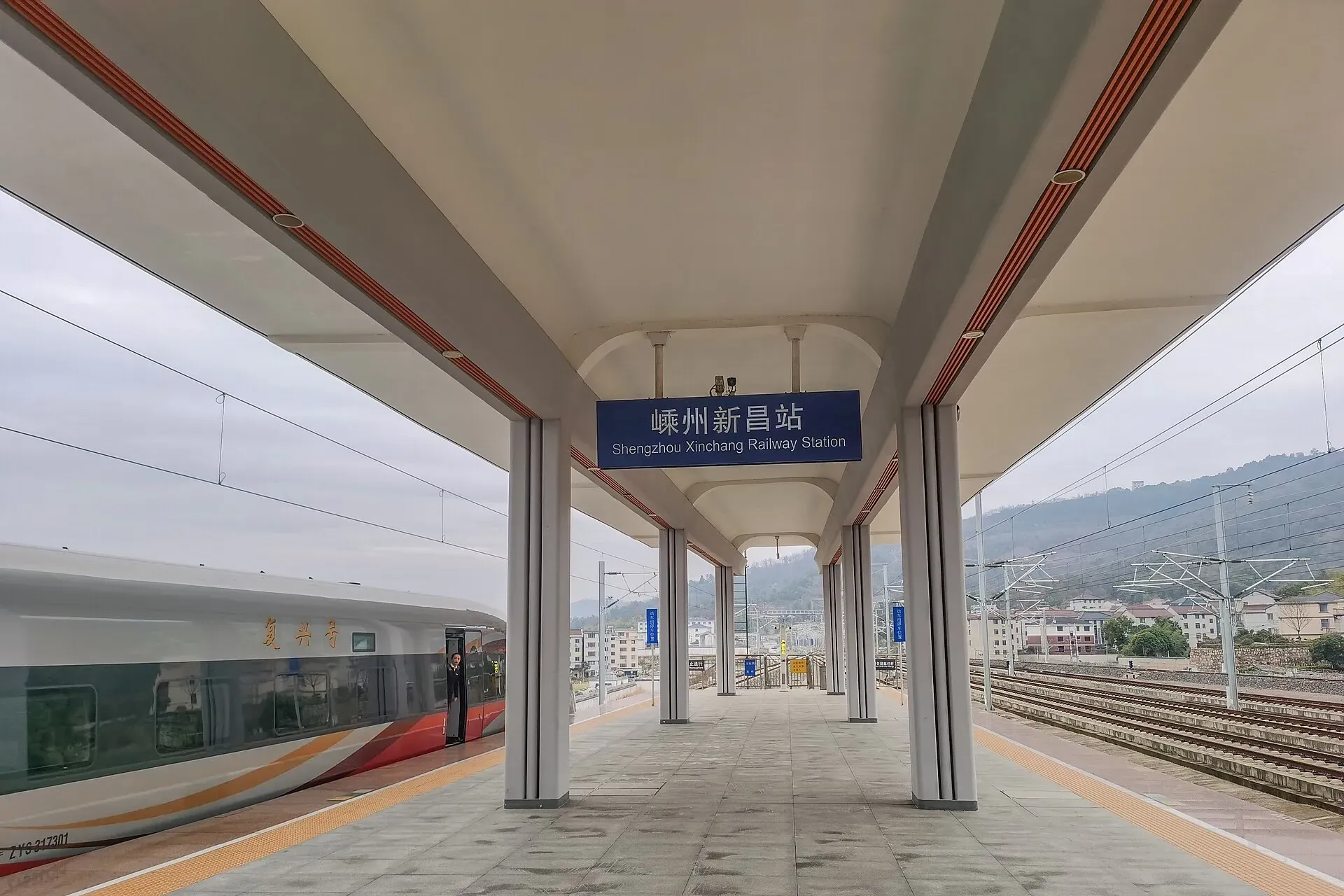
Xinchang has its own tea market, the China Tea Market, which China News Service called the biggest trading center for Longjing in the country; on weekend mornings, it reported, the trading hall is packed and loud with haggling. For getting to Xinchang, see Getting to Xinchang; on the same trip you can visit the Great Buddha of Xinchang and Mount Tianmu.
Questions & answers
Is Dafo Longjing real Longjing?
Yes. Longjing is a protected geographical name in China, and only tea from three areas of Zhejiang — West Lake, Qiantang and Yuezhou — may use it. Xinchang is in Shaoxing, in the Yuezhou area, and Dafo Longjing is the brand name its Longjing growers share.
How is it different from West Lake Longjing?
Both are Longjing, from different places. West Lake Longjing comes from around West Lake in Hangzhou; Dafo Longjing comes from Xinchang, much of it, China News Service reported in 2017, from tea gardens more than 400 meters up in the hills. West Lake Longjing is China’s most valuable regional tea brand, valued at 8.639 billion yuan in the 2025 assessment.
Why is it called Dafo, “Great Buddha”?
Dafo refers to Xinchang’s Great Buddha Temple. According to China News Service in 2021, the county built its tea brand on the name of this thousand-year-old temple. See the Great Buddha of Xinchang.
When does the new tea come in?
In spring. In 2025 the ceremony opening the Dafo Longjing spring harvest was held on March 8.
How can I tell the genuine article?
Since 2025 Xinchang has used three traceable labels for Dafo Longjing — origin, ecological and premium, each a step above the last. When you buy, look for them on the pack.
Sources
- 英文为本站翻译。
- 三品浙江新昌“禅茶”:沐浴茶韵芬芳 探秘兴农智慧 · 中国新闻网,2017 年 4 月 15 日
- 中国茶叶区域公用品牌价值十强揭晓 大佛龙井达47.74亿元 · 中国新闻网,2021 年 4 月 12 日
- “身份认证”护航区域公用品牌 新昌大佛龙井“三大标签”正式启用 · 潮新闻,2025 年 2 月 20 日
- 大佛龙井新茶开采 · 潮新闻,2025 年 3 月 10 日
- 智库观点 | 2025中国茶叶区域公用品牌价值评估报告 · 潮新闻,2025 年 5 月 27 日
- 看新昌茶如何让年轻人主动“干杯” · 人民政协网,2025 年 12 月 10 日
- 全国第四!绍兴新昌大佛龙井品牌价值高达64.75亿元 · 财闻网,2026 年 7 月 22 日
- 龙井茶 · 维基百科