The Great Buddha of Xinchang
In a cliff on Mount Shicheng in Xinchang sits a stone Maitreya Buddha 13.2 meters tall. Three monks worked on it over some thirty years until it was finished in 516, two centuries before the Leshan Giant Buddha. Liu Xie, author of The Literary Mind and the Carving of Dragons, wrote its inscription, and the Thousand Buddha Cliff next door holds more than a thousand small figures.
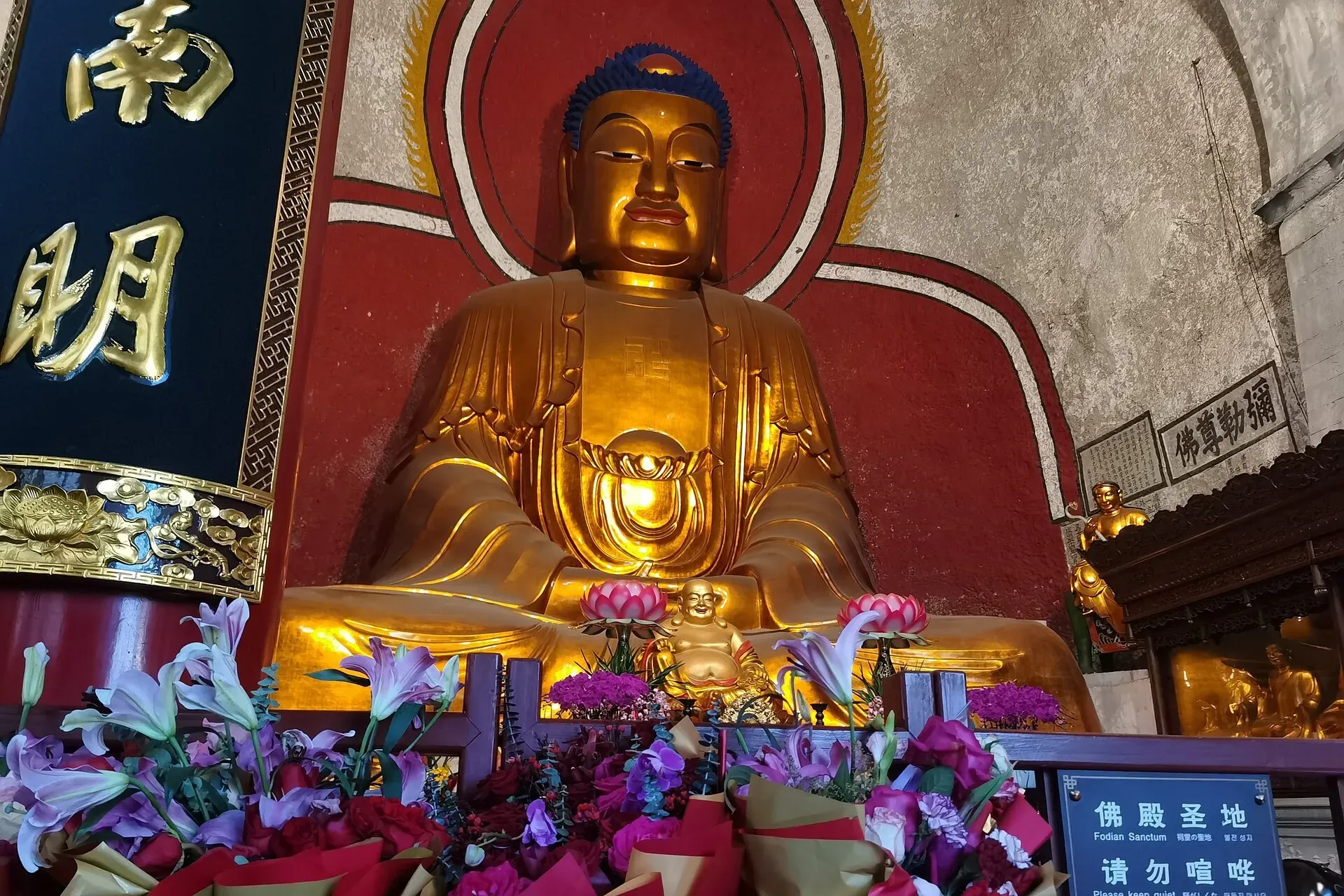
On Mount Shicheng, on the edge of Xinchang town, a cave has been cut into a cliff, and in the cave sits a Maitreya Buddha. This is the Great Buddha Temple’s stone Maitreya: the seated figure is 13.2 meters tall and 10.6 meters from knee to knee, its ears are 2.7 meters long, and more than ten people could stand on its open palms. Finished in 516, more than two hundred years before the Leshan Giant Buddha in Sichuan, it is known as the Great Buddha of the South.
Three monks, some thirty years
According to the Biographies of Eminent Monks, in the Southern Qi a monk of Shan county named Senghu lived at Yinyue Temple on Mount Shicheng. North of the temple was a sheer rock face where he often saw light and heard music, and he vowed to carve a stone Maitreya ten zhang tall. By the Jianwu years (494–498) only the outline of the face had been cut when Senghu fell ill. Before he died he said, “I never expected what I began to be finished in a single lifetime.”
Sengshu took up the work but did not have the means to finish it. In 507 Lu Xian, magistrate of Shifeng, spent a night by the Shan stream and dreamed of three monks who asked him to tell Xiao Wei, Prince of Jian’an, that the prince would recover from his illness if Senghu’s statue in Shan county were completed. The prince later petitioned Emperor Wu of Liang, who sent the eminent monk Sengyou to take charge. Sengyou cut the niche his predecessors had made too shallow five zhang deeper and reshaped the topknot; the work began in the spring of 513 and the statue was finished in the spring of 516.
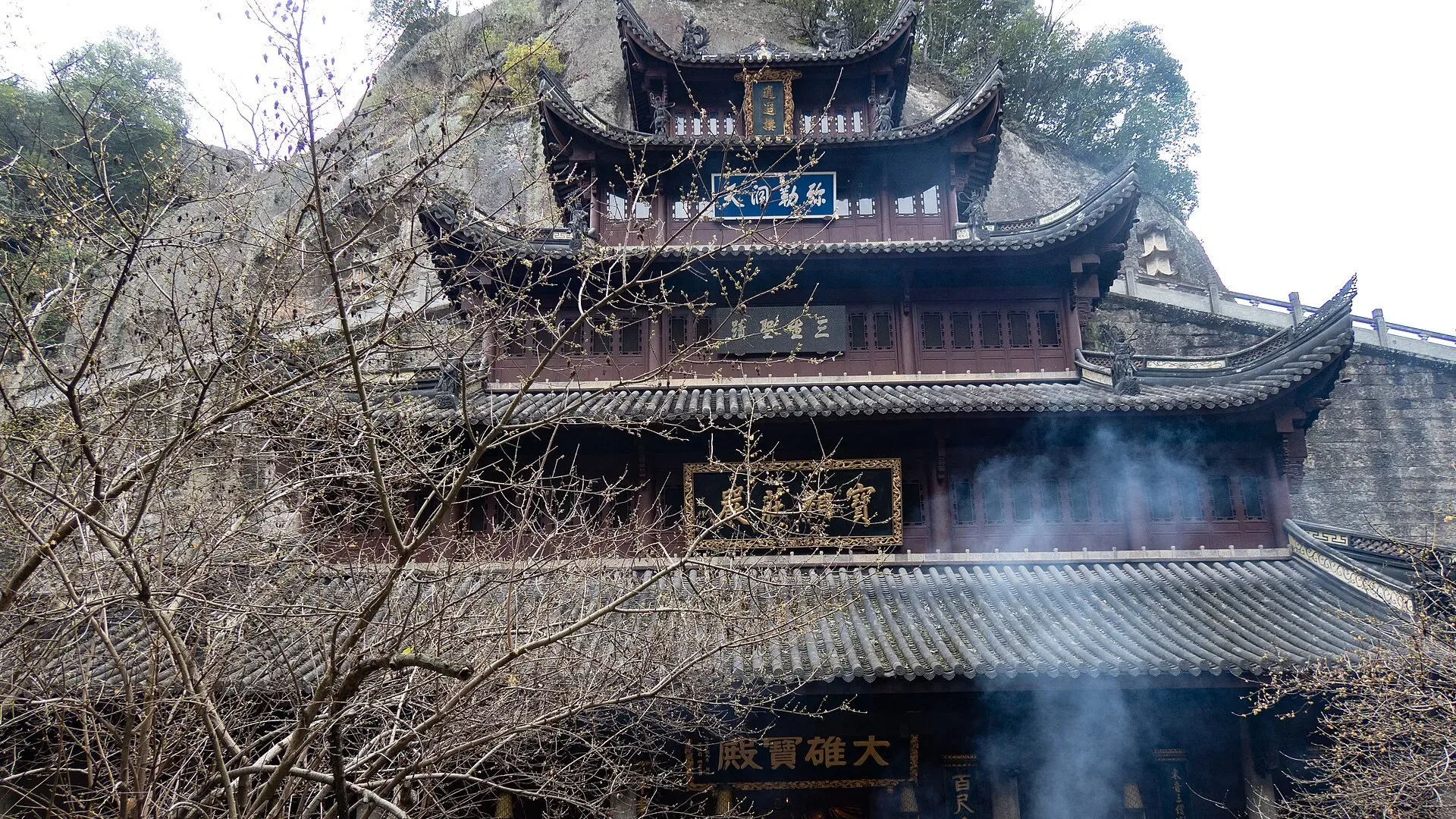
Because it took three monks, the Buddha is also called the Sacred Work of Three Lives — words that still hang on a board on the great hall built over the cave.
Liu Xie’s inscription
When the statue was done, Liu Xie wrote the Stele of the Stone Statue of Shicheng Temple in Shan, Made by the Prince of Jian’an of Liang, recording how it was carved. Liu Xie, the author of The Literary Mind and the Carving of Dragons, had spent years as a young man at Dinglin Temple in Jiankang as a follower of Sengyou. The inscription describes workmen building plank walkways on the cliff, “the ring of hammer and chisel above the rosy clouds, chips of stone falling beyond the sky,” and calls the Buddha “the wonder of its age, the great work of all time.” According to the local paper Jinri Xinchang, it is the only temple inscription by Liu Xie that survives complete, and the earliest written record of the Xinchang Buddha.
Older than the Buddha
The temple is older than its Buddha. Around 345, in the early Yonghe years of the Eastern Jin, the monk Tanguang came to Mount Shicheng and lived in a stone chamber on its south side that he named Yinyue — the beginning of the Great Buddha Temple. At about the same time the eminent monk Yu Falan founded Yuanhua Temple here, and Zhi Dun, who returned to Mount Shicheng late in life, died here. According to the Biographies of Eminent Monks, monks such as Zhu Tanyou later came here to meditate.
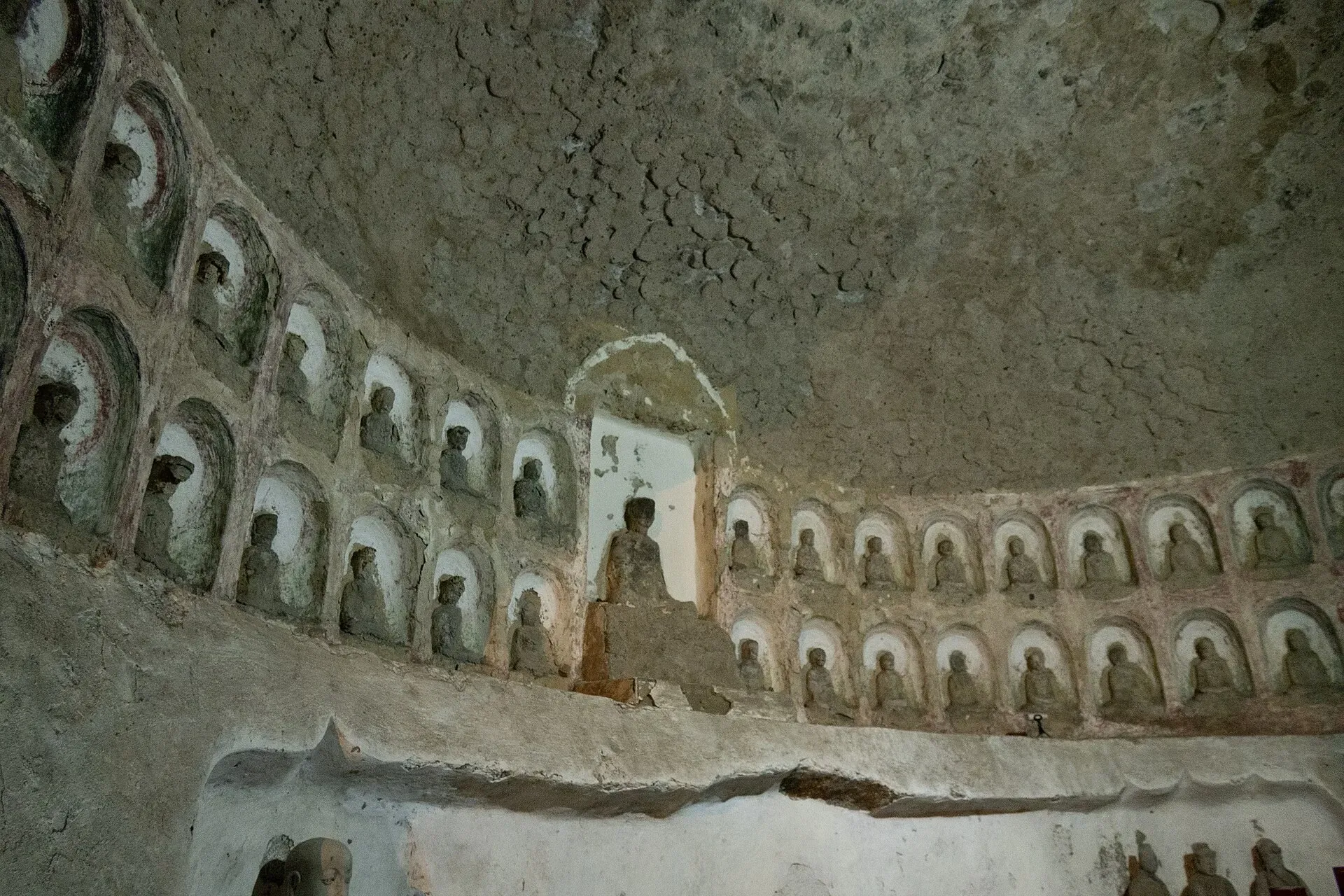
About 300 meters northwest of the Great Buddha Temple is the Thousand Buddha Cloister, known as the Thousand Buddha Cliff. Its cave holds 1,075 small Buddhas, the largest over a meter tall and the smallest only a few inches. According to Jinri Xinchang, it grew out of Yu Falan’s Yuanhua Temple, its carving is older than the Great Buddha, and it is the earliest cave sculpture yet found in southern China.
Shicheng Temple has one more place in Buddhist history: in 597 Zhiyi, founder of the Tiantai school, died here, and his disciples carried him back to Tiantai for burial — see Guoqing Temple.
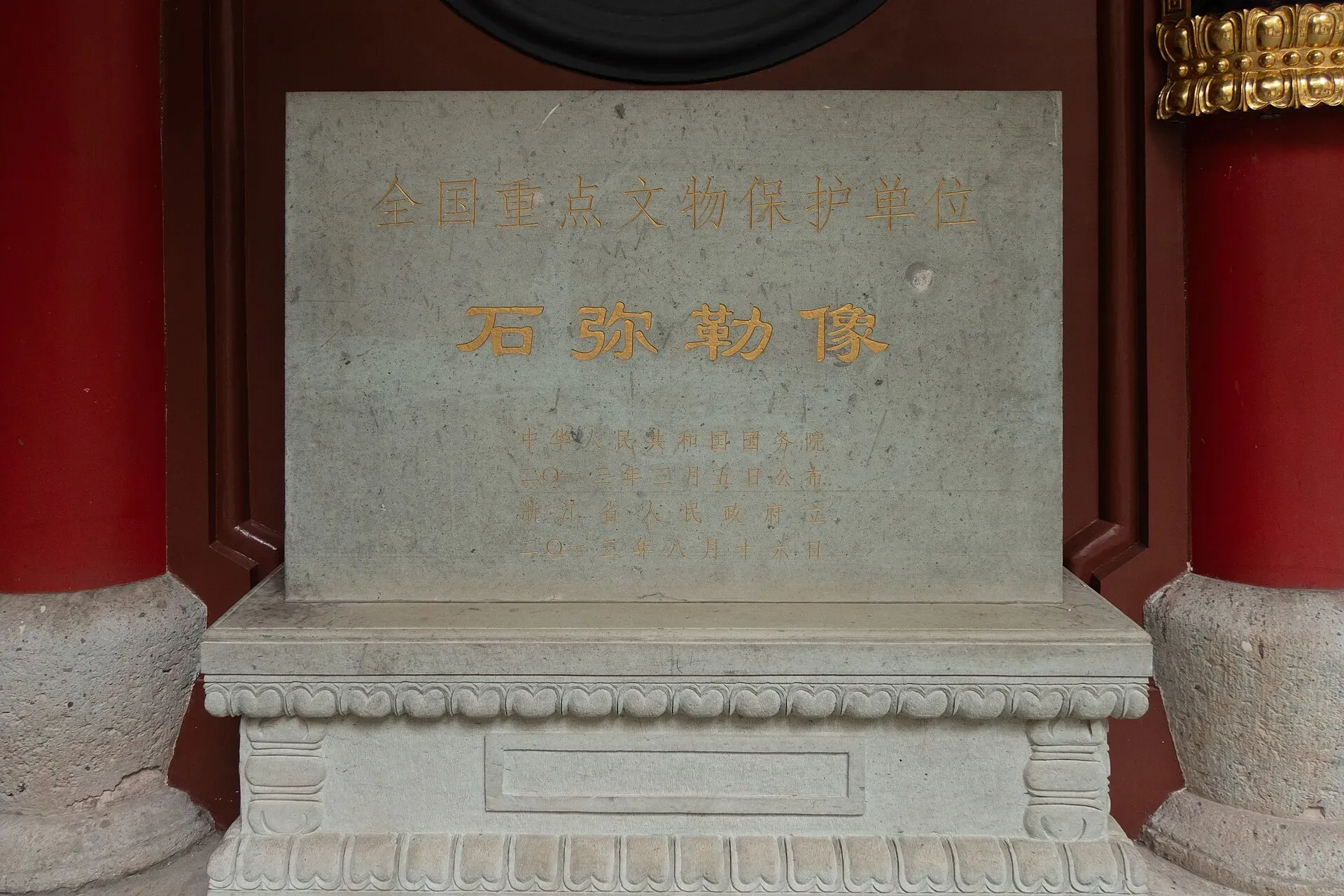
In 2013 the stone Maitreya was listed as a major national heritage site; the listing is now called the Stone Maitreya of the Great Buddha Temple and the Thousand Buddha Cliff Sculptures.
Visiting the temple
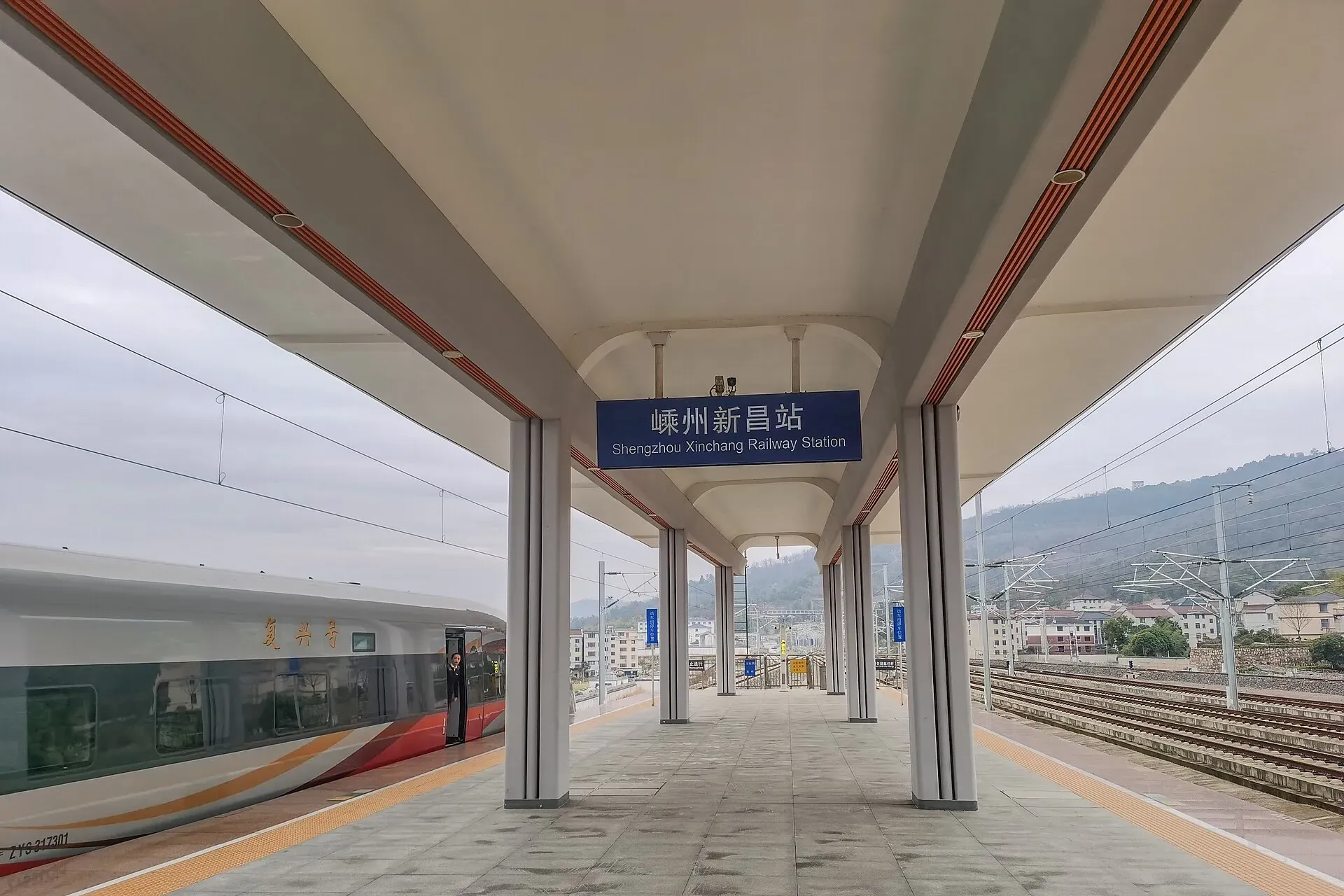
The Great Buddha Temple is on the edge of Xinchang town. According to Hangzhou.com.cn, it is about 8.8 km by taxi from Shengzhou-Xinchang station, or more than an hour by bus. Inside the gate is a release pond, where fish are set free as an act of mercy; on the rock face south of it, the words “Namo Amitabha” are in the hand of the monk Hongyi. The scenic area also has a Reclining Buddha Hall and a petrified wood garden. Tickets and opening hours change, so check with the scenic area before you go.
Banzhu Village, at the foot of Mount Tianmu, is twenty-odd minutes’ drive south of the temple, so the two fit into one day — see Mount Tianmu.
Questions & answers
How big is the Great Buddha of Xinchang?
The seated figure is 13.2 meters tall, 10.6 meters from knee to knee, with ears 2.7 meters long; with its base it stands 16.3 meters high, and more than ten people could stand on its open palms.
When was the Great Buddha carved?
The monk Senghu began it in the Southern Qi, Sengshu carried on, and Sengyou of the Liang finished it — work began in the spring of 513 and ended in the spring of 516, some thirty years after the first cut.
Why is it called the Sacred Work of Three Lives?
Because it took three monks — Senghu, Sengshu and Sengyou — to finish it. As Senghu said on his deathbed, he had never expected to complete the work in one lifetime.
Which is older, the Xinchang Buddha or the Leshan Giant Buddha?
Xinchang’s. It was finished in 516, more than two hundred years before the Leshan Giant Buddha in Sichuan.
How do I get to the Great Buddha Temple?
Take the train to Shengzhou-Xinchang station; the temple is about 8.8 km away by taxi, or over an hour by bus. Tickets and opening hours change, so check with the scenic area before you go.
Sources
- 车程是按 OpenStreetMap 路网估算的开车时间。碑文引自刘勰《梁建安王造剡山石城寺石像碑》(收在《全梁文》里);僧护等人的故事据《高僧传》。英文为本站翻译。
- 新昌大佛寺石雕弥勒像及刘勰碑记 · 今日新昌,2021 年 9 月 27 日
- 三生大佛如如不动 般若心灯了了常明——访新昌大佛寺方丈传实法师 · 中国宗教学术网,2015 年 10 月 22 日
- 大佛寺 (新昌) · 维基百科
- 赤城志 (四庫全書本)/卷35(智顗“示灭石城”)· 维基文库
- 浙江省境内的全国重点文物保护单位列表 · 维基百科
- 嵊州、新昌、天台通高铁啦!杭绍台铁路昨试运行 · 杭州网,2021 年 11 月 27 日