The Si Houses at Sizhai
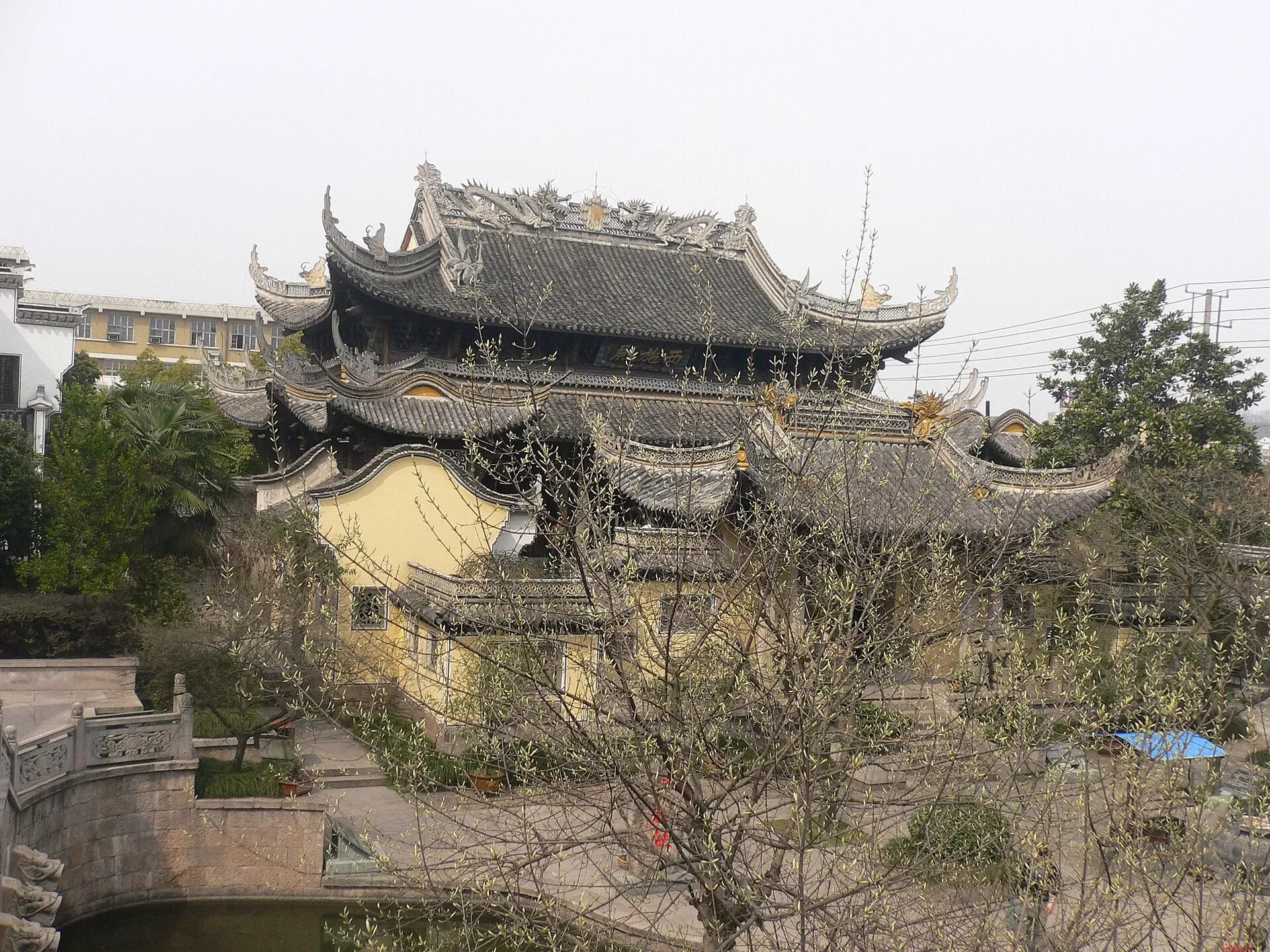
The House of a Thousand Pillars (Sisheng House) is a Qing mansion at Sizhai village in Zhuji, finished in 1798 by the merchant Si Yuanru on 6,850 square meters. With the Faxiang House and the Huaguogong Villa it became a national heritage site in 2001. Behind it is the family’s Bifeng Study; the village’s Simin Primary School also grew out of a family school.
The House of a Thousand Pillars (Qianzhuwu, also translated as the Thousand-Pillar House) is a Qing-dynasty mansion in Sizhai, a village in Dongbaihu Town in Zhuji, Zhejiang. Its formal name is the Sisheng House. Si Yuanru, a rich local merchant, finished it in 1798, in the Jiaqing reign, on a plot of 6,850 square meters, and its pillars, more than a thousand of them, gave it its popular name. In June 2001 it was listed, with the Faxiang House and the Huaguogong Villa in the same village, as a national Major Historical and Cultural Site in the fifth batch, under the name Ancient Residences of Si.
It is not an empty monument: when a reporter from China Reading Weekly, a Guangming Daily paper, came in 2007, 67 households were living in it. On the slope behind it stands the family’s old schoolhouse, the Bifeng Study, and the village primary school, which also grew out of a family school, carries the name of a shrine over its gate. For the rest of Zhuji, see Places to Visit.
The Si family and their village
Si is a rare surname. According to a 2019 article from the Zhuji government’s news office, more than 15,000 people in Zhuji bear it, most of them at Sizhai in Dongbaihu Town, and in 2022 Zhejiang Daily called Sizhai the largest settlement of the surname in the country.
The name comes with a story about filial sons. The same article, citing the Dongyang gazetteer, tells it this way: in the year 238, in the kingdom of Wu, an official named Shi Wei was condemned to death, and his two sons each begged to be punished in his place. The ruler, Sun Quan, said of the younger, “This is a filial son” (the word for “this” is si), pardoned the father and gave the family the surname Si. The family later settled at Si village in Dongyang. Tradition has it that in the Tang dynasty one of its descendants, a scholar named Si Desui, came this way on his travels, married into a local family named Song and stayed, and that the place took its name, “the Si home,” from his line. All of this is family tradition.
Sizhai was once called Shanglin, and the stream that runs through the village is still the Shanglin stream. According to the same article, the place became Sizhai Township in 1948 and was merged with Chencai Town in 2005 to form today’s Dongbaihu Town.
The House of a Thousand Pillars
Its builder, Si Yuanru (1753–1832), belonged to the thirty-second generation of the clan. According to a paper published in 2017 by scholars from the University of Kitakyushu, Zhejiang Agriculture and Forestry University and another college (the 2017 paper, below), he traded in forest products, became the richest man in Zhuji in his day and later held a minor official post. China Reading Weekly reported in 2007 that the house was finished in 1798, with five gateways, and that it is 108.56 meters wide from east to west and 63.10 meters deep. The Zhejiang Cultural Heritage Bureau’s account of 2006 gives the same year, the third of the Jiaqing reign, the same two measurements and an area of 6,850 square meters.
The plan has five parallel axes. According to Wikipedia, the central one has three ranges — the gatehouse, the main hall and the rear building — and the two on either side each carry two courtyard houses, one behind the other, linked by long galleries. The 2017 paper counts eight courtyard houses, ten large courtyards and thirty-six small ones; Si Yuanru’s four sons and their descendants lived in them. With galleries everywhere, you can walk through the house, as the saying goes, “without seeing the sun on a fine day or wetting your shoes in the rain.”
How many pillars there are depends on who is counting. China Reading Weekly and Wikipedia give 121 rooms and 1,322 pillars; a report carried in 2013 by the travel site Guojia Lüyou Dili (National Tourism Geography) gives 118 rooms, 32 lanes and more than 1,200 pillars, and the Zhuji news office also wrote “more than 1,200” in 2019. Either way there are over a thousand.
The gate inscription and the Hundred Horses
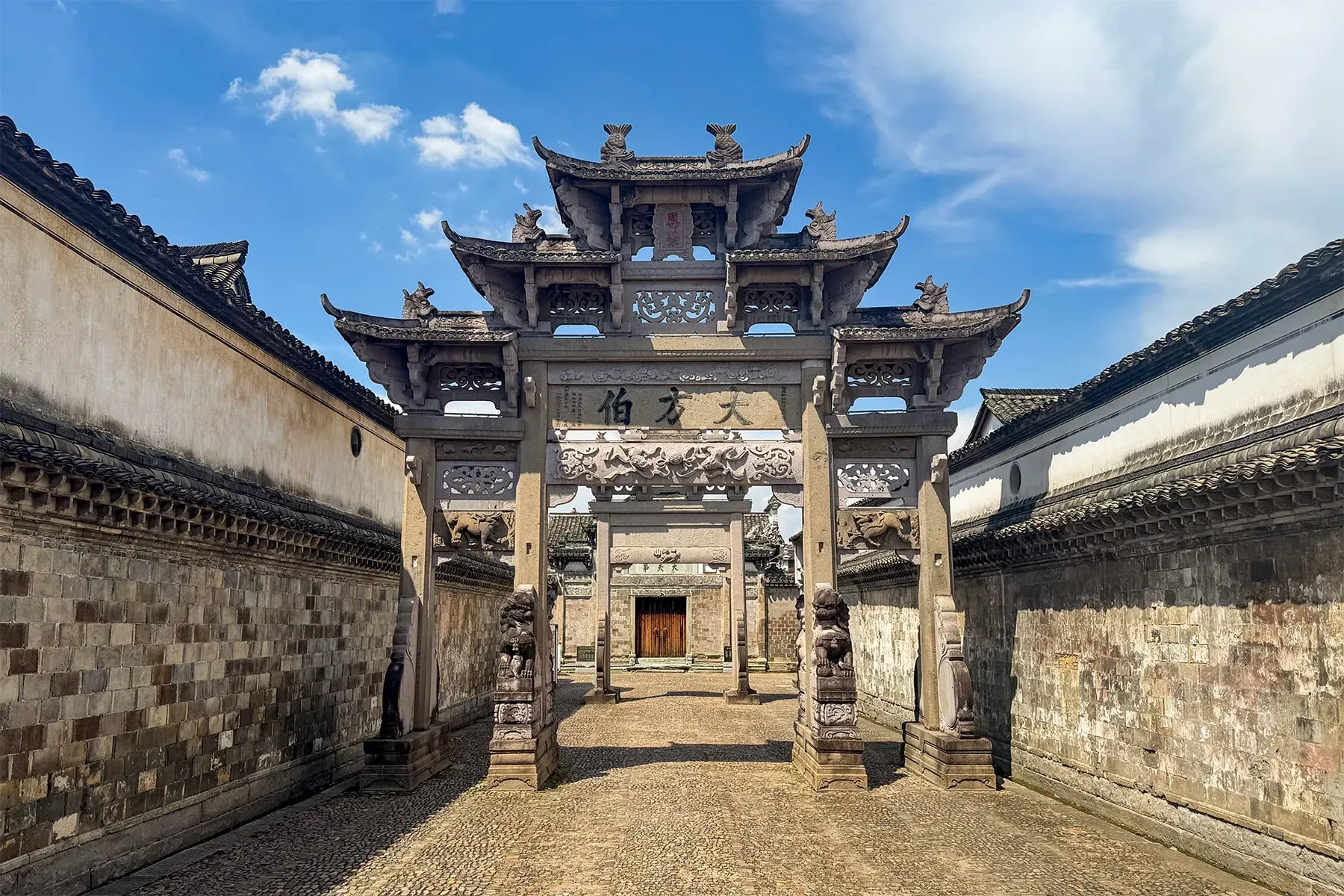
Over the main gate, on a bluestone lintel, are four characters, yu si wei sheng, “here it flourishes,” from which the Sisheng House takes its name. According to the Zhuji news office in 2019 they are in nine-fold seal script, after the hand of the Song calligrapher Mi Fu, with seal characters, deer, pines, plum blossom, figures and flowers carved on either side. China Reading Weekly traces the phrase to the Analects; in that passage Confucius remarks how hard talent is to find. On the gate the word si, “this” or “here,” is also the family’s name, a double meaning that Wikipedia notes as well.
Inside, above the screen wall of the main hall, is the Hundred Horses. According to Wikipedia it is a brick carving made of 21 square bricks, 7.04 meters long, with 53 horses, and no two of the horses or the men are posed alike (the provincial heritage bureau also calls it a brick carving; China Reading Weekly calls it a stone carving). The 2017 paper also describes six lattice doors in the gatehouse carved with stories of the Twenty-four Filial Exemplars, and a board in the main hall that reads “five generations under one roof.”
The Faxiang House and the Huaguogong Villa
The other two houses on the national list are in the same village. The Faxiang House, popularly the “lower new house,” stands about 400 meters west of the House of a Thousand Pillars, going by the coordinates given on Wikipedia, and was built by Si Yuanru’s elder brother, Si Yuanren. The Zhejiang Cultural Heritage Bureau’s account of 2006 dates it to 1802, the seventh year of the Jiaqing reign; Wikipedia says only the Jiaqing reign, and the 2017 paper says no record of the exact year survives. It is 59.4 meters wide and 54.8 meters deep, on 3,255 square meters, and the words over its gate, chang fa qi xiang, “long may its blessings unfold,” come from the hymn “Changfa” in the Book of Songs. The authors of the paper counted 37 different patterns on its doors and windows alone, and 18 kinds of animal-head door knockers.
The Huaguogong Villa lies to the southwest, about 2 km by road from the House of a Thousand Pillars. Built in 1840, the gengzi year of the Daoguang reign, it covers 2,806 square meters, with a school in front and a family shrine behind. Citing its inscription, the 2017 paper says that Si Huaguo, a lover of books who honored scholars, wished to found a school for his descendants but grew too old to do it, and that his son and grandson built it. The name over the gate was written by the Qing classicist Yu Yue. In front is a half-moon pond; the hill behind is Xiangshan, Elephant Hill, and so the school was known as the Xiangshan school.
The paper also records two stone wells under the rear eaves of the middle hall, one deep and one shallow, known as the yin and yang wells, and beside them a small bluestone pavilion made for burning paper that had writing on it.
From the Bifeng Study to Simin Primary School
The Bifeng Study is behind the House of a Thousand Pillars. As China Reading Weekly’s reporter described it in 2007, a pebble path lined with old trees climbs by steps from the back of the house, through a memorial archway and a yard, to a three-story wooden building that Si Yuanru put up at the same time as the house. The classroom was upstairs. The story goes that at first there was no staircase: pupils climbed a bamboo ladder, which was taken away during lessons and put back when school was over. The board over its gate is also by Yu Yue. The provincial heritage bureau says the study is built into the hillside and covers about 300 square meters. The report quotes Si Zhangmei, a sixth-generation descendant of Si Yuanru, as saying that he also set aside several hundred mu of fields as school property, 300 mu (about 20 hectares) in Shengzhou alone, whose rents paid the teachers and supported the pupils.
In 1905 the Qing court abolished the civil service examinations. The same report says that Si Yangzhi, a descendant of Si Huaguo who had been a county magistrate in Sichuan and Hubei, then turned the family school in the Huaguogong Villa into the Xiangshan People’s School: no longer for the clan’s children only, but a new-style school open to all, girls as well as boys. The report calls it the first modern school in Zhuji. The founding year is also given as 1904, in the Zhuji news office’s article of April 2019, and by China Youth Daily in December 2024, which reported that the school had marked its 120th anniversary on November 23 that year.
The present buildings were begun in 1917. According to China Reading Weekly, the movers were Si Yangzhi and his son Si Gengzhou, who had come back from studying in Japan. The timber they wanted was the big trees on the ancestral graves, and the clan objected, so they presented the project as a shrine to the ancestors, and the trees were felled. That is why the bluestone board over the school gate carries not the school’s name but five characters that mean “Shrine of the Filial Son Si of the Han,” written by Kang Youwei, the late-Qing reformer. Zhejiang Daily wrote in 2022 that the school stands in the middle of the village, three ranges of brick and timber built up the hillside.
According to Zhejiang Daily in 2022 and the Zhuji news office in 2019, the school’s pupils included the paleobotanist Si Xingjian (1901–1964), Si Gengzhou’s son, elected to the Chinese Academy of Sciences in 1955, and the primary-school educator Si Xia (1910–2004). It is still a working primary school, a hundred years old by Xinhua’s account in 2023.
Sizhai has a literary footnote as well. Zhejiang Daily noted in 2022 that in 1946 the writer Eileen Chang (Zhang Ailing) stopped at a small Western-style house in the village on her way from Shanghai to Wenzhou, a journey she set down in the notes known as Yixiang ji, “a record of strange country.”
Rediscovery, and the people who live there
Fame came late. China Reading Weekly tells how, in June 1999, Weng Lihua, then head of Zhejiang’s finance department, came to Sizhai, stood before the dilapidated house and saw what it was worth. He called for its protection again and again and allocated 500,000 yuan for repairs, and experts including Luo Zhewen, Ruan Yisan and Chen Qiaoyi came to see it. The house had survived, Weng said, because the village was poor: had Sizhai been rich, the villagers would long since have pulled the old place down to build new homes.
By that account the old houses of Sizhai became a protected site of Zhuji city in 2000 and of the province in 2001. The national list was issued by the State Council on June 25, 2001 (the report says 2002): the fifth batch named 518 sites, and the Ancient Residences of Si are number 309 among them. Zhejiang Daily said in 2022 that all 14 old houses surviving in Sizhai are protected at one level or another, and that the village was in the first batch of China’s Traditional Villages.
When it was “discovered,” the house was full of people, and it has stayed that way. The 2013 report found mostly the old and the very young at home, the younger adults having left for the cities. By then the house was a scenic area, and nearly 20 million yuan had been spent over several years on repairing the Huaguogong Villa, the Faxiang House and other old houses.
In October 2026 Zhejiang Daily described the House of a Thousand Pillars as a Qing compound “passed on in living use”: a national 3A scenic area, where heritage safety officers, police and village volunteers patrol together, checking the old buildings for fire and electrical hazards.
Getting there and seeing the houses
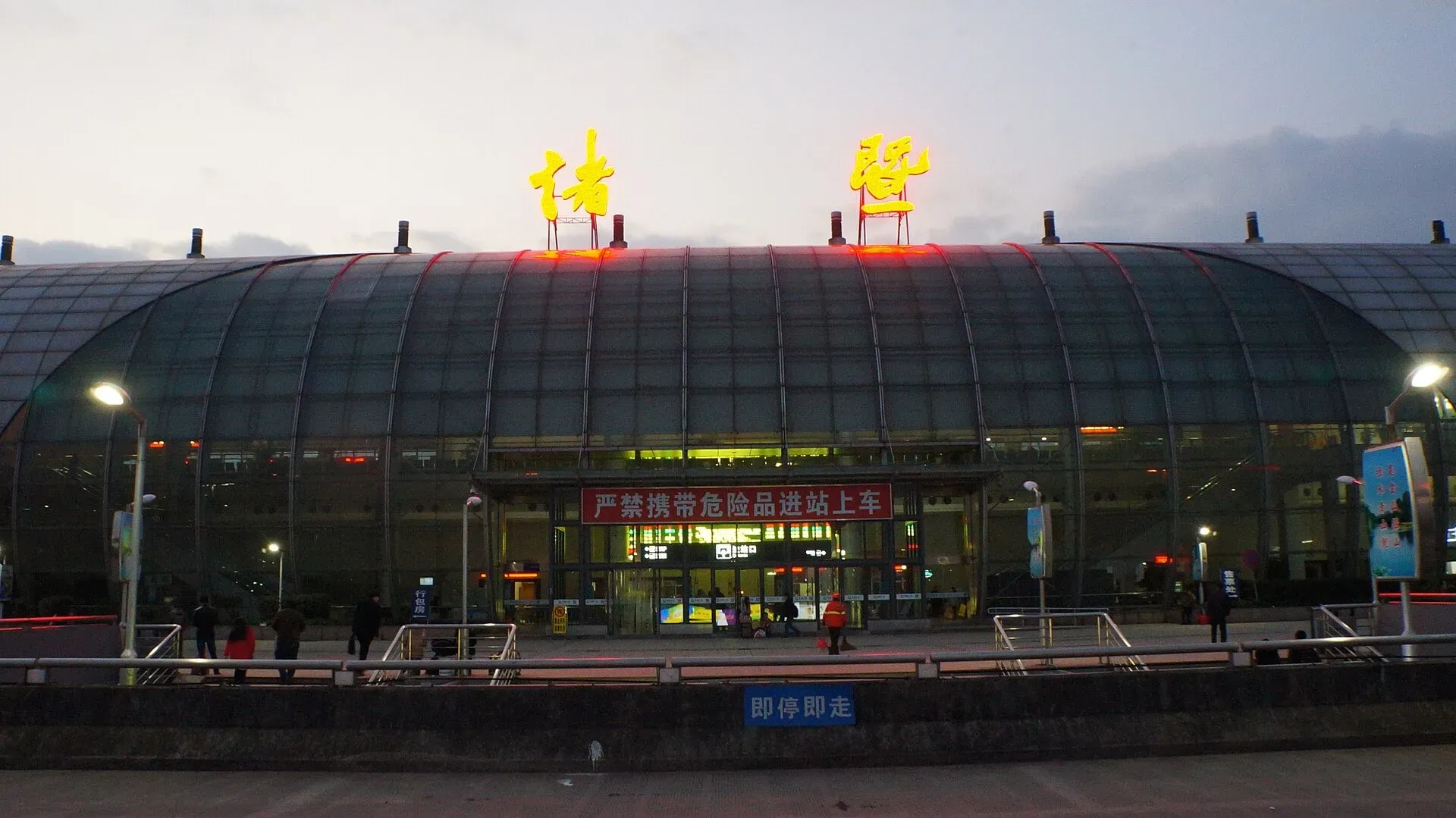
Sizhai is in the hills of southeastern Zhuji. It is about 40 km by road from Zhuji station and about 35 km from Xi Shi’s Hometown, some forty minutes either way on a map estimate, and longer on holidays. Zhuji station is on the Shanghai–Kunming high-speed line; on the 2025 timetable the fastest trains from Hangzhou East take 22 minutes, but schedules change, so check 12306 and see Getting to Zhuji. We found no reliable information on buses, so a car or a hired driver is the practical way.
The buildings are not side by side: the Faxiang House is about 400 meters west of the House of a Thousand Pillars, the Huaguogong Villa is to the southwest, about 2 km by road, and the Bifeng Study is a short climb from the back of the main house. Going by those distances, we would allow about half a day to see them all. The school is a working school and the houses are people’s homes, so visit quietly.
We found no official statement of ticket prices or opening hours. Zhejiang Daily mentioned in 2022 that self-service ticket machines stood outside the Huaguogong Villa, the Western-style house and other sights during that year’s National Day holiday; ask the scenic area before you go.
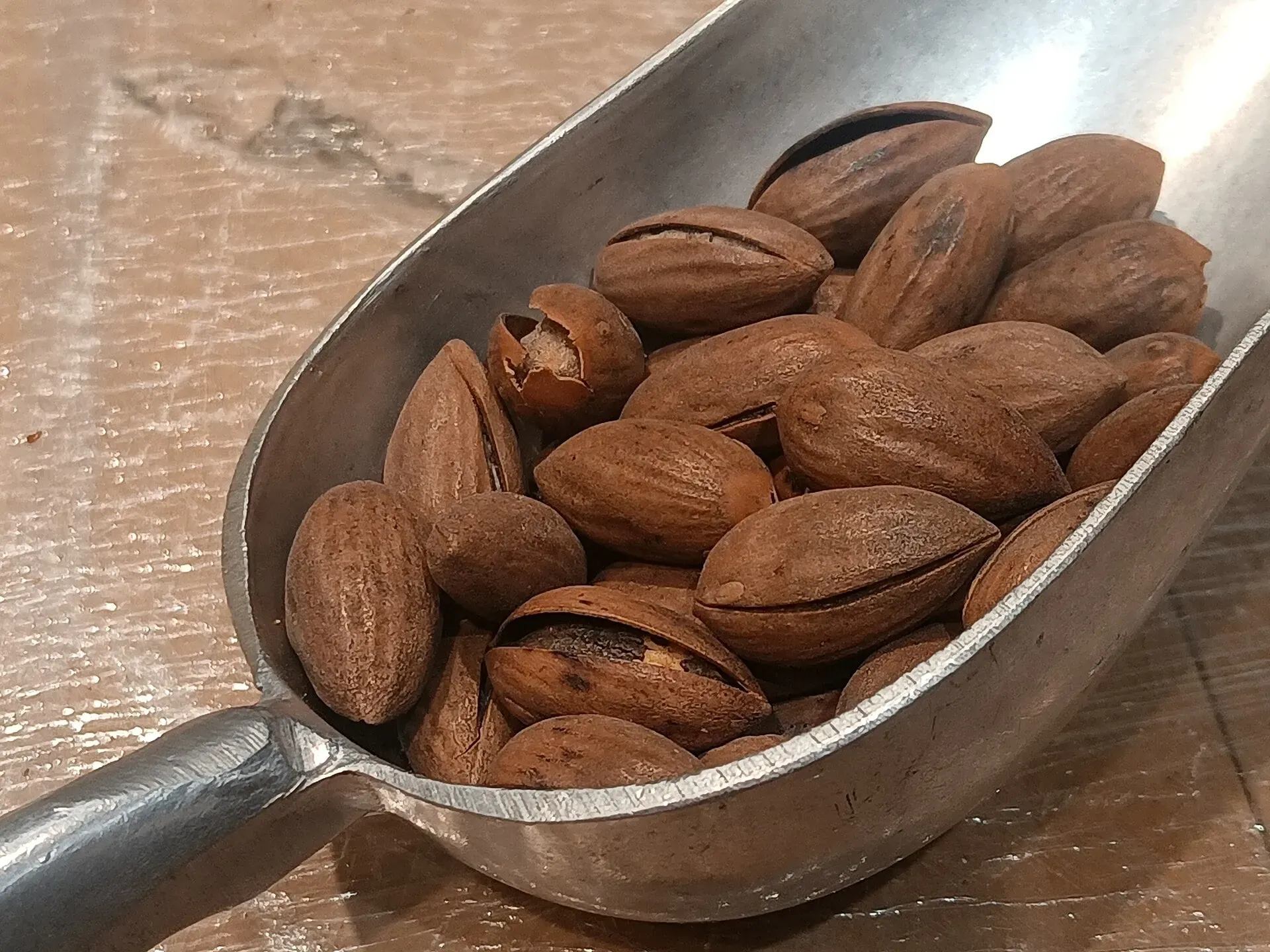
The Zhejiang Department of Civil Affairs, in 2019, put Sizhai on the same eastern route through Zhuji as Dongbai Mountain and the thousand-year-old torreya groves, and the Shaoxing government’s English website, run by China Daily, lists it the same way; for the groves, see Torreya Nuts. For a clan compound of another kind, begun in the Ming and laid out as nine courts along a single axis, see The Lu Residence in Dongyang, to the south.
Questions & answers
What is the House of a Thousand Pillars, and where is it?
It is a Qing mansion, formally the Sisheng House, in the village of Sizhai in Dongbaihu Town, southeastern Zhuji, Zhejiang, finished in 1798 by the merchant Si Yuanru on a plot of 6,850 square meters. In 2001 it was listed with two other houses in the village, the Faxiang House and the Huaguogong Villa, as a national Major Historical and Cultural Site, the Ancient Residences of Si.
Does it really have a thousand pillars?
Yes, and more. China Reading Weekly in 2007 and Wikipedia both give 1,322; a 2013 report and the Zhuji government’s news office in 2019 say more than 1,200. The rooms are counted two ways as well, 121 or 118.
What do the words over the gate mean?
The four characters, yu si wei sheng, come from the Analects and mean roughly “here it flourishes”; si, “here” or “this,” is also the family’s surname, and the Sisheng House is named for them. They are cut in nine-fold seal script, after the hand of the Song calligrapher Mi Fu.
Do people still live in the house?
Reports over the years say so. China Reading Weekly counted 67 households in 2007, and a 2013 report found mostly old people and children at home. In October 2026 Zhejiang Daily called it a compound “passed on in living use,” and it is also a national 3A scenic area. Remember that you are walking through people’s homes.
Why does Simin Primary School have a shrine’s name over its gate?
According to China Reading Weekly in 2007, when the school was built from 1917 its founders wanted the big trees on the ancestral graves for timber. The clan objected, so the project was presented as a shrine to the ancestors, and the board over the gate, written by Kang Youwei, names a shrine. The school began in 1905 as the Xiangshan People’s School in the Huaguogong Villa; other accounts give 1904.
How do I get to Sizhai, and do I need a ticket?
It is about 40 km by road from Zhuji station, some forty minutes on a map estimate, and we found no reliable information on buses. Zhejiang Daily mentioned self-service ticket machines at the sights in 2022, but we found no official prices or opening hours, so ask before you go. For trains, see Getting to Zhuji.
Sources
- 英文为本站翻译。车程和几处老宅之间的距离,是按 OpenStreetMap 路网(OSRM)和维基百科所列坐标估算的。到诸暨站、西施故里的距离和高铁时刻,与本站《去哪儿走走》《怎么去诸暨》一致;卢宅的年代和布局与本站《东阳卢宅》一致,出处见各篇。《论语》《诗经》引文依维基文库的录文。
- 国务院关于公布第五批全国重点文物保护单位和与现有全国重点文物保护单位合并项目的通知(国发〔2001〕25号)· 中国政府网(国务院公报 2001 年第 24 号),2001 年 6 月 25 日
- 第五批全国重点文物保护单位 · 维基百科
- 斯氏古民居建筑群 · 维基百科
- 斯盛居 · 维基百科
- 发祥居 · 维基百科
- 诸暨•斯宅 · 浙江省文物局(浙江文物网),2006 年(网页未注明日期,年份据网址;互联网档案馆 2016 年 5 月 7 日存档)
- Classical Production Based on the Family’s Sight: The Analysis of Traditional Village for Sizhai · Fangai Chi, Liping He, Gaochuan Zhang and Bart Dewancker, Journal of Asian Institute of Low Carbon Design, 2017 (J-STAGE)
- 书香斯宅 · 光明网(中华读书报,特约记者叶辉),2007 年 4 月 18 日
- 诸暨“千柱屋”掩藏百年风情 · 国家旅游地理网(李扬、寿祈祺),2013 年 1 月 10 日
- 【新知】诸暨这个姓,百家姓没收录!故事可不少 · 诸暨发布(澎湃号),2019 年 4 月 7 日
- 跟着网红游诸暨 | 青山绿水间感受古越文化 · 诸暨发布(澎湃号),2019 年 5 月 3 日
- 诸暨斯宅:深耕文化沃土,千年古村迎蝶变 · 浙江日报(张卉卉),2022 年 11 月 9 日
- 诸暨探索文物安全共治新路径 · 杭州网(浙江日报),2026 年 10 月 26 日
- 乡村小学开启特色课程“乡村艺课” · 新华网,2023 年 4 月 13 日
- 120岁的村小还是乡土少年 · 中国青年报(冰点周刊,李新玲),2024 年 12 月 4 日
- 千年古县 | 西施故里 好美诸暨 · 浙江民政(澎湃号),2019 年 7 月 4 日
- Zhuji · ezhejiang.gov.cn, English website of the Information Office of the Shaoxing Municipal People’s Government (presented by China Daily), January 30, 2024
- 論語·泰伯第八 · 维基文库
- 詩經·商頌·長發 · 维基文库
- 米芾 · 维基百科
- 斯行健 · 维基百科
- 斯霞 · 维基百科