Torreya Nuts
Torreya nuts, xiangfei in Chinese, are a nut found only in China — olive-shaped once roasted, with a hard shell and a black inner skin. The Kuaiji hills hold nearly 80,000 ancient torreya trees, recognized by the UN Food and Agriculture Organization as a Globally Important Agricultural Heritage System in 2013. Zhaojia in Zhuji is the heart of it, with more than 2,700 trees over a thousand years old; its “King of Torreya” is some 1,380 years old.
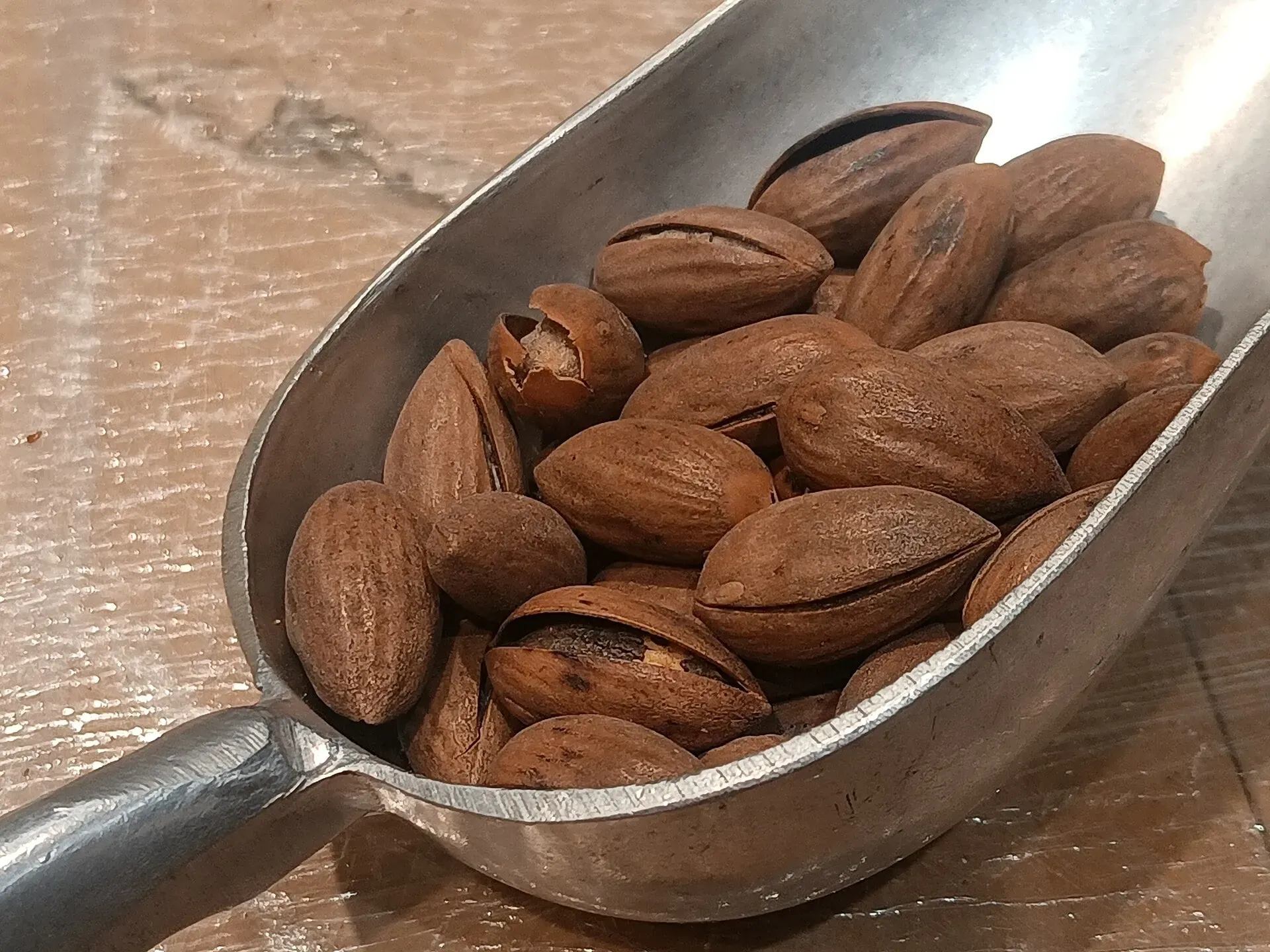
Torreya nuts are one of Zhuji’s specialties. They are small and olive-shaped, with a hard shell and a black papery skin inside. The nuts grow on old trees in the Kuaiji hills, some of them more than a thousand years old.
What they are
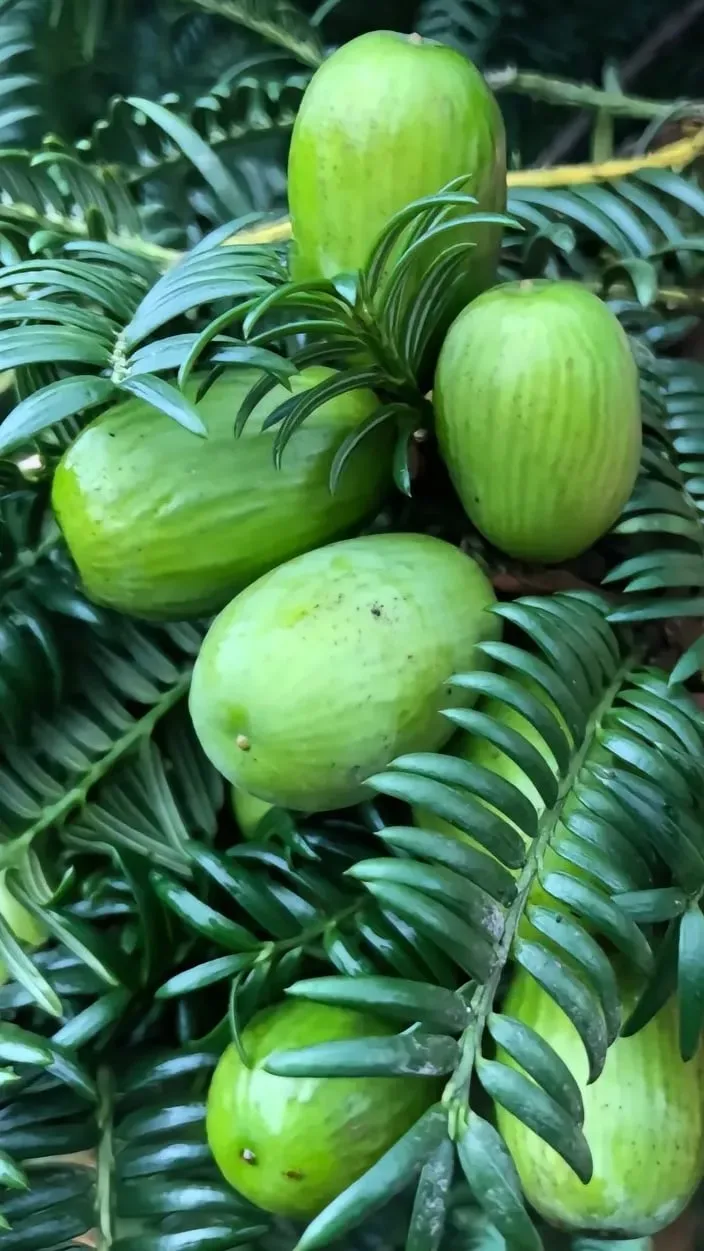
According to People’s Daily in 2024, the Chinese torreya is an evergreen conifer of the yew family, native to China and one of the world’s rarer economic trees. It grows mostly in warm, humid places in southern China below 1,400 meters, chiefly in the Kuaiji, Tianmu, Huangshan and Wuyi ranges. Roasted, its seeds become olive-shaped nuts with a hard shell, a black inner skin and a pale yellow kernel.
In English it is called Chinese torreya or Chinese nutmeg yew. According to the English Wikipedia, one of its cultivars, ‘Merrillii,’ goes back to the Tang dynasty and is thought to have originated in the mountains of northeast Zhejiang; the tree is already recorded in the Erya, China’s oldest surviving dictionary, as early as the second century BCE. According to the Chinese Wikipedia, a torreya seed takes three years from flower to ripeness.
Thousand-year-old grafted trees
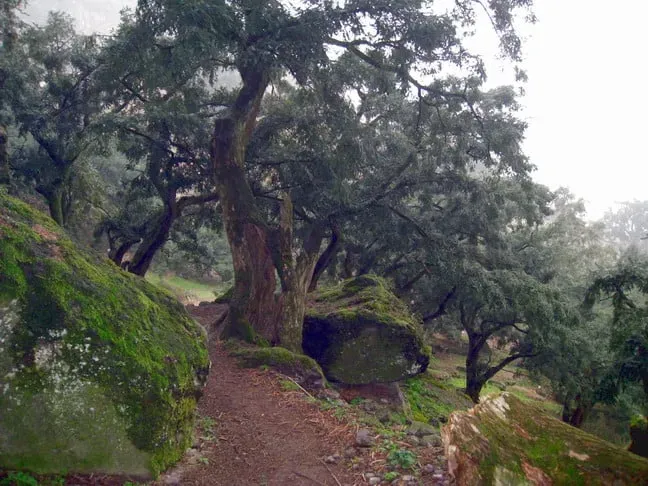
The torreya is a masterpiece of grafting. People long ago chose the best of the wild trees and passed them down by grafting, generation after generation. According to People’s Daily, every old torreya tree has a clear scar at the base of its trunk — the mark of the graft, which locals call the “ox leg.”
The ancient torreya woods of the Kuaiji hills, People’s Daily says, spread over 402 square kilometers with nearly 80,000 old trees. According to Hangzhou.com.cn in 2024, 72,000 of them are more than a century old and over 4,500 more than a thousand. In 2013 the UN Food and Agriculture Organization recognized the Kuaijishan ancient torreya groves as a Globally Important Agricultural Heritage System.
Zhaojia, in the northeast of Zhuji on the western slopes of the Kuaiji hills, is the heart of it. The same report counts 37,000 trees in the town over a century old, 25,000 over five hundred years and more than 2,700 over a thousand — more than half of the whole heritage area — and its “King of Torreya,” the tree with the widest crown, is some 1,380 years old.
From tree to table
Torreya nuts are hard won. According to People’s Daily, a torreya seed takes three years to mature on the tree; the trees grow more than twenty meters tall and their branches are brittle, so picking is done with a centipede ladder, a bamboo basket, a bamboo hook and a few ropes. The seeds must then be husked, left to ferment in heaps, washed, dried and roasted before they have their fragrance; the husking can only be done by hand, and the fermenting takes nearly two weeks. This picking-and-processing craft became Zhejiang provincial intangible heritage in 2012.
He Tan, a Song dynasty writer, said of a torreya nut that one taste brought spring to his teeth and cheeks, and that for ten years his dreams wandered back to it. Zhuji’s Xi Shi legends even include a torreya story, “the eyes of the torreya” — see Xi Shi’s Hometown.
Guarding the old trees
The old trees are closely protected. According to People’s Daily, China’s first torreya nature reserve was set up here in 2001, and in 2009 the area became a national torreya forest park; as early as 2006 the village of Xuanjiashan in Zhaojia wrote a ban on felling old torreya trees into its village rules. In 2023 Zhuji began trial “adoptions” of old trees in Xuanjiashan and Feiwang villages, with the adopters sharing the harvest.
Getting there
Zhaojia is in the northeast of Zhuji, about 33 km from Zhuji high-speed station — a little over half an hour by car, by map estimate. The best time is autumn, during picking, or early winter, when the roasting is under way. The town has also opened the Zoumagang trail, lined with torreya trees a century or a millennium old. For how to reach Zhuji, see Getting to Zhuji.
When and where to see the trees
According to a 2017 paper by researchers at Zhejiang A&F University in the journal Scientia Silvae Sinicae, torreya is usually picked in early to mid September, between Bailu (“White Dew,” a solar term around September 7) and the autumn equinox, when the husk turns from green to pale yellow and splits; Hangzhou.com.cn, in 2024, put the picking season at the end of September. According to Chao News in 2024, picking at Zhaojia normally starts around Bailu, and the first new nuts are ready by National Day, October 1; that year heat and drought were pushing the start back to September 15. On September 10, 2026, Xinhua photographed growers in Xuanjiashan village picking from the old trees.
According to the UN Food and Agriculture Organization, the Kuaijishan ancient torreya groves take in 59 villages in 12 townships of Zhuji, Shengzhou and what was then Shaoxing County, now Keqiao District. In Zhuji, Zhaojia has the Zhuji Torreya National Forest Park, and according to People’s Daily in 2024, Xuanjiashan village lies inside it. The “King of Torreya” grows in the town’s Feiwang village: according to Hangzhou Daily in 2023, it is 18 meters tall and 9.26 meters round, the largest torreya tree in China, and China Daily called it the park’s star attraction in 2024.
The Zoumagang hike starts at the King of Torreya. According to China Daily in 2024, it runs over Zoumagang to a waterfall at Dongzhuang village: nearly 11 km with more than 700 meters of climbing, about four hours on foot. The route had been overhauled that February.
According to Chao News in 2024, Zhaojia holds a torreya festival every autumn; in 2025, Chao News reported, the picking ceremony was held on September 19 in the forest park, around the King of Torreya. The dates change every year, so check locally. According to the Zhuji government’s news office in April 2026, the sights of the heritage groves, the King of Torreya at Zhaojia among them, are free and need no booking, and the hours it gives are “closed on Mondays, open other days.” We have found no buses to Zhaojia published by an official source or the major media; going by car or with a hired driver is simplest. Ask locally before you go.
Choosing and eating the nuts
What makes a good nut? According to Shaoxing Fabu, a Shaoxing government news account, in 2023, a good torreya nut is whole, even in color and size, and fragrant and crisp. The 2017 paper says the more oil a kernel holds, the more fragrant and crisp the nut; torreya is rich in protein and oil and low in starch, and so fine-textured and crisp, while ungrafted trees grown from seed give nuts that are coarse and hard, neither fragrant nor crisp. How easily the black skin comes off, it adds, is an important test of a roasted nut’s quality.
Old trees and newer plantations give different nuts. According to Hangzhou.com.cn in 2024, a grower who has been in the trade for decades says old-tree nuts are a little smaller, with thin, glossy shells, skins that come off easily and crisper, more fragrant kernels; plantations, the report adds, now produce dozens of times as many nuts as the old trees. According to Hangzhou Daily in 2023, an expert at Shaoxing’s ancient-torreya conservation center said the two had been sold mixed together in recent years. According to Chao News in 2025, Zhaojia has set up a tracing system for old-tree nuts: scanning a code shows the tree’s location, its grower, and how the nuts were picked and sold.
According to Chao News in 2025, it was a bumper year at Zhaojia. A Feiwang village official said green fruit, still in the husk, was fetching up to 8 yuan a jin (500 grams) from buyers, more than the year before; a grower who has bought green fruit for many years said the very best old-tree nuts sold for more than 400 yuan a kilo.
The shells are hard, but there is a knack to opening them. In an essay on Chao News in 2025, Meng Zuping passes on his grandmother’s method: each shell has a slightly raised dot on either side, like an eye, and a hard squeeze on the two “eyes” between thumb and forefinger cracks it. Legend says Xi Shi found them first, so they are called “Xi Shi’s eyes.” The black skin around the kernel is usually removed before eating. According to Hangzhou.com.cn in 2024, one grower said his family had begun making ready-split nuts, which are easier to shell, in the past two years.
Questions & answers
What are torreya nuts?
The seeds of the Chinese torreya, an evergreen conifer of the yew family native to China. Roasted, they become olive-shaped nuts with a hard shell, a black inner skin and a pale yellow kernel.
What are torreya nuts called in English?
Chinese torreya or Chinese nutmeg yew; the botanical name is Torreya grandis.
What are the Kuaijishan ancient torreya groves?
The ancient torreya woods of the Kuaiji hills around Shaoxing, spread over 402 square kilometers with nearly 80,000 old trees. The FAO recognized them as a Globally Important Agricultural Heritage System in 2013. Zhaojia in Zhuji is the heart of the area, with 37,000 trees over a century old and more than 2,700 over a thousand.
Why are torreya trees said to be grafted?
Torreya was selected long ago from wild trees and passed down by grafting, generation after generation. Look closely at an old tree and you will see a clear scar at the base of the trunk, which locals call the “ox leg” — the mark of the graft.
When are torreya nuts in season?
The seeds are picked in autumn, then husked, left to ferment in heaps, washed, dried and roasted; early winter is the busy roasting season.
What do torreya nuts taste like?
According to a 2017 paper by researchers at Zhejiang A&F University, torreya nuts are rich in protein and oil and low in starch, which makes them fine-textured and crisp; the kernel is around 60 percent oil, and the more oil, the more fragrant and crisp the nut. Local growers, Shaoxing Fabu reported in 2023, say nuts from old trees have thin shells that open easily and are crisper and more fragrant, with a sweet aftertaste.
How do you open a torreya nut?
An essay published by Chao News in 2025 explains that each shell has a slightly raised dot on either side, known as “Xi Shi’s eyes”; squeeze them between thumb and forefinger and the shell cracks. The black skin around the kernel is usually removed before eating. According to Hangzhou.com.cn in 2024, there are also ready-split nuts that are easier to shell.
Are torreya nuts the same as pine nuts or ginkgo nuts?
No; they come from three different trees. Torreya nuts are the seeds of the Chinese torreya, a conifer of the yew family. According to Wikipedia, pine nuts are the seeds of pines, and ginkgo nuts the seeds of Ginkgo biloba, the last living species of its order. The torreya’s other English name, Chinese nutmeg yew, comes, Wikipedia says, from its nutmeg-like seeds and yew-like leaves; it is neither a nutmeg nor one of the true yews of the genus Taxus.
Where can I see the ancient torreya trees?
At the Zhuji Torreya National Forest Park in Zhaojia, in the northeast of Zhuji. According to Hangzhou Daily in 2023, the King of Torreya in the town’s Feiwang village is the largest torreya tree in China, and according to China Daily in 2024, the Zoumagang hike, nearly 11 km long, starts at the tree. According to Chao News in 2024, picking at Zhaojia normally starts around Bailu in early September, and the town holds a torreya festival every autumn.
Sources
- 车程是按 OpenStreetMap 路网估算的开车时间。
- 香榧千年 香飘万里(古树的故事) · 人民日报,2024 年 11 月 13 日
- 与宋人同尝一口“千年古香榧” · 杭州网,2024 年 11 月 3 日
- Torreya grandis · Wikipedia
- 香榧 · 维基百科
- 西施传说 · 中国非物质文化遗产网
- 不同采收成熟度和堆沤方式对香榧种子堆沤后熟品质的影响 · 林业科学(叶珊等,浙江农林大学),2017 年第 53 卷第 11 期
- 白露将至,今年的诸暨香榧可能会迟到,最早下月中旬能吃上 · 潮新闻(腾讯新闻),2024 年 9 月 6 日
- 浙江诸暨:香榧之乡采摘忙 多渠道助农增收 · 光明网(新华网),2026 年 9 月 10 日
- Kuaijishan Ancient Chinese Torreya · 联合国粮农组织全球重要农业文化遗产(2026 年 11 月 5 日查阅)
- 《绍兴会稽山古香榧群保护规定》获批 明年3月1日起正式实施 · 浙江在线(绍兴日报),2018 年 12 月 7 日
- 诸暨赵家镇千年香榧古树寻找“守护人” · 浙江在线(杭州日报),2023 年 8 月 2 日
- 赵家镇古树香榧开摘了 国庆假期,“香榧之乡”邀你品古树香榧、游古道 · 中国日报网,2024 年 9 月 30 日
- 赵家香榧开采啦!这些深山中的“香榧之最”你见过吗? · 潮新闻,2025 年 9 月 19 日
- 绍兴这颗“千年果”,为何这般珍贵? · 绍兴发布(澎湃号),2023 年 10 月 23 日
- 晚潮|香榧飘香 · 潮新闻(孟祖平),2025 年 11 月 7 日
- “在浙过春假”指引出炉,诸暨这些景点入选!附优惠政策! · 诸暨发布(澎湃号),2026 年 4 月 10 日
- Torreya grandis · Flora of China
- Bailu (solar term) · Wikipedia
- Pine nut · Wikipedia
- Ginkgo biloba · Wikipedia