Places to Visit
Zhuji, south of Hangzhou: Xi Shi’s Hometown, the Wuxie falls, Baita Lake, old Fengqiao, pearls, torreya groves and the Si houses, and how to get to each.
Zhuji is in Shaoxing, Zhejiang, south of Hangzhou. Xi Shi’s Hometown is on the river on the south side of the city. In the hills to the west are the Wuxie waterfalls and the red cliffs of Douyan; to the northeast are the pearls of Shanxiahu, the wetlands of Baita Lake, the old town of Fengqiao and the ancient torreya groves of Zhaojia; and to the southeast stands the Si family’s House of a Thousand Pillars. Here are the places worth the trip, with where each one is and how to get there; the stories behind them are in our longer guides.
Xi Shi’s Hometown
The Puyang River, which runs through the city, is also called the Huan River, and according to Wikipedia its local names in Zhuji, such as Huanpu and the Huansha (“silk-washing”) stream, come from the story of Xi Shi washing silk. On the Huan River on the south side of the city, below Zhuluo Hill, is Xi Shi’s Hometown, begun in 2003: a national 4A scenic area with the Xi Shi Hall, the Fan Li Shrine and the Zheng Dan Pavilion, about 7 km from Zhuji station, around ten minutes by taxi. According to the Zhuji government’s news office in 2026, in the evening there is a night tour of the Huansha River, “Meeting Xi Shi,” and an immersive play, “Dreaming of Xi Shi,” performed in old ancestral halls and on old opera stages. Check tickets and opening hours locally. More in Xi Shi’s Hometown.
Wuxie and Douyan
Wuxie, in Wuxie Town in the hills of northwestern Zhuji, is named for a waterfall that comes down in five tiers: the name means “five cascades.” A 2019 profile of the city by the Zhejiang Department of Civil Affairs puts the scenic area 23 km northwest of the city and counts 72 peaks, 36 flats, 25 cliffs, 10 rocks, 5 falls, 3 valleys, 2 streams and a lake, which have earned it the name “little Yandang.” According to an essay by Tian Weifa on Chao News in 2025, the State Council made Wuxie a national scenic area in May 2002; the fifth cascade drops 31.2 meters; the lake you pass on the way in is the Wuxie reservoir, completed in 1973; and Wuxie Temple in the hills was founded in the reign of the Tang emperor Xianzong by the Chan master Lingmo, and is where Liangjie, founder of the Caodong school, became a monk. The Zhuji government’s news office recommended the quiet Xiyuan gorge in 2026. It is about 26 km from Zhuji station, a little over half an hour by car; allow at least half a day.
According to Wikipedia, the national scenic area that Wuxie belongs to also takes in Xi Shi’s Hometown, Douyan and Tangjiangyan. Douyan lies southwest of the city, about 17 km or some twenty minutes by car from Zhuji station. The Zhejiang Department of Civil Affairs called it a “strange mountain of a thousand Buddhas” in 2019, and the Zhuji government’s news office described it in 2026 as red danxia rock, with views from the top over drifting cloud. The same account describes Tangjiangyan, further southwest, as “green hills on three sides and a lake on the fourth,” with an outdoor training base; it is about 29 km, around half an hour by car, from the station.
Shanxiahu, the pearl town
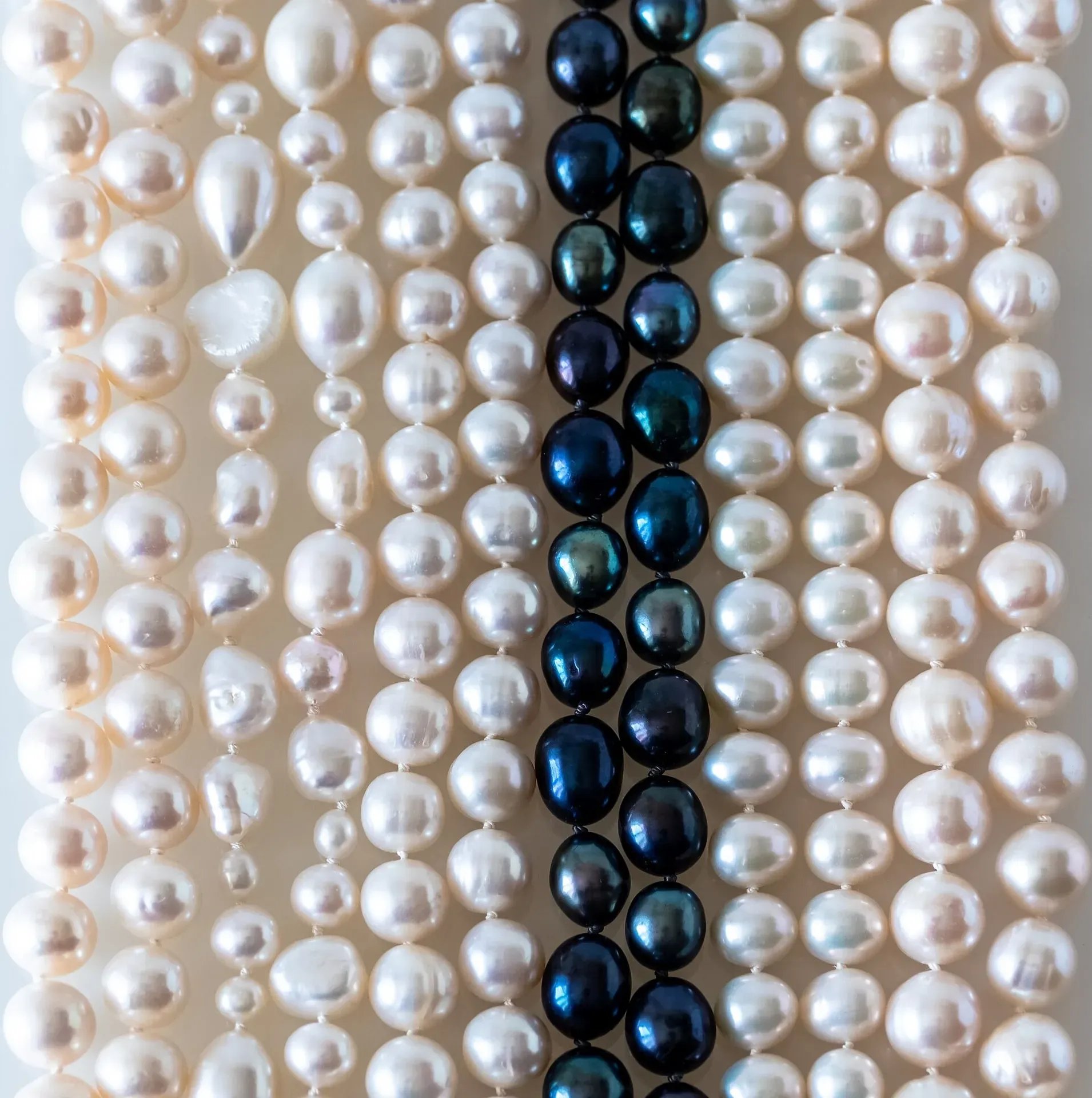
Shanxiahu, a town in the northeast of Zhuji, produces more than 80 percent of China’s freshwater pearls and over 70 percent of the world’s, according to China News Service in 2026. The Huadong International Jewelry City, opened there in 2008, is the largest pearl market in the world. It is about 29 km by car from Zhuji station and about 24 km from Xi Shi’s Hometown, roughly half an hour either way. Prices and quality vary widely, so compare a few shops before you buy. The town also has the World Freshwater Pearl Museum, opened in 2020, where, the Zhuji government’s news office said in 2026, you can open a mussel and take out the pearl yourself. More in Zhuji Pearls. Zhuji also makes socks — see Datang Socks.
Baita Lake
According to China News Service in 2008, Shanxiahu’s pearl industry began in 1970, when pearls were first grown successfully in the local Baita Lake. The lake, in the northeast of Zhuji, is now the Baita Lake National Wetland Park. According to CCTV in 2022, the park has 78 islands and a maze of waterways, and that winter more than 120,000 migrating birds of over 60 species had arrived to spend the season, among them the Chinese egret. The Zhuji government’s news office described it in 2026 as a place of “fields in the lake, lakes in the fields, and people living with the lake,” where you can ride a sculled wooden boat through the reed beds or a boat out at dusk for the sunset, and where there is also a campsite. It is about 35 km from Zhuji station, around forty minutes by car.
Fengqiao
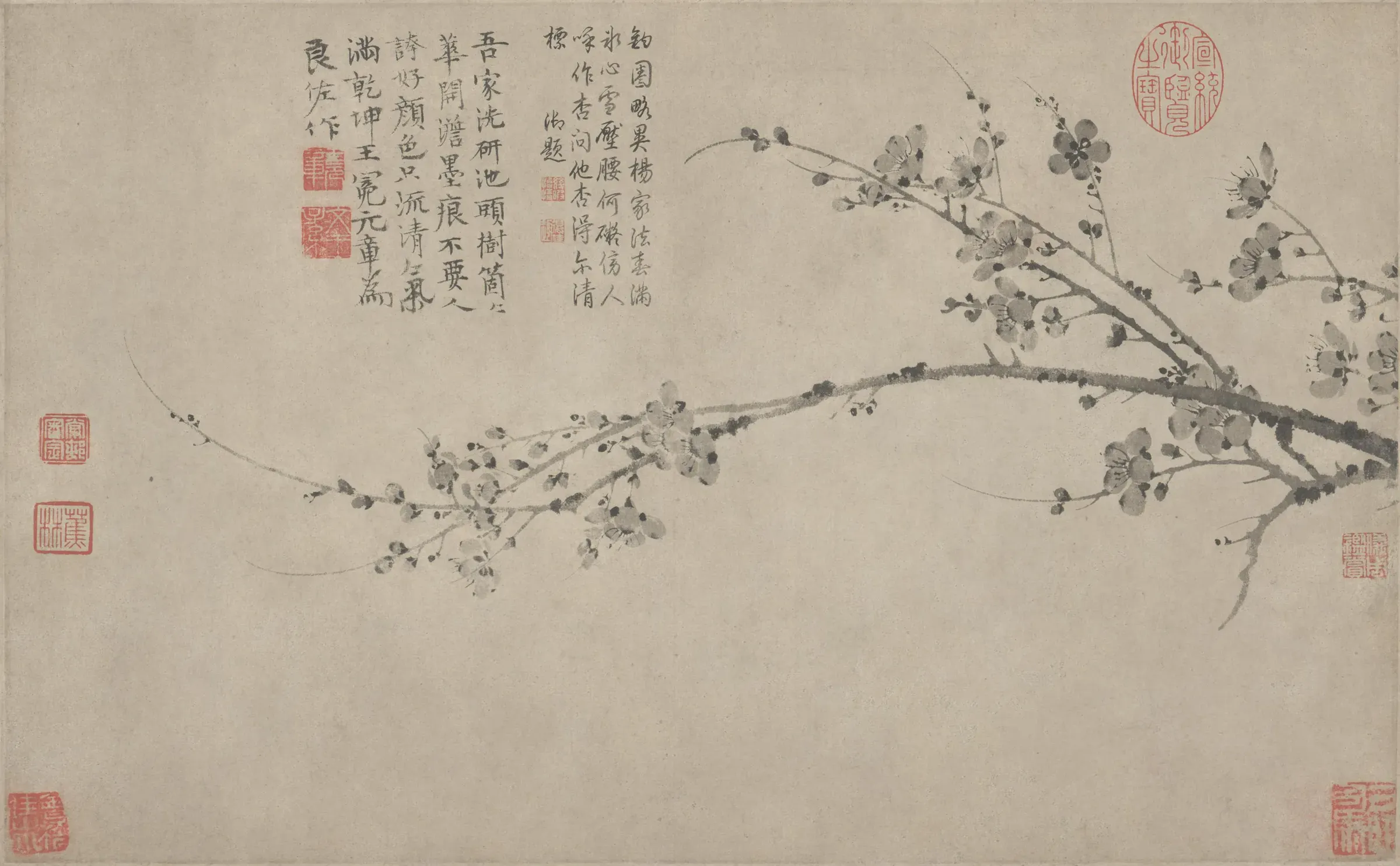
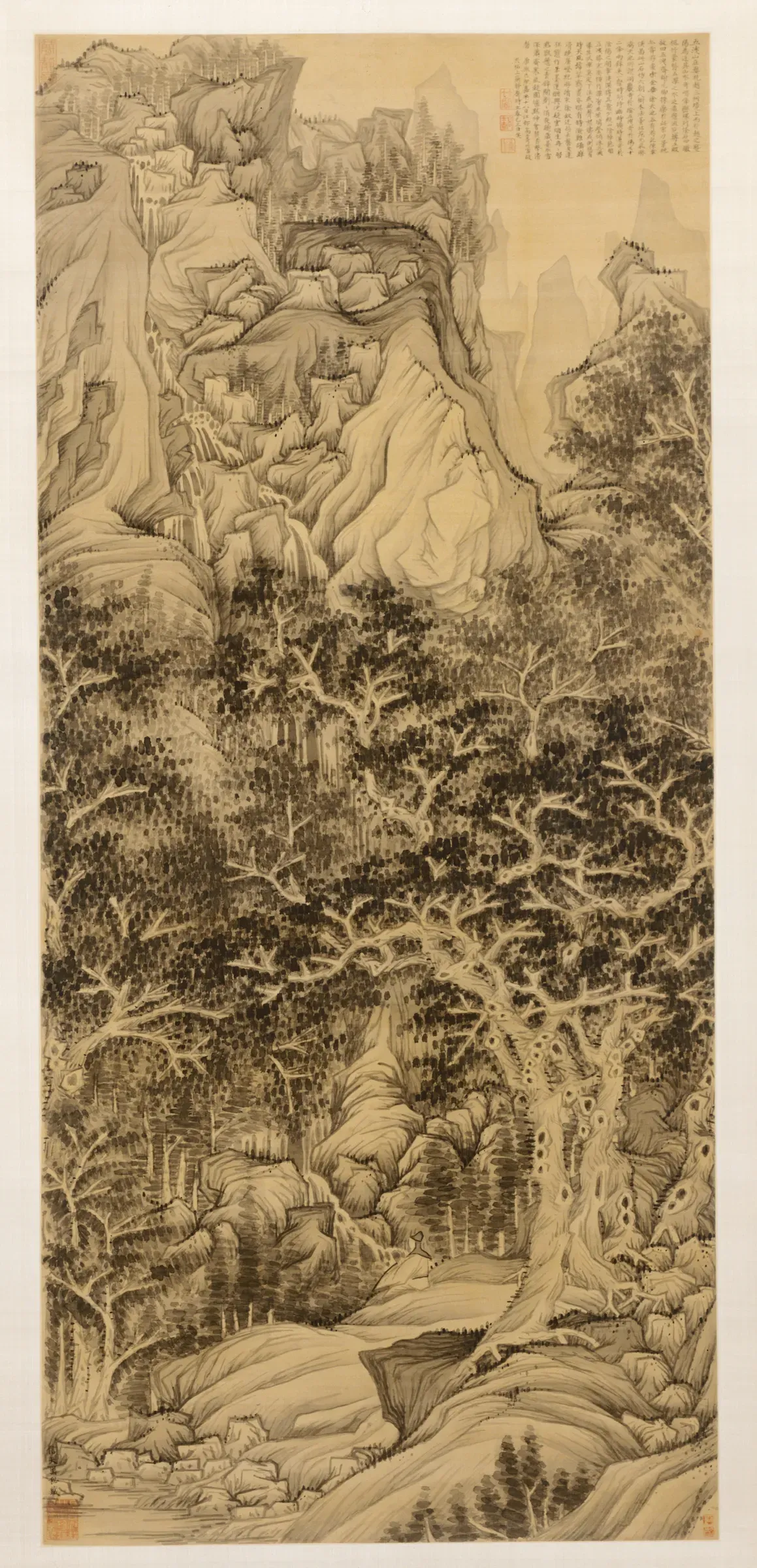
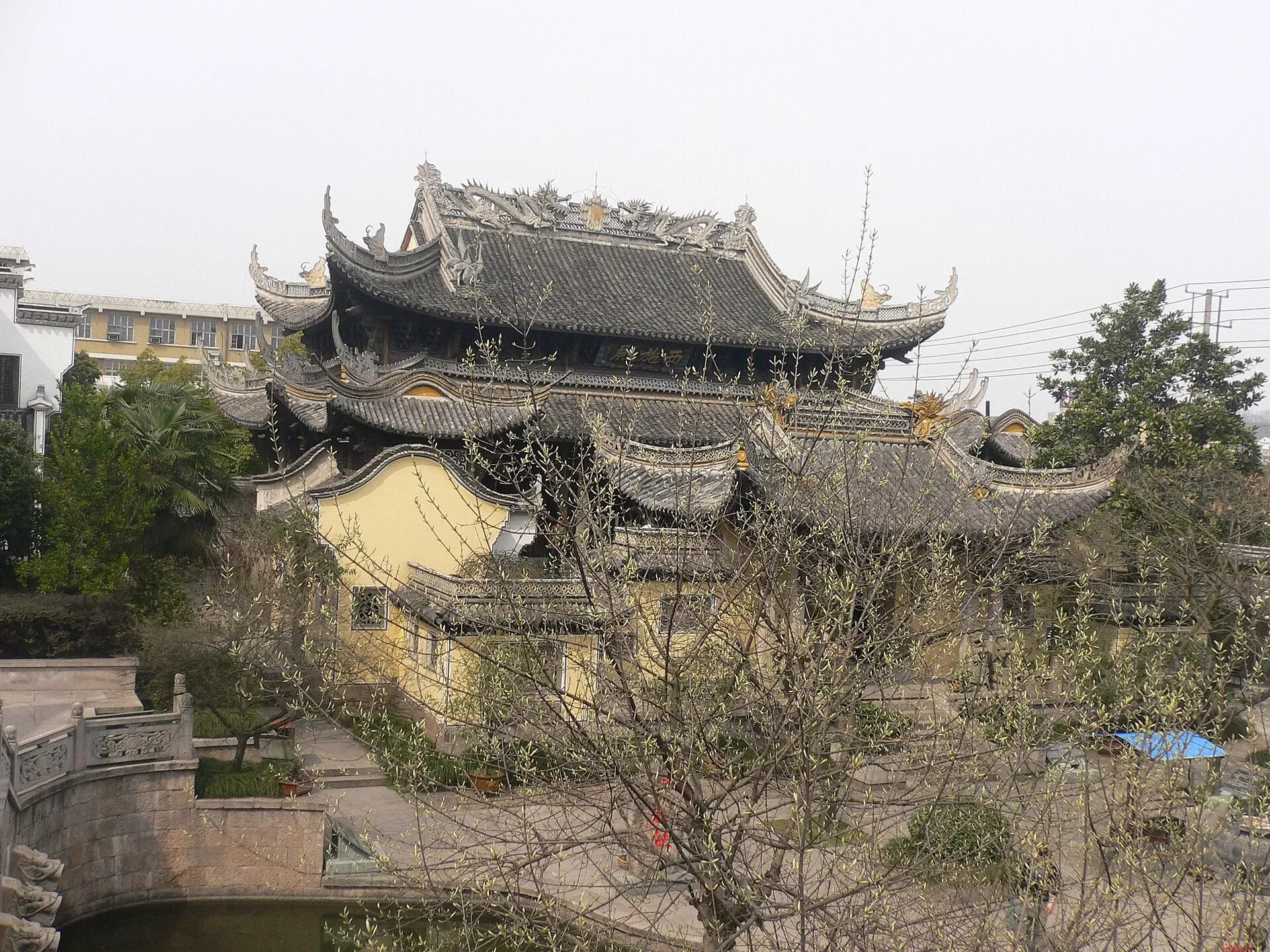
Fengqiao is a town in the northeast of Zhuji, at the western foot of the Kuaiji hills, on both banks of the Fengxi River; according to Dushi Kuaibao in 2024, it takes its name from the tall stone bridge over the river. Zhuji’s local history office wrote in 2023 that Fengqiao is one of China’s historic and cultural towns, a national designation, and was the seat of Yi’an County in the Song. The Yuan painter Wang Mian, the Yuan writer Yang Weizhen and Chen Hongshou, a painter of the late Ming and early Qing, known together as the Three Worthies of Fengqiao, all came from here. Its old buildings include the Donghuacheng Temple pagoda, the Xiaotianzhu garden, the Fengqiao Great Temple and Chen Hongshou’s former home; the Zhejiang Department of Civil Affairs wrote in 2019 that the pagoda was built in 1092, in the Northern Song, and Dushi Kuaibao says the Great Temple was founded in the Song and enlarged in the Ming, and has an old opera stage. According to China Daily, the Fengqiao Three Worthies Museum opened in the town on April 30, 2025, with the three men’s manuscripts, calligraphy and paintings.
Fengqiao is also where the “Fengqiao experience” began. According to Xinhua in 2023, in 1963 the town’s officials and residents devised a way of settling disputes by relying on the people themselves, summed up as “small matters stay in the village, big matters stay in the town, and conflicts are not passed up the line”; the town has an exhibition hall about it. Fengqiao is about 29 km from Zhuji station, around half an hour by car. By bus, Dushi Kuaibao suggested in 2024 taking the Zhuji Express 1 from the station to the Zhuji bus station and changing to the No. 133 as far as the Fangguanzhan stop, about an hour and a half in all.
The torreya groves of Zhaojia
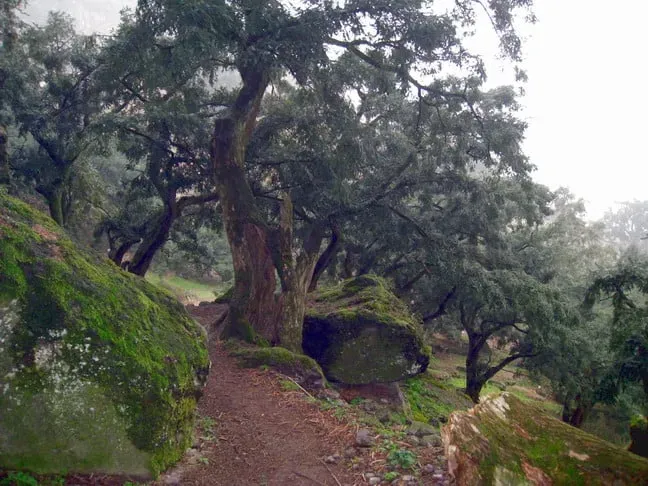
About 7 km southeast of Fengqiao is Zhaojia, the heart of the Kuaijishan ancient torreya groves, which the UN Food and Agriculture Organization recognized as a Globally Important Agricultural Heritage System in 2013. According to Hangzhou.com.cn in 2024, the town has more than 2,700 trees over a thousand years old, and its “King of Torreya” is some 1,380 years old. The town has opened the Zoumagang trail, lined with torreya trees a century or a millennium old. The best time is autumn, during picking, or early winter, when the roasting is under way. It is about 33 km from Zhuji station, a little over half an hour by car. More in Torreya Nuts.
The Si houses at Sizhai
Sizhai, a village in Dongbaihu Town in the southeast of Zhuji, is where the Si family has lived since the Tang. According to Wikipedia, fourteen large houses from the Qing and the Republic survive around Sizhai, and the three finest, the Sisheng House, the Faxiang House and the Huaguogong Villa, were listed together in 2001 as a national Major Historical and Cultural Site, the Ancient Residences of Si.
Wikipedia also says that the Sisheng House was built in the Jiaqing reign of the Qing by Si Yuanru, a very rich local man, and is named for the words over its gate, “here it flourishes.” It covers 6,850 square meters, with 10 large courtyards, 36 small ones, 121 two-story rooms and 1,322 pillars, hence its other name, the House of a Thousand Pillars; you can walk through it “without seeing the sun on a fine day or wetting your shoes in the rain.” Above the screen wall of the main hall is a brick carving of a hundred horses, made of 21 square bricks and showing 53 horses. The Faxiang House next door was built by Si Yuanru’s elder brother, Si Yuanren, also in the Jiaqing years.
Sizhai is about 40 km from Zhuji station and about 35 km from Xi Shi’s Hometown, some forty minutes by car. The Zhejiang Department of Civil Affairs, in 2019, put it on the same eastern route as Dongbai Mountain and the thousand-year-old torreya groves. According to Zhejiang Daily in October 2026, the House of a Thousand Pillars is a national 3A scenic area open to visitors. People still live in the village, though, and we have found no reliable information on opening hours or tickets, so ask locally before you go.
For the history and layout of the house, the Bifeng Study and Simin Primary School, see The Si Houses at Sizhai.
A bowl of Ciwu noodles
When you need a break, have a bowl of Ciwu noodles: the dough is beaten with a wooden pole, and every bowl is cooked on its own with a fresh-fried topping. They come from Ciwu, the northernmost town in Zhuji, but there are shops all over Zhuji and beyond, so you need not go to Ciwu itself; in 2019 the shared “Zhuji Ciwu Noodles” brand was launched at the Xi Shi’s Hometown scenic area, and the first flagship shop opened there. Chao News noted in 2025 that Fengqiao has its own eel noodles and pian’erchuan. More in Ciwu Beaten Noodles.
Getting around
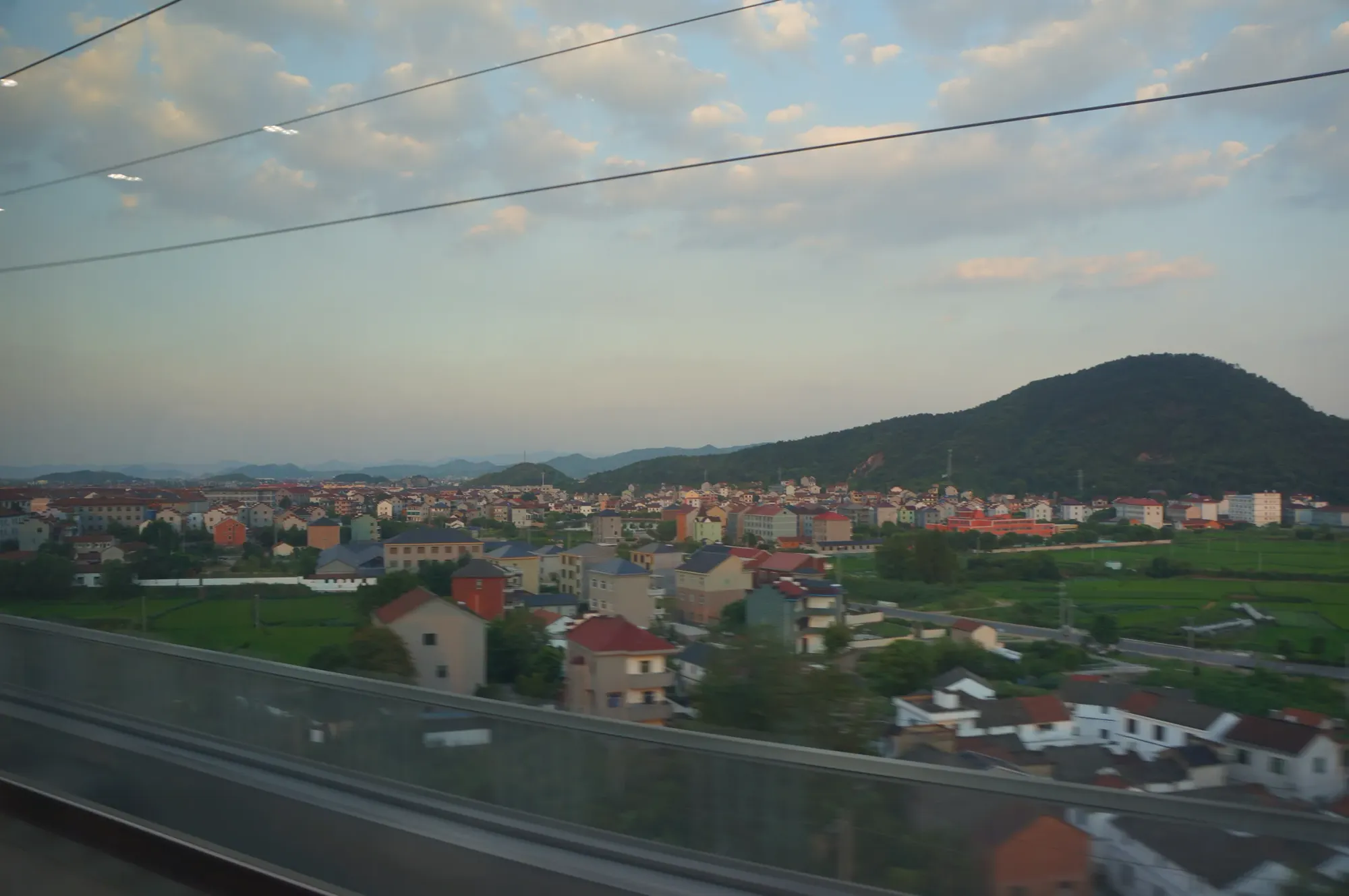
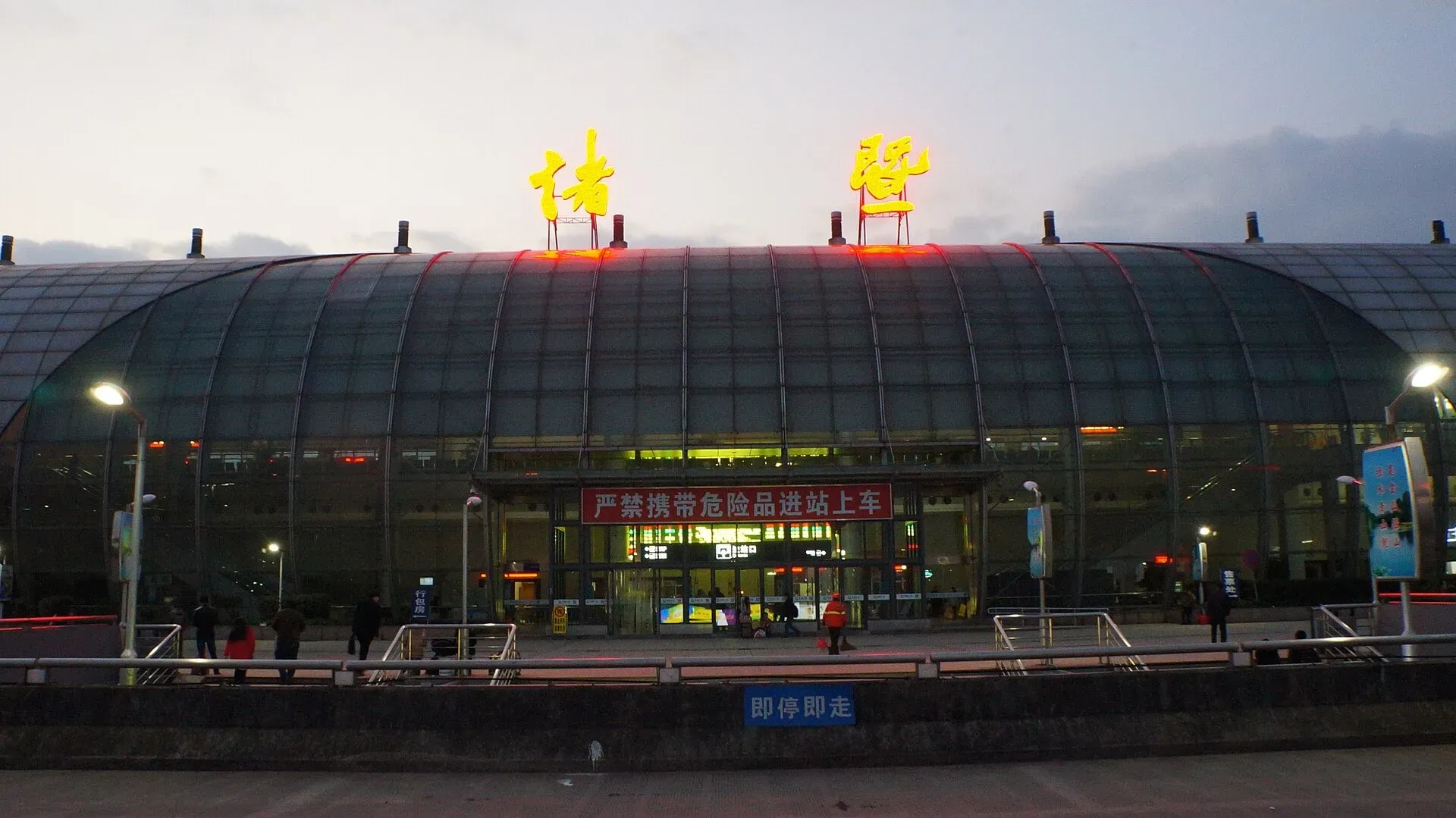
Zhuji station is on the west side of the city, on the Shanghai–Kunming high-speed line: on the 2025 timetable, the fastest trains take 22 minutes from Hangzhou East and about an hour and ten minutes from Shanghai Hongqiao. Xi Shi’s Hometown is about 7 km from the station, and a taxi is simplest. The other places lie on either side of the city — Wuxie, Douyan and Tangjiangyan to the west; Shanxiahu, Baita Lake, Fengqiao and Zhaojia to the northeast and Sizhai to the southeast — so a car or a hired driver is easiest. Apart from the bus route to Fengqiao above, we have found no reliable information on buses to the sights; routes, tickets and opening hours change, so check locally. See Getting to Zhuji. For a day trip from Hangzhou, see Day Trips from Hangzhou by High-Speed Train.
More photos
All photos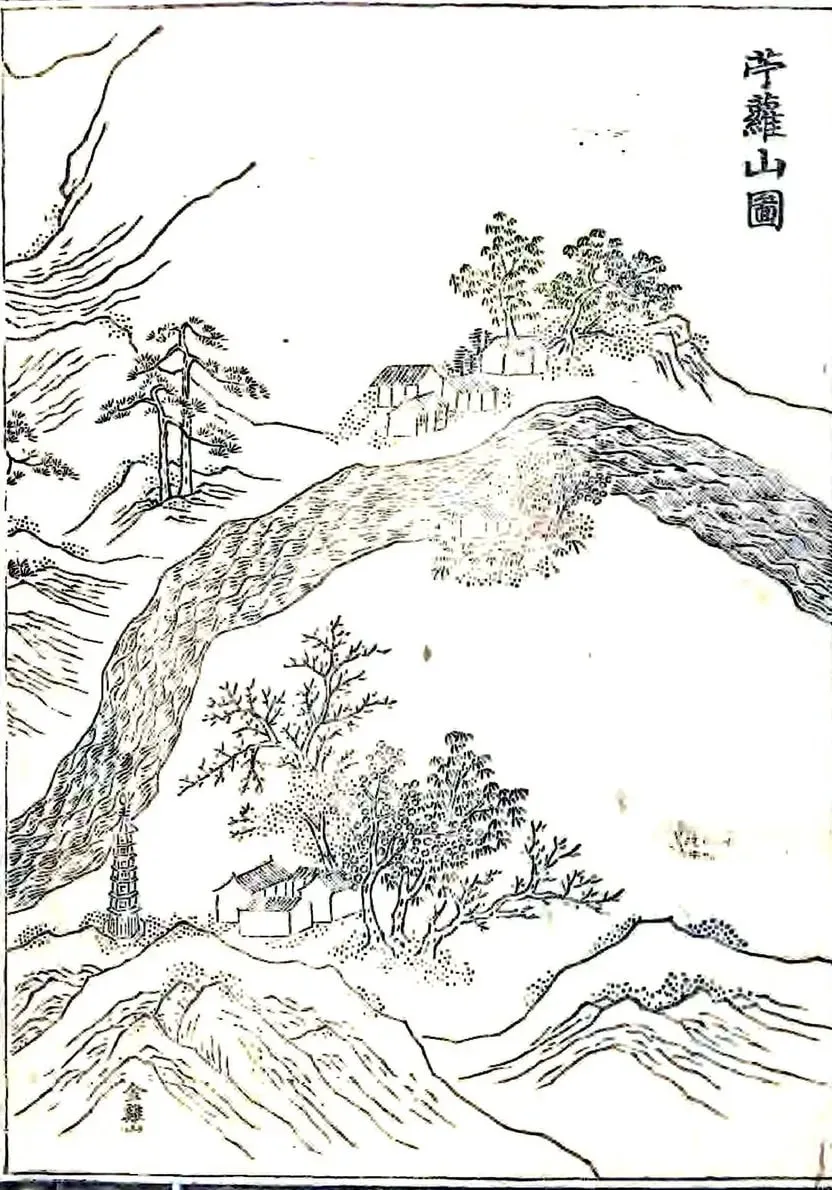
Sources
- 车程是按 OpenStreetMap 路网估算的开车时间,方位按 OpenStreetMap 地图。西施故里、山下湖、赵家镇和五泄离车站的距离,以及西施故里、珍珠、香榧、次坞打面和高铁的数字,与本站的《西施故里》《诸暨珍珠》《香榧》《次坞打面》《怎么去诸暨》一致,出处见各篇。英文为本站翻译。
- 浦阳江 · 维基百科
- 西施故里 · 维基百科
- 5·19中国旅游日,总要来一趟诸暨吧!这份游玩宝典请收好!· 诸暨发布(澎湃号),2026 年 5 月 19 日
- 千年古县 | 西施故里 好美诸暨 · 浙江民政(澎湃号),2019 年 7 月 4 日
- 晚潮|五泄水库和五泄风景区 · 潮新闻(田渭法),2025 年 3 月 13 日
- 五泄 · 维基百科
- 白塔湖湿地迎来大批越冬候鸟 生物多样性不断丰富 · 中国日报网(央视网),2022 年 11 月 27 日
- 中国历史文化名镇——诸暨市枫桥镇 · 浙江在线(社科在线,诸暨市史志研究室供稿),2023 年 11 月 23 日
- 这个端午,你“反向旅游”了吗?杭州边上有个低调古镇藏着绝美古戏台 · 杭州网(都市快报),2024 年 6 月 9 日
- 千年古镇再添文化地标 诸暨枫桥三贤馆开馆 · 中国日报网(腾讯新闻),2025 年 5 月 6 日
- 第1视点丨坚持和发展新时代“枫桥经验” · 新华网,2023 年 9 月 21 日
- 斯氏古民居建筑群 · 维基百科
- 斯盛居 · 维基百科
- 发祥居 · 维基百科
- 打面、干面、活面……香迷糊了,快来诸暨会“面”吧!· 潮新闻,2025 年 3 月 13 日
- 诸暨探索文物安全共治新路径 · 杭州网(浙江日报),2026 年 10 月 26 日
- 世界淡水珍珠博物馆开馆 · 中国经济网(中国新闻网),2020 年 11 月 10 日