Xi Shi’s Hometown
Xi Shi, the first of China’s Four Beauties, is said to have lived at the end of the Spring and Autumn period below Zhuluo Hill in Zhuji, washing silk in the river, until the minister Fan Li presented her to the king of Wu. The Xi Shi legends, nominated by Zhuji, joined China’s first national list of intangible heritage in 2006, and Xi Shi’s Hometown on the Huan River has a Xi Shi Hall and a Fan Li Shrine.
Of China’s Four Beauties, Xi Shi comes first. Her story begins with a small hill and a river on the south side of Zhuji.
The girl who washed silk below Zhuluo Hill
According to Wikipedia, Xi Shi, also called Xizi, is said to have been born Shi Yiguang. Her family lived below Zhuluo Hill in Zhuji, in the state of Yue. There were two villages at the foot of the hill, east and west, and most of the villagers were named Shi; her family lived in the west village, so people called her Xi Shi, “Shi of the West.” She and her friends often washed silk in the river — rinsing lengths of cloth in the running water — which is why she is also known as the girl who washed silk.
Li Bai’s poem Xi Shi begins with where she came from:
Xi Shi, a girl of the Yue streams,
came from Zhuluo Hill.
Her beauty outshone past and present; the lotus blushed before her jade face.
Washing silk, she played with the green water,
as idle as the clear waves.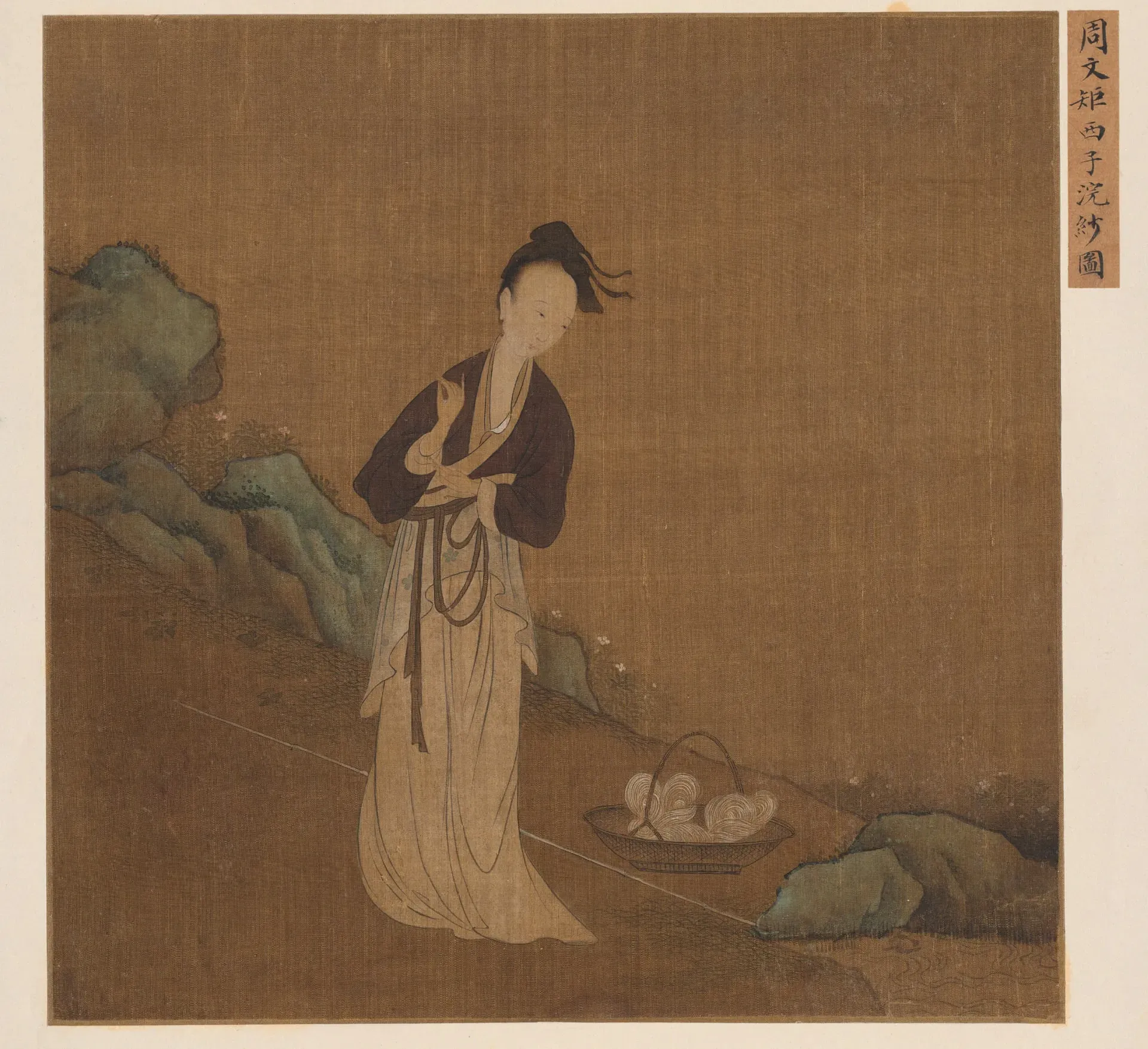
The king’s plan
At the end of the Spring and Autumn period, King Goujian of Yue was defeated by Wu at the battle of Fujiao, and Yue became a vassal of Wu. To take his revenge, his ministers Wen Zhong and Fan Li advised him to present beautiful women to King Fuchai of Wu to distract him; among those chosen were Xi Shi and Zheng Dan. According to Wikipedia, Goujian had musicians train Xi Shi in song, dance and bearing, and after three years Fan Li took her to Wu. Fuchai gave himself up to pleasure, and in the end Wu fell to Yue.
Xi Shi and Fan Li
There are two stories of what became of her. The one most often told is that after Wu fell, Fan Li refused the king’s rewards and slipped away with Xi Shi, and the two drifted off on the Five Lakes and lived in hiding; the other says she was drowned. According to Wikipedia, Fan Li later changed his name in the state of Qi and grew rich in trade at Tao, where he was known as Lord Zhu of Tao; many merchants since have worshipped him as a god of wealth.
A story told for 2,500 years
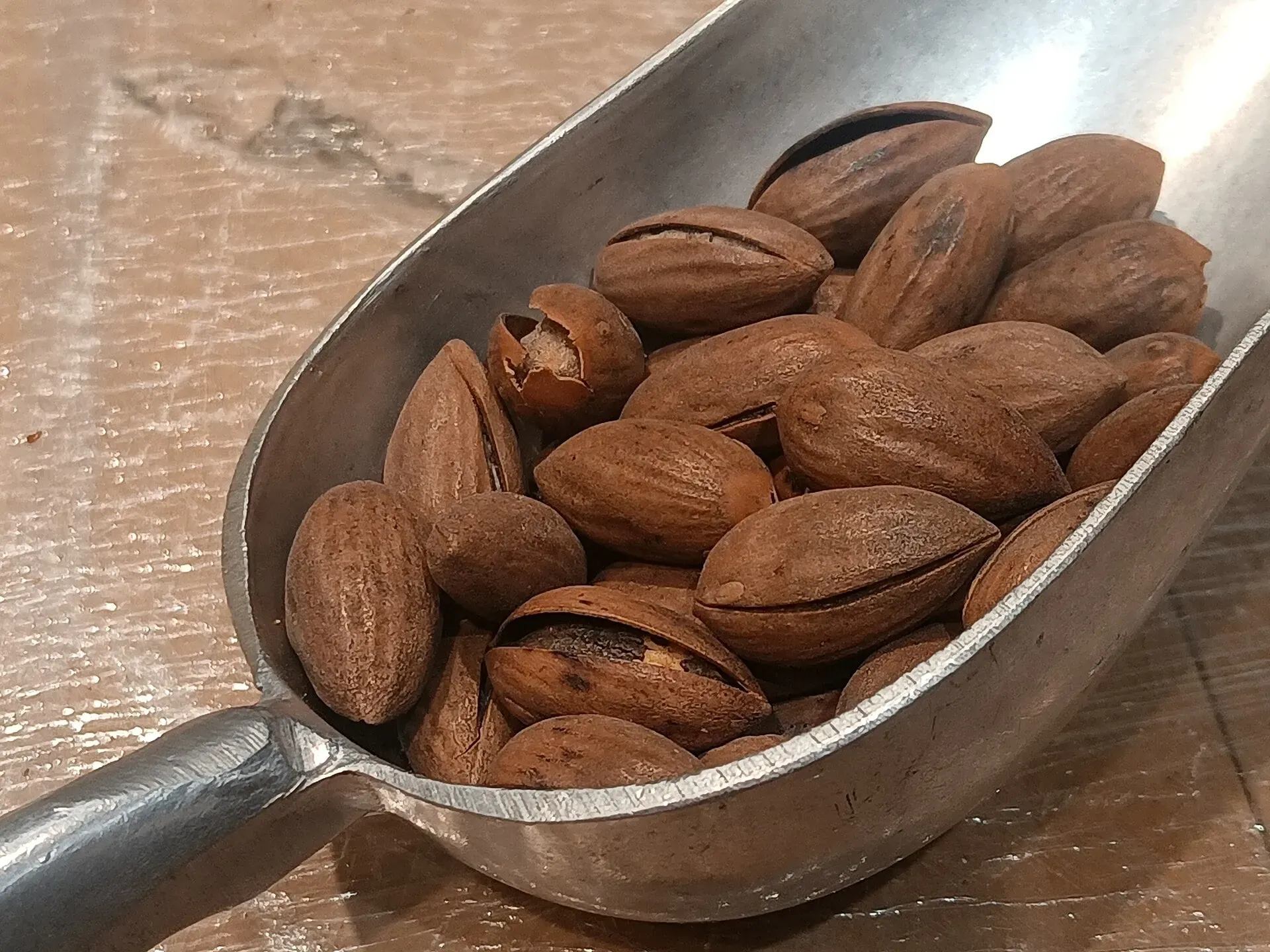
Xi Shi’s name already appears in the Mozi and the Mencius. According to China’s intangible heritage website, the Xi Shi legends arose at the end of the Spring and Autumn period from oral storytelling. Set against the wars of Wu and Yue, with her extraordinary life as the trunk, they put out many branches: stories about people, such as “Dong Shi imitating the frown”; about places, such as White Fish Pool; about local produce, such as the “eyes” of the torreya nut; and about customs, such as the water lanterns at Sanjiangkou. In 2006 the Xi Shi legends joined China’s first national list of intangible cultural heritage as item I-10, nominated by Zhuji.
“Dong Shi imitating the frown” comes from the Zhuangzi: Xi Shi had a pain in her heart and frowned with her hand pressed to her chest, which only made her lovelier; her neighbor Dong Shi copied her, and everyone who saw her fled. Folk tradition also gives Xi Shi the “sinking fish” of the idiom for beauty — fish forgot to swim and sank when they saw her washing silk — although the idiom is generally traced to the Zhuangzi, where it was said of two other beauties, Mao Qiang and Li Ji.
Whether Xi Shi really lived is uncertain. According to Wikipedia, some scholars believe she never existed, and others place her home in Xiaoshan.
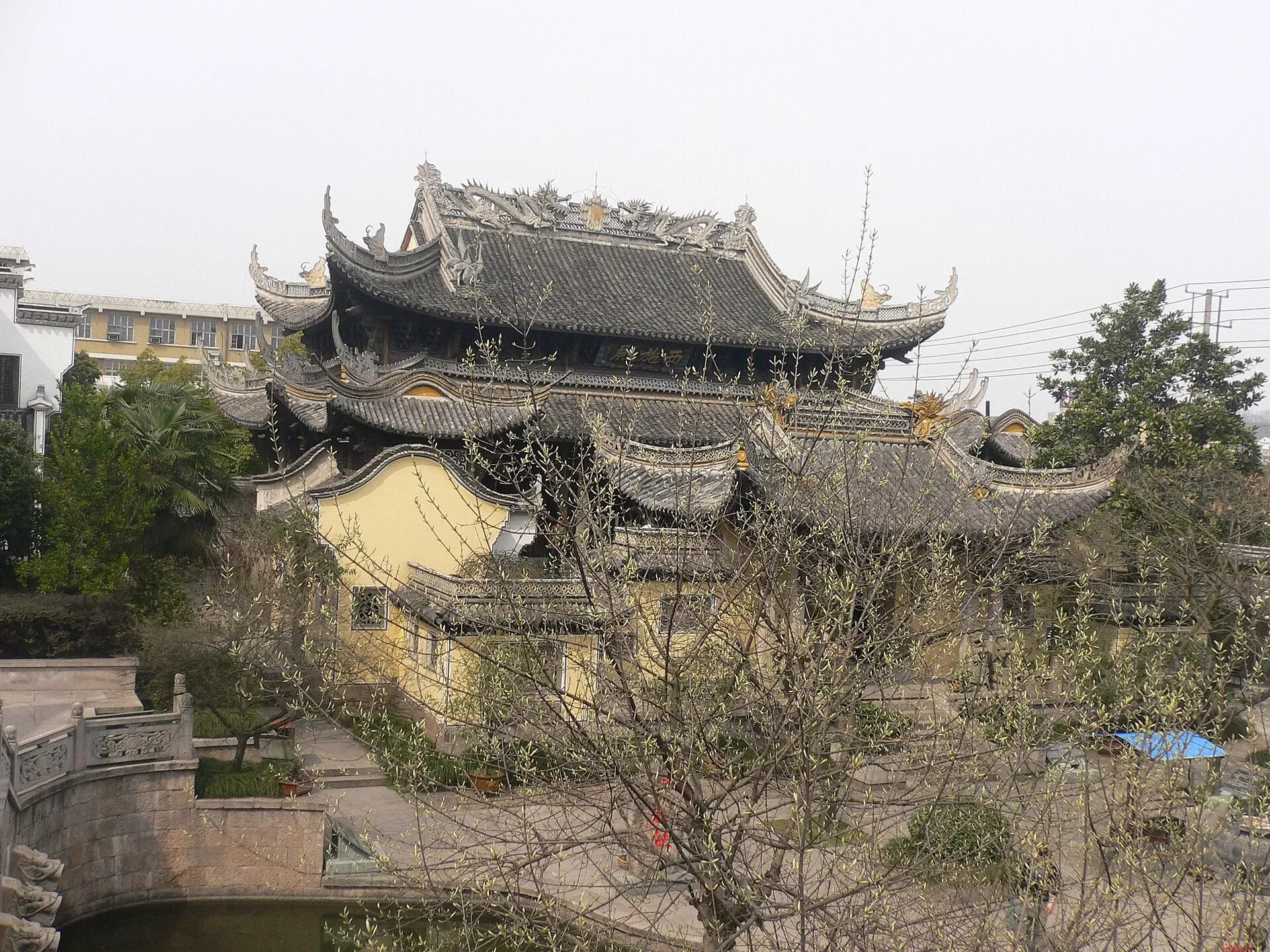
Xi Shi’s Hometown
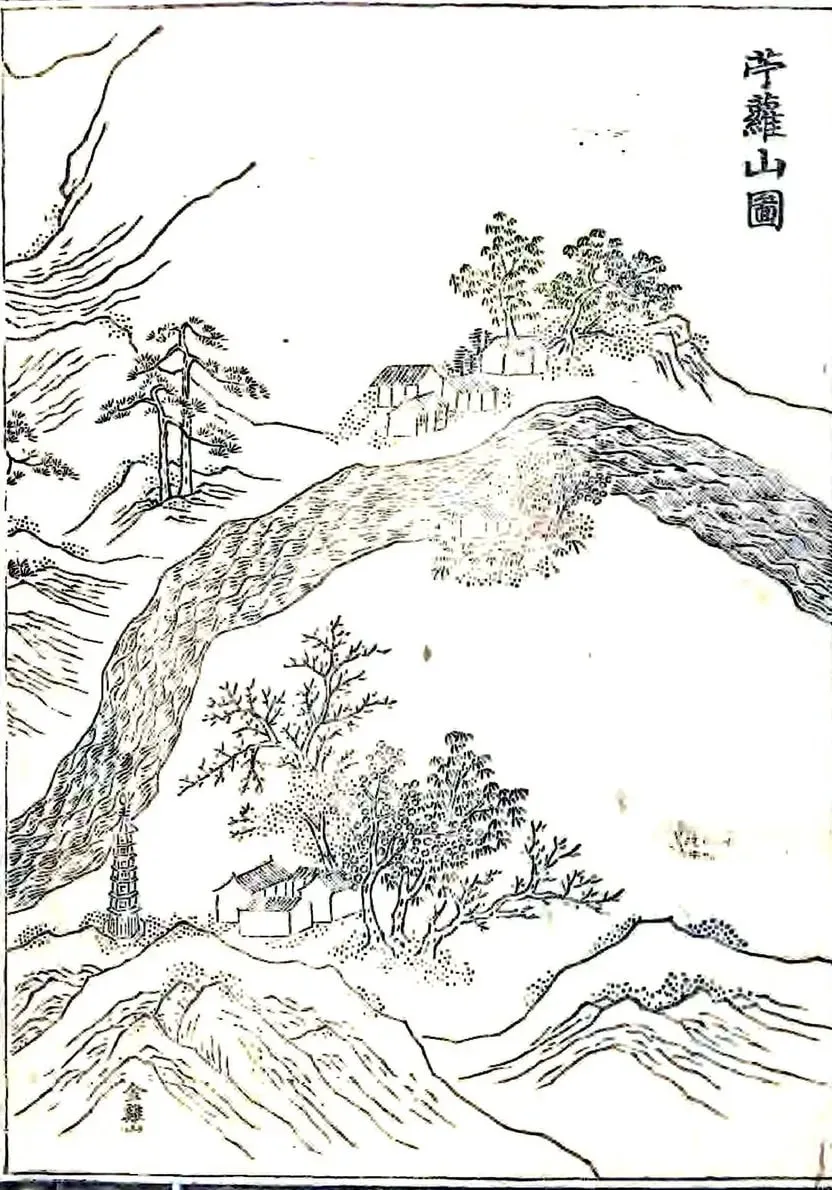
On the Huan River on the south side of Zhuji is a scenic area in her memory called Xi Shi’s Hometown. According to Wikipedia, Zhuji built it in 2003; it is a national 4A tourist area with a riverside promenade along the Huan, the Xi Shi Hall, the Fan Li Shrine and the Zheng Dan Pavilion. The Qianlong-era gazetteer of Zhuji already opened with a picture of Zhuluo Hill.
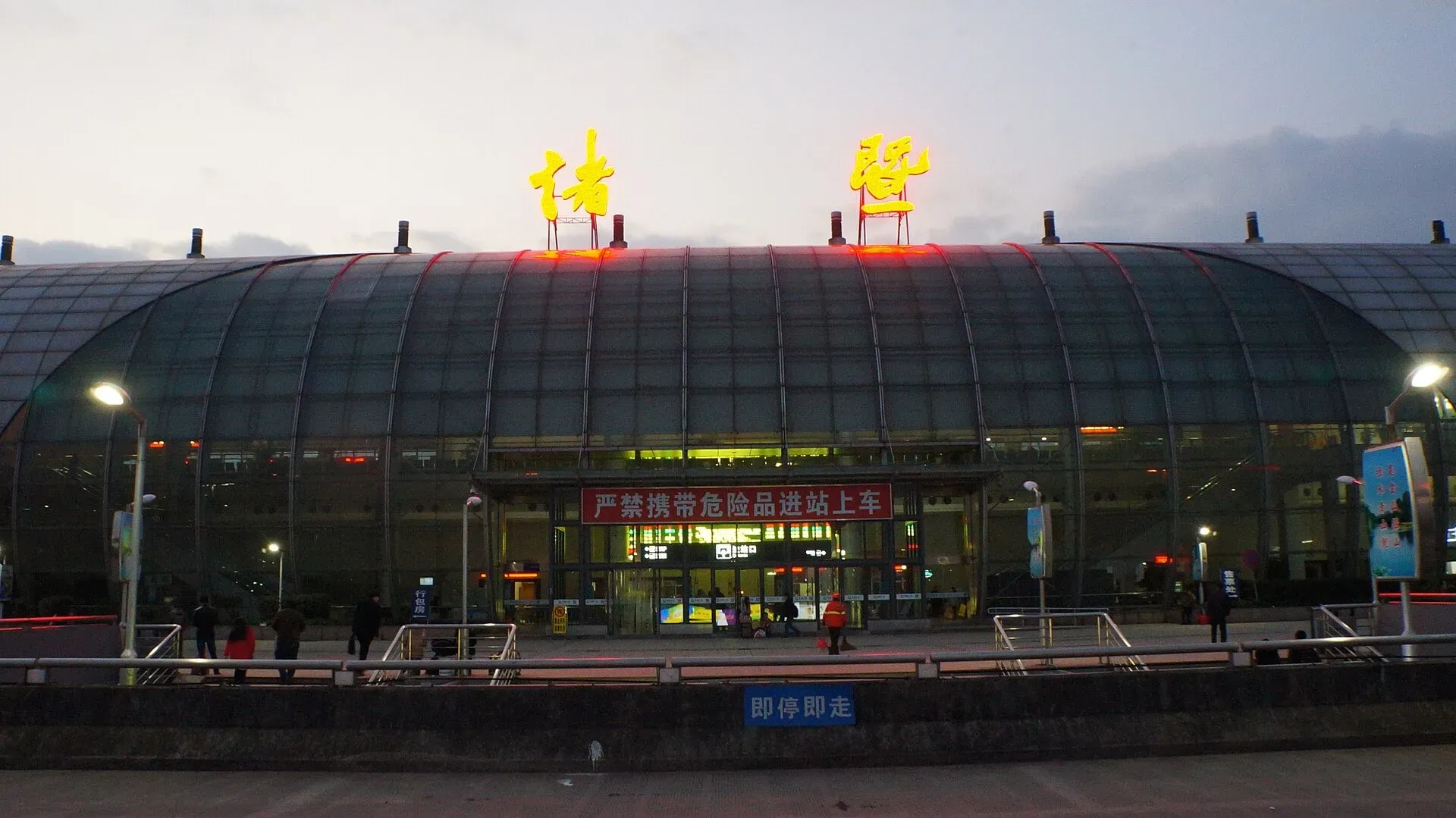
Xi Shi’s Hometown is about 7 km from Zhuji high-speed station, around ten minutes by taxi by map estimate. Check tickets and opening hours locally; for how to reach Zhuji, see Getting to Zhuji.
Planning a visit
According to Wikipedia, the scenic area of Xi Shi’s Hometown spans both banks of the Huan River. The Xi Shi Hall stands by the river below Zhuluo Hill. According to an essay by Chen Kanzhang on Chao News in 2023, early in the 21st century Zhuji added an eastern district on the far bank, below Jinji Hill, which faces Zhuluo Hill across the river, on the land of Luciwan village and the former Zhuji machine-tool works. The scenic area is on the south side of the city, a little over a kilometer’s walk from the city square in the center, and about a kilometer and a half from the square to the Xi Shi Hall.
Today’s Xi Shi Hall was begun in 1986 and finished in 1990. According to Wikipedia, it covers more than 5,000 square meters, with a gatehouse, the Old Yue Terrace, the Zheng Dan Pavilion, a gallery of inscribed stones, and the Rouge and Sinking Fish pools, among others; for the rebuilding, more than 12,000 old building parts — beams, pillars, doors, windows, carved brackets and more — were collected from old houses all over Zhuji. Chen Kanzhang writes that this gives the hall the air of a folk museum, and that the name over the gate was written by the painter Liu Haisu. Beside the hall, by the river, is the Silk-Washing Stone. Also on the riverbank, carved into the rock, are the two characters for “washing silk,” traditionally said to be by Wang Xizhi; according to CCTV in 2007, they were repainted in 1986.
According to the Zhuji government’s news office in 2026, the sights are strung out along the Huan River — the Xi Shi Hall, the Museum of Famous Women in Chinese History, the Fan Li Shrine, the Zheng Ancestral Hall and others — and Old Yue Street is lined with shops, with every kind of snack.
According to Chao News in 2024, the “Meeting Xi Shi” night cruise on the Huan River began trial runs at the end of 2023 and had carried more than 28,000 visitors by May Day 2024. Visitors boarded at the scenic area’s pier, the roof of the boat slid open, and a dance drama played out on stages along both banks — five acts and twelve scenes between Xi Shi’s Hometown and Maozhubu Bridge to the north, telling the story of her life. Both the cruise and the play “Dreaming of Xi Shi” were still in the Zhuji government news office’s guide in 2026.
We have found no recent information from the scenic area or the major media on which parts charge admission, how much, or when they open, nor on the times and prices of the cruise and the play; the cruise needed a ticket, according to Chao News in 2024. Nor have we found reliable information on buses from Zhuji station to the scenic area.
The sights are spread out along the river: allow half a day to see the Xi Shi Hall and the halls and shrines by the river in daylight, and stay on after dark for the cruise or the play. For other places to see in Zhuji, see Places to Visit. Tickets, opening hours and evening shows change often, so ask locally before you go.
Questions & answers
Where was Xi Shi from?
By tradition, from Zhuji in the state of Yue, at the end of the Spring and Autumn period. She lived below Zhuluo Hill, where there were two villages, east and west, most of whose people were named Shi; her family lived in the west village, hence Xi Shi, “Shi of the West.” Some place her home in Xiaoshan instead.
Was Xi Shi from Zhuji or from Xiaoshan?
Both claims are old, and the mainstream one is Zhuji. According to CCTV in 2007, most opinion over the centuries favored Zhuji, while some scholars — Lai Sixing of the Ming and Mao Qiling and Zhu Yizun of the Qing among them — argued for Xiaoshan. Mao’s evidence was a note by Liu Zhao in the Book of the Later Han, which, under Yuji, the old name of Xiaoshan, quotes the Yuejue shu as calling it “where Xi Shi came from”; many scholars think the note is mistaken. The two places argued the point again for seven years from 1979, and Linpu, in Xiaoshan, also has a Xi Shi temple and other sites, which local tradition explains by her stopping there on her way to Wu. In 2006 the Xi Shi legends, nominated by Zhuji, joined China’s first national list of intangible heritage; that year Xiaoshan still held to its claim.
Did Xi Shi really exist?
No one can say for sure. Her name already appears in the Mozi and the Mencius, but most of her life story comes from later legend; according to Wikipedia, some scholars believe she never existed.
What happened to Xi Shi in the end?
There are two versions. One says that after Wu fell she left with Fan Li and they drifted away on the Five Lakes; the other says she was drowned. The first is the one most people tell.
Is the “fish sinking” in “beauty to make fish sink and geese fall” about Xi Shi?
That is how it is usually told — that fish forgot to swim and sank when they saw Xi Shi washing silk. The idiom is generally traced to the Zhuangzi, however, where it was said of two other beauties, Mao Qiang and Li Ji; others trace it to a Tang poem on Xi Shi by Song Zhiwen.
What is the story of “Dong Shi imitating the frown”?
It comes from the Zhuangzi. Xi Shi had a pain in her heart and frowned with her hand pressed to her chest, which made her even lovelier; a neighbor, Dong Shi, thought it beautiful and copied her, and everyone who saw her ran away. It now means imitating someone blindly, with comic results.
Where is Xi Shi’s Hometown?
On the Huan River on the south side of Zhuji, about 7 km from Zhuji high-speed station. It is a national 4A scenic area with the Xi Shi Hall, the Fan Li Shrine and the Zheng Dan Pavilion. Check tickets and opening hours locally.
Is the Xi Shi Hall an old building?
The building is a modern rebuilding, but many of its parts are old. According to an essay by Chen Kanzhang on Chao News in 2023, a shrine to Xi Shi below Zhuluo Hill is on record from the Tang at the latest; it was destroyed and rebuilt many times, and mostly destroyed by Japanese bombing during the war against Japan. The present hall was begun in 1986 and finished in 1990; according to Wikipedia, more than 12,000 old building parts collected from old houses across Zhuji went into it.
What is there to see at Xi Shi’s Hometown in the evening?
According to the Zhuji government’s news office in 2026, you can take the “Meeting Xi Shi” night cruise on the Huan River or see the immersive play “Dreaming of Xi Shi.” According to Chao News in 2024, the cruise began trial runs at the end of 2023, with a dance drama on stages along both banks, and needed a ticket. We have found no official show times or prices, so ask before you go.
Sources
- 李白诗出自《全唐诗》卷一八一。英文为本站翻译。车程是按 OpenStreetMap 路网估算的开车时间。
- 步行距离是按 OpenStreetMap 路网估算的,方位按 OpenStreetMap 地图。
- 西施传说 · 中国非物质文化遗产网(国家级名录,项目编号 Ⅰ-10)
- 西施 · 维基百科
- Xi Shi · Wikipedia
- 范蠡 · 维基百科
- 西施(李白)· 维基文库
- 西施故里 · 维基百科
- 晚潮|唐诗之路:西施殿,苎萝山麓千年秋 · 潮新闻(陈侃章),2023 年 9 月 1 日
- 西施故里之争争出一片辉煌 · 央视网,2007 年 4 月 17 日
- 精彩五一 乐享假期 · 潮新闻,2024 年 5 月 2 日
- 5·19中国旅游日,总要来一趟诸暨吧!这份游玩宝典请收好!· 诸暨发布(澎湃号),2026 年 5 月 19 日
- 后汉书·郡国志四 · 维基文库