Xinchang Diaoqiang Opera
Diaoqiang is an old opera style of eastern Zhejiang, thought to be the last surviving echo of the Yuyao tune, one of the four great styles of Ming southern drama. It uses no strings or winds, only percussion, and voices that join in at the end of each line. It joined China’s first national list of intangible heritage in 2006, and the Xinchang Diaoqiang Troupe is the only company in China that can still stage the Yuan drama The Northern West Chamber.
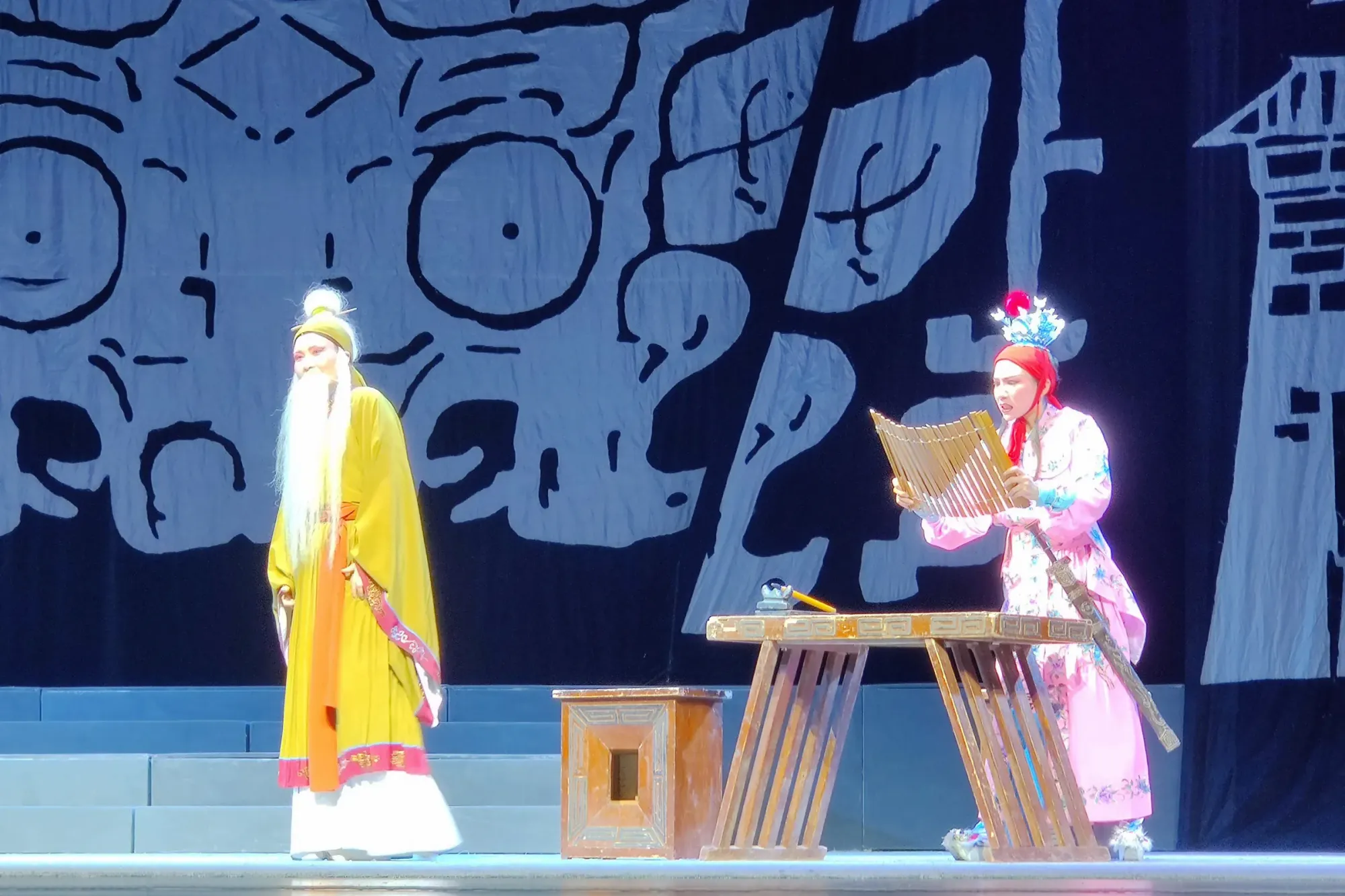
Xinchang is best known for its Great Buddha and for Mount Tianmu, but it also keeps something older and far less known: Diaoqiang. It is an old opera style of eastern Zhejiang, sung with no fiddles or flutes, only gongs and drums; at the end of each line, the musicians at the back of the stage take up the tune with their voices.
An echo of the Yuyao tune
Southern drama in the Ming dynasty was sung in several regional styles, among them the Haiyan, Yuyao, Kunshan and Yiyang tunes; the Kunshan tune is what became Kunqu. The Yuyao tune vanished long ago — except that, according to China’s intangible heritage website, Xinchang’s Diaoqiang is thought to be its last surviving echo.
Diaoqiang, also called the Shaoxing high tune or the Xinchang high tune, centered on Xinchang and was once heard across Shaoxing, Xiaoshan, Shangyu, Yuyao, Sheng County and Ninghai. Its heyday came in the early Qing, when it spread outward from Hangzhou. Why did it survive in Xinchang of all places? The same website’s answer is geography: in the hills of eastern Zhejiang, Xinchang was cut off enough for an old style to hold on.
How old it is depends on whom you ask: a 2009 report from Zhejiang’s culture information network gives it more than six hundred years, Chinese Wikipedia more than four hundred.
Singing without strings
What sets Diaoqiang apart is the way it is sung. The heritage website names three techniques — ganchang, bangqiang and dieban, roughly bare singing, helping voices and stacked beats. At the end of a line, others take up the last word or few words, or repeat them a beat late to a different melody; the helping voices are human voices alone, and each line tends to slide downward as it goes. The 2009 report sums up this old southern-drama style in four phrases: no strings or winds, only the clappers to keep time; gongs and drums in support, and the backstage band taking up the line.
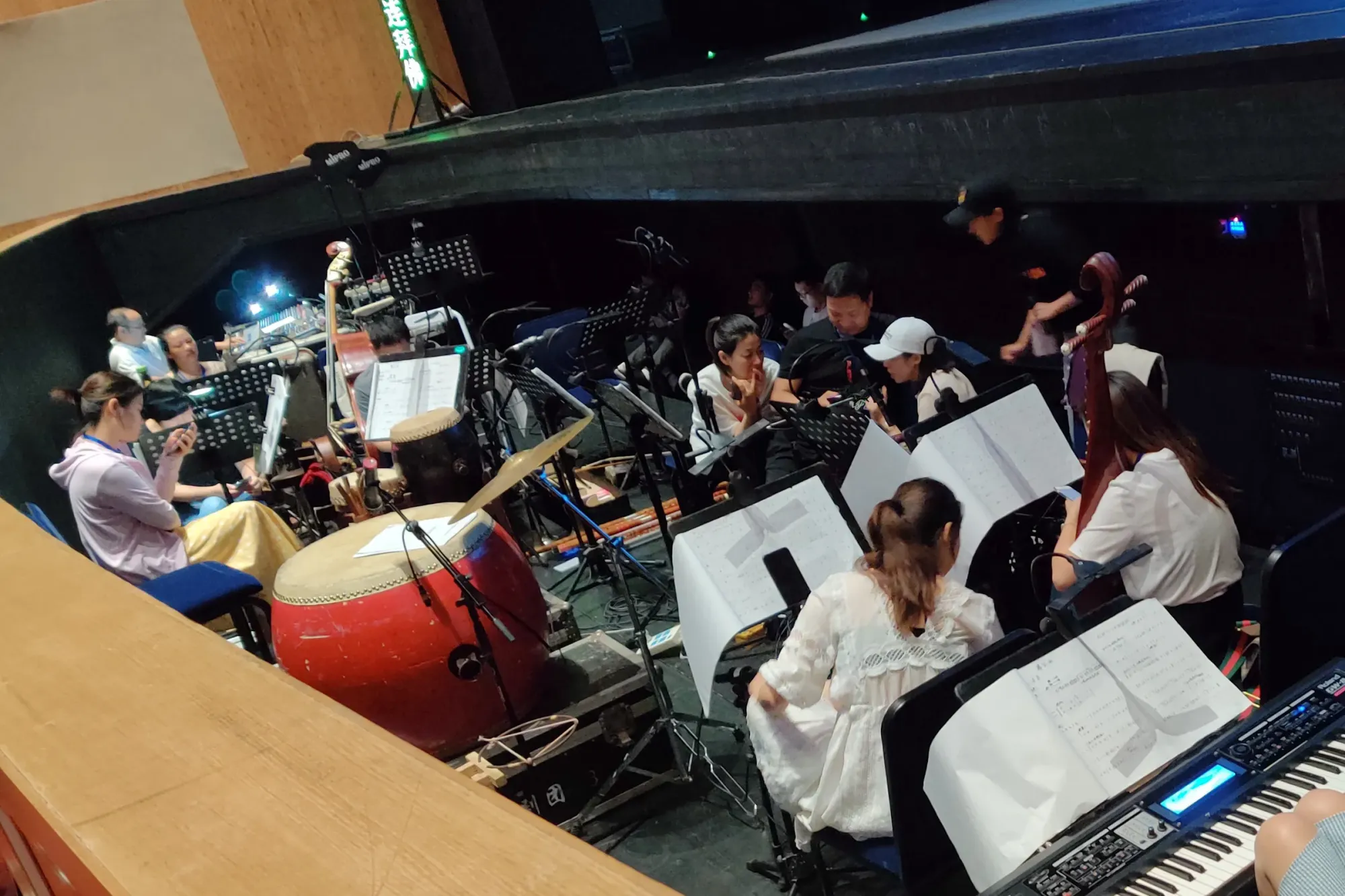
The accompaniment is just as spare: no strings or winds, only percussion, played by a band of six on the clappers and drum, the small gongs and the rest. Only later, under the influence of Kunqu and luantan opera, did a handful of excerpts add the dizi flute and the banhu fiddle.
Its stock roles are counted as “three painted faces, four white faces and five dan”: three kinds of painted-face roles; four kinds of unpainted male roles, from old men to young scholars; and five kinds of female roles, from old women to young girls. The acting is known for its finesse, and for set-piece feats such as raising a chair aloft, holding a candle, and kicking off a boot with one’s back to the audience.
159 old scripts
Diaoqiang has a large repertoire: plays handed down from the Mulian dramas, southern drama, Yuan zaju and the long chuanqi dramas of the Ming and Qing, as well as historical and modern plays written in the last century or so. According to the heritage website, its archives hold 159 manuscript plays from before the late Qing.
The most precious are a few Yuan dramas, among them the Northern West Chamber, Autumn in the Han Palace and The Dressing Case, which only Diaoqiang still performs. The Northern West Chamber is Wang Shifu’s Romance of the Western Chamber, written to northern tunes in the Yuan dynasty — hence “northern,” to tell it from the Southern West Chamber adapted in the Ming. According to the same website, the Xinchang Diaoqiang Troupe is the only company in China that can stage it, and its Autumn in the Han Palace keeps the original form of Yuan drama.
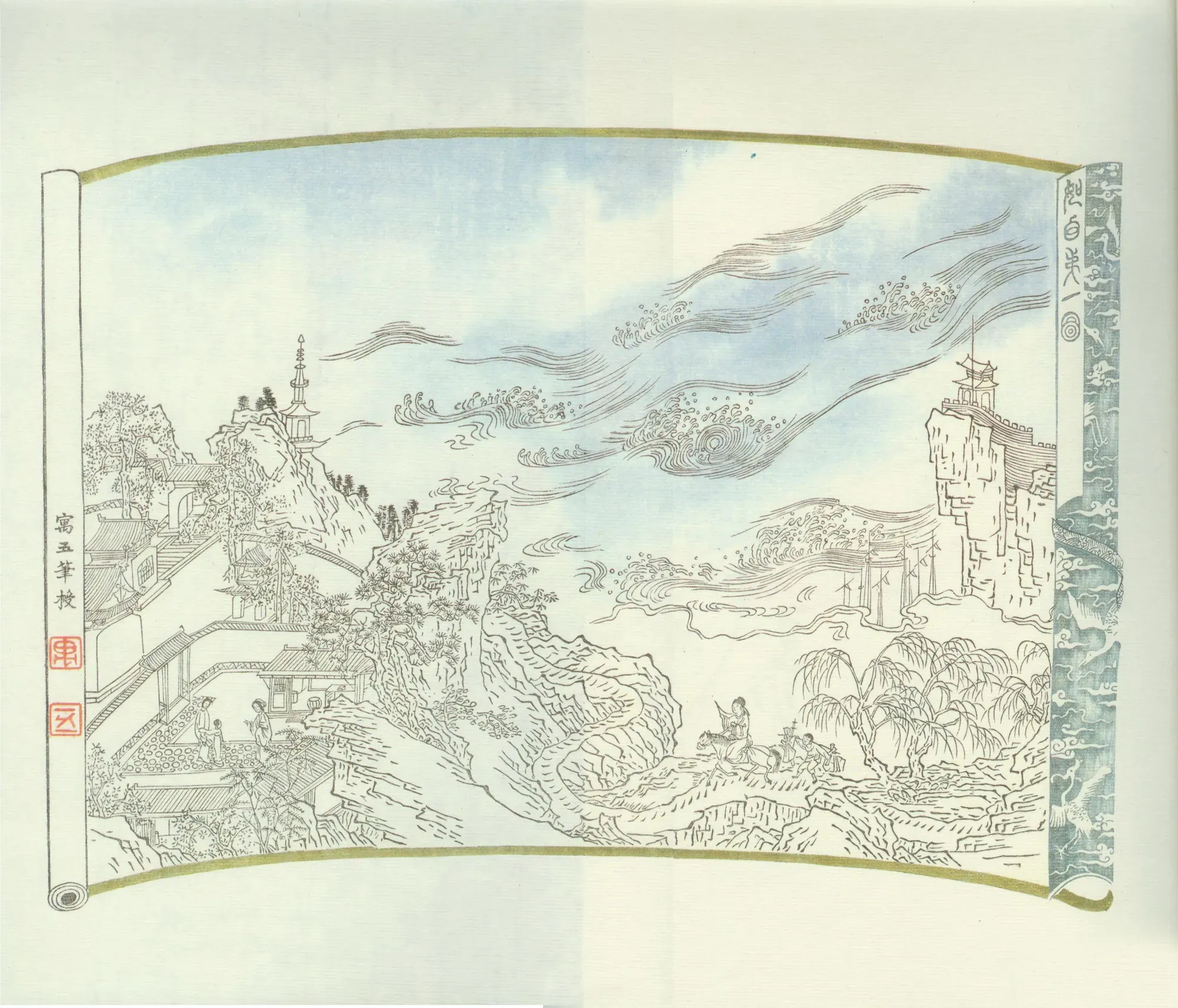
The Mulian plays tell of Mulian, the disciple of the Buddha who rescues his mother from hell. Diaoqiang’s Mulian repertoire runs to 167 pieces, the heritage website counts, and 72 of them are found in no other kind of opera.
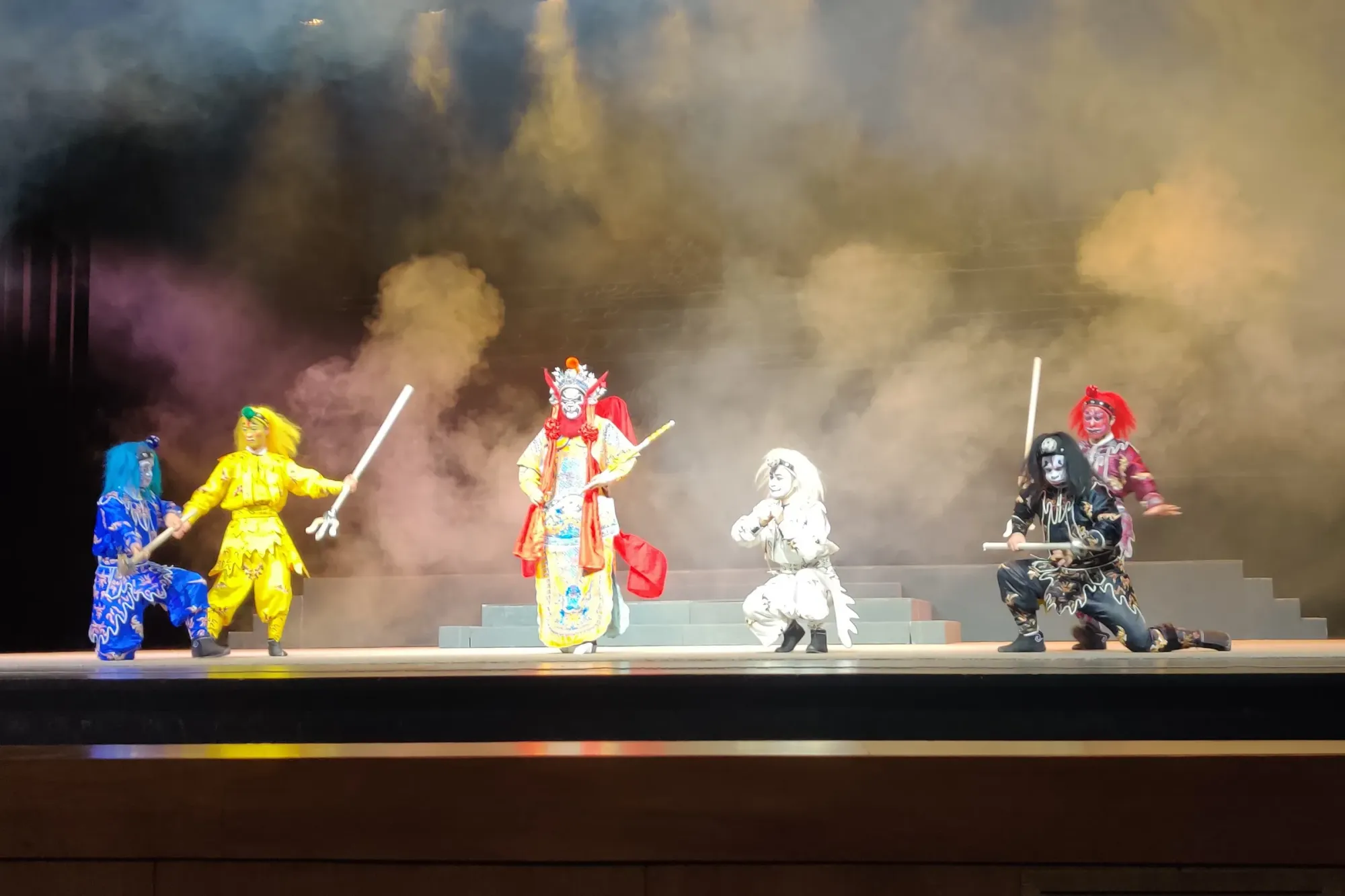
What Yue opera owes it
Diaoqiang shaped the theatre around it. According to the heritage website, Ninghai pingdiao is an offshoot of it, and other local forms — Yue opera, Taizhou luantan, Rui’an high tune and Shaoxing opera — all drew to some degree on its plays, tunes and stagecraft. Yue opera itself was born next door to Xinchang, in Shengzhou; see The Birthplace of Yue Opera.
The same source adds that some of Diaoqiang’s song suites still carry traces of the stamping songs of the Tang dynasty and the sung dances of the Song — a rare window on early Chinese theatre and music.
From the brink to the classroom
In the late Qing and the early Republic, war after war and the rise of newer kinds of opera pushed Diaoqiang into decline. The heritage website’s entry describes it as endangered, with a troupe short of money and a gap between generations of performers.
The Xinchang Diaoqiang Troupe was founded in 1959, and marked its fiftieth year in 2009 with a new Mulian play, The Red God. According to the 2009 report, the provincial culture department named Diaoqiang a heritage training base in 2007, and the county set up a fund for it and a vocational class to train young performers. In 2016 the Guangming Daily reported that Xinchang had written Diaoqiang into its primary-school textbooks, so that children meet the old opera early.
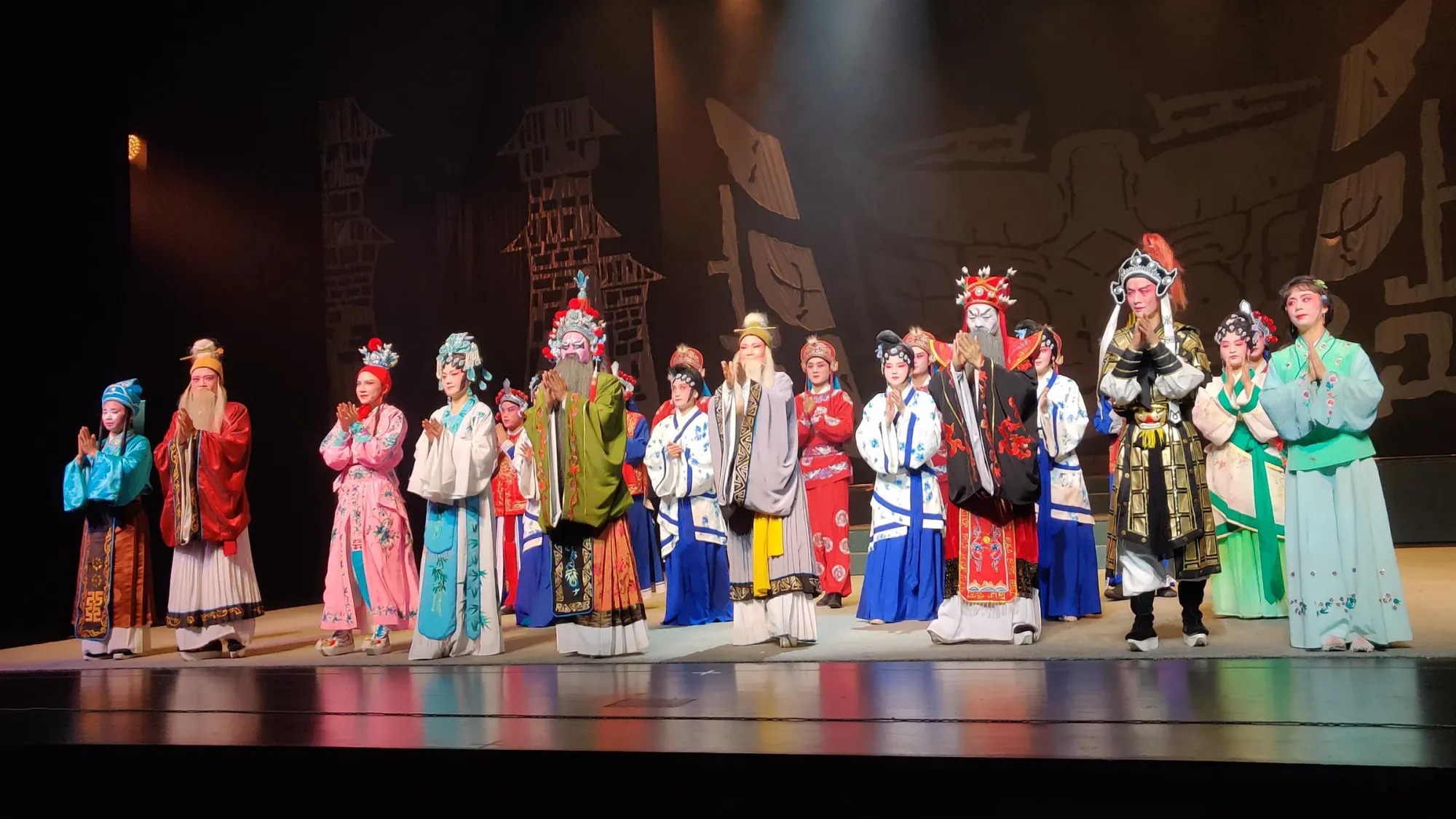
China’s intangible heritage website lists Zhang Huaqin, Cai Dejin, Lü Yueming and Wang Ying as masters of the tradition, and the Xinchang Diaoqiang Conservation and Development Center as the body responsible for it.
Seeing Diaoqiang in Xinchang
Since its founding the troupe has performed in Xinchang and the surrounding area. We have not found a fixed venue or a published schedule, so if you want to see a performance, ask locally before you go. For the journey, see Getting to Xinchang; on the same trip you can visit the Great Buddha of Xinchang and Mount Tianmu.
Questions & answers
What is Diaoqiang?
An old opera style from Xinchang in Zhejiang, also called the Shaoxing high tune or the Xinchang high tune, once performed across Shaoxing, Xiaoshan, Shangyu, Yuyao, Sheng County and Ninghai. According to China’s intangible heritage website, it is thought to be the last surviving echo of the Yuyao tune, one of the four great styles of Ming southern drama. It joined China’s first national list of intangible cultural heritage in 2006.
What accompanies the singing?
Percussion alone. Diaoqiang is sung without strings or winds; a band of six plays the clappers, drum and small gongs, and the helping voices at the end of a line are human voices only. Later, under the influence of Kunqu and luantan opera, a few excerpts added the dizi flute and the banhu fiddle.
What is the Northern West Chamber?
It is Wang Shifu’s Yuan dynasty drama The Romance of the Western Chamber. Wang wrote it to northern tunes, so it is also called the Northern West Chamber, to tell it apart from the Southern West Chamber adapted from it in the Ming. According to China’s intangible heritage website, the Xinchang Diaoqiang Troupe is the only company in the country that can still perform the northern version.
Is Diaoqiang related to Yue opera?
Yes. According to China’s intangible heritage website, Ninghai pingdiao is an offshoot of Diaoqiang, and Yue opera, Taizhou luantan, Rui’an high tune and Shaoxing opera all drew to some degree on its plays, tunes and stagecraft. Yue opera was born in Shengzhou, Xinchang’s neighbor — see The Birthplace of Yue Opera.
Where can I see Diaoqiang?
The Xinchang Diaoqiang Troupe has performed in Xinchang and the surrounding area since it was founded in 1959. We have not found a fixed venue or schedule, so ask locally before you go.