Chongren ancient town
Northwest of Shengzhou, the old town of Chongren keeps more than two hundred historic buildings from the early Ming to the Republic, including 154 old courtyard houses. It is a major national heritage site and one of China’s historic towns — and on weekends, Yue opera is still sung on its old stage.
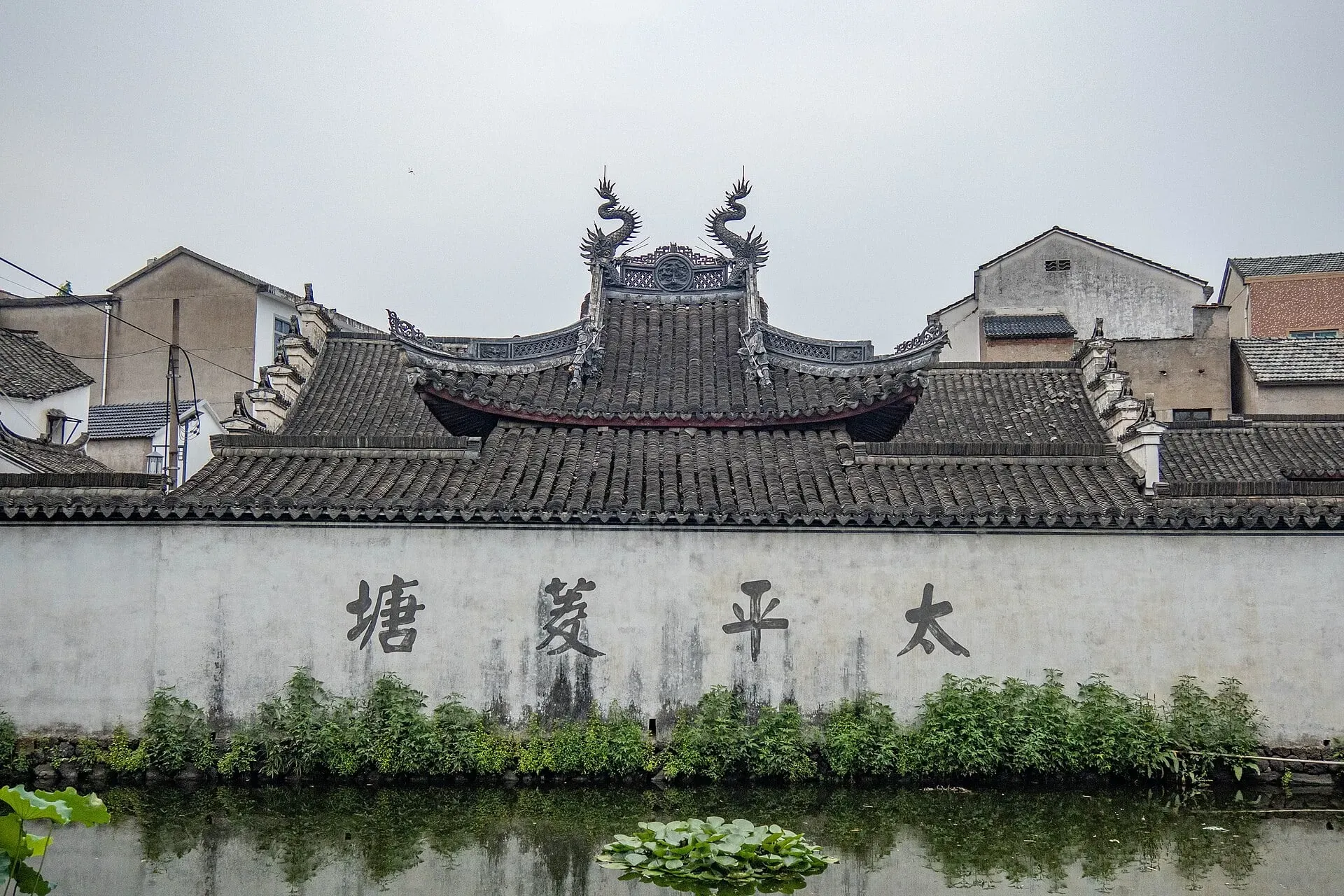
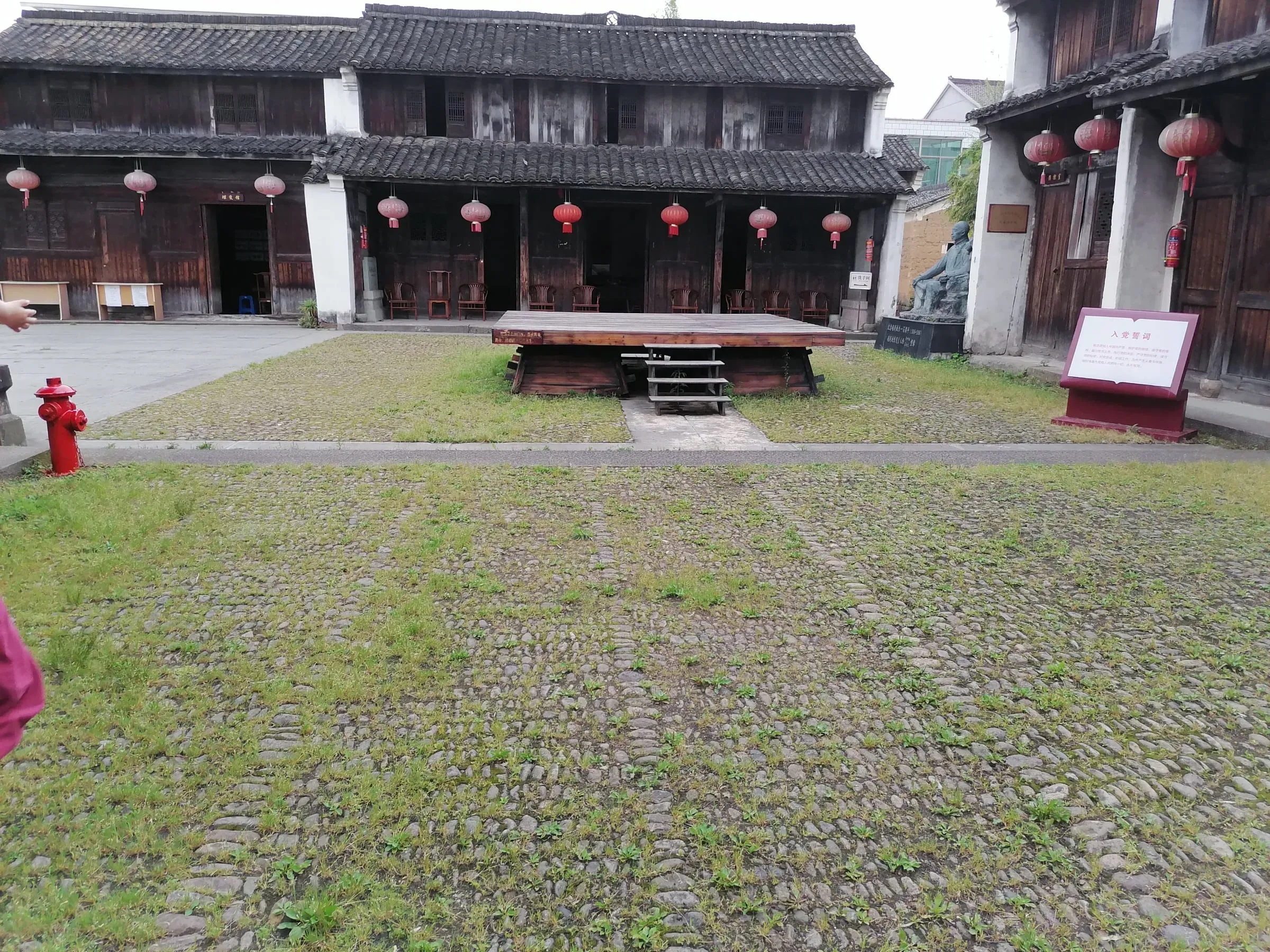
About eleven kilometers northwest of central Shengzhou lies Chongren. It is not an old town rebuilt for tourists: families still live in its courtyard houses, its lanes are paved with river cobbles, and on weekends Yue opera is sung on the old stage of the Yushan Ancestral Hall. More than two hundred historic buildings survive here, from the early Ming dynasty to the Republic. Chongren became a major national heritage site in 2006 and one of China’s historic towns in 2014.
A village and its clan
Chongren is old: China’s National Cultural Heritage Administration says there was a village here before the Three Kingdoms period. In the Northern Song dynasty the Qiu family arrived, and in time they became the largest clan in the village. Sources differ on the date. The Shengzhou gazetteer, citing the Qiu genealogy, says the Xining years (1068–1077); the national heritage catalogue says the Qingli years (1041–1048). According to the genealogy, the family’s ancestor came south in 316 with Sima Rui, the future founder of the Eastern Jin, and settled in Wuzhou (today’s Jinhua); his son moved to Yunmen near Kuaiji (today’s Shaoxing), and a branch later moved on to western Sheng county. The Qiu of Chongren call themselves the Yimen, or “righteous house,” Qiu, and were long the leading family of western Shengzhou.
As for the name, the popular story says the Qiu family prized benevolence and righteousness — chong ren means “honoring benevolence” — and the place was named for their family values. But as Shengzhou News pointed out in a 2018 piece on local place names, Shan county already had a Chongren township among its forty townships in the Tang dynasty, well before the Qiu arrived; Tang township names often used Confucian virtues such as benevolence, righteousness, propriety and filial piety. So the idea that Chongren was named after the Qiu family is not quite right.
- Tang dynasty: Shan county already has a Chongren township.
- Northern Song: the Qiu family arrives and becomes the village’s largest clan.
- Wanli era of the Ming (1573–1620): a market grows up here.
- Kangxi era of the Qing (1662–1722): Chongren becomes a town.
- 1912: a Chongren District is set up, taking in Chongren Town.
- 2006: the old buildings of Chongren Village become a major national heritage site.
- 2014: Chongren is named in China’s sixth list of historic towns.
154 courtyard houses
A taimen is what people around Shaoxing call a walled family compound entered through a gatehouse; the Zhou family compound in Shaoxing where Lu Xun grew up is a famous example. A taimen usually wraps around one or more courtyards and houses several households of the same clan. According to the national heritage catalogue, Chongren keeps more than two hundred historic structures from the early Ming to the Republic: 154 old courtyard houses, 14 tea and roadside pavilions, more than 50 early modern buildings and 51 old wells.
The Five Linked Courtyards are the largest group: several smaller compounds joined together in the mid-Qing, known above all for their woodcarving. Walk the lanes and you will often see covered passages, called guojielou, bridging the houses on either side above your head.
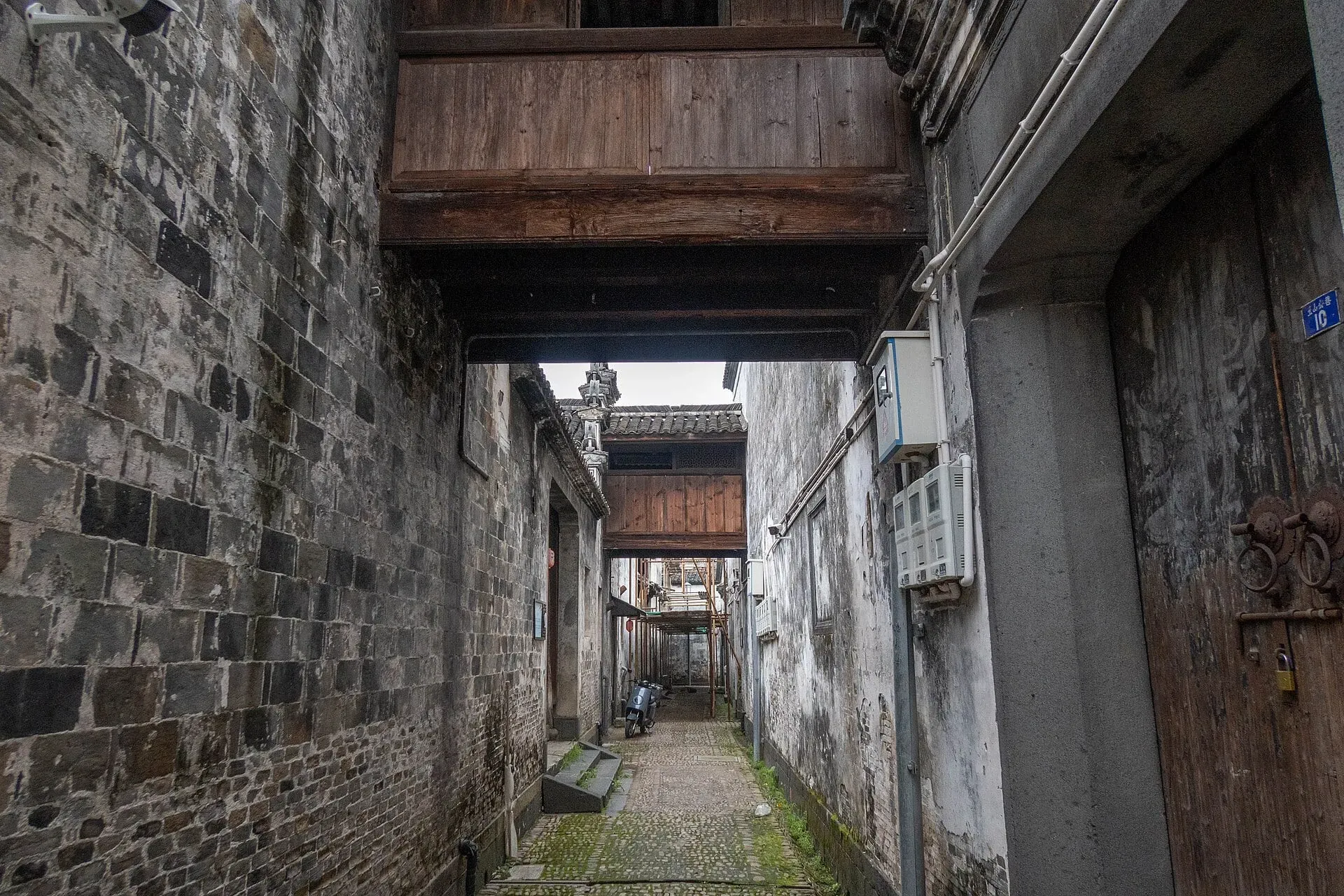
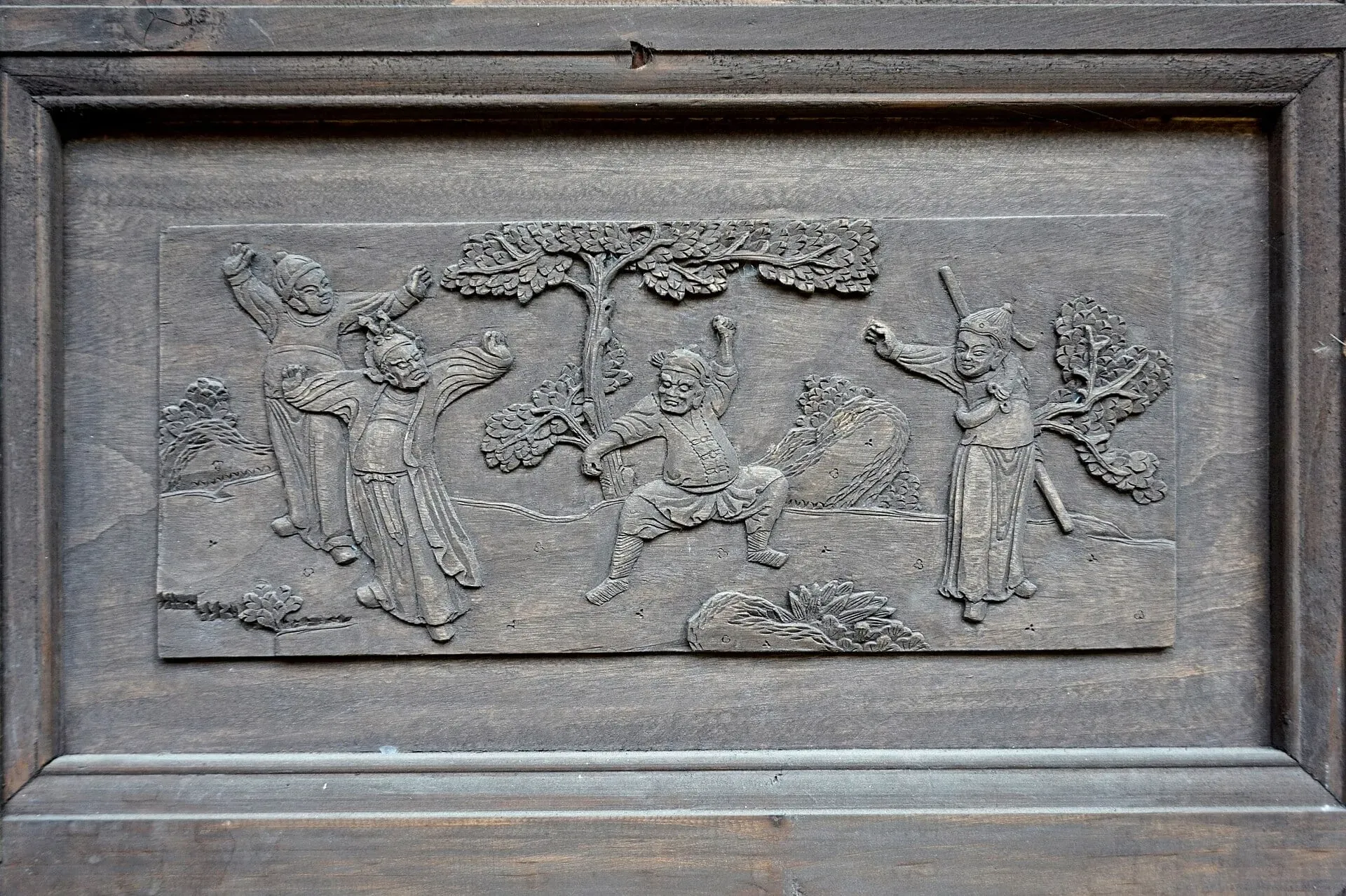
Chongren’s old houses are richly decorated, with carving on doors, windows and beams; the town office and the old courthouse, by contrast, are public buildings from the Republican era.
The stage at the Yushan Ancestral Hall
The Yushan Ancestral Hall is the largest in Chongren, built in 1791 and covering 1,012 square meters. Inside is an old opera stage with stone pillars, two-story galleries along its north and south sides, and a small square in front.
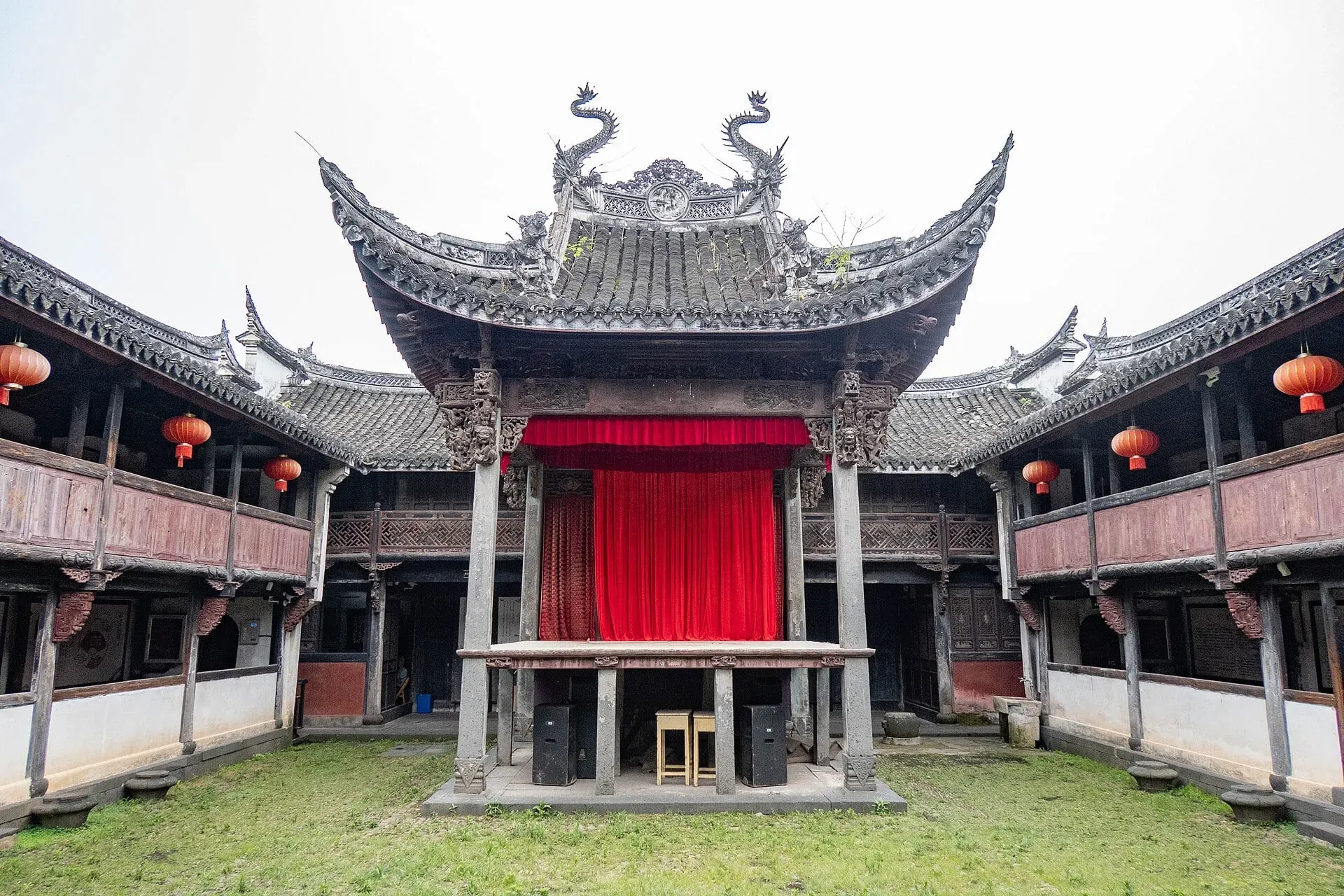
Shengzhou has more than two hundred old stages, and this one was once the liveliest for miles around. Young Yue opera performers tried out their voices here, and the square and side galleries were always packed. By the end of the last century many old stages had fallen quiet; in recent years the city has paid to repair the roof and strengthen the pillars, put someone in charge, and opened the stage to the public for free.
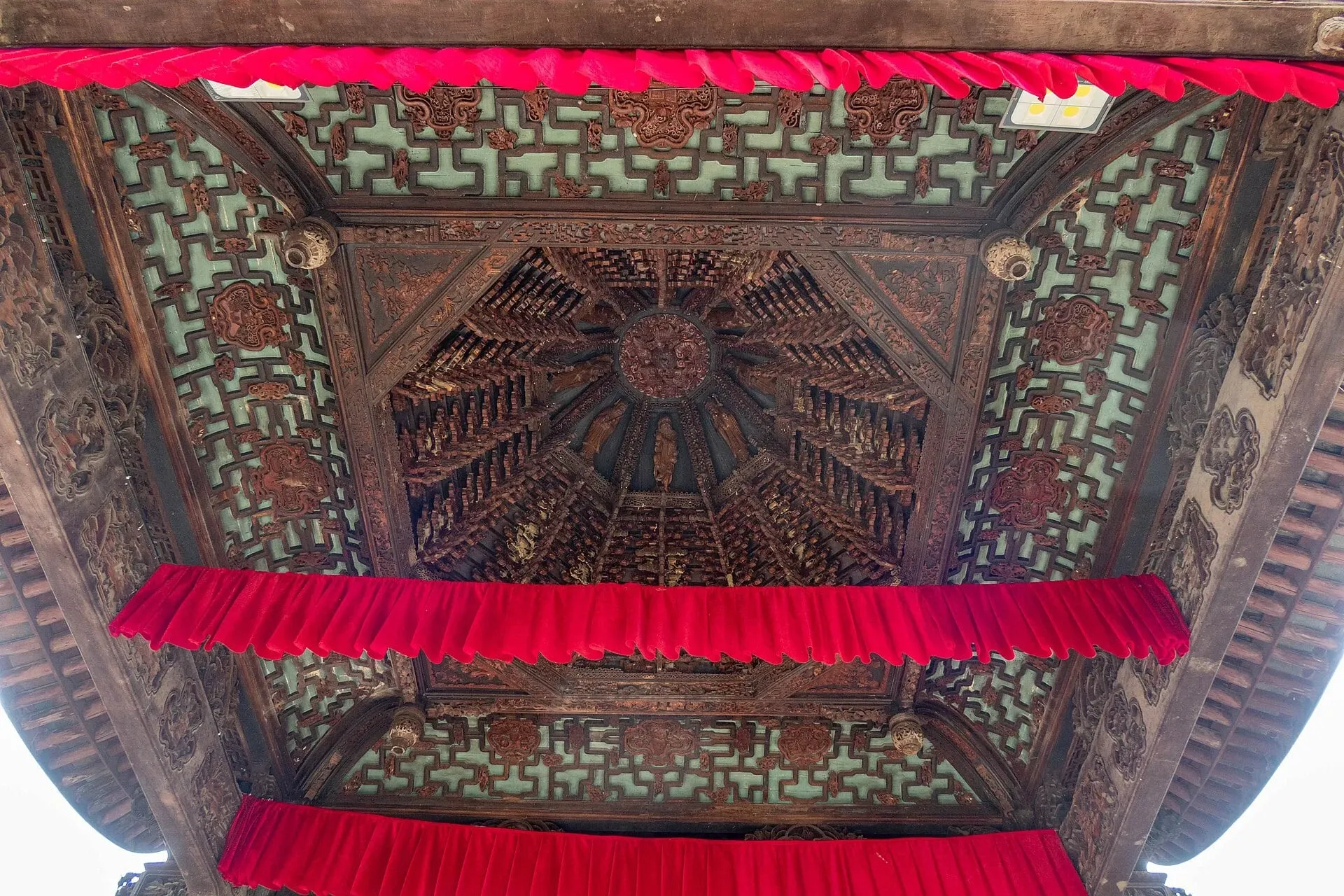
These days Chongren puts on Yue opera at the stage every weekend and public holiday — excerpts from the classics, but also a chance for ordinary fans to step up and sing. Since 2023 Shengzhou has also run a village Yue opera contest, livestreamed so that fans across China can see the old village stages. According to People’s Daily in 2026, Shengzhou has 117 registered private Yue opera troupes employing more than eight thousand people. For the story of Yue opera itself, see our Yue opera guide.
Visiting Chongren
Chongren is about 11 kilometers northwest of central Shengzhou, on the Shaoxing–Ganlin road. It is a lived-in old town and many courtyard houses are still homes, so keep your voice down and ask before stepping into a private courtyard. For Yue opera, come on a weekend or a public holiday.
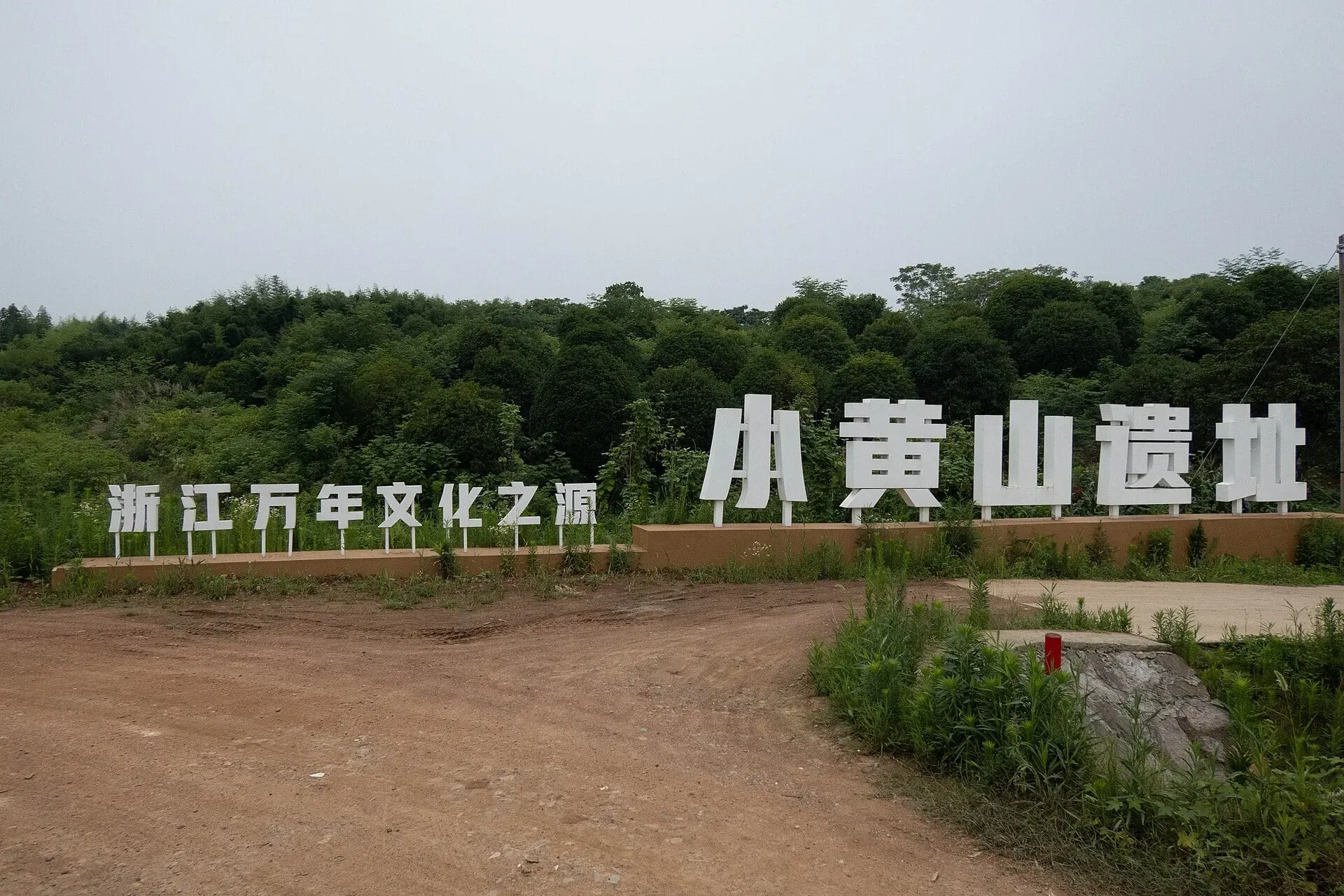
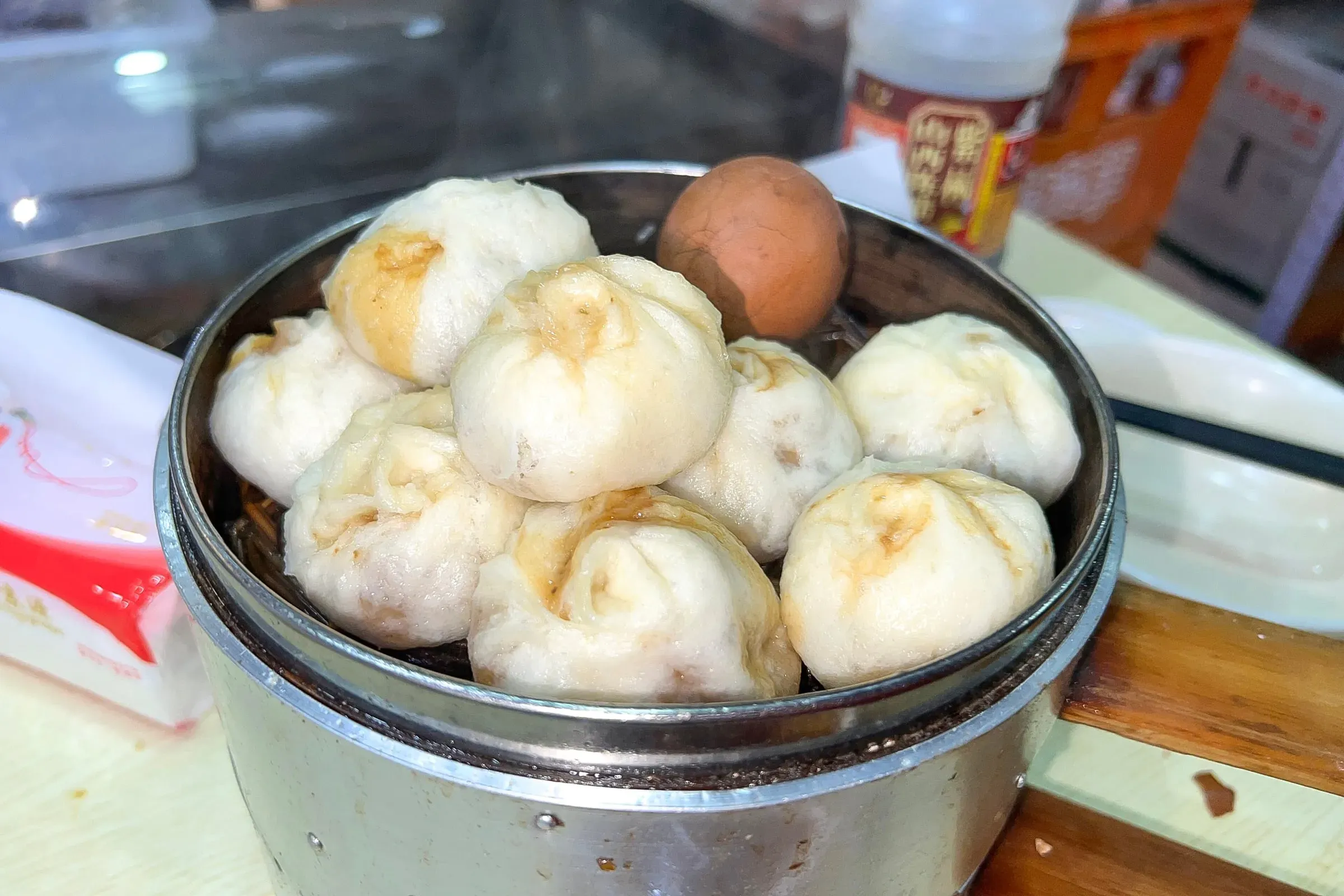
Other sights around the town include the Zhanshan Temple, an old signpost stone, the former homes of Zhang Boqi and of Wang Jinfa, a leader of the 1911 revolution, and the Xiji Bridge at Kuixi. Nearby Ganlin Town has the Xiaohuangshan site and Dongwang Village, the birthplace of Yue opera, which make an easy day out together; back in town, leave room for Shengzhou snacks.
Questions & answers
Where is Chongren?
In Chongren Town, about 11 km northwest of central Shengzhou on the Shaoxing–Ganlin road. Ganlin Town, home of the Xiaohuangshan site, is not far away.
Do you need a ticket for Chongren?
Chongren is a lived-in old town. According to People’s Daily, the restored stage in the Yushan Ancestral Hall is open to the public free of charge.
When can you see Yue opera in Chongren?
On weekends and public holidays, when the town puts on Yue opera at the Yushan Ancestral Hall stage — excerpts from the classics, and local fans taking a turn.
Where does the name Chongren come from?
The popular story says the Qiu family prized benevolence (ren) and the place was named for their values. But Shan county already had a Chongren township in the Tang dynasty, before the Qiu arrived, so the story doesn’t quite hold; Tang township names often drew on Confucian virtues.
What is a taimen?
Taimen is the Shaoxing-area word for a walled family compound entered through a gatehouse, usually built around one or more courtyards and home to several households of one clan. The Zhou family compound where Lu Xun grew up is a famous example. Chongren has 154 of them.
Sources
- 崇仁村建筑群 · 维基百科
- 国家文物局编:《全国重点文物保护单位(第六批)》第Ⅴ卷,文物出版社,2008 年,第 225—228 页(经维基百科转引)
- 中国历史文化名镇 · 维基百科
- 嵊州地名杂识——崇仁 · 嵊州新闻网,2018 年 3 月 15 日
- 老戏台 唱新韵 · 人民日报,2026 年 3 月 21 日
- (文化中国行)走进嵊州崇仁古镇:老台门保留慢生活 · 中新网,2024 年 4 月 24 日