Shengzhou Snacks
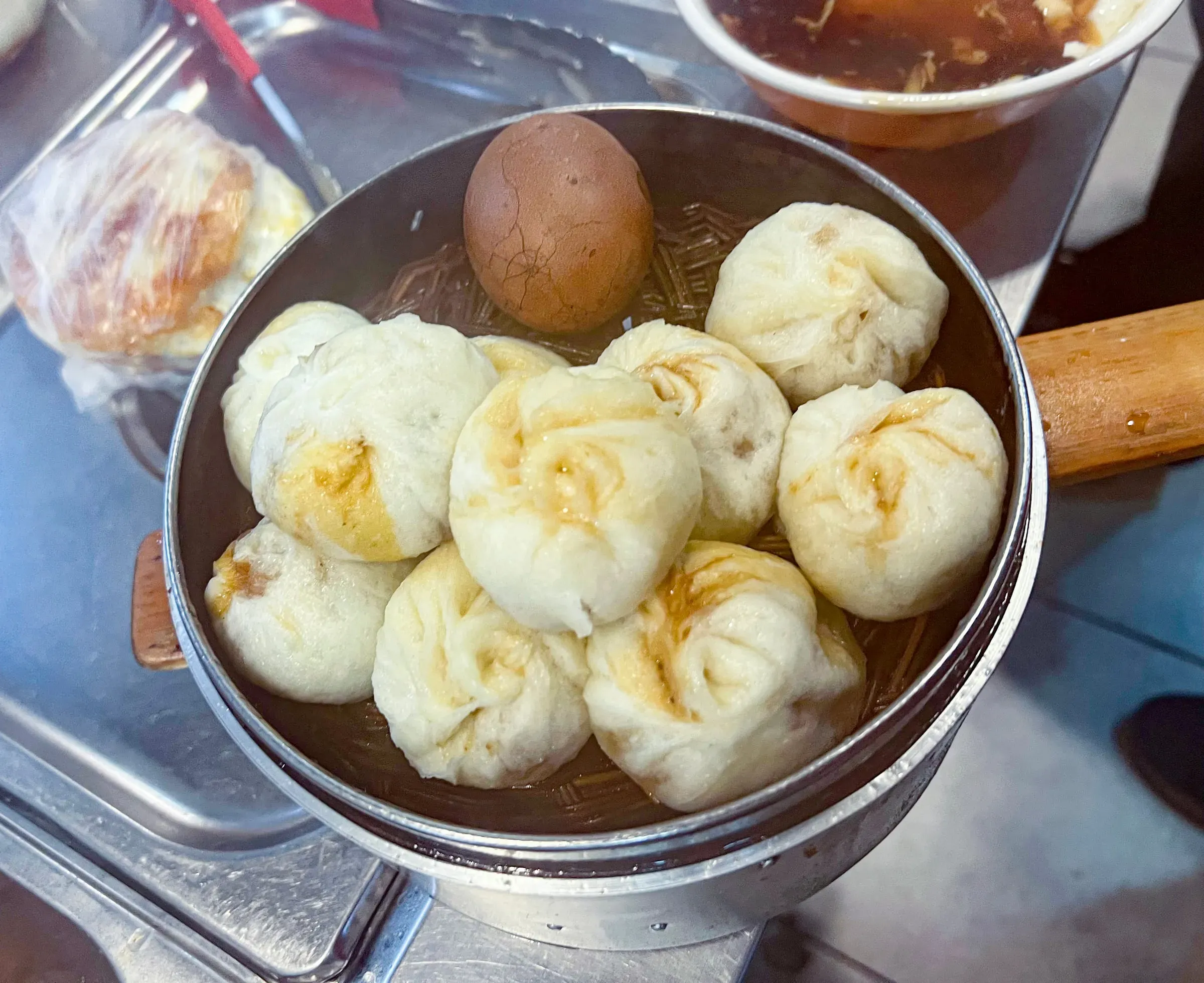
Xiaolongbao, fried rice cakes and fried zhamian noodles are the “three treasures” of Shengzhou snacks — and Shengzhou snack shops are all over China.
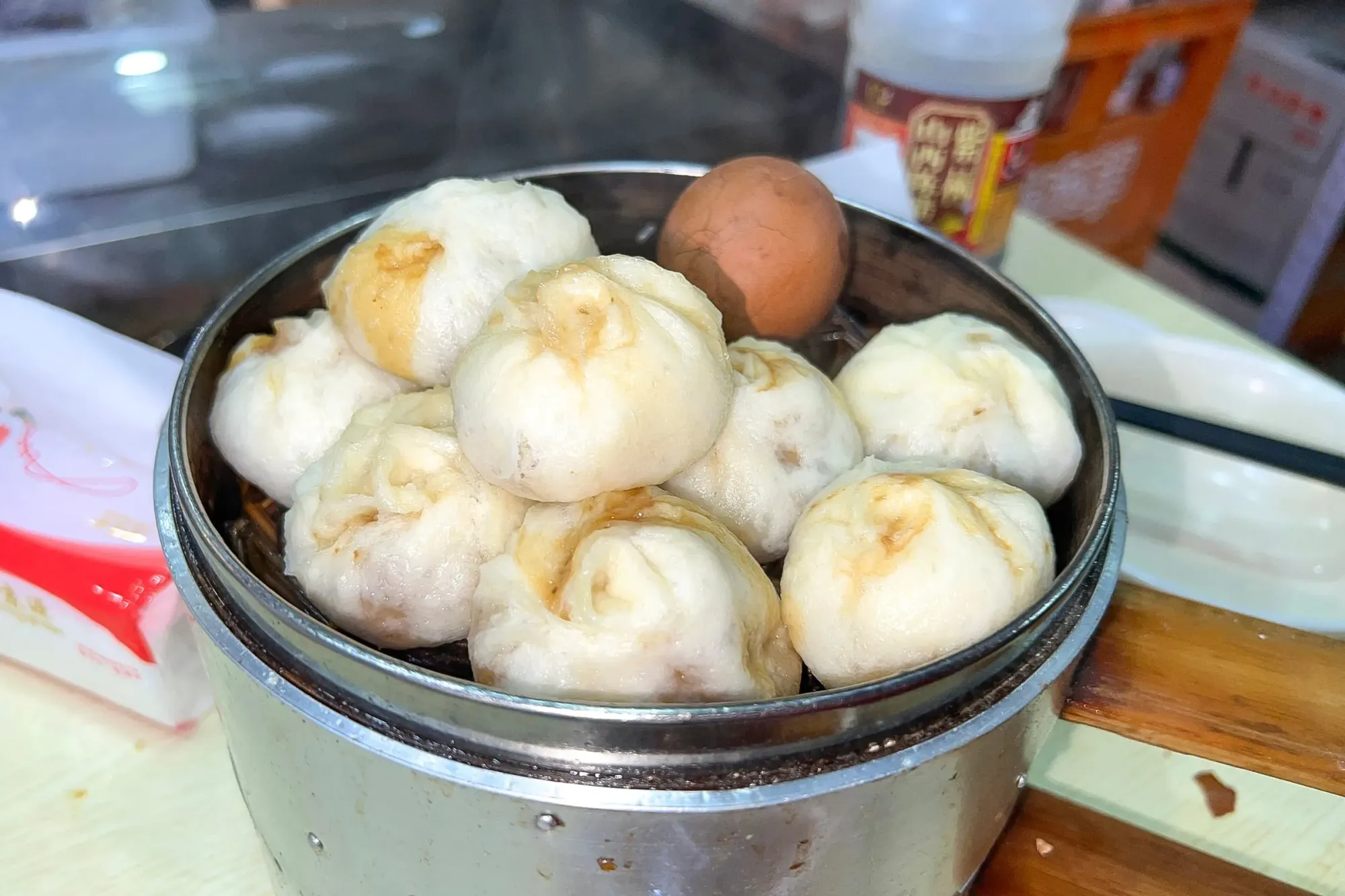
In towns and cities all over China you’ll find small shops under a sign reading “Shengzhou Snacks” (嵊州小吃): a basket of xiaolongbao, a bowl of wontons or noodles, cheap and filling. Shengzhou has more than a hundred kinds of snacks and has been named a “Chinese City of Snack Culture.” The three best known — xiaolongbao, fried rice cakes and fried zhamian noodles — are called the “three treasures” of Shengzhou snacks.
Xiaolongbao
Shengzhou xiaolongbao are raised with an old-dough starter and left open at the top in a “carp mouth,” soft and juicy. Locals also love tofu mantou (sold elsewhere as tofu xiaolongbao): a very thin, dumpling-like wrapper around silken tofu with a little minced pork. For their history, how they’re made and the story behind “Hangzhou xiaolongbao,” see Shengzhou Xiaolongbao.
Fried rice cakes
Shengzhou’s fried rice cakes are stir-fried with silken tofu, pickled greens and ribbons of egg. Savory, soft and chewy, they are one of the most homely tastes of Shengzhou. For more, see Shengzhou Fried Rice Cakes.
Zhamian
Zhamian (榨面) is Shengzhou’s well-known rice noodle. It is dried after it is made, so it keeps for a long time, and softened in hot water before cooking. The classic way to eat it is stir-fried with dried bamboo shoots, shredded pork and pickled greens — tossed with chopsticks rather than a spatula, so the noodles don’t clump.
Spring pancakes
Spring pancakes (春饼) are paper-thin wheat pancakes that people in Shengzhou eat all year round. According to an article on Shengzhou News in 2020, wheat flour, water and a little salt are worked into a soft, stretchy dough; the cook takes a small pinch, wipes it lightly across a hot cast-iron griddle into a round, peels it off, turns it and gives it a moment more — “as thin as a cicada’s wing and as round as the full moon.”
Spring pancakes are eaten rolled around a filling. The same article says the favorite is youtunguo (油氽果), a fritter of shredded radish or pumpkin in batter, fried in a little boat-shaped mold; stinky tofu is another. In Huangze there is also a pig’s-head version: a piece of hot pig’s-head meat laid on the pancakes, sprinkled with toasted salt and rolled up. According to a 2016 article on Shengzhou News, a spring pancake rolled around minced pork or scallions and deep-fried becomes a spring roll.
The name comes from the old custom of eating them on Lichun, the solar term that opens spring in early February. Neighboring Xinchang loves spring pancakes too; see Xinchang Fried Rice Cakes and Snacks.
Maihuoshao
Maihuoshao (麦镬烧), or maihuo, looks like a spring pancake but is much thicker. According to a 2021 Shengzhou News article carried by Zhejiang Online, it is made in much the same way: wheat flour, water and salt are mixed into a soft batter, spread into a round in a hot iron wok, baked, and wrapped around fillings such as stir-fried bean sprouts and fried tofu. In 2025 Shaoxing Release, the Shaoxing government’s news account, named Qianliang maihuo, from Qianliang village in Huangze, among the standouts of Shengzhou’s snacks.
In Shengzhou, the Dragon Boat Festival calls for maihuoshao. According to a 2014 article on Shengzhou News, the new wheat has just come in by then, so families grind fresh flour and make maihuoshao for the festival lunch. Legend ties the custom to Wu Zixu, the loyal minister of the ancient state of Wu: people along the Shan stream are said to have made maihuoshao from the new wheat so that he could “taste the new harvest.” The 2021 article says eating maihuoshao at the festival is still as popular in Shengzhou as eating zongzi.
Green maci
In the Shengzhou dialect, rice cakes are called maci (麻糍). According to Shengzhou News in 2019, Shengzhou’s rice cakes are made of late-season japonica rice, long and square like bricks, and commonly called maci — which is why locals also call fried rice cakes “fried maci.” But maci is not only rice cake: according to a 2016 article on the dialect on Shengzhou News, a soft rice cake filled with bean paste is a maci too.
In spring there is also green maci (青麻糍). According to a 2018 report on Shengzhou News, it is made from mugwort, glutinous rice flour, bean paste and sesame: at one household in Qianliang village, Huangze, reporters watched the steamed rice flour being tipped into a stone mortar and pounded again and again with a stone pestle of about 12.5 kilograms until the dough and the mugwort were fully blended; it was then dusted with flour, wrapped around bean paste and cut into lengths. A guide to Huangze’s snacks from the same year names Qianliang as where it has traditionally been made, with every household there making it around the Qingming festival.
Wine-lees chicken and pork
Wine-lees chicken and pork (糟鸡、糟肉) are among Shengzhou’s best-known flavors. According to a 2016 article on Shengzhou News, they are simple to make: cooked chicken and pork are rubbed with salt, packed into a watertight container in layers with the lees left over from pressing glutinous rice wine, and sealed; after ten to fifteen days they are ready. Most families seal them before Chinese New Year, start eating them a week after, and usually make them last until the end of the second lunar month.
Legend has it that a couple who ran a small wine shop in old Sheng, too poor to buy anything else for New Year, salted the chicken and pork they had cooked and pressed them into the lees; when they served it to their New Year guests, the whole house filled with its smell, and soon every family was making it. In Shengzhou’s old town today, shops selling wine-cured meats stand next to the rice-cake shops; see Shengzhou Fried Rice Cakes.
Eating snacks in Shengzhou
Breakfast in Shengzhou is usually a basket of xiaolongbao or tofu mantou — see Shengzhou Xiaolongbao — perhaps with a bowl of tangbao, which, according to a 2016 article on Shengzhou News, is the dialect word for wontons: tiny ones cooked in broth. In the autumn of 2023, reporters from the food publication Flavor Planet found a tangbao shop on Shixin Street that had been open for forty years; the menu on the wall had just five items: tangbao, raw tangbao (生汤包), tangbao with duck egg, pork zongzi and tea eggs.
To try several at once, head for the old town. According to Shaoxing Release in February 2025, for that year’s Spring Festival Shengzhou set aside snack areas on Dongqian Street in the old town, on the Yuexiu Road snack street and elsewhere, and snack zones in Huangze and Chongren towns; Dongqian Street and nearby offered 108 kinds of food. Dongqian Street fits into a walk with the Town God Temple and the old city wall; see Following the Tang Poets Through Shengzhou. The arrangements may differ from year to year, so check before you go.
And many more
Spring pancakes, sticky rice cakes, steamed dumplings with preserved greens… By one count Shengzhou has 108 kinds of snacks — enough, they say, to eat something different every day for a month.
Questions & answers
What snacks is Shengzhou known for?
Best known are the “three treasures” — xiaolongbao, fried rice cakes and fried zhamian noodles. Others include tofu mantou, spring pancakes, maihuoshao, green maci, wine-lees chicken and pork, and tangbao. According to China News Service in 2026, Shengzhou has 108 kinds of snacks.
What does “maci” mean in Shengzhou?
In the Shengzhou dialect, rice cakes are called maci, so fried rice cakes are also called “fried maci.” But maci also means a soft rice cake filled with bean paste, such as green maci, eaten around the Qingming festival and made of mugwort and glutinous rice flour.
What is tangbao in Shengzhou?
Tiny wontons cooked in broth. In the Shengzhou dialect tangbao means wontons, not Shanghai-style soup dumplings.
More photos
All photos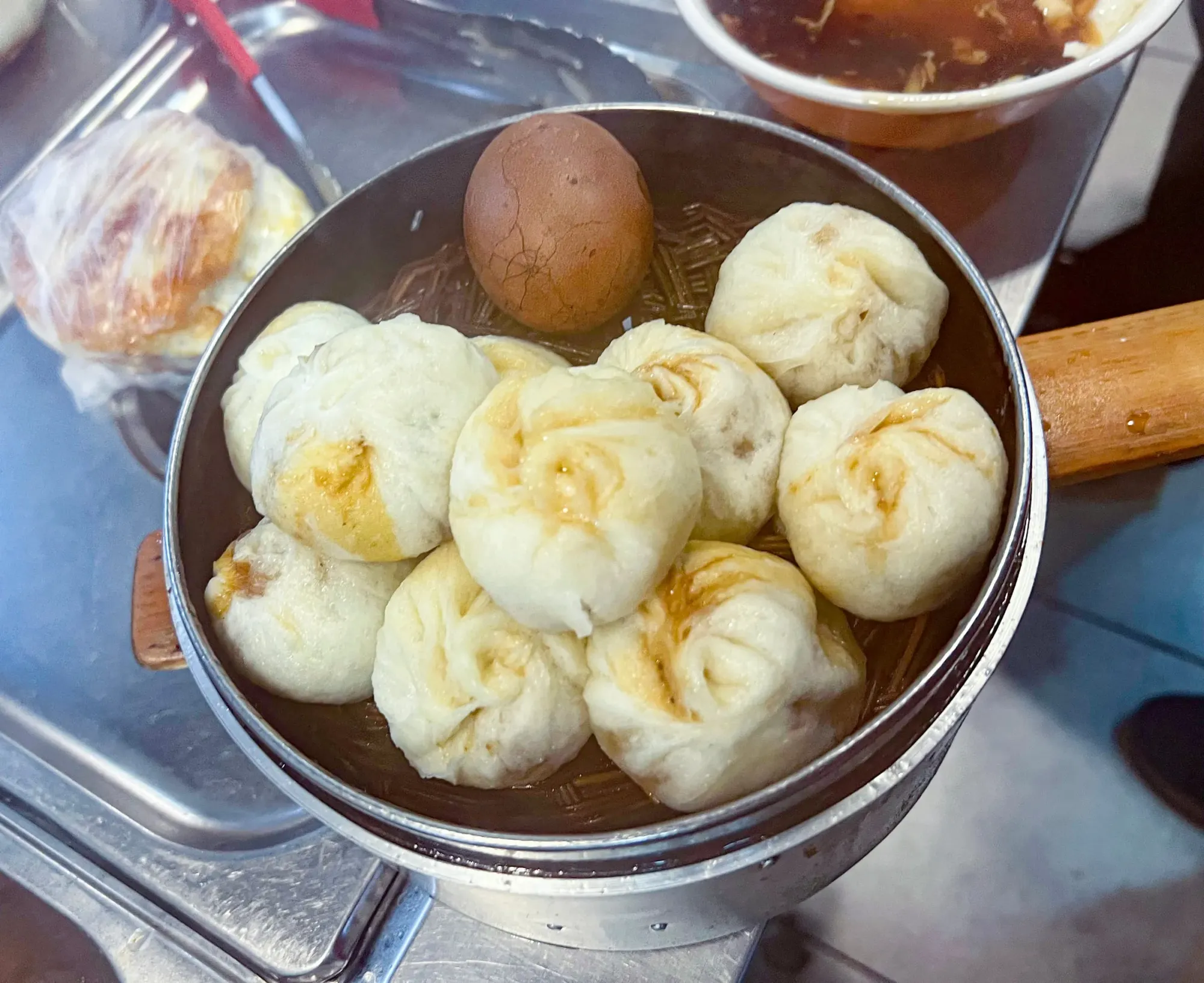
Sources
- 百余种嵊州小吃飘香海内外 · 中国新闻网(凤凰网转载),2024 年 3 月 14 日
- 人这一辈子,一定要去一趟嵊州! · 中新社,2026 年 1 月 6 日
- 2024 中国(嵊州)小吃文化节 · 羊城晚报
- 中国最“难吃”的菜系,却承包了每个城市的早餐? · 风味星球(虎嗅转载),2025 年 5 月 20 日
- 嵊州小吃 · 嵊州新闻网,2019 年 5 月 5 日
- 嵊州小吃:春饼 · 嵊州新闻网,2016 年 8 月 24 日
- 《春饼卷油氽果》:皮酥脆 馅咸鲜 口齿留香 · 嵊州新闻网,2020 年 12 月 22 日
- 嵊州:有一种端午叫“冬红”有一道美食叫麦镬烧 · 浙江在线(嵊州新闻网),2021 年 6 月 10 日
- 端午食俗——端午美食吃“五黄” · 嵊州新闻网,2014 年 6 月 3 日
- 嵊州方言趣谈——食品的别样称呼 · 嵊州新闻网,2016 年 2 月 24 日
- 《嵊州炒年糕》:一道具有美好寓意的绝品美食 · 嵊州新闻网,2020 年 11 月 12 日
- 清明近 黄泽镇前良村的手工青麻糍“火爆” · 嵊州新闻网,2018 年 3 月 22 日
- 黄泽特色小吃简介 · 嵊州新闻网,2018 年 3 月 7 日
- 嵊州美食——糟鸡糟肉 · 嵊州新闻网,2016 年 7 月 21 日
- 就算“食神”来了,三天也吃不完! · 绍兴发布(澎湃号),2025 年 2 月 6 日