小黄山遗址与上山文化Xiaohuangshan and the Shangshan culture
嵊州甘霖镇的小黄山遗址,是九千年前的一个村落,属于以早期稻作闻名的上山文化。这里的陶罐留下了中国最早的红曲米酒痕迹之一;2024 年,它随上山文化遗址群列入《中国世界文化遗产预备名单》。
Nine thousand years ago, Xiaohuangshan in Shengzhou’s Ganlin Town was a village of the Shangshan culture, known for some of the world’s earliest rice farming. Its pots hold some of China’s earliest traces of red rice beer, and since 2024 it has been on China’s tentative list for World Heritage.
在嵊州甘霖镇,长乐江边一块不起眼的台地下面,埋着一个九千年前的村子,这就是小黄山遗址。它属于上山文化,世界上已知最早的稻作农业文化之一。九千年前,这里的人已经在碾磨食物、烧制陶器,还会用红曲酿米酒,献给死去的祖先。
Under an unremarkable terrace beside the Changle River in Shengzhou’s Ganlin Town lies a village from nine thousand years ago: the Xiaohuangshan site. (The name means “Little Yellow Hill”; it has nothing to do with the famous Huangshan mountains in Anhui.) It belongs to the Shangshan culture, one of the earliest known rice-farming cultures in the world. Nine thousand years ago, people here were grinding food, making pottery — and brewing red rice beer as an offering to their dead.
九千年前的村子
A village nine thousand years ago
小黄山遗址在嵊州市甘霖镇上杜山村,坐落在一块高出四周约 10 米的古台地上,四周是曹娥江上游长乐江的河谷平原,地势平坦开阔。1984 年,嵊州的文物部门在文物普查中发现了它。2005 年 3 月到 2007 年 1 月,浙江省文物考古研究所和嵊州市文物管理处在这里做了抢救性发掘,从环壕、房址、储藏坑和墓葬里出土了两千多件陶器和石器。
The site lies in Shangdushan Village, Ganlin Town, on an old terrace about ten meters above the flat, open valley of the Changle River, a headwater of the Cao’e. Shengzhou’s heritage office found it during a survey in 1984. From March 2005 to January 2007, archaeologists from the Zhejiang Provincial Institute of Cultural Relics and Archaeology and the Shengzhou heritage office carried out a rescue excavation, recovering more than 2,000 pottery and stone objects from ring ditches, house remains, storage pits and graves.
遗址面积有五万多平方米(2020 年的报道说超过十万平方米),是长江中下游地区距今九千年前后规模最大的聚落遗址。2006 年 5 月,它入选“2005 年度全国十大考古新发现”。浙江省文物考古研究所后来总结说,上山文化的环壕和房址,是在小黄山第一次被发现的。
The site covers more than 50,000 square meters (a 2020 report puts it at over 100,000), making it the largest known settlement in the middle and lower Yangtze region from around 9,000 years ago. In May 2006 it was named one of China’s top ten archaeological discoveries of 2005. As the Zhejiang institute later put it, Xiaohuangshan was where the ring ditches and houses of the Shangshan culture were first found.
挖出了什么
What came out of the ground
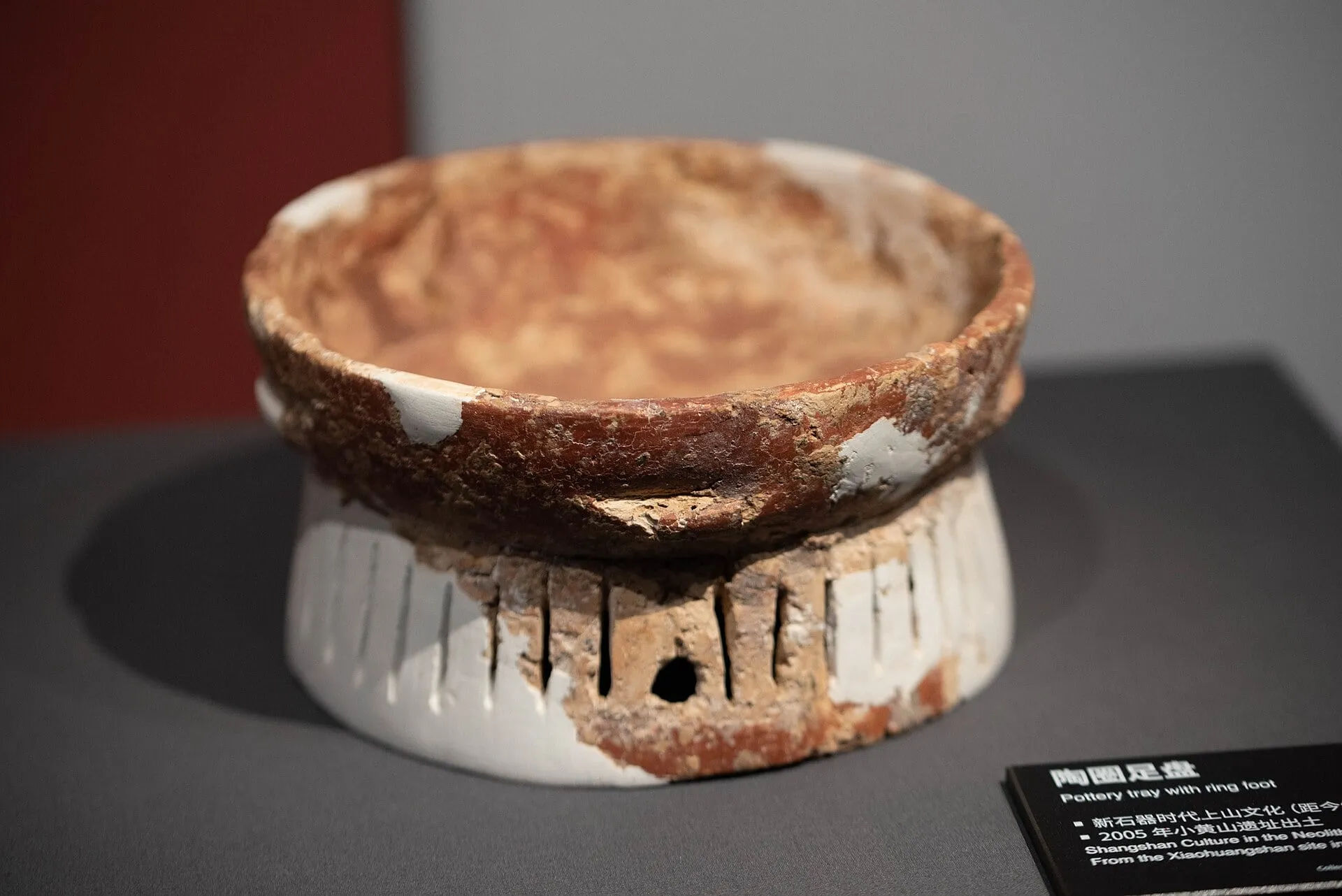
小黄山最有特点的,是一批夹砂红衣陶:陶土里掺了砂,外面涂一层红色的陶衣,有双耳罐、圈足盘等。这里的文化面貌,和浙江早先发现的跨湖桥文化、河姆渡文化、马家浜文化都不一样,却和浦江的上山遗址一致。
The most distinctive finds are red-slipped pots: sand-tempered clay coated in a red slip, among them two-handled jars and ring-footed dishes. This assemblage is unlike anything from the Kuahuqiao, Hemudu or Majiabang cultures found earlier in Zhejiang, but it matches the Shangshan site in Pujiang.
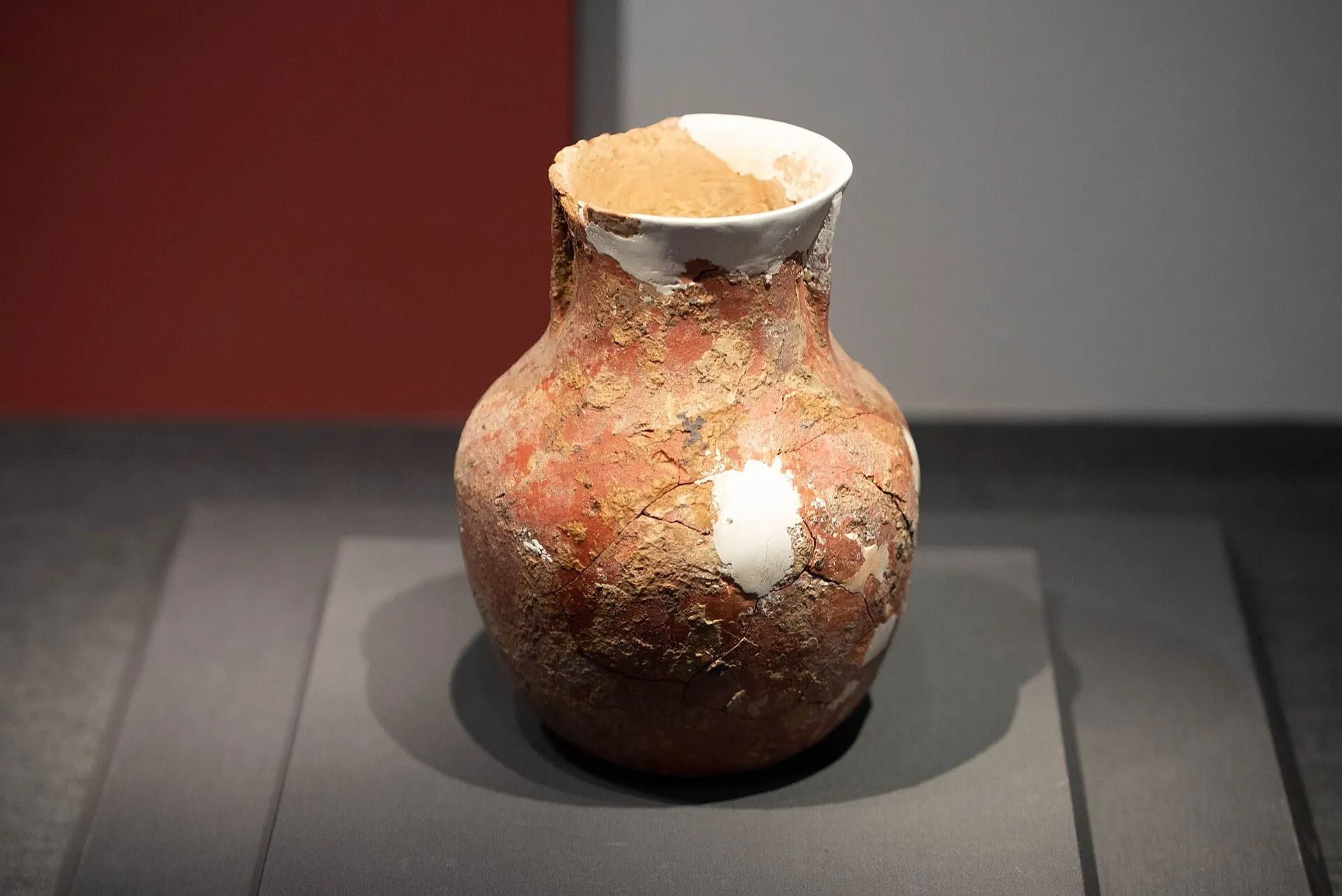
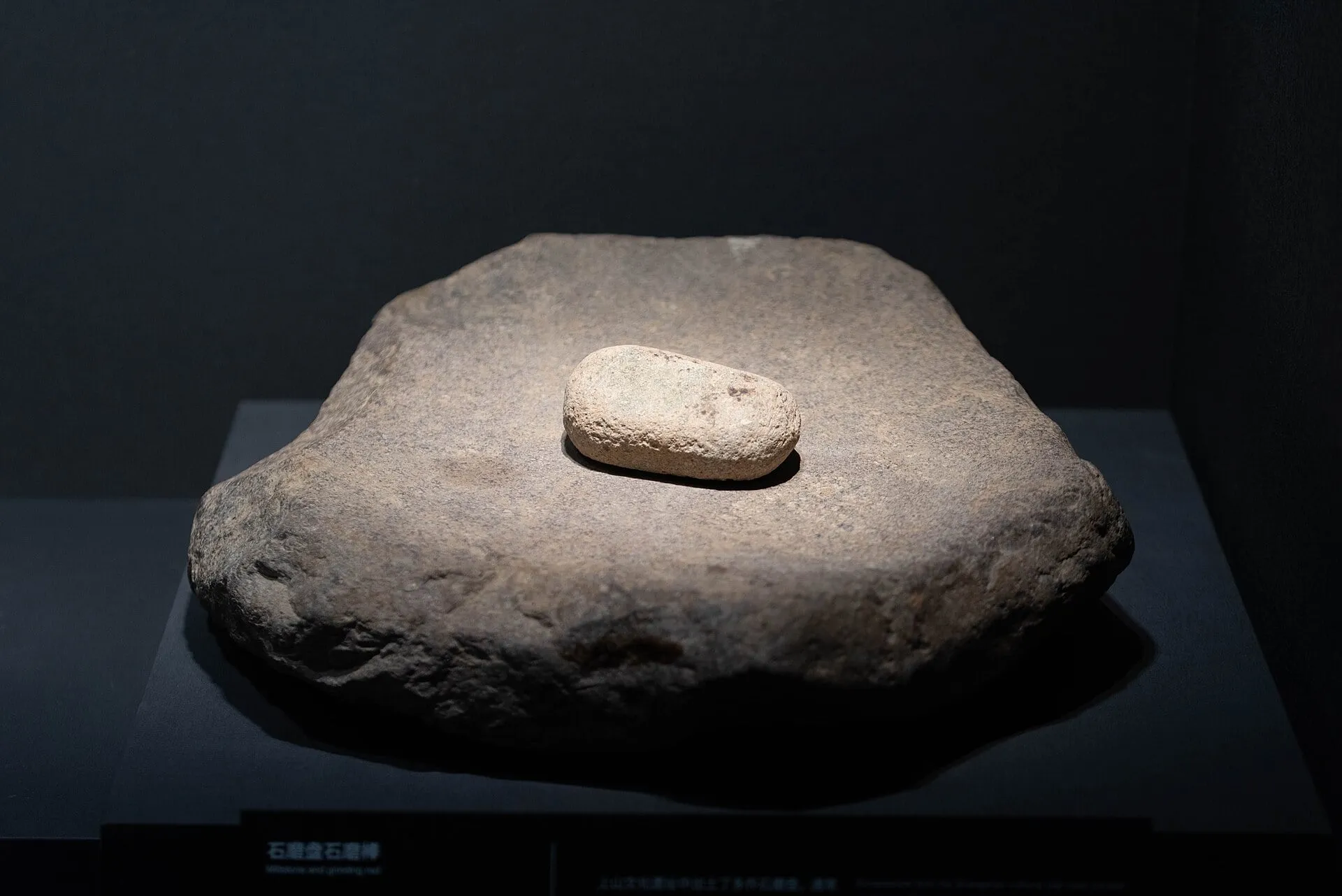
另一类是加工食物的工具:石磨盘、磨石,还有储藏食物的坑。浙江省博物馆还展出过小黄山的穿孔石器和带凹槽的石球。考古学者认为,小黄山为研究人类从采集走向农耕的过程,提供了内容丰富的实例。
Then there are tools for preparing food — grinding slabs and grinding stones — along with pits for storing it. Perforated stones and grooved stone balls from the site have been shown at the Zhejiang Provincial Museum. Archaeologists see Xiaohuangshan as a rich example of the shift from foraging to farming.
九千年前的红曲米酒
Red rice beer, 9,000 years ago
小黄山最出人意料的发现,藏在陶罐里。2023 年,斯坦福大学的刘莉和王海明等学者在学术期刊《全新世》(The Holocene)上发表论文:他们分析了小黄山出土的三件陶器里的微小遗存,找到了用红曲酿米酒的证据。酿酒的“曲”用红曲霉和稻米做成,可能还加了草药;原料以稻米为主,还有薏苡、橡子和百合;圆肚子的球腹罐,就是发酵用的容器。
The biggest surprise was inside the pots. In 2023, a team including Li Liu of Stanford University and Haiming Wang published a study in The Holocene. Analyzing microscopic remains from three pots found at Xiaohuangshan, they found evidence of red rice beer. The brewers made a starter, or qu, from Monascus mold and rice, probably with herbs; the main ingredient was rice, along with Job’s tears, acorns and lily bulbs; and round-bellied globular jars served as fermenting vessels.
论文还发现,被分析的那件球腹罐是随葬品,说明米酒可能是献给祖先的祭品;剩下的酒糟,则可能和别的食物一起煮,盛在盘子里,在宴会上分享。作者认为,这种用米酒祭祀的做法在稻作刚刚起步时就出现了,为理解稻作为什么会出现、又为什么会扩散,提供了新的线索。
One of the jars they analyzed had been buried in a grave, which suggests the beer was an offering to the ancestors. The leftover dregs may have been cooked with other food and served on plates at feasts. The authors argue that this ritual use of beer began at the very start of rice cultivation, and that it sheds new light on why rice farming began and spread.
一年后,刘莉等学者又在浦江上山遗址的陶片里,找到了约一万年前的米酒痕迹,论文发表在《美国国家科学院院刊》上,这被认为是东亚已知最早的酿酒技术。红曲霉至今仍是中国人酿酒、做红曲米的老帮手。
A year later, Li Liu and colleagues found traces of rice beer about 10,000 years old in pottery from the Shangshan site itself, published in the Proceedings of the National Academy of Sciences — the earliest known fermentation technique in East Asia. Monascus mold is still used in China today to make red yeast rice and red rice wine.
为什么叫“上山文化”
Why “Shangshan culture”?
2000 年 11 月,考古学者在金华浦江县发现了上山遗址。2003 年的碳十四测年显示,它距今约 11400 到 8600 年,比河姆渡早了三四千年。2005 年开始发掘的小黄山,年代比上山晚,内涵却有许多共同点,属于同一种文化。按照考古学的惯例,一种新文化有两处以上的遗址被发现时,就用最先发现的典型遗址来命名。2006 年 11 月 7 日,“上山文化”在浦江正式命名,小黄山的发现为此提供了支持。
In November 2000, archaeologists found the Shangshan site in Pujiang County, near Jinhua. Radiocarbon dates in 2003 put it at about 11,400 to 8,600 years old, three to four thousand years older than Hemudu. Xiaohuangshan, excavated from 2005, is younger than Shangshan but has much in common with it: the two belong to the same culture. By archaeological convention, once a new culture is known from two or more sites, it is named after the first typical site found. The Shangshan culture was formally named in Pujiang on November 7, 2006, with Xiaohuangshan’s finds as supporting evidence.
二十年过去,浙江已经发现了二十多处上山文化遗址,分布在近三万平方公里的范围里,其中有浦江上山、嵊州小黄山、龙游荷花山、义乌桥头、仙居下汤、永康湖西等。仙居下汤遗址还入选了 2024 年度全国十大考古新发现。
Twenty years on, more than twenty Shangshan sites have been found in Zhejiang, spread across nearly 30,000 square kilometers. They include Shangshan in Pujiang, Xiaohuangshan in Shengzhou, Hehuashan in Longyou, Qiaotou in Yiwu, Xiatang in Xianju and Huxi in Yongkang. Xiatang was named one of China’s top ten archaeological discoveries of 2024.
稻子从哪里来
Where rice came from
上山文化出名,是因为稻子。在浦江上山遗址,考古人员发现陶土里掺着大量碎稻壳和稻叶:一万年前的人,把它们拌进陶土里烧陶。分析显示,这些稻子已经有了不同于野生稻的特征,说明上山人已经开始人工栽培水稻。
The Shangshan culture is famous for rice. At the Shangshan site, archaeologists found pottery clay packed with chopped rice husks and leaves, mixed in by potters ten thousand years ago. The rice already showed features unlike wild rice — evidence that the people of Shangshan had begun to cultivate it.
2024 年 5 月,中国科学院地质与地球物理研究所吕厚远的团队,和浙江省文物考古研究所等单位一起在《科学》上发表研究。他们用植硅体(植物细胞里形成的微小二氧化硅颗粒)等方法,在上山遗址和龙游荷花山遗址的地层里,看到了稻子从野生到驯化长达十万年的连续轨迹:
In May 2024, a team led by Lyu Houyuan of the Chinese Academy of Sciences’ Institute of Geology and Geophysics, working with the Zhejiang institute and others, published a study in Science. Using phytoliths — microscopic bits of silica formed in plant cells — and other evidence from the layers of the Shangshan and Hehuashan sites, they traced rice from wild to domesticated over 100,000 years:
- 约 10 万年前:长江下游已经广泛分布着野生稻。
- 约 2.4 万年前:末次冰期来临,人们开始采集、利用野生稻。
- 约 1.3 万年前:人们开始干预、栽种野生稻。
- 约 1.1 万年前:具有驯化特征的稻子迅速增多,东亚的稻作农业由此起源。
- About 100,000 years ago: wild rice is already widespread in the lower Yangtze.
- About 24,000 years ago: as the last ice age sets in, people begin gathering wild rice.
- About 13,000 years ago: people begin tending and planting wild rice.
- About 11,000 years ago: rice with domestic traits rises fast, marking the start of rice farming in East Asia.
研究者认为,东亚稻作农业的起源和西亚小麦农业的起源几乎同时。考古学界普遍认为,水稻最早是在长江中下游被驯化的;上山之后,跨湖桥(约八千年前)、河姆渡(约七千年前)和良渚(约五千年前)一路接下去,勾勒出中国稻作从起源到早期发展的清晰序列。
The researchers note that rice farming in East Asia began at about the same time as wheat farming in Southwest Asia. Archaeologists generally agree that rice was first domesticated in the middle and lower Yangtze. After Shangshan come Kuahuqiao (about 8,000 years ago), Hemudu (7,000) and Liangzhu (5,000): a clear sequence from the first rice farming to its early growth in China.
申遗之路
Toward World Heritage
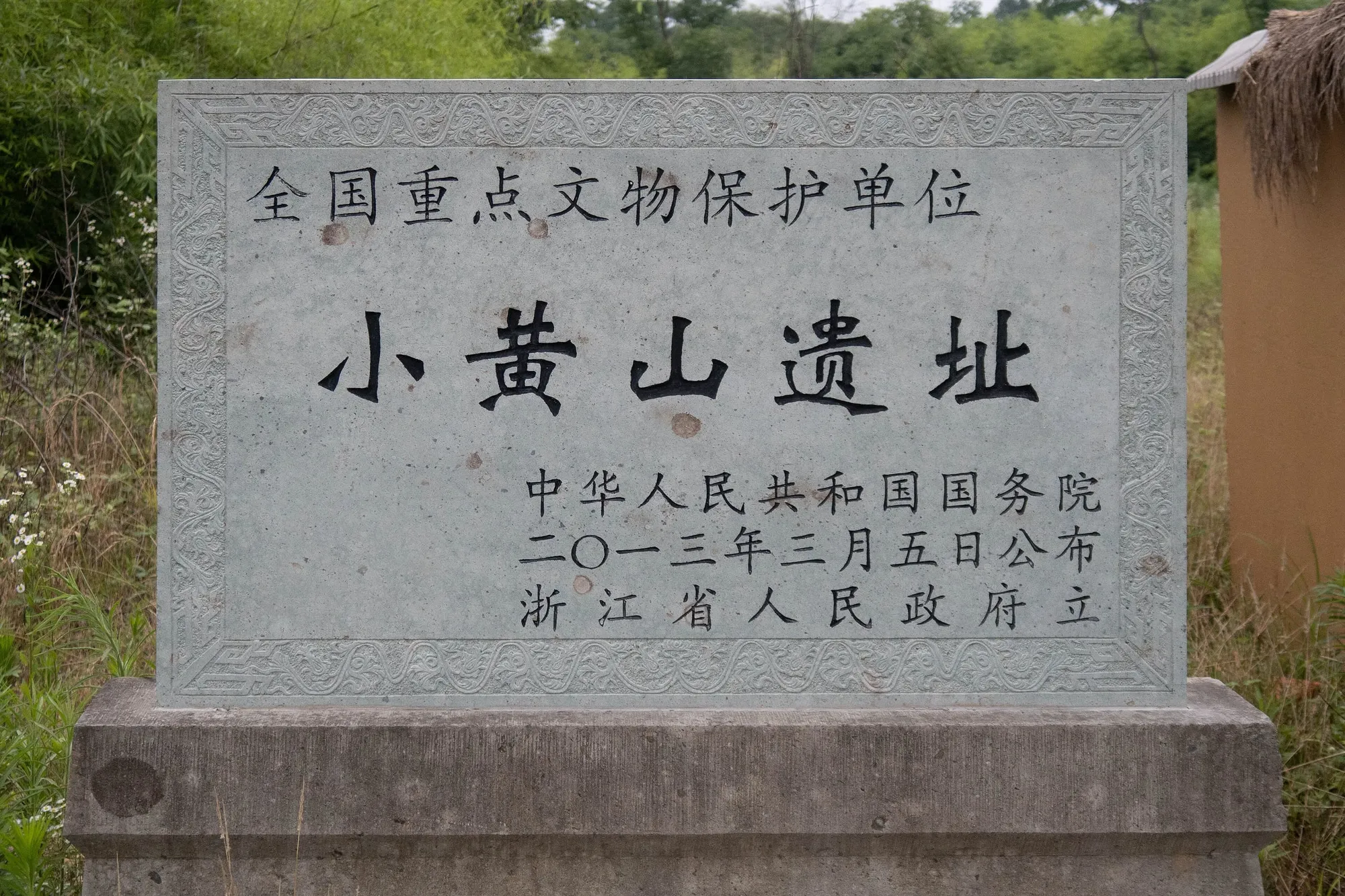
2013 年 3 月 5 日,国务院把小黄山遗址公布为全国重点文物保护单位。2024 年 12 月,包括小黄山在内的上山文化遗址群列入《中国世界文化遗产预备名单》,拿到了申报世界文化遗产的“入场券”。据浙江省文物局 2026 年的答复,嵊州为此获批了 5 亿元专项债;2025 年 6 月,嵊州市政府网站还发布了“小黄山遗址区域整治和保护展示工程(一期)”的采购变更公告。浦江那边,上山博物院计划在 2026 年建成开放。
On March 5, 2013, China’s State Council listed Xiaohuangshan as a major national heritage site. In December 2024 the Shangshan sites, Xiaohuangshan among them, joined China’s tentative list for World Heritage — the first step toward a nomination. According to a 2026 reply from the Zhejiang Cultural Heritage Bureau, Shengzhou has been granted 500 million yuan in special bonds for this work, and in June 2025 the city government posted a procurement notice for the first phase of a project to clean up, protect and display the Xiaohuangshan site. In Pujiang, the Shangshan Museum is due to open in 2026.
去小黄山看看
Visiting Xiaohuangshan
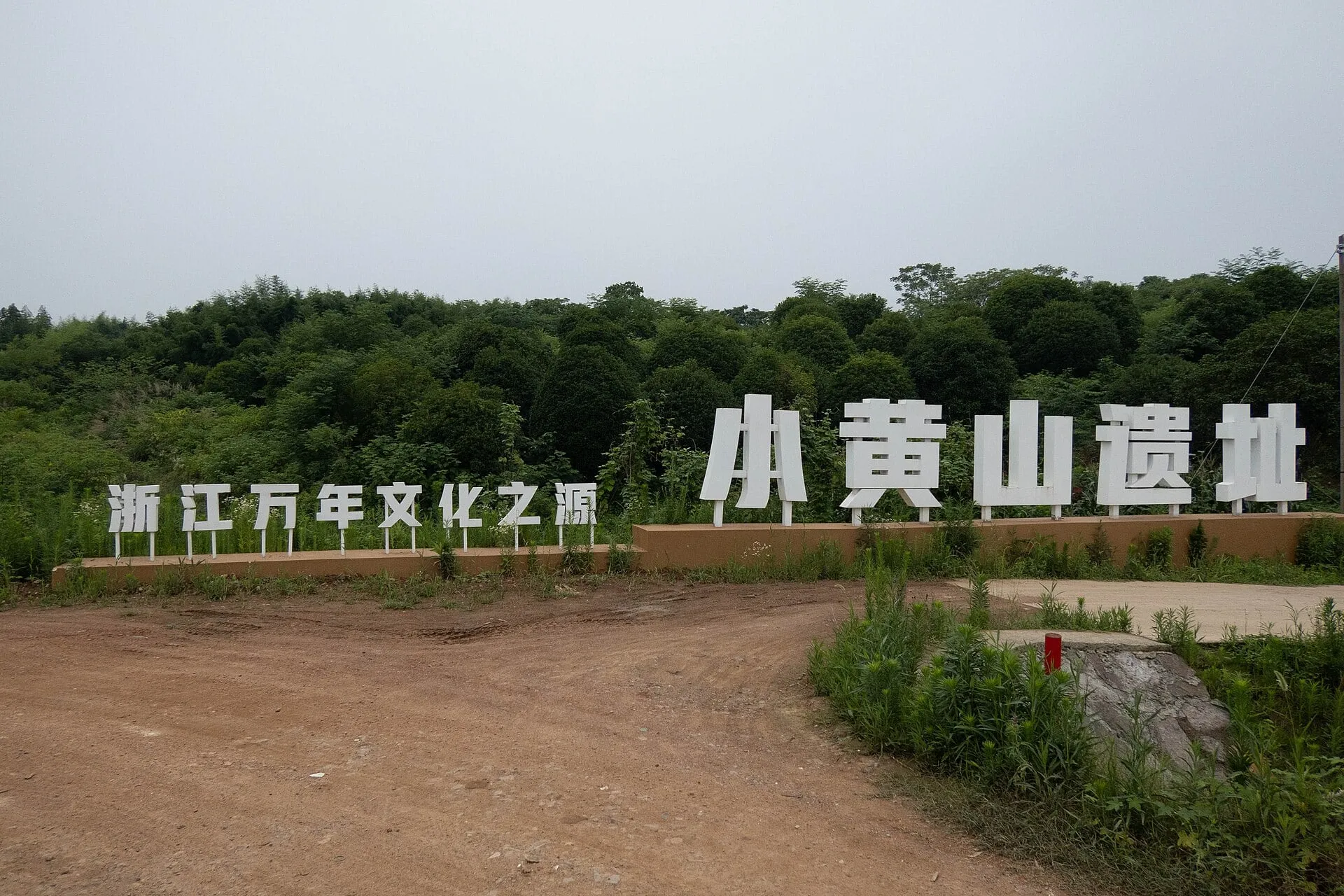
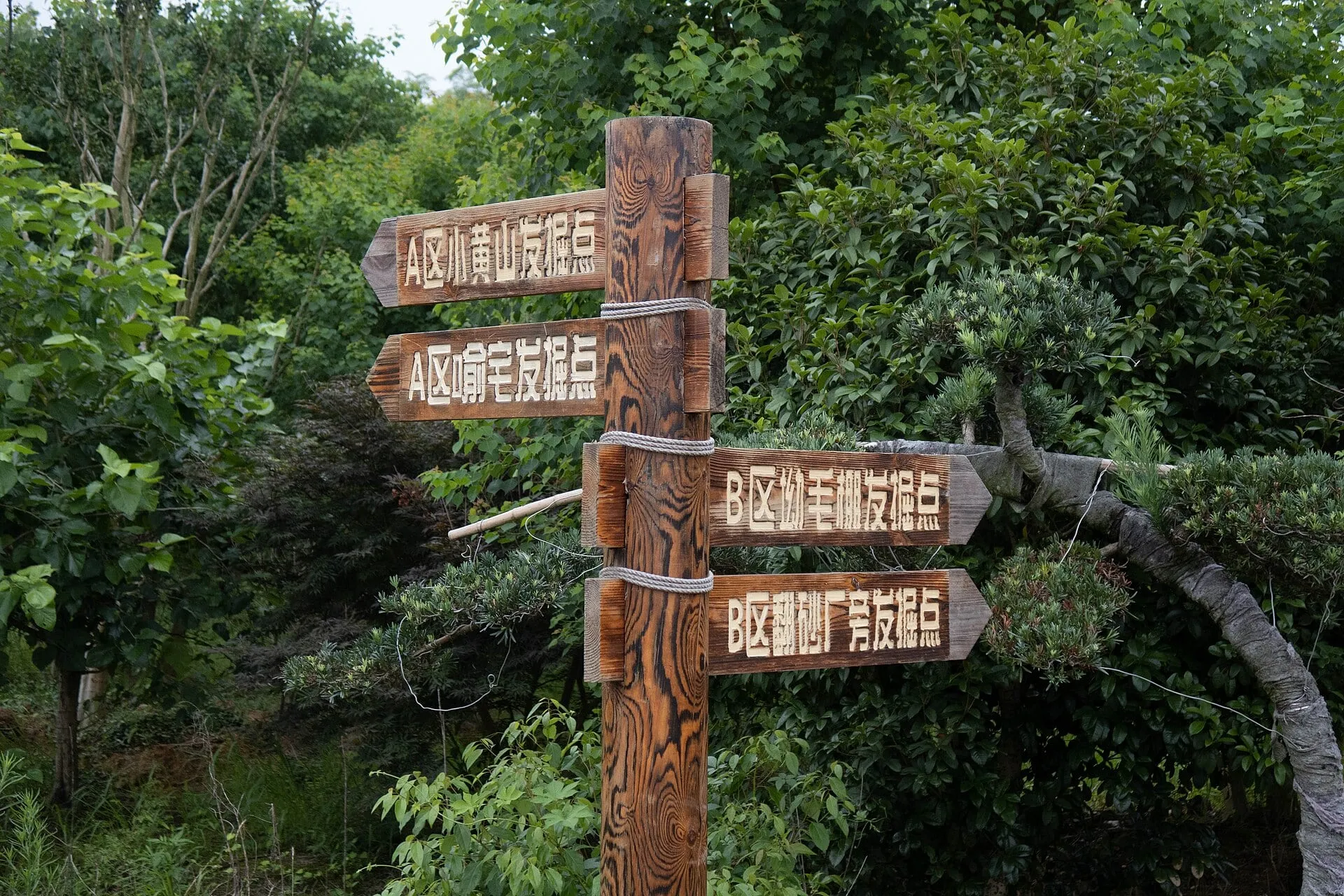
小黄山遗址是一处露天的保护区。到了现场,能看到入口处“浙江万年文化之源”的大字、国保碑,还有指向 A 区、B 区几处发掘点的路标。出土的文物收藏在浙江省文物考古研究所。遗址的保护展示工程 2025 年还在推进,去之前最好先打听开放和交通情况。
Xiaohuangshan is an open-air protected site. At the entrance, big white characters hail it as “the source of ten thousand years of Zhejiang culture”; inside are the national heritage stone and signposts to the excavation areas, A and B. The finds themselves are kept by the Zhejiang Provincial Institute of Cultural Relics and Archaeology. With the display project still under way in 2025, check access and transport before you go.
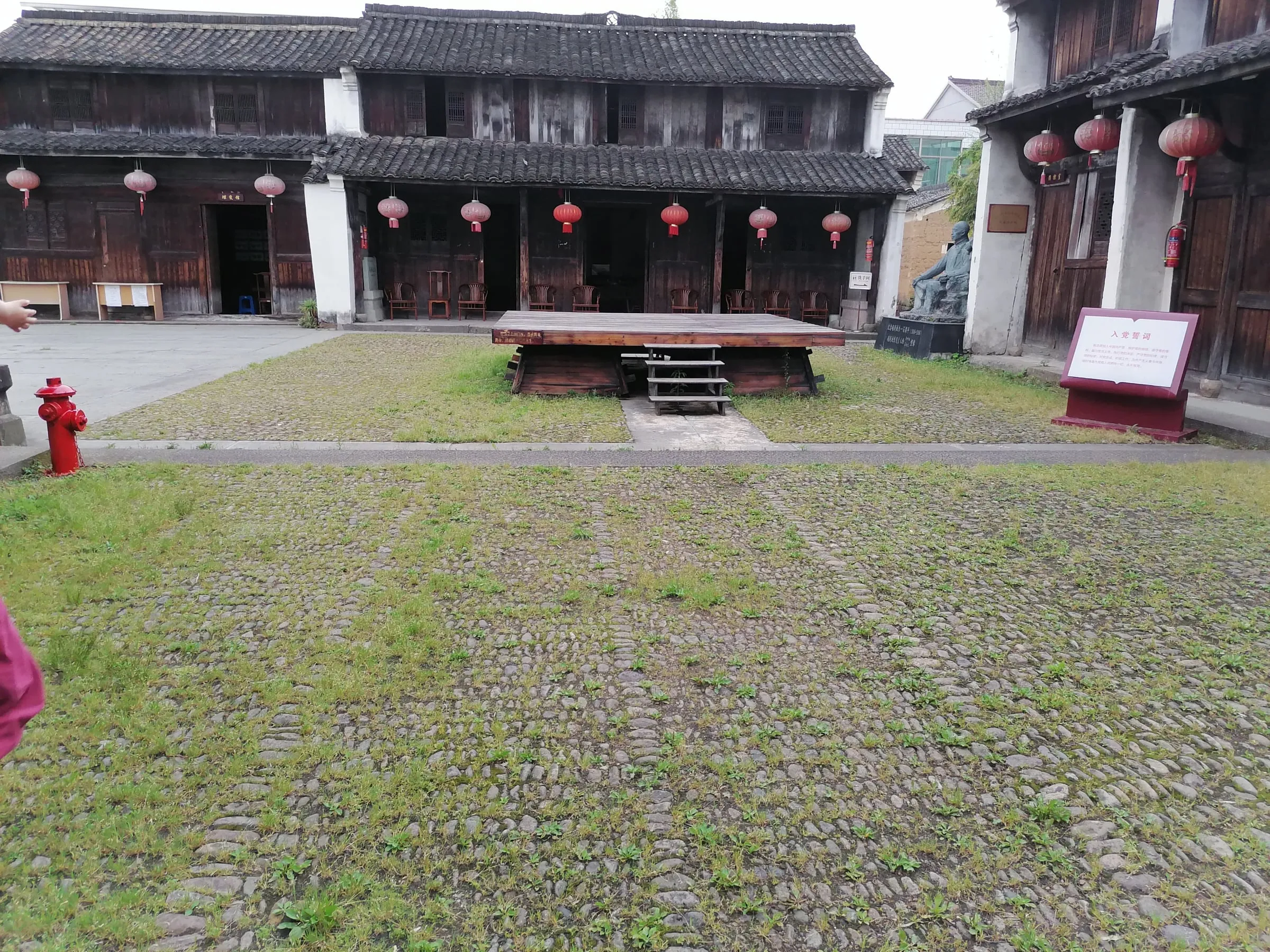
同在甘霖镇的东王村,是越剧的诞生地:1906 年,几位唱书艺人用四只稻桶和几块门板搭起草台,唱出了第一台越剧。一边是九千年前用稻米酿酒的村落,一边是用稻桶搭起的戏台,两处可以一起去。详见越剧和去哪儿走走。
Dongwang Village, the birthplace of Yue opera, is in the same town. In 1906 a few storytellers built a stage there from four rice-threshing tubs and some old doors, and gave the first performance of what became Yue opera. A village that brewed rice beer nine thousand years ago and a stage made of rice tubs: the two make a good day out together. See Yue opera and Places to visit.
常见问题Questions & answers
小黄山遗址有多少年了?How old is the Xiaohuangshan site?
大约九千年。碳十四测年显示,小黄山的主要遗存距今约 9000 年;2023 年的研究论文给出的是距今约 9000—8500 年,属于上山文化中期。上山文化的命名地浦江上山遗址更早,距今约 11400—8600 年。
About 9,000 years. Radiocarbon dating puts its main remains at around 9,000 years ago, and a 2023 study dates them to about 9,000–8,500 years ago, the middle phase of the Shangshan culture. The Shangshan site in Pujiang, which gave the culture its name, is older, at about 11,400 to 8,600 years.
为什么叫“上山文化”,不叫“小黄山文化”?Why is it called the Shangshan culture and not the Xiaohuangshan culture?
考古学文化一般用最先发现的典型遗址命名。浦江的上山遗址 2000 年就被发现,年代也比小黄山早;小黄山 2005 年的发掘证明两地属于同一种文化,推动了 2006 年“上山文化”的正式命名。
Archaeological cultures are usually named after the first typical site found. The Shangshan site in Pujiang was discovered in 2000 and is older than Xiaohuangshan; the 2005 dig at Xiaohuangshan showed that the two belonged to the same culture, which helped bring about the formal naming of the Shangshan culture in 2006.
上山文化是世界上最早种水稻的地方吗?Is the Shangshan culture where rice farming began?
它是最重要的证据之一。考古学界普遍认为,水稻最早是在长江中下游被驯化的;2024 年发表在《科学》上的研究,在上山文化遗址的地层里看到了稻子从野生到驯化的连续过程,具有驯化特征的稻子在约 1.1 万年前迅速增多。专家和官方常用的说法是“万年上山,世界稻源”。
It is among the strongest evidence. Archaeologists generally agree that rice was first domesticated in the middle and lower Yangtze, and a 2024 study in Science traced rice from wild to domesticated through the layers of Shangshan sites, with domestic-type rice rising sharply about 11,000 years ago. Experts and officials often call Shangshan “the source of the world’s rice.”
小黄山的红曲米酒是怎么回事?What is the red rice beer from Xiaohuangshan?
2023 年,刘莉等学者分析了小黄山出土的三件陶器,在里面找到了用红曲霉酿酒的痕迹,认为九千年前这里的人已经在酿红曲米酒,原料以稻米为主,还有薏苡、橡子和百合。其中一件球腹罐是随葬品,说明米酒可能是献给祖先的祭品。
In 2023 a team including Li Liu analyzed three pots from Xiaohuangshan and found traces of brewing with Monascus mold. They concluded that people here were making red rice beer 9,000 years ago, mainly from rice, with Job’s tears, acorns and lily bulbs. One of the jars came from a grave, suggesting that the beer was an offering to the ancestors.
现在能去看小黄山遗址吗?Can you visit the Xiaohuangshan site?
遗址在嵊州市甘霖镇上杜山村,是露天的保护区,现场能看到入口的大字、国保碑和通往各发掘点的路标。出土文物收藏在浙江省文物考古研究所;遗址的保护展示工程 2025 年还在推进,去之前最好先打听开放和交通情况。
The site is in Shangdushan Village, Ganlin Town. It is an open-air protected area where you can see the big sign at the entrance, the national heritage stone and signposts to the excavation areas. The finds are kept by the Zhejiang Provincial Institute of Cultural Relics and Archaeology, and a project to protect and display the site was still under way in 2025, so check access and transport before you go.
参考资料Sources
- 小黄山遗址 · 维基百科
- Shaoxing Xiaohuangshan relics seek World Heritage status · China Daily, November 23, 2020
- 上山文化,中华万年文化史的重要源头 · 人民日报(浙江省文物考古研究所),2026 年 4 月 18 日
- Serving red rice beer to the ancestors ca. 9000 years ago at Xiaohuangshan early Neolithic site in south China · Li Liu, Haiming Wang, Hanlong Sun, Xingcan Chen, The Holocene 33 (8), 2023
- Identification of 10,000-year-old rice beer at Shangshan in the Lower Yangzi River valley of China · Li Liu et al., PNAS 121 (51), December 9, 2024
- Traces of 10,000-Year-Old Rice Beer Found in China · Sci.News, December 10, 2024
- From Wild to Domesticated: Scientists Reveal 100,000 Years of Continuous Rice Evolution · Chinese Academy of Sciences, May 24, 2024
- 回望上山之发现上山(二)· 浦江发布(澎湃新闻),2020 年 4 月 29 日
- 【文化中国行】万年上山 世界稻源 · 中国日报网,2025 年 6 月 23 日
- 浙江上山文化考古特展在京举行 · 中国日报网,2021 年 11 月 22 日
- 浙江省文物局答复上山文化申遗进展 · 澎湃新闻,2026 年 6 月 12 日
- 人这一辈子,一定要去一趟嵊州! · 中新网,2026 年 1 月 6 日
- 【变更公告】嵊州市小黄山遗址区域整治和保护展示工程(一期)· 嵊州市人民政府,2025 年 6 月 6 日