Ma Yinchu of Shengzhou
The economist Ma Yinchu (1882–1982) was a Shengzhou man, born at Pukou in the house his father built; the family came from Shaoxing. He studied at Yale and Columbia, led Zhejiang and Peking universities and published his New Population Theory in 1957. His Pukou home is a national heritage site.
Where was Ma Yinchu from? He was a Shengzhou man, born in 1882 at Pukou in what was then Sheng county, in the old house that stands at 74 Mingren Street in today’s Pukou subdistrict of Shengzhou. The family came from Shaoxing; his father had moved to Pukou as a young man to make wine. Shengzhou’s local history office wrote in 2015 that Ma was born in the house and lived there until he left to study at 17.
He went on to study at Yale and Columbia, led Zhejiang and Peking universities and in 1957 published his New Population Theory. The State Council listed the Pukou house as a national heritage site in 2006. This page sets out his life by date, with a source for each step, and passes no judgment on his theory or on later population policy. For the county’s names, see From Shan to Sheng.
The Ma family of Pukou
The Mas were wine-makers. According to Ma Dacheng, Ma Yinchu’s grand-nephew and a member of staff at the Ma Yinchu Memorial in Hangzhou, writing on Shengzhou’s news site in 2012, the Ma clan of Xiaogaobu in Kuaiji (Shaoxing) made wine from the early Qing for seven generations, down to Ma Yinchu’s nephews. In 1866 Ma Yinchu’s father, Ma Qingchang (courtesy name Disheng), then 16, followed an elder kinsman, Ma Gengliang, to Pukou and opened the Ma Shuji wine shop. Pukou lies where four streams meet, at what Ma Dacheng calls the widest stretch of the Shan stream, and before the Republic it was a hub of river and road traffic and one of the county’s best-known towns. For the stream, see the Shan stream.
The family’s roots may go further back. An article by Ma Shanjun on Shengzhou’s news site in 2011, citing family genealogies, says the Mas of Wurong in Shaoxing had moved there in the Yuan dynasty from Ma village in Sheng county, now Gulai town in Shengzhou. That is the genealogies’ account; we found no other record to check it against.
Accounts differ on how well off the family was. A 2021 article from Zhejiang University’s news office says he was born in a “small wine shop”; according to a 2010 report in the Tiantian Shangbao, Ma Dacheng holds that the phrase “a small wine-workshop owner’s family” is wrong, since Ma Yinchu’s great-great-grandfather and great-grandfather were leading figures in the Shaoxing wine trade and the family belonged to the gentry middle class.
Where and when he was born
Of the sources cited here that name his birthplace, most give Sheng county, and many of them Pukou. Shengzhou’s Party history and local history offices wrote in 2015 that his father built the house in the Guangxu years of the Qing, and that “Ma Yinchu was born in the house and lived there until he left to study at 17,” in the western side room of the second courtyard. Yang Wei, then president of Zhejiang University, wrote in the People’s Daily in 2012 that he “was born in Sheng county, Zhejiang (today Shengzhou)”; a 2007 article in the Beijing Evening News also calls him “a man of Sheng county, Zhejiang (today Shengzhou).”
One article says he was born in Shaoxing. An article by He Jiyuan, first printed in the China Archives News in 1998 and reprinted by People’s Daily Online in 2002, says he “was born on June 24, 1882 in Shaoxing, Zhejiang”; the same article dates his Peking University presidency to 1953, unlike the university’s own list, which gives 1951. Shengzhou’s news site, in its 2012 feature, puts the two names together, calling him “a man of Sheng county, Shaoxing, Zhejiang (today Shengzhou).”
His birthday is usually given as June 24, 1882, as in Yang Wei’s article and Shengzhou’s news site’s 2012 description of the house. Peking University’s news site, in 2007, gave it in the old calendar as the ninth day of the fifth month of the eighth year of Guangxu, at the hour of the horse; born in a horse year, month, day and hour, and named Ma, “horse,” he was called the man of five horses. The short life at the end of his own 1914 dissertation, however, says “the author was born in 1885 in the province of Chehkiang,” with no county. We found no explanation for the three-year difference.
He died on May 10, 1982, according to Yang Wei’s article, in Beijing, according to Shengzhou’s news site in 2012, some six weeks short of his hundredth birthday by the Western count. Shengzhou’s news site wrote in 2009 that he died “at 101”; Chinese Wikipedia notes that this is the traditional reckoning and that he was 99.
Shanghai, Tianjin, Yale and Columbia
According to Yang Wei, he went to the Anglo-Chinese College in Shanghai in 1898, entered Beiyang University in Tianjin in 1904 to study mining and metallurgy, and left for Yale in 1907; Shengzhou’s 2012 feature dates his entry to Beiyang to 1901. His own short life says he was educated at the Anglo-Chinese College, Shanghai, and at Pei-yang University, Tientsin.
Accounts differ on his Yale degree. Yang Wei writes that he took “a master’s degree in economics in 1910”; his 1914 short life says he entered Yale in 1907, took “a full undergraduate course” and received the A.B. in 1910 “with first honor.”
That autumn he entered Columbia’s School of Political Science, studying under Edwin R. A. Seligman and others, and from 1913 to 1914 he also took courses at New York University’s School of Accountancy, his short life says. His doctoral thesis, The Finances of the City of New York, was published by Columbia in 1914, its preface signed “Columbia University, August 5, 1914.” In the preface he wrote that the finances of New York and those of the Republic of China “have many points of resemblance,” and that the book would be of value to Chinese fiscal authorities, “particularly if it be translated into the Chinese language.”
Peking University, Hangzhou, Nanjing and Chongqing
According to Yang Wei, he came home at the end of 1914, and early in 1916 became a professor of economics at Peking University and head of its economics and commerce departments. He was also the university’s first dean of studies, a post Yang Wei does not date; Shengzhou’s 2012 feature says he became dean in 1919. Chinese Wikipedia’s main text dates his start at Peking University to September 1915, though its opening paragraph says 1916. In 1927 he left the university for the south and became a member of Zhejiang’s provincial government (Yang Wei); from 1928 he sat in the Nationalist government’s Legislative Yuan in Nanjing and after 1929 chaired a finance committee and an economic committee (Shengzhou’s 2012 feature).
When war with Japan came, he went to Chongqing University as professor of economics and dean of its business school, in November 1938 according to an article in Shengzhou’s 2012 feature, whose timeline gives early 1938. Yang Wei writes that he put forward a series of wartime economic proposals and openly criticised the government’s policies and officials; Peking University’s president Xu Zhihong said in 2007 that from 1938 to 1940 he published more than sixty articles exposing how the “Four Great Families” profited from the war.
Then he was detained, though sources differ on the year. Xu Zhihong said December 1940, with a year and nine months in prison; Shengzhou’s 2012 feature gives the arrest as December 6, 1940. Yang Wei writes December 1941, and says he was held in the Xifeng camp in Guizhou and the Shangrao camp in Jiangxi for a year and eight months. Chinese Wikipedia says he was released in August 1942 and then kept under house arrest, watched by the authorities, at Gele Mountain in Chongqing.
President of Zhejiang and Peking universities
Zhejiang University’s list of presidents gives his term as August 1949 to May 1951. A 2021 article from the university’s news office says he arrived to take up the post on the afternoon of August 26, 1949, and that his presidency lasted only 21 months. The same year he was named a member of the Central People’s Government (Shengzhou’s 2012 feature).
Peking University’s list gives his presidency as June 1951 to March 1960, and the university’s history pages call him its first president after 1949. Shengzhou’s 2012 feature says he was appointed on May 23, 1951, and the Beijing Evening News wrote in 2007 that he was installed on June 1, 1951, in the university’s Democracy Square.
The New Population Theory: dates and events
What follows gives dates and the parties’ own words, without comment.
- 1955: according to Xu Zhihong, he submitted a paper, “Population Control and Scientific Research,” to the Zhejiang group at the second session of the First National People’s Congress.
- March 1957: he spoke on the “new population theory” at the enlarged Eleventh Supreme State Conference (Xu Zhihong).
- June 1957: he formally submitted the New Population Theory as a motion to the fourth session of the First National People’s Congress (Xu Zhihong).
- July 5, 1957: the People’s Daily printed it in full (Xu Zhihong; Peking University’s history pages). Xu Zhihong described its basic proposal as raising the quality of the population and controlling its numbers; Peking University’s news site said in 2007 that the article had ten parts and proposed that the state adopt family planning.
- From 1958: his economic and population ideas were criticised across the country (Xu Zhihong). Peking University’s news site wrote in 2007 that the criticism began in April 1958 and that in May Chen Boda criticised him by name at the university.
- 1960: Shengzhou’s 2012 feature says that on January 4 he was “forced to resign as president of Peking University for publishing the New Population Theory”; the university’s list ends his term in March 1960, when, according to its history pages, Lu Ping also took on the presidency.
He was rehabilitated in 1979. According to a Xinhua report of July 25, 1979, printed in the People’s Daily the next day and reprinted by People’s Daily Online in 2002, Li Gui, deputy head of the Communist Party’s United Front Work Department, called at his home at 32 Dongzongbu Hutong in Beijing in mid-July and told him:
Today the Party has asked me to inform you that the two rounds of criticism against you, before 1958 and from the end of 1959, were wrong. Practice has shown that your new population theory of birth control is correct, and the organisation will fully rehabilitate you and restore your good name.Peking University’s news site wrote in 2007 that on September 11, 1979, the Party’s Central Committee replied to the university Party committee’s decision of July 23 on his rehabilitation: “The Centre agrees with the Peking University Party committee’s report and decision on rehabilitating Mr Ma Yinchu.” That September he became honorary president of Peking University, and on February 27, 1981, he was elected honorary president of the Population Association of China (Shengzhou’s 2012 feature).
The former residence at Pukou
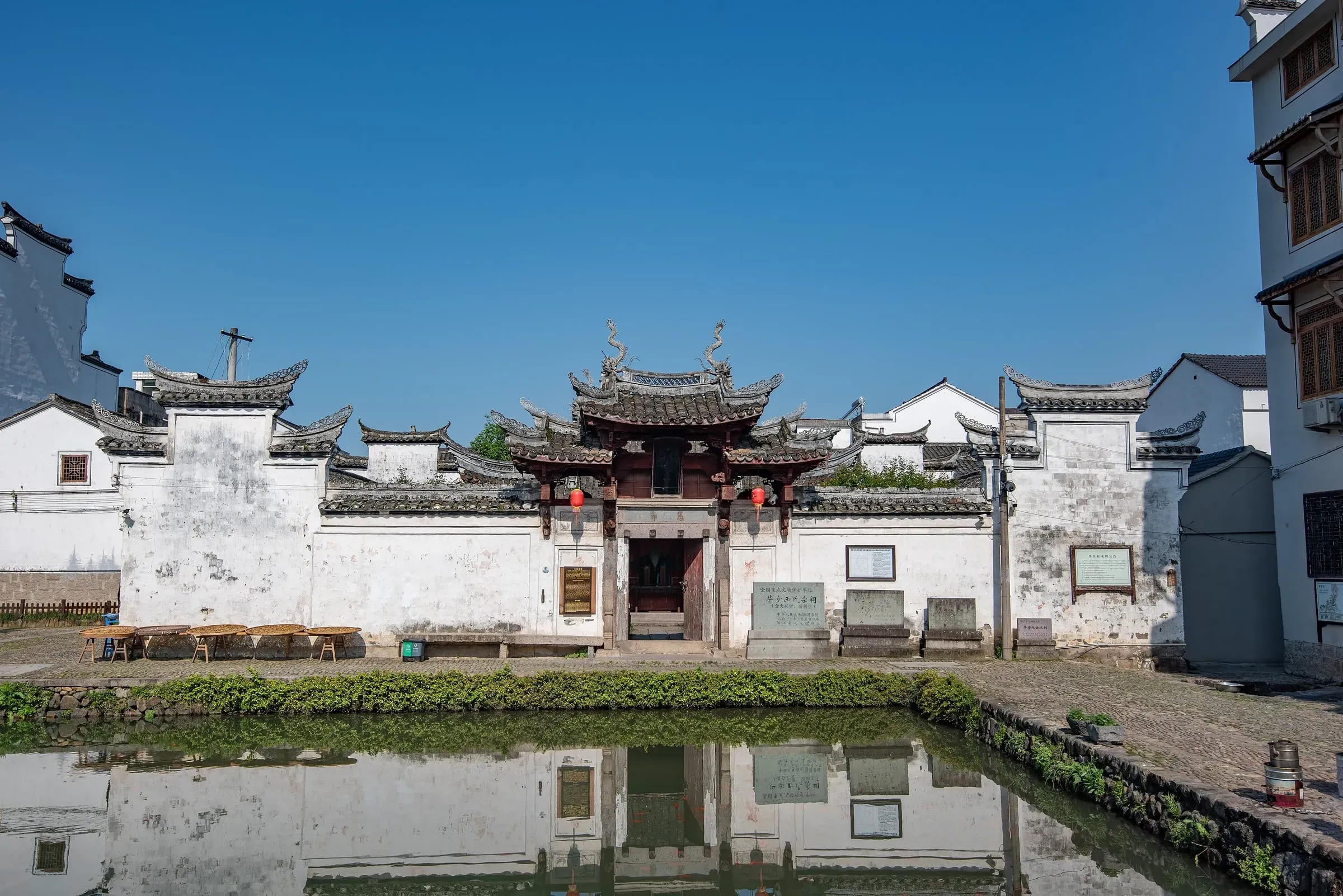
The house is at 74 Mingren Street in Pukou subdistrict, which Shengzhou’s news site calls a street a century old. According to that site in 2012, Ma Yinchu’s father, Ma Disheng, built it in the Guangxu years of the Qing for the family and for the master and apprentices of the Ma Shuji wine shop. It is brick and timber, faces north and has three courtyards one behind another, with brick outer walls and plank inner walls, on a plot of 628 square metres with 1,228 square metres of floor space. The local history offices’ 2015 description likewise has his father building it in the Guangxu years, facing north, with three courtyards on a plot of 628 square metres; a 2009 description on the same news site gives the plot as 604 square metres and says the house “sits in the north and faces south,” while also saying that its north side is on the street. Upstairs, galleries link the second and third courtyards, a layout known locally as a “running-horse” house. The 2009 description adds that because Pukou often flooded, the wine jars were stored upstairs, and a log was laid under the floor to bear the weight.
Between the two listings, the city paid for a restoration in the second half of 2000, repairing the first two courtyards and taking down and rebuilding the third (Shengzhou local history offices, 2015). The State Council’s list places it among “important historic sites and representative buildings of the modern period,” dated “Qing to Republic,” at “Shengzhou and Hangzhou, Zhejiang.”
What there is to see: according to Shengzhou’s news site in 2015, the ground floor has been returned to its old state, with the hall, the bedroom, the counting room and a kitchen with an old stove furnished as they were, while the upper floor, called the Fengjie Garden, holds an exhibition on his life. The same site said in 2012 that the exhibition covers 360 square metres in ten sections, with more than 180 historical photos and charts and over 230 objects. Ma Dacheng wrote in 2012 that the display also includes an office in memory of Ma Benxiao, known as Ma Shaobai, a nephew who as head of the Pukou chamber of commerce obtained railway rails to keep the Pukou wooden bridge from washing away.
Opening: a report from Pukou subdistrict, posted on Shengzhou’s news site on May 4, 2008, said that the house would be open from May 1, from 8 a.m. to 5:30 p.m., holidays included, with guides on hand; in May 2015 the same site listed it as the fourth of Shengzhou’s “free scenic sites.” We found nothing more recent on hours, tickets or booking, so ask locally before you go.
The grave, a school and his other homes
On May 22, 1982, he was cremated at Babaoshan in Beijing; part of his ashes went into the Babaoshan Revolutionary Cemetery and part was to be taken by his family to his home county of Sheng (People’s Daily, May 23, 1982, reprinted on Peking University’s news site in 2018). According to Shengzhou’s news site in 2009 and 2012, he is buried at Xiawangshe village in Xianyan town, beside his mother; the grave was built in 1983 and repaired in the spring of 2012, and the 1997 list above named the grave together with the house as a provincial heritage site.
Shengzhou also has a secondary school named after him. According to the town’s news site in 2012, in November 2011 the city decided to rename Shengzhou No. 2 Middle School, founded in 1996, as Ma Yinchu Middle School, while the existing school of that name became its junior section; the new name went up on December 28. In August 1998 the city made a “Ma Yinchu Former Residence tourist area” one of its first city-level scenic areas, and on June 24, 2004, the Zhejiang Ma Yinchu Research Society was founded in Shengzhou (chronicle of the Shengzhou gazetteer). A 2022 report on The Paper’s user platform, bylined to reporters from Shengzhou’s media centre, said that an event marking his 140th anniversary was held in Shengzhou on August 11 that year, where plans for a Ma Yinchu Research Institute were presented and Hai Wen was named its head. The Shengzhou gazetteer’s chronicle also records that on October 13, 1999, his Complete Works and a picture album were launched and a bronze statue of him was unveiled; it does not say where the statue stands.
He had two other homes elsewhere, not to be confused with the Pukou house:
- 210 Qingchun Road, Hangzhou: according to Zhejiang University’s news site in 2004, he lived here while serving in Zhejiang in the 1930s and while president of the university from 1949 to 1951; after restoration it opened as the Ma Yinchu Memorial on June 24, 2004 (Chinese Wikipedia says September 2004). It was listed with the Shengzhou house as a national heritage site in 2006.
- 32 Dongzongbu Hutong, Beijing: according to the Beijing Evening News in 2007, this Western-style compound was bought in May 1950; after Peking University moved to the Yanyuan campus in 1952 he lived on campus at 63 Yannanyuan, and he moved back here in 1960. The article said his descendants were living there. It was here that Li Gui told him of his rehabilitation in 1979.
Getting to Pukou
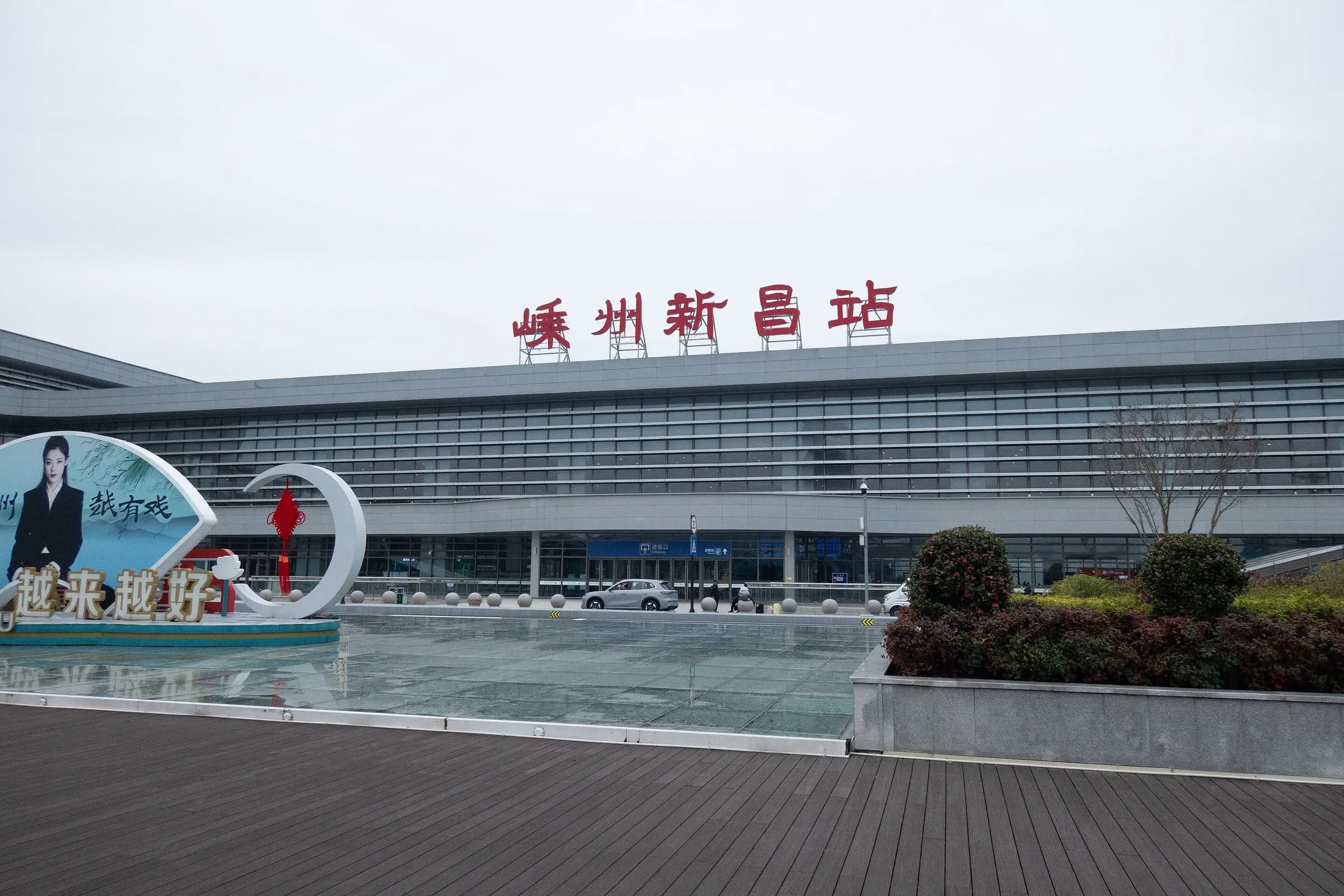
Pukou lies north-northeast of central Shengzhou, and Mingren Street is in Pukou subdistrict. By OSRM’s estimate on OpenStreetMap data (November 2026), it is about 16 km by car from Shengzhou-Xinchang station, about a quarter of an hour, and about 11 km, some ten minutes, from the city government offices on Xianhu Road; traffic will add to both. Shengzhou’s news site said in 2009 that city bus 7 ran there directly; check whether it still does before you set out.
For trains and stations, see Getting There; for the rest of Shengzhou, see Places to Visit.
Questions & answers
Where was Ma Yinchu from?
Shengzhou in Zhejiang: he was born at Pukou in what was then Sheng county, today Pukou subdistrict of Shengzhou. Shengzhou’s local history office says he was born in the Pukou house and lived there until he left to study at 17. The family came from Shaoxing, and his father followed an elder relative to Pukou in 1866 to make wine. One article says he was “born in Shaoxing, Zhejiang”; see below.
Where is Ma Yinchu’s former residence?
His birthplace is at 74 Mingren Street, Pukou subdistrict, Shengzhou, a national heritage site. He also lived at 210 Qingchun Road in Hangzhou and at 32 Dongzongbu Hutong in Beijing; the Hangzhou house was listed together with the Shengzhou one as a national heritage site.
When was Ma Yinchu’s New Population Theory published?
In June 1957 he submitted it as a motion to the fourth session of the First National People’s Congress, and the People’s Daily printed it in full on July 5. Its basic proposal, Peking University’s president Xu Zhihong said in 2007, was to raise the quality of the population and control its numbers.
Which universities did Ma Yinchu lead?
Zhejiang University from August 1949 to May 1951, and Peking University from June 1951 to March 1960, according to the two universities’ lists of presidents. In September 1979 he became honorary president of Peking University.
Is the house open, and is there a fee?
Hours announced in May 2008 were 8 a.m. to 5:30 p.m. every day, holidays included, and in 2015 Shengzhou’s news site listed it among the town’s free sights. We found nothing more recent on hours or booking, so ask locally before you go.
Where is Ma Yinchu buried?
After he died in Beijing in 1982, part of his ashes was placed in the Babaoshan Revolutionary Cemetery and part was taken back to Sheng county and buried beside his mother at Xiawangshe village, Xianyan town. The grave was built in 1983 and was listed with the house as a provincial heritage site in 1997.
Sources
- 英文为本站翻译。到浦口的距离和车程是按 OpenStreetMap 数据、用 OSRM 路网估算的(2026 年 11 月),起点是嵊州新昌站和嵊州市人民政府(仙湖路),终点是名人街。嵊州市人民政府网站 www.szzj.gov.cn 上 2025 年的一篇《嵊州市马寅初故居》我们打不开,没有引用;绍兴网的几篇报道也打不开。
- 国务院关于核定并公布第六批全国重点文物保护单位的通知(国发〔2006〕19号),2006 年 5 月 25 日 · 中国政府网(2006 年第 21 号国务院公报)
- 关于公布第四批省级文物保护单位及调整部分省级文物保护单位的通知(浙政发〔1997〕160号,1997 年 8 月 29 日)及附件名单 · 浙江省文物局网站,2020 年 6 月 12 日(互联网档案馆 2020 年 12 月 12 日存档)
- 马寅初故居 · 嵊州春秋(中共嵊州市委党史研究室、嵊州市地方志办公室),2015 年 4 月 13 日
- 大事记 ·《嵊州市志(1986—2002)》,嵊州市地方志办公室
- 马寅初故居 · 嵊州新闻网,2012 年 6 月 19 日
- 【专题】纪念马寅初诞辰130周年 · 嵊州新闻网,2012 年 6 月
- 马寅初墓 · 嵊州新闻网,2012 年 6 月 19 日
- 马寅初中学 · 嵊州新闻网,2012 年 6 月 19 日
- 马寅初祖上在嵊州浦口的数处遗迹 · 嵊州新闻网(马大成,杭州马寅初纪念馆),2012 年 4 月 1 日
- 人口学家马寅初回族说毫无根据 · 嵊州新闻网(马善军),2011 年 4 月 2 日
- 浦口街道马寅初故居5月1日起实行对外开放 · 嵊州新闻网(浦口街道,张彩芳),2008 年 5 月 4 日
- 马寅初故居 · 嵊州新闻网,2009 年 1 月 6 日
- 嵊州市免费开放景区之四:江南民居“马老故居” · 嵊州新闻网,2015 年 5 月 19 日
- 马寅初故居成为绍兴市政协首批“同心教育基地”之一 · 嵊州新闻网(陈链芳),2020 年 4 月 14 日
- 马寅初出生于一个小酒作坊主家庭?为求学投河抗争?马老侄孙说:《马寅初传》说的有错 · 天天商报(绍兴日报社,陈正军),2010 年 4 月 26 日(互联网档案馆存档)
- 浙江嵊州隆重举办纪念马寅初诞辰140周年活动 · 澎湃新闻·澎湃号“湃客”(账号“图释世界”发布,署名嵊州融媒记者金斌等),2022 年 8 月 25 日
- 历任校长 · 浙江大学
- 民族瑰宝垂青史 求是之魂永相传——纪念马寅初先生诞辰130周年 · 人民日报(杨卫,时任浙江大学校长),浙江大学新闻网转载,2012 年 6 月 27 日
- 【中国共产党精神谱系中的浙大人】马寅初:言人所不敢言,执真理尽平生 · 浙江大学新闻办,2021 年 5 月 11 日
- 马寅初纪念馆在杭落成 · 浙江大学新闻网,2004 年 6 月 24 日
- 历任领导(历任校长)· 北京大学
- 新中国成立后十七年的北京大学(1949—1966)· 北京大学“北大史苑”
- 永恒的北大之光:许智宏在纪念马寅初座谈会上的致辞 · 北京大学新闻网,2007 年 7 月 4 日
- 1979年9月11日:中央决定为马寅初平反 · 北京大学新闻网,2007 年 9 月 11 日(互联网档案馆存档)
- 东总布胡同32号 · 北京晚报(王之鸿),北京大学新闻网转载,2007 年 12 月 24 日
- 【回眸40年:《人民日报》看北大】1982:马寅初同志遗体在北京火化(原载人民日报 1982 年 5 月 23 日第 2 版)· 北京大学新闻网,2018 年 11 月 30 日
- 中共中央为马寅初彻底平反恢复名誉(原载人民日报 1979 年 7 月 26 日)· 人民网,2002 年 6 月 13 日(互联网档案馆存档)
- 马寅初与毛泽东人口问题的一场论争(贺吉元,原载中国档案报 1998 年 10 月 15 日)· 人民网,2002 年 6 月 13 日(互联网档案馆存档)
- Yin Ch’u Ma, The Finances of the City of New York(Columbia University Studies in History, Economics and Public Law, vol. 61, no. 2;博士论文,1914)· Internet Archive(加州大学图书馆藏本,书末附作者小传 Vita)
- 马寅初 · 维基百科
- 马寅初故居 (杭州) · 维基百科
- Ma Yinchu · Wikipedia