From Shan to Sheng
Shengzhou was once Shan county. Split apart, the character 剡 is two fires and a knife. Tang writers read it as a sign of refuge; after Fang La’s revolt it looked like an omen of war, and in 1121 the county was renamed Sheng. In 1995 Sheng county became the city of Shengzhou.
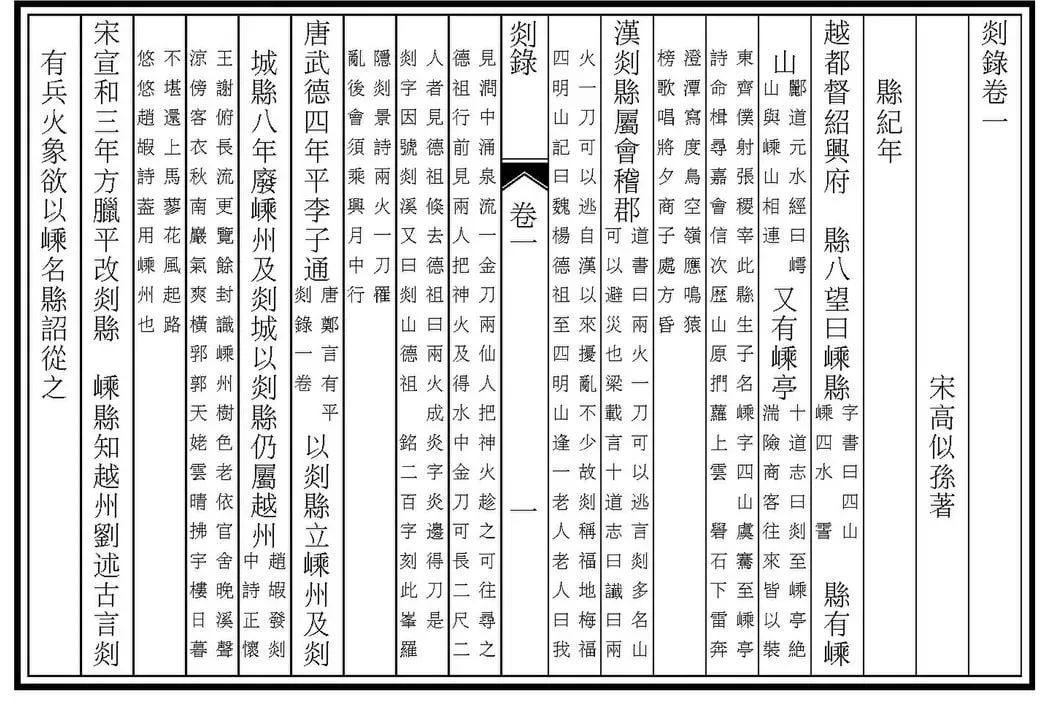
The name Shengzhou is only about thirty years old. Sheng county lasted nearly nine hundred years before that, and for more than a thousand years before that the place was called Shan (剡). Each change of name left a record, and the Southern Song county gazetteer, the Shan Records, tells the story plainly.
Two fires and a knife
As a place name, 剡 is read shàn. Its original meaning, read yǎn, is “to sharpen”: the Book of Changes speaks of “stringing wood to make bows and sharpening wood to make arrows.” Split apart, the character is two “fire” signs and a “knife.”
At first those parts were read as a good omen. The Shan Records quotes the Tang writer Liang Zaiyan’s Treatise on the Ten Circuits: “A prophecy says, ‘Two fires and a knife — there you can escape.’ There has been much turmoil since the Han, so Shan is called a blessed land.” The idea was that Shan, with its many mountains, was a place to shelter from disaster. When war tore through the north in the Eastern Jin, Wang Xizhi, Dai Kui and Xie Lingyun all came to Shan; see the Shan stream and Wang Xizhi in Shengzhou.
The Shan Records also tells a legend about the character itself. A man named Wei Dezu met an old man on Mount Siming and saw a golden knife washing out of a spring in a ravine, chased by two immortals holding divine fire. When Wei Dezu got the knife, he said: “Two fires make 炎; add a knife beside 炎 and you have 剡.” And so the place was called the Shan stream and Mount Shan.
A Tang prefecture called Sheng
The character 嵊 had already served as the place’s name in the Tang. According to the Shan Records, in 621, after the defeat of the rebel Li Zitong, Shan county became Sheng Prefecture, with a separate Shancheng county; in 625 both were abolished, and Shan county went back to Yue Prefecture. The Tang poet Zhao Gu, in “Leaving Shan,” wrote of “looking over the old fief to recognize Sheng Prefecture” — using that very name.
Where Xinchang came from
Neighboring Xinchang was once part of Shan county. In his 1215 preface to the Shan Records, the magistrate Shi Anzhi wrote: “The county once had forty townships; later thirteen were split off as Xinchang county, and only twenty-seven remain.” According to Wikipedia, the split came in 908, under Qian Liu, king of Wuyue.
The renaming of 1121
In the winter of 1120 Fang La rose in revolt in Muzhou, rebels in Shan county joined him, and the county town fell. The next spring Liu Shugu, the commander for Yue Prefecture, cleared them out. The Shan Records says: “In the third year of Xuanhe of the Song, when Fang La had been put down, Shan county was renamed Sheng. The prefect of Yue, Liu Shugu, said Shan carried an image of war and fire and wished to name the county Sheng; an edict agreed.”
The same two fires and a knife that the Tang read as “there you can escape,” the Song read as war. Shi Anzhi put it even more plainly in his preface:
In the Han, Shan was a county; in the Tang, Sheng Prefecture, soon a county again. In the Xuanhe years of our dynasty, because 剡 is two fires and a knife and bodes ill for the town, its name was changed to the present one.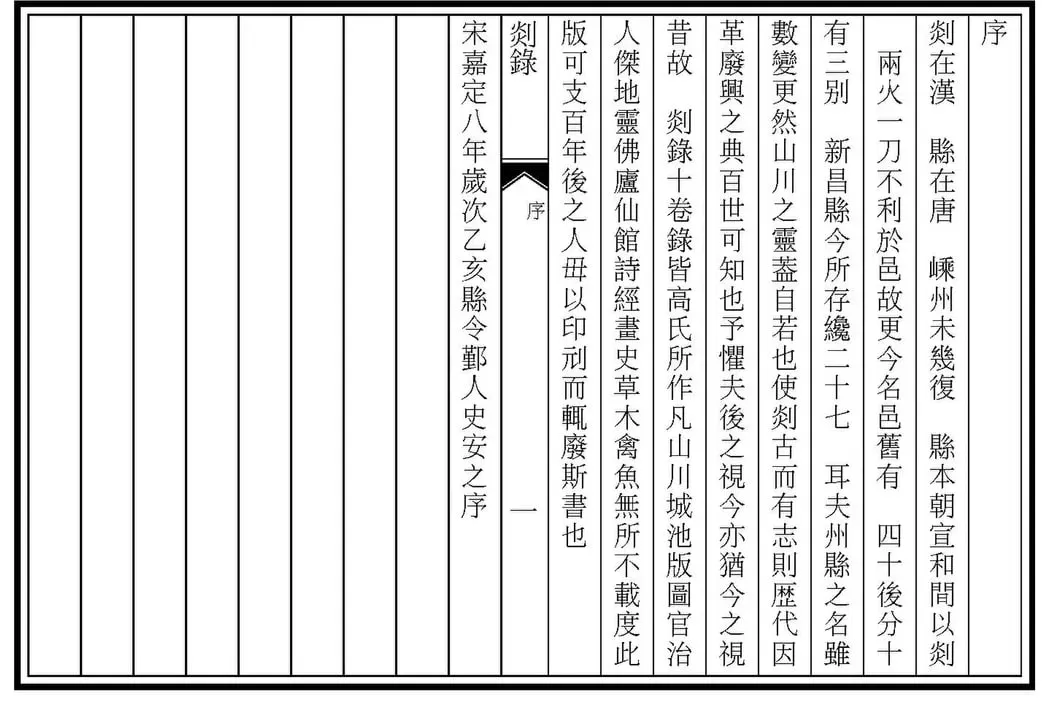
Why 嵊?
The new name was not invented from nothing. The Shan Records opens by noting that “the county has a Mount Sheng,” and a Sheng Pavilion too, and quotes an old dictionary: “four mountains make 嵊; four waters make 霅.” Zhang Ji, a Southern Qi official who once served as magistrate here, named his son Sheng, with the courtesy name Sishan, “Four Mountains.” The renaming borrowed a name the place already had.
A popular explanation is that Shengzhou is ringed by four mountains — Dianshan to the east, Huangshan to the south, Xibaishan to the west and Tushan to the north — hence “four mountains joined.” Today the character 嵊 appears almost only in place names: Shengzhou, and Shengsi in the Zhoushan islands, whose name comes from two islands, Sijiaoshan and Shengshan — a different Mount Sheng.
From Sheng county to Shengzhou city
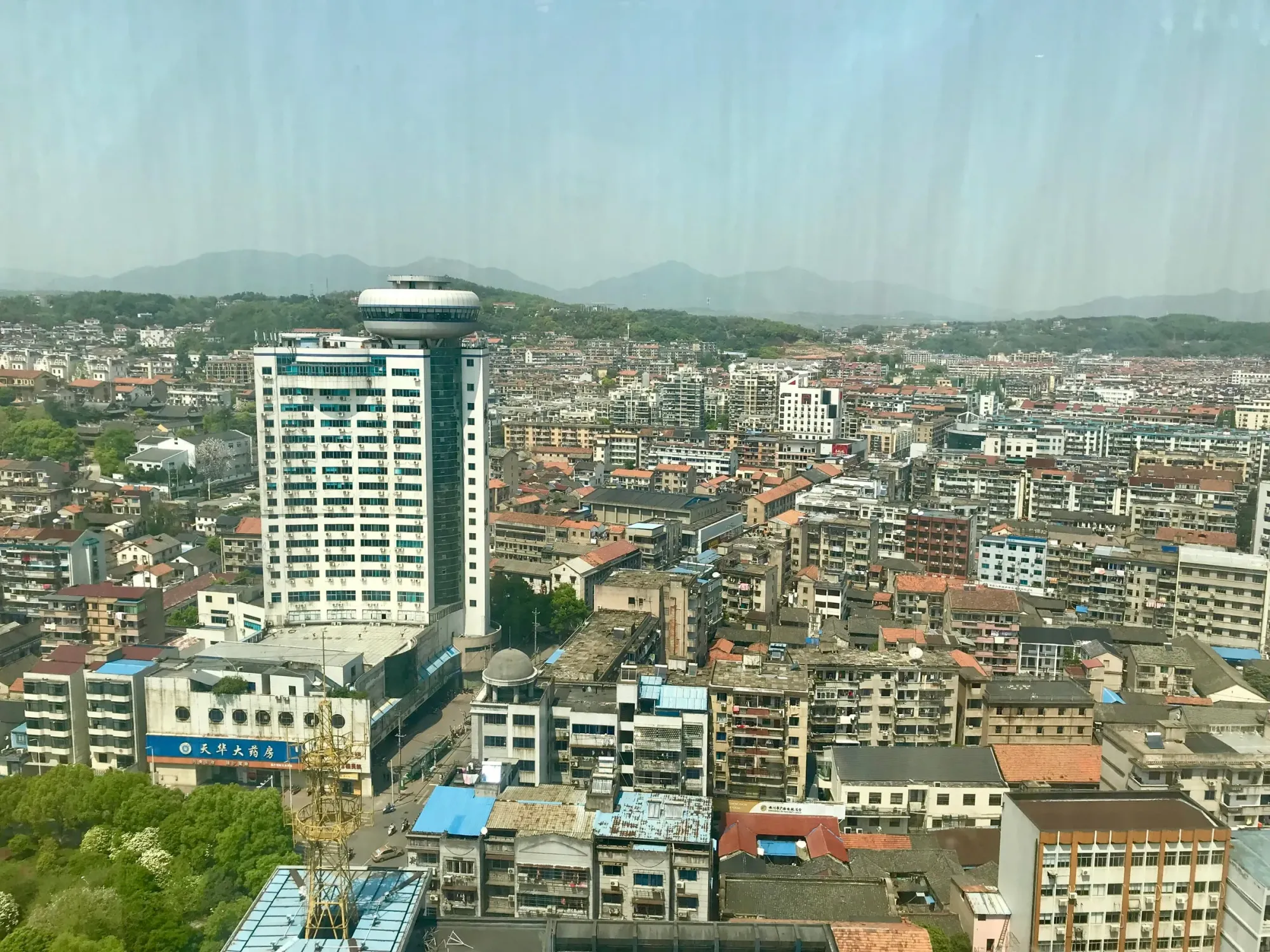
The name Sheng county lasted from 1121 to 1995. On December 10, 1992, the county government applied to become a city, asking at the same time to be named Shengzhou — partly because the Shan Records showed there had been a Tang Sheng Prefecture, and “the name Shengzhou would be easily accepted by people inside and outside the county.” On August 30, 1995, the State Council approved abolishing Sheng county and creating the city of Shengzhou, and from December 6 every office and institution with “Sheng county” in its name switched to “Shengzhou city.”
Shan lives on
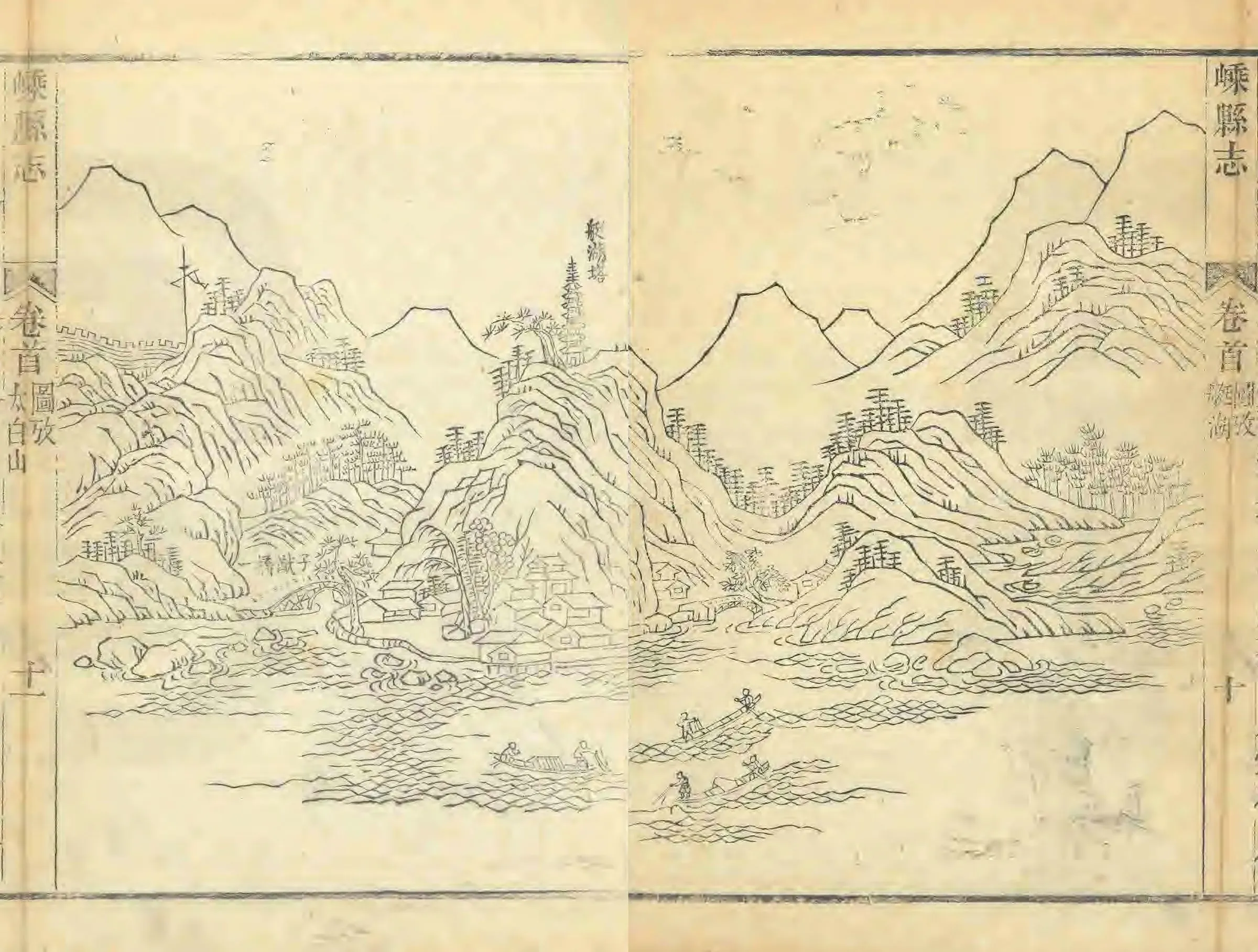
The old name has not disappeared. The stream through town is still the Shan stream, one of the city’s subdistricts is Shanhu (剡湖), and poets still write of “Shan.” In English the place used to be called Shengxian or Sheng County; go back further and it is Shan.
Questions & answers
How do you say 剡, and what does it mean?
In place names such as Shan county and the Shan stream it is read shàn. Its original meaning, read yǎn, is “to sharpen”; the Book of Changes speaks of “stringing wood to make bows and sharpening wood to make arrows.” The character is built from two “fire” signs and a “knife.”
Why was Shan county renamed Sheng?
In 1121, after Fang La’s revolt had been put down, the prefect of Yue, Liu Shugu, said 剡 carried “an image of war and fire” and asked to name the county 嵊 instead; the court agreed. Magistrate Shi Anzhi’s 1215 preface to the Shan Records puts it more bluntly — the character is “two fires and a knife, which bodes ill for the town, so its name was changed.”
What does 嵊 mean?
The Shan Records quotes an old dictionary — “four mountains make 嵊.” The county already had a Mount Sheng and a Sheng Pavilion, and the new name borrowed that local place name. A popular explanation is that Shengzhou is ringed by four mountains — Dianshan to the east, Huangshan to the south, Xibaishan to the west and Tushan to the north. The character is used almost only in place names — Shengzhou, and Shengsi in the Zhoushan islands.
How are Shengzhou and Xinchang related?
Xinchang was once part of Shan county. Shi Anzhi’s preface to the Shan Records says the county once had forty townships, until thirteen were split off to form Xinchang, leaving twenty-seven. According to Wikipedia, the split came in 908, under Qian Liu, king of Wuyue.
When did Sheng county become Shengzhou city?
In 1995. Sheng county applied in 1992 to become a city named Shengzhou, citing the Tang dynasty’s Sheng Prefecture as precedent; the State Council approved it on August 30, 1995, and the new name took effect on December 6.