剡溪与唐诗之路The Poets’ Stream
李白、杜甫都为剡溪写过诗;王羲之在这里度过晚年;“乘兴而来”的故事也发生在这条溪上。
Li Bai and Du Fu wrote about the Shan stream, Wang Xizhi spent his last years beside it, and a famous story about following a whim ends here.
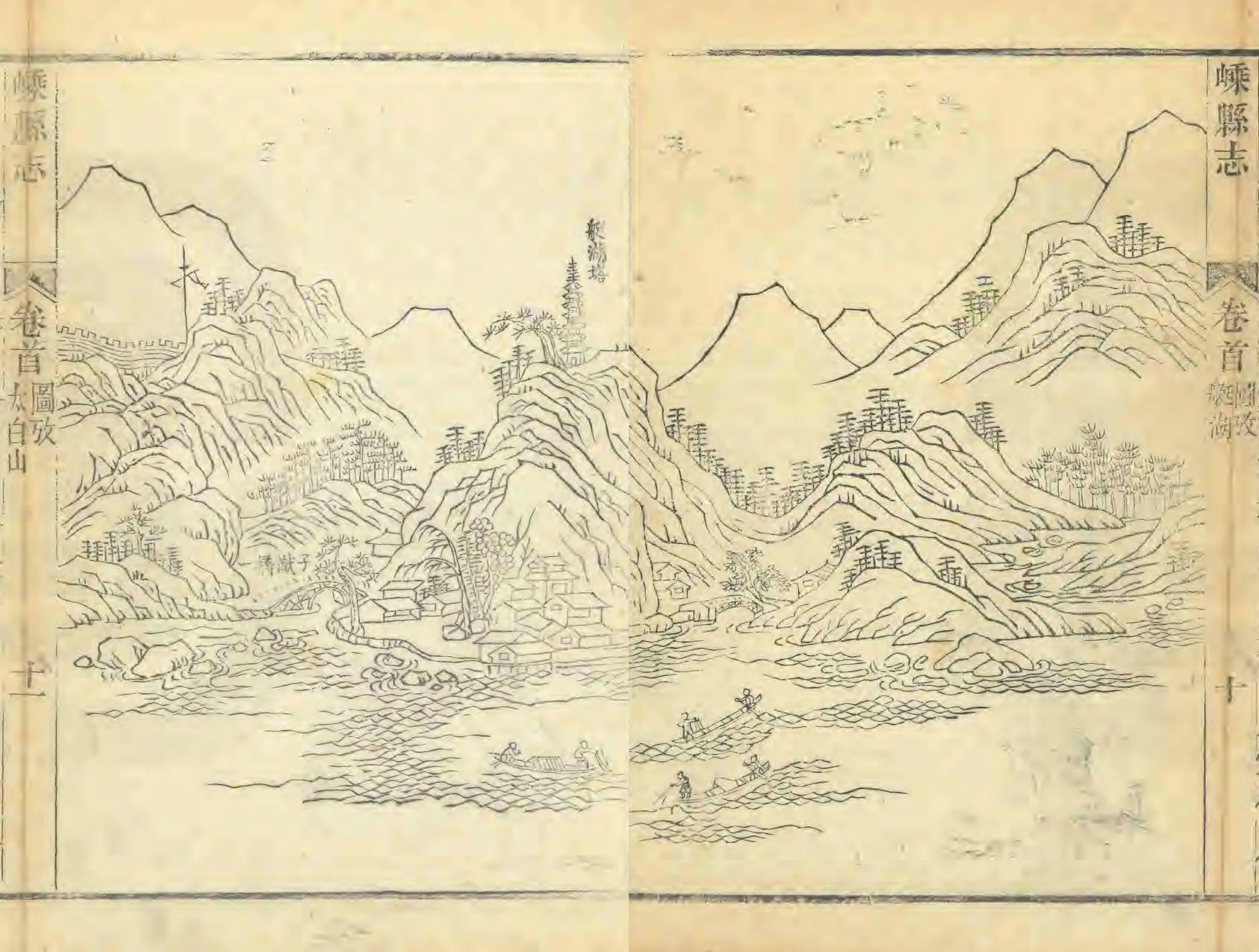
流过嵊州的剡溪,是曹娥江的上游。在唐代,它是诗人心中的名胜:从绍兴出发,沿着剡溪逆流而上,可以一路走到天台山。
The Shan stream (剡溪) that runs through Shengzhou is the upper reach of the Cao’e River. In the Tang dynasty it was famous among poets: from Shaoxing you could follow it upstream all the way to Mount Tiantai.
浙东唐诗之路
The Tang Poetry Road
今天,人们把唐代诗人在浙东一带行吟的路线称为“浙东唐诗之路”。这个说法由新昌学者竺岳兵在 1991 年提出,后来得到中国唐代文学学会的认可。李白、杜甫、孟浩然、贺知章等数百位唐代诗人到过这一带,留下了一千五百多首诗。
Today, the route that Tang poets wandered through eastern Zhejiang is known as the Tang Poetry Road of Eastern Zhejiang (浙东唐诗之路). The name was proposed in 1991 by Zhu Yuebing, a scholar from neighboring Xinchang, and later endorsed by the Chinese Society of Tang Literature. Hundreds of Tang poets — Li Bai, Du Fu, Meng Haoran and He Zhizhang among them — traveled this way and left more than 1,500 poems.
李白在出发的路上就写道:
Li Bai wrote, as he set out:
此行不为鲈鱼鲙,
自爱名山入剡中。I make this journey not for the sliced perch —
I go for love of the mountains of Shan.他在梦里也来过:
He even came here in a dream:
湖月照我影,
送我至剡溪。The moon on the lake cast my shadow
and saw me all the way to the Shan stream.杜甫晚年回忆年轻时的游历,对剡溪仍念念不忘:
Late in life, Du Fu looked back on the travels of his youth and still could not let the stream go:
剡溪蕴秀异,
欲罢不能忘。The Shan stream holds a rare beauty —
I would stop thinking of it, but I cannot forget.雪夜访戴
A visit on a snowy night
《世说新语》里有一个有名的故事。王羲之的儿子王子猷住在山阴(今绍兴)。一天夜里下大雪,他醒来开门饮酒,四下一片洁白,忽然想起住在剡县的朋友戴安道,当即连夜乘小船去找他。船走了一整夜才到,他到了戴家门口,却没有进去,转身回去了。别人问为什么,他说:“吾本乘兴而行,兴尽而返,何必见戴?”
A New Account of the Tales of the World (《世说新语》) tells a famous story. Wang Ziyou, a son of the calligrapher Wang Xizhi, lived in Shanyin (today’s Shaoxing). One night, after a heavy snowfall, he woke, opened his door and poured some wine. Everything around him was white. Suddenly he thought of his friend Dai Andao, who lived in Shan, and set off at once in a small boat. The journey took all night. When he reached Dai’s gate, he did not go in — he turned around and went home. Asked why, he said: “I came on a whim, and when the whim was spent I went back. Why must I see Dai?”
成语“乘兴而来,兴尽而返”,就出自这个故事。
The Chinese idiom “to come on a whim and leave when it is spent” (乘兴而来,兴尽而返) comes from this story.
书圣的晚年
The Sage of Calligraphy
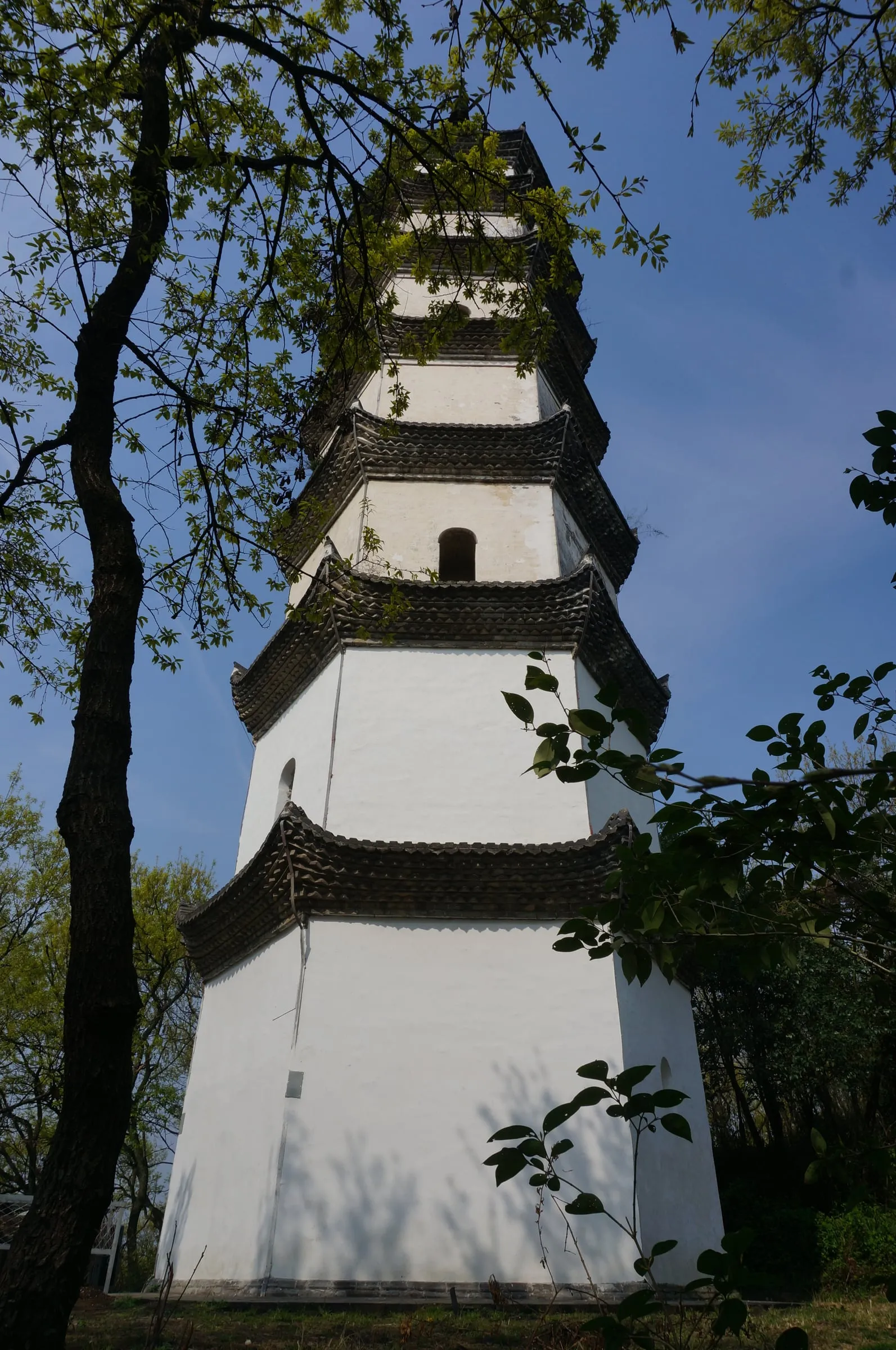
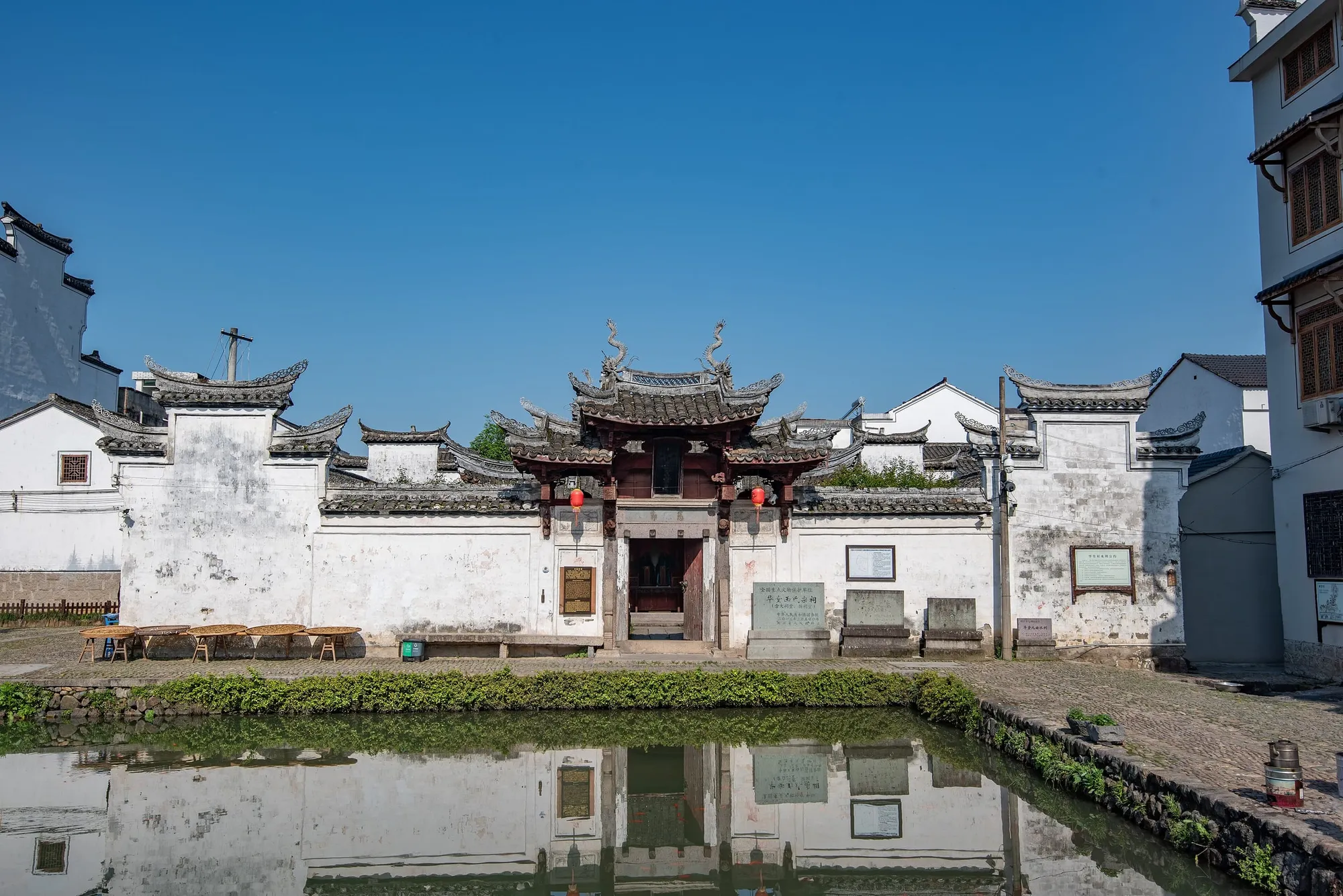
被尊为“书圣”的王羲之,晚年辞官,来到剡县金庭(今嵊州金庭镇)隐居,去世后葬在金庭的瀑布山下。据记载,他的故居后来成了金庭观。附近的华堂古村,至今住着王羲之的后人。
Wang Xizhi, honored as the Sage of Calligraphy, left office late in life and retired to Jinting in Shan — today’s Jinting Town in Shengzhou. He was buried below Waterfall Mountain in Jinting. According to old records, his home later became the Jinting Daoist Temple (金庭观). In nearby Huatang Village, his descendants still live today.
今天的诗人
A poet today
更多照片More photos
全部 All photos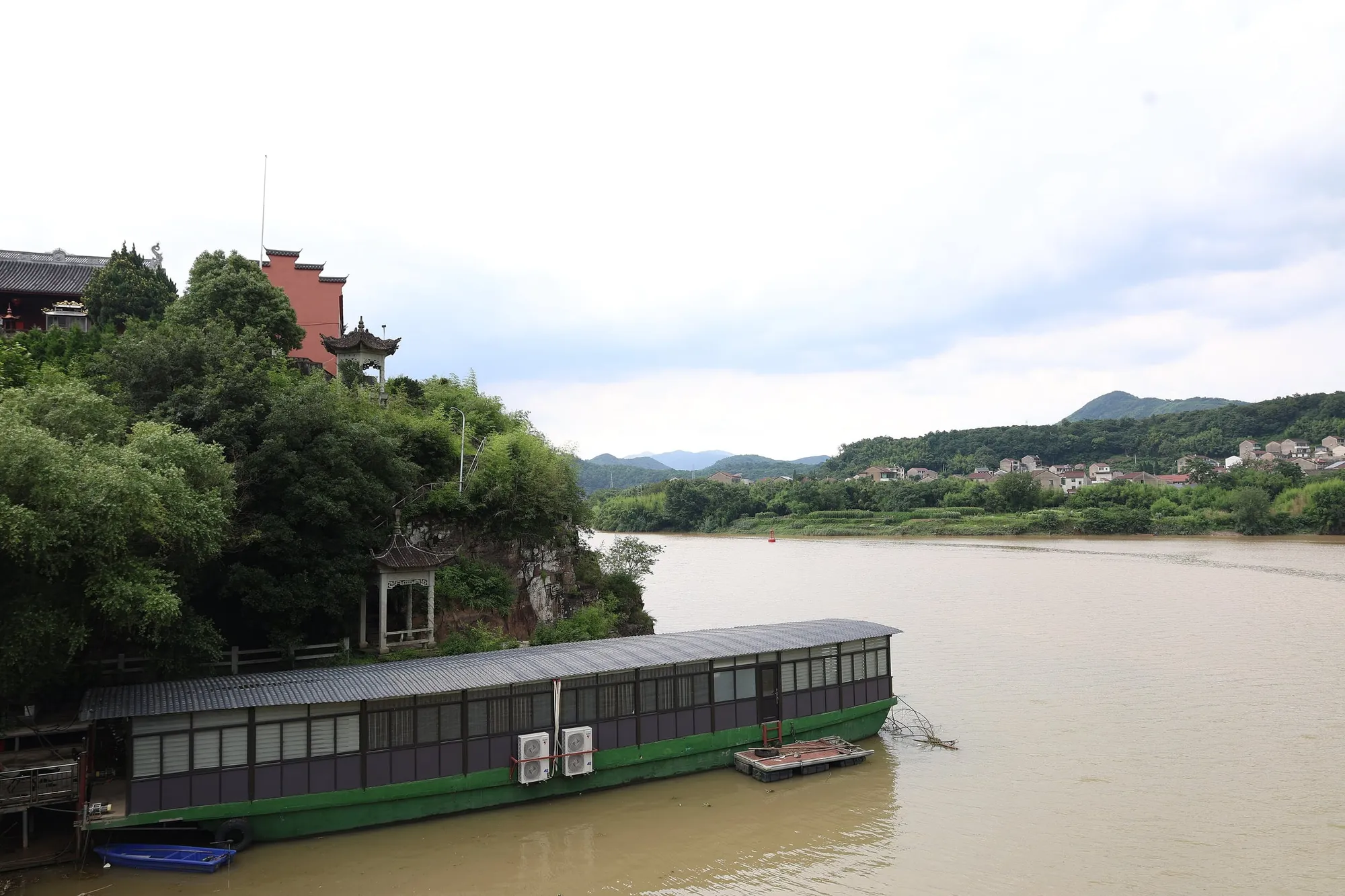
参考资料Sources
- 诗句出自李白《秋下荆门》《梦游天姥吟留别》、杜甫《壮游》;故事出自《世说新语·任诞》。英文为本站翻译。“鲈鱼鲙”用的是张翰思念家乡鲈鱼、辞官回乡的典故。
- 浙东唐诗之路 · 澎湃新闻
- 王羲之与嵊州 · 潮新闻
- Wang Xizhi · Wikipedia