Following the Tang Poets Through Shengzhou
Tang poets came into Shengzhou by boat up the Shan stream; today the train from Hangzhou takes half an hour. This route follows the poets — in at the mouth of the stream in Sanjie, on to Ting Lake and the old town — then spends a second day on an old town and Yue opera, or at the home of the Sage of Calligraphy on the way to Xinchang.
Tang poets reached eastern Zhejiang mostly by boat: across the Qiantang River, into the Eastern Zhejiang Canal at Xixing, up the Cao’e River from Shangyu, then against the current of the Shan stream, on toward Mount Tiantai. Zhu Yuebing, the Xinchang scholar who named the Tang Poetry Road, called Shan the hub for touring the great mountains of eastern Zhejiang — like the airport where travelers change planes today. The trip is much faster now: since January 2022, the Hangzhou–Taizhou high-speed railway has run from north to south past the mountains and rivers of the poems.
This route follows the poets’ direction: into Shengzhou at Sanjie in the north, up the Shan stream into town, then south and east, looking ahead to the next stop, Xinchang. For the whole road, see the Tang Poetry Road of Eastern Zhejiang.
The poets’ road and today’s railway
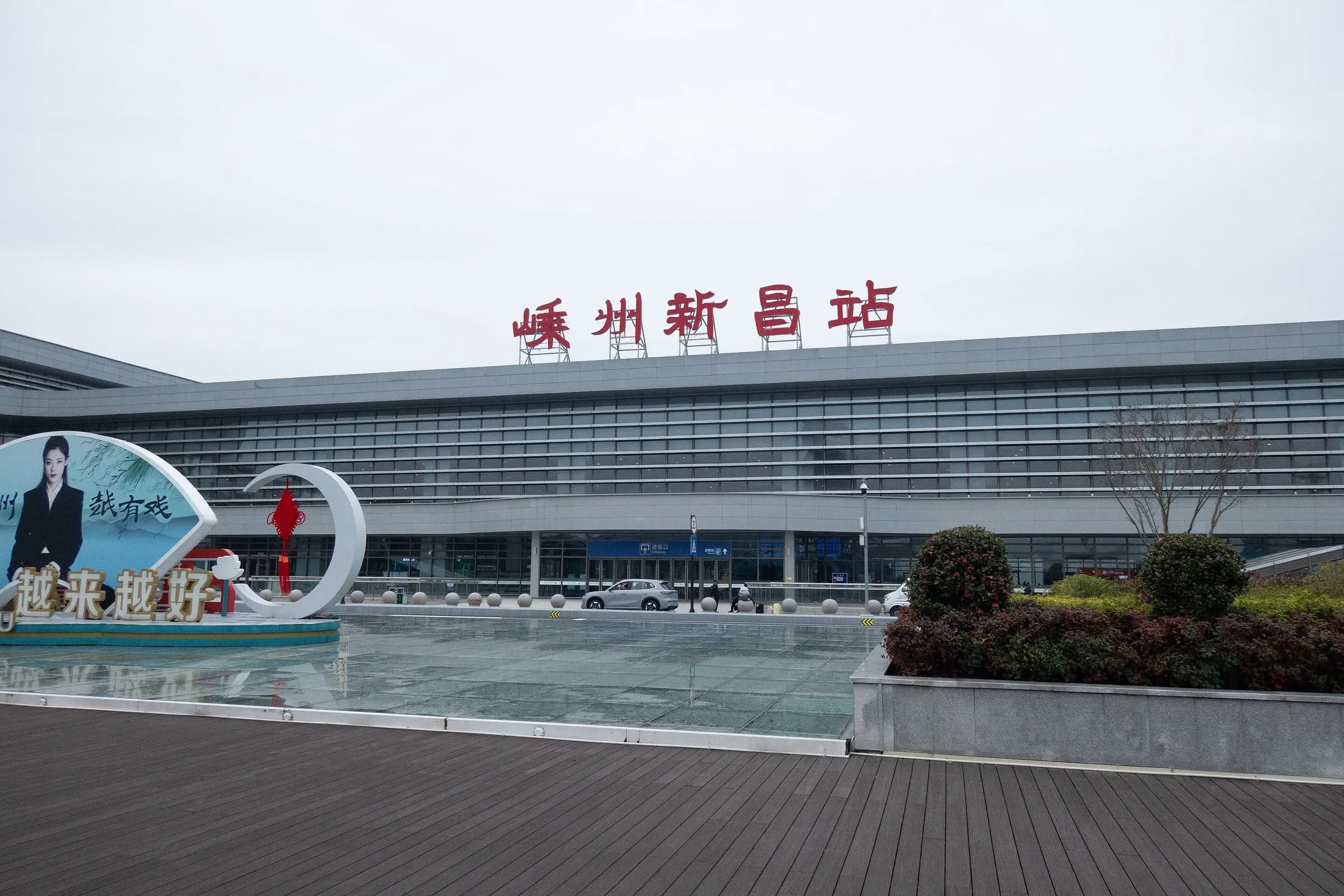
According to Hangzhou.com.cn, the Hangzhou–Taizhou line runs from Hangzhou East through Shaoxing North, Shangyu South, Shengzhou North, Shengzhou-Xinchang and Tiantaishan, all the way to Wenling; Hangzhou East to Shengzhou North takes about half an hour. Shengzhou North is in Sanjie, in the north, where the Shan stream leaves Shengzhou. Shengzhou-Xinchang is south of the city, on the border between Shengzhou and Xinchang and close to both towns. So the smoothest plan is to arrive at Shengzhou North and leave from Shengzhou-Xinchang.
Day one: up the Shan stream into town
Morning: in at the mouth of the stream
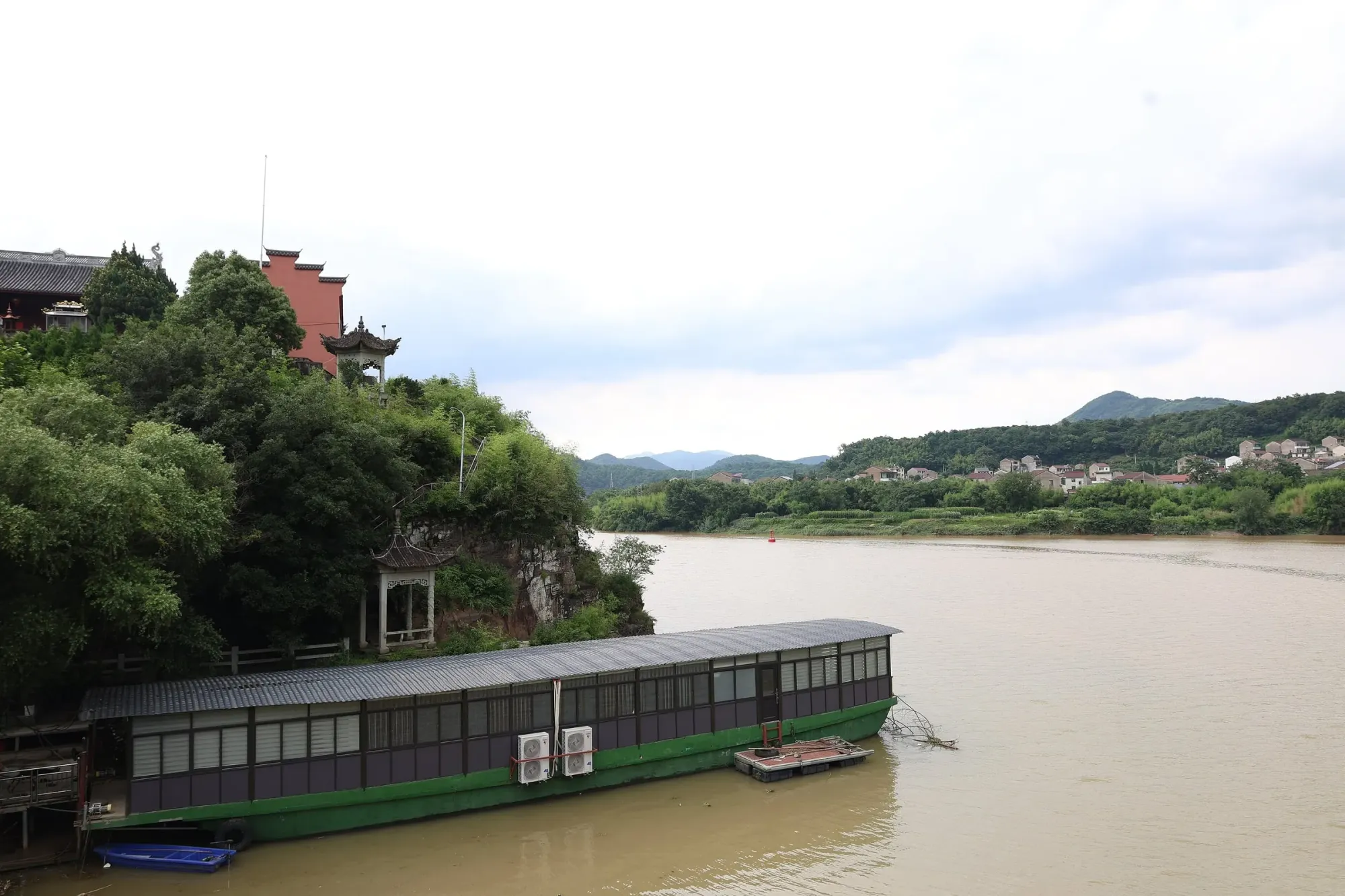
The 嶀 in Tupu (嶀浦) is read tū. The Tupu stretch in Sanjie is the most famous part of the Shan stream. It is also called the mouth of the Shan stream — Tang poets coming up the Cao’e River from Shangyu entered the Shan stream here, which is why some call Tupu the start of the road’s Shan stream section. Where the whole Tang Poetry Road begins is disputed; some say Shaoxing, others Xiaoshan in Hangzhou. According to “Old Roads,” a column on The Paper’s platform, this is where the stream comes out of a gorge between Mount Tu and Mount Sheng and suddenly widens. Tupu Temple stands on a lone cliff above the pool, with two small pavilions in front of it, one high and one low, and a winding path down to the water. The photo at the top of this page shows the spot.
Tradition says Xie Lingyun, the fifth-century father of Chinese landscape poetry, fished here; his estate at Shining was in what is now Sanjie. China Daily reported in 2019 that five or six sand and brick works once lined the bank and the water smelled of diesel. After the river was cleaned up, the Tupu Moon-Gazing Square was built here. Legend says Li Bai came to Shan three times in search of Xie Lingyun’s traces, so the square has a statue of Li Bai. It is one of the stops on the city’s “Poetic Shan Stream” project, which links sights along the stream with greenways and waterways over 18.7 kilometers.
From Shengzhou North it is about a quarter of an hour to Tupu by taxi.
Ting Lake: where Wang Ziyou turned his boat around
Follow the stream south for about twenty minutes and you reach Ting Lake on the north side of town.
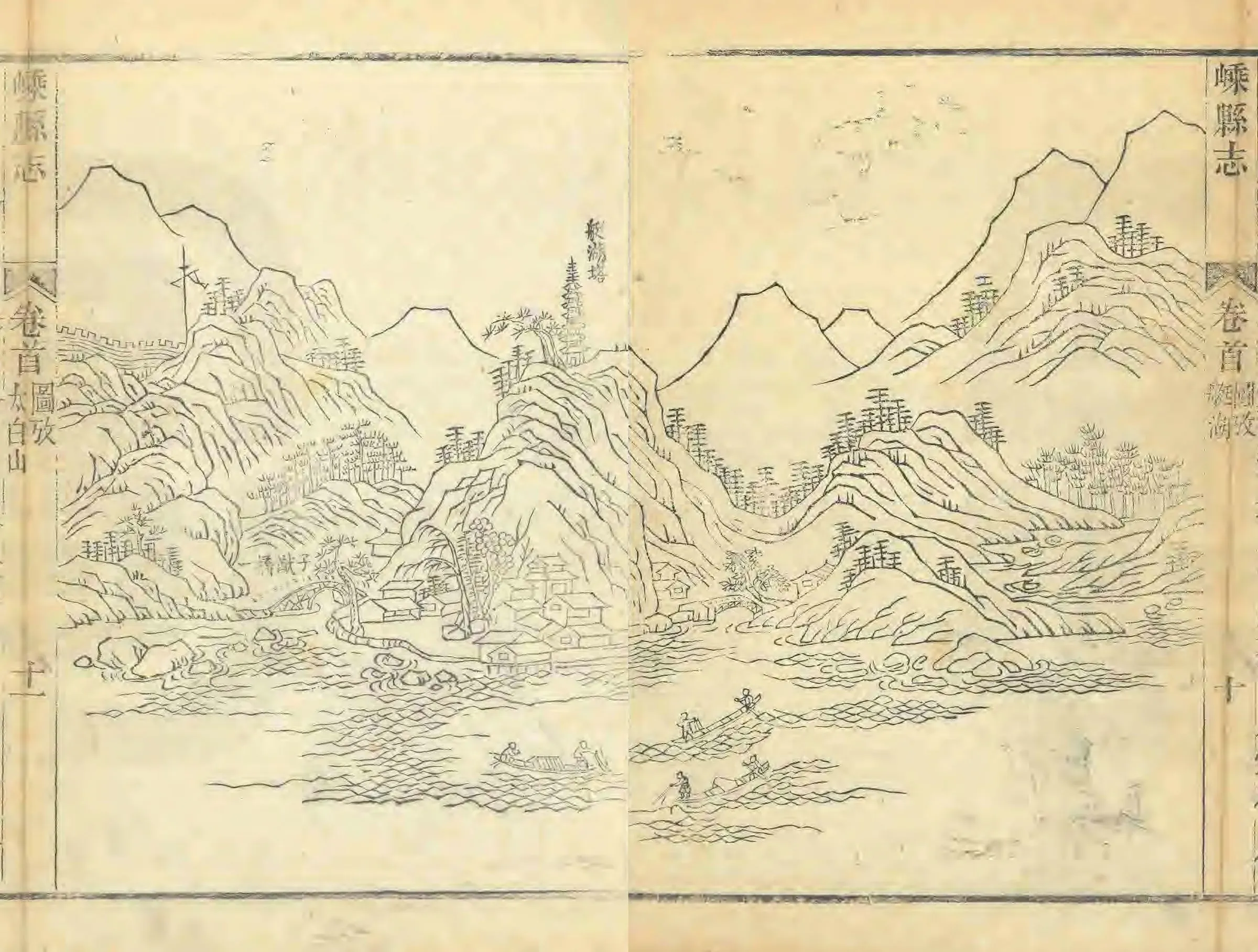
In A New Account of the Tales of the World, Wang Ziyou takes a boat through a snowy night to visit Dai Kui, then turns back at his gate. In Shengzhou they say the second half of the story happened at Ting Lake. According to the Chinese Wikipedia, the lake was an old course of the Shan stream; Wang Ziyou is said to have turned his boat around here, which gave it the name Ting Lake, “Boat Lake,” and it later silted up into fields. The map of Ting Lake in the 1828 county gazetteer still shows a “Ziyou Bridge” — see The Poets’ Stream.
On top of Ting Hill stands Tinghu Pagoda, first built in 1545 as the county town’s feng shui pagoda. It is six-sided and seven stories high, built of brick and wood, and was restored in 2001.
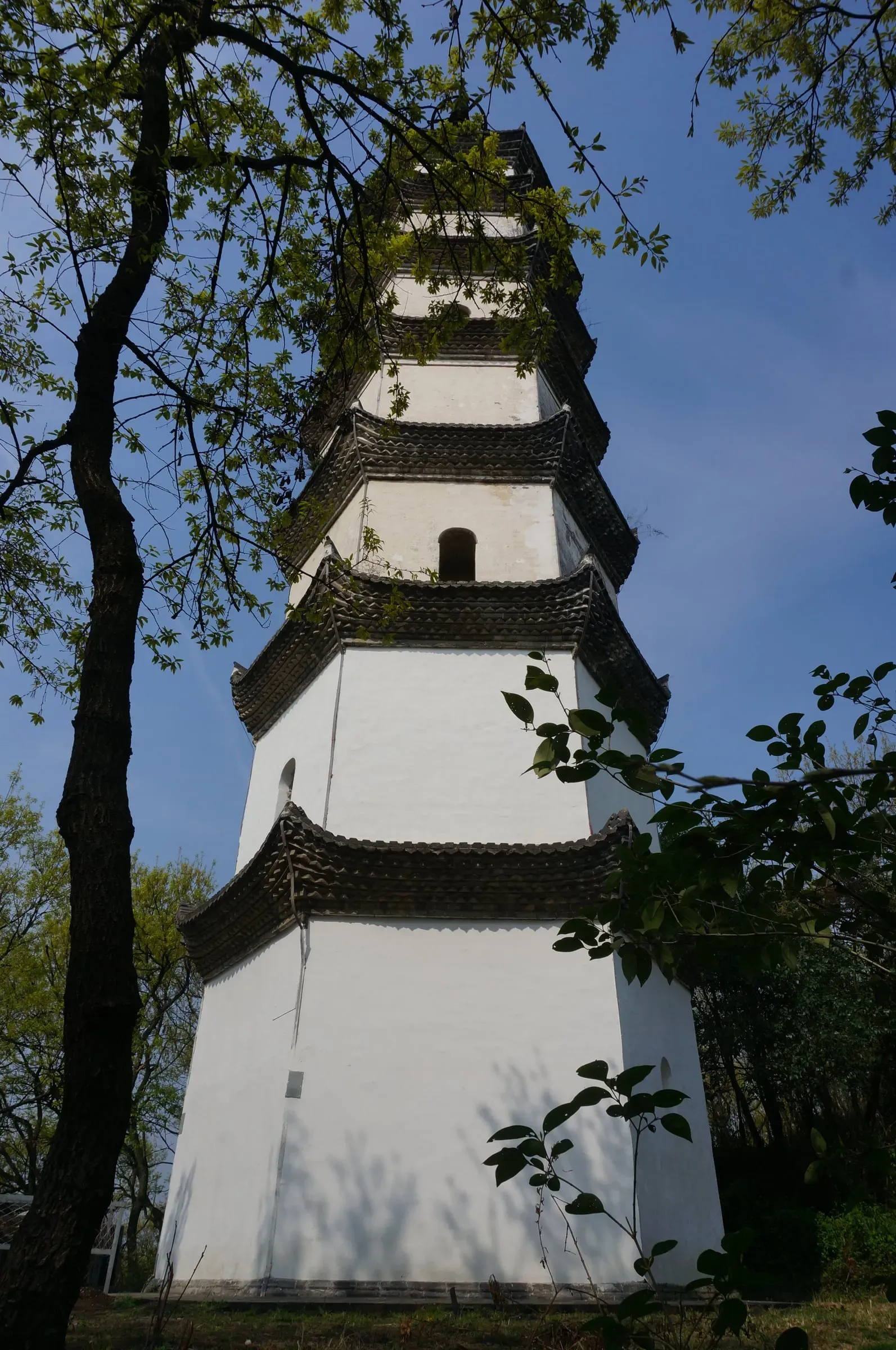
Ting Lake has water again. Ting Lake City Park opened in October 2018 and covers 4.8 square kilometers, 3.4 of them water — about half the water area of Hangzhou’s West Lake. Zhejiang Online reported that the park recreates the scene of Huang Gongwang’s painting of the snowy-night visit, with eight scenic spots such as “Rare Beauty of the Shan Stream” and “Moonlit Boat on the Winding Stream.”
Midday: fried rice cakes in the old town
Shengzhou’s old town is small, and the fried-rice-cake shops stand side by side. Fried rice cakes, fried zhamian noodles and xiaolongbao are known as the “three treasures” of Shengzhou snacks; the tofu buns locals call doufu mantou are small tofu dumplings with very thin skins. See Shengzhou Fried Rice Cakes and Shengzhou Snacks.
Afternoon: the Town God Temple, Dongqian Street and the old wall
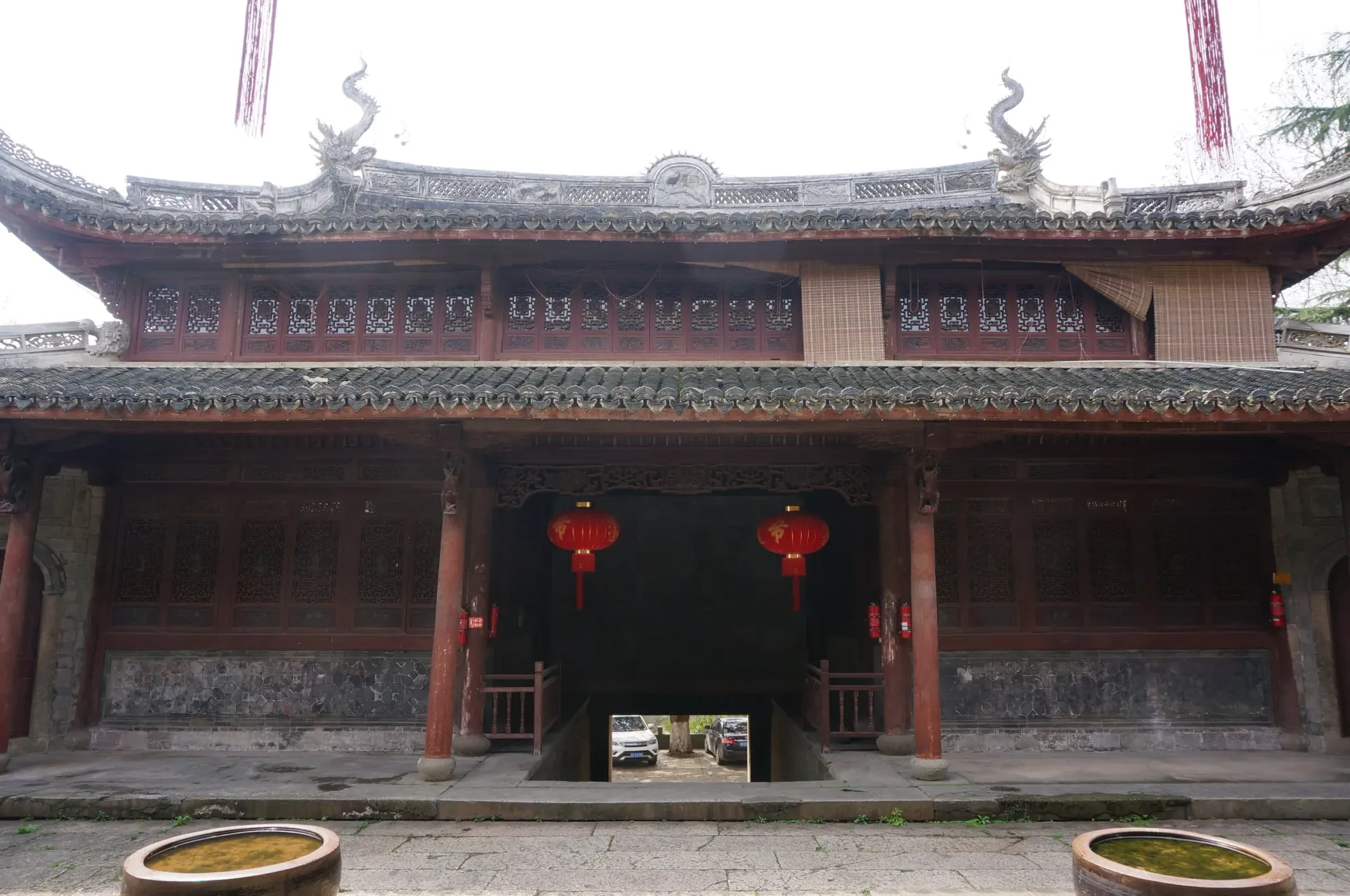
The Town God Temple of Sheng County stands at the southeastern foot of Mount Lutai. Records show it was already being rebuilt in 1347, and most of what stands today was rebuilt in the Qing dynasty. On its central axis is the First Tower of Stream and Hill, named after Zhu Xi’s praise of the view from Mount Lutai, “first among streams and hills”; on the inner side of the ceremonial gate is an opera stage with an octagonal coffered ceiling. According to a 2025 People’s Daily article, the temple also keeps two very finely woven bamboo fans — see Shengzhou bamboo weaving.
A few hundred meters to the southeast is Dongqian Street, which reopened on January 23, 2025, after renovation. The work kept the old pattern of lanes, along with the thousand-year-old city wall, Ren Guang’s home, the former home of Shen Yinchu and a guildhall of tobacco merchants from Jiangsu, Zhejiang and Fujian. Ren Guang, the composer who wrote the theme song for the 1934 film The Song of the Fishermen, came from Dongqian Street, and his home is now the Ren Guang memorial hall.
Evening: a walk by the stream
The Shan stream runs right through town. Zhejiang Online reported that a riverside greenway has been built along it, the first stage running 5.4 kilometers between Shuangta Bridge and Shengzhou Bridge; in the center of town is the stretch of riverbank locals know as the “Beautiful Three Kilometers.” Late in life, remembering the travels of his youth in eastern Zhejiang, Du Fu wrote: “The Shan stream holds a rare beauty; I would stop thinking of it, but cannot forget.” A walk by the water shows you why.
From the city it is about ten minutes by taxi to Shengzhou-Xinchang station.
Day two, option A: an old town, a 9,000-year-old village and Yue opera
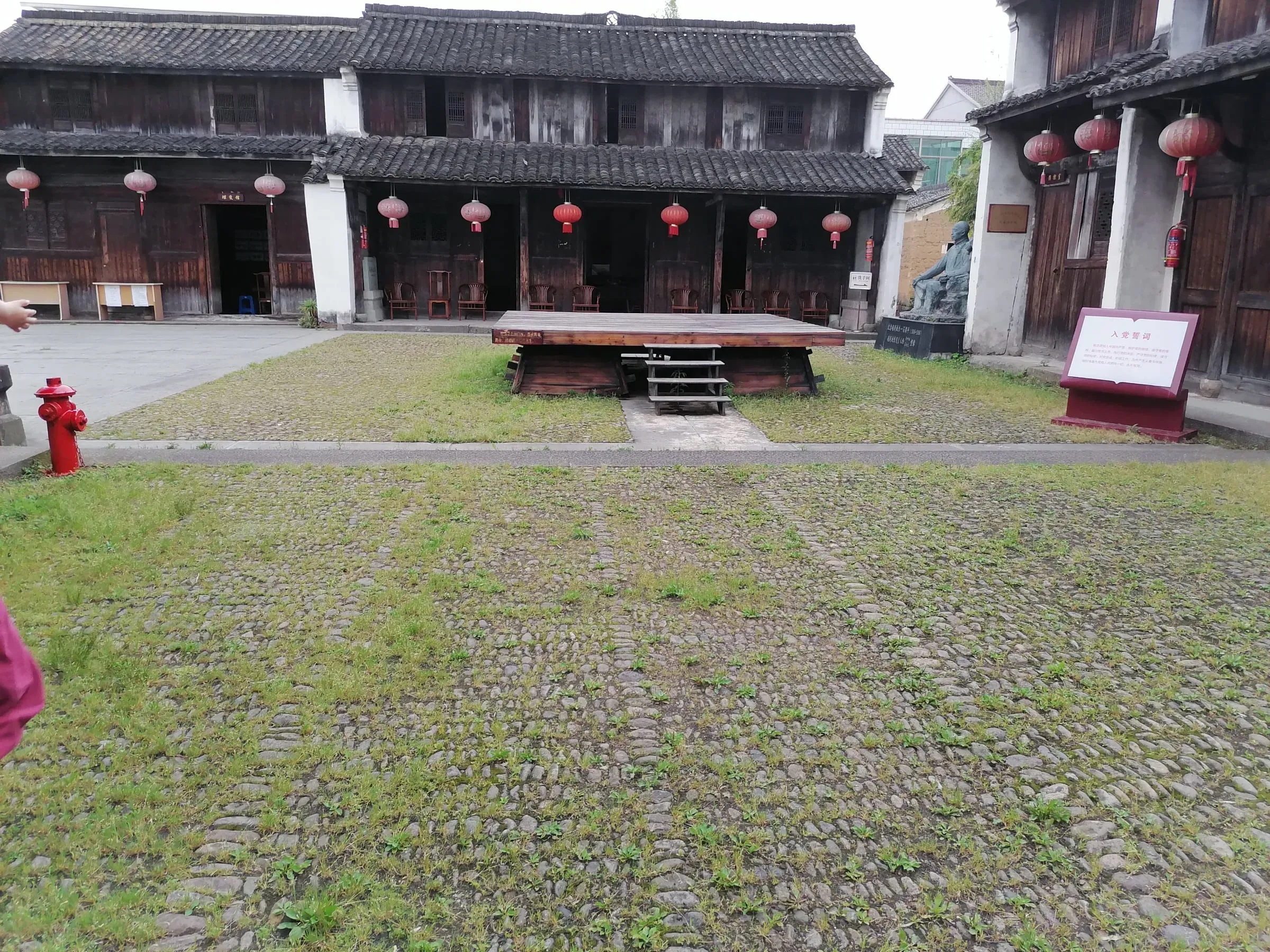
Start the morning northwest of the city in Chongren, where more than two hundred historic buildings survive from the early Ming to the Republic. The old stage in the Yushan Ancestral Hall is where many early Yue opera performers got their start, and it often has performances on weekends and holidays. People still live in many of the courtyard houses, so tread softly.
About ten minutes south of Chongren is the Xiaohuangshan site in Ganlin, a village of the Shangshan culture from about nine thousand years ago. It is an open-air protected area, and work to conserve and display it is still under way, so check whether it is open before you go.
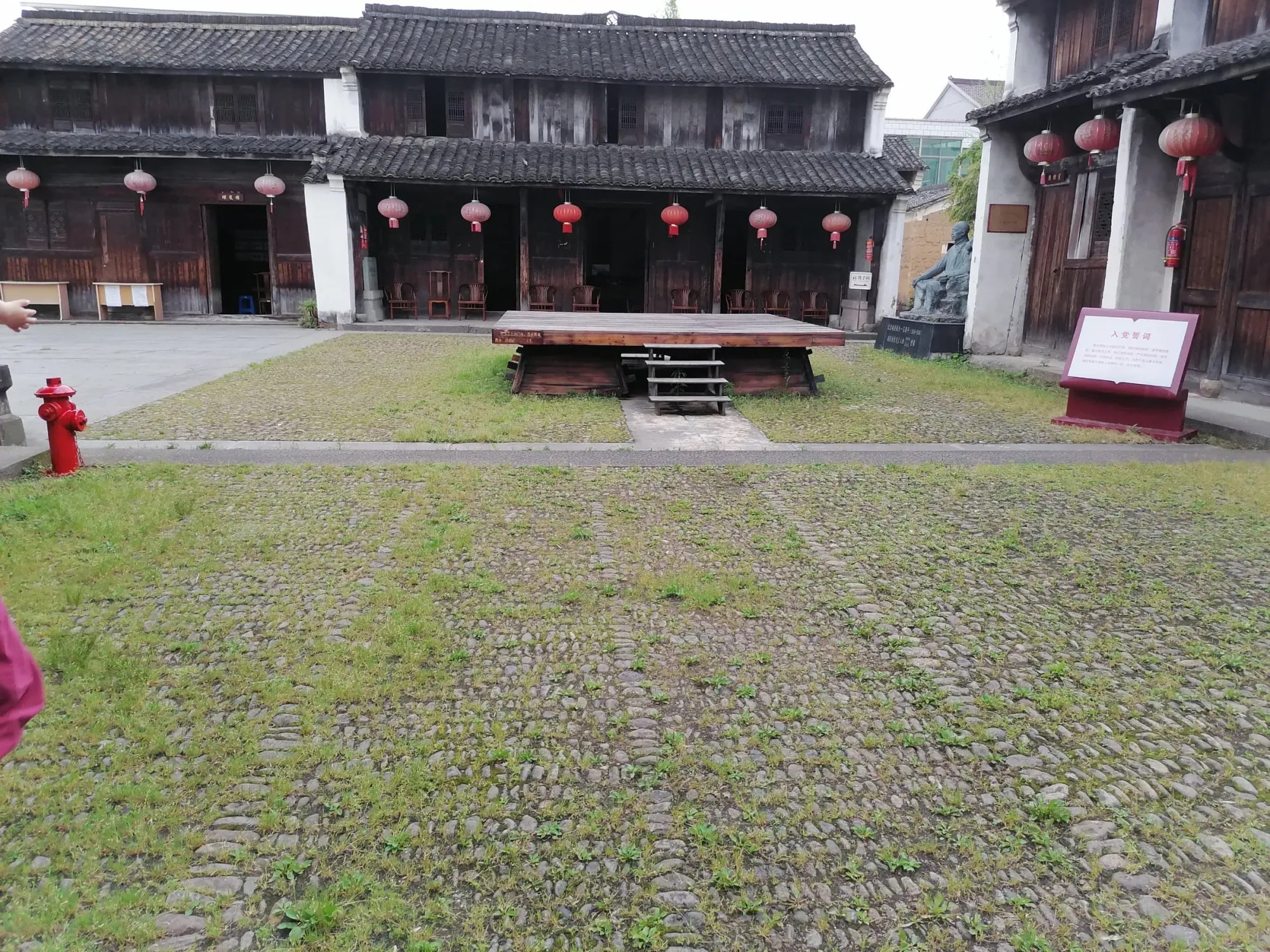
Further south is Yue opera’s home ground. In 1906 a few storytellers built a straw stage of rice tubs and door planks in Dongwang Village, and Yue opera was performed on a stage for the first time. The village now has a replica stage more than ten meters tall, rebuilt in 2016 after a fire. Nearby Shijia’ao is where the first all-female Yue opera school was founded in 1923; according to a 2024 Xinhua report, a troupe of the village’s own women performs on its old stage every week.
The Yue Opera Town has grown up around Shijia’ao. On International Museum Day, May 18, 2023, the new building of the Yue Opera Museum opened here. Billed as China’s first specialist museum of traditional opera, it has a Yue opera hall on the ground floor that tells the story in sections from the opera’s birth through its craze in Shanghai to its golden age, and the museum holds more than 30,000 objects and documents. Upstairs are a display on Shengzhou’s history and culture and an experience center where you can put on a costume and learn to sing a few lines. The town also has an old-style opera house, a canteen and craft workshops for bamboo weaving, Shan rattan paper calligraphy and Huibai tea. For the story of Yue opera, see The Birthplace of Yue Opera.
Shengzhou-Xinchang station is ten to fifteen minutes from the Yue Opera Town by taxi.
Day two, option B: the Sage of Calligraphy’s village, then Xinchang
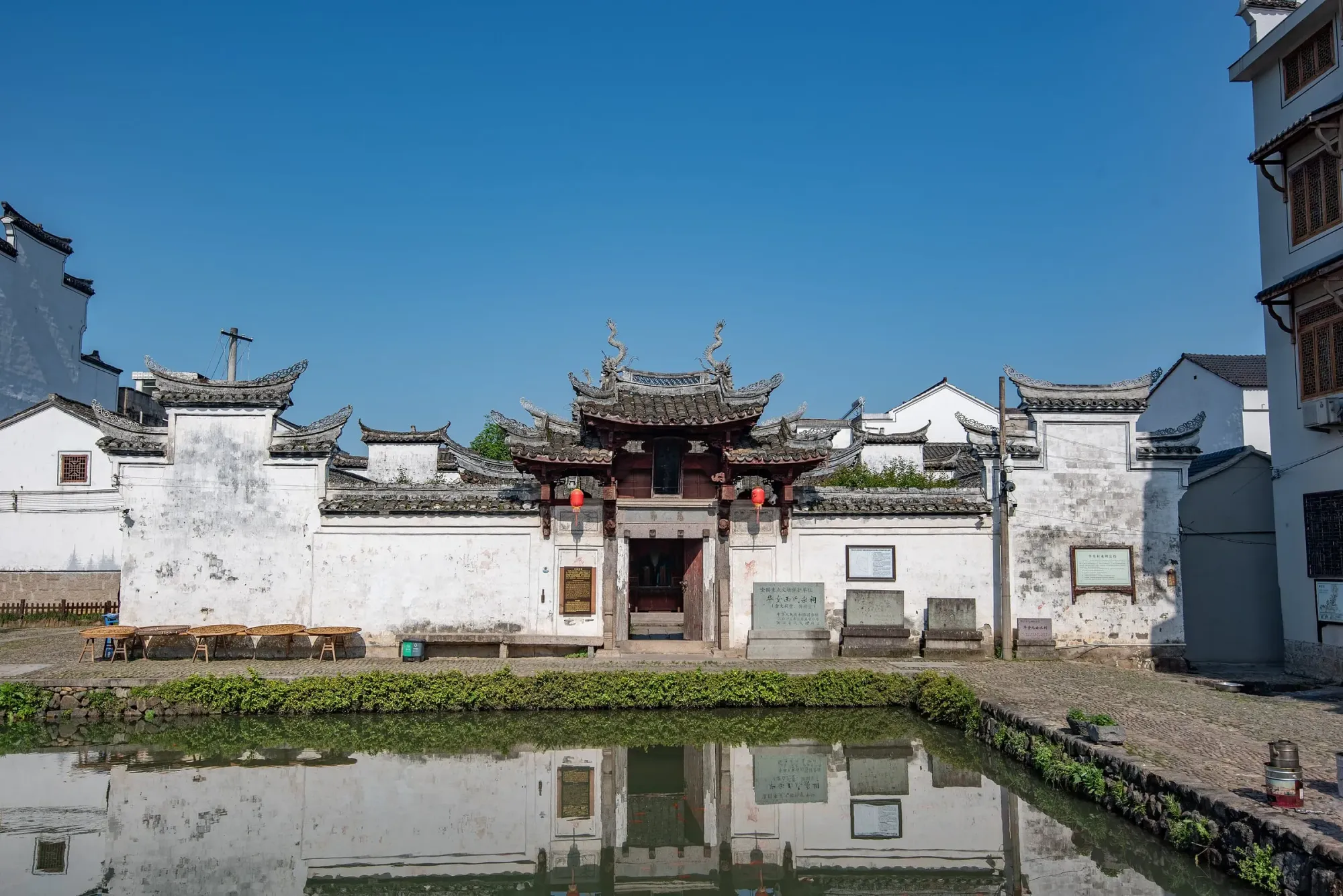
Huatang Village in Jinting Town is a little over half an hour’s drive east of the city. Tradition says Wang Xizhi spent his last years at Jinting, and his descendants still live in Huatang. The village has the Wang Ancestral Hall, first built in the Ming dynasty, old pebbled lanes and a winding water channel; on the hillside behind it are the Jinting Daoist Temple and the Tomb of General Wang, though whether Wang Xizhi really lies there is debated. Li Bai wrote a poem about him too. See Wang Xizhi in Shengzhou.
From Huatang it is about forty minutes southwest to the town of Xinchang. Bai Juyi wrote: “Of the landscapes of the southeast, Yue is the head, Shan is the face, and Wozhou and Tianmu are the eyes and brows.” Mount Wozhou and Mount Tianmu are both in Xinchang, and Tianmu is the mountain Li Bai climbs in his poem Dreaming of Mount Tianmu. Closest to Shengzhou-Xinchang station is the Great Buddha Temple in Xinchang town. According to Hangzhou.com.cn, its stone Maitreya Buddha was carved into a sheer cliff over some thirty years and is a landmark of early cave sculpture south of the Yangtze; it is about 8.8 kilometers from the station by taxi. For more, see our guides to Xinchang, Mount Tianmu and the Great Buddha Temple. One more stop south by train is Tiantai, where the Tang Poetry Road ends — see Tiantai.
Before you go
- Train times change often, so check 12306 before you travel. See Getting There.
- Taxis or ride-hailing are the easiest way between stops; buses mean changes and take much longer. The driving times here are map estimates and will be longer on holidays.
- For Yue opera, come on a weekend or public holiday. The Yue Opera Town holds a theater festival every year from October 1 to 7.
- People still live in the old towns and villages, so ask before stepping into a private courtyard.
- April and May are the peak of the tea harvest; you can stop at the tea gardens around Sanjie on the way. See Shengzhou tea.
And you don’t have to reach every stop. Wang Ziyou got to his friend’s gate and went home without knocking: come on a whim, leave when the whim is spent. That has always been the way to travel the Shan stream.
Questions & answers
How should I spend a day in Shengzhou?
Arrive at Shengzhou North in the morning and see the mouth of the Shan stream at Tupu in Sanjie, then follow the stream south to Ting Lake and its pagoda on the north side of town. Have fried rice cakes in the old town for lunch, spend the afternoon at the Town God Temple, Dongqian Street and the old city wall, walk along the stream in the evening, and leave from Shengzhou-Xinchang station south of the city.
Can I do Shengzhou as a day trip from Hangzhou?
Yes. On the Hangzhou–Taizhou high-speed line, Hangzhou East to Shengzhou North takes about half an hour. Schedules change often, so check 12306 before you go.
Which places in Shengzhou are linked to the Tang Poetry Road?
Tupu in Sanjie, at the mouth of the Shan stream, where Xie Lingyun is said to have fished and where a statue of Li Bai now stands; Ting Lake on the north side of town, where Wang Ziyou is said to have turned his boat around after his snowy-night journey; and Huatang Village in Jinting, where Wang Xizhi is said to have spent his last years. Further on are Mount Wozhou and Mount Tianmu in Xinchang.
Where is the Yue Opera Museum?
Since May 18, 2023, the museum’s new building has been in the Yue Opera Town at Shijia’ao Village in Ganlin. The Yue opera hall is on the ground floor, with a display on Shengzhou’s history and culture and a Yue opera experience center upstairs.
Should I get off at Shengzhou North or Shengzhou-Xinchang?
Shengzhou North is in Sanjie in the north, close to the mouth of the Shan stream, so it suits a trip that follows the Tang Poetry Road. Shengzhou-Xinchang is south of the city, close to central Shengzhou, the Yue Opera Town and Xinchang. For this route, arrive at Shengzhou North and leave from Shengzhou-Xinchang.
Sources
- 车程是按 OpenStreetMap 路网估算的开车时间,实际以路况为准。诗句出自杜甫《壮游》;白居易的话出自《沃洲山禅院记》;王子猷的故事出自《世说新语·任诞》。英文为本站翻译。
- 高铁连通“浙东唐诗之路”,访天姥无须“梦游” · 新华社“草地”周刊(凤凰网转载),2022 年 1 月 16 日
- 嵊州、新昌、天台通高铁啦!杭绍台铁路昨试运行 · 杭州网,2021 年 11 月 27 日
- 剡溪——唐诗之路(竺岳兵)· 新昌浙东唐诗之路研究社
- 剡溪为何含“唐”量如此高 · 钱江晚报,2023 年 9 月 2 日(浙江省社科联网站转载)
- 杭台高铁穿梭的浙东唐诗之路 是一条怎样的路? · 杭州网,2022 年 1 月 7 日
- 古道行|雇舟访庙,浙东唐诗之路(下)· 澎湃号,2018 年 10 月 9 日
- 嶀浦望月——探访唐诗之路 梦回剡溪人家 · 中国日报网,2019 年 10 月 13 日
- 城市景观串起美丽绿道 · 浙江在线,2019 年 7 月 9 日
- 艇湖塔 · 维基百科
- 嵊县城隍庙 · 维基百科
- 嵊州老城·东前街热闹开街 · 人民网浙江频道,2025 年 1 月 24 日
- 任光(音乐家)· 维基百科
- “浙东唐诗之路”绍兴(嵊州)国际铁人三项赛 · 中国日报网,2019 年 10 月 27 日
- 越剧博物馆新馆开馆 · 嵊州新闻网,2023 年 5 月 19 日
- 从越剧博物馆到越剧小镇,走出“馆舍”创造更大文化空间 · 新华日报,2024 年 5 月 17 日
- 嵊州越剧小镇:近悦远来 活力澎湃 · 浙江融媒体(腾讯新闻),2024 年 3 月 12 日
- 越剧“嵊”开 · 新华网浙江频道,2024 年 3 月 29 日
- 中国铁路 12306