Tiantai Yunwu Tea
Tiantai Yunwu, “cloud and mist,” is the green tea of Mount Tiantai; the tea of its highest peak was long called Huading Yunwu. Tiantai also has a place in the story of tea in Japan: the monk Saichō, who studied here in 804–805, is said to have taken tea seeds home, and Eisai, who studied at Wannian Temple, wrote his book on tea, the Kissa Yōjōki, in 1211.
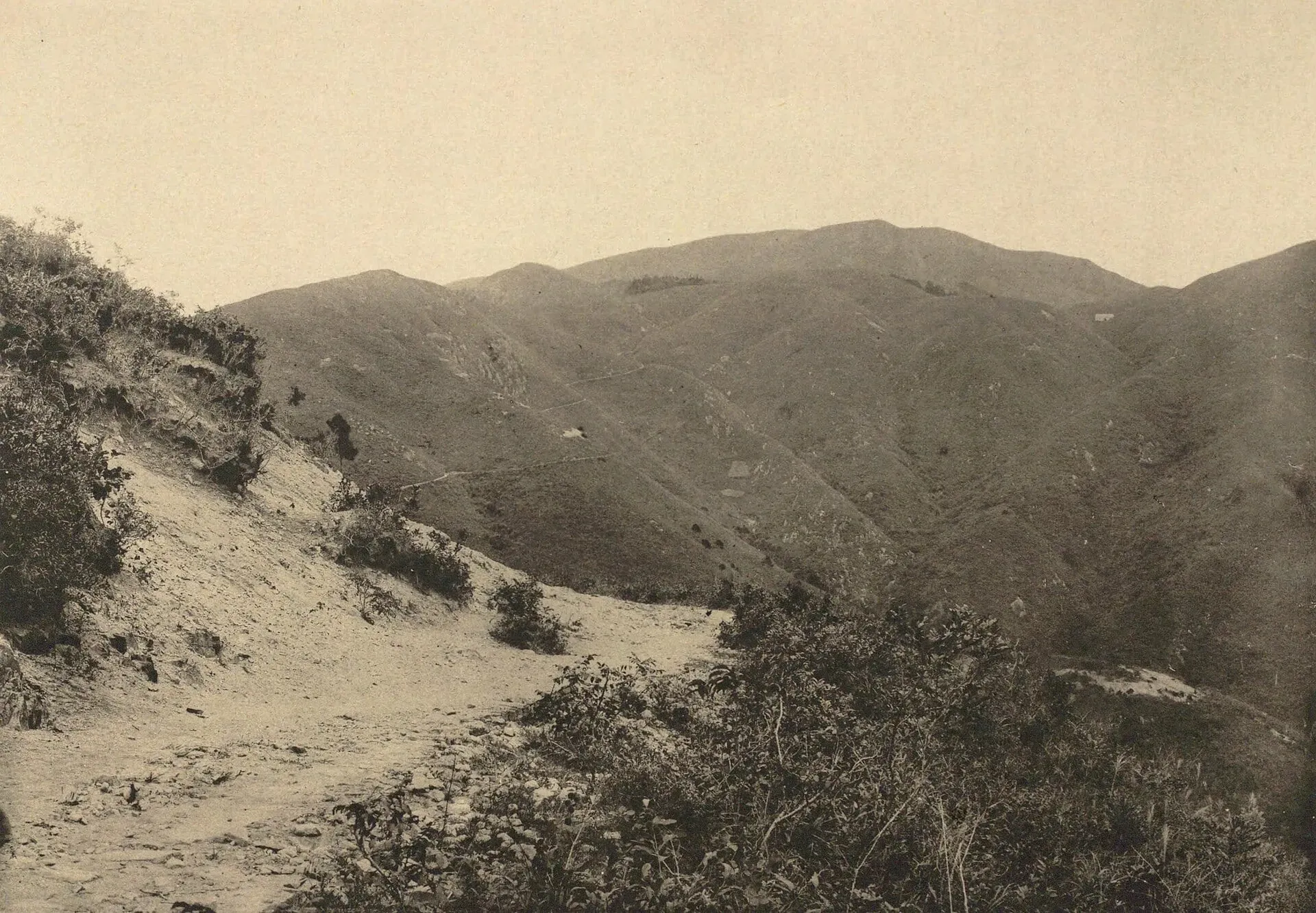
Tiantai Yunwu, “cloud and mist,” is the green tea of Mount Tiantai in Zhejiang and the name of Tiantai County’s regional tea brand; the tea of the highest peak, Huading, has long been called Huading Yunwu. The mountain also has a place in the history of tea in Japan. The monk Saichō is said to have taken tea seeds home from here and planted them below Mount Hiei, and the monk Eisai, who came to Tiantai twice, went on to write a book about tea, the Kissa Yōjōki.
Huading Yunwu
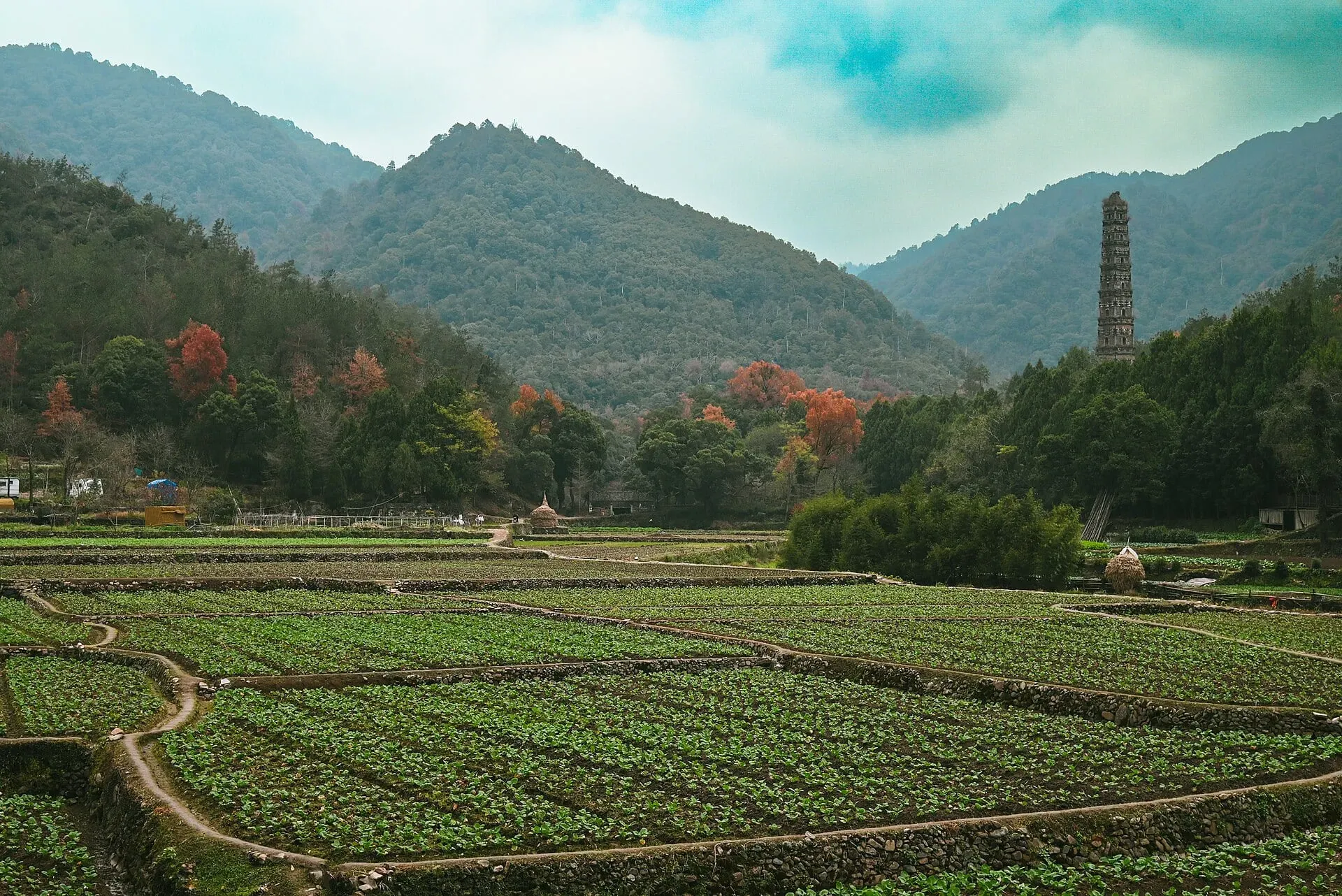
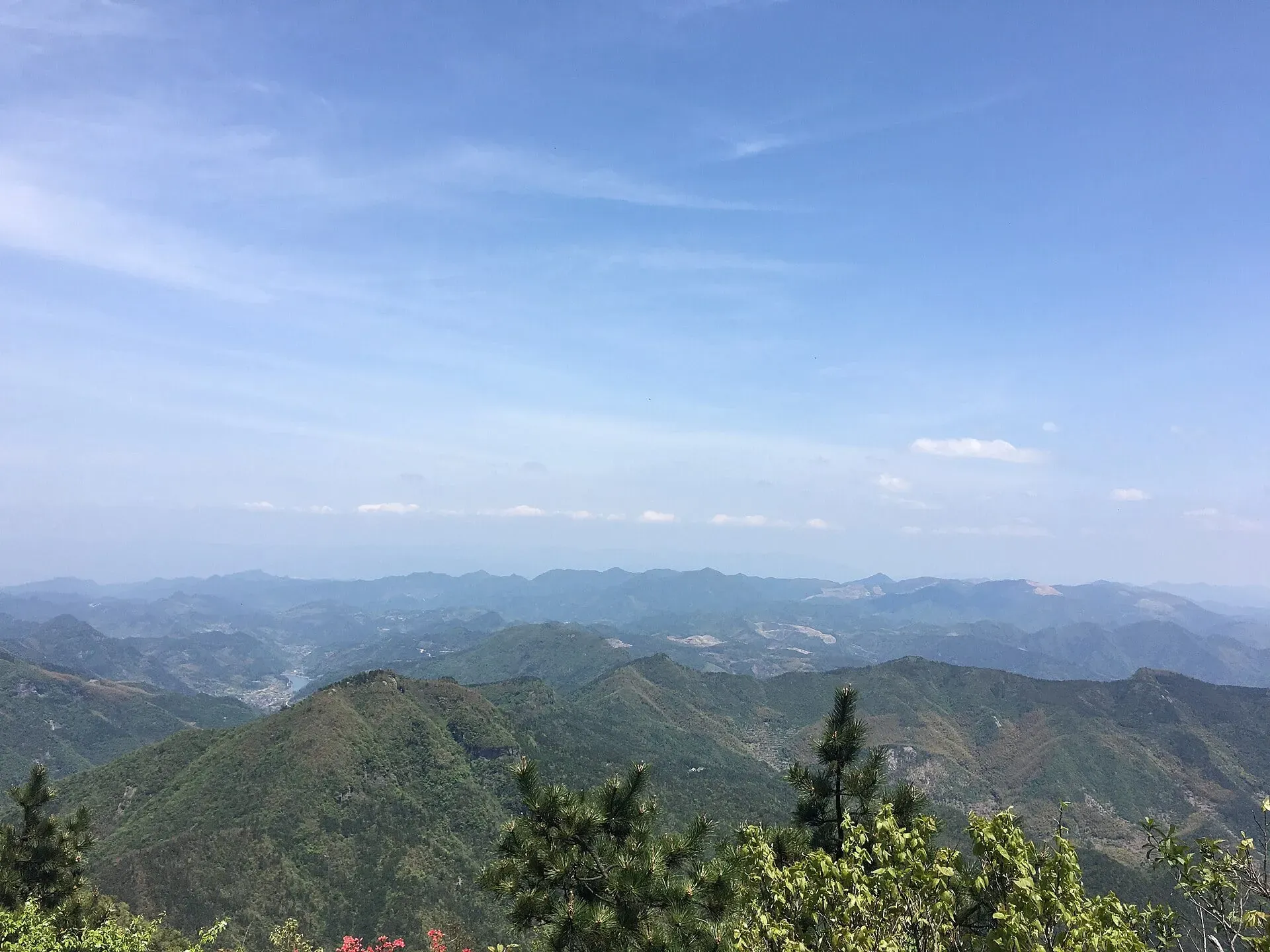
Huading, the highest peak of Mount Tiantai, rises to 1,098 meters about 30 kilometers northeast of the county town. The Taizhou Prefecture Gazetteer of 1995 describes it as high, cold and often in cloud, with a “specialty of cloud-mist tea, long a famous tea.” The county gazetteer of the same year says Huading Yunwu was historically one of the four great teas of Zhejiang, grown on Huading and the hills around the Stone Bridge, and that the best came from two mountain hermitages, Woyun and Bimin; in 1958 the Ministry of Agriculture’s cash-crops bureau called it “a treasure among green teas.”
Legends and records
Tiantai’s tea has its legends and its records. The county gazetteer tells how, in the Three Kingdoms period, the Daoist Ge Xuan came to Huading to cultivate the Way and planted tea there, later called Immortal Ge’s Tea Garden; the Taizhou gazetteer places it, by tradition, behind Huading Temple, in front of the Guiyun Cave. It is a legend: we have found no record from the time.
The first firm record is the Classic of Tea, by Lu Yu of the Tang dynasty. Ranking the teas of eastern Zhejiang, Lu Yu put Taizhou last, as “low,” with a note that tea grown at Chicheng, in Shifeng county, “is the same as Shezhou’s”; Shezhou’s tea, in western Zhejiang, he also ranked low. Shifeng is one of Tiantai’s old names, and Mount Chicheng stands just north of today’s town.
The Chicheng Zhi, a Taizhou gazetteer completed in 1223, goes further, quoting Sang Zhuang’s Ruzhi Xupu: “Tiantai tea has three grades: Zining is the best, Weiling next, and Xiaoxi after that” — at the time, Pumen, Tianfeng and Guoqing. It also quotes Song Qi praising tea as “rain and dew of the Buddha’s heaven, immortal nectar of the emperor’s garden,” and notes that he did not say where the tea grew. Those eight characters now help to sell Tiantai Yunwu, as in Chao News’s report of 2026.
Picking, making and the tea today
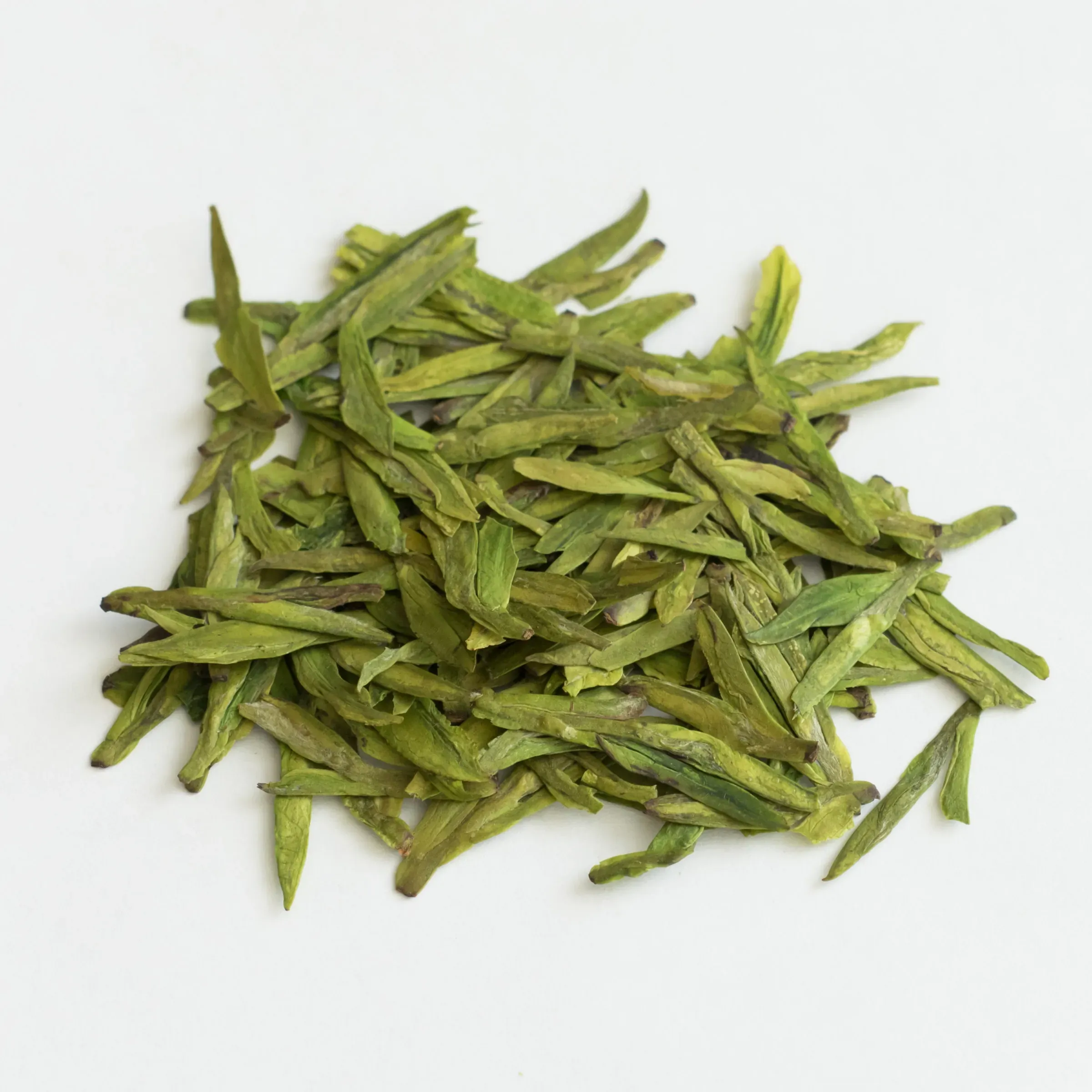
In the county gazetteer, Huading Yunwu is picked between Grain Rain and the Start of Summer, from about April 20 to early May, taking the shoots of one bud with one or two leaves just opening. It is made in five steps — sorting, spreading out, fixing the green with heat, rubbing and straightening in a wok, and drying — into a tight, fine, slightly flat tea, glossy green and downy, with a high, lasting fragrance and a strong, fresh taste that turns sweet.
According to Chao News in August 2026, Tiantai County has 103,000 mu, about 6,900 hectares, of tea gardens, the core of them at 400 to 1,100 meters; it made 3,277 tonnes of tea in 2025, and the Tiantai Yunwu brand is valued at more than 1.286 billion yuan. China Daily called Tiantai Yunwu a national geographical indication product in 2024; we have not found which register lists it, or since when.
Saichō’s tea seeds
In 804 the Japanese monk Saichō came to study on Mount Tiantai; he went home the next year and founded Japan’s Tendai school — see Guoqing Temple and Saichō, Eisai and Mount Tiantai. Japan’s Tourism Agency wrote in 2020 that the Hiyoshi Tea Garden, beside Sakamoto-Hieizanguchi station at the foot of Mount Hiei, is believed to have been planted by Saichō and thought to be the oldest tea garden in Japan; its Chinese text adds that, by tradition, the seeds came from Mount Tiantai. Shiga Prefecture, in 2026, put the sowing of seeds from Tang China in 805 and called it the traditional beginning of Ōmi tea.
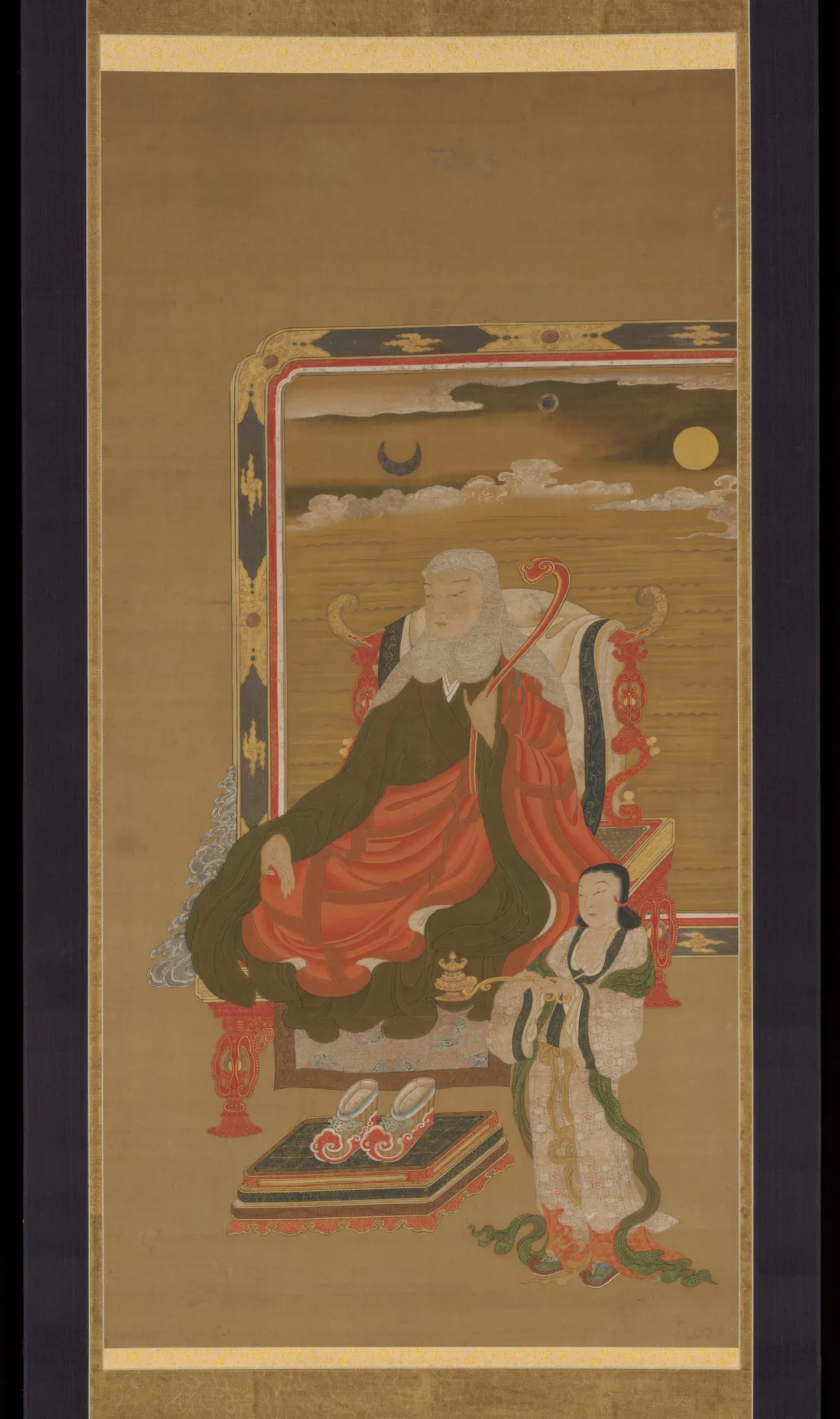
The sources do not agree. The 1995 county gazetteer states it as fact: on his way home Saichō “took a good many tea seeds from Tiantai and tried planting them at the Hiyoshi tea garden.” Japan’s official accounts say only that it is believed, or said, and English Wikipedia notes that Saichō is often credited with Japan’s first tea seeds but that the documentary evidence is uncertain. The earliest reliable record of tea drinking in Japan is in the court chronicle Nihon Kōki: in 815, when Emperor Saga stopped at Bonshakuji temple in Ōmi, the monk Eichū, who had also been to Tang China, “brewed tea with his own hands and served it.”
Eisai and his book of tea
The record for Eisai (1141–1215) is much clearer. According to Japanese reference works and the county gazetteer, he first came to Song China in 1168 and climbed Mount Tiantai. On his second journey, from 1187, he studied Linji Chan under Xu’an Huaichang at Wannian Temple on the mountain, followed him to Mount Tiantong, and went home in 1191. At Tiantai, the gazetteer says, he paid for repairs to the temple and studied how tea was grown and made.
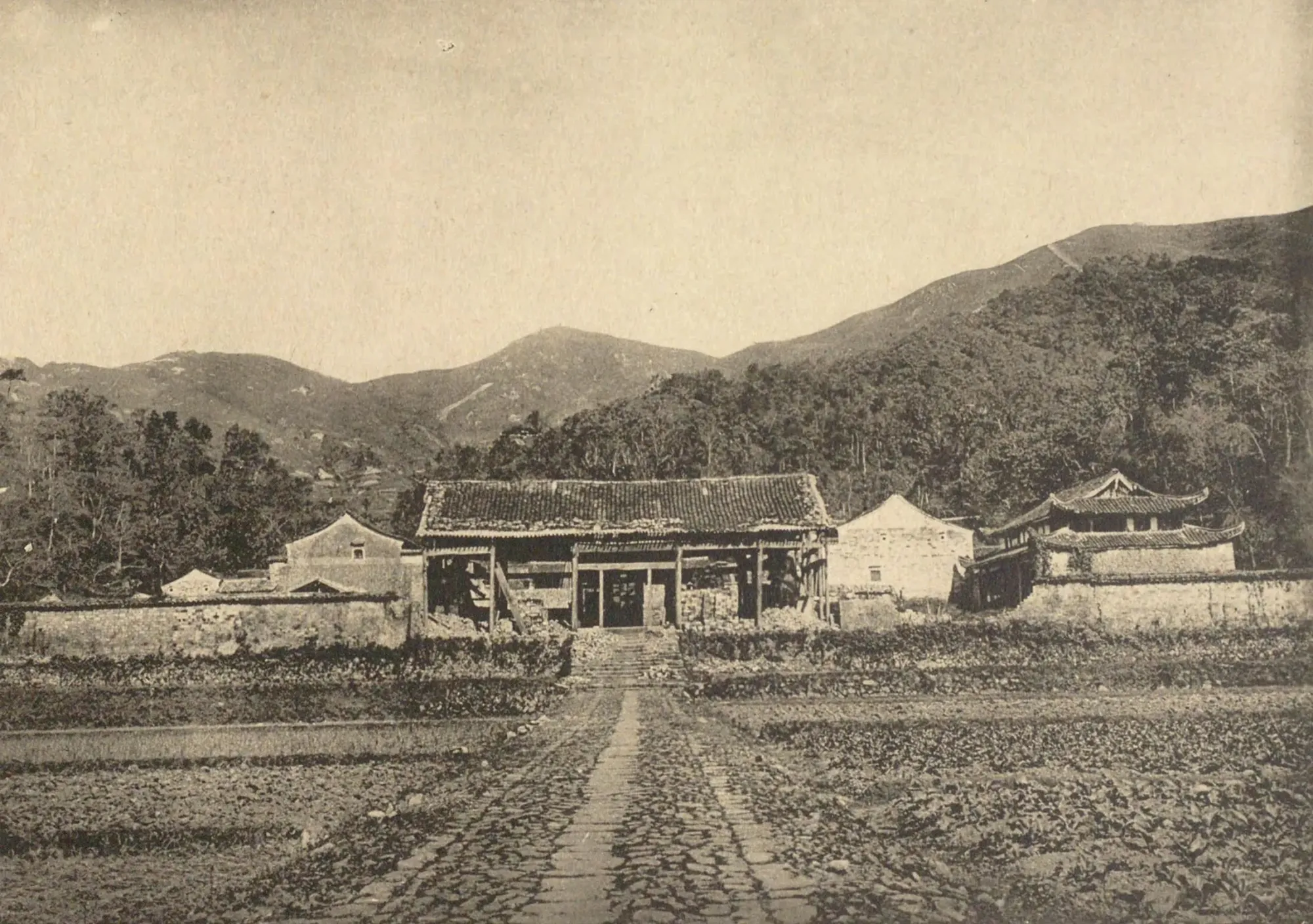
He brought tea seeds from Song China and, says the Nipponica encyclopedia, planted them on Mount Sefuri in Kyushu. In 1211 he wrote a two-volume book in classical Chinese, the Kissa Yōjōki, “Drinking Tea for Health,” and revised it in 1214; it opens, as Heibonsha’s World Encyclopedia quotes it, by calling tea “the elixir of health for this latter age, the wondrous art of long life.” In 1214, the chronicle Azuma Kagami records, Eisai offered a bowl of tea to the shogun Minamoto no Sanetomo, who had a hangover, together with a book in praise of tea, generally taken to be the Kissa Yōjōki. In Japan, Eisai is sometimes called the founder of tea.
Tea for the arhats
In the Song dynasty, tea was also an offering. As the historian Liu Shu-fen of Academia Sinica in Taipei wrote in 2015, the belief that the arhats, the Buddha’s enlightened disciples, dwelt on Mount Tiantai grew from the legend of the Eastern Jin monk Zhu Tanyou, who crossed Tiantai’s Stone Bridge to a holy temple; in the Song, people offered tea to the arhats and took the “milk flowers” forming on it as the sign that they had accepted. The Stone Bridge of the legend is the one over today’s Stone Bridge falls — see Mount Tiantai.
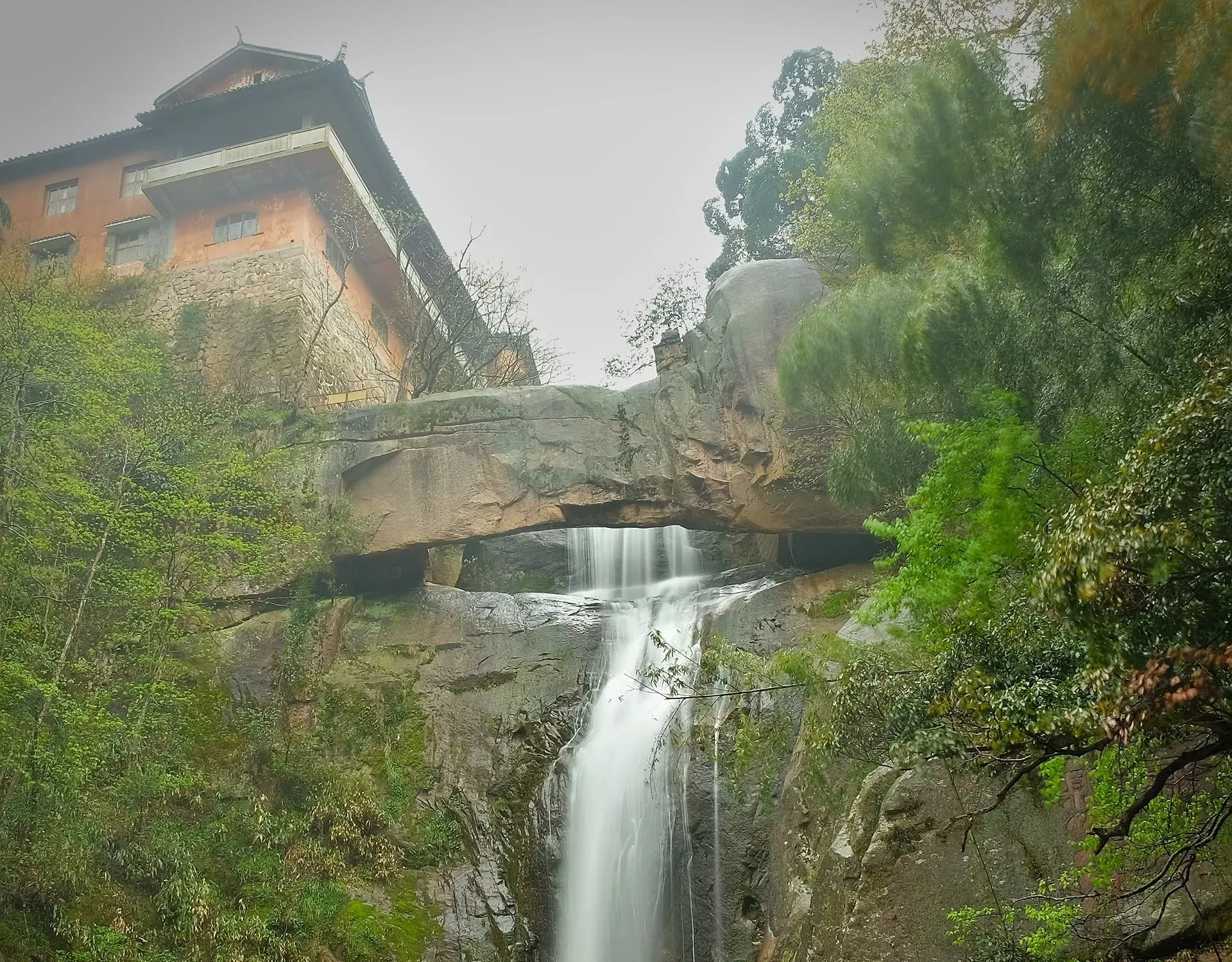
Eisai made such an offering himself: in 1168, says the Yamakawa dictionary of Japanese history, he and the Japanese monk Chōgen offered tea to the arhats at Wannian Temple. Tiantai Yunwu is now hailed as “the ancestor of tea south of the Yangtze, the source of the tea of Japan and Korea” (Chao News, 2026). That is a local claim. The documented link with Japanese tea is Eisai’s time on the mountain; Saichō’s seeds are a tradition.
Seeing the tea in Tiantai
To see where the tea grows, go up to Huading by the road that carries on from the Stone Bridge. For transport and tickets, see Mount Tiantai and Places to Visit; tickets, hours and buses change, so check with the scenic area before you go.
The 1995 county gazetteer puts the Huading Yunwu picking between Grain Rain and the Start of Summer, about when Huading’s Fortune’s rhododendrons are at their best, in late April or early May, according to Shenxiu Tiantai on Zhejiang Online in 2025.
Tiantai is also promoting tea tourism: from April 23 to 25, 2025, it hosted the sixth China Tea Tourism Conference, and Zhejiang Online reported more than twenty ecological tea gardens in the county, with over 100,000 tea visitors a year. We have not found which gardens are open to visitors, nor a tea museum or a tea shop we can recommend; to watch picking or firing, or to buy tea, ask locally before you go.
Wannian Temple, where Eisai studied, stands at the foot of Mount Wannian, north of the county town (1995 county gazetteer). The Taizhou gazetteer of 1995 puts it about 15 km from town as the crow flies, or 28 km by the road round by the Stone Bridge. It says the Eastern Jin monk Tanyou first built a dwelling there and the temple was rebuilt on a grand scale in 1104; in the Southern Song, Eisai and later Dōgen, a disciple of his disciple, studied here and went home to found Japan’s Rinzai and Sōtō schools. We have found no current visitor information for it; for what stands there today, see Saichō, Eisai and Mount Tiantai.
For the tea of Xinchang, Tiantai’s neighbor to the north, see Dafo Longjing; for Shengzhou’s, see Shengzhou tea.
Questions & answers
Are Tiantai Yunwu and Huading Yunwu the same tea?
Huading Yunwu is the old name for the cloud-mist tea of Huading, Mount Tiantai’s highest peak; the 1995 county gazetteer says it grows on Huading and the hills around the Stone Bridge. Today Tiantai Yunwu is also the county’s regional tea brand, and China Daily noted in 2024 that, because the tea of Huading is the best known, it has also been called Huading Yunwu.
Did Japanese tea come from Mount Tiantai?
Tiantai’s county gazetteer and its tea promotion say so, but tradition and record need telling apart. That Saichō brought tea seeds from Mount Tiantai in 805 and planted them below Mount Hiei is a tradition, and Japan’s official accounts say only that it is believed. The earliest reliable record of tea drinking in Japan is the Nihon Kōki’s account of Eichū, another monk who had been to Tang China, serving tea to Emperor Saga in 815. Eisai’s two journeys to Mount Tiantai, in 1168 and 1187, his study at Wannian Temple, the tea seeds he took home in 1191 and his book of 1211 are all on record, but the Japanese reference works we checked say only that the seeds came from Song China.
When is the tea picked?
In spring. The 1995 county gazetteer says Huading Yunwu is picked between Grain Rain and the Start of Summer, from about April 20 to early May, taking one bud with one or two leaves just opening; in the same gazetteer, Jiulong tea from the top of Cangshan is picked between Qingming and Grain Rain, about April 5 to 20. Check locally for the year’s dates.
Is Tiantai Yunwu a geographical indication?
China Daily called it a national geographical indication product in 2024. We have not found which register lists it, or the year it was registered.
Where can I see the tea gardens, or buy the tea?
Huading is the old heart of the tea; for getting up there, see Mount Tiantai. Zhejiang Online reported in 2025 that the county has more than twenty ecological tea gardens and receives over 100,000 tea visitors a year, but we have not found which of them are open to visitors, nor a tea museum or a shop we can recommend, so ask locally before you go.
Sources
- 英文为本站翻译,英文和日文资料的中译也是本站翻译。《茶经》《赤城志》的引文依维基文库的录文。谷雨、立夏、清明对应的公历日期是大约的。
- 天台县志 · 第八编 林业 · 第五章 特产品类 · 第一节 茶叶(1995 年)· 台州史志网
- 天台县志 · 第三编 天台山 · 第四章 莅山名人 · 第二节 海外名人(1995 年)· 台州史志网
- 天台县志 · 第三编 天台山 · 第二章 寺观 · 第一节 寺院(1995 年)· 台州史志网
- 台州地区志 · 第四十四章 风景名胜 · 第一节 山岳名胜(1995 年)· 台州史志网
- 陆羽《茶经》卷下 · 维基文库
- 陈耆卿《赤城志》卷三十六(四库全书本)· 维基文库
- 嘉定赤城志 · 维基百科
- 天台山云雾茶亮相香港国际茶展 浙茶出海再添新窗口 · 潮新闻,2026 年 8 月 14 日
- Tiantai Yunwu Tea enjoys strong brand value · China Daily, 2024 年 5 月 29 日
- 第六届中国茶旅大会在天台启幕:共探“茶旅+”发展新路径 · 浙江在线,2025 年 4 月 25 日
- 走起!天台这3条旅游线路攻略也太全了 · 浙江在线(神秀天台),2025 年 4 月 28 日
- 天台华顶:千年杜鹃沐雪披银装 · 中国新闻网(中国日报网转载),2025 年 2 月 26 日
- Sakamoto Area · Japan Tourism Agency multilingual database (FY 2020)
- 坂本地区 · 日本观光厅多语言解说文数据库(2020 年度)
- 日本茶発祥の地・滋賀 「近江の茶」を愉しむ春が到来 · 滋賀県(共同通信 PR ワイヤー),2026 年 3 月 16 日
- 栄西 · コトバンク(日本大百科全書、改訂新版 世界大百科事典、山川 日本史小辞典 ほか)
- 喫茶養生記 · コトバンク(改訂新版 世界大百科事典、日本大百科全書 ほか)
- 煎茶道 · コトバンク(改訂新版 世界大百科事典)
- 梵釈寺 · コトバンク(世界大百科事典「チャ(茶)」ほか)
- 刘淑芬《宋代的罗汉信仰及其仪式——从大德寺宋本“五百罗汉图”说起》·《中央研究院历史语言研究所集刊》第 86 本第 4 分,2015 年
- History of tea in Japan · Wikipedia