Master Zhiyi of Mount Tiantai
Master Zhizhe is Zhiyi (538–597), the monk who in effect founded the Tiantai school of Buddhism. After eight years of teaching in Jinling he came to Mount Tiantai in 575; he died at Shicheng Temple, in today’s Xinchang, in 597 and lies buried at Folong, in what is now the Zhizhe Stupa Courtyard.
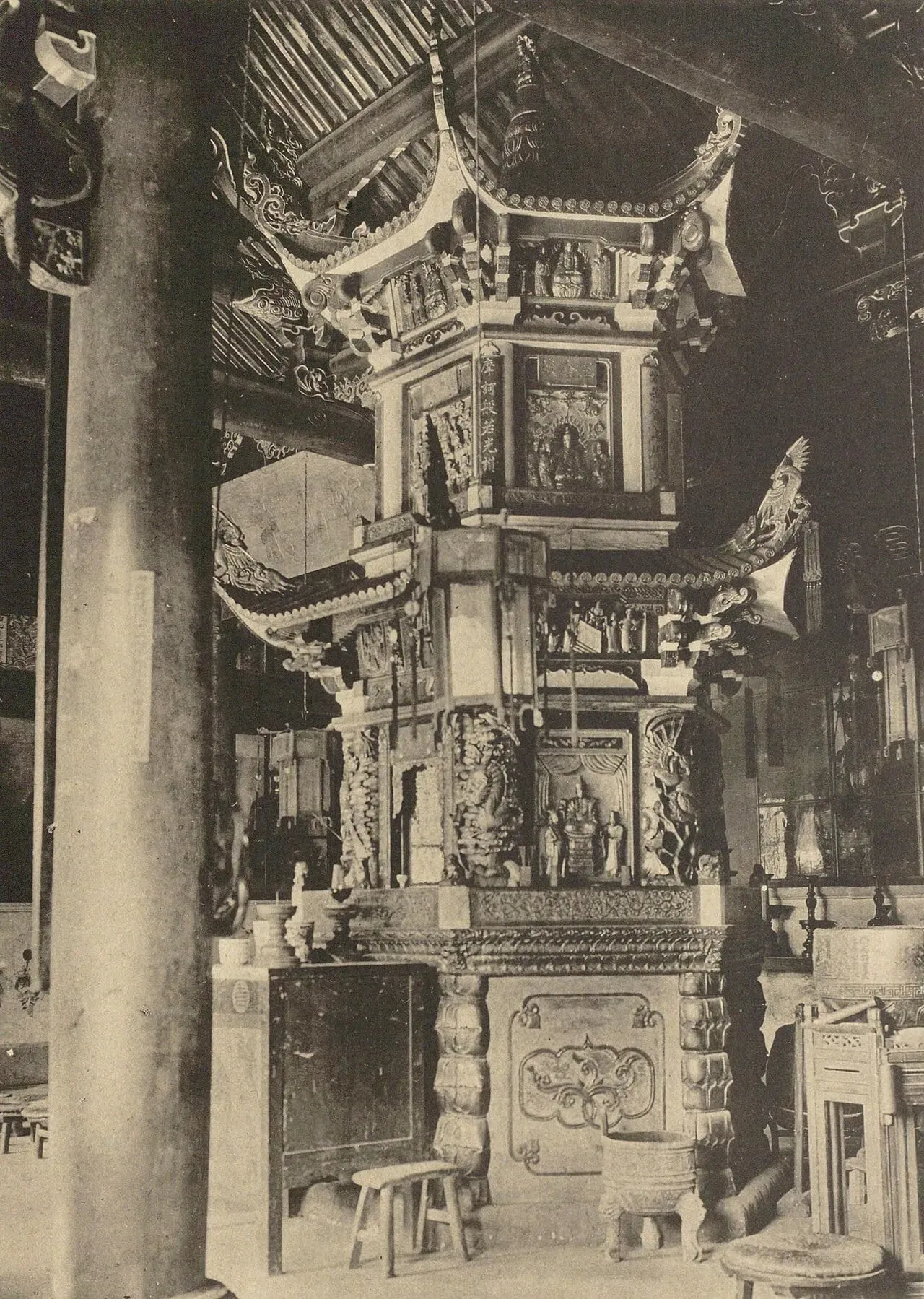
Master Zhizhe is Zhiyi (538–597), the monk who in effect founded the Tiantai school of Buddhism; his name is said Zhìyǐ, the 顗 in the third tone. He meditated, taught and lies buried on Mount Tiantai: Guoqing Temple at its foot was built to his plan, his stone pagoda stands in the stupa courtyard at Folong, and on Huading a legend tells of his night among demons.
From Jingzhou to Jinling
His disciple Guanding, in his Biography of Master Zhizhe of Tiantai, says Zhiyi was born a Chen in Huarong county, Jingzhou: its seat was in today’s Qianjiang, Hubei, says Chinese Wikipedia, though Britannica has him born in Hunan. After the Western Wei took Jiangling in 554 his family was scattered and his parents died, and at eighteen he became a monk at Guoyuan Temple in Xiangzhou, today’s Changsha.
In 560 he made the dangerous journey to Mount Dasu, on the embattled frontier between the Chen and the Northern Qi, to study under Huisi (515–577). Huisi greeted him, by Guanding’s account, with “Long ago on Vulture Peak we heard the Lotus Sutra together.” There, reciting the sutra, Zhiyi passed into deep meditation.
In 567 Huisi, about to leave for Mount Heng, charged him: “Do not be the last of the line, the one who lets the seed die.” Zhiyi went to the Chen capital, Jinling, today’s Nanjing, and taught at Waguan Temple for eight years, where, the biography says, even the court’s ministers came to hear him.
Why Mount Tiantai
Success troubled him. In his first year at Waguan, he counted, forty sat with him and twenty grasped the teaching; by the third, two hundred sat and fewer grasped it: “the followers grow ever more, and those who grasp the teaching ever fewer.” He longed for Mount Tiantai, to “cut my ties on that ridge, pecking on its peaks and drinking from its streams.”
In the ninth month of 575 he went into the mountain, against the emperor’s wishes. As a youth, Guanding writes, he saw as in a dream a very high mountain above the sea, where a monk on the summit told him: “You shall live here. You shall end here.” The monastery he built at Folong matched the vision exactly, and in 578 the emperor named it Xiuchan. Folong, “Buddha Ridge,” got its name, local people told Guanding, because visitors to the mountain often saw Buddha images there (preface to the Guoqing Bailu).
A night on Huading
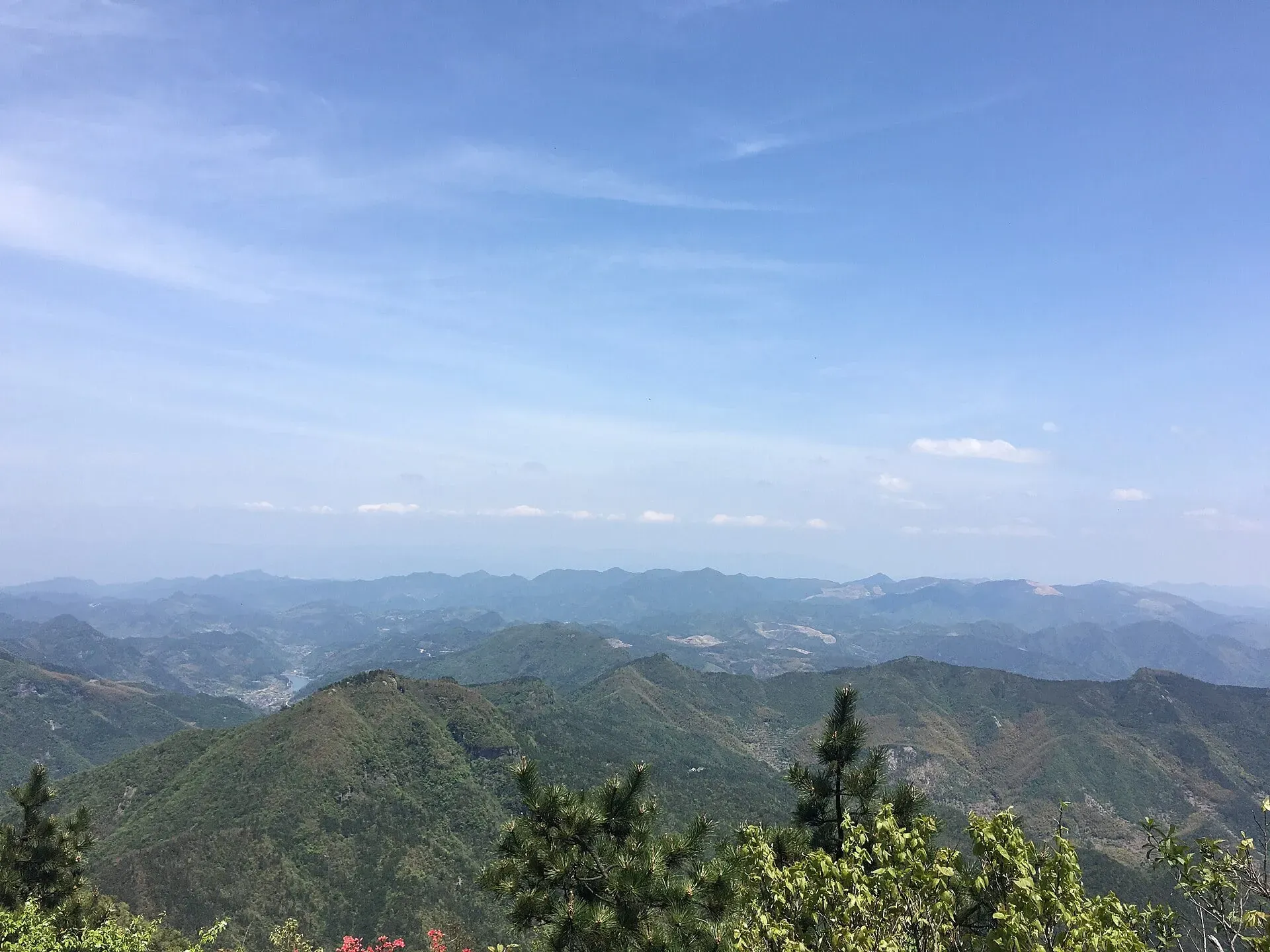
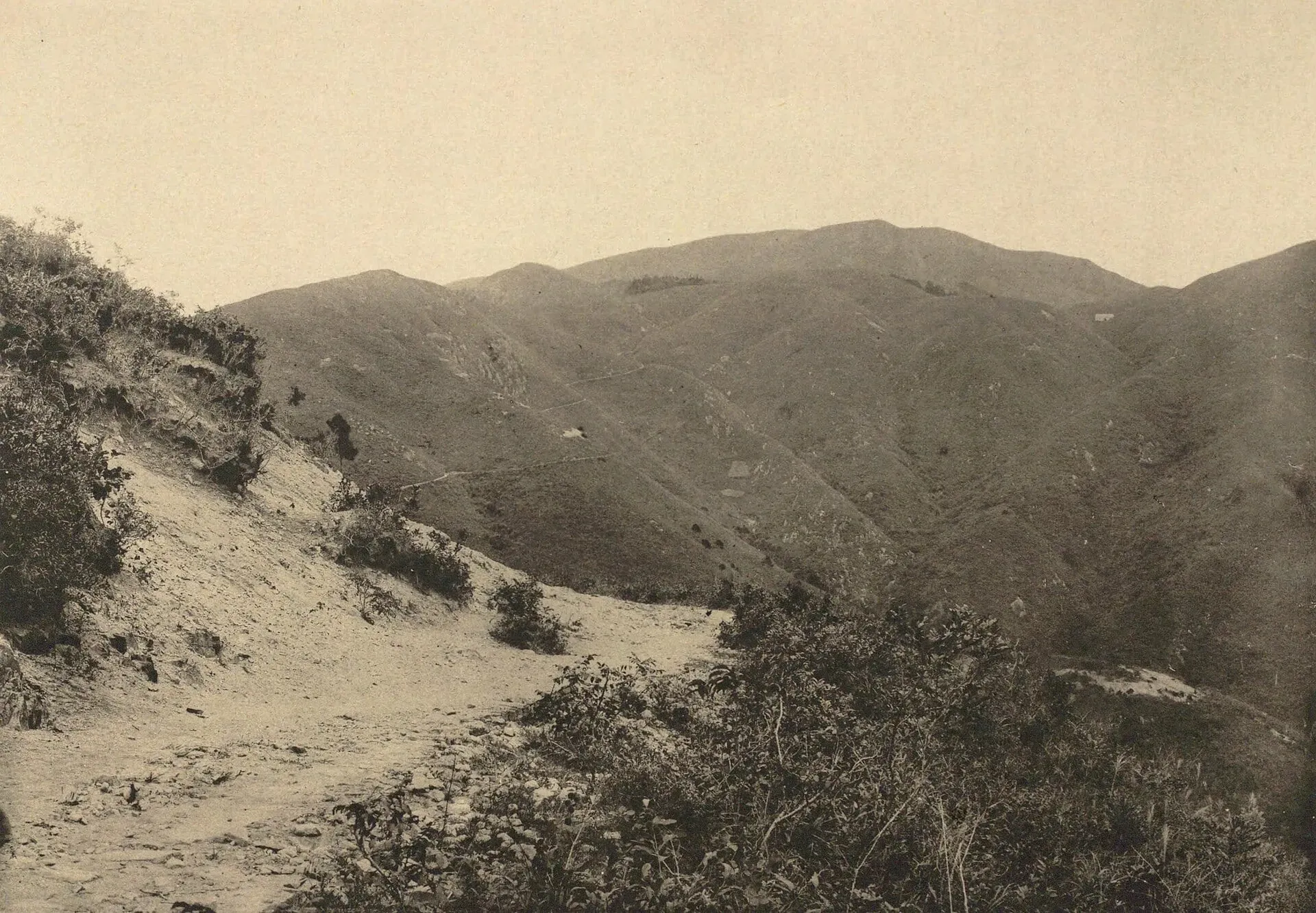
Guanding tells how Zhiyi climbed Huading, the highest peak, to practice austerities alone. Late one night a gale tore up trees, thunder shook the mountain and demons came in a thousand shapes, then in the likeness of his parents and teachers, weeping and clinging to him. He kept his mind still and they faded; as the morning star rose, a divine monk appeared and taught him.
It is a legend. The Chicheng Zhi, a Taizhou gazetteer of 1223, says Zhiyi once sat in meditation on Huading and records a Demon-Subduing Pagoda and a Tiger-Taming Altar there; the 1995 county gazetteer lists them with the Baijing Terrace among his traces. For the summit, see Places to Visit.
What he taught, in plain words
Zhiyi wrote little; his works are mostly lectures his disciples took down. Here is a short outline, following our sources:
Calming and contemplation. Zhi settles the mind so that it does not scatter; guan looks closely from that settled ground until wisdom arises (1995 county gazetteer). His short manual for beginners says: “Know that these two are like the two wheels of a cart and the two wings of a bird; practice only one and you fall into error.” His Mohe Zhiguan, lectured at Yuquan Temple in 594, was never finished, Guanding notes.
The Lotus Sutra. The school takes it as its root text and is also called the Lotus school (county gazetteer, 1995). Guanding recorded Zhiyi’s two great lecture series on it, and Britannica says Zhiyi helped make it the most popular scripture of East Asia.
Five periods and eight teachings. As Britannica puts it, Zhiyi held that the Buddha taught in five periods, suited to his listeners, and preached the Lotus Sutra in the last. Tradition and the 1995 gazetteer credit him with the “five periods and eight teachings”; English Wikipedia cites Japanese scholars such as Sekiguchi Shindai who conclude that this full system was assembled later by Zhanran, and that Zhiyi never used the term.
Three thousand realms in a single thought. The Mohe Zhiguan says: “These three thousand are in a single moment of mind. If there is no mind, that is all; but at the slightest stirring of mind, all three thousand are there.” The figure, says Chinese Wikipedia, multiplies ten realms of beings, from the hells to the Buddhas, by the ten each contains, by ten “suchnesses” and by three kinds of world. Zhiyi adds that this means neither that the mind gives rise to all things nor that it holds them all at once.
The name Zhizhe, and the last journey
After the Sui conquered the Chen, Yang Guang, Prince of Jin, received the bodhisattva precepts from him at Yangzhou in the eleventh month of 591. Zhiyi named the prince Zongchi, “holding all,” and the prince named him Zhizhe, “the Wise One.” He then founded Yuquan Temple in his native Jingzhou; when he came back to Tiantai, his old monastery had stood empty for twelve years.
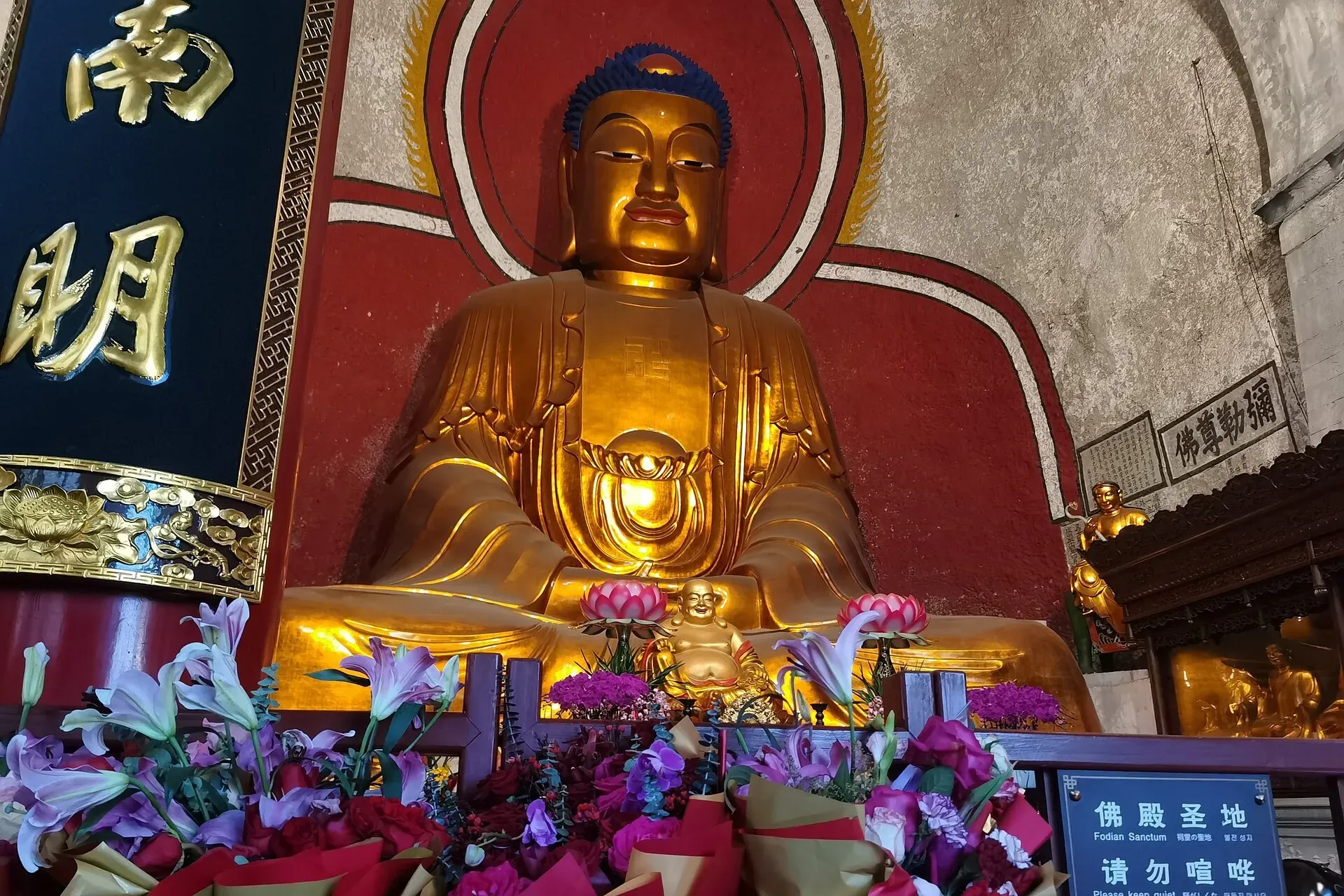
In the tenth month of 597 the prince sent for him. On the way he fell ill at Shicheng Temple in Shan county and said: “I know my life ends here; there is no need to go on. Shicheng is the western gate of Tiantai.” Three days before he died he wrote a vow asking for the repair of sacred sites, among them “the ten-zhang stone Maitreya of Shan county, its gold flaking away,” today’s Great Buddha of Xinchang.
He died sitting cross-legged on the twenty-fourth day of the eleventh month of the seventeenth year of Kaihuang, aged sixty by the Chinese count: January 7, 598, by Japanese Wikipedia’s conversion. Daoxuan’s Continued Biographies of Eminent Monks gives the twenty-second, and his age as sixty-seven.
The stupa courtyard at Folong
He had asked to be buried on the southwest peak: “pile stones about the body, plant pines over the grave, and raise two white stupas, so that all who see them may set their hearts on awakening.” His disciples carried him back to Folong for burial. Guanding writes that it had been raining without a break; the disciples prayed, and as soon as the bier moved, the clouds parted.
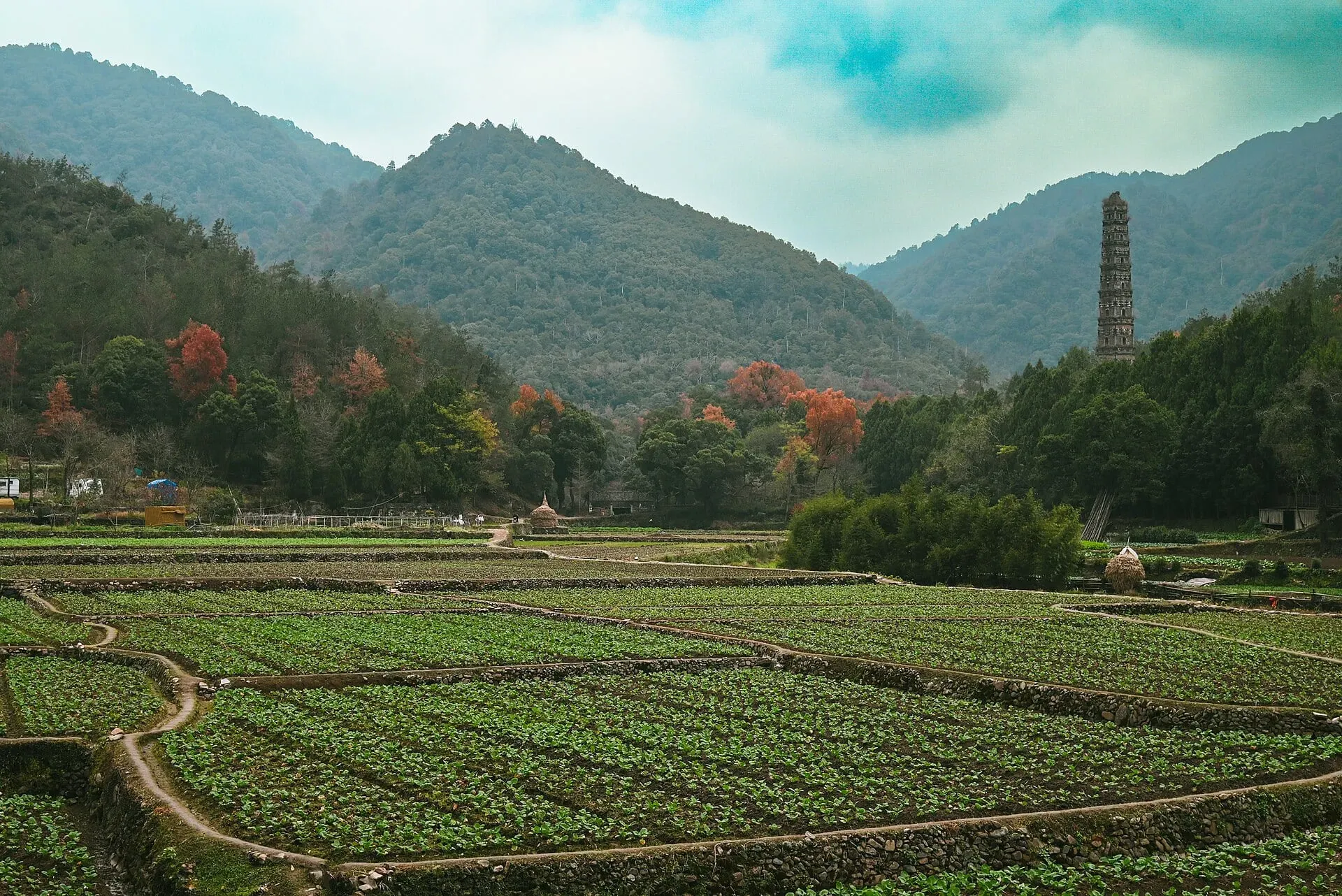
The grave is today’s Zhizhe Stupa Courtyard, also called Tatou Temple or Zhenjue Temple. The Chicheng Zhi of 1223 dates it to 597, with two stone pagodas before the shrine, and the name Zhenjue to 1008. The 1995 county gazetteer says it was destroyed in the fighting of 1861–1862, rebuilt in 1889 and listed as a provincial heritage site in 1982; it belongs to Guoqing Temple.
The gazetteer describes the hall’s bluestone pagoda, about seven meters high with its base, two-storied and six-sided, with his seated figure in front, and portraits of seventeen Tiantai patriarchs on the walls. By legend the two old stone lions at the south gate were beasts that came to roar at the sky when he died, and turned to stone. North of the temple lie the tombs of three patriarchs: Guanding, Zhanran and the Ming master Chuandeng.
After Zhiyi: Guanding, Zhanran and Korea
Guanding (561–632), a Taizhou man from Zhang’an, spent thirteen years with Zhiyi, recorded his lectures and compiled the Guoqing Bailu. In the mid-Tang Zhanran (711–782) revived the school and annotated the three great works; he died at Folong in 782. His disciples Daosui and Xingman taught the Japanese monk Saichō — see Guoqing Temple and Saichō, Eisai and Mount Tiantai.
Later the texts had to come home from abroad. According to the Fozu Tongji, a Buddhist history of 1269, they survived the wars of the late Tang and the Five Dynasties only in fragments, so Qian Chu, king of Wuyue, sent envoys to Goryeo and Japan; in 960 the Goryeo monk Chegwan brought them to the Tiantai master Yiji, and “the teachings of the school returned to China.” Another passage sends the envoys to Japan alone, but the compiler concludes that the texts came back with Chegwan.
More than a century later the Goryeo prince Uicheon (1055–1101) came to Song China, in 1085 by the county gazetteer’s date; Britannica says 1084. He studied the Tiantai teaching with Cibian, then bowed at Zhiyi’s stupa at Folong and vowed, the Fozu Tongji says, to “go home and spread it.” He went home in 1086, the gazetteer says, and founded the Cheontae school in Korea (Britannica). Among the seventeen patriarchs the gazetteer lists on the hall’s walls is a Korean too: Yitong (927–988), the sixteenth patriarch in the lineage of the Fozu Tongji.
Following Zhiyi on Mount Tiantai today
Guoqing Temple was begun in 598 to his plan; see Guoqing Temple and Places to Visit. By our estimate from OpenStreetMap, the stupa courtyard is about 7 km by road north of Guoqing, ten-odd minutes by car on the way up to Huading, and about 16 km, twenty minutes, from Tiantaishan station. For the train to Tiantaishan, see Getting to Tiantai.
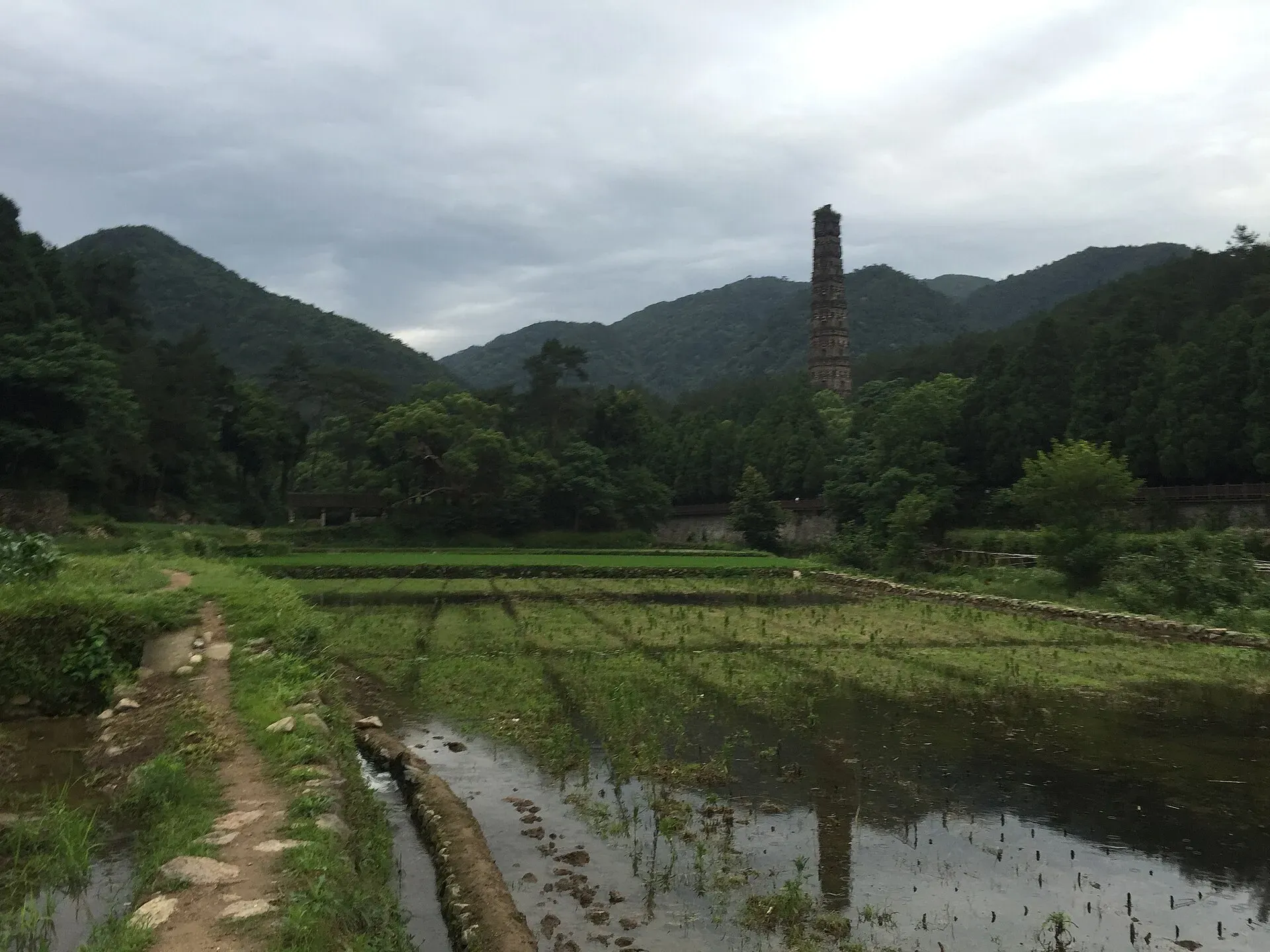
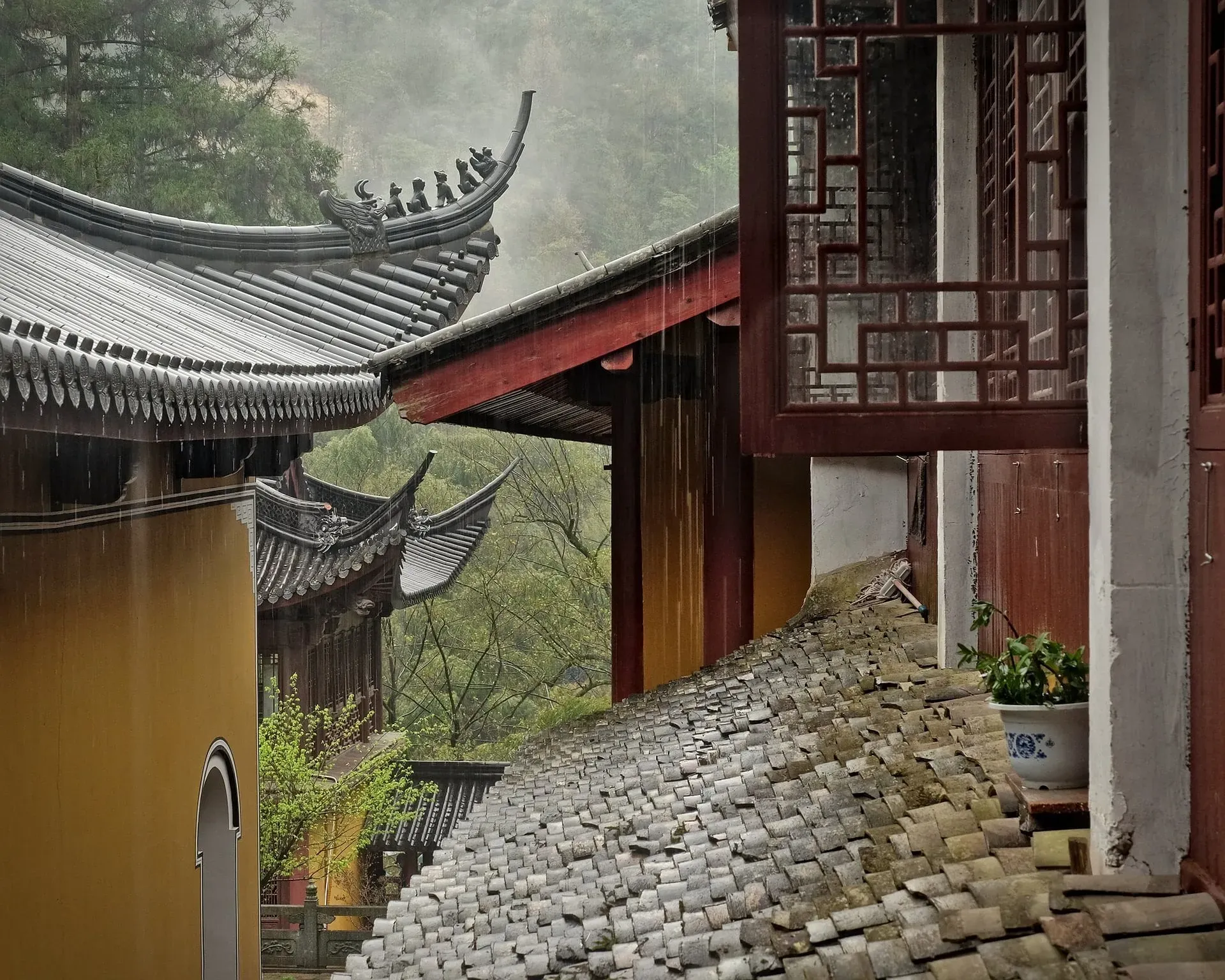
Gaoming Temple, about 10 km by road from Guoqing and some 3 km beyond the stupa courtyard (again by our OpenStreetMap estimate), became one of China’s national key Buddhist temples in Han Chinese areas in 1983. Legend says that while Zhiyi was lecturing on the Vimalakirti Sutra at Folong, a wind carried off the pages; he followed them five li and set up a retreat where they fell. The temple itself, the gazetteer says, was built in 936.
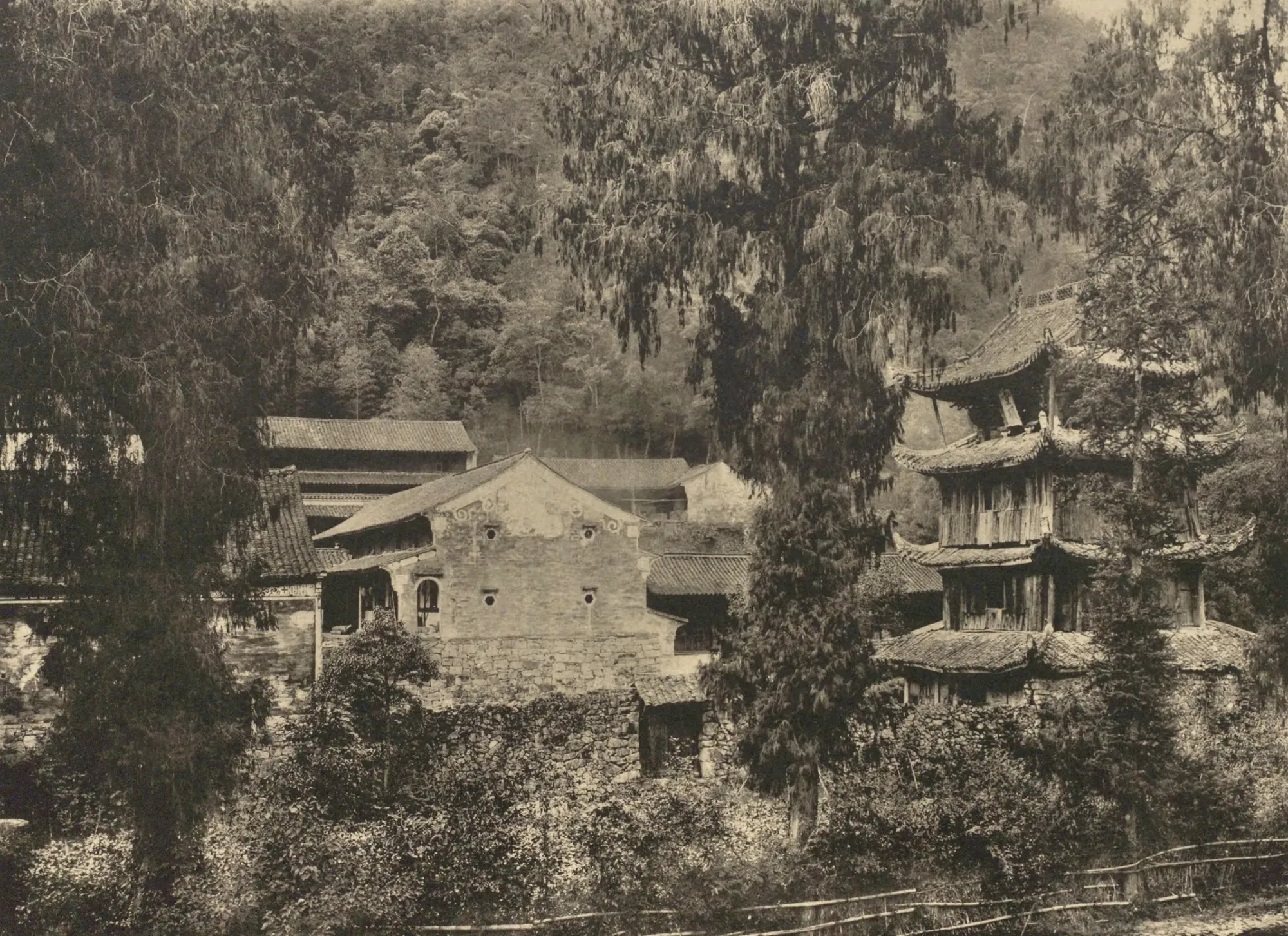
For the road up to Huading, see Mount Tiantai. The stupa courtyard and Gaoming are working monasteries, so keep your voice down. As of November 2026 we had found no official hours, prices or buses for either, so ask locally before you go.
Questions & answers
Who was Master Zhizhe?
Zhiyi (538–597), the monk who in effect founded the Tiantai school of Buddhism in the late sixth century. In 591 the Prince of Jin, Yang Guang, the future Emperor Yang of Sui, called him Zhizhe, “the Wise One,” and he has been known ever since as Master Zhizhe, or the Master of Tiantai. See Guoqing Temple.
How do you say Zhiyi?
Zhìyǐ. The second character, 顗, is read yǐ, in the third tone, and means “quiet.” According to the Tang master Zhanran, it was the Dharma name his teacher gave him when he became a monk, chosen for its sense of stillness.
Who founded the Tiantai school?
Zhiyi, as a rule; the 1995 county gazetteer calls him the school’s actual founder. In the lineage of the Fozu Tongji, the Indian master Nagarjuna is the first patriarch, Huiwen and Huisi the second and third, and Zhiyi the fourth, and the school takes its name from Mount Tiantai, where he meditated for so long.
Where is Zhiyi buried?
At Folong on Mount Tiantai, in today’s Zhizhe Stupa Courtyard, also called Zhenjue Temple, north of Guoqing Temple; by our estimate from OpenStreetMap it is about 7 km by road from Guoqing. Its hall holds the bluestone pagoda of Master Zhizhe, about seven meters tall with its base (county gazetteer, 1995). As of November 2026 we have found no opening hours or ticket prices for it.
Where did Zhiyi die?
At Shicheng Temple in Shan county, today’s Great Buddha Temple in Xinchang. Called down from the mountain by the Prince of Jin in the winter of 597, he fell ill at Shicheng and died there on the twenty-fourth day of the eleventh month; his disciples took his body back to Tiantai and buried him at Folong. Britannica and some other accounts say simply that he died on Mount Tiantai. See the Great Buddha of Xinchang.
Sources
- 英文为本站翻译。灌顶《隋天台智者大师别传》《国清百录》、智顗《修习止观坐禅法要》《摩诃止观》和《赤城志》的引文,依维基文库录自《大正藏》和《四库全书》的文本;湛然《止观辅行传弘决》、道宣《续高僧传》和志磐《佛祖统纪》依 CBETA。发愿文见《国清百录》卷三《发愿疏文》。车程是按 OpenStreetMap 路网估算的开车时间。
- 隋天台智者大师别传(灌顶撰)· 维基文库
- 国清百录 卷一(灌顶序)· 维基文库
- 国清百录 卷三(发愿疏文)· 维基文库
- 修习止观坐禅法要(小止观)· 维基文库
- 摩诃止观 卷一(灌顶序)· 维基文库
- 摩诃止观 卷五 · 维基文库
- 止观辅行传弘决 卷一(湛然)· CBETA
- 续高僧传 卷十七(道宣,智顗传)· CBETA
- 佛祖统纪 卷八(义寂、义通)· CBETA
- 佛祖统纪 卷十(谛观)· CBETA
- 佛祖统纪 卷十四(义天)· CBETA
- 佛祖统纪 卷四十三(法运通塞志,建隆元年)· CBETA
- 赤城志 卷二十八(四库全书本)· 维基文库
- 赤城志 卷三十五(四库全书本)· 维基文库
- 天台县志 · 第三编 天台山 · 第二章 寺观 · 第一节 寺院(1995 年)· 台州史志网
- 天台县志 · 第二十五编 宗教 · 第一章 佛教 · 第一节 天台宗(1995 年)· 台州史志网
- Zhiyi · Encyclopaedia Britannica(2026 年 11 月 6 日查阅)
- Daigak Guksa (Uicheon) · Encyclopaedia Britannica(2026 年 11 月 6 日查阅)
- 智顗 · 维基百科
- Zhiyi · Wikipedia
- 智顗 · 日文维基百科
- 智者塔院 · 维基百科
- 章安灌顶 · 维基百科
- 荆溪湛然 · 维基百科
- 义天 · 维基百科
- 顗 · 维基词典