Shengzhou neckties
About nine in ten of China’s neckties are made in Shengzhou. The trade began in 1984 with a joint venture of 35 workers, went on to supply much of the world, and is now looking for life after the tie.
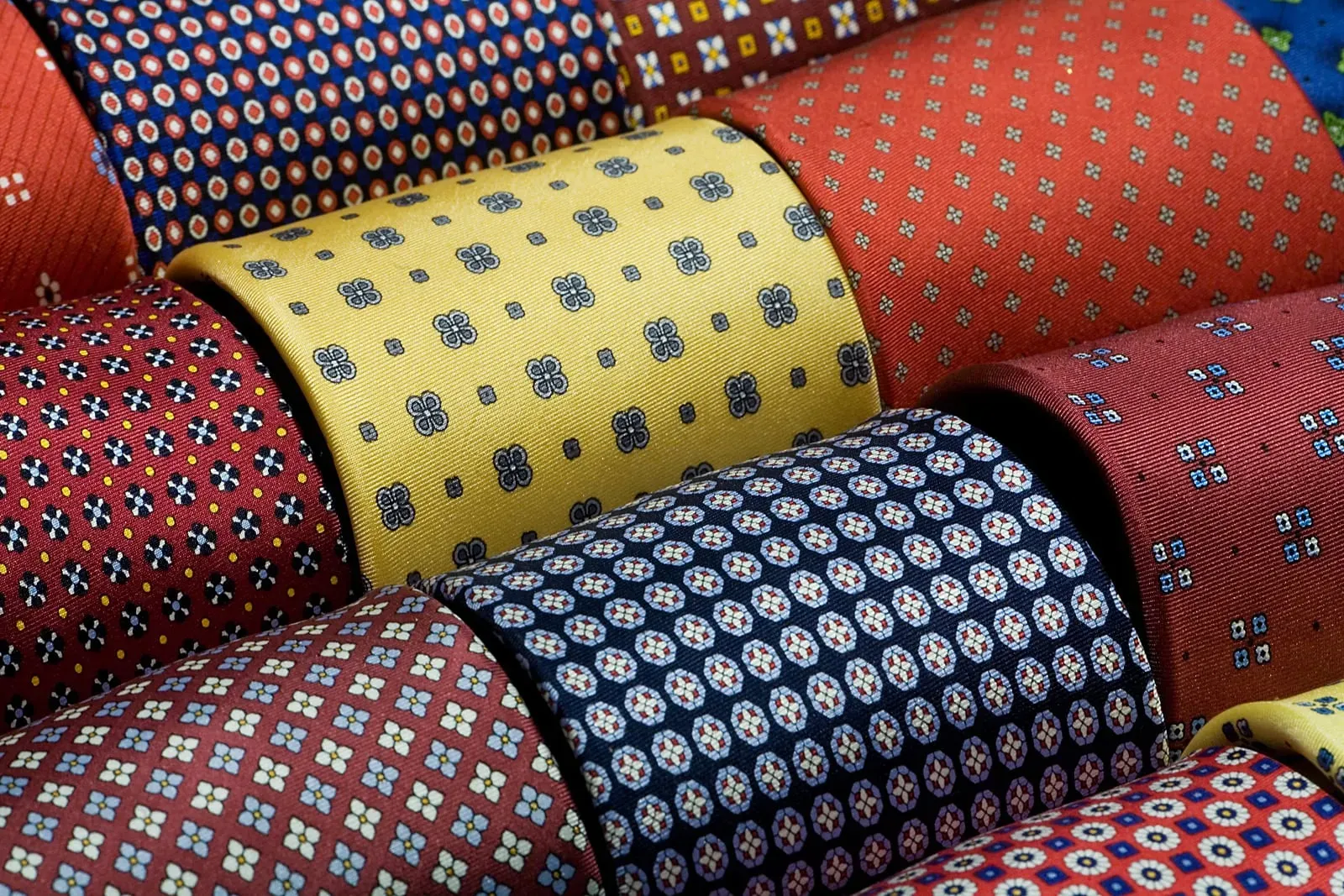
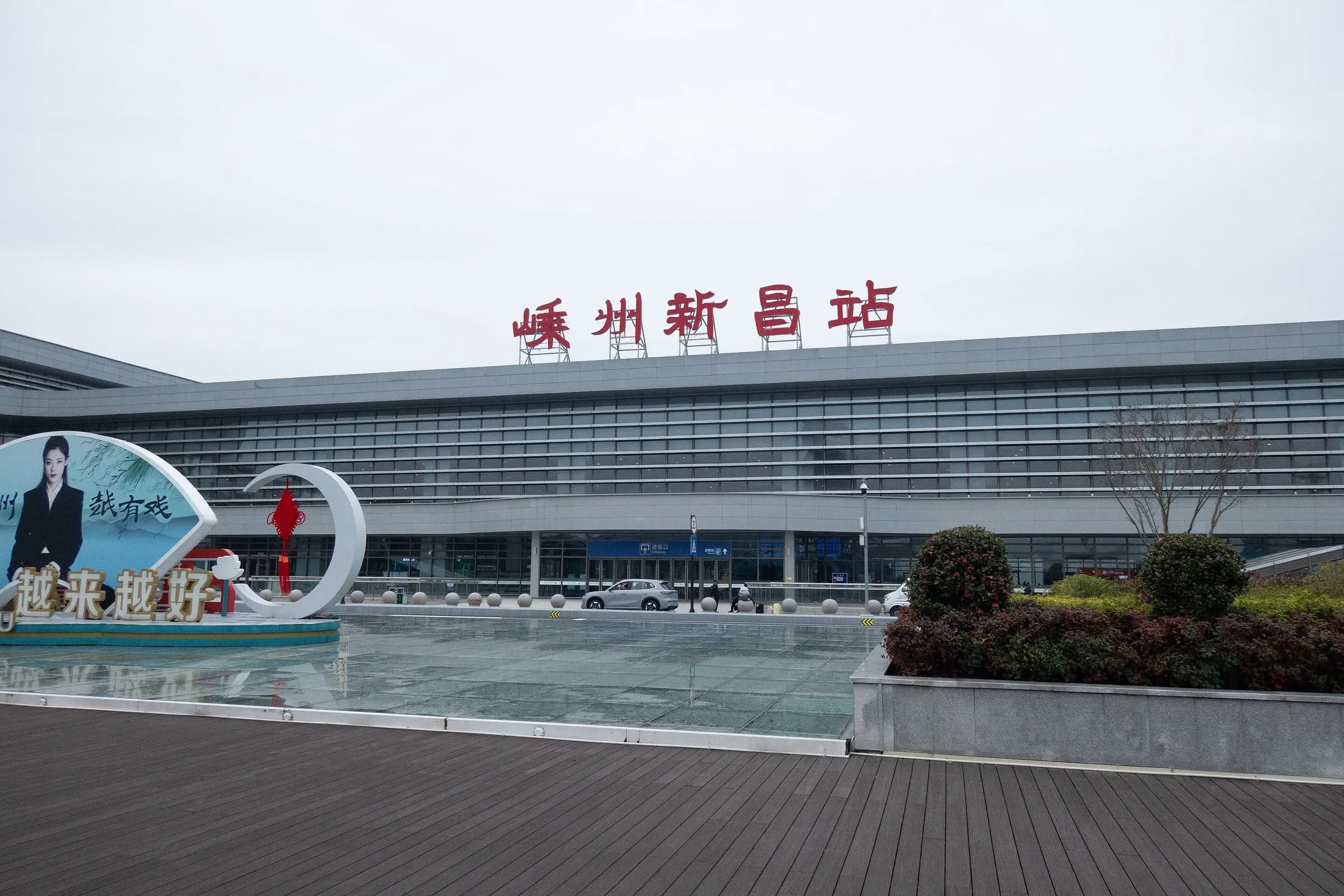
People in Shengzhou like to say their city “put a necktie on the planet.” According to China News Service in 2026, about nine in ten of China’s ties and six in ten of the world’s are made in this small city. It is not an old craft here: the trade began at the end of 1984, in a joint venture with 35 workers. In forty years Shengzhou went from selling ties off a street stall to becoming the world’s biggest source of them — just as fewer and fewer people wear one.
A joint venture and a street stall
The area had long raised silkworms and woven silk; the city’s gazetteer credits its “warm, humid climate and clear, soft water” for laying the groundwork. The real starting point, though, was in Shenzhen. At a 1984 gathering there of Hong Kong residents with roots in Sheng county, Lu Lu, a Hong Kong silk businessman from the county’s Xinming township, offered nine sewing machines to a local garment factory. The county leaders had a better idea: instead of a gift, why not a joint venture back home?
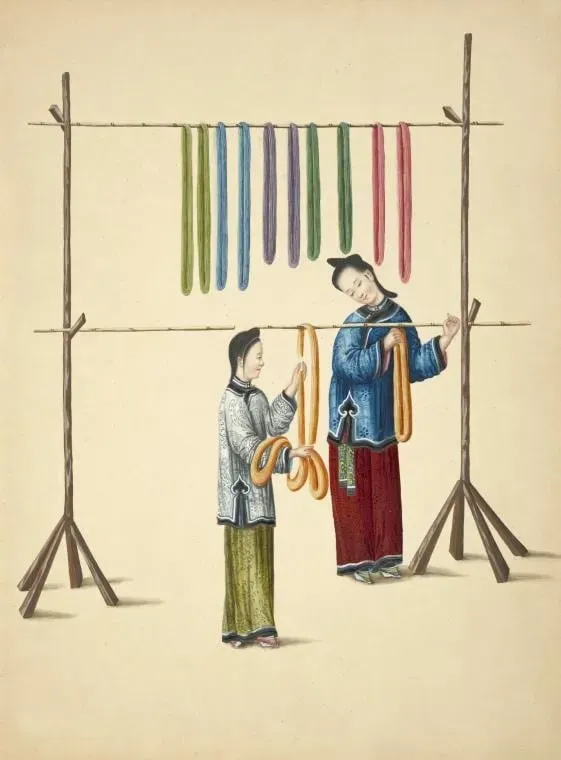
On December 21, 1984, Zhejiang Jiayou Necktie Co. was founded by the county silk mill, the garment factory and Lu’s Hong Kong tie company. It had registered capital of 233,000 yuan, six looms and 35 workers, and it wove tie silk as well as making ties. Its Chinese name used the Cantonese word for a necktie, 领呔, in which 呔 simply sounds out the English “tie.” Jiayou was the first joint venture with overseas capital in Shaoxing and the earliest in China’s tie industry; the gazetteer calls it the mother of Shengzhou’s whole tie trade.
Jiayou opened on February 26, 1985, with flags and drums outside the Shengzhou Theater. The good times did not last. Credit was being tightened nationwide, the payments due under a one-year deal for a Hangzhou textile wholesaler to take its whole output never came, and by August the deal was off. With ties piling up, the general manager, Gao Jincheng, led his sales staff to set up a stall on the pavement outside the Dongfeng Restaurant on the county town’s main street. They took less than a thousand yuan that day, but it was the first time a Shengzhou tie maker had gone out and sold for itself. By the end of the year Jiayou had sold 288,000 ties under its Junshi brand.
From Shenzhen back home
In the late 1980s, opening a tie company in Shenzhen became something of a craze among Hong Kong businesspeople from Sheng county, and within a few years there were fifteen of them. Many people from the county went to work in these factories, learning the craft and making contacts with buyers. When land and wages in Shenzhen began to soar at the end of the decade — and Jiayou was turning a healthy profit back home — the factories started moving to Shengzhou. Two of Jiayou’s salesmen set up tie workshops of their own, the county’s first privately owned tie businesses.
What followed, in the gazetteer’s words, was “men and women, young and old, all at work — ten thousand households making ties.” In 1994 about four in five households in Xiemu Village were making ties; across the county more than 50,000 people did it full-time, and at least 100,000 lived off the trade. By the end of the 1990s, roughly one in three women working in the countryside was making ties. Sewing is the most exacting step, and hand stitching still beat the machines, so much of the work went to women.
When an ABC News crew visited in 2005, they reported that nearly half the world’s ties, including well-known American brands, were made here. A local tie official told them that most people in Necktie City don’t actually wear ties — they are too busy making them.
China Tie City
In 1992 the county decided to “build a market and grow an industry,” and put up the East Zhejiang Clothing City on the southeast side of town. It opened on December 18. Of the 742 traders who moved in that month, just eight sold ties. The next year the clothing trade was slow, but those eight tie stalls were busy. The county followed the money: shops on the ground floor, workshops upstairs. That October it was renamed the East Zhejiang Tie and Clothing City, and in April 1995 it became China Tie City.
In 1995 the market sold 520 million yuan worth of ties, 45 percent of the county’s tie sales. By 2002 it had 400 tie traders, could sell as many as 300,000 ties in a single day, and shipped to more than 80 countries and regions. Its second phase, the World Necktie Showcase Center, opened in 2000 with a necktie museum and the national tie quality testing center inside.
Until 1992, Shengzhou’s ties were sold almost entirely within China. That November a Belgian buyer ordered 300,000 ties from the Jintiande company, the first order a foreign buyer had placed with the county’s tie trade. Exports grew year by year, and by 2002 local firms were exporting 58 million US dollars’ worth on their own account, to Hong Kong, Japan, the United States, Germany, Italy and more.
How a tie is made
A tie goes through weaving, dyeing or printing, cutting, sewing, pressing, inspection and packing. Shengzhou’s specialty is yarn-dyed jacquard silk, in which the pattern is woven in with colored threads rather than printed on top.
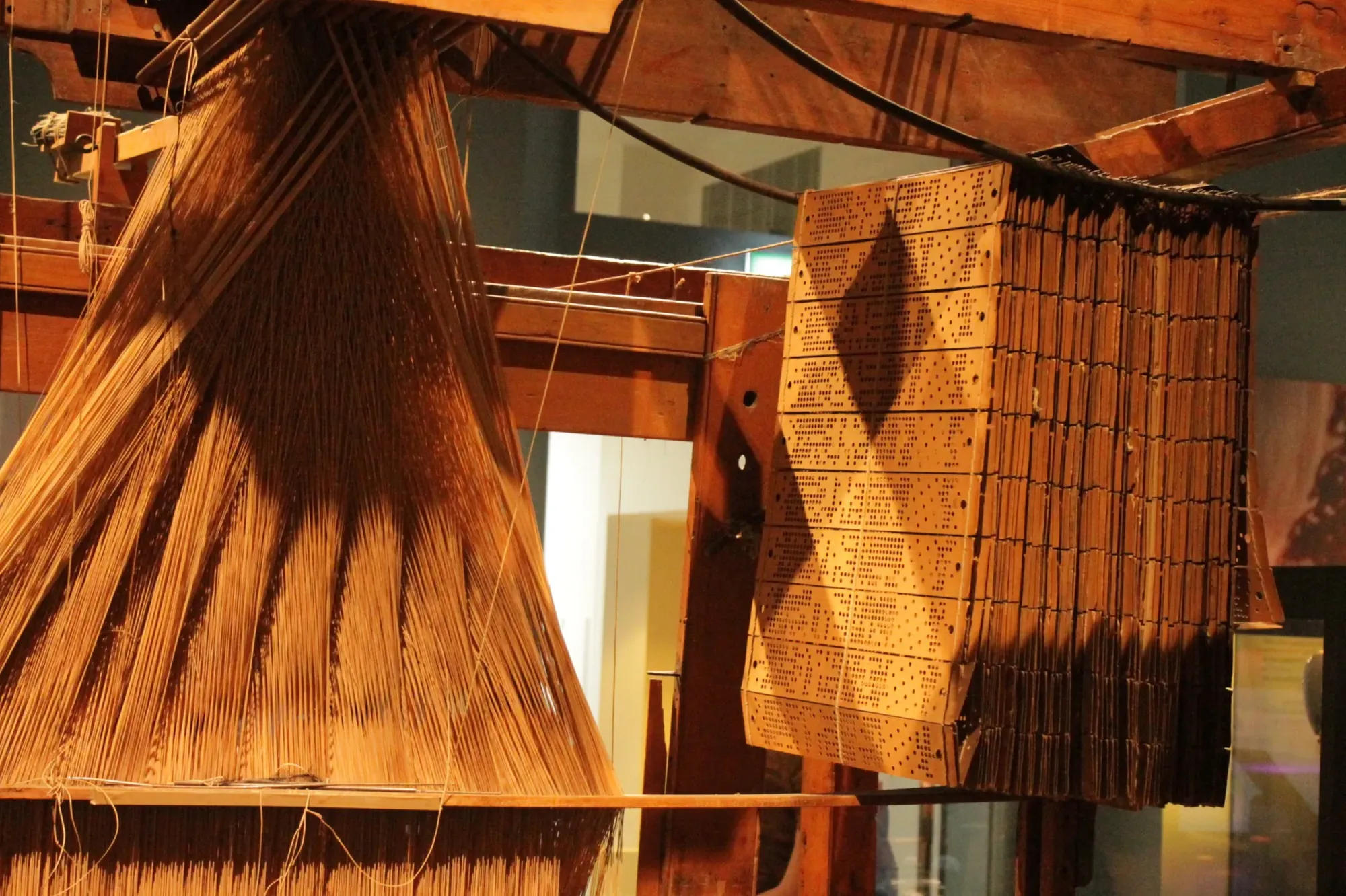
An old jacquard loom is run by a long chain of punched cards. Each card stands for one pass of the weft, and its holes decide which warp threads are lifted. The gazetteer gives an example: if one repeat of a pattern takes 800 weft threads, you need 800 cards — “laborious and slow.” When Shengzhou started making ties in the mid-1980s, patterns were still designed this way, card by card.
In early 1995 Babei became the first company in the city to bring in Swiss rapier looms and French electronic jacquard heads, and others followed. After it switched to electronic jacquard looms in 1997, its fabrics went from four colors to twelve and its looms from 100 to 400 revolutions a minute. By the early 2000s, Shengzhou could turn out a thousand tie designs a day and go from a new design to a finished tie within 24 hours.
The cloth is cut on the bias, diagonally across the weave. The New York tie maker Jesse Langsdorf came up with this in 1922, cutting ties on the bias and sewing them from three pieces so they would fall straight from the knot without twisting. It is also why stripes that run straight across the cloth end up running diagonally on a tie.
The numbers over time
How much of the world’s supply Shengzhou makes depends on who is counting: Zhejiang Daily said 40 percent in 2008, Shengzhou’s local news site 50 percent in 2011, and recent official profiles and China News Service say 60 percent. The output figures are firmer — 230 million ties in 2002 and about 300 million in 2008. The shares in the table are given as reported; we have not found an independent global count to check them against.
Up against Como
Como, in northern Italy, is Europe’s best-known home of silk and ties. By 2002, the gazetteer says, Shengzhou was already making more ties than Como. But a 2010 report noted that while most of Como’s tie manufacturing had moved to Shengzhou, the design and the brands had stayed in Como: its ties sold for more than $100 each, Shengzhou’s for a few tens of dollars at most. Como’s hand-painted silks were printed just 100 meters per design, for the big fashion houses of Milan, Paris and New York.
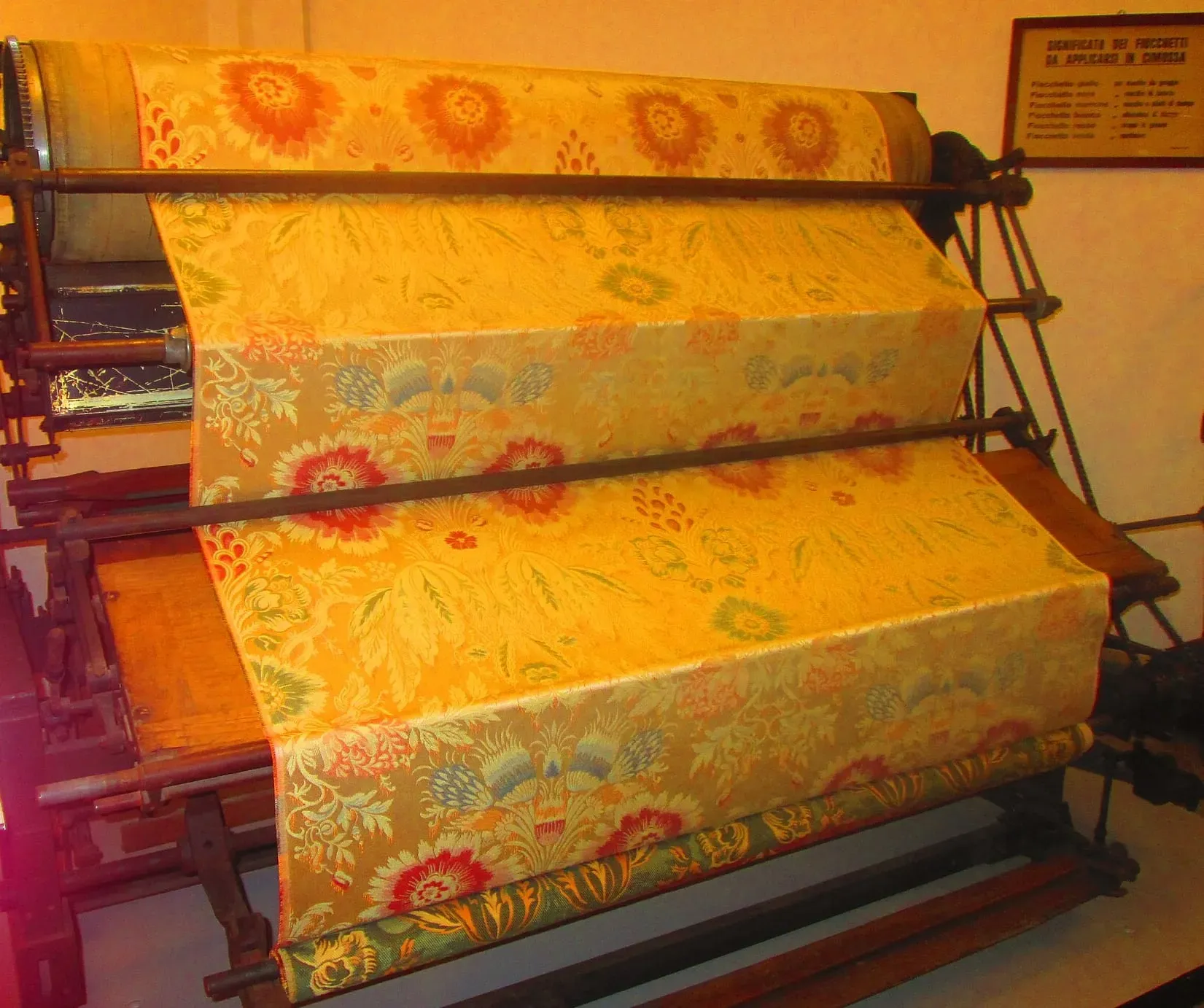
In 2008, squeezed by rising costs and a stronger yuan, Shengzhou’s tie association negotiated a collective price rise with international buyers. After much back and forth, ties went up by just ten US cents each. Local firms have also been working on design: in 2002 Babei bought a controlling stake in an Italian tie design company, and the same year Shengzhou hosted China’s first national tie design competition.
After the tie
Fewer and fewer people wear ties, though. A 2025 report said the necktie had been “gradually fading from mainstream consumption,” and China Tie City had lost its crowds. Shengzhou’s tie makers had long been branching out into silk bedding and home textiles, scarves and knitwear. By 2009, ties and everything else each made up about half of the local tie and clothing industry’s output, and in 2010 the China National Textile and Apparel Council named Shengzhou “China’s Capital of Silk.”
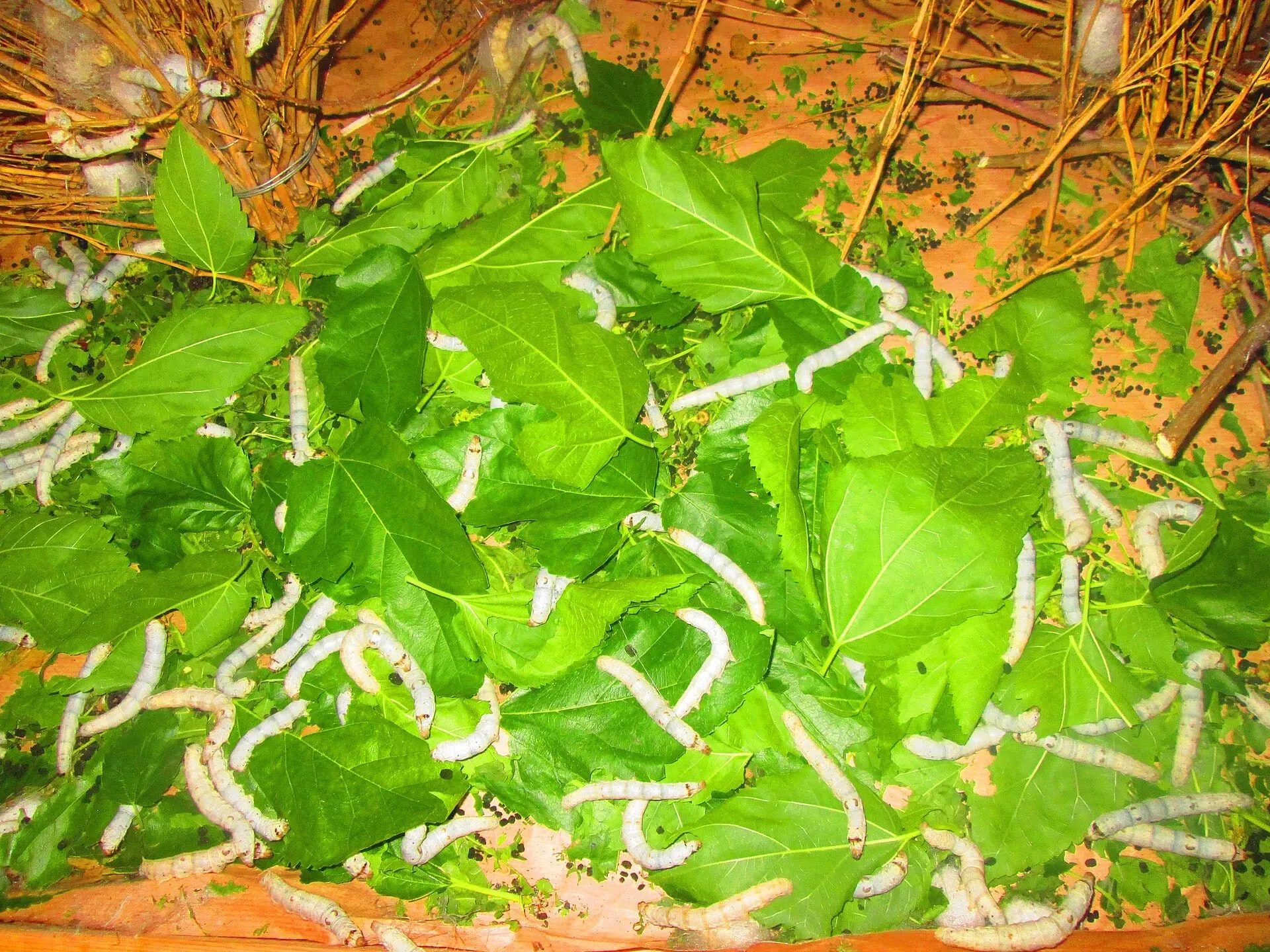
The most striking move went all the way upstream, to the silkworm. On January 20, 2019, Babei announced that its first batch of factory-raised cocoons had come off the line, after seven years of research and 350 million yuan of investment. The silkworms live in a 5,000-square-meter germ-free workshop and eat an artificial feed of soybean, corn flour, sweet potato starch and vitamins, with mulberry leaf powder added to tempt their appetite. The plant can produce 10,000 tonnes of cocoons a year — about what 100,000 farming households would raise — with fewer than 200 workers. In 2025 Science and Technology Daily named Babei as one of the companies raising silkworms on artificial feed in factories all year round.
China Tie City itself has changed shape. Traders began moving out in 2019, and in June 2023 the city decided to turn nearly 20,000 square meters of the old market into an e-commerce park. The Shengzhou New Economy E-commerce Park opened on the evening of November 7, 2025; its livestreaming studios were busy, and sales passed 7 million yuan that first night. The old main building was kept, a China (Shengzhou) Necktie Industry Exhibition Hall was added, and firms including Babei and Maidilang have signed on as tenants.
Seeing it for yourself
To see the story for yourself, head to the New Economy E-commerce Park in the old China Tie City buildings, which has the necktie exhibition hall as well as showrooms run by local tie and clothing firms. We have not yet confirmed the hall’s opening hours, so check before you go.
In Shengzhou, ties and Yue opera go together. The first China Necktie Festival was held here in November 1998, and it was later merged with the opera festival into a combined Yue Opera and Necktie Festival. After the ties, visit Dongwang Village in Ganlin, where Yue opera was born — and stop for a basket of tofu buns.
Questions & answers
How many of the world’s neckties come from Shengzhou?
Figures vary. The most common claim is about 90 percent of China’s ties and 60 percent of the world’s (China News Service, 2026), but Zhejiang Daily put the world share at 40 percent in 2008 and Shengzhou’s local news site at 50 percent in 2011. Output is firmer ground — 230 million ties in 2002 and about 300 million in 2008.
Why did Shengzhou start making ties?
The area had long raised silkworms and woven silk. In 1984 a Hong Kong silk businessman from the county set up Jiayou with the local silk mill and a garment factory — the earliest joint venture with overseas capital in China’s tie industry. Many people from the county then learned the trade in tie factories in Shenzhen and, by the late 1980s, brought the factories home.
Is China Tie City still there?
Not as a market. Traders began moving out in 2019, and in November 2025 the buildings reopened as the Shengzhou New Economy E-commerce Park. The main structure was kept, a China (Shengzhou) Necktie Industry Exhibition Hall was added, and tie makers such as Babei and Maidilang have signed on as tenants.
How do Shengzhou ties compare with Italian ones?
Mostly in design and branding. A 2010 report said most of Como’s tie manufacturing had moved to Shengzhou, but Como kept the design studios and the brands — its ties sold for more than $100 each, Shengzhou’s for a few tens of dollars at most.
Why are ties cut on the bias?
Cloth cut on the diagonal has more give, so the tie falls straight from the knot instead of twisting. The method was introduced by the New York tie maker Jesse Langsdorf in 1922 — and it is why stripes woven straight across the cloth run diagonally on a finished tie.
Sources
- 第九编 领带 ·《嵊州市志(1986—2002)》,嵊州市地方志办公室
- 21世纪,嵊州给地球“系”上一条领带 · 嵊州新闻网,2011 年 7 月 21 日
- 嵊州领带产业:延伸·提升·走向蓝海 · 浙江日报,2008 年 10 月 31 日
- 嵊州闯荡新丝路 · 浙江统一战线网,2010 年 6 月 10 日
- Inside the Necktie Capital of the World · ABC News, November 18, 2005
- Silkworm factory may bring ‘cocoon-break’ for sericulture · Xinhua via China Daily, January 23, 2019
- 四川省人工饲料养蚕技术取得新突破 · 科技日报,2025 年 5 月 10 日
- 嵊州领带城蝶变重生转型新经济电商产业园 · 中国县域经济报,2025 年 11 月 8 日
- “中国领带城”开启“二次创业” · 杭州日报,2025 年 11 月 12 日
- 人这一辈子,一定要去一趟嵊州! · 中新网,2026 年 1 月 6 日
- Shengzhou · Zhejiang government English portal, updated January 30, 2024
- Necktie · Wikipedia