Shengzhou bamboo weaving
Shengzhou bamboo weaving was named in China’s first list of national intangible heritage in 2006. The finest work packs 150 bamboo threads into an inch, and its makers have woven everything from baskets and fruit trays to pagodas, galloping horses and a Yue opera stage.
Yue opera and bamboo weaving have been called Shengzhou’s “twin flowers on one stem.” Shengzhou sits on the western slopes of the Siming Mountains, where bamboo is plentiful and splits well into strips, and weaving is found wherever bamboo grows in the city. In 2006 Shengzhou bamboo weaving, like Yue opera, was named in China’s first list of national intangible heritage.
A two-thousand-year-old craft
According to China’s national intangible heritage website, Shengzhou bamboo weaving goes back more than two thousand years to the Warring States, was already refined by the Han and Jin, and improved again under the Ming and Qing, when woven bamboo became part of every household. The Eastern Jin poet Xu Xun admired the woven bamboo fans made here: “strips as fine as a cicada’s wing in autumn, round as the moon.” In the late Qing, workshops appeared in Shengzhou making fine-strip baskets for carrying, for exams, for incense, for food and for shoes — the exam basket being what scholars carried to the imperial examinations.
After 1949, weavers joined together, first as a bamboo goods production and sales workshop, then from 1954 a bamboo goods cooperative, and from 1959 the Arts and Crafts Bamboo Weaving Factory, hailed as “the first house of bamboo weaving at home or abroad.” In the early 1980s more than thirty thousand people in Shengzhou wove bamboo for a living.
150 threads to the inch
A piece of woven bamboo goes through design, shaping, mold-making, estimating materials, preparing threads and strips, treating against moths and mold, dyeing, weaving, carving fittings, assembly and lacquering. Turning bamboo into threads and strips alone takes several steps — sawing, rolling, splitting, sectioning, splitting into strips, splitting into threads, drawing and scraping — and there are more than a hundred weaving techniques, with names like turtle-back, inserted ribs, sprung flowers and threading.
Shengzhou weaving comes both fine and coarse. The finest work packs 150 bamboo threads into an inch, “delicate and as thin as a wing”; the coarse work uses the spring of the bamboo, inserted and woven with flair, bold and plain. Writing in People’s Daily in 2025, one author recalled that a master weaving a bamboo eagle needed more than a thousand hair-fine threads for its wings alone.
Shengzhou weavers also invented a few signature techniques: animal figures, bleached threads and strips, strips printed with “flower” patterns, and lacquer over a woven core. The “flower strips” are printed with designs — in one, two or several overlaid colors — and woven into the middle and ends of a piece. By 1988 Shengzhou weaving had more than 360 weaving patterns and 6,000 designs; today the count is twelve categories and more than 7,000 designs.
From baskets to galloping horses
Shengzhou weaving used to mean baskets, trays and jars for the home. One man did much to turn it into an art: Yu Zhanggen. According to a 2014 report by Sina Collection, he began learning from his father at eight and was taking apprentices of his own at twelve. On a work trip to Hangzhou in 1966, he saw tourists crowding around porcelain animals in a gift shop and thought: why not animals in bamboo? His first elephant was stiff, “its four legs like four table legs.” So he went to the zoo, even crouched in front of the chicken cages when he went to buy vegetables, and in the end combined animals with household objects — a goose basket, a duck tray and a chicken jar with lids that open.
Shengzhou weaving reached its creative peak in the late 1980s, with pieces such as Mountain Eagle, Six Steeds of Zhaoling, Dragon Boat, Galloping Horse and the Qin Bronze Chariot. Other well-known works include Liuhe Pagoda, Yue Fei and Su Wu Herding Sheep, and Nine Lions with an Embroidered Ball is on display in the Zhejiang Hall of the Great Hall of the People.
A Yue opera stage in bamboo
In 1992 the Yue opera star Yuan Xuefen came home to Shengzhou and said to Yu Zhanggen: if only the old opera stages could be woven in bamboo, so that Shengzhou’s two flowers could bloom together. Yu took the words to heart. With his apprentice Xu Huadang he visited many old stages — “watching the stage more than the opera” — and after a year and a half produced Old Stage of the Yue Country: about 42 centimeters long, 37 wide and 56 high, with two actors on it performing The Butterfly Lovers. For the opera itself, see Yue opera.
Decline and revival
From the 1990s, plastic goods of every kind replaced bamboo in daily life, demand fell, and weavers struggled to make a living. In November 2002 the Shengzhou Arts and Crafts Bamboo Weaving Factory stopped production. China’s intangible heritage website put it bluntly at the time: Shengzhou bamboo weaving “has no one to carry it on, and urgently needs rescue and support.”
Heritage protection turned things around. According to a case study published on the heritage website in 2023, a Shengzhou bamboo factory set up a heritage workshop in 2022. It brought in experts from Tsinghua University’s Academy of Arts and Design and the China Academy of Art, developed more than forty kinds of tea tables and trays, more than thirty kinds of screens and chairs and a line of bamboo lampshades, and reached an annual output of over seven million yuan; it set up more than twenty outworking sites in Huangze, Jinting and neighboring Xinchang that employ more than two hundred people, and took bamboo weaving into primary schools and vocational schools. In 2025 People’s Daily described young people sitting beside old masters in the workshops, weaving the old craft into modern lamps and design pieces.
Where to see it
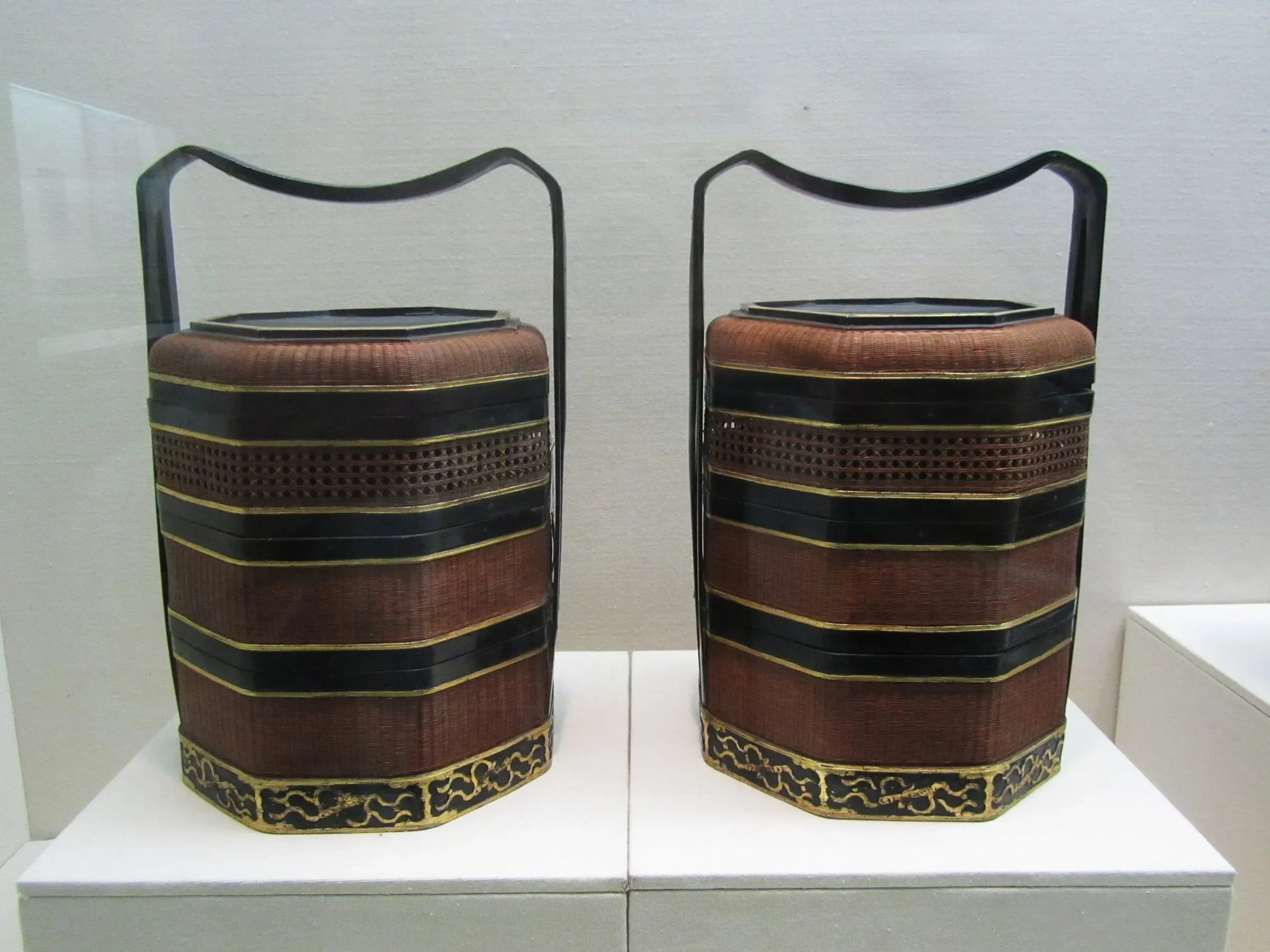
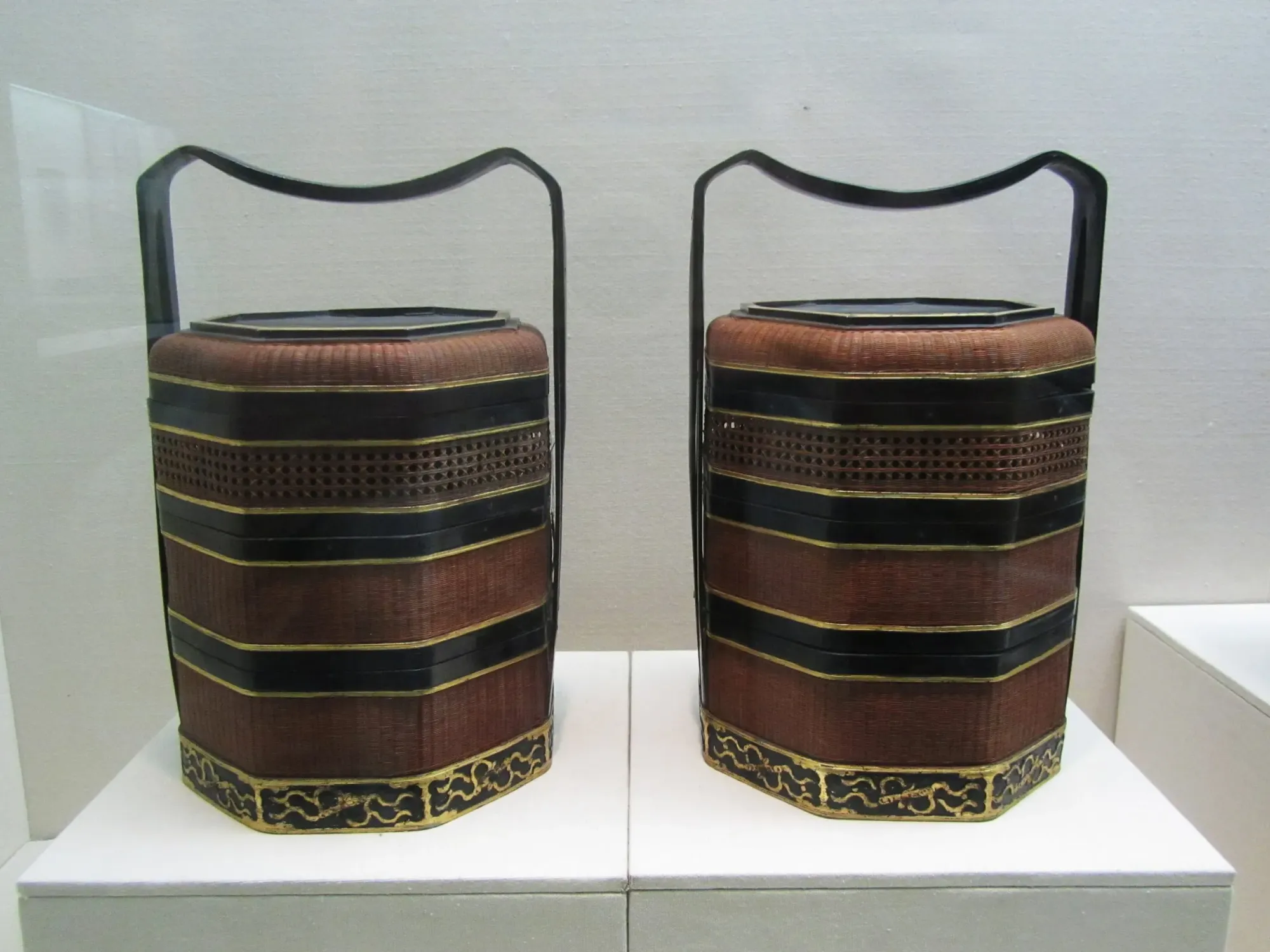
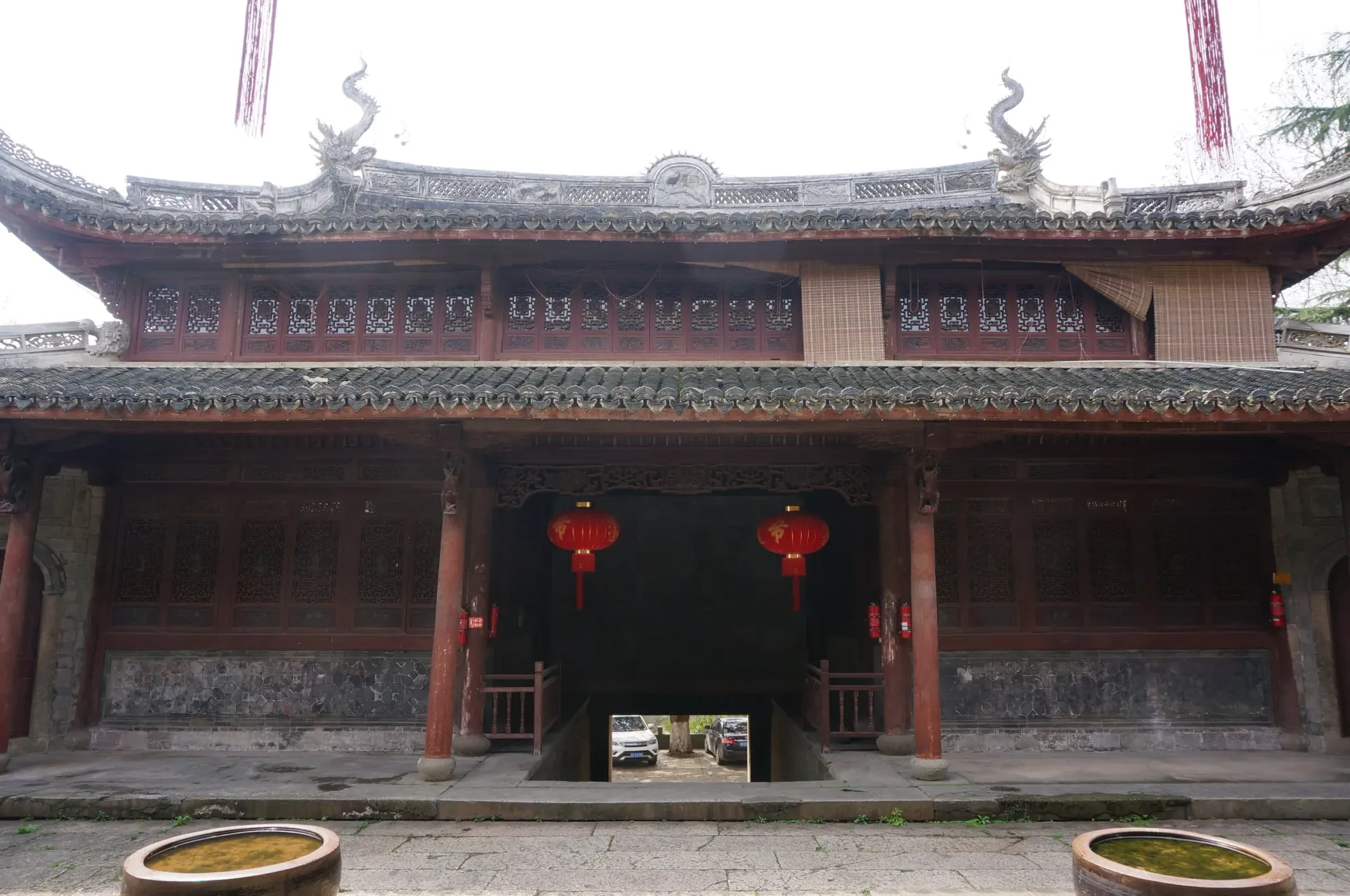
The Zhejiang Provincial Museum holds a 1950s Shengzhou bamboo basket with three octagonal tiers — the one in the photo at the top of this page. According to the 2025 People’s Daily article, the Town God Temple in Shengzhou, first built in the Southern Song and rebuilt in the Qing, keeps two bamboo fans of astonishing fineness. The heritage workshop mentioned above has set up a small bamboo museum with hands-on classes, and has furnished bamboo-themed rooms at guesthouses in Hejiawu.
For more of what Shengzhou makes, see Made in Shengzhou and Shengzhou tea.
Questions & answers
What makes Shengzhou bamboo weaving special?
Its fineness — the finest work packs 150 bamboo threads into an inch, “as thin as a wing.” Its range — twelve categories, from baskets, trays, jars, boxes and vases to screens, animals, figures, buildings, furniture, lamps and utensils, in more than 7,000 designs. And a few signature techniques — animal figures, bleaching, printed “flower strips” and lacquer over a woven core.
What are “flower strips” and woven-core lacquer?
“Flower strips” are bamboo strips printed with patterns — in one, two or several overlaid colors — woven into the middle and ends of a piece for decoration. Woven-core lacquer is lacquerware built on a body of woven bamboo.
Who is Yu Zhanggen?
A national representative bearer of Shengzhou bamboo weaving and a Master of Chinese Arts and Crafts. He began learning from his father at eight, led the first experiments with bamboo animals from 1966, and is credited by his apprentice with helping turn Shengzhou weaving “from household goods into art.” The bamboo Yue opera stage is his work.
Why did Shengzhou bamboo weaving decline?
From the 1990s, plastic replaced bamboo for everyday goods, demand fell and weavers struggled to make a living; the Shengzhou Arts and Crafts Bamboo Weaving Factory, once called “the first house of bamboo weaving at home or abroad,” stopped production in November 2002. Since its listing as national heritage in 2006, heritage workshops have brought young people back to make tea ware, furniture and lamps.
Where can you see Shengzhou bamboo weaving?
The Zhejiang Provincial Museum holds a 1950s Shengzhou bamboo basket. According to People’s Daily in 2025, the Town God Temple in Shengzhou keeps two finely woven bamboo fans. A bamboo-weaving heritage workshop in Shengzhou has also set up a small bamboo museum and runs hands-on classes.