Small Towns Near Shanghai by High-Speed Train
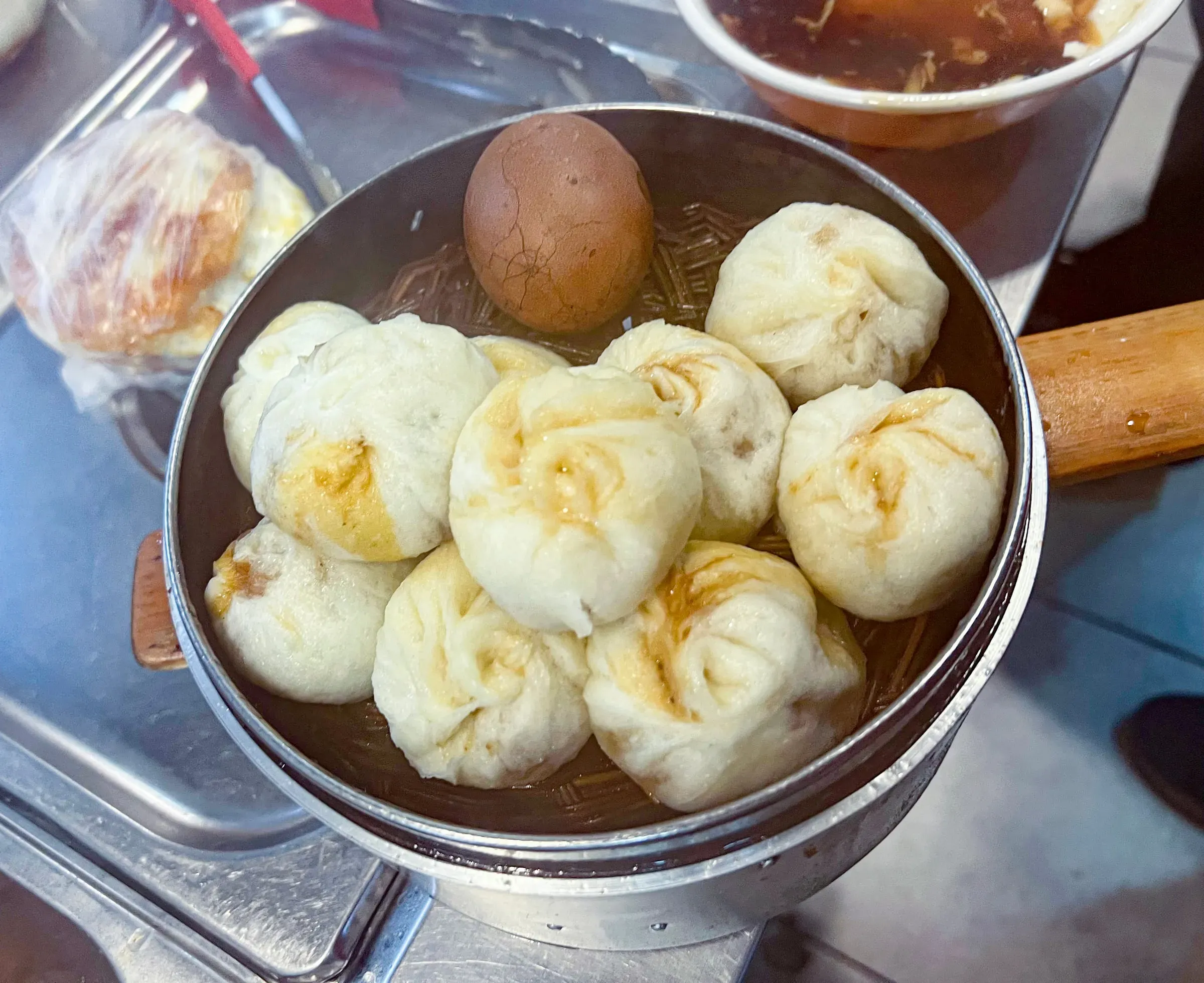
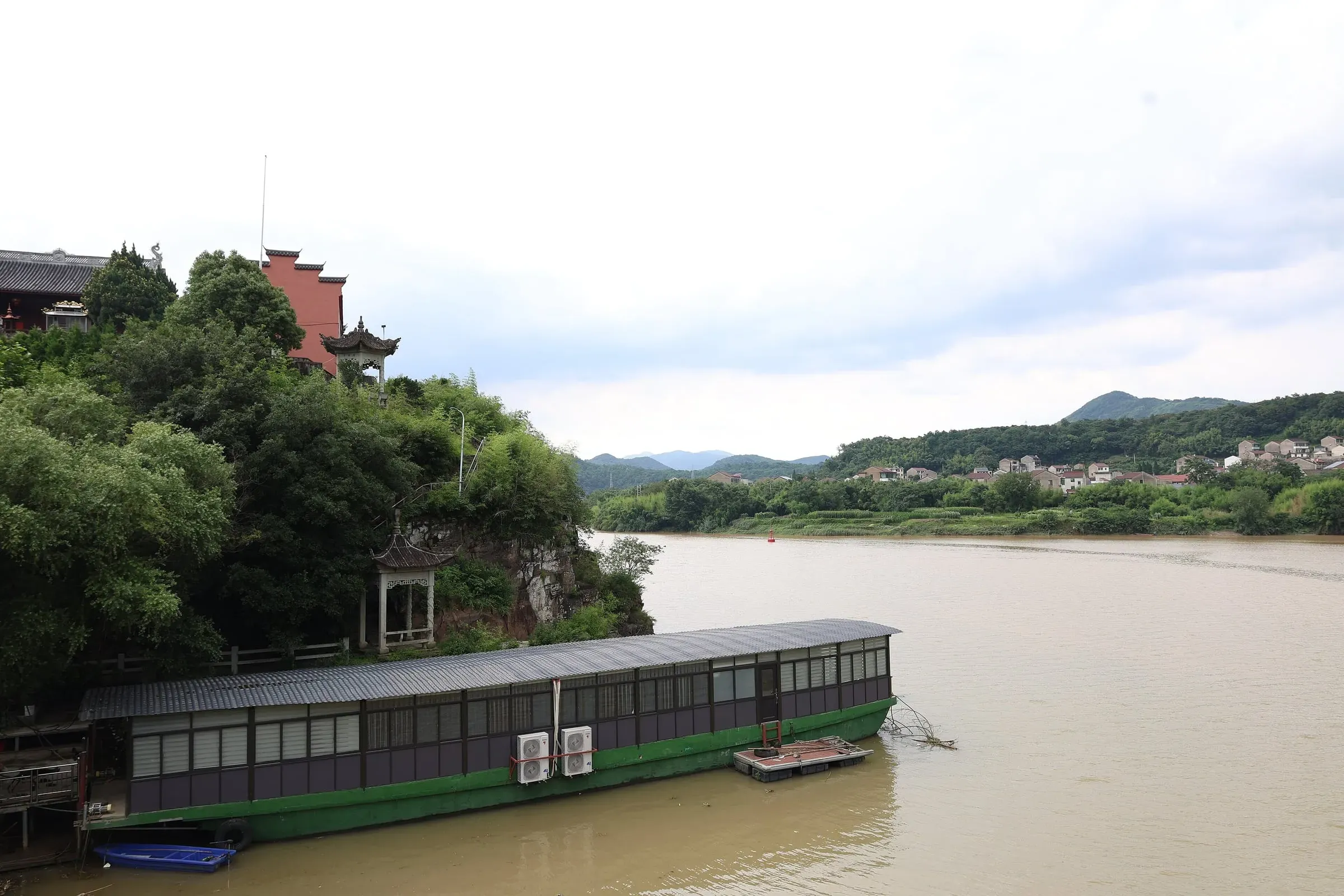
Most lists of small towns near Shanghai stop at the water towns. But direct high-speed trains from Shanghai Hongqiao also reach four small towns in the hills of eastern Zhejiang in two to three hours — Shengzhou, home of Yue opera and xiaolongbao; Xinchang, with its cliff-carved Buddha; Tiantai, birthplace of Tiantai Buddhism; and Linhai, with a Great Wall of its own. On a second line are Xianju, home of Shenxianju and the Ruyi Bridge, and Dongyang, home of Hengdian World Studios; and closest of all to Shanghai is Zhuji, Xi Shi’s hometown, on the Shanghai–Kunming line.
Ask about small towns near Shanghai and most guides will send you to the water towns: Zhouzhuang, Wuzhen, Zhujiajiao. But two or three hours on a high-speed train will also take you to a different kind of small town — the county seats in the hills of eastern Zhejiang. They were not built for visitors; they are ordinary working towns, each with one thing it is proud of: an opera, a Buddha, a temple, a city wall.
The four towns are Shengzhou, Xinchang, Tiantai and Linhai, strung from north to south along the Hangzhou–Taizhou high-speed railway, which opened in 2022. Tang dynasty poets traveled in the same direction, along what is now called the Tang Poetry Road of Eastern Zhejiang — see the Tang Poetry Road.
One railway, four small towns
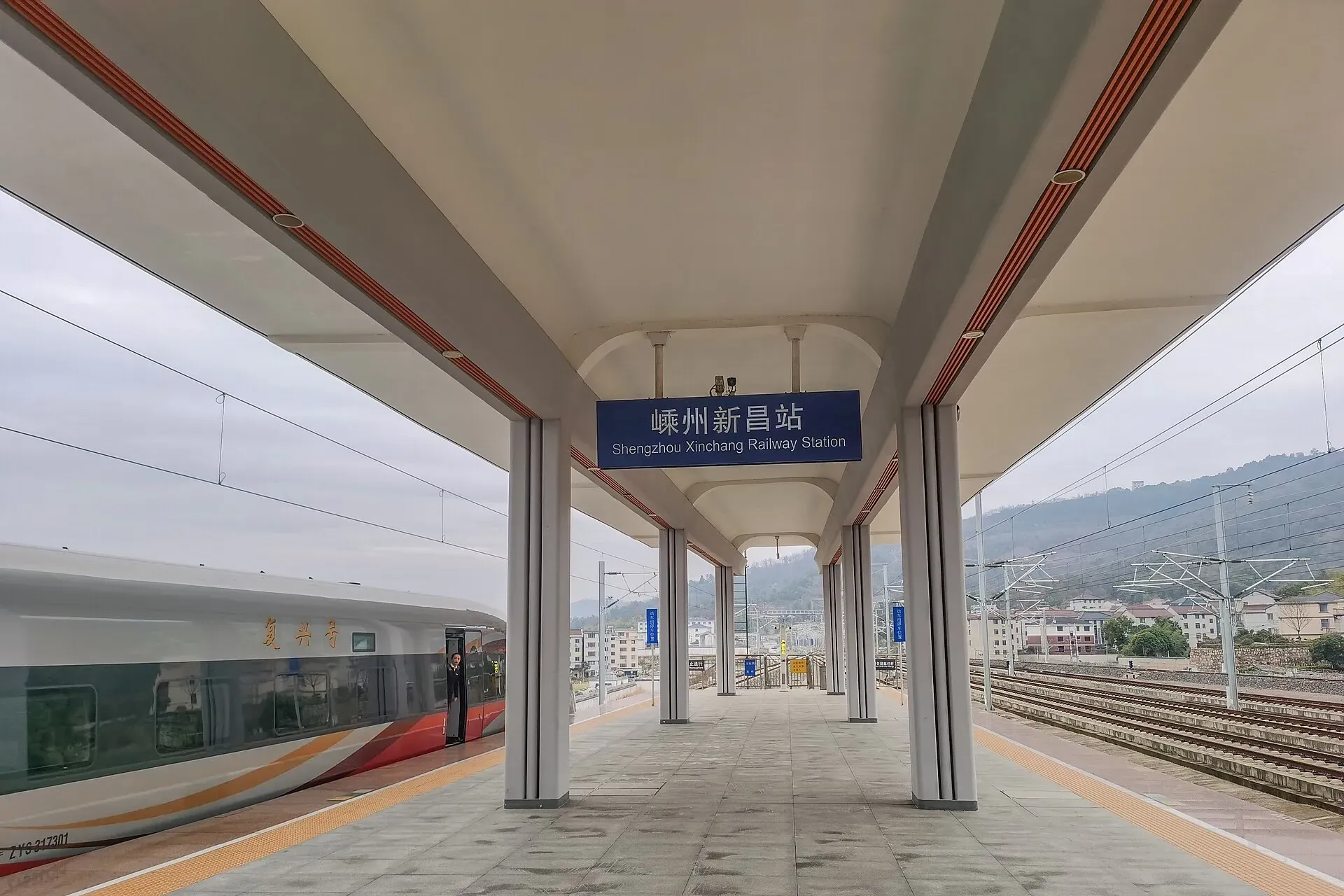
The Hangzhou–Taizhou high-speed railway runs 266.9 kilometers from Hangzhou East through Shaoxing North, Shangyu South, Shengzhou North, Shengzhou-Xinchang, Tiantaishan and Linhai to Taizhou and Wenling. From Hangzhou East the fastest trains reach Shengzhou in about half an hour and Tiantai in about an hour.
From Shanghai there is no need to change either. On the 2025 timetable listed by the Chinese schedule site Haocha, direct high-speed trains run throughout the day from Shanghai Hongqiao, Shanghai South and Shanghai Songjiang: to Shengzhou-Xinchang in as little as an hour and forty-five minutes, to Tiantaishan from about two hours and to Linhai from about two hours twenty minutes. Schedules change often, so check 12306 before you go.
Shengzhou: home of Yue opera and xiaolongbao
Shengzhou is the birthplace of Yue opera: in 1906 a few storytellers built its first stage out of rice tubs and door planks in the village of Dongwang. Many of the “Hangzhou xiaolongbao” shops on China’s streets are in fact run by people from Shengzhou, whose small buns are raised with an old-dough starter and left open at the top — not the same thing as Shanghai’s soup dumplings. Outside town are Jinting, where the calligrapher Wang Xizhi retired, and the old courtyard houses of Chongren.
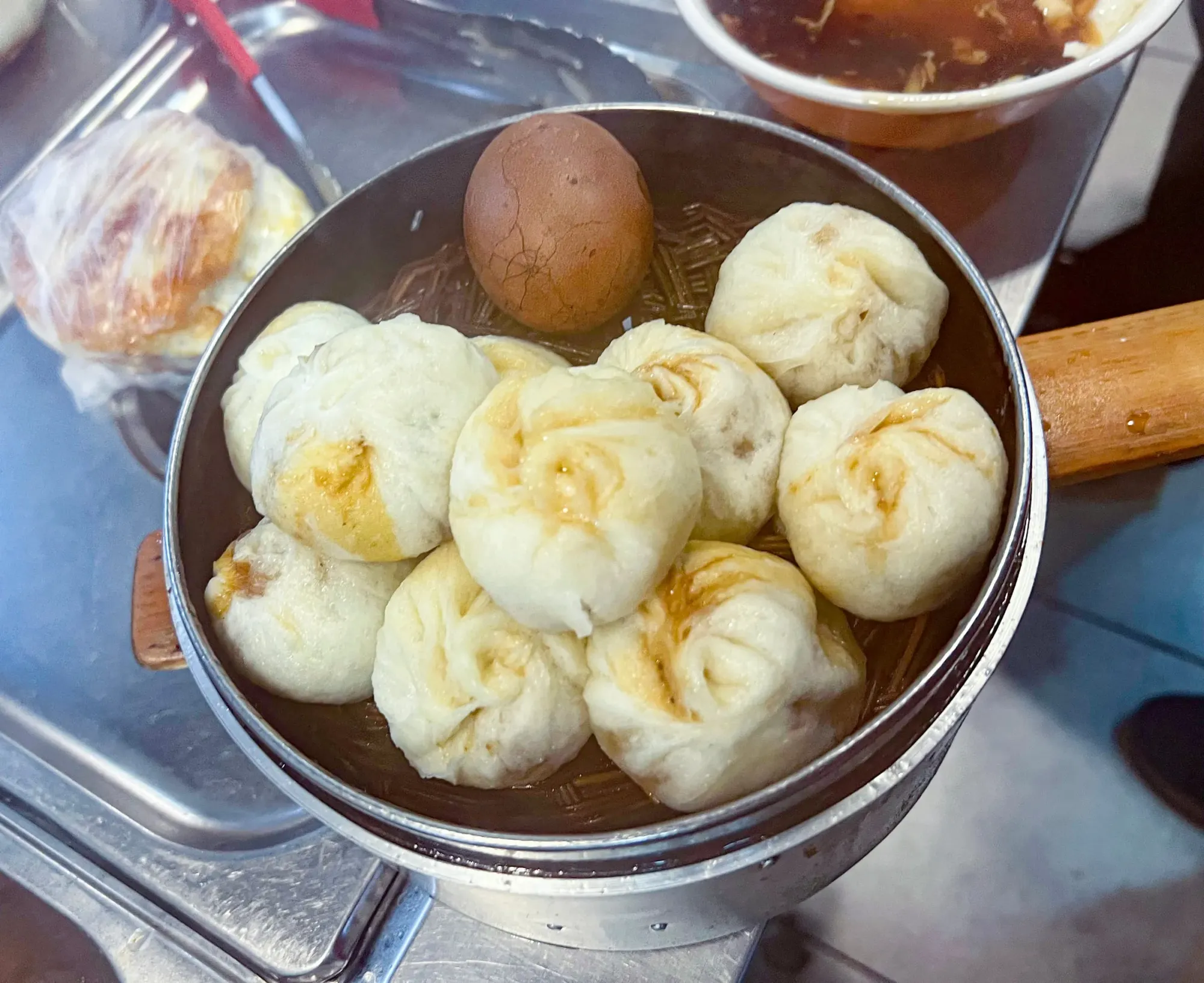
See Shengzhou Xiaolongbao, The Birthplace of Yue Opera and Following the Tang Poets Through Shengzhou.
Xinchang: a Buddha in a cliff, and the mountain of Li Bai’s dream
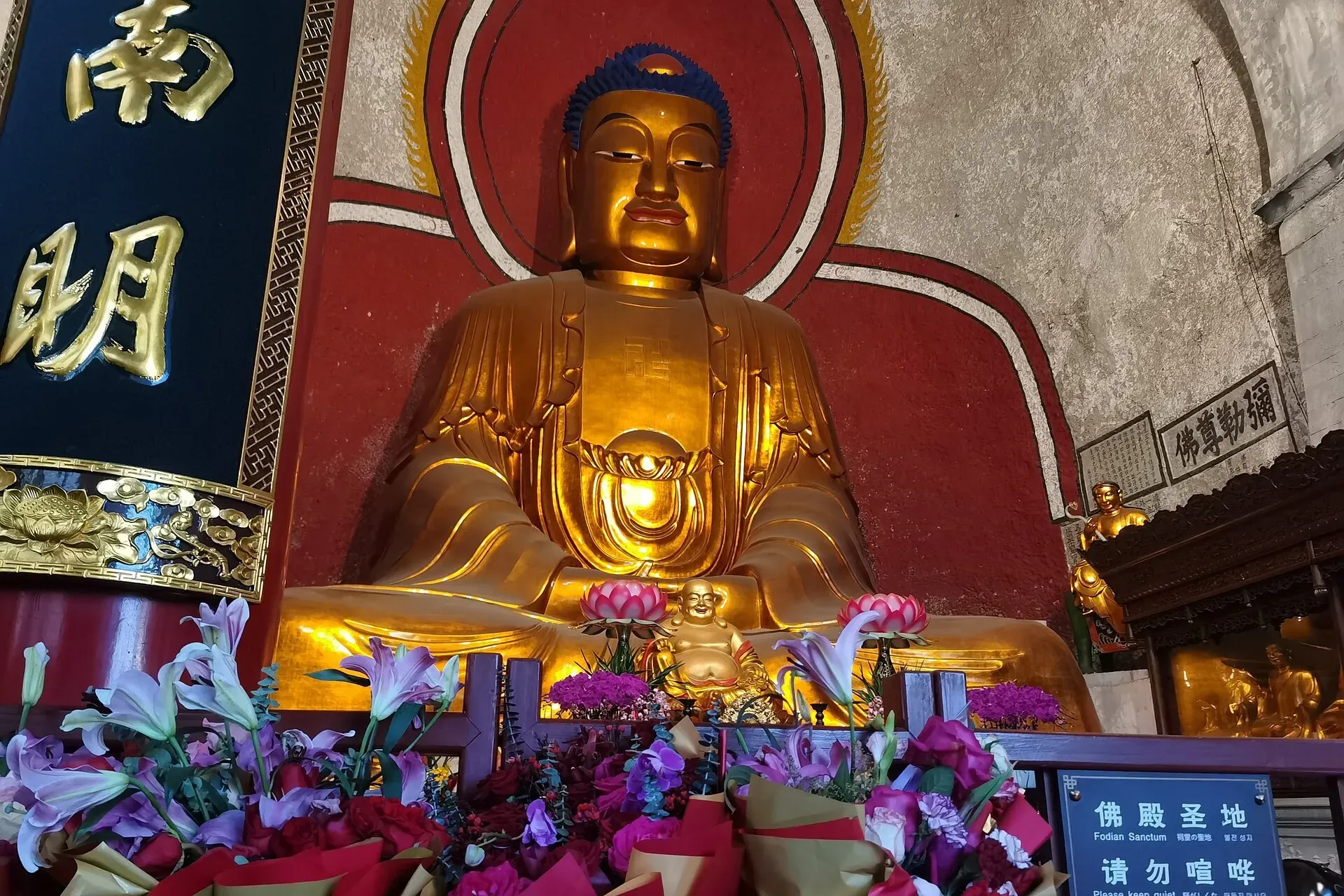
Xinchang shares its high-speed station with Shengzhou. In the Great Buddha Temple on the edge of town sits a Maitreya carved into a cliff cave, 13.2 meters tall and finished in 516 — two centuries before the Leshan Giant Buddha. Mount Tianmu, the subject of Li Bai’s poem “Dreaming of Mount Tianmu,” is in Xinchang too, and the local fried rice cakes come simmered in broth.
Tiantai: Guoqing Temple and where Xu Xiake set out
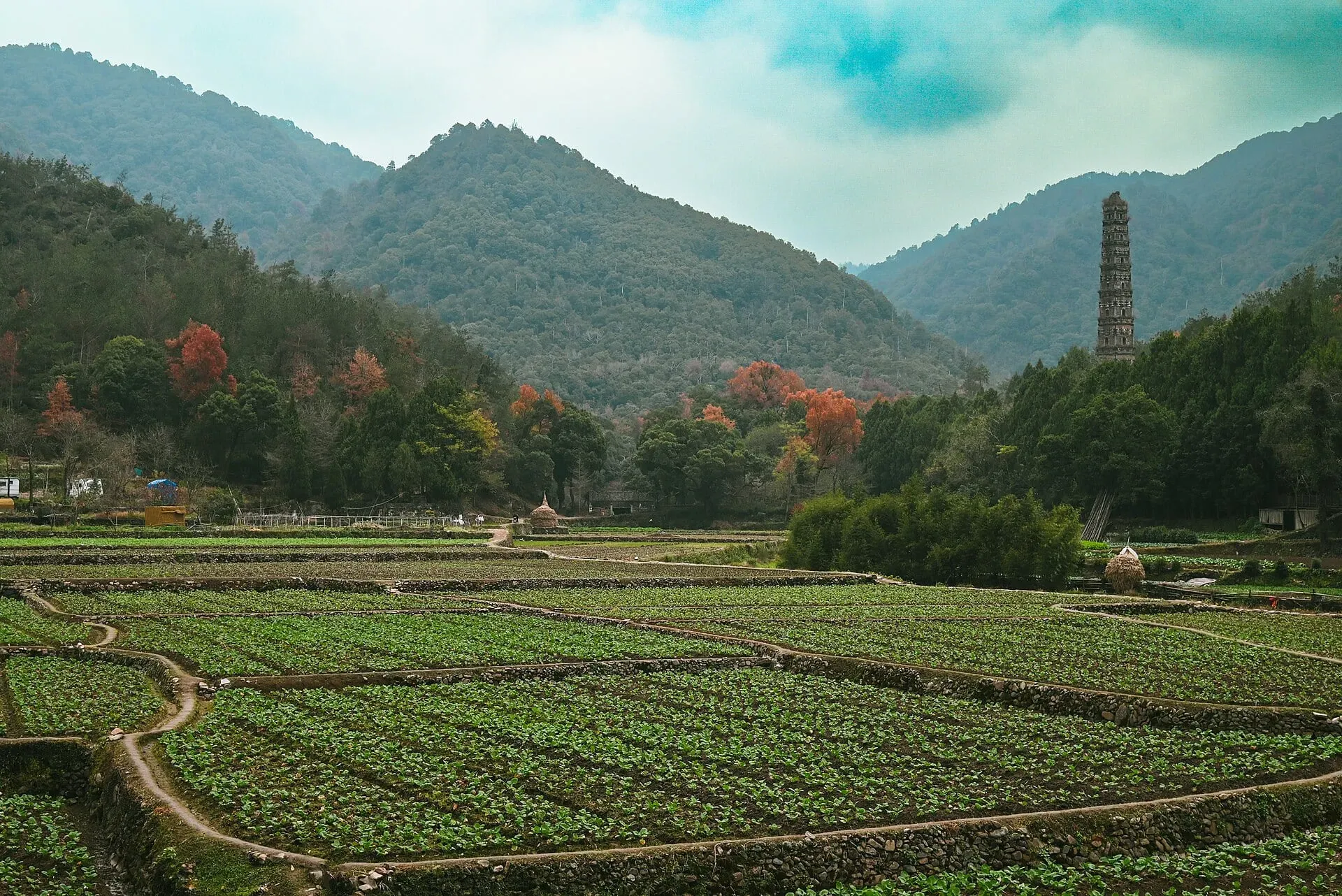
Guoqing Temple, at the foot of Tiantai Mountain, was begun in 598. It is the founding temple of Tiantai Buddhism, and of Japan’s Tendai school after it, and a pagoda more than 1,400 years old stands outside its gate. Up the mountain are the Stone Bridge falls, and in 1613 the traveler Xu Xiake began his famous diaries here. Han Shan — Cold Mountain, the Tang poet-monk — lived as a recluse in these hills.
Linhai: a Great Wall of the South and a living old city
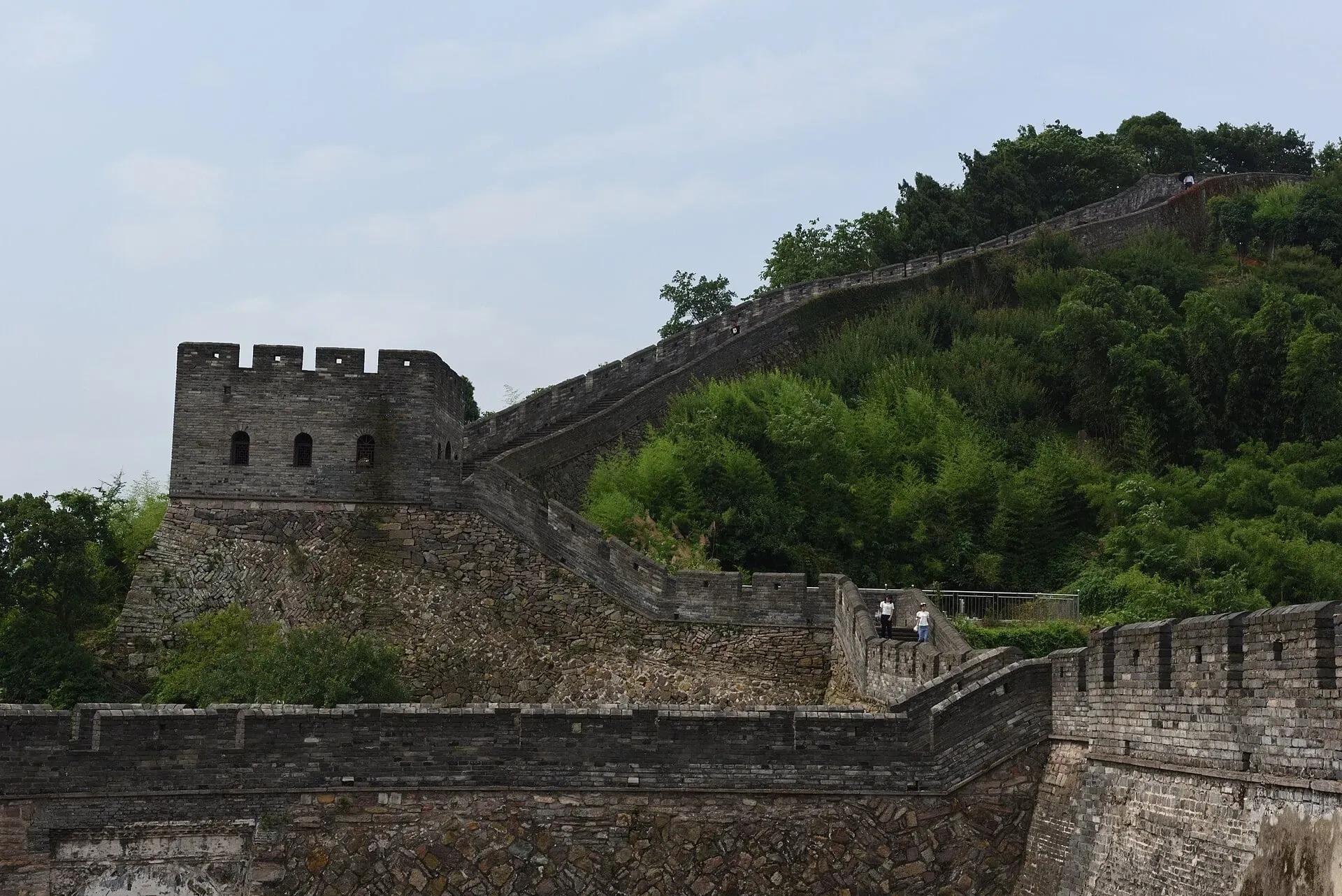
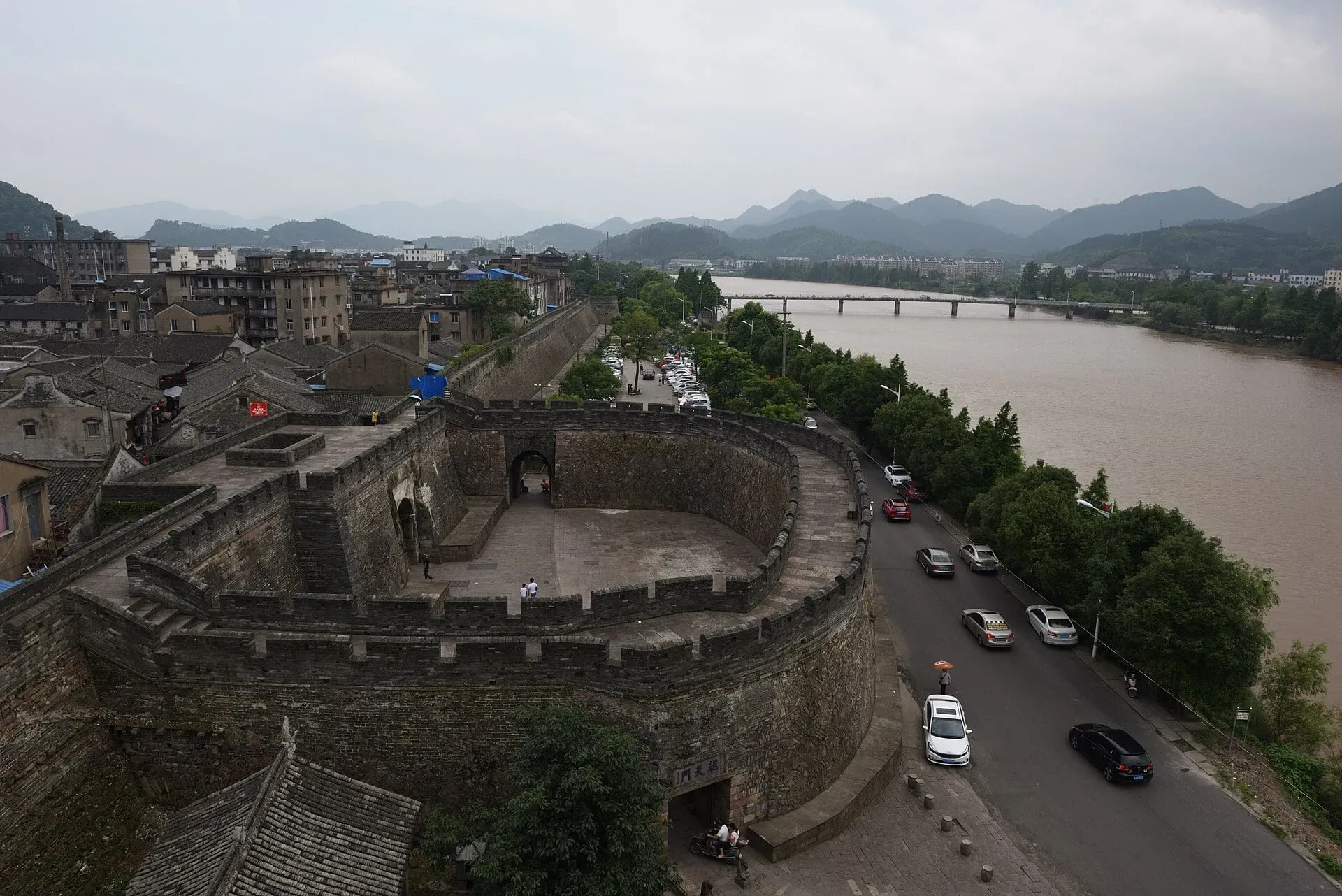
Linhai was the capital of Taizhou for fourteen hundred years. 4,730 meters of its city wall survive; the northern stretch rides a ridge and is known as the Great Wall of the South, or the Linhai Great Wall, while the river stretch doubles as a flood levee. Inside, Ziyang Old Street runs for over a kilometer, still lined with homes and century-old shops.
Zhuji, on the Shanghai–Kunming line
The closest of all to Shanghai is Zhuji, on the Shanghai–Kunming high-speed railway: as little as an hour and ten minutes direct from Shanghai Hongqiao, and 22 minutes from Hangzhou East. Zhuji is Xi Shi’s hometown, with Xi Shi’s Hometown on the Huan River in the south of the city, and Shanxiahu in its northeast is the largest freshwater pearl market in the world. See Xi Shi’s Hometown, Zhuji Pearls and Torreya Nuts.
Dongyang and Xianju, on another line
Two more towns are not on the Hangzhou–Taizhou railway but on the Hangzhou–Wenzhou line, which opened in September 2024. Dongyang’s station is called Hengdian, right by Hengdian World Studios — 47 minutes from Hangzhou West at the fastest, and from about two hours ten minutes direct from Shanghai Hongqiao; see Hengdian World Studios. Two stops further south is Xianju: about an hour and twenty minutes from Hangzhou West, with direct trains from Shanghai Hongqiao in as little as two hours forty minutes. Xianju is best known for Shenxianju, a landscape of volcanic cliffs and spires crossed by the Ruyi Bridge, which opened in 2020; come in June and the yangmei are in season.
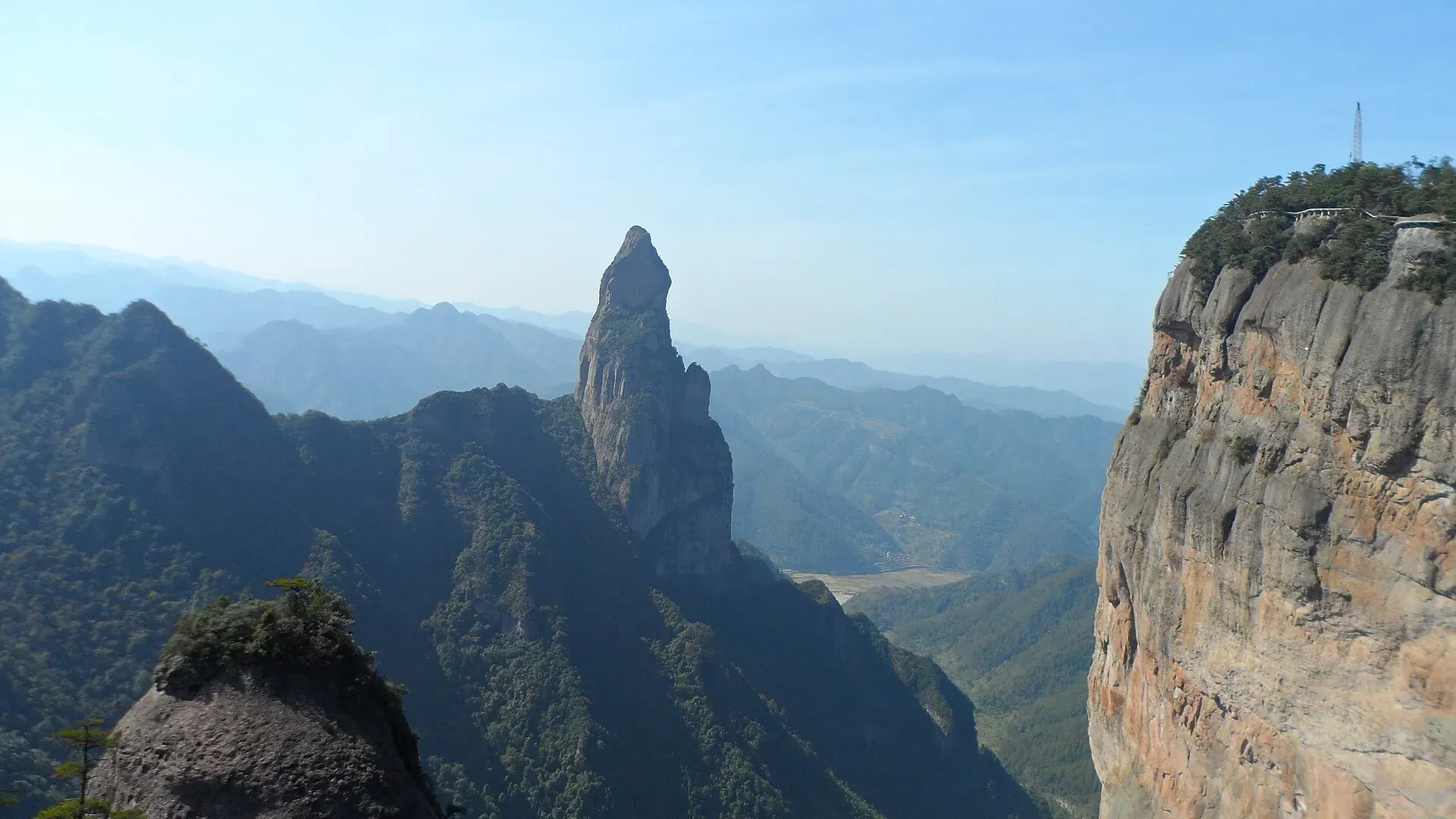
See Shenxianju and the Ruyi Bridge, Xianju Yangmei, Potan Old Town and the Boneless Lanterns and Things to Do in Xianju.
Planning your trip
- One day, from Hangzhou: go to Shengzhou or Xinchang, half an hour away by train, and come back the same day.
- Two days, from Shanghai: take a direct train to Linhai, walk the wall and Ziyang Old Street and stay the night; next day ride one stop to Tiantai for Guoqing Temple and the Stone Bridge falls, then take the train back to Shanghai from Tiantaishan station.
- Four or five days: work your way south, one stop at a time — Shengzhou, Xinchang, Tiantai, Linhai.
None of the four stations is in the town center, so allow ten to twenty minutes by taxi at each end. For details see Getting to Shengzhou, Getting to Xinchang, Getting to Tiantai, Getting to Linhai, Getting to Xianju, Getting to Dongyang and Hengdian and Getting to Zhuji.
Before you go
You can buy train tickets with your passport on 12306, China Railway’s official website and app, and you show the passport at the station. Mobile payment is everywhere in China, so consider linking an international bank card to Alipay or WeChat Pay before you travel.
Questions & answers
Which small towns near Shanghai can I reach by high-speed train?
Besides the water towns such as Zhouzhuang and Wuzhen, direct high-speed trains from Shanghai Hongqiao reach Shengzhou, Xinchang, Tiantai and Linhai in eastern Zhejiang — the nearest in as little as an hour and forty-five minutes, and Linhai, the farthest, in about two and a half to three and a half hours. All four are on the same Hangzhou–Taizhou line, so they are easy to combine.
Is there a Great Wall near Shanghai?
There is a “Great Wall of the South” — the Taizhou city wall in Linhai, Zhejiang, often called the Linhai Great Wall, whose northern stretch rides a ridge much like the Great Wall in the north. Direct trains from Shanghai Hongqiao reach Linhai in about two and a half to three and a half hours. See the Linhai Great Wall.
Which of these towns is closest to Shanghai?
Zhuji. Direct trains on the Shanghai–Kunming high-speed line reach Zhuji from Shanghai Hongqiao in as little as an hour and ten minutes, and the station is about 7 km from Xi Shi’s Hometown. See Zhuji.
How do I get to Hengdian World Studios from Shanghai?
Take a high-speed train to Hengdian station in Dongyang. Direct trains run from Shanghai Hongqiao, Shanghai South and Shanghai Songjiang, taking about two hours ten minutes to three hours from Hongqiao; from Hangzhou West the fastest takes 47 minutes. The station is about 6 km from the center of Hengdian. See Hengdian World Studios.
How do I get to Shenxianju and the Ruyi Bridge from Shanghai?
Take a high-speed train to Xianju station — direct from Shanghai Hongqiao in as little as two hours forty minutes. Shenxianju is about 16 km from the station, with a dedicated bus. Xianju is on the Hangzhou–Wenzhou line, a different railway from the other four towns. See Shenxianju and the Ruyi Bridge.
Which town works as a day trip from Hangzhou?
Shengzhou and Xinchang are closest, about half an hour from Hangzhou East by high-speed train. Tiantai is about an hour away, close enough for a day at Guoqing Temple.
How long do I need for all four?
Four or five days is comfortable — a day each for Shengzhou and Xinchang, and a day or two each for Tiantai and Linhai. With less time, pick Linhai and Tiantai, which are one stop apart.
Can foreign visitors buy train tickets themselves?
Yes. On 12306, China Railway’s official website and app, you can buy tickets with your passport, and you show the passport at the station.
Sources
- 上海出发的车次和时间据好查网站的 2025 年时刻表,以 12306 为准;到站后的车程是按 OpenStreetMap 路网估算的。各座小城的资料出处见各篇指南。
- 上海到嵊州新昌列车时刻表 · 好查(2025 年时刻)
- 上海到天台山列车时刻表 · 好查(2025 年时刻)
- 上海到临海列车时刻表 · 好查(2025 年时刻)
- 上海到仙居列车时刻表 · 好查(2025 年时刻)
- 上海到横店列车时刻表 · 好查(2025 年时刻)
- 上海到诸暨列车时刻表 · 好查(2025 年时刻)
- 杭州到仙居列车时刻表 · 好查(2025 年时刻)
- 官宣!杭温高铁明天开通运营,杭州西至温州北最快1小时27分 · 杭州网,2024 年 9 月 5 日
- 杭台高铁开通运营一周年 运送旅客超500万人次 · 杭州网,2023 年 1 月 8 日
- 诗仙李白做梦都要去天台山 · 都市快报,2025 年 1 月 26 日
- 中国铁路 12306